Systemic Metronidazole i n
Periodontal Therapy
Usama M. madany
Professor, Department of Oral Medicine
Periodontology, Diagnosis and Oral Radiology,
Faculty of Dental Medicine , Al-Azhar University
- Commonly used antibiotics in periodontal therapy :
Tetrayclines (doxycycline) Metronidazole
Clindamycin Penicillins (amoxicillin)
Erythromycins (azithromycin, clarithromycin)
Ciprofloxacin
The microbial etiology of inflammatory periodontal
diseases provides the rationale for the local and
systemic use of different antibiotics in periodontal
therapy.
-Systemic antibiotic therapy in periodontics should be
reserved to the following:
A. Prophylaxis for patients with medical problems requiring
antibiotic coverage.
B. Patients with systemic manifestations associated with
acute periodontal infections (ANUG and acute periodontal
abscess) .
C. As an adjunct to surgical and non surgical periodontal
therapy.
D. Patients who undergo continued periodontal breakdown in
spite of thorough debridement and excellent home care .
Metronidazole
Pharmacology and spectrum:
-It is a nitroimidazole compound mainly active against
protozoal infections.
-It is very effective in low reduction potential areas, and
bactericidal to anaerobes through inhibition of DNA
synthesis.
-It can readily attain effective antibacterial concentration in
gingival tissue, saliva and crevicular fluid.
-It is effective against the microorganism strongly
associated with and implicated in pathogenesis of
periodontal disease.
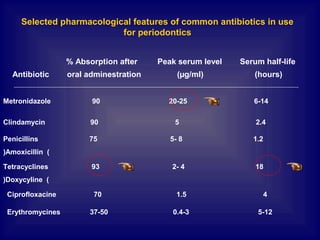
% Absorption after Peak serum level Serum half-life
Antibiotic oral adminestration (µg/ml) (hours)
Metronidazole 90 20-25 6-14
Tetracyclines 93 2- 4 18
(Doxycyline)
Clindamycin 90 5 2.4
Penicillins 75 5- 8 1.2
(Amoxicillin)
Ciprofloxacine 70 1.5 4
Erythromycines 37-50 0.4-3 5-12
Selected pharmacological features of common antibiotics in use
for periodontics
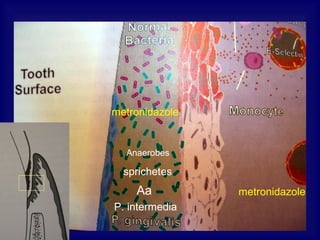
•metronidazole
metronidazole
metronidazole
Aa
P. intermedia
sprichetes
Anaerobes
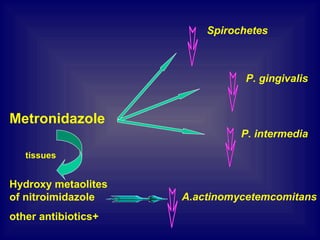
Metronidazole
Spirochetes
P. gingivalis
P. intermedia
A.actinomycetemcomitans
Hydroxy metaolites
of nitroimidazole
+other antibiotics
tissues
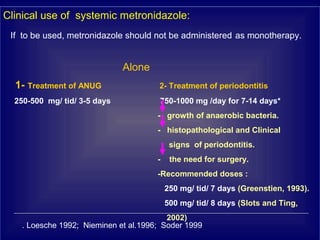
Clinical use of systemic metronidazole:
If to be used, metronidazole should not be administered as monotherapy.
Alone
1- Treatment of ANUG 2- Treatment of periodontitis
250-500 mg/ tid/ 3-5 days 750-1000 mg /day for 7-14 days*
- growth of anaerobic bacteria.
- histopathological and Clinical
signs of periodontitis.
- the need for surgery.
-Recommended doses :
250 mg/ tid/ 7 days (Greenstien, 1993).
500 mg/ tid/ 8 days (Slots and Ting,
2002)
Loesche 1992; Nieminen et al.1996; Soder 1999.
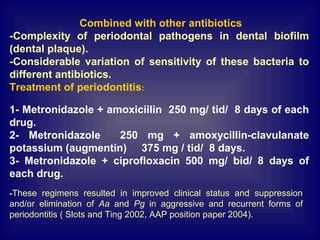
Combined with other antibiotics
-Complexity of periodontal pathogens in dental biofilm
(dental plaque).
-Considerable variation of sensitivity of these bacteria to
different antibiotics.
Treatment of periodontitis:
1- Metronidazole + amoxiciilin 250 mg/ tid/ 8 days of each
drug.
2- Metronidazole 250 mg + amoxycillin-clavulanate
potassium (augmentin) 375 mg / tid/ 8 days.
3- Metronidazole + ciprofloxacin 500 mg/ bid/ 8 days of
each drug.
-These regimens resulted in improved clinical status and suppression
and/or elimination of Aa and Pg in aggressive and recurrent forms of
periodontitis ( Slots and Ting 2002, AAP position paper 2004).
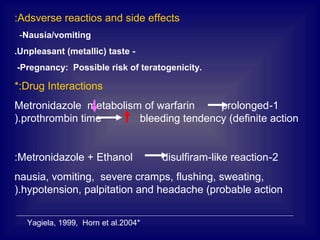
Adsverse reactios and side effects:
-Nausia/vomiting
-Unpleasant (metallic) taste.
-Pregnancy: Possible risk of teratogenicity.
Drug Interactions*:
1-Metronidazole metabolism of warfarin prolonged
prothrombin time bleeding tendency (definite action).
2-Metronidazole + Ethanol disulfiram-like reaction:
nausia, vomiting, severe cramps, flushing, sweating,
hypotension, palpitation and headache (probable action).
*Yagiela, 1999, Horn et al.2004
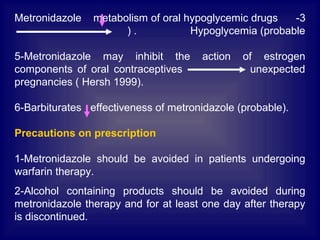
3-Metronidazole metabolism of oral hypoglycemic drugs
Hypoglycemia (probable) .
5-Metronidazole may inhibit the action of estrogen
components of oral contraceptives unexpected
pregnancies ( Hersh 1999).
6-Barbiturates effectiveness of metronidazole (probable).
Precautions on prescription
1-Metronidazole should be avoided in patients undergoing
warfarin therapy.
2-Alcohol containing products should be avoided during
metronidazole therapy and for at least one day after therapy
is discontinued.
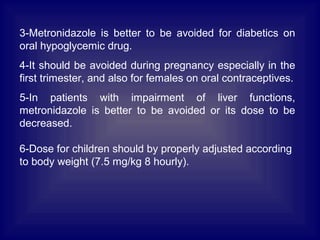
3-Metronidazole is better to be avoided for diabetics on
oral hypoglycemic drug.
4-It should be avoided during pregnancy especially in the
first trimester, and also for females on oral contraceptives.
5-In patients with impairment of liver functions,
metronidazole is better to be avoided or its dose to be
decreased.
6-Dose for children should by properly adjusted according
to body weight (7.5 mg/kg 8 hourly).
Metondazole

Metondazole

  • 2.
    Systemic Metronidazole in Periodontal Therapy Usama M. madany Professor, Department of Oral Medicine Periodontology, Diagnosis and Oral Radiology, Faculty of Dental Medicine , Al-Azhar University
  • 3.
    - Commonly usedantibiotics in periodontal therapy : Tetrayclines (doxycycline) Metronidazole Clindamycin Penicillins (amoxicillin) Erythromycins (azithromycin, clarithromycin) Ciprofloxacin The microbial etiology of inflammatory periodontal diseases provides the rationale for the local and systemic use of different antibiotics in periodontal therapy.
  • 4.
    -Systemic antibiotic therapyin periodontics should be reserved to the following: A. Prophylaxis for patients with medical problems requiring antibiotic coverage. B. Patients with systemic manifestations associated with acute periodontal infections (ANUG and acute periodontal abscess) . C. As an adjunct to surgical and non surgical periodontal therapy. D. Patients who undergo continued periodontal breakdown in spite of thorough debridement and excellent home care .
  • 5.
    Metronidazole Pharmacology and spectrum: -Itis a nitroimidazole compound mainly active against protozoal infections. -It is very effective in low reduction potential areas, and bactericidal to anaerobes through inhibition of DNA synthesis. -It can readily attain effective antibacterial concentration in gingival tissue, saliva and crevicular fluid. -It is effective against the microorganism strongly associated with and implicated in pathogenesis of periodontal disease.
  • 6.
    % Absorption afterPeak serum level Serum half-life Antibiotic oral adminestration (µg/ml) (hours) Metronidazole 90 20-25 6-14 Tetracyclines 93 2- 4 18 (Doxycyline) Clindamycin 90 5 2.4 Penicillins 75 5- 8 1.2 (Amoxicillin) Ciprofloxacine 70 1.5 4 Erythromycines 37-50 0.4-3 5-12 Selected pharmacological features of common antibiotics in use for periodontics
  • 7.
  • 8.
  • 9.
    Clinical use ofsystemic metronidazole: If to be used, metronidazole should not be administered as monotherapy. Alone 1- Treatment of ANUG 2- Treatment of periodontitis 250-500 mg/ tid/ 3-5 days 750-1000 mg /day for 7-14 days* - growth of anaerobic bacteria. - histopathological and Clinical signs of periodontitis. - the need for surgery. -Recommended doses : 250 mg/ tid/ 7 days (Greenstien, 1993). 500 mg/ tid/ 8 days (Slots and Ting, 2002) Loesche 1992; Nieminen et al.1996; Soder 1999.
  • 10.
    Combined with otherantibiotics -Complexity of periodontal pathogens in dental biofilm (dental plaque). -Considerable variation of sensitivity of these bacteria to different antibiotics. Treatment of periodontitis: 1- Metronidazole + amoxiciilin 250 mg/ tid/ 8 days of each drug. 2- Metronidazole 250 mg + amoxycillin-clavulanate potassium (augmentin) 375 mg / tid/ 8 days. 3- Metronidazole + ciprofloxacin 500 mg/ bid/ 8 days of each drug. -These regimens resulted in improved clinical status and suppression and/or elimination of Aa and Pg in aggressive and recurrent forms of periodontitis ( Slots and Ting 2002, AAP position paper 2004).
  • 11.
    Adsverse reactios andside effects: -Nausia/vomiting -Unpleasant (metallic) taste. -Pregnancy: Possible risk of teratogenicity. Drug Interactions*: 1-Metronidazole metabolism of warfarin prolonged prothrombin time bleeding tendency (definite action). 2-Metronidazole + Ethanol disulfiram-like reaction: nausia, vomiting, severe cramps, flushing, sweating, hypotension, palpitation and headache (probable action). *Yagiela, 1999, Horn et al.2004
  • 12.
    3-Metronidazole metabolism oforal hypoglycemic drugs Hypoglycemia (probable) . 5-Metronidazole may inhibit the action of estrogen components of oral contraceptives unexpected pregnancies ( Hersh 1999). 6-Barbiturates effectiveness of metronidazole (probable). Precautions on prescription 1-Metronidazole should be avoided in patients undergoing warfarin therapy. 2-Alcohol containing products should be avoided during metronidazole therapy and for at least one day after therapy is discontinued.
  • 13.
    3-Metronidazole is betterto be avoided for diabetics on oral hypoglycemic drug. 4-It should be avoided during pregnancy especially in the first trimester, and also for females on oral contraceptives. 5-In patients with impairment of liver functions, metronidazole is better to be avoided or its dose to be decreased. 6-Dose for children should by properly adjusted according to body weight (7.5 mg/kg 8 hourly).