Amebiasis
Two morphologically identical but genetically
and biochemically distinct species of
Entamoeba:
E. histolytica in 10% is pathogenic,
and E. dispar in 90%
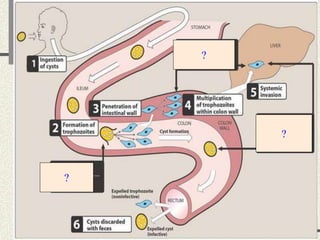
?
?
?
May cause:
mild to severe colitis ( acute or chronic )
- amebic dysentery.
In some instances, these trophozoites also
invade extraintestinal tissues,
chiefly the liver where they produce
amebic abscesses and systemic disease
Anti-amoebics
Drugs used in Amebiasis
Classification
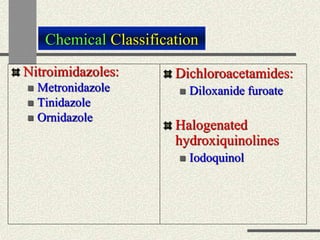
Chemical Classification
Nitroimidazoles:
 Metronidazole
 Tinidazole
 Ornidazole
Dichloroacetamides:
 Diloxanide furoate
Halogenated
hydroxiquinolines
 Iodoquinol
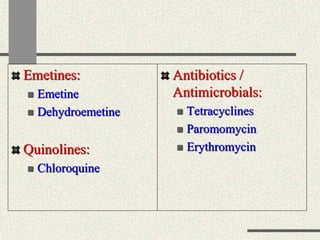
Emetines:
 Emetine
 Dehydroemetine
Quinolines:
 Chloroquine
Antibiotics /
Antimicrobials:
 Tetracyclines
 Paromomycin
 Erythromycin
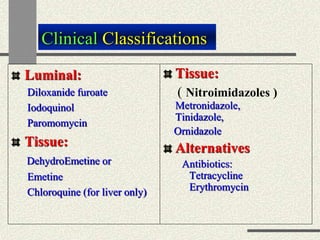
Clinical Classifications
Luminal:
Diloxanide furoate
Iodoquinol
Paromomycin
Tissue:
DehydroEmetine or
Emetine
Chloroquine (for liver only)
Tissue:
( Nitroimidazoles )
Metronidazole,
Tinidazole,
Ornidazole
Alternatives
Antibiotics:
Tetracycline
Erythromycin
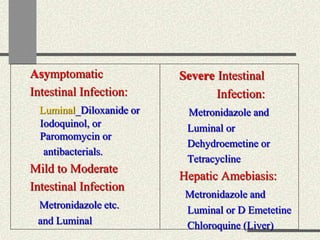
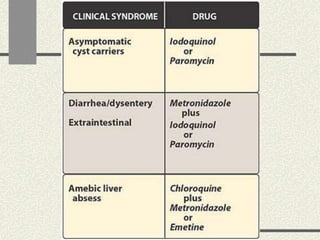
Asymptomatic
Intestinal Infection:
Luminal_Diloxanide or
Iodoquinol, or
Paromomycin or
antibacterials.
Mild to Moderate
Intestinal Infection
Metronidazole etc.
and Luminal
Severe Intestinal
Infection:
Metronidazole and
Luminal or
Dehydroemetine or
Tetracycline
Hepatic Amebiasis:
Metronidazole and
Luminal or D Emetetine
Chloroquine (Liver)
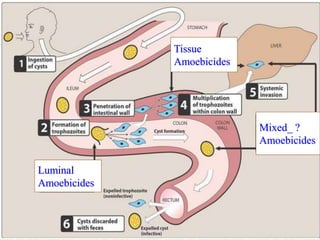
Luminal
Amoebicides
Tissue
Amoebicides
Mixed_ ?
Amoebicides
What may be the preferred initial drug?
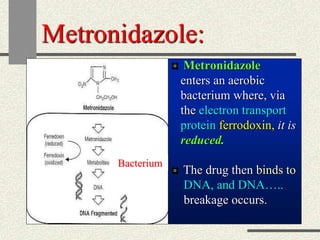
Metronidazole:
Metronidazole
enters an aerobic
bacterium where, via
the electron transport
protein ferrodoxin, it is
reduced.
The drug then binds to
DNA, and DNA…..
breakage occurs.
Bacterium
Mechanism of action:
Metronidazole is amebicidal,
bactericidal,
and trichomonicidal.
Unionized metronidazole is readily taken
up by anaerobic organisms and cells.
Its selectivity for anaerobic bacteria is a
result of the ability of these organisms to
reduce metronidazole to its active form
intracellularly.
The electron transport proteins
necessary for this reaction are found
only in anaerobic bacteria.
Reduced metronidazole then disrupts
DNA's helical structure, thereby
inhibiting bacterial Nucleic Acid
Synthesis.
Cell death.
Metronidazole is equally effective
against dividing and non-dividing
cells.
Spectrum of activity:
Metronidazole and related
nitroimidazoles are active in vitro against a
wide variety of
anaerobic protozoal parasites
and anaerobic bacteria.
It is:
amebicidal, trichomonacidal and
bactericidal.
The spectrum of activity of metronidazole
includes the following:
Anaerobic gram-negative bacilli,
including :
Bacteroides species,
Fusobacterium
and Veillonella;
Anaerobic gram-positive cocci
including:
Clostridium,
Eubacterium,
Peptococcus
and Peptostreptococcus.
Metronidazole is also active against:
H. pylori,
E. histolytica
G. vaginalis & lamblia.
T. vaginalis
Metronidazole acts primarily against
the trophozoite forms of E. histolytica
and has limited activity against the
encysted forms.
Pharmacokinetics:
Preparations of metronidazole are available
for oral, intravenous, intravaginal,
and topical administration.
The drug usually is completely and promptly
absorbed after oral intake
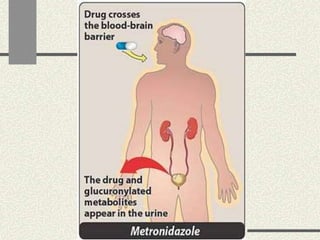
With the exception of placenta,
metronidazole penetrates well into body
tissues and fluids, including vaginal
secretions, seminal fluids, saliva, and breast
milk.
Therapeutic concentrations also are achieved
in cerebrospinal fluid.
After an oral dose, over 75% of labeled
metronidazole is eliminated in the urine, largely as
metabolites;
only about 10% is recovered as unchanged drug.
The liver is the main site of metabolism, and this
accounts for over 50% of the systemic clearance
of metronidazole.
Therapeutic Indications:
Protozoal Infections:
1. Amoebiasis…Hepatic and intestinal
2. Trichomonal infections in men and
women.
3. Giardiasis.
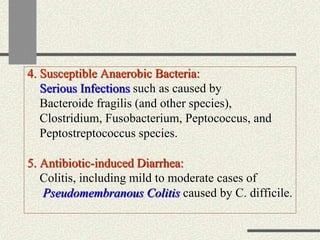
4. Susceptible Anaerobic Bacteria:
Serious Infections such as caused by
Bacteroide fragilis (and other species),
Clostridium, Fusobacterium, Peptococcus, and
Peptostreptococcus species.
5. Antibiotic-induced Diarrhea:
Colitis, including mild to moderate cases of
Pseudomembranous Colitis caused by C. difficile.
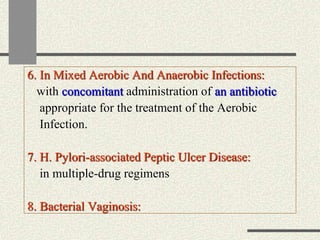
6. In Mixed Aerobic And Anaerobic Infections:
with concomitant administration of an antibiotic
appropriate for the treatment of the Aerobic
Infection.
7. H. Pylori-associated Peptic Ulcer Disease:
in multiple-drug regimens
8. Bacterial Vaginosis:
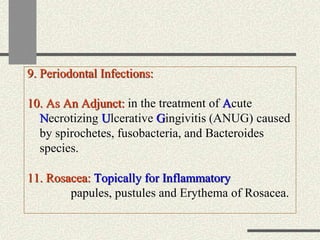
9. Periodontal Infections:
10. As An Adjunct: in the treatment of Acute
Necrotizing Ulcerative Gingivitis (ANUG) caused
by spirochetes, fusobacteria, and Bacteroides
species.
11. Rosacea: Topically for Inflammatory
papules, pustules and Erythema of Rosacea.
Adverse Effects:
Side effects to discontinue therapy are
rarely severe enough.
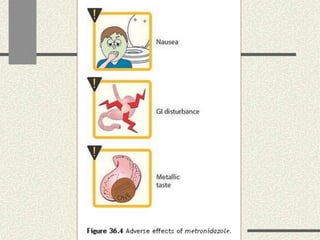
The most common are headache, nausea,
dry mouth, and a metallic taste.
Vomiting, diarrhea, and abdominal distress
occasionally are experienced.
Furry tongue, glossitis, and stomatitis occurring
during therapy.
Dizziness, vertigo, and, very rarely encephalopathy,
convulsions, incoordination, and ataxia are
neurotoxic effects that warrant discontinuation of
metronidazole.
Temporary Neutropenia:
reversible after discontinuation of therapy.
Contraindications:
The drugs should be used to treat amebic
dysentery or amebic liver abscess for the
minimum period needed to relieve severe
symptoms
They should not be used for more than 10
days.
Precautions:
The drug should be withdrawn if numbness
or paresthesias of the extremities occur.
Urticaria, flushing, and pruritus are
indicative of drug sensitivity that can
require withdrawal of metronidazole.
Metronidazole should be used with caution
in patients with Active Disease of the CNS
because of its potential neurotoxicity.
The dosage of metronidazole should be
reduced in patients with Severe Hepatic
Disease.
Drug Interactions:
Alcohol:
Disulfiram-like Effect.
abdominal distress, vomiting, flushing, or
headache if they drink alcoholic beverages
during or within 3 days after therapy with this
drug.
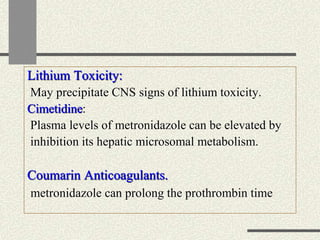
Lithium Toxicity:
May precipitate CNS signs of lithium toxicity.
Cimetidine:
Plasma levels of metronidazole can be elevated by
inhibition its hepatic microsomal metabolism.
Coumarin Anticoagulants.
metronidazole can prolong the prothrombin time
DILOXANIDE FUROATE
Diloxanide is a dichloroacetamide derivative,
furoate ester
proved to be appreciably
more active
than
the parent compound.
Pharmacological Effects.
Diloxanide is directly amebicidal when
tested in vitro.
The furoate ester is more potent.
Mechanism of Action:
Little is known
Pharmacokinetics:
After oral ingestion, the ester is largely
hydrolyzed in the lumen or mucosa of the
intestine to diloxanide and furoic acid;
only diloxanide appears in the systemic
circulation.
10 % remain in lumen
60% to 90% is excreted in the urine
within 48 hours
Therapeutic Uses
Given alone, diloxanide furoate is effective
for treatment of Asymptomatic Passers of
amoebic cysts
Diloxanide is ineffective when
administered alone in the treatment of
extra intestinal amoebiasis.
Diloxanide furoate is used
along with or after an appropriate
systemic or mixed amoebicide to affect a
cure of invasive and extra intestinal
amoebiasis.
Orally recommended Adult Dose:
500 mg three times daily for 10 days.
If necessary, treatment can be extended to
20 days.
Children Dose: 20 mg/kg per day in three
divided doses for 10 days.
Adverse Effects:
Diloxanide furoate generally is well
tolerated and side effects are mild.
Flatulence is most commonly reported;
nausea, vomiting, diarrhea, pruritus, and
urticaria occur occasionally
Iodoquinol
(di-iodo-hydroxyquin)
Iodoquinol (diiodohydroxyquin) is a
halogenated hydroxyquinoline.
An effective luminal amebicide
used with metronidazole to treat amoebic
infections.
Pharmacokinetics &
Pharmacological effects:
90% of the drug is retained in the intestine
and excreted in the feces.
10% enters the circulation, has a half-life of
11-14 hrs,
Excreted in the urine as glucuronides.
The Mechanism Of Action of iodoquinol
against trophozoites is unknown.
It is effective against organisms in the
bowel lumen
but not against trophozoites in the
intestinal wall or extra intestinal tissues.
Precautions:
Iodoquinol should be taken with meals to
limit gastrointestinal toxicity.
It should be used with caution in patients
with optic neuropathy, renal or thyroid
disease, or nonamoebic hepatic disease.
Contraindications:
The drug should be discontinued if it
produces persistent diarrhea or signs of
iodine toxicity (dermatitis, urticaria,
pruritus, fever).
It is contraindicated in patients with
intolerance to iodine
Paromomycin
Paromomycin sulfate is an aminoglycoside
antibiotic
Not significantly absorbed from the GIT
.
Used only as a luminal amebicide and has no
effect against extraintestinal amebic infections.
The small amount absorbed is slowly excreted
unchanged, mainly by glomerular filtration.
The drug may accumulate with renal
insufficiency and contribute to renal toxicity.
• Paromomycin is an effective luminal amebicide
similar efficacy and probably less toxicity than
other agents;
In a recent study, it was superior to
diloxanide furoate in clearing asymptomatic
infections.
(Parenteral paromomycin is under investigation in
the treatment of visceral leishmaniasis.)
Adverse Effects:
Occasional Abdominal Distress and Diarrhea.
Paromomycin should be avoided in patients
with Significant Renal Disease
used with caution in persons with
gastrointestinal ulcerations.
Emetine, Dehydroemetine:
Emetine:
an alkaloid derived from ipecac
"Brazil root"
Direct-acting, systemic amebicidal
Dehydroemetine:
similar pharmacological properties
but is considered to be less toxic.
Pharmacokinetics:
The drugs are administered parenterally because
oral preparations are absorbed erratically.
Emetine and dehydroemetine should be
administered subcutaneously (preferred) or
intramuscularly (but never intravenously) in a
supervised setting
They accumulate in tissues and are eliminated
slowly via the kidneys.
Therapeutic Indications:
Limited to unusual circumstances in which
severe amebiasis warrants effective therapy
and metronidazole cannot be used.
Dehydroemetine is preferred over emetine
because of its somewhat better toxicity
profile.
Adverse Effects:
Adverse effects are generally mild when the drugs
are used for 3-5 days but increase with prolonged
use
Pain and tenderness in the area of injection are
frequent, and sterile abscesses may develop.
Diarrhea is common.
nausea, vomiting
, muscle weakness and discomfort
minor electrocardiographic changes.
Serious toxicities :
cardiac arrhythmias,
heart failure,
hypotension
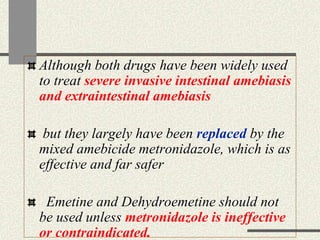
Although both drugs have been widely used
to treat severe invasive intestinal amebiasis
and extraintestinal amebiasis
but they largely have been replaced by the
mixed amebicide metronidazole, which is as
effective and far safer
Emetine and Dehydroemetine should not
be used unless metronidazole is ineffective
or contraindicated.
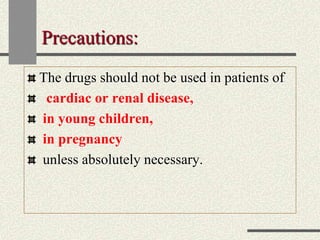
Precautions:
The drugs should not be used in patients of
cardiac or renal disease,
in young children,
in pregnancy
unless absolutely necessary.
Asymptomatic Luminal Agent:
Intestinal Diloxanide Furoate,
Infection 500 mg TID
for 10 days
or
Iodoquinol,
650 mg TID
for 21 days
or
Paromomycin,
10 mg/kg TID
for 7 days
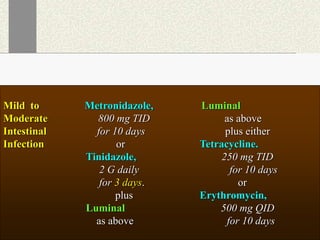
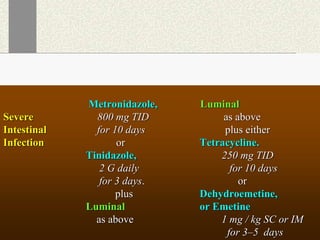
Clinical Setting Drugs of Choice Alternative Drugs
and Adult Dosage and Adult Dosage
Mild to Metronidazole, Luminal
Moderate 800 mg TID as above
Intestinal for 10 days plus either
Infection or Tetracycline.
Tinidazole, 250 mg TID
2 G daily for 10 days
for 3 days. or
plus Erythromycin,
Luminal 500 mg QID
as above for 10 days
Metronidazole, Luminal
Severe 800 mg TID as above
Intestinal for 10 days plus either
Infection or Tetracycline.
Tinidazole, 250 mg TID
2 G daily for 10 days
for 3 days. or
plus Dehydroemetine,
Luminal or Emetine
as above 1 mg / kg SC or IM
for 3–5 days
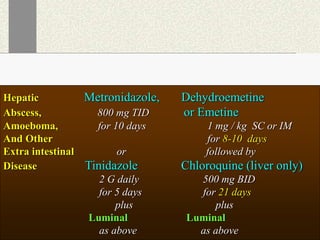
Hepatic Metronidazole, Dehydroemetine
Abscess, 800 mg TID or Emetine
Amoeboma, for 10 days 1 mg / kg SC or IM
And Other for 8-10 days
Extra intestinal or followed by
Disease Tinidazole Chloroquine (liver only)
2 G daily 500 mg BID
for 5 days for 21 days
plus plus
Luminal Luminal
as above as above

Amebicides.ppt

  • 1.
    Amebiasis Two morphologically identicalbut genetically and biochemically distinct species of Entamoeba: E. histolytica in 10% is pathogenic, and E. dispar in 90%
  • 2.
  • 3.
    May cause: mild tosevere colitis ( acute or chronic ) - amebic dysentery. In some instances, these trophozoites also invade extraintestinal tissues, chiefly the liver where they produce amebic abscesses and systemic disease
  • 4.
  • 5.
  • 6.
    Chemical Classification Nitroimidazoles:  Metronidazole Tinidazole  Ornidazole Dichloroacetamides:  Diloxanide furoate Halogenated hydroxiquinolines  Iodoquinol
  • 7.
    Emetines:  Emetine  Dehydroemetine Quinolines: Chloroquine Antibiotics / Antimicrobials:  Tetracyclines  Paromomycin  Erythromycin
  • 8.
    Clinical Classifications Luminal: Diloxanide furoate Iodoquinol Paromomycin Tissue: DehydroEmetineor Emetine Chloroquine (for liver only) Tissue: ( Nitroimidazoles ) Metronidazole, Tinidazole, Ornidazole Alternatives Antibiotics: Tetracycline Erythromycin
  • 9.
    Asymptomatic Intestinal Infection: Luminal_Diloxanide or Iodoquinol,or Paromomycin or antibacterials. Mild to Moderate Intestinal Infection Metronidazole etc. and Luminal Severe Intestinal Infection: Metronidazole and Luminal or Dehydroemetine or Tetracycline Hepatic Amebiasis: Metronidazole and Luminal or D Emetetine Chloroquine (Liver)
  • 11.
  • 12.
    What may bethe preferred initial drug?
  • 13.
    Metronidazole: Metronidazole enters an aerobic bacteriumwhere, via the electron transport protein ferrodoxin, it is reduced. The drug then binds to DNA, and DNA….. breakage occurs. Bacterium
  • 14.
    Mechanism of action: Metronidazoleis amebicidal, bactericidal, and trichomonicidal.
  • 15.
    Unionized metronidazole isreadily taken up by anaerobic organisms and cells. Its selectivity for anaerobic bacteria is a result of the ability of these organisms to reduce metronidazole to its active form intracellularly.
  • 16.
    The electron transportproteins necessary for this reaction are found only in anaerobic bacteria. Reduced metronidazole then disrupts DNA's helical structure, thereby inhibiting bacterial Nucleic Acid Synthesis.
  • 17.
    Cell death. Metronidazole isequally effective against dividing and non-dividing cells.
  • 18.
    Spectrum of activity: Metronidazoleand related nitroimidazoles are active in vitro against a wide variety of anaerobic protozoal parasites and anaerobic bacteria. It is: amebicidal, trichomonacidal and bactericidal.
  • 19.
    The spectrum ofactivity of metronidazole includes the following: Anaerobic gram-negative bacilli, including : Bacteroides species, Fusobacterium and Veillonella;
  • 20.
  • 21.
    Metronidazole is alsoactive against: H. pylori, E. histolytica G. vaginalis & lamblia. T. vaginalis
  • 22.
    Metronidazole acts primarilyagainst the trophozoite forms of E. histolytica and has limited activity against the encysted forms.
  • 23.
    Pharmacokinetics: Preparations of metronidazoleare available for oral, intravenous, intravaginal, and topical administration. The drug usually is completely and promptly absorbed after oral intake
  • 24.
    With the exceptionof placenta, metronidazole penetrates well into body tissues and fluids, including vaginal secretions, seminal fluids, saliva, and breast milk. Therapeutic concentrations also are achieved in cerebrospinal fluid.
  • 25.
    After an oraldose, over 75% of labeled metronidazole is eliminated in the urine, largely as metabolites; only about 10% is recovered as unchanged drug. The liver is the main site of metabolism, and this accounts for over 50% of the systemic clearance of metronidazole.
  • 27.
    Therapeutic Indications: Protozoal Infections: 1.Amoebiasis…Hepatic and intestinal 2. Trichomonal infections in men and women. 3. Giardiasis.
  • 28.
    4. Susceptible AnaerobicBacteria: Serious Infections such as caused by Bacteroide fragilis (and other species), Clostridium, Fusobacterium, Peptococcus, and Peptostreptococcus species. 5. Antibiotic-induced Diarrhea: Colitis, including mild to moderate cases of Pseudomembranous Colitis caused by C. difficile.
  • 29.
    6. In MixedAerobic And Anaerobic Infections: with concomitant administration of an antibiotic appropriate for the treatment of the Aerobic Infection. 7. H. Pylori-associated Peptic Ulcer Disease: in multiple-drug regimens 8. Bacterial Vaginosis:
  • 30.
    9. Periodontal Infections: 10.As An Adjunct: in the treatment of Acute Necrotizing Ulcerative Gingivitis (ANUG) caused by spirochetes, fusobacteria, and Bacteroides species. 11. Rosacea: Topically for Inflammatory papules, pustules and Erythema of Rosacea.
  • 31.
    Adverse Effects: Side effectsto discontinue therapy are rarely severe enough. The most common are headache, nausea, dry mouth, and a metallic taste. Vomiting, diarrhea, and abdominal distress occasionally are experienced.
  • 32.
    Furry tongue, glossitis,and stomatitis occurring during therapy. Dizziness, vertigo, and, very rarely encephalopathy, convulsions, incoordination, and ataxia are neurotoxic effects that warrant discontinuation of metronidazole.
  • 33.
    Temporary Neutropenia: reversible afterdiscontinuation of therapy.
  • 35.
    Contraindications: The drugs shouldbe used to treat amebic dysentery or amebic liver abscess for the minimum period needed to relieve severe symptoms They should not be used for more than 10 days.
  • 36.
    Precautions: The drug shouldbe withdrawn if numbness or paresthesias of the extremities occur. Urticaria, flushing, and pruritus are indicative of drug sensitivity that can require withdrawal of metronidazole.
  • 37.
    Metronidazole should beused with caution in patients with Active Disease of the CNS because of its potential neurotoxicity. The dosage of metronidazole should be reduced in patients with Severe Hepatic Disease.
  • 38.
    Drug Interactions: Alcohol: Disulfiram-like Effect. abdominaldistress, vomiting, flushing, or headache if they drink alcoholic beverages during or within 3 days after therapy with this drug.
  • 39.
    Lithium Toxicity: May precipitateCNS signs of lithium toxicity. Cimetidine: Plasma levels of metronidazole can be elevated by inhibition its hepatic microsomal metabolism. Coumarin Anticoagulants. metronidazole can prolong the prothrombin time
  • 40.
    DILOXANIDE FUROATE Diloxanide isa dichloroacetamide derivative, furoate ester proved to be appreciably more active than the parent compound.
  • 41.
    Pharmacological Effects. Diloxanide isdirectly amebicidal when tested in vitro. The furoate ester is more potent. Mechanism of Action: Little is known
  • 42.
    Pharmacokinetics: After oral ingestion,the ester is largely hydrolyzed in the lumen or mucosa of the intestine to diloxanide and furoic acid; only diloxanide appears in the systemic circulation. 10 % remain in lumen 60% to 90% is excreted in the urine within 48 hours
  • 43.
    Therapeutic Uses Given alone,diloxanide furoate is effective for treatment of Asymptomatic Passers of amoebic cysts Diloxanide is ineffective when administered alone in the treatment of extra intestinal amoebiasis.
  • 44.
    Diloxanide furoate isused along with or after an appropriate systemic or mixed amoebicide to affect a cure of invasive and extra intestinal amoebiasis.
  • 45.
    Orally recommended AdultDose: 500 mg three times daily for 10 days. If necessary, treatment can be extended to 20 days. Children Dose: 20 mg/kg per day in three divided doses for 10 days.
  • 46.
    Adverse Effects: Diloxanide furoategenerally is well tolerated and side effects are mild. Flatulence is most commonly reported; nausea, vomiting, diarrhea, pruritus, and urticaria occur occasionally
  • 47.
    Iodoquinol (di-iodo-hydroxyquin) Iodoquinol (diiodohydroxyquin) isa halogenated hydroxyquinoline. An effective luminal amebicide used with metronidazole to treat amoebic infections.
  • 48.
    Pharmacokinetics & Pharmacological effects: 90%of the drug is retained in the intestine and excreted in the feces. 10% enters the circulation, has a half-life of 11-14 hrs, Excreted in the urine as glucuronides.
  • 49.
    The Mechanism OfAction of iodoquinol against trophozoites is unknown. It is effective against organisms in the bowel lumen but not against trophozoites in the intestinal wall or extra intestinal tissues.
  • 50.
    Precautions: Iodoquinol should betaken with meals to limit gastrointestinal toxicity. It should be used with caution in patients with optic neuropathy, renal or thyroid disease, or nonamoebic hepatic disease.
  • 51.
    Contraindications: The drug shouldbe discontinued if it produces persistent diarrhea or signs of iodine toxicity (dermatitis, urticaria, pruritus, fever). It is contraindicated in patients with intolerance to iodine
  • 52.
    Paromomycin Paromomycin sulfate isan aminoglycoside antibiotic Not significantly absorbed from the GIT . Used only as a luminal amebicide and has no effect against extraintestinal amebic infections. The small amount absorbed is slowly excreted unchanged, mainly by glomerular filtration. The drug may accumulate with renal insufficiency and contribute to renal toxicity.
  • 53.
    • Paromomycin isan effective luminal amebicide similar efficacy and probably less toxicity than other agents; In a recent study, it was superior to diloxanide furoate in clearing asymptomatic infections. (Parenteral paromomycin is under investigation in the treatment of visceral leishmaniasis.)
  • 54.
    Adverse Effects: Occasional AbdominalDistress and Diarrhea. Paromomycin should be avoided in patients with Significant Renal Disease used with caution in persons with gastrointestinal ulcerations.
  • 55.
    Emetine, Dehydroemetine: Emetine: an alkaloidderived from ipecac "Brazil root" Direct-acting, systemic amebicidal Dehydroemetine: similar pharmacological properties but is considered to be less toxic.
  • 56.
    Pharmacokinetics: The drugs areadministered parenterally because oral preparations are absorbed erratically. Emetine and dehydroemetine should be administered subcutaneously (preferred) or intramuscularly (but never intravenously) in a supervised setting They accumulate in tissues and are eliminated slowly via the kidneys.
  • 57.
    Therapeutic Indications: Limited tounusual circumstances in which severe amebiasis warrants effective therapy and metronidazole cannot be used. Dehydroemetine is preferred over emetine because of its somewhat better toxicity profile.
  • 58.
    Adverse Effects: Adverse effectsare generally mild when the drugs are used for 3-5 days but increase with prolonged use Pain and tenderness in the area of injection are frequent, and sterile abscesses may develop.
  • 59.
    Diarrhea is common. nausea,vomiting , muscle weakness and discomfort minor electrocardiographic changes. Serious toxicities : cardiac arrhythmias, heart failure, hypotension
  • 60.
    Although both drugshave been widely used to treat severe invasive intestinal amebiasis and extraintestinal amebiasis but they largely have been replaced by the mixed amebicide metronidazole, which is as effective and far safer Emetine and Dehydroemetine should not be used unless metronidazole is ineffective or contraindicated.
  • 61.
    Precautions: The drugs shouldnot be used in patients of cardiac or renal disease, in young children, in pregnancy unless absolutely necessary.
  • 62.
    Asymptomatic Luminal Agent: IntestinalDiloxanide Furoate, Infection 500 mg TID for 10 days or Iodoquinol, 650 mg TID for 21 days or Paromomycin, 10 mg/kg TID for 7 days Clinical Setting Drugs of Choice Alternative Drugs and Adult Dosage and Adult Dosage
  • 63.
    Mild to Metronidazole,Luminal Moderate 800 mg TID as above Intestinal for 10 days plus either Infection or Tetracycline. Tinidazole, 250 mg TID 2 G daily for 10 days for 3 days. or plus Erythromycin, Luminal 500 mg QID as above for 10 days
  • 64.
    Metronidazole, Luminal Severe 800mg TID as above Intestinal for 10 days plus either Infection or Tetracycline. Tinidazole, 250 mg TID 2 G daily for 10 days for 3 days. or plus Dehydroemetine, Luminal or Emetine as above 1 mg / kg SC or IM for 3–5 days
  • 65.
    Hepatic Metronidazole, Dehydroemetine Abscess,800 mg TID or Emetine Amoeboma, for 10 days 1 mg / kg SC or IM And Other for 8-10 days Extra intestinal or followed by Disease Tinidazole Chloroquine (liver only) 2 G daily 500 mg BID for 5 days for 21 days plus plus Luminal Luminal as above as above