METAMORPHOSIS IN INSECTS
A Journey of Transformation
Submitted To :-
Dr. Seema Sharma
Dr. Vibha Tomar
Submitted By :-
Saba Parveen
M.Sc Zoology
( III Semester )
CONTENT :-
• METAMORPHOSIS
• Defination
• Types of Metamorphosis
• Characteristics
• Imaginal Discs
• Hormonal Control
• Regulation
• 20-hydroxyecdysone activity
• Determination of the wing imaginal discs
• Summary
• Reference
METAMORPHOSIS
Defination
• Metamorphosis is a remarkable biological process in insects,
characterized by profound changes in their body shape, structure, and
function at different stages of their life.
• This transformation is entirely controlled by hormones and involves
significant modifications to their physical form.
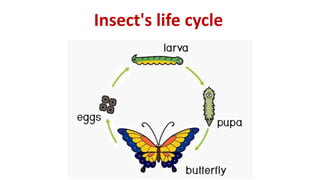
Insect's life cycle
In different type of insects it is of different types:
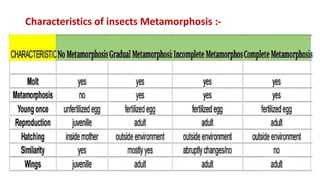
TYPES OF METAMORPHOSIS
No Metamorphosis
Gradual Metamorphosis
Incomplete Metamorphosis
Complete Metamorphosis
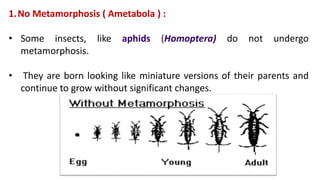
1.No Metamorphosis ( Ametabola ) :
• Some insects, like aphids (Homoptera) do not undergo
metamorphosis.
• They are born looking like miniature versions of their parents and
continue to grow without significant changes.
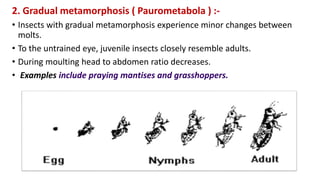
2. Gradual metamorphosis ( Paurometabola ) :-
• Insects with gradual metamorphosis experience minor changes between
molts.
• To the untrained eye, juvenile insects closely resemble adults.
• During moulting head to abdomen ratio decreases.
• Examples include praying mantises and grasshoppers.
3. Incomplete Metamorphosis ( Hemimetabola ) :-
 It is also called Abrupt metamorphosis.
 Insects pass through several nymphal stages before the nymph molts to the
winged adult.
 These insects are usually aquatic with external gills.
 The head becomes proportionately smaller and the abdomen larger with
successive molts.
 As they approach adulthood, wings appear on the back, much as they do if
the animal were to undergo gradual metamorphosis.
 Naids and adults are completely different.
4. Complete Metamorphosis ( Holometabola ) :-
 The complete form of metamorphosis involves three very different life stages
once the insect hatches from the
 egg:- larva, pupa or chrysalis , and adult or imago.
 Larvae are often worm-like and differ significantly from the adult form.
 Larva molt to form a “resting” stage called a pupa or chrysalis. This is a stage
incapable of coordinate locomotion.
 Feet, antennae, and wings (when present) are closely attached to the
animal's outer surface .
Characteristics of insects Metamorphosis :-
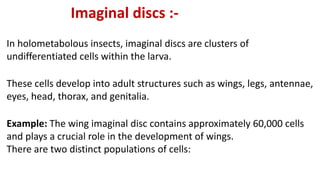
In holometabolous insects, imaginal discs are clusters of
undifferentiated cells within the larva.
These cells develop into adult structures such as wings, legs, antennae,
eyes, head, thorax, and genitalia.
Example: The wing imaginal disc contains approximately 60,000 cells
and plays a crucial role in the development of wings.
There are two distinct populations of cells:
Imaginal discs :-
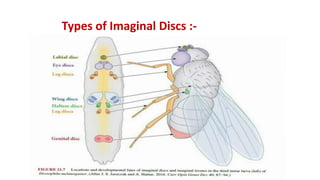
Types of Imaginal Discs :-
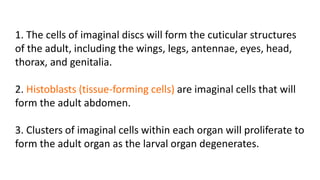
1. The cells of imaginal discs will form the cuticular structures
of the adult, including the wings, legs, antennae, eyes, head,
thorax, and genitalia.
2. Histoblasts (tissue-forming cells) are imaginal cells that will
form the adult abdomen.
3. Clusters of imaginal cells within each organ will proliferate to
form the adult organ as the larval organ degenerates.
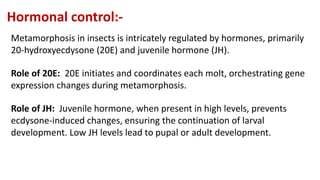
Hormonal control:-
Metamorphosis in insects is intricately regulated by hormones, primarily
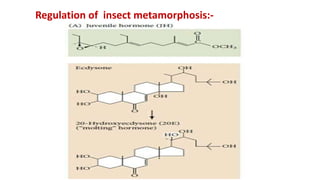
20-hydroxyecdysone (20E) and juvenile hormone (JH).
Role of 20E: 20E initiates and coordinates each molt, orchestrating gene
expression changes during metamorphosis.
Role of JH: Juvenile hormone, when present in high levels, prevents
ecdysone-induced changes, ensuring the continuation of larval
development. Low JH levels lead to pupal or adult development.
Regulation of insect metamorphosis:-
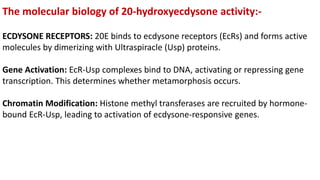
The molecular biology of 20-hydroxyecdysone activity:-
ECDYSONE RECEPTORS: 20E binds to ecdysone receptors (EcRs) and forms active
molecules by dimerizing with Ultraspiracle (Usp) proteins.
Gene Activation: EcR-Usp complexes bind to DNA, activating or repressing gene
transcription. This determines whether metamorphosis occurs.
Chromatin Modification: Histone methyl transferases are recruited by hormone-
bound EcR-Usp, leading to activation of ecdysone-responsive genes.
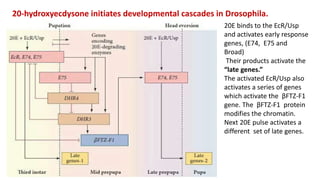
20E binds to the EcR/Usp
and activates early response
genes, (E74, E75 and
Broad)
Their products activate the
“late genes.”
The activated EcR/Usp also
activates a series of genes
which activate the βFTZ-F1
gene. The βFTZ-F1 protein
modifies the chromatin.
Next 20E pulse activates a
different set of late genes.
20-hydroxyecdysone initiates developmental cascades in Drosophila.
Determination of the wing imaginal discs :-
Process: Ecdysone signaling plays a critical role in the growth and
differentiation of imaginal discs.
One distinguishing marker for wing discs is the vestigial gene.
Example: When the vestigial gene is expressed in other imaginal discs, it
triggers wing tissue development.
Summary :-
Insect metamorphosis encompasses various types, with holometabolous insects
undergoing the most dramatic changes.
Hormonal control, particularly 20E and JH, dictates the outcome of each molt.
Ecdysone receptors and gene regulation mechanisms are essential for
metamorphosis.
Development: During the pupal stage, imaginal discs and histoblasts grow and
differentiate to shape the structures of the adult body.
Reference :-
~ Development Biology 12th edition
Michael J. F. Barresi Smith and Scott F. Gilbert
~ LinkedIn Slide Share
~ Wikipedia
https://en.m.wikipedia.org/w/index.php?title=Metamorphosis&oldid=100217682
5
~ Go to www.devbio.com for Further Developments, Watch Development
videos, Dev Tutorials.
Metamorphosis in insects ppt.pptx

Metamorphosis in insects ppt.pptx

  • 1.
    METAMORPHOSIS IN INSECTS AJourney of Transformation
  • 2.
    Submitted To :- Dr.Seema Sharma Dr. Vibha Tomar Submitted By :- Saba Parveen M.Sc Zoology ( III Semester )
  • 3.
    CONTENT :- • METAMORPHOSIS •Defination • Types of Metamorphosis • Characteristics • Imaginal Discs • Hormonal Control • Regulation • 20-hydroxyecdysone activity • Determination of the wing imaginal discs • Summary • Reference
  • 4.
    METAMORPHOSIS Defination • Metamorphosis isa remarkable biological process in insects, characterized by profound changes in their body shape, structure, and function at different stages of their life. • This transformation is entirely controlled by hormones and involves significant modifications to their physical form.
  • 5.
  • 6.
    In different typeof insects it is of different types: TYPES OF METAMORPHOSIS No Metamorphosis Gradual Metamorphosis Incomplete Metamorphosis Complete Metamorphosis
  • 7.
    1.No Metamorphosis (Ametabola ) : • Some insects, like aphids (Homoptera) do not undergo metamorphosis. • They are born looking like miniature versions of their parents and continue to grow without significant changes.
  • 8.
    2. Gradual metamorphosis( Paurometabola ) :- • Insects with gradual metamorphosis experience minor changes between molts. • To the untrained eye, juvenile insects closely resemble adults. • During moulting head to abdomen ratio decreases. • Examples include praying mantises and grasshoppers.
  • 9.
    3. Incomplete Metamorphosis( Hemimetabola ) :-  It is also called Abrupt metamorphosis.  Insects pass through several nymphal stages before the nymph molts to the winged adult.  These insects are usually aquatic with external gills.  The head becomes proportionately smaller and the abdomen larger with successive molts.  As they approach adulthood, wings appear on the back, much as they do if the animal were to undergo gradual metamorphosis.  Naids and adults are completely different.
  • 10.
    4. Complete Metamorphosis( Holometabola ) :-  The complete form of metamorphosis involves three very different life stages once the insect hatches from the  egg:- larva, pupa or chrysalis , and adult or imago.  Larvae are often worm-like and differ significantly from the adult form.  Larva molt to form a “resting” stage called a pupa or chrysalis. This is a stage incapable of coordinate locomotion.  Feet, antennae, and wings (when present) are closely attached to the animal's outer surface .
  • 12.
  • 13.
    In holometabolous insects,imaginal discs are clusters of undifferentiated cells within the larva. These cells develop into adult structures such as wings, legs, antennae, eyes, head, thorax, and genitalia. Example: The wing imaginal disc contains approximately 60,000 cells and plays a crucial role in the development of wings. There are two distinct populations of cells: Imaginal discs :-
  • 14.
  • 15.
    1. The cellsof imaginal discs will form the cuticular structures of the adult, including the wings, legs, antennae, eyes, head, thorax, and genitalia. 2. Histoblasts (tissue-forming cells) are imaginal cells that will form the adult abdomen. 3. Clusters of imaginal cells within each organ will proliferate to form the adult organ as the larval organ degenerates.
  • 16.
    Hormonal control:- Metamorphosis ininsects is intricately regulated by hormones, primarily 20-hydroxyecdysone (20E) and juvenile hormone (JH). Role of 20E: 20E initiates and coordinates each molt, orchestrating gene expression changes during metamorphosis. Role of JH: Juvenile hormone, when present in high levels, prevents ecdysone-induced changes, ensuring the continuation of larval development. Low JH levels lead to pupal or adult development.
  • 17.
    Regulation of insectmetamorphosis:-
  • 18.
    The molecular biologyof 20-hydroxyecdysone activity:- ECDYSONE RECEPTORS: 20E binds to ecdysone receptors (EcRs) and forms active molecules by dimerizing with Ultraspiracle (Usp) proteins. Gene Activation: EcR-Usp complexes bind to DNA, activating or repressing gene transcription. This determines whether metamorphosis occurs. Chromatin Modification: Histone methyl transferases are recruited by hormone- bound EcR-Usp, leading to activation of ecdysone-responsive genes.
  • 19.
    20E binds tothe EcR/Usp and activates early response genes, (E74, E75 and Broad) Their products activate the “late genes.” The activated EcR/Usp also activates a series of genes which activate the βFTZ-F1 gene. The βFTZ-F1 protein modifies the chromatin. Next 20E pulse activates a different set of late genes. 20-hydroxyecdysone initiates developmental cascades in Drosophila.
  • 20.
    Determination of thewing imaginal discs :- Process: Ecdysone signaling plays a critical role in the growth and differentiation of imaginal discs. One distinguishing marker for wing discs is the vestigial gene. Example: When the vestigial gene is expressed in other imaginal discs, it triggers wing tissue development.
  • 21.
    Summary :- Insect metamorphosisencompasses various types, with holometabolous insects undergoing the most dramatic changes. Hormonal control, particularly 20E and JH, dictates the outcome of each molt. Ecdysone receptors and gene regulation mechanisms are essential for metamorphosis. Development: During the pupal stage, imaginal discs and histoblasts grow and differentiate to shape the structures of the adult body.
  • 22.
    Reference :- ~ DevelopmentBiology 12th edition Michael J. F. Barresi Smith and Scott F. Gilbert ~ LinkedIn Slide Share ~ Wikipedia https://en.m.wikipedia.org/w/index.php?title=Metamorphosis&oldid=100217682 5 ~ Go to www.devbio.com for Further Developments, Watch Development videos, Dev Tutorials.