METAMORPHOSIS ININSECTSANDITS
TYPES
Contents
 Metamorphosis
 Ametabolous
 Gradual metamorphosis
 Compelete metamorphosis
 Incompelete metamorphosis
 Metamorphosis in insects
 Metamorphosis in Butterfly
 Harmonal control in metamorphosis
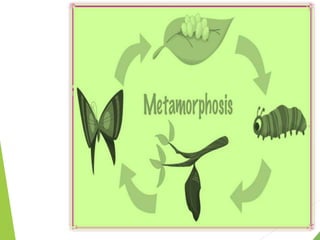
Metamorphosis
Definiti
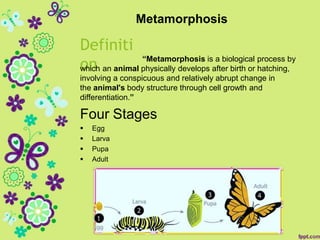
on “Metamorphosis is a biological process by
which an animal physically develops after birth or hatching,
involving a conspicuous and relatively abrupt change in
the animal's body structure through cell growth and
differentiation.”
Four Stages
 Egg
 Larva
 Pupa
 Adult
TypesOfMetamorphosis
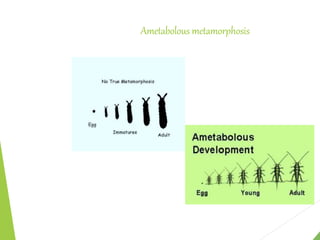
1. Ametabolous metamorphosis
• Little or no metamorphosis
• eggs immatures
• same shape as the adults.
• get bigger no distinct rearrangements of body structures .
• Immatures juveniles.
• Changes in form during growth are minor
• all immature stages resemble adults.
Examples
i. Springtail
ii. silverfish
iii. firebrats
Ametabolous metamorphosis
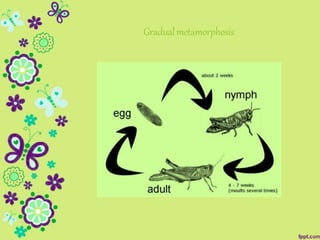
2.Gradualmetamorphosis
 Paurometabola
 Immatures are called nymphs.
 Change in form is gradual,
 obvious changes involving
 development of external wing pads
 differences in color or markings.
 Nymphs and adults generally share the same
habitat
 Examples
i. Grasshoppers
ii. crickets
iii. true bugs
Gradualmetamorphosis
Complete metamorphosis
• “In complete metamorphosis a larva completely changes its
body plan to become an adult”.
• Holometabolous
• Four stages
i. Egg
ii. Larva
iii. Pupa
iv. Adult
 Immatures are called larvae and pupae.
 Larvae do not resemble adults.
 Wings and other adult features ….an immobile pupal stage
 Immatures and adults may or may not share habitats
 Immatures are adapted for feeding
 adults are adapted for reproduction and dispersal.
 Butterflies, moths, beetles, flies, ants, bees and wasps
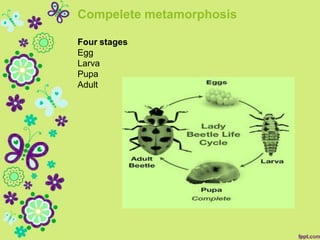
Compelete metamorphosis
Four stages
Egg
Larva
Pupa
Adult
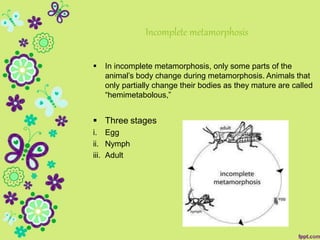
Incomplete metamorphosis
 In incomplete metamorphosis, only some parts of the
animal’s body change during metamorphosis. Animals that
only partially change their bodies as they mature are called
“hemimetabolous,”
 Three stages
i. Egg
ii. Nymph
iii. Adult
Incompletemetamorphosis
 Immatures are called naiads.
 Immatures do not closely resemble adults
 naiads have tracheal gills.
 transition to adult form is gradual
 Nymphs and adults dwell in different habitats.
Examples
Mayflies ,dragonflies ,damselflies and stoneflies
Metamorphosis in butterfly
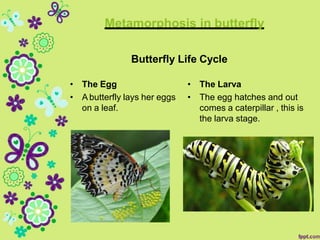
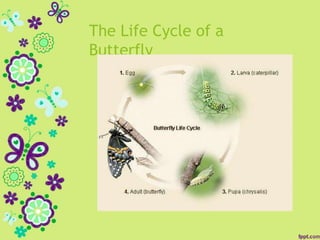
Butterfly Life Cycle
• The Egg
• A butterfly lays her eggs
on a leaf.
• The Larva
• The egg hatches and out
comes a caterpillar , this is
the larva stage.
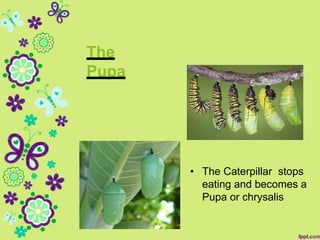
The
Pupa
• The Caterpillar stops
eating and becomes a
Pupa or chrysalis
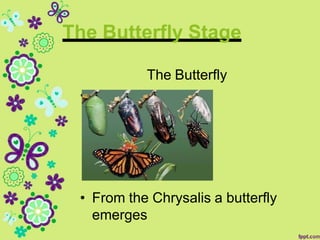
The Butterfly Stage
The Butterfly
• Hhh
• From the Chrysalis a butterfly
emerges
The Life Cycle of a
Butterfly
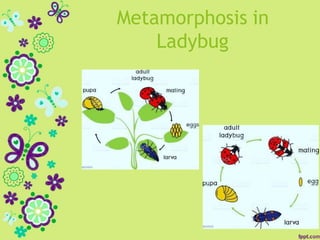
Metamorphosis in
Ladybug
Metamorphosis in
insects
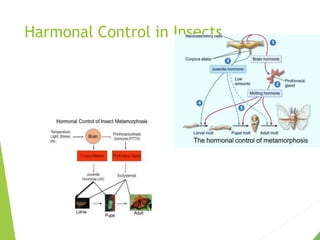
Insect molting and metamorphosis are controlled by two
effector hormones: the steroid 20-hydroxyecdysone and the lipid
juvenile hormone (JH)
 in immature insects Corpora allata ………….juvnile
hormone
 inhibits the genes ,promote development of adult
 causing the insect to remain "immature"
 The corpora allata shrink during the last larval or
nymphal instar
 stop producing juvenile hormone. and causes the
insect to molt into an adult (hemimetabolous) or a
pupa (holometabolous).
 approach of sexual maturity
 brain neurosecretory cells
 brain hormone "reactivates" the corpora allata
 • juvenile hormone.
Cont.
.
 In adult females , stimulates production of
yolk for the eggs.
 In adult males ,stimulates the accessory
glands to produce proteins needed for
seminal fluid and the case of the
spermatophore.
 In the absence of normal juvenile hormone
production, the adult remains sexually
sterile
20-
hydroxyecdysone
 20-hydroxyecdysone initiates and coordinates each molt and
regulates the changes in gene expression that occur during
metamorphosis.
Harmonal Control in Insects

insect 1).pptx

  • 2.
    METAMORPHOSIS ININSECTSANDITS TYPES Contents  Metamorphosis Ametabolous  Gradual metamorphosis  Compelete metamorphosis  Incompelete metamorphosis  Metamorphosis in insects  Metamorphosis in Butterfly  Harmonal control in metamorphosis
  • 3.
    Metamorphosis Definiti on “Metamorphosis isa biological process by which an animal physically develops after birth or hatching, involving a conspicuous and relatively abrupt change in the animal's body structure through cell growth and differentiation.” Four Stages  Egg  Larva  Pupa  Adult
  • 4.
    TypesOfMetamorphosis 1. Ametabolous metamorphosis •Little or no metamorphosis • eggs immatures • same shape as the adults. • get bigger no distinct rearrangements of body structures . • Immatures juveniles. • Changes in form during growth are minor • all immature stages resemble adults. Examples i. Springtail ii. silverfish iii. firebrats
  • 5.
  • 6.
    2.Gradualmetamorphosis  Paurometabola  Immaturesare called nymphs.  Change in form is gradual,  obvious changes involving  development of external wing pads  differences in color or markings.  Nymphs and adults generally share the same habitat  Examples i. Grasshoppers ii. crickets iii. true bugs
  • 7.
  • 8.
    Complete metamorphosis • “Incomplete metamorphosis a larva completely changes its body plan to become an adult”. • Holometabolous • Four stages i. Egg ii. Larva iii. Pupa iv. Adult  Immatures are called larvae and pupae.  Larvae do not resemble adults.  Wings and other adult features ….an immobile pupal stage  Immatures and adults may or may not share habitats  Immatures are adapted for feeding  adults are adapted for reproduction and dispersal.  Butterflies, moths, beetles, flies, ants, bees and wasps
  • 9.
  • 10.
    Incomplete metamorphosis  Inincomplete metamorphosis, only some parts of the animal’s body change during metamorphosis. Animals that only partially change their bodies as they mature are called “hemimetabolous,”  Three stages i. Egg ii. Nymph iii. Adult
  • 11.
    Incompletemetamorphosis  Immatures arecalled naiads.  Immatures do not closely resemble adults  naiads have tracheal gills.  transition to adult form is gradual  Nymphs and adults dwell in different habitats. Examples Mayflies ,dragonflies ,damselflies and stoneflies
  • 12.
    Metamorphosis in butterfly ButterflyLife Cycle • The Egg • A butterfly lays her eggs on a leaf. • The Larva • The egg hatches and out comes a caterpillar , this is the larva stage.
  • 13.
    The Pupa • The Caterpillarstops eating and becomes a Pupa or chrysalis
  • 14.
    The Butterfly Stage TheButterfly • Hhh • From the Chrysalis a butterfly emerges
  • 15.
    The Life Cycleof a Butterfly
  • 16.
  • 17.
    Metamorphosis in insects Insect moltingand metamorphosis are controlled by two effector hormones: the steroid 20-hydroxyecdysone and the lipid juvenile hormone (JH)  in immature insects Corpora allata ………….juvnile hormone  inhibits the genes ,promote development of adult  causing the insect to remain "immature"  The corpora allata shrink during the last larval or nymphal instar  stop producing juvenile hormone. and causes the insect to molt into an adult (hemimetabolous) or a pupa (holometabolous).  approach of sexual maturity  brain neurosecretory cells  brain hormone "reactivates" the corpora allata  • juvenile hormone.
  • 18.
    Cont. .  In adultfemales , stimulates production of yolk for the eggs.  In adult males ,stimulates the accessory glands to produce proteins needed for seminal fluid and the case of the spermatophore.  In the absence of normal juvenile hormone production, the adult remains sexually sterile
  • 19.
    20- hydroxyecdysone  20-hydroxyecdysone initiatesand coordinates each molt and regulates the changes in gene expression that occur during metamorphosis.
  • 20.