Metal Stud Partitions -
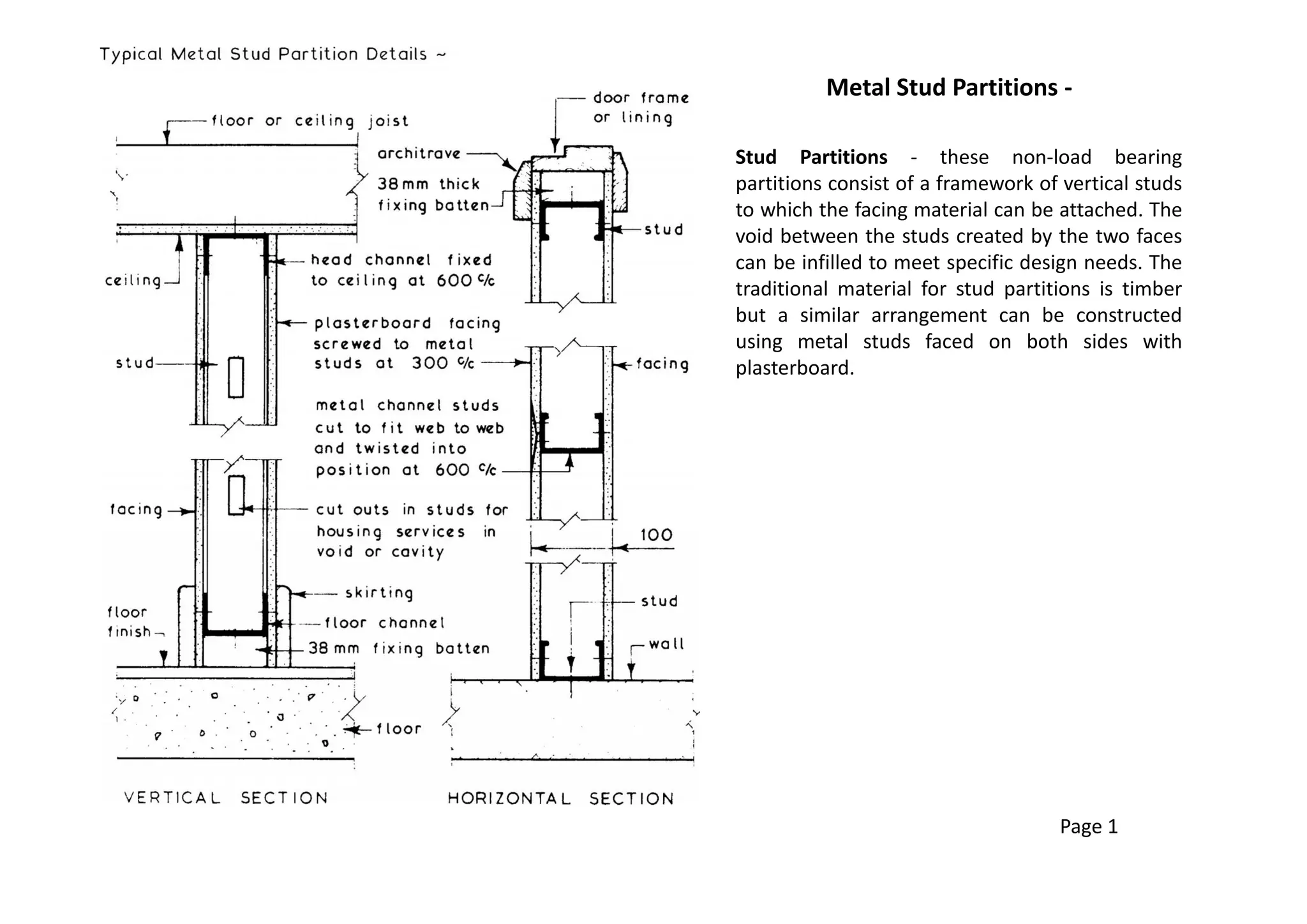
Stud Partitions - these non-load bearing
partitions consist of a framework of vertical studs
to which the facing material can be attached. The
void between the studs created by the two faces
can be infilled to meet specific design needs. The
traditional material for stud partitions is timber
but a similar arrangement can be constructed
using metal studs faced on both sides with
plasterboard.
Page 1
Stud Partitions -- Fire Protection
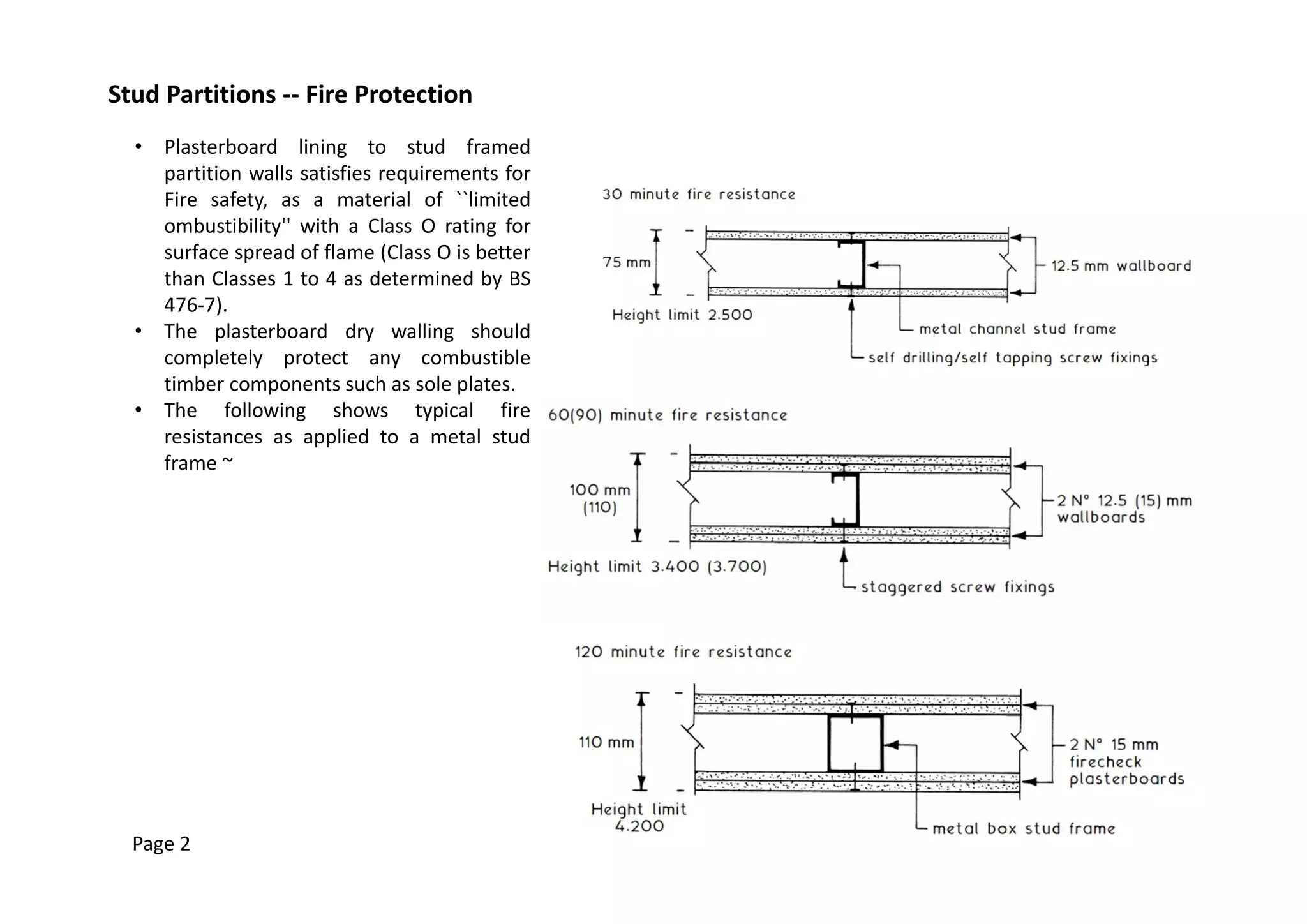
• Plasterboard lining to stud framed
partition walls satisfies requirements for
Fire safety, as a material of ``limited
ombustibility'' with a Class O rating for
surface spread of flame (Class O is better
than Classes 1 to 4 as determined by BS
476-7).
• The plasterboard dry walling should
completely protect any combustible
timber components such as sole plates.
• The following shows typical fire
resistances as applied to a metal stud
frame ~
Page 2
Demountable Partitions
Partitions ~
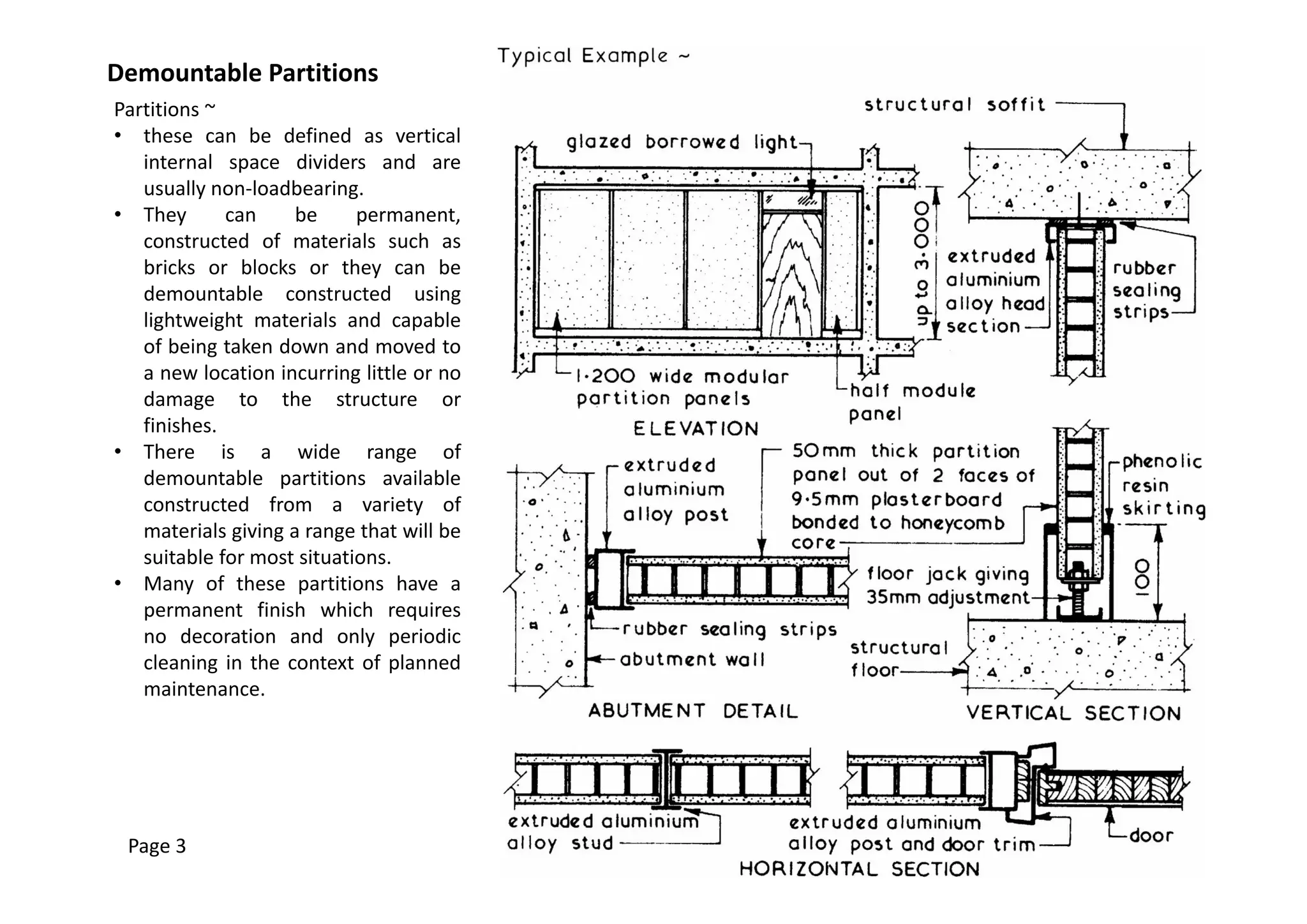
• these can be defined as vertical
internal space dividers and are
usually non-loadbearing.
• They can be permanent,
constructed of materials such as
bricks or blocks or they can be
demountable constructed using
lightweight materials and capable
of being taken down and moved to
a new location incurring little or no
damage to the structure or
finishes.
• There is a wide range of
demountable partitions available
constructed from a variety of
materials giving a range that will be
suitable for most situations.
• Many of these partitions have a
permanent finish which requires
no decoration and only periodic
cleaning in the context of planned
maintenance.
Page 3
Demountable Partitions ~
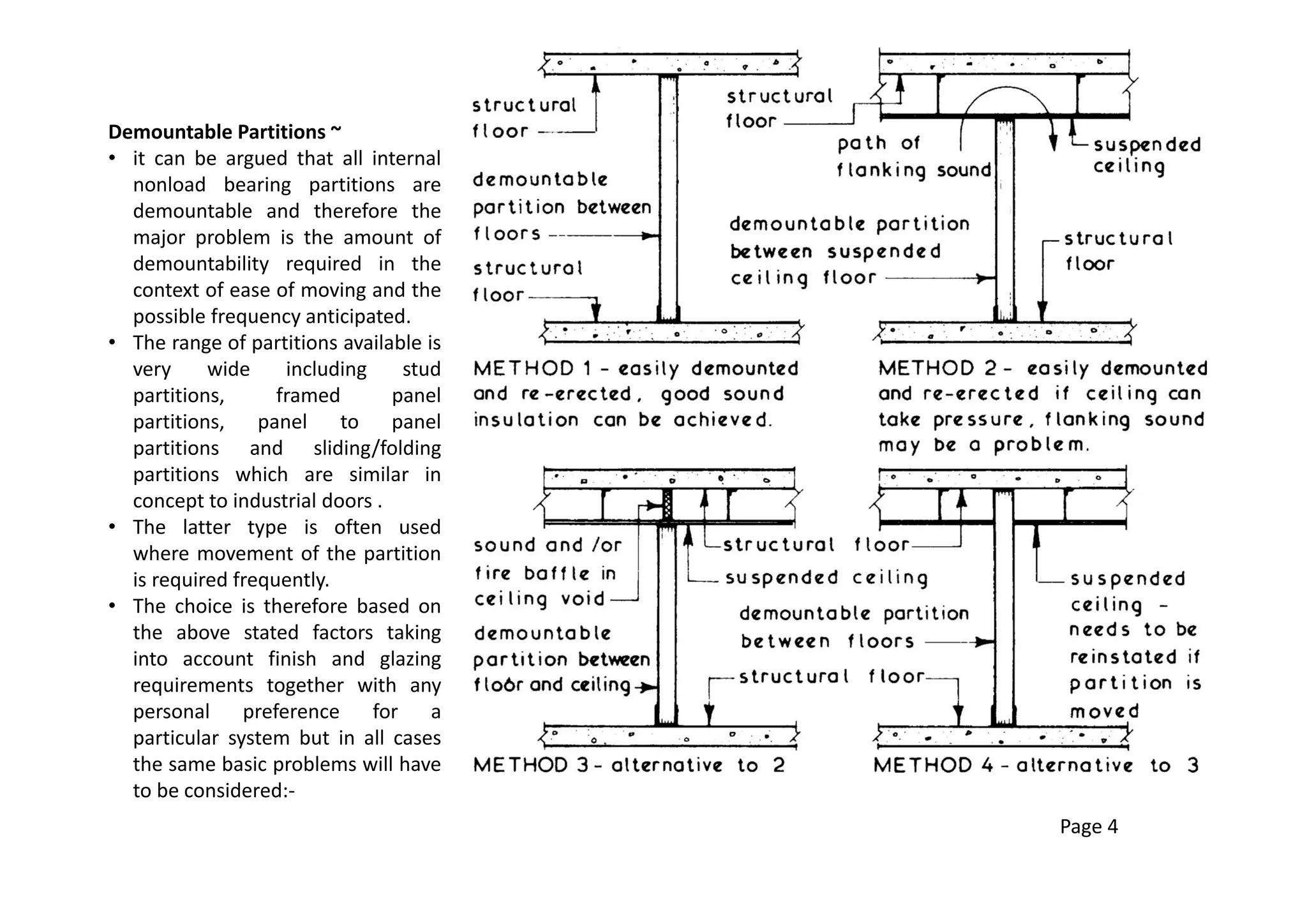
• it can be argued that all internal
nonload bearing partitions are
demountable and therefore the
major problem is the amount of
demountability required in the
context of ease of moving and the
possible frequency anticipated.
• The range of partitions available is
very wide including stud
partitions, framed panel
partitions, panel to panel
partitions and sliding/folding
partitions which are similar in
concept to industrial doors .
• The latter type is often used
where movement of the partition
is required frequently.
• The choice is therefore based on
the above stated factors taking
into account finish and glazing
requirements together with any
personal preference for a
particular system but in all cases
the same basic problems will have
to be considered:-
Page 4
Page 5
Reference - Chudley and Greeno's Building Construction Handbook

Metal stud partition.pdf

  • 1.
    Metal Stud Partitions- Stud Partitions - these non-load bearing partitions consist of a framework of vertical studs to which the facing material can be attached. The void between the studs created by the two faces can be infilled to meet specific design needs. The traditional material for stud partitions is timber but a similar arrangement can be constructed using metal studs faced on both sides with plasterboard. Page 1
  • 2.
    Stud Partitions --Fire Protection • Plasterboard lining to stud framed partition walls satisfies requirements for Fire safety, as a material of ``limited ombustibility'' with a Class O rating for surface spread of flame (Class O is better than Classes 1 to 4 as determined by BS 476-7). • The plasterboard dry walling should completely protect any combustible timber components such as sole plates. • The following shows typical fire resistances as applied to a metal stud frame ~ Page 2
  • 3.
    Demountable Partitions Partitions ~ •these can be defined as vertical internal space dividers and are usually non-loadbearing. • They can be permanent, constructed of materials such as bricks or blocks or they can be demountable constructed using lightweight materials and capable of being taken down and moved to a new location incurring little or no damage to the structure or finishes. • There is a wide range of demountable partitions available constructed from a variety of materials giving a range that will be suitable for most situations. • Many of these partitions have a permanent finish which requires no decoration and only periodic cleaning in the context of planned maintenance. Page 3
  • 4.
    Demountable Partitions ~ •it can be argued that all internal nonload bearing partitions are demountable and therefore the major problem is the amount of demountability required in the context of ease of moving and the possible frequency anticipated. • The range of partitions available is very wide including stud partitions, framed panel partitions, panel to panel partitions and sliding/folding partitions which are similar in concept to industrial doors . • The latter type is often used where movement of the partition is required frequently. • The choice is therefore based on the above stated factors taking into account finish and glazing requirements together with any personal preference for a particular system but in all cases the same basic problems will have to be considered:- Page 4
  • 5.
    Page 5 Reference -Chudley and Greeno's Building Construction Handbook