Fadhila Al-Busaidi
Family medicine resident – R4
52 yrs old lady.
k/c/o feeling hot most of the time ,
No change in her weight , no change in bowel habits,
She does not have peroid for 14months.
Also she feels depressed sometimes
Her husband died 3years back , no sexaul relationship.
Definitions.
Perimenopause.
Menopause.
Postmenopause.
Menopausal Symptoms.
Laboratory investigations.
Management.
Take home massage.
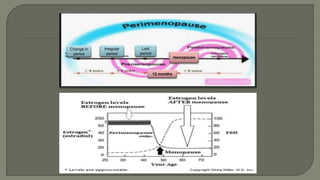
Perimenopause:
>40yrs, woman has irregular cycles of ovulation and
menstruation leading up to menopause and continuing
until 12 months after her final period.
The perimenopauseis also known as the menopausal
transition or climacteric.
Menopause:
12 months amenorrhea, with no other cause in women
>50yrs OR >24 months amenorrhea in women <50 yrs.
Postmenopause:
 The time after menopause has occurred, starting when a
woman has not had a period for 12 consecutive months.
Last
period
Irregular
period
Change in
period
menopause
12 months
vasomotor symptoms (hot flushes and sweats)
musculoskeletal symptoms (joint and muscle pain)
effects on mood (low mood)
urogenital symptoms (vaginal dryness, UTI)
sexual difficulties (low sexual desire).
 Diagnose the following without laboratory tests in otherwise
healthy women aged over 45 years with menopausal
symptoms:
 perimenopause based on vasomotor symptoms and irregular
periods
 menopause in women who have not had a period for at least
12 months and are not using hormonal contraception
 menopause based on symptoms in women without a uterus.
Don’t use FSH test to diagnose menopause in women
using COC or high-dose progestogen.
Consider using a FSH test to diagnose menopause only:
in women aged 40 to 45 years with menopausal symptoms, including
a change in their menstrual cycle
in women aged < 40 years in whom menopause is suspected
it can be difficult to diagnose menopause in women who
are taking hormonal treatments,
One small study found that a rise in FSH without a
change in estradiol levels 2wks after stopping COC is
evidence that it is safe to transition to HRT.
Others suggest discontinuation of COC when women are
in their mid-50s because spontaneous conception is rare
at this age.
AAFP
Offer women HRT for vasomotor symptoms. short-term
(up to 5 years):
oestrogen and progestogen to women with a uterus.
oestrogen alone to women without a uterus.
Do not routinely offer (SSRIs), (SNRIs) or clonidine as
first-line treatment for vasomotor symptoms alone.
Low-dose paroxetine (Brisdelle) is the only non-hormonal
medication approved by the FDA to treat hot flashes.
AAFP
clinical hypnosis (five 45-minute sessions weekly) has
been shown to reduce hot flashes by 74%, compared with
a 17% reduction in patients who received only education
and encouragement.
there is no high-quality, consistent evidence that black
cohosh, many botanical products, and omega-3 fatty acid
supplements are effective for treating hot flashes.
Yoga, paced respiration, acupuncture, exercise, stress
reduction, and relaxation therapy also have not been
proven to alleviate hot flashes.
AAFP
lowering the ambient temperature;
using fans;
exercising;
avoiding triggers, such as alcohol and spicy foods
Although some women may prefer lifestyle modification,
there is no evidence for it to improves hot flashes.
AAFP
Consider HRT to alleviate low mood that arises as a result
of the menopause.
 Consider CBT to alleviate low mood or anxiety that arise
as a result of the menopause.
No clear evidence for SSRIs or SNRIs to ease low mood
in menopausal women who have not been diagnosed with
depression
Consider testosterone supplementation for menopausal
women with low sexual desire if HRT alone is not
effective.
Offer vaginal oestrogen to women with urogenital atrophy
(including those on systemic HRT) and continue treatment
for as long as needed to relieve symptoms.
If vaginal oestrogen does not relieve symptoms of
urogenital atrophy, consider increasing the dose.
Explain to women with urogenital atrophy that:
symptoms often come back when treatment is stopped
adverse effects from vaginal oestrogen are very rare
they should report unscheduled vaginal bleeding to their GP.
moisturisers and lubricants can be used alone or in
addition to vaginal oestrogen.
Do not offer routine monitoring of endometrial thickness
during treatment for urogenital atrophy. NICE
Clinicians should consider an endometrial biopsy and/or
transvaginal ultrasonography if spotting or bleeding occurs
while using low-dose vaginal estrogen.
AAFP
gradually reducing HRT may limit recurrence of symptoms
in the short term
gradually reducing or immediately stopping HRT makes
no difference to their symptoms in the longer term.
Cardiovascular disease.
Venous thromboembolism. (oral > transdermal )
Breast cancer. (HRT with oestrogen and progestogen)
Prevent Osteoporosis. (effect decreases once treatment stops)
HRT does not increase cardiovascular disease risk when
started in women aged < 60 years.
Be aware that the presence of cardiovascular risk factors
is not a contraindication to HRT as long as they are
optimally managed.
 the baseline risk of coronary heart disease and stroke for
women around menopausal age varies from one woman to
another according to the presence of cardiovascular risk
factors
 HRT with oestrogen alone is associated with no, or reduced,
risk of coronary heart disease
 HRT with oestrogen and progestogen is associated with little
or no increase in the risk of coronary heart disease.
Women that taking oral (but not transdermal) oestrogen is
associated with a small increase in the risk of stroke.
The baseline population risk of stroke in women aged <
60 years is very low.
FSH should not be done routinely in the diagnosis of
menopause in women aged > 45 years.
FSH should not be used to diagnose menopause in those
taking COC or POP because these affect FSH
measurements.
NICE. 12 November 2015
RCOG.
AAFP.

Menopause

  • 1.
  • 2.
    52 yrs oldlady. k/c/o feeling hot most of the time , No change in her weight , no change in bowel habits, She does not have peroid for 14months. Also she feels depressed sometimes Her husband died 3years back , no sexaul relationship.
  • 3.
  • 4.
    Perimenopause: >40yrs, woman hasirregular cycles of ovulation and menstruation leading up to menopause and continuing until 12 months after her final period. The perimenopauseis also known as the menopausal transition or climacteric.
  • 5.
    Menopause: 12 months amenorrhea,with no other cause in women >50yrs OR >24 months amenorrhea in women <50 yrs.
  • 6.
    Postmenopause:  The timeafter menopause has occurred, starting when a woman has not had a period for 12 consecutive months.
  • 7.
  • 8.
    vasomotor symptoms (hotflushes and sweats) musculoskeletal symptoms (joint and muscle pain) effects on mood (low mood) urogenital symptoms (vaginal dryness, UTI) sexual difficulties (low sexual desire).
  • 9.
     Diagnose thefollowing without laboratory tests in otherwise healthy women aged over 45 years with menopausal symptoms:  perimenopause based on vasomotor symptoms and irregular periods  menopause in women who have not had a period for at least 12 months and are not using hormonal contraception  menopause based on symptoms in women without a uterus.
  • 10.
    Don’t use FSHtest to diagnose menopause in women using COC or high-dose progestogen. Consider using a FSH test to diagnose menopause only: in women aged 40 to 45 years with menopausal symptoms, including a change in their menstrual cycle in women aged < 40 years in whom menopause is suspected
  • 11.
    it can bedifficult to diagnose menopause in women who are taking hormonal treatments,
  • 12.
    One small studyfound that a rise in FSH without a change in estradiol levels 2wks after stopping COC is evidence that it is safe to transition to HRT. Others suggest discontinuation of COC when women are in their mid-50s because spontaneous conception is rare at this age. AAFP
  • 13.
    Offer women HRTfor vasomotor symptoms. short-term (up to 5 years): oestrogen and progestogen to women with a uterus. oestrogen alone to women without a uterus. Do not routinely offer (SSRIs), (SNRIs) or clonidine as first-line treatment for vasomotor symptoms alone.
  • 14.
    Low-dose paroxetine (Brisdelle)is the only non-hormonal medication approved by the FDA to treat hot flashes. AAFP
  • 15.
    clinical hypnosis (five45-minute sessions weekly) has been shown to reduce hot flashes by 74%, compared with a 17% reduction in patients who received only education and encouragement.
  • 16.
    there is nohigh-quality, consistent evidence that black cohosh, many botanical products, and omega-3 fatty acid supplements are effective for treating hot flashes. Yoga, paced respiration, acupuncture, exercise, stress reduction, and relaxation therapy also have not been proven to alleviate hot flashes. AAFP
  • 17.
    lowering the ambienttemperature; using fans; exercising; avoiding triggers, such as alcohol and spicy foods Although some women may prefer lifestyle modification, there is no evidence for it to improves hot flashes. AAFP
  • 18.
    Consider HRT toalleviate low mood that arises as a result of the menopause.  Consider CBT to alleviate low mood or anxiety that arise as a result of the menopause. No clear evidence for SSRIs or SNRIs to ease low mood in menopausal women who have not been diagnosed with depression
  • 19.
    Consider testosterone supplementationfor menopausal women with low sexual desire if HRT alone is not effective.
  • 20.
    Offer vaginal oestrogento women with urogenital atrophy (including those on systemic HRT) and continue treatment for as long as needed to relieve symptoms. If vaginal oestrogen does not relieve symptoms of urogenital atrophy, consider increasing the dose.
  • 21.
    Explain to womenwith urogenital atrophy that: symptoms often come back when treatment is stopped adverse effects from vaginal oestrogen are very rare they should report unscheduled vaginal bleeding to their GP. moisturisers and lubricants can be used alone or in addition to vaginal oestrogen.
  • 22.
    Do not offerroutine monitoring of endometrial thickness during treatment for urogenital atrophy. NICE Clinicians should consider an endometrial biopsy and/or transvaginal ultrasonography if spotting or bleeding occurs while using low-dose vaginal estrogen. AAFP
  • 23.
    gradually reducing HRTmay limit recurrence of symptoms in the short term gradually reducing or immediately stopping HRT makes no difference to their symptoms in the longer term.
  • 24.
    Cardiovascular disease. Venous thromboembolism.(oral > transdermal ) Breast cancer. (HRT with oestrogen and progestogen) Prevent Osteoporosis. (effect decreases once treatment stops)
  • 25.
    HRT does notincrease cardiovascular disease risk when started in women aged < 60 years. Be aware that the presence of cardiovascular risk factors is not a contraindication to HRT as long as they are optimally managed.
  • 26.
     the baselinerisk of coronary heart disease and stroke for women around menopausal age varies from one woman to another according to the presence of cardiovascular risk factors  HRT with oestrogen alone is associated with no, or reduced, risk of coronary heart disease  HRT with oestrogen and progestogen is associated with little or no increase in the risk of coronary heart disease.
  • 27.
    Women that takingoral (but not transdermal) oestrogen is associated with a small increase in the risk of stroke. The baseline population risk of stroke in women aged < 60 years is very low.
  • 28.
    FSH should notbe done routinely in the diagnosis of menopause in women aged > 45 years. FSH should not be used to diagnose menopause in those taking COC or POP because these affect FSH measurements.
  • 29.
    NICE. 12 November2015 RCOG. AAFP.