Mee$ng	
  User	
  Needs	
  &	
  Expecta$ons:	
  
A	
  Library’s	
  Quest	
  for	
  Discovery	
  
A	
  follow-­‐up	
  to	
  Taylor	
  &	
  Francis’	
  White	
  Paper	
  
Elyse	
  Profera	
  
Associate	
  Library	
  Marke4ng	
  Manager	
  

An	
  Unlikely	
  Ecosystem:	
  A	
  Poten?al	
  Research	
  Trove	
  
Jackie	
  Shieh	
  
Coordinator,	
  Resource	
  Descrip4on	
  Group	
  

1
A	
  lot	
  to	
  discuss	
  in	
  30	
  minutes	


• 
• 
• 
• 
• 

Research	
  objec4ves	
  	
  
Highlights	
  of	
  research	
  results	
  	
  
Key	
  themes	
  &	
  takeaways	
  
GWU	
  case	
  study	
  	
  
Ques4ons	


2
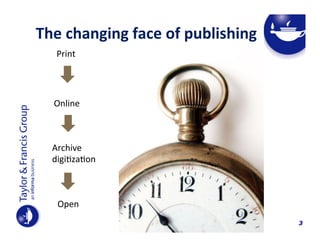
The	
  changing	
  face	
  of	
  publishing	
  
Print	
  

Online	
  

Archive	
  
digi4za4on	
  

Open	
  
3


  Adaptable	
  and	
  transparent	


“Libraries	
  have	
  tradi.onally	
  offered	
  the	
  ‘convenience,	
  immediacy,	
  	
  
and	
  direct	
  access	
  to	
  a	
  wealth	
  of	
  content’	
  that	
  would	
  have	
  been	
  otherwise	
  
unavailable	
  to	
  the	
  consumer.	
  In	
  the	
  digital	
  environment,	
  libraries	
  struggle	
  to	
  
maintain	
  a	
  primary	
  role.	
  New	
  expecta.ons,	
  advanced	
  technologies,	
  	
  
and	
  market	
  innova.ons	
  are	
  evolving	
  faster	
  than	
  libraries	
  can	
  reasonably	
  
compete	
  with,	
  since	
  resource	
  limita.ons,	
  reduced	
  staffing,	
  and	
  conflic.ng	
  
priori.es	
  inhibit	
  libraries’	
  technological	
  agility.”	


  Lisa	
  Carlucci	
  Thomas,	
  “Subscrip?ons	
  Are	
  Us:	
  Content,	
  Access	
  and	
  
	
  Collec?ons,”	
  Journal	
  of	
  Web	
  Librarianship,	
  v6i1,	
  2012.	


4
Research	
  objec$ves	


•  To	
  further	
  understand	
  
how	
  and	
  why	
  libraries	
  
are	
  making	
  changes	
  	
  to	
  
their	
  user	
  interfaces	
  and	
  
cataloging	
  systems	


•  To	
  iden4fy	
  the	
  ways	
  	
  
librarians	
  conduct	
  
research	
  to	
  understand	
  
their	
  end-­‐users	
  needs	
  
•  Determine	
  how	
  
publishers	
  can	
  help	
  with	
  
discovery	
  in	
  the	
  library	


5


  Research	
  methodology	


•  Ini4al	
  research	
  produced	
  for	
  2013	
  
White	
  Paper,	
  specifically:	
  
•  Online	
  survey	
  (500+	
  
responses)	


•  Follow-­‐up	
  global	
  online	
  survey	
  to	
  
source	
  quan4ta4ve	
  research	
  (420+	
  
responses)	
  	
  
•  Twi_er	
  Party	
  to	
  facilitate	
  dialogue	
  
with	
  librarians	
  and	
  source	
  addi4onal	
  
qualita4ve	
  research	
  	
  
6


  Paid	
  vs.	
  free	
  content,	
  why?	


f	
  paid-­‐
	
  o
th	
  lots l	
  right	
  
i
rary	
  w ry	
  goa
	
  lib
n	
  
a	
  new our	
  prima
	
  we	
  ca
“As	
  
t
	
  so	
  tha
ntent	
  
	
  it
for	
  co
omote
r


  is	
  to	
  p 	
  investment are	
  also	
  
now
	
  on	
  the owever	
  we	
   ces	
  on	
  
r
report ness,	
  h
	
  resou y
e
ffec.v romote	
  free F	
  surve
e
p
ing	
  to	
   ibrarian,	
  T&
try
eb.”	
  L
the	
  w

“I	
  believe	
  t
hat	
  a	
  lot	
  o
f	
  free	
  
online	
  con
tent	
  is	
  acc
essed	
  
through	
  G
oogle	
  and	
  
social	
  
networks.	
  
Scholarly	
  
content	
  is	
  
another	
  m
aJer,	
  
though,	
  an
d	
  I
two	
  conten 	
  think	
  the	
  
t	
  types	
  sho
uld	
  
be	
  handled
	
  differently
.”	
  
Librarian,	
  
T&F	
  surve
y	
  
7


  User	
  interfaces	


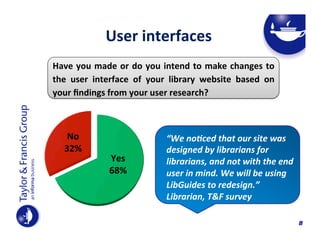
Have	
  you	
  made	
  or	
  do	
  you	
  intend	
  to	
  make	
  changes	
  to	
  
the	
   user	
   interface	
   of	
   your	
   library	
   website	
   based	
   on	
  
your	
  findings	
  from	
  your	
  user	
  research?	
  

No	
  
32%	
  

Yes	
  
68%	
  

“We	
  no?ced	
  that	
  our	
  site	
  was	
  
designed	
  by	
  librarians	
  for	
  
librarians,	
  and	
  not	
  with	
  the	
  end	
  
user	
  in	
  mind.	
  We	
  will	
  be	
  using	
  
LibGuides	
  to	
  redesign.”	
  
Librarian,	
  T&F	
  survey	
  	
  
8


  User	
  interfaces	


0%	
  

10%	
   20%	
   30%	
   40%	
   50%	
   60%	
   70%	
   80%	
   90%	
   100%	
  

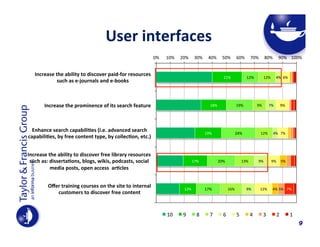
Increase	
  the	
  ability	
  to	
  discover	
  paid-­‐for	
  resources	
  
such	
  as	
  e-­‐journals	
  and	
  e-­‐books	
  

12%	
  

21%	
  

Increase	
  the	
  prominence	
  of	
  its	
  search	
  feature	
  

19%	
  

18%	
  

Enhance	
  search	
  capabili$es	
  (i.e.	
  advanced	
  search	
  
capabili$es,	
  by	
  free	
  content	
  type,	
  by	
  collec$on,	
  etc.)	
  
Increase	
  the	
  ability	
  to	
  discover	
  free	
  library	
  resources	
  
such	
  as:	
  disserta$ons,	
  blogs,	
  wikis,	
  podcasts,	
  social	
  
media	
  posts,	
  open	
  access	
  	
  ar$cles	
  

20%	
  

17%	
  

Offer	
  training	
  courses	
  on	
  the	
  site	
  to	
  internal	
  
customers	
  to	
  discover	
  free	
  content	
  

17%	
  

12%	
  

10	
  

9	
  

8	
  

7	
  

9%	
  

24%	
  

19%	
  

6	
  

9%	
  

9%	
  

5	
  

4	
  

4%	
   6%	
  

7%	
  

12%	
  

13%	
  

16%	
  

12%	
  

12%	
  

3	
  

9%	
  

4%	
   7%	
  

9%	
   5%	
  

4%	
  5%	
   7%	
  

2	
  

1	
  
9


  User	
  interfaces	


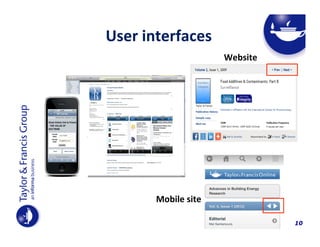
Website	


Mobile	
  site	
  	
  
10


  Promo$on	
  to	
  library	
  end-­‐users	
  
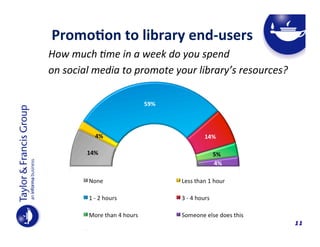
How	
  much	
  .me	
  in	
  a	
  week	
  do	
  you	
  spend	
  	
  
on	
  social	
  media	
  to	
  promote	
  your	
  library’s	
  resources?	
  

11
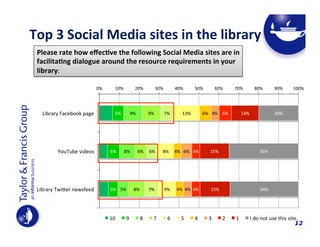
Top	
  3	
  Social	
  Media	
  sites	
  in	
  the	
  library	
  
Please	
  rate	
  how	
  effec$ve	
  the	
  following	
  Social	
  Media	
  sites	
  are	
  in	
  	
  
facilita$ng	
  dialogue	
  around	
  the	
  resource	
  requirements	
  in	
  your	
  
library:	
  
0%	
  

Library	
  Facebook	
  page	
  

YouTube	
  videos	
  

Library	
  Twi_er	
  newsfeed	
  

10%	
  

20%	
  

6%	
  

6%	
  

9%	
  

8%	
  

5%	
   5%	
  

10	
  

9	
  

30%	
  

9%	
  

6%	
   6%	
  

8%	
  

8	
  

7%	
  

7	
  

40%	
  

7%	
  

50%	
  

13%	
  

60%	
  

70%	
  

6%	
   4%	
   6%	
  

80%	
  

14%	
  

90%	
  

100%	
  

20%	
  

8%	
   4%	
   6%	
   4%	
  

15%	
  

35%	
  

9%	
  

15%	
  

34%	
  

6	
  

4%	
   4%	
   4%	
  

5	
  

4	
  

3	
  

2	
  

1	
  

I	
  do	
  not	
  use	
  this	
  site.	
  
12
Twi_er	
  to	
  promote	
  content	
  
TWITTER	
  

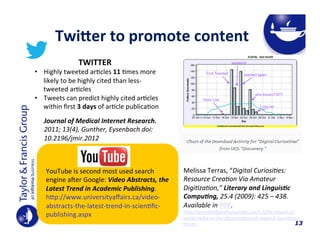
•  Highly	
  tweeted	
  ar4cles	
  11	
  4mes	
  more	
  
likely	
  to	
  be	
  highly	
  cited	
  than	
  less-­‐
tweeted	
  ar4cles	
  
•  Tweets	
  can	
  predict	
  highly	
  cited	
  ar4cles	
  
within	
  first	
  3	
  days	
  of	
  ar4cle	
  publica4on	
  
Journal	
  of	
  Medical	
  Internet	
  Research.	
  
2011;	
  13(4),	
  Gunther,	
  Eysenbach	
  doi:
10.2196/jmir.2012	
  

YouTube	
  is	
  second	
  most	
  used	
  search	
  
engine	
  ager	
  Google:	
  Video	
  Abstracts,	
  the	
  
Latest	
  Trend	
  in	
  Academic	
  Publishing.	
  
h_p://www.universityaffairs.ca/video-­‐
abstracts-­‐the-­‐latest-­‐trend-­‐in-­‐scien4fic-­‐
publishing.aspx	


Melissa	
  Terras,	
  “Digital	
  Curiosi.es:	
  
Resource	
  Crea.on	
  Via	
  Amateur	
  
Digi.za.on,”	
  Literary	
  and	
  Linguis?c	
  
Compu?ng,	
  25.4	
  (2009):	
  425	
  –	
  438.	
  
Available	
  in	
  PDF.	
  

h_p://journalofdigitalhumani4es.org/1-­‐3/the-­‐impact-­‐of-­‐
social-­‐media-­‐on-­‐the-­‐dissemina4on-­‐of-­‐research-­‐by-­‐melissa-­‐
13
terras/	


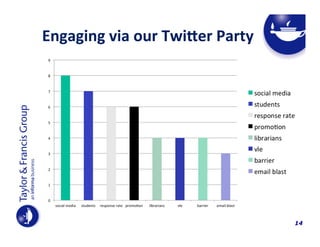
  Engaging	
  via	
  our	
  Twi_er	
  Party	


14
15


  Twi_er	
  Party	
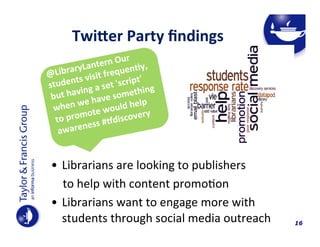
  findings	


rn	
  Our ly,	
  
te
aryLan frequent
@Libr 	
  visit	
  
'	
  
udents 	
  a	
  set	
  'script 	
  
st
having e	
  something
but	
  
we	
  hav uld	
  help	
  
when	
  
o
mote	
  w iscovery	
  	
  
to	
  pro ss	
  #dd
e
waren
a


•  Librarians	
  are	
  looking	
  to	
  publishers	


  to	
  help	
  with	
  content	
  promo4on	
  
•  Librarians	
  want	
  to	
  engage	
  more	
  with	
  
students	
  through	
  social	
  media	
  outreach	


16
Research	
  takeaways	
  
•  Free	
  content	
  holds	
  value,	
  
paid	
  content	
  takes	
  
precedence	
  
•  User	
  interfaces	
  should	
  be	
  
designed	
  with	
  the	
  end-­‐user	
  
in	
  mind	
  	
  
•  Collaborate	
  with	
  
publishers	
  to	
  reach	
  your	
  
end-­‐users	
  

•  Social	
  media	
  in	
  the	
  library	
  
is	
  gaining	
  momentum.	
  	
  
17
Jackie Shieh
The George Washington University
Libraries
jshieh [at] gwu [dot] edu
@datapod
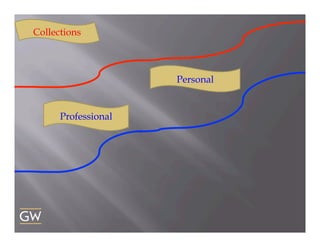
Collections

Personal

Professional
¨ 
¨ 
¨ 
¨ 
¨ 
¨ 

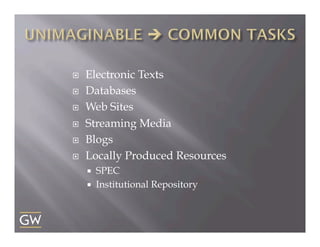
Electronic Texts
Databases
Web Sites
Streaming Media
Blogs
Locally Produced Resources
¡ 
¡ 

SPEC
Institutional Repository
¨ 

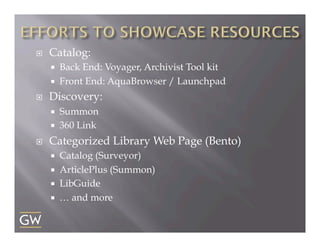
Catalog:
¡ 
¡ 

¨ 

Discovery:
¡ 
¡ 

¨ 

Back End: Voyager, Archivist Tool kit
Front End: AquaBrowser / Launchpad
Summon
360 Link

Categorized Library Web Page (Bento)
¡ 
¡ 
¡ 
¡ 

Catalog (Surveyor)
ArticlePlus (Summon)
LibGuide
… and more
¨ 
¨ 
¨ 
¨ 
¨ 
¨ 

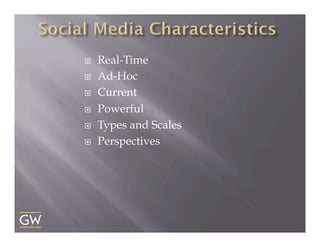
Real-Time
Ad-Hoc
Current
Powerful
Types and Scales
Perspectives
¨ 
¨ 

Just-In-Time
Just-In-Case

¨ 
¨ 
¨ 
¨ 

Right Persons
Right Skills
Right Time
Right Place
¨ 

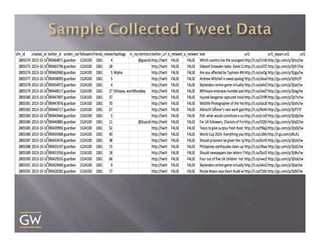
Content Prohibited to serve as a datastore

¨ 

Content Prohibited to be shared as datasets
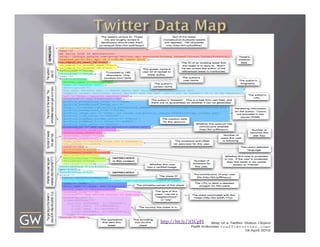
http://bit.ly/1f1CpFJ
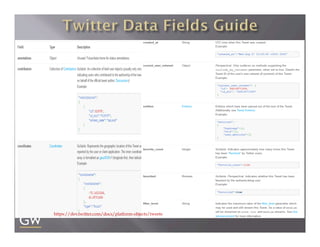
https://dev.twitter.com/docs/platform-objects/tweets
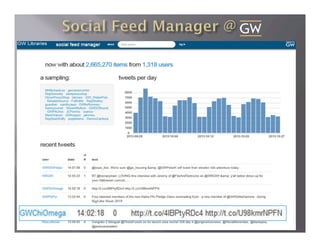
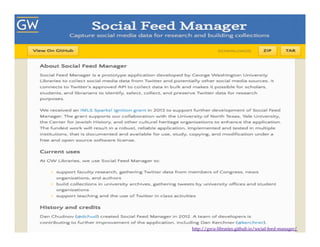
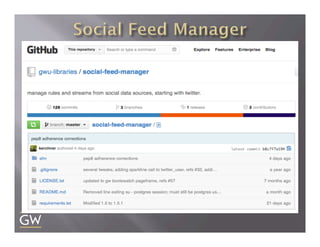
http://gwu-libraries.github.io/social-feed-manager/
¨ 
¨ 
¨ 
¨ 

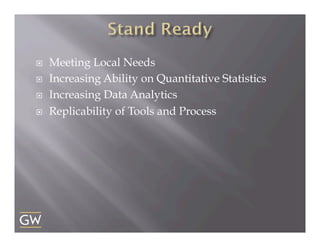
Meeting Local Needs
Increasing Ability on Quantitative Statistics
Increasing Data Analytics
Replicability of Tools and Process

Meeting User Needs & Expectations: A Library’s Quest for Discovery

  • 1.
        Mee$ng  User  Needs  &  Expecta$ons:   A  Library’s  Quest  for  Discovery   A  follow-­‐up  to  Taylor  &  Francis’  White  Paper   Elyse  Profera   Associate  Library  Marke4ng  Manager   An  Unlikely  Ecosystem:  A  Poten?al  Research  Trove   Jackie  Shieh   Coordinator,  Resource  Descrip4on  Group   1
  • 2.
    A  lot  to  discuss  in  30  minutes         •  •  •  •  •  Research  objec4ves     Highlights  of  research  results     Key  themes  &  takeaways   GWU  case  study     Ques4ons     2
  • 3.
    The  changing  face  of  publishing   Print   Online   Archive   digi4za4on   Open   3
  • 4.
             Adaptable  and  transparent         “Libraries  have  tradi.onally  offered  the  ‘convenience,  immediacy,     and  direct  access  to  a  wealth  of  content’  that  would  have  been  otherwise   unavailable  to  the  consumer.  In  the  digital  environment,  libraries  struggle  to   maintain  a  primary  role.  New  expecta.ons,  advanced  technologies,     and  market  innova.ons  are  evolving  faster  than  libraries  can  reasonably   compete  with,  since  resource  limita.ons,  reduced  staffing,  and  conflic.ng   priori.es  inhibit  libraries’  technological  agility.”      Lisa  Carlucci  Thomas,  “Subscrip?ons  Are  Us:  Content,  Access  and    Collec?ons,”  Journal  of  Web  Librarianship,  v6i1,  2012.     4
  • 5.
    Research  objec$ves     •  To  further  understand   how  and  why  libraries   are  making  changes    to   their  user  interfaces  and   cataloging  systems     •  To  iden4fy  the  ways     librarians  conduct   research  to  understand   their  end-­‐users  needs   •  Determine  how   publishers  can  help  with   discovery  in  the  library       5
  • 6.
             Research  methodology           •  Ini4al  research  produced  for  2013   White  Paper,  specifically:   •  Online  survey  (500+   responses)       •  Follow-­‐up  global  online  survey  to   source  quan4ta4ve  research  (420+   responses)     •  Twi_er  Party  to  facilitate  dialogue   with  librarians  and  source  addi4onal   qualita4ve  research     6
  • 7.
             Paid  vs.  free  content,  why?           f  paid-­‐  o th  lots l  right   i rary  w ry  goa  lib n   a  new our  prima  we  ca “As   t  so  tha ntent    it for  co omote r    is  to  p  investment are  also   now  on  the owever  we   ces  on   r report ness,  h  resou y e ffec.v romote  free F  surve e p ing  to   ibrarian,  T& try eb.”  L the  w “I  believe  t hat  a  lot  o f  free   online  con tent  is  acc essed   through  G oogle  and   social   networks.   Scholarly   content  is   another  m aJer,   though,  an d  I two  conten  think  the   t  types  sho uld   be  handled  differently .”   Librarian,   T&F  surve y   7
  • 8.
             User  interfaces             Have  you  made  or  do  you  intend  to  make  changes  to   the   user   interface   of   your   library   website   based   on   your  findings  from  your  user  research?   No   32%   Yes   68%   “We  no?ced  that  our  site  was   designed  by  librarians  for   librarians,  and  not  with  the  end   user  in  mind.  We  will  be  using   LibGuides  to  redesign.”   Librarian,  T&F  survey     8
  • 9.
             User  interfaces             0%   10%   20%   30%   40%   50%   60%   70%   80%   90%   100%   Increase  the  ability  to  discover  paid-­‐for  resources   such  as  e-­‐journals  and  e-­‐books   12%   21%   Increase  the  prominence  of  its  search  feature   19%   18%   Enhance  search  capabili$es  (i.e.  advanced  search   capabili$es,  by  free  content  type,  by  collec$on,  etc.)   Increase  the  ability  to  discover  free  library  resources   such  as:  disserta$ons,  blogs,  wikis,  podcasts,  social   media  posts,  open  access    ar$cles   20%   17%   Offer  training  courses  on  the  site  to  internal   customers  to  discover  free  content   17%   12%   10   9   8   7   9%   24%   19%   6   9%   9%   5   4   4%   6%   7%   12%   13%   16%   12%   12%   3   9%   4%   7%   9%   5%   4%  5%   7%   2   1   9
  • 10.
             User  interfaces             Website     Mobile  site     10
  • 11.
           Promo$on  to  library  end-­‐users   How  much  .me  in  a  week  do  you  spend     on  social  media  to  promote  your  library’s  resources?   11
  • 12.
    Top  3  Social  Media  sites  in  the  library   Please  rate  how  effec$ve  the  following  Social  Media  sites  are  in     facilita$ng  dialogue  around  the  resource  requirements  in  your   library:   0%   Library  Facebook  page   YouTube  videos   Library  Twi_er  newsfeed   10%   20%   6%   6%   9%   8%   5%   5%   10   9   30%   9%   6%   6%   8%   8   7%   7   40%   7%   50%   13%   60%   70%   6%   4%   6%   80%   14%   90%   100%   20%   8%   4%   6%   4%   15%   35%   9%   15%   34%   6   4%   4%   4%   5   4   3   2   1   I  do  not  use  this  site.   12
  • 13.
    Twi_er  to  promote  content   TWITTER   •  Highly  tweeted  ar4cles  11  4mes  more   likely  to  be  highly  cited  than  less-­‐ tweeted  ar4cles   •  Tweets  can  predict  highly  cited  ar4cles   within  first  3  days  of  ar4cle  publica4on   Journal  of  Medical  Internet  Research.   2011;  13(4),  Gunther,  Eysenbach  doi: 10.2196/jmir.2012   YouTube  is  second  most  used  search   engine  ager  Google:  Video  Abstracts,  the   Latest  Trend  in  Academic  Publishing.   h_p://www.universityaffairs.ca/video-­‐ abstracts-­‐the-­‐latest-­‐trend-­‐in-­‐scien4fic-­‐ publishing.aspx     Melissa  Terras,  “Digital  Curiosi.es:   Resource  Crea.on  Via  Amateur   Digi.za.on,”  Literary  and  Linguis?c   Compu?ng,  25.4  (2009):  425  –  438.   Available  in  PDF.   h_p://journalofdigitalhumani4es.org/1-­‐3/the-­‐impact-­‐of-­‐ social-­‐media-­‐on-­‐the-­‐dissemina4on-­‐of-­‐research-­‐by-­‐melissa-­‐ 13 terras/  
  • 14.
             Engaging  via  our  Twi_er  Party     14
  • 15.
  • 16.
             Twi_er  Party  findings       rn  Our ly,   te aryLan frequent @Libr  visit   '   udents  a  set  'script   st having e  something but   we  hav uld  help   when   o mote  w iscovery     to  pro ss  #dd e waren a   •  Librarians  are  looking  to  publishers            to  help  with  content  promo4on   •  Librarians  want  to  engage  more  with   students  through  social  media  outreach       16
  • 17.
    Research  takeaways   • Free  content  holds  value,   paid  content  takes   precedence   •  User  interfaces  should  be   designed  with  the  end-­‐user   in  mind     •  Collaborate  with   publishers  to  reach  your   end-­‐users   •  Social  media  in  the  library   is  gaining  momentum.     17
  • 18.
    Jackie Shieh The GeorgeWashington University Libraries jshieh [at] gwu [dot] edu @datapod
  • 20.
  • 21.
    ¨  ¨  ¨  ¨  ¨  ¨  Electronic Texts Databases Web Sites StreamingMedia Blogs Locally Produced Resources ¡  ¡  SPEC Institutional Repository
  • 22.
    ¨  Catalog: ¡  ¡  ¨  Discovery: ¡  ¡  ¨  Back End: Voyager,Archivist Tool kit Front End: AquaBrowser / Launchpad Summon 360 Link Categorized Library Web Page (Bento) ¡  ¡  ¡  ¡  Catalog (Surveyor) ArticlePlus (Summon) LibGuide … and more
  • 23.
  • 26.
  • 27.
    ¨  Content Prohibited toserve as a datastore ¨  Content Prohibited to be shared as datasets
  • 28.
  • 29.
  • 33.
  • 35.
    ¨  ¨  ¨  ¨  Meeting Local Needs IncreasingAbility on Quantitative Statistics Increasing Data Analytics Replicability of Tools and Process