Functional Integration in Technical Services

George Stachokas
Purdue University


ARL library statistics*
 Median circulation of print materials in 1991 = 509,673
 Median circulation of print materials in 2009 =





414, 482
Median number of students in 1991 = 18,290
Median number of students in 2009 = 23,303
[Circulation per student in 1991 = 27.9]
[Circulation per student in 2009 = 17.8]

*Kyrillidou, M. & Morris, S. (2011). ARL Statistics, 2008-2009. Washington, DC: Association of Research
Libraries.


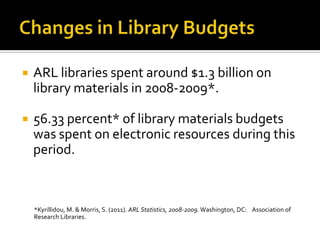
ARL libraries spent around $1.3 billion on
library materials in 2008-2009*.



56.33 percent* of library materials budgets
was spent on electronic resources during this
period.

*Kyrillidou, M. & Morris, S. (2011). ARL Statistics, 2008-2009. Washington, DC: Association of
Research Libraries.


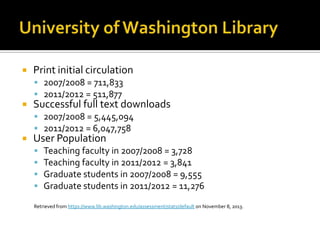
Print initial circulation
 2007/2008 = 711,833
 2011/2012 = 511,877



Successful full text downloads
 2007/2008 = 5,445,094
 2011/2012 = 6,047,758



User Population





Teaching faculty in 2007/2008 = 3,728
Teaching faculty in 2011/2012 = 3,841
Graduate students in 2007/2008 = 9,555
Graduate students in 2011/2012 = 11,276

Retrieved from https://www.lib.washington.edu/assessment/stats/default on November 8, 2013.






Print usage is in continuous decline in most
academic libraries.
Electronic usage continues to increase in
most libraries.
The majority of the materials budget in most
academic libraries is now spent on electronic
resources and continues to increase.
Library technical services is still mostly
organized to manage print resources.


Cloud based systems and other changes in
technology reduce the overall number of
personnel required for technical services.



Work will increasingly shift to professional and
student staff and away from clerical or support
staff.



The degree of local customization of service is
more important than collection size for
determining the need for local technical services
positions.


Replace current technical services
organizational structure with integrated
electronic resources management





Content Management
User Support
Licensing
Acquisitions/Payment Processing

 Metadata (included or closely coordinated)


Combine remaining clerical or support staff
personnel who manage print resources into a
Print Resources Unit.



The Print Resources Unit will be phased out over
time as the overall usage and size of the print
collection continues to decline.



Clerical or support staff could also be reassigned
to regional shared print repositories if positions
are available.


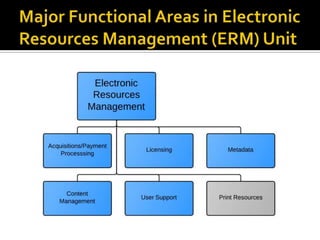
Acquisitions/Payment Processing
 Processing invoices and financial data entry into

ILS/ERM/LMS
 Preparing standardized reports for collection
analysis, including cost-per-use and overlap analysis



Licensing

 Negotiating license agreements with vendors
 Assistance with collection analysis



Metadata

 Creating, enhancing, and correcting metadata records

for electronic resources
 Batch processing of metadata records


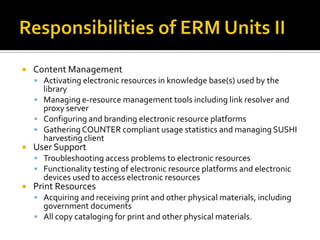
Content Management
 Activating electronic resources in knowledge base(s) used by the

library
 Managing e-resource management tools including link resolver and
proxy server
 Configuring and branding electronic resource platforms
 Gathering COUNTER compliant usage statistics and managing SUSHI
harvesting client



User Support

 Troubleshooting access problems to electronic resources
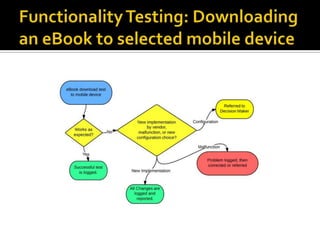
 Functionality testing of electronic resource platforms and electronic

devices used to access electronic resources



Print Resources

 Acquiring and receiving print and other physical materials, including

government documents
 All copy cataloging for print and other physical materials.


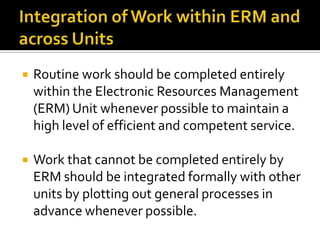
Routine work should be completed entirely
within the Electronic Resources Management
(ERM) Unit whenever possible to maintain a
high level of efficient and competent service.



Work that cannot be completed entirely by
ERM should be integrated formally with other
units by plotting out general processes in
advance whenever possible.


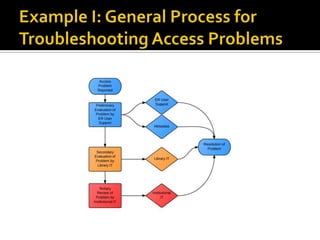
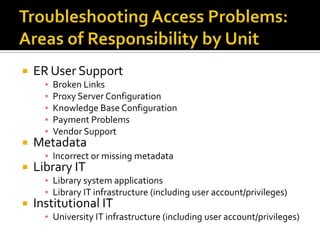
ER User Support
▪
▪
▪
▪
▪



Broken Links
Proxy Server Configuration
Knowledge Base Configuration
Payment Problems
Vendor Support

Metadata

▪ Incorrect or missing metadata



Library IT

▪ Library system applications
▪ Library IT infrastructure (including user account/privileges)



Institutional IT

▪ University IT infrastructure (including user account/privileges)




Usability testing is increasingly common in
libraries and is usually managed by
specialized librarians or IT professionals
Libraries also need to explore functionality
testing such as the routine testing of
electronic resource platforms and the
accessibility of eBooks, online
journals, databases, and streaming media
using various electronic devices






Electronic resource platforms are constantly
changing – testing is required to ensure
correct configuration and branding.
Finding major problems before users do, by
no means easy, helps to protect the library’s
reputation as a reliable information service
provider.
Information about malfunctioning platforms
and/or poor technology support provided by
vendors is useful for collection development.


ER User Support tests functionality
 Routine functionality testing to determine how an electronic

resource platform is actually working
 Routine functionality testing to determine how an electronic
device (computer, tablet, or smartphone) accesses library
eBooks, streaming media, and other online content
 Identify and refer available configuration options to other
library personnel without making any recommendations



Library IT, specialized librarians, or other professional
library personnel test usability

 Advanced testing of how users actually identify and make use of

electronic resources and devices
 Make recommendations for how an electronic resource
platform or electronic device should be set up by the library


Use attrition, changes in library systems or
management tools, or other reorganization efforts in
the library as excuses to experiment with developing
new ERM positions. Individual positions can later be
reorganized into new units.



Offer retraining opportunities to clerical and support
staff and evaluate their potential for new work.



Be honest with personnel about opportunities in
technical services.


The exact size, skill sets, and organizational
structure of technical services will continue to
vary greatly among libraries, but electronic
resources management is the appropriate
focus for technical services in contemporary
libraries, not print.



The only constant in managing electronic
resources is change.
Thank you!

George Stachokas
Head, Resource Services
Purdue University Libraries
gstachok@purdue.edu

Electronic Resources Management: Functional Integration in Technical Services

  • 1.
    Functional Integration inTechnical Services George Stachokas Purdue University
  • 2.
     ARL library statistics* Median circulation of print materials in 1991 = 509,673  Median circulation of print materials in 2009 =     414, 482 Median number of students in 1991 = 18,290 Median number of students in 2009 = 23,303 [Circulation per student in 1991 = 27.9] [Circulation per student in 2009 = 17.8] *Kyrillidou, M. & Morris, S. (2011). ARL Statistics, 2008-2009. Washington, DC: Association of Research Libraries.
  • 3.
     ARL libraries spentaround $1.3 billion on library materials in 2008-2009*.  56.33 percent* of library materials budgets was spent on electronic resources during this period. *Kyrillidou, M. & Morris, S. (2011). ARL Statistics, 2008-2009. Washington, DC: Association of Research Libraries.
  • 4.
     Print initial circulation 2007/2008 = 711,833  2011/2012 = 511,877  Successful full text downloads  2007/2008 = 5,445,094  2011/2012 = 6,047,758  User Population     Teaching faculty in 2007/2008 = 3,728 Teaching faculty in 2011/2012 = 3,841 Graduate students in 2007/2008 = 9,555 Graduate students in 2011/2012 = 11,276 Retrieved from https://www.lib.washington.edu/assessment/stats/default on November 8, 2013.
  • 5.
        Print usage isin continuous decline in most academic libraries. Electronic usage continues to increase in most libraries. The majority of the materials budget in most academic libraries is now spent on electronic resources and continues to increase. Library technical services is still mostly organized to manage print resources.
  • 6.
     Cloud based systemsand other changes in technology reduce the overall number of personnel required for technical services.  Work will increasingly shift to professional and student staff and away from clerical or support staff.  The degree of local customization of service is more important than collection size for determining the need for local technical services positions.
  • 7.
     Replace current technicalservices organizational structure with integrated electronic resources management     Content Management User Support Licensing Acquisitions/Payment Processing  Metadata (included or closely coordinated)
  • 8.
     Combine remaining clericalor support staff personnel who manage print resources into a Print Resources Unit.  The Print Resources Unit will be phased out over time as the overall usage and size of the print collection continues to decline.  Clerical or support staff could also be reassigned to regional shared print repositories if positions are available.
  • 10.
     Acquisitions/Payment Processing  Processinginvoices and financial data entry into ILS/ERM/LMS  Preparing standardized reports for collection analysis, including cost-per-use and overlap analysis  Licensing  Negotiating license agreements with vendors  Assistance with collection analysis  Metadata  Creating, enhancing, and correcting metadata records for electronic resources  Batch processing of metadata records
  • 11.
     Content Management  Activatingelectronic resources in knowledge base(s) used by the library  Managing e-resource management tools including link resolver and proxy server  Configuring and branding electronic resource platforms  Gathering COUNTER compliant usage statistics and managing SUSHI harvesting client  User Support  Troubleshooting access problems to electronic resources  Functionality testing of electronic resource platforms and electronic devices used to access electronic resources  Print Resources  Acquiring and receiving print and other physical materials, including government documents  All copy cataloging for print and other physical materials.
  • 12.
     Routine work shouldbe completed entirely within the Electronic Resources Management (ERM) Unit whenever possible to maintain a high level of efficient and competent service.  Work that cannot be completed entirely by ERM should be integrated formally with other units by plotting out general processes in advance whenever possible.
  • 14.
     ER User Support ▪ ▪ ▪ ▪ ▪  BrokenLinks Proxy Server Configuration Knowledge Base Configuration Payment Problems Vendor Support Metadata ▪ Incorrect or missing metadata  Library IT ▪ Library system applications ▪ Library IT infrastructure (including user account/privileges)  Institutional IT ▪ University IT infrastructure (including user account/privileges)
  • 15.
      Usability testing isincreasingly common in libraries and is usually managed by specialized librarians or IT professionals Libraries also need to explore functionality testing such as the routine testing of electronic resource platforms and the accessibility of eBooks, online journals, databases, and streaming media using various electronic devices
  • 16.
       Electronic resource platformsare constantly changing – testing is required to ensure correct configuration and branding. Finding major problems before users do, by no means easy, helps to protect the library’s reputation as a reliable information service provider. Information about malfunctioning platforms and/or poor technology support provided by vendors is useful for collection development.
  • 17.
     ER User Supporttests functionality  Routine functionality testing to determine how an electronic resource platform is actually working  Routine functionality testing to determine how an electronic device (computer, tablet, or smartphone) accesses library eBooks, streaming media, and other online content  Identify and refer available configuration options to other library personnel without making any recommendations  Library IT, specialized librarians, or other professional library personnel test usability  Advanced testing of how users actually identify and make use of electronic resources and devices  Make recommendations for how an electronic resource platform or electronic device should be set up by the library
  • 19.
     Use attrition, changesin library systems or management tools, or other reorganization efforts in the library as excuses to experiment with developing new ERM positions. Individual positions can later be reorganized into new units.  Offer retraining opportunities to clerical and support staff and evaluate their potential for new work.  Be honest with personnel about opportunities in technical services.
  • 20.
     The exact size,skill sets, and organizational structure of technical services will continue to vary greatly among libraries, but electronic resources management is the appropriate focus for technical services in contemporary libraries, not print.  The only constant in managing electronic resources is change.
  • 21.
    Thank you! George Stachokas Head,Resource Services Purdue University Libraries gstachok@purdue.edu

Editor's Notes

  • #3 *Kyrillidou, M. & Morris, S. (2011). ARL Statistics, 2008-2009. Washington, DC: Association of Research Libraries.
  • #4 *Kyrillidou, M. & Morris, S. (2011). ARL Statistics, 2008-2009. Washington, DC: Association of Research Libraries.