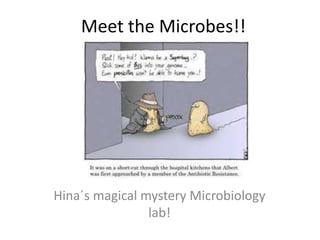
Meet the Microbes!!Hina´s magical mystery Microbiology lab!
As you watch the film clip....Ask yourself the following questions...What THREE words come to mind when you first see the flatWhy do you think James´s flat makes you feel the way you do?What health risks are posed by keeping the flat in this condition?
Now look at these pictures...In groups list 5 differences between them!
Microbes are everywhere!
What is microbiology?Discuss the word with the person next to you!A little introduction!So what are we doing this session?a)learning ASEPTIC techniqueb)learning how to CULTURE bacteria	c) understanding how to classify bacteria
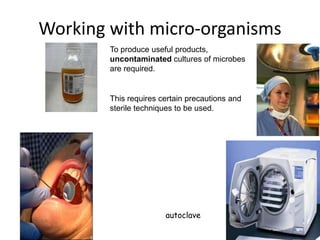
autoclaveWorking with micro-organismsTo produce useful products, uncontaminated cultures of microbes are required.This requires certain precautions and sterile techniques to be used.
Before we begin!
Using micro-organismsMicro-organisms can be grown by man. They need certain nutrients which are often contained in an agar medium: carbohydrates (energy source)
 mineral ions
 sometimes +protein, vitaminsThis is poured into a petri dish.ContaminationIs when unwanted, possibly harmful microbes grow. You don’t want this to happen.
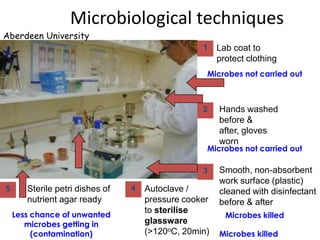
Microbiological techniques12345Aberdeen UniversityLab coat to protect clothingMicrobes not carried outHands washed before & after, gloves wornMicrobes not carried outSmooth, non-absorbent work surface (plastic) cleaned with disinfectant before & afterSterile petri dishes of nutrient agar readyAutoclave / pressure cooker to sterilise glassware (>120oC, 20min)Less chance of unwanted microbes getting in (contamination)Microbes killedMicrobes killed
Techniques (continued)67Lid held over petri dish during inoculationWire loop & bottles flamed before useMicrobes killedLess chance of unwanted microbes getting in
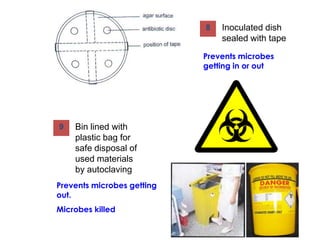
8Bin lined with plastic bag for safe disposal of used materials by autoclaving9Inoculated dish sealed with tapePrevents microbes getting in or outPrevents microbes getting out. Microbes killed
Now it´s your turn!Find a partnerDecide what aspects of bacterial culture you are going to investigatee.g. 	The difference between soap and disinfectant	Effectiveness of handwashing?	Bacteria from different parts of your body	Effect of chemicals on bacterial growth	Anything else you can think of!Prepare your work surface and agar plateInnoculate!Seal your petri dish and don´t forget to label it with your names and the dateRe-sterilise your work surfaceWash your hands!
Classificationis the grouping together of things on the basis of features they have in common.
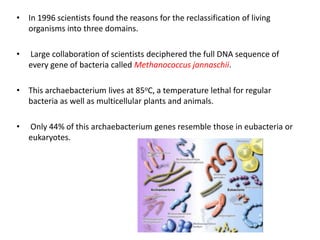
In 1996 scientists found the reasons for the reclassification of living organisms into three domains.
Large collaboration of scientists deciphered the full DNA sequence of every gene of bacteria called Methanococcusjannaschii.
This archaebacterium lives at 85oC, a temperature lethal for regular bacteria as well as multicellular plants and animals.
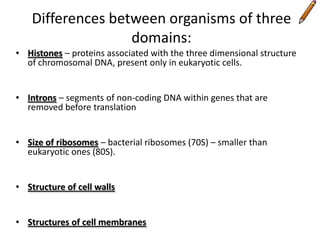
Only 44% of this archaebacterium genes resemble those in eubacteriaor eukaryotes.Differences between organisms of three domains:Histones – proteins associated with the three dimensional structure of chromosomal DNA, present only in eukaryotic cells.Introns – segments of non-coding DNA within genes that are removed before translationSize of ribosomes – bacterial ribosomes (70S) – smaller than eukaryotic ones (80S).Structure of cell wallsStructures of cell membranes
Classification of BacteriaArchaebacteria: extremistsEubacteria: HeterotrophsPhotosynthetic autotrophsChemosynthetic autotrophs
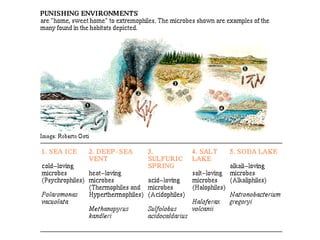
ArchaeaArchaebacteria (archaios – ancient, bakterion – rod) live in extreme environments where few other organisms survive.They are believed to have been the first forms of life on Earth.Methanogenic archaebacteria – inhabit anaerobic habitats and give off methane as a product of their metabolism. They live in the guts of cattle and are responsible for the intestinal gases that cattle produce.

Meet the microbes!!

  • 1.
    Meet the Microbes!!Hina´smagical mystery Microbiology lab!
  • 2.
    As you watchthe film clip....Ask yourself the following questions...What THREE words come to mind when you first see the flatWhy do you think James´s flat makes you feel the way you do?What health risks are posed by keeping the flat in this condition?
  • 3.
    Now look atthese pictures...In groups list 5 differences between them!
  • 4.
  • 5.
    What is microbiology?Discussthe word with the person next to you!A little introduction!So what are we doing this session?a)learning ASEPTIC techniqueb)learning how to CULTURE bacteria c) understanding how to classify bacteria
  • 6.
    autoclaveWorking with micro-organismsToproduce useful products, uncontaminated cultures of microbes are required.This requires certain precautions and sterile techniques to be used.
  • 7.
  • 8.
    Using micro-organismsMicro-organisms canbe grown by man. They need certain nutrients which are often contained in an agar medium: carbohydrates (energy source)
  • 9.
  • 10.
    sometimes +protein,vitaminsThis is poured into a petri dish.ContaminationIs when unwanted, possibly harmful microbes grow. You don’t want this to happen.
  • 11.
    Microbiological techniques12345Aberdeen UniversityLabcoat to protect clothingMicrobes not carried outHands washed before & after, gloves wornMicrobes not carried outSmooth, non-absorbent work surface (plastic) cleaned with disinfectant before & afterSterile petri dishes of nutrient agar readyAutoclave / pressure cooker to sterilise glassware (>120oC, 20min)Less chance of unwanted microbes getting in (contamination)Microbes killedMicrobes killed
  • 12.
    Techniques (continued)67Lid heldover petri dish during inoculationWire loop & bottles flamed before useMicrobes killedLess chance of unwanted microbes getting in
  • 13.
    8Bin lined withplastic bag for safe disposal of used materials by autoclaving9Inoculated dish sealed with tapePrevents microbes getting in or outPrevents microbes getting out. Microbes killed
  • 14.
    Now it´s yourturn!Find a partnerDecide what aspects of bacterial culture you are going to investigatee.g. The difference between soap and disinfectant Effectiveness of handwashing? Bacteria from different parts of your body Effect of chemicals on bacterial growth Anything else you can think of!Prepare your work surface and agar plateInnoculate!Seal your petri dish and don´t forget to label it with your names and the dateRe-sterilise your work surfaceWash your hands!
  • 15.
    Classificationis the groupingtogether of things on the basis of features they have in common.
  • 16.
    In 1996 scientistsfound the reasons for the reclassification of living organisms into three domains.
  • 17.
    Large collaboration ofscientists deciphered the full DNA sequence of every gene of bacteria called Methanococcusjannaschii.
  • 18.
    This archaebacterium livesat 85oC, a temperature lethal for regular bacteria as well as multicellular plants and animals.
  • 19.
    Only 44% ofthis archaebacterium genes resemble those in eubacteriaor eukaryotes.Differences between organisms of three domains:Histones – proteins associated with the three dimensional structure of chromosomal DNA, present only in eukaryotic cells.Introns – segments of non-coding DNA within genes that are removed before translationSize of ribosomes – bacterial ribosomes (70S) – smaller than eukaryotic ones (80S).Structure of cell wallsStructures of cell membranes
  • 20.
    Classification of BacteriaArchaebacteria:extremistsEubacteria: HeterotrophsPhotosynthetic autotrophsChemosynthetic autotrophs
  • 21.
    ArchaeaArchaebacteria (archaios –ancient, bakterion – rod) live in extreme environments where few other organisms survive.They are believed to have been the first forms of life on Earth.Methanogenic archaebacteria – inhabit anaerobic habitats and give off methane as a product of their metabolism. They live in the guts of cattle and are responsible for the intestinal gases that cattle produce.