Embracing Water 
Supply Sustainability - 
Advocating for Reuse 
in Our Water Supply 
Portfolios 
Melissa Meeker, Executive 
Director 
Southern California Water 
Summit 
November 8, 2014
2
3
How it actually works:
7 
Downstream…
8 
De facto Water Reuse 
Consumer 
Discharge 
Drinking Water 
Treatment 
Conventional 
Wastewater Treatment
9 
Indirect Potable Reuse 
Drinking Water 
Treatment 
Conventional 
Wastewater Treatment 
Advanced 
Consumer 
Wastewater Treatment 
Environment 
al Buffer
10 
Direct Potable Reuse Concept 
Drinking Water 
Treatment 
Conventional 
Wastewater Treatment 
Consumer 
Advanced 
Wastewater Treatment
How do you view water? 
11 
Significantly Undervalued
Balancing Water Demands and Limited 
Resources 
12
Chronic Imbalance between Supply and 
Demand 
• Article in the LA Times – UC researchers have 
determined that California has issued water rights 
that amount to roughly five times the state's 
average annual runoff 
13 
August 2014 January 2011
14
Potential for Water Reuse 
• About 7% of municipal 
About 33 bgd Municipal 
wastewater effluent in 
Effluent 
7.3% 
the U.S. is reclaimed 
and beneficially reused 
• Israel reuses more than 
70% 
• Singapore reuses 30%, 
up from 15% in recent 
92.7% 
years 
Available Water Reclaimed Water 
• Australia, now at 8%, 
has a national goal of 
30% by 2015 15
Factors Driving Water Reuse Today 
•Drought 
•Population growth 
•Increased municipal, industrial, and agricultural 
demand 
•Dependence on single source of supply 
•TMDLs/Nutrient load caps 
“Water 
scarcity” 
16 
No one strategy can solve the future water needs 
of the state, 
so the portfolios include different mixes of 
strategies, such as 
conservation, reuse, agricultural transfers, and 
new water supply
The time is now 
Provides local, climate-independent, 
sustainable supply for the environment, 
agriculture, industry AND people 
• The need has never been greater 
• Shift in climate 
• Greater awareness of 
environmental/downstream concerns 
• Existing treatment systems are 
protective 
• Treatment technologies have been 
proven 
• Continued technological advancement 
• Significant research to ensure 
reliability 
17 
Economic 
Environmental 
Social
The WateReuse Story: Who We Are, 
What We Do 
18 
Trade 
Association 
Research 
Foundation 
Leadership 
Research 
Education
19 
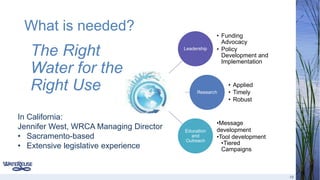
What is needed? 
Leadership 
• Funding 
Advocacy 
• Policy 
Development and 
Implementation 
Research 
• Applied 
• Timely 
• Robust 
Education 
and 
Outreach 
•Message 
development 
•Tool development 
•Tiered 
Campaigns 
The Right 
Water for the 
Right Use 
In California: 
Jennifer West, WRCA Managing Director 
• Sacramento-based 
• Extensive legislative experience
Research 
20
Since 2000… 
•198 projects commissioned 
•Over $61M in funding 
leveraged 
•145 published reports 
• 50 projects still active 
So far in 2014… 
• 13 projects launched 
•$3M WRRF funding, 
leveraged 
by additional $4.2M (and 
counting) 
•15 published reports (and 
21 
Research Foundation 
35 
30 
25 
20 
15 
10 
5 
0 
Projects Started Reports Published
22 
Research Categories 
• Potable Reuse 
• Business 
Economics/Triple Bottom 
Line 
• Industrial Reuse 
• Public Acceptance & Policy 
• Desalination
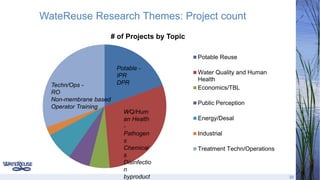
WateReuse Research Themes: Project count 
23 
# of Projects by Topic 
Potable Reuse 
Water Quality and Human 
Health 
Economics/TBL 
Public Perception 
Energy/Desal 
Industrial 
Treatment Techn/Operations 
Potable - 
IPR 
DPR 
WQ/Hum 
an Health 
- 
Pathogen 
s 
Chemical 
s 
Disinfectio 
n 
byproduct 
Techn/Ops - 
RO 
Non-membrane based 
Operator Training
Research Path to Achieve DPR 
Initiative Goal 
To overcome the regulatory, scientific, 
technical, and attitudinal barriers to 
DPR by undertaking three main tasks: 
• Conduct rigorous scientific research 
• Communicate the research findings 
through public awareness programs 
•Work with regulatory authorities to 
facilitate DPR implementation by local 
water utilities 
• >US $6 million raised to date, leveraged 
(so far) $12M 
24
Regulatory 
Concerns 
How do we achieve treatment and 
process reliability through redundancy, 
robustness, 
and resilience? 
Community 
Concerns 
Utility 
Concerns 
How do we address 
the economic and 
technical feasibility 
of DPR? 
How do we train 
operators to run 
these advanced 
systems? 
How do we 
increase public 
awareness of the 
water cycle and 
illustrate the safety 
of DPR to lead to 
acceptance? 
Barriers to 
DPR
Regulatory 
14-10 
11-10 
14-01 
14-02 
WRF4508 
WRA-14-01 
14-13 
14-16 
14-18 
11-02 11-05 
11-01 
12-06 
13-02 
13-12 
13-03 
14-03 
WRF4536 
14-05 
14-14 
14-15 
14-19 
Utility Community 
14-08 
14-12 
13-13 
12-07 
14-17 
WRRF DPR research program worth over 
$12M is underway 
to address these concerns to illustrate the
13-02 Public Perception 
27 
•Polling 
•Focus groups 
•Telephone surveys 
•Northern and Southern California
28
29
30
31
Financial Support 
32
Funding Sources 
• State Water Resources Control 
Board – $800M in 1% Interest 
Loans through CW SRF 
• MWD Local Resources 
Program Incentive 
• $340/AF over 25 yrs; $475/AF over 15 
yrs 
• Includes on-site retrofits as eligible 
costs in the LRP 
• 2014 State Water Bond - 
$7.545B ; $725M earmarked for 
water recycling/ advanced 
treatment technology projects 
• Competitive bid process; 50%/50% 
grants and low interest loans
In Summary 
•Research 
•Applied answers to critical questions 
•Education and Outreach 
•Tools and action to make water part of the 
sustainability 
•Leadership 
•Do it for the economy, environment, and 
society’s quality of life. 
34
35
The days of using water once 
and disposing of it are behind us. 
Melissa Meeker, Executive Director 
mmeeker@watereuse.org 
Jennifer West, WR CA Managing Director 
jwest@watereuse.org

Meeker The New Frontier

  • 1.
    Embracing Water SupplySustainability - Advocating for Reuse in Our Water Supply Portfolios Melissa Meeker, Executive Director Southern California Water Summit November 8, 2014
  • 2.
  • 3.
  • 5.
  • 7.
  • 8.
    8 De factoWater Reuse Consumer Discharge Drinking Water Treatment Conventional Wastewater Treatment
  • 9.
    9 Indirect PotableReuse Drinking Water Treatment Conventional Wastewater Treatment Advanced Consumer Wastewater Treatment Environment al Buffer
  • 10.
    10 Direct PotableReuse Concept Drinking Water Treatment Conventional Wastewater Treatment Consumer Advanced Wastewater Treatment
  • 11.
    How do youview water? 11 Significantly Undervalued
  • 12.
    Balancing Water Demandsand Limited Resources 12
  • 13.
    Chronic Imbalance betweenSupply and Demand • Article in the LA Times – UC researchers have determined that California has issued water rights that amount to roughly five times the state's average annual runoff 13 August 2014 January 2011
  • 14.
  • 15.
    Potential for WaterReuse • About 7% of municipal About 33 bgd Municipal wastewater effluent in Effluent 7.3% the U.S. is reclaimed and beneficially reused • Israel reuses more than 70% • Singapore reuses 30%, up from 15% in recent 92.7% years Available Water Reclaimed Water • Australia, now at 8%, has a national goal of 30% by 2015 15
  • 16.
    Factors Driving WaterReuse Today •Drought •Population growth •Increased municipal, industrial, and agricultural demand •Dependence on single source of supply •TMDLs/Nutrient load caps “Water scarcity” 16 No one strategy can solve the future water needs of the state, so the portfolios include different mixes of strategies, such as conservation, reuse, agricultural transfers, and new water supply
  • 17.
    The time isnow Provides local, climate-independent, sustainable supply for the environment, agriculture, industry AND people • The need has never been greater • Shift in climate • Greater awareness of environmental/downstream concerns • Existing treatment systems are protective • Treatment technologies have been proven • Continued technological advancement • Significant research to ensure reliability 17 Economic Environmental Social
  • 18.
    The WateReuse Story:Who We Are, What We Do 18 Trade Association Research Foundation Leadership Research Education
  • 19.
    19 What isneeded? Leadership • Funding Advocacy • Policy Development and Implementation Research • Applied • Timely • Robust Education and Outreach •Message development •Tool development •Tiered Campaigns The Right Water for the Right Use In California: Jennifer West, WRCA Managing Director • Sacramento-based • Extensive legislative experience
  • 20.
  • 21.
    Since 2000… •198projects commissioned •Over $61M in funding leveraged •145 published reports • 50 projects still active So far in 2014… • 13 projects launched •$3M WRRF funding, leveraged by additional $4.2M (and counting) •15 published reports (and 21 Research Foundation 35 30 25 20 15 10 5 0 Projects Started Reports Published
  • 22.
    22 Research Categories • Potable Reuse • Business Economics/Triple Bottom Line • Industrial Reuse • Public Acceptance & Policy • Desalination
  • 23.
    WateReuse Research Themes:Project count 23 # of Projects by Topic Potable Reuse Water Quality and Human Health Economics/TBL Public Perception Energy/Desal Industrial Treatment Techn/Operations Potable - IPR DPR WQ/Hum an Health - Pathogen s Chemical s Disinfectio n byproduct Techn/Ops - RO Non-membrane based Operator Training
  • 24.
    Research Path toAchieve DPR Initiative Goal To overcome the regulatory, scientific, technical, and attitudinal barriers to DPR by undertaking three main tasks: • Conduct rigorous scientific research • Communicate the research findings through public awareness programs •Work with regulatory authorities to facilitate DPR implementation by local water utilities • >US $6 million raised to date, leveraged (so far) $12M 24
  • 25.
    Regulatory Concerns Howdo we achieve treatment and process reliability through redundancy, robustness, and resilience? Community Concerns Utility Concerns How do we address the economic and technical feasibility of DPR? How do we train operators to run these advanced systems? How do we increase public awareness of the water cycle and illustrate the safety of DPR to lead to acceptance? Barriers to DPR
  • 26.
    Regulatory 14-10 11-10 14-01 14-02 WRF4508 WRA-14-01 14-13 14-16 14-18 11-02 11-05 11-01 12-06 13-02 13-12 13-03 14-03 WRF4536 14-05 14-14 14-15 14-19 Utility Community 14-08 14-12 13-13 12-07 14-17 WRRF DPR research program worth over $12M is underway to address these concerns to illustrate the
  • 27.
    13-02 Public Perception 27 •Polling •Focus groups •Telephone surveys •Northern and Southern California
  • 28.
  • 29.
  • 30.
  • 31.
  • 32.
  • 33.
    Funding Sources •State Water Resources Control Board – $800M in 1% Interest Loans through CW SRF • MWD Local Resources Program Incentive • $340/AF over 25 yrs; $475/AF over 15 yrs • Includes on-site retrofits as eligible costs in the LRP • 2014 State Water Bond - $7.545B ; $725M earmarked for water recycling/ advanced treatment technology projects • Competitive bid process; 50%/50% grants and low interest loans
  • 34.
    In Summary •Research •Applied answers to critical questions •Education and Outreach •Tools and action to make water part of the sustainability •Leadership •Do it for the economy, environment, and society’s quality of life. 34
  • 35.
  • 36.
    The days ofusing water once and disposing of it are behind us. Melissa Meeker, Executive Director mmeeker@watereuse.org Jennifer West, WR CA Managing Director jwest@watereuse.org

Editor's Notes

  • #8 Illustration of reuse – fit for purpose
  • #19 What are we, WateReuse, doing about it. We are a combination of two organizations – a trade association and a research foundation.
  • #22 Research Foundation – nearly 200 projects and over $60M in research…
  • #24 This graph shows the key areas which are sized based on the number of projects in that theme.
  • #26 Research is focused on the barriers – Regulatory, Utility and Community concerns
  • #27 See how the projects fit in that space