Depression
in the Medically Ill
David Straker, D.O., FAPA, FAPM
Attending C-L Psychiatry
Psychosomatic Medicine Fellowship Director
North Shore-Long Island Jewish Medical Center
Attending C-L Psychiatrist,
Columbia University Medical Center, Lenox Hill Hospital
Key Points
 Many patients are “depressed”. May be an
Adjustment disorder or “minor depression”
 Often patients in ICU look depressed and
actually have hypoactive delirium
 Antidepressants take time to work
 Rule out Medical Conditions / Drug Induced
/ Substance Induced
 Does patient need a Psych Consult
 Does patient need a 1:1
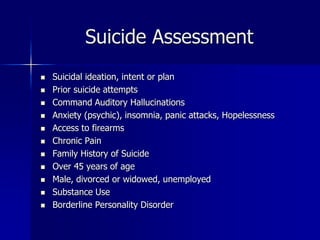
Suicide Assessment
 Suicidal ideation, intent or plan
 Prior suicide attempts
 Command Auditory Hallucinations
 Anxiety (psychic), insomnia, panic attacks, Hopelessness
 Access to firearms
 Chronic Pain
 Family History of Suicide
 Over 45 years of age
 Male, divorced or widowed, unemployed
 Substance Use
 Borderline Personality Disorder
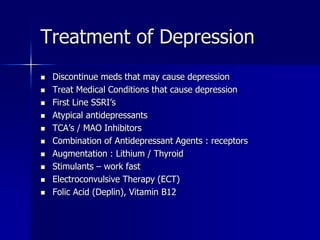
Treatment of Depression
 Discontinue meds that may cause depression
 Treat Medical Conditions that cause depression
 First Line SSRI’s
 Atypical antidepressants
 TCA’s / MAO Inhibitors
 Combination of Antidepressant Agents : receptors
 Augmentation : Lithium / Thyroid
 Stimulants – work fast
 Electroconvulsive Therapy (ECT)
 Folic Acid (Deplin), Vitamin B12
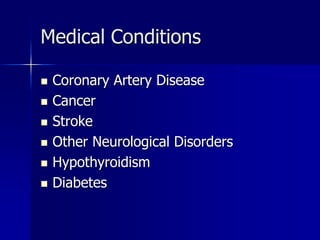
Medical Conditions
 Coronary Artery Disease
 Cancer
 Stroke
 Other Neurological Disorders
 Hypothyroidism
 Diabetes
Coronary Artery Disease
 16-23% depressed
 Depression is an independent predictor of morbidity
and mortality following the onset of CAD
 Increased risk of coronary events in patients who
are depressed
 Higher incidence of depression in patients with
CHF, post-MI, post CABG, and post angioplasty
 SADHART and ENRICHD trials: modest effects
noted. Sertraline safe, but little positive effects on
heart. ENRICHD – CBT and social support
Cancer
 10-30% prevalence of major and minor
depression
 Pancreatic #1
 Medications: interferon, interleukin,
corticosteroids, and vinca alkaloids
(vincristine and vinblastine)
 Very difficult to distinguish from medical
illness (especially fatigue, anorexia)
Neurological Disease
 Parkinson’s Disease
 Poststroke Depression
 Dementia’s
 Epilepsy
 Multiple sclerosis
 Huntington’s Disease
Parkinson’s Disease
 50% prevalence of depressive
symptoms
 Often dysthymic disorder and minor
depression rather than MDD
 Levo-dopa can cause depression
 Very difficult to distinguish from core
features of the illness itself. BDI is
helpful
Post-Stroke Depression
 Major depression ranges from 19.3%
(inpatient) to 23.3% (ambulatory)
 ? Associated with lesions in the left anterior
and left basal ganglia regions, although
recent meta-analysis failed to show this
 Evidence for TCA (nortriptyline) and SSRI
(celexa) as treatment
 Cardiovascular morbidity and mortality may
be reduced with the use of SSRI’s
Dementia
 Significant co-morbidity with major
depression
 20-32% prevalence of MDD in
dementia patients
 Treatment appears to have minimal
positive effects
Epilepsy
 20-55% of patients with recurrent seizures
but only 3-9% of those with well controlled
seizures have major depression
 Patients with Complex Partial Seizures have
17x prevalence of MDD than general
population
 Avoid wellbutrin, maprotiline, and
amoxapine as greater risk of seizures
 Phenobarbital and keppra can cause
depression
Other Neurological Disorders
 Multiple sclerosis: up to 50% of
patients and those on interferon (40%
of patients). Often during an acute
exacerbation or as part of chronic
progressive course
 Huntington’s Disease: MDD in up to
32% of patients
Endocrine Disorders
 Diabetes: 2x as common as the
general population; often effects the
illness, compliance, etc.
 Hypothyroidism: leads to depression
In patients who are depressed check
TSH. Also those on lithium who get
depressed; check thyroid
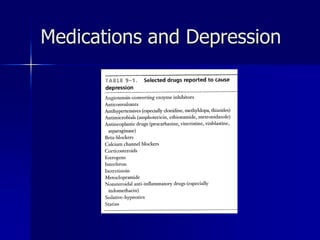
Medications and Depression
 See Table
 Mostly dose related, but as with
interferon at normal doses it is seen
 Most common: Accutane, Steroids,
Interferon, ? Beta Blockers, and
Anticonvulsants
Medications and Depression
Psychopharmacologic
Management
 SSRI’s
 TCA’s
 Other Novel antidepressants
 Augmenting Agents
 Herbal Meds / Vitamins
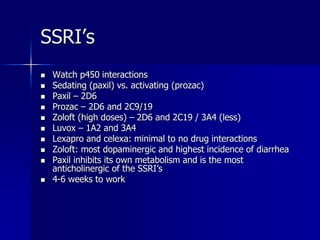
SSRI’s
 Watch p450 interactions
 Sedating (paxil) vs. activating (prozac)
 Paxil – 2D6
 Prozac – 2D6 and 2C9/19
 Zoloft (high doses) – 2D6 and 2C19 / 3A4 (less)
 Luvox – 1A2 and 3A4
 Lexapro and celexa: minimal to no drug interactions
 Zoloft: most dopaminergic and highest incidence of diarrhea
 Paxil inhibits its own metabolism and is the most
anticholinergic of the SSRI’s
 4-6 weeks to work
Rare, but Noteworthy Side
Effects of Antidepressants
 Hyponatremia – SSRI’s (elderly)
 Bleeding / Surgery
 QTc prolongation – Citalopram, TCA’s
 Seizures - Wellbutrin
 Liver Dysfunction – nefazodone,
duloxetine
 Serotonin Syndrome
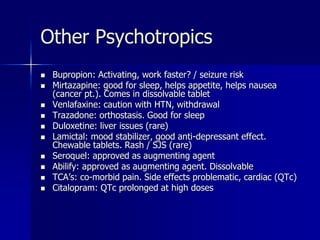
Other Psychotropics
 Bupropion: Activating, work faster? / seizure risk
 Mirtazapine: good for sleep, helps appetite, helps nausea
(cancer pt.). Comes in dissolvable tablet
 Venlafaxine: caution with HTN, withdrawal
 Trazadone: orthostasis. Good for sleep
 Duloxetine: liver issues (rare)
 Lamictal: mood stabilizer, good anti-depressant effect.
Chewable tablets. Rash / SJS (rare)
 Seroquel: approved as augmenting agent
 Abilify: approved as augmenting agent. Dissolvable
 TCA’s: co-morbid pain. Side effects problematic, cardiac (QTc)
 Citalopram: QTc prolonged at high doses
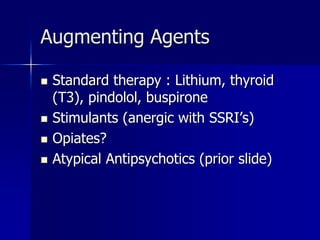
Augmenting Agents
 Standard therapy : Lithium, thyroid
(T3), pindolol, buspirone
 Stimulants (anergic with SSRI’s)
 Opiates?
 Atypical Antipsychotics (prior slide)
Stimulants
 Methylphenidate (2.5 mg to 10mg often in divided
doses given early in the day): increase energy,
appetite, and elevate mood
 Dexedrine, Modafanil (Provigil), etc.
 Atypical / retarded depression
 Fast onset of action
 Stroke, HIV, and Cancer
 Mild, dose related side effects are agitation,
naseau, and insomnia. Tachycardia, psychosis and
hypertension may occur but are rare.
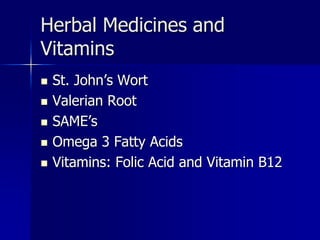
Herbal Medicines and
Vitamins
 St. John’s Wort
 Valerian Root
 SAME’s
 Omega 3 Fatty Acids
 Vitamins: Folic Acid and Vitamin B12
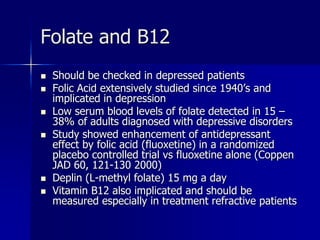
Folate and B12
 Should be checked in depressed patients
 Folic Acid extensively studied since 1940’s and
implicated in depression
 Low serum blood levels of folate detected in 15 –
38% of adults diagnosed with depressive disorders
 Study showed enhancement of antidepressant
effect by folic acid (fluoxetine) in a randomized
placebo controlled trial vs fluoxetine alone (Coppen
JAD 60, 121-130 2000)
 Deplin (L-methyl folate) 15 mg a day
 Vitamin B12 also implicated and should be
measured especially in treatment refractive patients
Other Treatments
 Electromagnetic Stimulation
(Transcranial MS)
 Vagal Nerve Stimulation
 ECT (“shock therapy”)
 CES (Cranial Electrical Stimulator)
Psychotherapy
 Supportive
 Psychodynamic
 Cognitive Behavioral Therapy
 Brief Psychotherapy (at the bedside)
Summary
 Rule out Medical Conditions
 Check Medication List
 R/O substance induced disorders
 Differentiate depression from neuro-
vegetative signs of medical illness
 Treat aggressively with medications,
therapy and use alternative /
complementary treatments when indicated

Medicine Conference - Depression

  • 1.
    Depression in the MedicallyIll David Straker, D.O., FAPA, FAPM Attending C-L Psychiatry Psychosomatic Medicine Fellowship Director North Shore-Long Island Jewish Medical Center Attending C-L Psychiatrist, Columbia University Medical Center, Lenox Hill Hospital
  • 2.
    Key Points  Manypatients are “depressed”. May be an Adjustment disorder or “minor depression”  Often patients in ICU look depressed and actually have hypoactive delirium  Antidepressants take time to work  Rule out Medical Conditions / Drug Induced / Substance Induced  Does patient need a Psych Consult  Does patient need a 1:1
  • 3.
    Suicide Assessment  Suicidalideation, intent or plan  Prior suicide attempts  Command Auditory Hallucinations  Anxiety (psychic), insomnia, panic attacks, Hopelessness  Access to firearms  Chronic Pain  Family History of Suicide  Over 45 years of age  Male, divorced or widowed, unemployed  Substance Use  Borderline Personality Disorder
  • 4.
    Treatment of Depression Discontinue meds that may cause depression  Treat Medical Conditions that cause depression  First Line SSRI’s  Atypical antidepressants  TCA’s / MAO Inhibitors  Combination of Antidepressant Agents : receptors  Augmentation : Lithium / Thyroid  Stimulants – work fast  Electroconvulsive Therapy (ECT)  Folic Acid (Deplin), Vitamin B12
  • 5.
    Medical Conditions  CoronaryArtery Disease  Cancer  Stroke  Other Neurological Disorders  Hypothyroidism  Diabetes
  • 6.
    Coronary Artery Disease 16-23% depressed  Depression is an independent predictor of morbidity and mortality following the onset of CAD  Increased risk of coronary events in patients who are depressed  Higher incidence of depression in patients with CHF, post-MI, post CABG, and post angioplasty  SADHART and ENRICHD trials: modest effects noted. Sertraline safe, but little positive effects on heart. ENRICHD – CBT and social support
  • 7.
    Cancer  10-30% prevalenceof major and minor depression  Pancreatic #1  Medications: interferon, interleukin, corticosteroids, and vinca alkaloids (vincristine and vinblastine)  Very difficult to distinguish from medical illness (especially fatigue, anorexia)
  • 8.
    Neurological Disease  Parkinson’sDisease  Poststroke Depression  Dementia’s  Epilepsy  Multiple sclerosis  Huntington’s Disease
  • 9.
    Parkinson’s Disease  50%prevalence of depressive symptoms  Often dysthymic disorder and minor depression rather than MDD  Levo-dopa can cause depression  Very difficult to distinguish from core features of the illness itself. BDI is helpful
  • 10.
    Post-Stroke Depression  Majordepression ranges from 19.3% (inpatient) to 23.3% (ambulatory)  ? Associated with lesions in the left anterior and left basal ganglia regions, although recent meta-analysis failed to show this  Evidence for TCA (nortriptyline) and SSRI (celexa) as treatment  Cardiovascular morbidity and mortality may be reduced with the use of SSRI’s
  • 11.
    Dementia  Significant co-morbiditywith major depression  20-32% prevalence of MDD in dementia patients  Treatment appears to have minimal positive effects
  • 12.
    Epilepsy  20-55% ofpatients with recurrent seizures but only 3-9% of those with well controlled seizures have major depression  Patients with Complex Partial Seizures have 17x prevalence of MDD than general population  Avoid wellbutrin, maprotiline, and amoxapine as greater risk of seizures  Phenobarbital and keppra can cause depression
  • 13.
    Other Neurological Disorders Multiple sclerosis: up to 50% of patients and those on interferon (40% of patients). Often during an acute exacerbation or as part of chronic progressive course  Huntington’s Disease: MDD in up to 32% of patients
  • 14.
    Endocrine Disorders  Diabetes:2x as common as the general population; often effects the illness, compliance, etc.  Hypothyroidism: leads to depression In patients who are depressed check TSH. Also those on lithium who get depressed; check thyroid
  • 15.
    Medications and Depression See Table  Mostly dose related, but as with interferon at normal doses it is seen  Most common: Accutane, Steroids, Interferon, ? Beta Blockers, and Anticonvulsants
  • 16.
  • 17.
    Psychopharmacologic Management  SSRI’s  TCA’s Other Novel antidepressants  Augmenting Agents  Herbal Meds / Vitamins
  • 18.
    SSRI’s  Watch p450interactions  Sedating (paxil) vs. activating (prozac)  Paxil – 2D6  Prozac – 2D6 and 2C9/19  Zoloft (high doses) – 2D6 and 2C19 / 3A4 (less)  Luvox – 1A2 and 3A4  Lexapro and celexa: minimal to no drug interactions  Zoloft: most dopaminergic and highest incidence of diarrhea  Paxil inhibits its own metabolism and is the most anticholinergic of the SSRI’s  4-6 weeks to work
  • 19.
    Rare, but NoteworthySide Effects of Antidepressants  Hyponatremia – SSRI’s (elderly)  Bleeding / Surgery  QTc prolongation – Citalopram, TCA’s  Seizures - Wellbutrin  Liver Dysfunction – nefazodone, duloxetine  Serotonin Syndrome
  • 20.
    Other Psychotropics  Bupropion:Activating, work faster? / seizure risk  Mirtazapine: good for sleep, helps appetite, helps nausea (cancer pt.). Comes in dissolvable tablet  Venlafaxine: caution with HTN, withdrawal  Trazadone: orthostasis. Good for sleep  Duloxetine: liver issues (rare)  Lamictal: mood stabilizer, good anti-depressant effect. Chewable tablets. Rash / SJS (rare)  Seroquel: approved as augmenting agent  Abilify: approved as augmenting agent. Dissolvable  TCA’s: co-morbid pain. Side effects problematic, cardiac (QTc)  Citalopram: QTc prolonged at high doses
  • 21.
    Augmenting Agents  Standardtherapy : Lithium, thyroid (T3), pindolol, buspirone  Stimulants (anergic with SSRI’s)  Opiates?  Atypical Antipsychotics (prior slide)
  • 22.
    Stimulants  Methylphenidate (2.5mg to 10mg often in divided doses given early in the day): increase energy, appetite, and elevate mood  Dexedrine, Modafanil (Provigil), etc.  Atypical / retarded depression  Fast onset of action  Stroke, HIV, and Cancer  Mild, dose related side effects are agitation, naseau, and insomnia. Tachycardia, psychosis and hypertension may occur but are rare.
  • 23.
    Herbal Medicines and Vitamins St. John’s Wort  Valerian Root  SAME’s  Omega 3 Fatty Acids  Vitamins: Folic Acid and Vitamin B12
  • 24.
    Folate and B12 Should be checked in depressed patients  Folic Acid extensively studied since 1940’s and implicated in depression  Low serum blood levels of folate detected in 15 – 38% of adults diagnosed with depressive disorders  Study showed enhancement of antidepressant effect by folic acid (fluoxetine) in a randomized placebo controlled trial vs fluoxetine alone (Coppen JAD 60, 121-130 2000)  Deplin (L-methyl folate) 15 mg a day  Vitamin B12 also implicated and should be measured especially in treatment refractive patients
  • 25.
    Other Treatments  ElectromagneticStimulation (Transcranial MS)  Vagal Nerve Stimulation  ECT (“shock therapy”)  CES (Cranial Electrical Stimulator)
  • 26.
    Psychotherapy  Supportive  Psychodynamic Cognitive Behavioral Therapy  Brief Psychotherapy (at the bedside)
  • 27.
    Summary  Rule outMedical Conditions  Check Medication List  R/O substance induced disorders  Differentiate depression from neuro- vegetative signs of medical illness  Treat aggressively with medications, therapy and use alternative / complementary treatments when indicated