REFLECTIVE SIDE OF PAIN
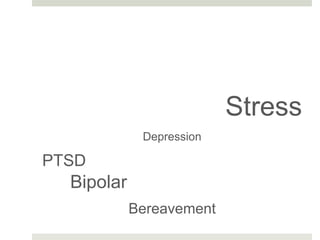
Stress
Depression
PTSD
Bipolar
Bereavement
QUESTIONS
?
Stress: In poetry, the word “stress” refers to the emphasis of
certain syllables in a poem’s metre. How might the metrical
“stresses” of poetry help us to cope with the mental and emotional
stresses of modern life?
Bereavement: Elisabeth Kübler-Ross proposed five stages of
grief. How might Shakespeare’s Hamlet and poems by Mir Taqi
Mir help us to think differently about the process of grieving?
Heartbreak: Is heartbreak a medical condition? What can Ghalib’s
poetry and Austen’s Sense and Sensibility teach us about
suffering and recovering from a broken heart?
Trauma: PTSD or “shellshock” has long been associated with the
traumatic experiences of soldiers in World War 1. Can poems and
plays offer us an insight into other sources of trauma, including
miscarriage and assault?
Depression and Bipolar: Which texts have people turned to during
periods of depression, and why? What can we learn from
literature about the links between bipolar disorder and creativity?
Ageing and Dementia: Why are sufferers of age-related memory loss
often still able to recall the poems they have learned “by heart”?
Evidence
 Edmund Pellegrino – expanding physicians’ awareness
 The process of writing - bigger picture, make sense of their
experiences
 Noami Goldberg – WILD MIND
Students can express in metaphorical and symbolic terms
 Epstein – mindful attention excludes thoughts of past problems &
future obligations.
Listening
 Outlet to release helplessness
 Role perception of physicians
Transfer effect
 Transfer of skills for patient care
 Three dimensions
Point-of-view writing assignments
 Emotionally closer to patients
 Improves understanding of the pain
Physician well being
 Emotional equilibrium
 Self healing
 Reducing isolation
Balance
 Jack Coulehan – emotional steadiness and emotional tenderness
Humanities-based interventions
 Downie - transferable skills: humanistic perspective, situational
coping with self-awareness
References
 Shapiro, J., Kasman, D., & Shafer, A. (2006). Words and wards: a model of reflective writing and its uses in
medical education. Journal of Medical Humanities, 27(4), 231-244.
 J. L. Coulehan, and P. C. Williams, “Vanquishing Virtue: The Impact of Medical Education.” Academic Medicine,
76 (2001): 598–605.
 N. Goldberg, Wild Mind: Living the Writer’s Life (New York: Bantam Books, 1990), 1–42.
 E. Pellegrino, “To Look Feelingly: The Affinities of Medicine and Literature.” Literature and Medicine, 1(1992): 19–
23.
 R. Downie, “Medical Humanities: Means, Ends, and Evaluation.” In Medical Humanities, eds. Evans, M and IG
Finlay (London: BMJ Books, 2001), 204–222.
 R. M. Epstein, “Mindful Practice.” Journal of the American Medical Association, 282 (1999): 833–839.
 R. M. Epstein, “Uninvited Guests in the Doctor-Patient Relationship.” Psychiatry Grand Rounds, University
 of Washington, Feb 1, 2001.

Reflective side

  • 1.
  • 2.
  • 3.
  • 4.
    Stress: In poetry,the word “stress” refers to the emphasis of certain syllables in a poem’s metre. How might the metrical “stresses” of poetry help us to cope with the mental and emotional stresses of modern life?
  • 5.
    Bereavement: Elisabeth Kübler-Rossproposed five stages of grief. How might Shakespeare’s Hamlet and poems by Mir Taqi Mir help us to think differently about the process of grieving?
  • 6.
    Heartbreak: Is heartbreaka medical condition? What can Ghalib’s poetry and Austen’s Sense and Sensibility teach us about suffering and recovering from a broken heart?
  • 7.
    Trauma: PTSD or“shellshock” has long been associated with the traumatic experiences of soldiers in World War 1. Can poems and plays offer us an insight into other sources of trauma, including miscarriage and assault?
  • 8.
    Depression and Bipolar:Which texts have people turned to during periods of depression, and why? What can we learn from literature about the links between bipolar disorder and creativity?
  • 9.
    Ageing and Dementia:Why are sufferers of age-related memory loss often still able to recall the poems they have learned “by heart”?
  • 10.
    Evidence  Edmund Pellegrino– expanding physicians’ awareness
  • 11.
     The processof writing - bigger picture, make sense of their experiences
  • 12.
     Noami Goldberg– WILD MIND Students can express in metaphorical and symbolic terms
  • 13.
     Epstein –mindful attention excludes thoughts of past problems & future obligations.
  • 14.
    Listening  Outlet torelease helplessness  Role perception of physicians
  • 15.
    Transfer effect  Transferof skills for patient care  Three dimensions
  • 16.
    Point-of-view writing assignments Emotionally closer to patients  Improves understanding of the pain
  • 17.
    Physician well being Emotional equilibrium  Self healing  Reducing isolation
  • 18.
    Balance  Jack Coulehan– emotional steadiness and emotional tenderness
  • 19.
    Humanities-based interventions  Downie- transferable skills: humanistic perspective, situational coping with self-awareness
  • 20.
    References  Shapiro, J.,Kasman, D., & Shafer, A. (2006). Words and wards: a model of reflective writing and its uses in medical education. Journal of Medical Humanities, 27(4), 231-244.  J. L. Coulehan, and P. C. Williams, “Vanquishing Virtue: The Impact of Medical Education.” Academic Medicine, 76 (2001): 598–605.  N. Goldberg, Wild Mind: Living the Writer’s Life (New York: Bantam Books, 1990), 1–42.  E. Pellegrino, “To Look Feelingly: The Affinities of Medicine and Literature.” Literature and Medicine, 1(1992): 19– 23.  R. Downie, “Medical Humanities: Means, Ends, and Evaluation.” In Medical Humanities, eds. Evans, M and IG Finlay (London: BMJ Books, 2001), 204–222.  R. M. Epstein, “Mindful Practice.” Journal of the American Medical Association, 282 (1999): 833–839.  R. M. Epstein, “Uninvited Guests in the Doctor-Patient Relationship.” Psychiatry Grand Rounds, University  of Washington, Feb 1, 2001.