Depression
   Major Depressive d/o
     Potential for pain and suffering in all aspects of life
     Affects ALL ages
     May include: psychosis, catatonic symptoms, and
      melancholy
   Dysthymia
     Chronic Depression
     > 1year for children
     > 2 years for adults/ elderly
   Premenstrual Dysphoric
     Depressed, anxious , moody
     Still being researched for data


       Also to be considered:
         Seasonal affective disorder
         Postpartum depression
     Depression may result from a complex
      interaction of causes, as evidences by high
      variability of:
       Symptoms
       Response to treatment and course of illness

    Common Theories:
     -Biological
     -Psychosocial influences/ life events
       Cognitive
       Learned helplessness
   Tools
     Beck Depression Inventory
     Hamilton Depression Scale
     Geriatric Depression Scale
     Zung Depression Scale
     SAD Person’s Scale


   National Mental Health Association
       http://www.depression-screening.org
   Safety First
       Suicide Potential
   Key Symptoms
     Depressed mood
     Anxiety
     Psychomotor agitation or retardation
     Somatic complaints
     Vegetative signs
   Affect (sad, weeping)

   Thought Processes (delusions, poor judgment)

   Feelings (anger, anxiety, hopelessness)

   Guilt (rumination over past failings)

   Physical Behavior (lethargy, poor hygiene, posture )

   Communication (slow speech, slow comprehnsion)
   Transient
       “blues” tired, feel like your in a little slump
   Mild
       Normal grief response, may cry, eating changes
   Moderate
     dysthymic., a little hopeless, ?suicidal potential
     Losing interest in self, grooming, social etc

   Severe
       Increased hopelessness, total despair, life functioning
        affected, Suicidal? Homicidal?
   Unrealistic expectations

   Feelings originating from the client

   Understanding of depression as a systemic
    illness with a complex interaction of causes
   Risk for suicide

   Hopelessness

   Powerlessness

   Disturbed thought process

   Ineffective coping
   Think – Pair- Share


   Find a partner and come up with a one minute
    care plan ( ie outcome criteria/ interventions)

   On you mark ..get set…go

   (Prioritize your interventions)!!!
   Sheila is a 35 year old IV therapist. She is grossly obese
    and has recently been suffering from shortness of breath
    on exertion. She has High BP, High Cholesterol and has
    noticed that a sore on her foot from a cut has not been
    healing. She has not been sleeping in her bed but on the
    couch so she can watch movies when she can’t sleep.
    She is tired, has a low tolerance for frustration, and feels
    constantly behind in all that she does.

   She is divorced and is raising a teenage son. She just
    received an invitation to her high school reunion. She
   Starts crying and con not stop all day. When her son
    gets home from school he calls an ambulance because
    his mother keeps talking about ending it all.

   Client hx: she was head cheerleader in high school. She
    got married right out of school due to an unexpected
    pregnancy.

   What are your priority assessments?
   Diagnosis? Why?
   Outcome Criteria for her that you would expect?
   Remain safe
   Reports hope for the future
   Identifies precursors of depression
   Reports improved mood
   Plans strategies to reduce the effects of
    precursors of depression

   Did You get these as well???
   Communication
   Counseling
   Encourage self care
   Therapeutic Milieu
   Health Teaching
   Medications
   Assess effects of Medications
   Psychotherapy
     Cognitive Therapy
     Interpersonal Therapy


   Social Skills Training
   Group Therapy
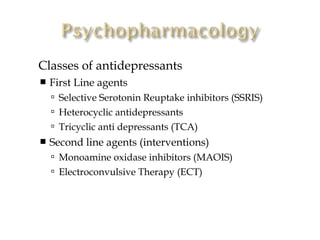
   Classes of antidepressants
       First Line agents
         Selective Serotonin Reuptake inhibitors (SSRIS)
         Heterocyclic antidepressants
         Tricyclic anti depressants (TCA)
       Second line agents (interventions)
         Monoamine oxidase inhibitors (MAOIS)
         Electroconvulsive Therapy (ECT)
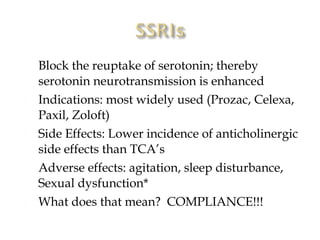
   Block the reuptake of serotonin; thereby
    serotonin neurotransmission is enhanced
   Indications: most widely used (Prozac, Celexa,
    Paxil, Zoloft)
   Side Effects: Lower incidence of anticholinergic
    side effects than TCA’s
   Adverse effects: agitation, sleep disturbance,
    Sexual dysfunction*
   What does that mean? COMPLIANCE!!!
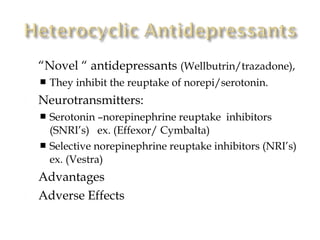
   “Novel “ antidepressants (Wellbutrin/trazadone),
       They inhibit the reuptake of norepi/serotonin.
   Neurotransmitters:
     Serotonin –norepinephrine reuptake inhibitors
      (SNRI’s) ex. (Effexor/ Cymbalta)
     Selective norepinephrine reuptake inhibitors (NRI’s)
      ex. (Vestra)
   Advantages
   Adverse Effects
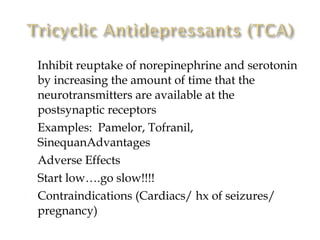
   Inhibit reuptake of norepinephrine and serotonin
    by increasing the amount of time that the
    neurotransmitters are available at the
    postsynaptic receptors
   Examples: Pamelor, Tofranil,
    SinequanAdvantages
   Adverse Effects
   Start low….go slow!!!!
   Contraindications (Cardiacs/ hx of seizures/
    pregnancy)
   Neurotransmitter: increases norepi, tyramine,
    dopamine, serotonin in the system
   This naturally raises the mood!
   Advantages: rare sedation, used for atypical
    depression and panic d/o, OCD, PTSD
   Nardil, Parnate ( two most common)
   Adverse effects (Cardiac changes)
     Avoid food with tyramine
     Drugs that interact with MAOI ( pg 349)
     Contraindications
   Used when a rapid response is needed to
    prevent suicidal ideations, extreme agitation,
    poor response to a variety of meds.
   Procedure
   Advantages
   Potential adverse reactions
   Article: Read ECT Article on Blackboard
   Also check out pg552 for pharmacology chart
   Integrative approaches for depression
     Light Therapy (First line treatment for SAD, seasonal
      affective d/o)
     St John’s Wort ( herb)
     Exercise ( naturally increases mood)


   Future of treatment
     Early screening for indicators
     Education for society
     Promotion of supplemental strategies by MD’s

Mood disorder depression order 7

  • 1.
  • 2.
    Major Depressive d/o  Potential for pain and suffering in all aspects of life  Affects ALL ages  May include: psychosis, catatonic symptoms, and melancholy  Dysthymia  Chronic Depression  > 1year for children  > 2 years for adults/ elderly
  • 3.
    Premenstrual Dysphoric  Depressed, anxious , moody  Still being researched for data  Also to be considered:  Seasonal affective disorder  Postpartum depression
  • 4.
    Depression may result from a complex interaction of causes, as evidences by high variability of:  Symptoms  Response to treatment and course of illness Common Theories: -Biological -Psychosocial influences/ life events Cognitive Learned helplessness
  • 5.
    Tools  Beck Depression Inventory  Hamilton Depression Scale  Geriatric Depression Scale  Zung Depression Scale  SAD Person’s Scale  National Mental Health Association  http://www.depression-screening.org
  • 6.
    Safety First  Suicide Potential  Key Symptoms  Depressed mood  Anxiety  Psychomotor agitation or retardation  Somatic complaints  Vegetative signs
  • 7.
    Affect (sad, weeping)  Thought Processes (delusions, poor judgment)  Feelings (anger, anxiety, hopelessness)  Guilt (rumination over past failings)  Physical Behavior (lethargy, poor hygiene, posture )  Communication (slow speech, slow comprehnsion)
  • 8.
    Transient  “blues” tired, feel like your in a little slump  Mild  Normal grief response, may cry, eating changes  Moderate  dysthymic., a little hopeless, ?suicidal potential  Losing interest in self, grooming, social etc  Severe  Increased hopelessness, total despair, life functioning affected, Suicidal? Homicidal?
  • 9.
    Unrealistic expectations  Feelings originating from the client  Understanding of depression as a systemic illness with a complex interaction of causes
  • 10.
    Risk for suicide  Hopelessness  Powerlessness  Disturbed thought process  Ineffective coping
  • 11.
    Think – Pair- Share  Find a partner and come up with a one minute care plan ( ie outcome criteria/ interventions)  On you mark ..get set…go  (Prioritize your interventions)!!!
  • 12.
    Sheila is a 35 year old IV therapist. She is grossly obese and has recently been suffering from shortness of breath on exertion. She has High BP, High Cholesterol and has noticed that a sore on her foot from a cut has not been healing. She has not been sleeping in her bed but on the couch so she can watch movies when she can’t sleep. She is tired, has a low tolerance for frustration, and feels constantly behind in all that she does.  She is divorced and is raising a teenage son. She just received an invitation to her high school reunion. She
  • 13.
    Starts crying and con not stop all day. When her son gets home from school he calls an ambulance because his mother keeps talking about ending it all.  Client hx: she was head cheerleader in high school. She got married right out of school due to an unexpected pregnancy.  What are your priority assessments?  Diagnosis? Why?  Outcome Criteria for her that you would expect?
  • 14.
    Remain safe  Reports hope for the future  Identifies precursors of depression  Reports improved mood  Plans strategies to reduce the effects of precursors of depression  Did You get these as well???
  • 15.
    Communication  Counseling  Encourage self care  Therapeutic Milieu  Health Teaching  Medications  Assess effects of Medications
  • 16.
    Psychotherapy  Cognitive Therapy  Interpersonal Therapy  Social Skills Training  Group Therapy
  • 17.
    Classes of antidepressants  First Line agents  Selective Serotonin Reuptake inhibitors (SSRIS)  Heterocyclic antidepressants  Tricyclic anti depressants (TCA)  Second line agents (interventions)  Monoamine oxidase inhibitors (MAOIS)  Electroconvulsive Therapy (ECT)
  • 18.
    Block the reuptake of serotonin; thereby serotonin neurotransmission is enhanced  Indications: most widely used (Prozac, Celexa, Paxil, Zoloft)  Side Effects: Lower incidence of anticholinergic side effects than TCA’s  Adverse effects: agitation, sleep disturbance, Sexual dysfunction*  What does that mean? COMPLIANCE!!!
  • 19.
    “Novel “ antidepressants (Wellbutrin/trazadone),  They inhibit the reuptake of norepi/serotonin.  Neurotransmitters:  Serotonin –norepinephrine reuptake inhibitors (SNRI’s) ex. (Effexor/ Cymbalta)  Selective norepinephrine reuptake inhibitors (NRI’s) ex. (Vestra)  Advantages  Adverse Effects
  • 20.
    Inhibit reuptake of norepinephrine and serotonin by increasing the amount of time that the neurotransmitters are available at the postsynaptic receptors  Examples: Pamelor, Tofranil, SinequanAdvantages  Adverse Effects  Start low….go slow!!!!  Contraindications (Cardiacs/ hx of seizures/ pregnancy)
  • 21.
    Neurotransmitter: increases norepi, tyramine, dopamine, serotonin in the system  This naturally raises the mood!  Advantages: rare sedation, used for atypical depression and panic d/o, OCD, PTSD  Nardil, Parnate ( two most common)  Adverse effects (Cardiac changes)  Avoid food with tyramine  Drugs that interact with MAOI ( pg 349)  Contraindications
  • 22.
    Used when a rapid response is needed to prevent suicidal ideations, extreme agitation, poor response to a variety of meds.  Procedure  Advantages  Potential adverse reactions  Article: Read ECT Article on Blackboard  Also check out pg552 for pharmacology chart
  • 23.
    Integrative approaches for depression  Light Therapy (First line treatment for SAD, seasonal affective d/o)  St John’s Wort ( herb)  Exercise ( naturally increases mood)  Future of treatment  Early screening for indicators  Education for society  Promotion of supplemental strategies by MD’s