Medicinal
Plants &
their Uses
CONTENTS
•   Adhatoda Vasica.
•   Ocimum Sanctum
•   Hibiscus Rosa-Sinensis
•   Mangifera Indica
•   Azadirachta Indica
•   Solanum Trilobatum
•   Phyllanthus Niruri
•   Curcuma Longa
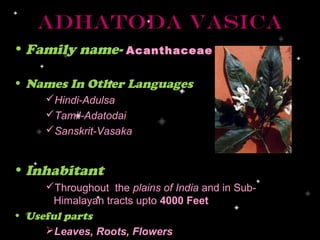
Adhatoda Vasica
• Family name- Acanthaceae

• Names In Other Languages
      Hindi-Adulsa
      Tamil-Adatodai
      Sanskrit-Vasaka


• Inhabitant
     Throughout the plains of India and in Sub-
       Himalayan tracts upto 4000 Feet
• Useful parts
     Leaves, Roots, Flowers
• Medicinal Uses Of Adhatoda Vasica
• Leaves & Roots
    Asthma, Bronchitis, Chronic Coughs,
     Breathlessness and in Cough as Expectorant
• Leaves
    Used in Rheumatism and has Insecticidal

• Whole plant
    Local Bleeding Due To Peptic Ulcer, Piles,
     Menorrhagia.
     antispasmodic
    Have antisceptic properties
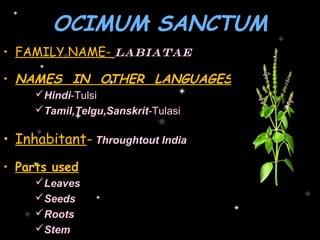
OCIMUM SANCTUM
• FAMILY NAME- Labiatae

• NAMES IN OTHER LANGUAGES
     Hindi-Tulsi
     Tamil,Telgu,Sanskrit-Tulasi

• Inhabitant- Throughtout India
• Parts used
     Leaves
     Seeds
     Roots
     Stem
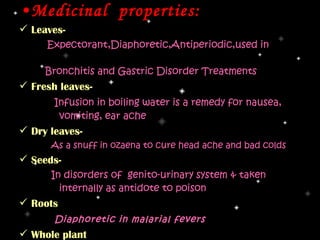
•Medicinal properties:
 Leaves-
     Expectorant,Diaphoretic,Antiperiodic,used in

     Bronchitis and Gastric Disorder Treatments
 Fresh leaves-
       Infusion in boiling water is a remedy for nausea,
        vomiting, ear ache
 Dry leaves-
      As a snuff in ozaena to cure head ache and bad colds
 Seeds-
      In disorders of genito-urinary system & taken
        internally as antidote to poison
 Roots
       Diaphoretic in malarial fevers
 Whole plant
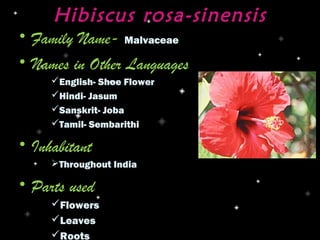
Hibiscus rosa-sinensis
• Family Name- Malvaceae
• Names in Other Languages
     English- Shoe Flower
     Hindi- Jasum
     Sanskrit- Joba
     Tamil- Sembarithi

• Inhabitant
     Throughout India

• Parts used
     Flowers
     Leaves
     Roots
•MEDICINAL PROPERTIES OF
 HIBISCUS ROSA-SINESIS
Flowers-
      Emollient, Aphrodisiac and Refrigerant
 Decoction of Flowers-
     Bronchial Catarrh
Leaves-
      Emollient, Aperient and Laxative
Decoction of Leaves-
     As a Lotion In Fevers
Roots-
     For Coughs, Venereal Disease, Fever,
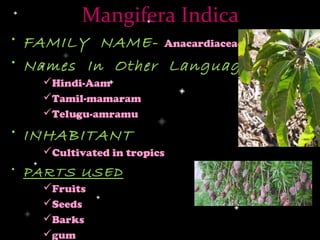
Mangifera Indica
• FAMILY NAME- Anacardiaceae
• Names In Other Languages
   Hindi-Aam
   Tamil-mamaram
   Telugu-amramu
• INHABITANT
   Cultivated in tropics
• PARTS USED
   Fruits
   Seeds
   Barks
   gum
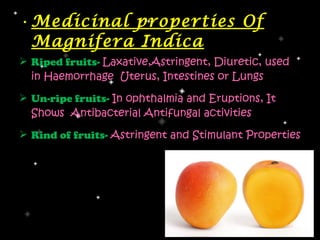
• Medicinal properties Of
  Magnifera Indica
 Riped fruits- Laxative,Astringent, Diuretic, used
  in Haemorrhage Uterus, Intestines or Lungs

 Un-ripe fruits- In ophthalmia and Eruptions, It
  Shows Antibacterial Antifungal activities

 Rind of fruits- Astringent and Stimulant Properties
 Seeds- In Asthma
 Seed kernal- Astringent Taste, Used as
  Anthelmintic, in Bleeding piles .
 Bark- Astringent Taste, In diphtheria and
  rheumatism
 Gum- substitute for gum arabic ,in dressing for
  cracked feet and for scabies
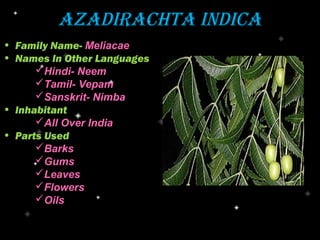
AzAdirAchtA indicA
• Family Name- Meliacae
• Names In Other Languages
      Hindi- Neem
      Tamil- Vepam
      Sanskrit- Nimba
• Inhabitant
      All Over India
• Parts Used
      Barks
      Gums
      Leaves
      Flowers
      Oils
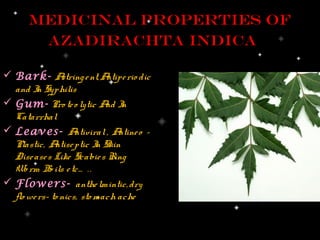
Medicinal properties of
        azadirachta indica

 Bark- A       string e nt, Antipe rio dic
  and I Syphilis
        n
 Gum- Pro te o lytic A I     nd n
  Catarrhal
 Leaves- A         ntiviral , A ntine o -
  Plastic, A  ntise ptic I Skin
                          n
  Dise ase s Like Scabie s Ring
  Wo rm B ils e tc… . .
            o
 Flowers- anthe lmintic, dry
  flo we rs- to nics, sto mach ache
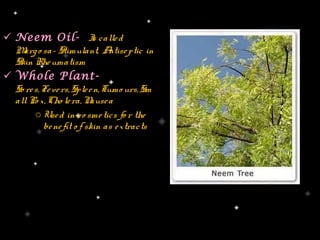
 Neem Oil- I calle d      s
  M o sa- Stimulant, A
    arg                         ntise ptic in
  Skin Rhe umatism
 Whole Plant-
  So re s, Fe ve rs, Sple e n, Tumo urs, Sm
  all Po x, Cho le ra, N  ause a
        o Use d in co sme tics fo r the
           be ne fit o f skin as e xtracts
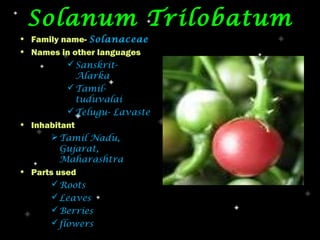
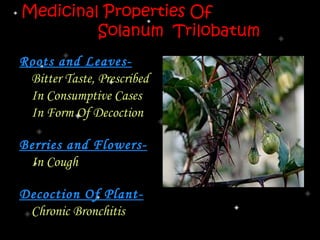
Solanum Trilobatum
• Family name- Solanaceae
• Names in other languages
            Sanskrit-
             Alarka
            Tamil-
             tuduvalai
            Telugu- Lavaste
• Inhabitant
        Tamil Nadu,
         Gujarat,
         Maharashtra
• Parts used
        Roots
        Leaves
        Berries
        flowers
Medicinal Properties Of
         Solanum Trilobatum
Roots and Leaves-
 Bitter Taste, Prescribed
 In Consumptive Cases
 In Form Of Decoction

Berries and Flowers-
 In Cough

Decoction Of Plant-
 Chronic Bronchitis
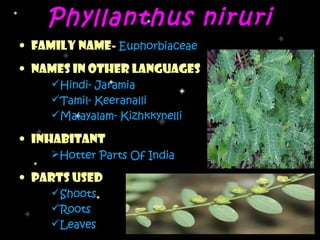
Phyllanthus niruri
• Family Name- Euphorbiaceae
• Names In Other Languages
     Hindi- Jaramia
     Tamil- Keeranalli
     Malayalam- Kizhkkynelli

• Inhabitant
     Hotter Parts Of India

• Parts Used
     Shoots
     Roots
     Leaves
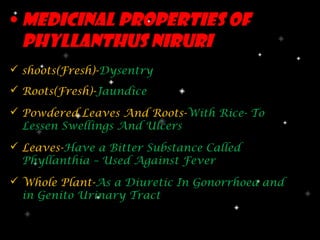
• Medicinal properties Of
  phyllanthus niruri
 shoots(Fresh)-Dysentry
 Roots(Fresh)-Jaundice

 Powdered Leaves And Roots-With Rice- To
  Lessen Swellings And Ulcers
 Leaves-Have a Bitter Substance Called
  Phyllanthia – Used Against Fever
 Whole Plant-As a Diuretic In Gonorrhoea and
  in Genito Urinary Tract
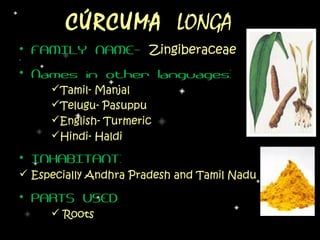
CÚRCUMA LONGA
• FAMILY NAME- Zingiberaceae
•


• Names in other languages:
     Tamil- Manjal
     Telugu- Pasuppu
     English- Turmeric
     Hindi- Haldi

• INHABITANT:
 Especially Andhra Pradesh and Tamil Nadu

• PARTS USED
      Roots
MEDICINAL PROPERTIES OF
    CURCUMA LONGA
• Anti oxidant

• Anti-Arthritis:
    currently being used experimentally as a
     treatment for ulcers in western countries.


• Anti-Cancer effects

• Anti-Diabetic Effects
REFERENCE
• http://www.globalherbalsupplies.com/h
  erb_information
• http://www.ageless.co.za
• http://www.mdidea.com
• http://www.rain-tree.com
medicinal plants & their uses

medicinal plants & their uses

  • 1.
  • 2.
    CONTENTS • Adhatoda Vasica. • Ocimum Sanctum • Hibiscus Rosa-Sinensis • Mangifera Indica • Azadirachta Indica • Solanum Trilobatum • Phyllanthus Niruri • Curcuma Longa
  • 3.
    Adhatoda Vasica • Familyname- Acanthaceae • Names In Other Languages Hindi-Adulsa Tamil-Adatodai Sanskrit-Vasaka • Inhabitant Throughout the plains of India and in Sub- Himalayan tracts upto 4000 Feet • Useful parts Leaves, Roots, Flowers
  • 4.
    • Medicinal UsesOf Adhatoda Vasica • Leaves & Roots Asthma, Bronchitis, Chronic Coughs, Breathlessness and in Cough as Expectorant • Leaves Used in Rheumatism and has Insecticidal • Whole plant Local Bleeding Due To Peptic Ulcer, Piles, Menorrhagia.  antispasmodic Have antisceptic properties
  • 5.
    OCIMUM SANCTUM • FAMILYNAME- Labiatae • NAMES IN OTHER LANGUAGES Hindi-Tulsi Tamil,Telgu,Sanskrit-Tulasi • Inhabitant- Throughtout India • Parts used Leaves Seeds Roots Stem
  • 6.
    •Medicinal properties:  Leaves- Expectorant,Diaphoretic,Antiperiodic,used in Bronchitis and Gastric Disorder Treatments  Fresh leaves- Infusion in boiling water is a remedy for nausea, vomiting, ear ache  Dry leaves- As a snuff in ozaena to cure head ache and bad colds  Seeds- In disorders of genito-urinary system & taken internally as antidote to poison  Roots Diaphoretic in malarial fevers  Whole plant
  • 7.
    Hibiscus rosa-sinensis • FamilyName- Malvaceae • Names in Other Languages English- Shoe Flower Hindi- Jasum Sanskrit- Joba Tamil- Sembarithi • Inhabitant Throughout India • Parts used Flowers Leaves Roots
  • 9.
    •MEDICINAL PROPERTIES OF HIBISCUS ROSA-SINESIS Flowers-  Emollient, Aphrodisiac and Refrigerant  Decoction of Flowers- Bronchial Catarrh Leaves-  Emollient, Aperient and Laxative Decoction of Leaves- As a Lotion In Fevers Roots- For Coughs, Venereal Disease, Fever,
  • 10.
    Mangifera Indica • FAMILYNAME- Anacardiaceae • Names In Other Languages Hindi-Aam Tamil-mamaram Telugu-amramu • INHABITANT Cultivated in tropics • PARTS USED Fruits Seeds Barks gum
  • 11.
    • Medicinal propertiesOf Magnifera Indica  Riped fruits- Laxative,Astringent, Diuretic, used in Haemorrhage Uterus, Intestines or Lungs  Un-ripe fruits- In ophthalmia and Eruptions, It Shows Antibacterial Antifungal activities  Rind of fruits- Astringent and Stimulant Properties
  • 12.
     Seeds- InAsthma  Seed kernal- Astringent Taste, Used as Anthelmintic, in Bleeding piles .  Bark- Astringent Taste, In diphtheria and rheumatism  Gum- substitute for gum arabic ,in dressing for cracked feet and for scabies
  • 13.
    AzAdirAchtA indicA • FamilyName- Meliacae • Names In Other Languages Hindi- Neem Tamil- Vepam Sanskrit- Nimba • Inhabitant All Over India • Parts Used Barks Gums Leaves Flowers Oils
  • 14.
    Medicinal properties of azadirachta indica  Bark- A string e nt, Antipe rio dic and I Syphilis n  Gum- Pro te o lytic A I nd n Catarrhal  Leaves- A ntiviral , A ntine o - Plastic, A ntise ptic I Skin n Dise ase s Like Scabie s Ring Wo rm B ils e tc… . . o  Flowers- anthe lmintic, dry flo we rs- to nics, sto mach ache
  • 15.
     Neem Oil-I calle d s M o sa- Stimulant, A arg ntise ptic in Skin Rhe umatism  Whole Plant- So re s, Fe ve rs, Sple e n, Tumo urs, Sm all Po x, Cho le ra, N ause a o Use d in co sme tics fo r the be ne fit o f skin as e xtracts
  • 16.
    Solanum Trilobatum • Familyname- Solanaceae • Names in other languages  Sanskrit- Alarka  Tamil- tuduvalai  Telugu- Lavaste • Inhabitant  Tamil Nadu, Gujarat, Maharashtra • Parts used  Roots  Leaves  Berries  flowers
  • 17.
    Medicinal Properties Of Solanum Trilobatum Roots and Leaves- Bitter Taste, Prescribed In Consumptive Cases In Form Of Decoction Berries and Flowers- In Cough Decoction Of Plant- Chronic Bronchitis
  • 18.
    Phyllanthus niruri • FamilyName- Euphorbiaceae • Names In Other Languages Hindi- Jaramia Tamil- Keeranalli Malayalam- Kizhkkynelli • Inhabitant Hotter Parts Of India • Parts Used Shoots Roots Leaves
  • 19.
    • Medicinal propertiesOf phyllanthus niruri  shoots(Fresh)-Dysentry  Roots(Fresh)-Jaundice  Powdered Leaves And Roots-With Rice- To Lessen Swellings And Ulcers  Leaves-Have a Bitter Substance Called Phyllanthia – Used Against Fever  Whole Plant-As a Diuretic In Gonorrhoea and in Genito Urinary Tract
  • 20.
    CÚRCUMA LONGA • FAMILYNAME- Zingiberaceae • • Names in other languages: Tamil- Manjal Telugu- Pasuppu English- Turmeric Hindi- Haldi • INHABITANT:  Especially Andhra Pradesh and Tamil Nadu • PARTS USED  Roots
  • 21.
    MEDICINAL PROPERTIES OF CURCUMA LONGA • Anti oxidant • Anti-Arthritis: currently being used experimentally as a treatment for ulcers in western countries. • Anti-Cancer effects • Anti-Diabetic Effects
  • 22.
    REFERENCE • http://www.globalherbalsupplies.com/h erb_information • http://www.ageless.co.za • http://www.mdidea.com • http://www.rain-tree.com