medicinal plants
WHAT IS MEDICINAL PLANT
o A medicinal plant is a plant that is used for medicinal
purposes, or to provide a medicinal substance for the
treatment or prevention of a disease.
o Examples :
1. Aloe vera
2. Ginger
3. Neem
4. Tulshi
5. Turmeric
6. Amla
7. Beal
8. Peppermint
Aloe vera
Aloe vera:
• Botanical Name: Aloe barbadensis
• Family: Asphodelaceae
• Morphology: a succulent plant with thick , fleshy leaves
• Parts used: leaves
Use:
1. Skin conditions: Aloe vera is often used topically to treat cuts, burns, and skin irritations. It
has anti-inflammatory properties that may help to reduce redness and swelling, and it can
also help to moisturize the skin.
2. Digestion: Aloe vera has been used to aid in digestion and to treat constipation. It is
believed to have a gentle laxative effect and may help to soften stools.
3. Immune system: Aloe vera is thought to boost the immune system and may help to protect
against illness.
4. Wound healing: Aloe vera may help to speed up the healing process for wounds. It is
believed to have antibacterial properties that may help to prevent infection.
5. Hair and scalp: Aloe vera can be used to nourish the scalp and promote healthy hair
growth. It is often used as an ingredient in hair care products.
Ginger
Ginger:
• Botanical Name : Zingiber officinale
• Family: Zingiberaceae
• Morphology: a tropical plant with long, green leaves
• and a knobby , aromatic root
• Parts used: root
Use:
1. Nausea and vomiting: Ginger is often used to alleviate nausea and vomiting caused by motion
sickness, morning sickness during pregnancy, and chemotherapy.
2. Inflammation: Ginger has anti-inflammatory properties and may be effective at reducing inflammation
in the body.
3. Pain relief: Ginger may be effective at reducing muscle pain and soreness. It may also be helpful for
relieving headaches and menstrual cramps.
4. Heart health: Some research suggests that ginger may have a positive effect on blood pressure and
cholesterol levels, which may be beneficial for heart health.
5. Cold and flu: Ginger may help to reduce the severity and duration of cold and flu symptoms. It is
believed to have immune-boosting properties.
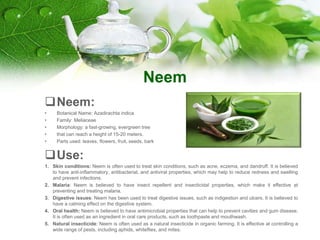
Neem
Neem:
• Botanical Name: Azadirachta indica
• Family: Meliaceae
• Morphology: a fast-growing, evergreen tree
• that can reach a height of 15-20 meters.
• Parts used: leaves, flowers, fruit, seeds, bark
Use:
1. Skin conditions: Neem is often used to treat skin conditions, such as acne, eczema, and dandruff. It is believed
to have anti-inflammatory, antibacterial, and antiviral properties, which may help to reduce redness and swelling
and prevent infections.
2. Malaria: Neem is believed to have insect repellent and insecticidal properties, which make it effective at
preventing and treating malaria.
3. Digestive issues: Neem has been used to treat digestive issues, such as indigestion and ulcers. It is believed to
have a calming effect on the digestive system.
4. Oral health: Neem is believed to have antimicrobial properties that can help to prevent cavities and gum disease.
It is often used as an ingredient in oral care products, such as toothpaste and mouthwash.
5. Natural insecticide: Neem is often used as a natural insecticide in organic farming. It is effective at controlling a
wide range of pests, including aphids, whiteflies, and mites.
Tulshi
Tulshi :
• Botanical Name : Ocimum tenuiflorum
• Family: Lamiaceae
• Morphology: a perennial herb that can
• grow up to 1 meter in height
• Parts used: leaves, flowers
Use:
1. Fever: Tulshi is believed to have antipyretic properties, which may help to reduce fever.
2. Respiratory issues: Tulshi is often used to treat respiratory issues, such as colds, flu, and bronchitis. It is
believed to have expectorant properties, which may help to clear mucus from the respiratory tract.
3. Digestive problems: Tulshi is believed to have a calming effect on the digestive system and may be effective at
treating digestive issues, such as indigestion and bloating.
4. Antibacterial and antiviral properties: Tulshi is believed to have antibacterial and antiviral properties, which
may help to prevent and treat infections.
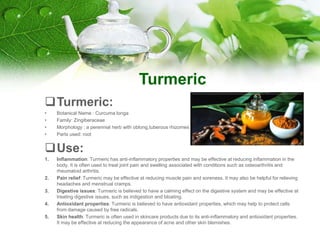
Turmeric
Turmeric:
• Botanical Name : Curcuma longa
• Family: Zingiberaceae
• Morphology : a perennial herb with oblong,tuberous rhizomes
• Parts used: root
Use:
1. Inflammation: Turmeric has anti-inflammatory properties and may be effective at reducing inflammation in the
body. It is often used to treat joint pain and swelling associated with conditions such as osteoarthritis and
rheumatoid arthritis.
2. Pain relief: Turmeric may be effective at reducing muscle pain and soreness. It may also be helpful for relieving
headaches and menstrual cramps.
3. Digestive issues: Turmeric is believed to have a calming effect on the digestive system and may be effective at
treating digestive issues, such as indigestion and bloating.
4. Antioxidant properties: Turmeric is believed to have antioxidant properties, which may help to protect cells
from damage caused by free radicals.
5. Skin health: Turmeric is often used in skincare products due to its anti-inflammatory and antioxidant properties.
It may be effective at reducing the appearance of acne and other skin blemishes.
Amla
Amla:
• Botanical Name : Phyllanthus emblica
• Family :Phyllanthaceae
• Morphology: a deciduous tree that can grow up to 15 meters
• Parts used: fruit, leaves
Use:
1. Colds and flu: Amla is believed to have immune-boosting properties and may be effective at reducing the severity
and duration of cold and flu symptoms.
2. Digestive issues: Amla is believed to have a calming effect on the digestive system and may be effective at
treating digestive issues, such as indigestion and bloating.
3. Skin health: Amla is believed to have antioxidant properties, which may help to protect skin cells from damage
caused by free radicals. It is often used in skincare products to improve skin health.
4. Hair health: Amla is believed to nourish the scalp and promote healthy hair growth. It is often used as an
ingredient in hair care products.
5. Cardiovascular health: Some research suggests that amla may have a positive effect on blood pressure and
cholesterol levels, which may be beneficial for heart health.
Bael
Bael:
• Botanical Name : Aegle marmelos
• Family: Rutaceae
• Morphology: a deciduous tree that can grow up to 10 meters
• Parts used: fruit, leaves, bark
Use:
1. Digestive health: The fruit of the bael tree is believed to have a soothing effect on the digestive system and is
used to treat a variety of digestive disorders, including diarrhea and dysentery. It is also thought to help improve
appetite.
2. Fever: The fruit is believed to have antipyretic (fever-reducing) properties and is often used to treat fever.
3. Inflammation: Some research suggests that the fruit may have anti-inflammatory properties and may be useful in
the treatment of inflammatory conditions.
4. Heart health: The fruit is believed to have a protective effect on the heart and may help to lower blood pressure
and reduce the risk of heart disease.
5. Skin health: The fruit is believed to have astringent properties and is often used to treat skin disorders and
promote the healing of wounds.
Peppermint
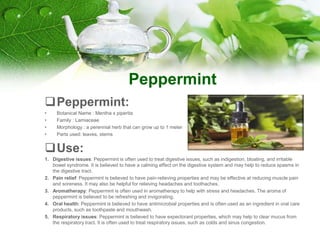
Peppermint:
• Botanical Name : Mentha x piperita
• Family : Lamiaceae
• Morphology : a perennial herb that can grow up to 1 meter
• Parts used: leaves, stems
Use:
1. Digestive issues: Peppermint is often used to treat digestive issues, such as indigestion, bloating, and irritable
bowel syndrome. It is believed to have a calming effect on the digestive system and may help to reduce spasms in
the digestive tract.
2. Pain relief: Peppermint is believed to have pain-relieving properties and may be effective at reducing muscle pain
and soreness. It may also be helpful for relieving headaches and toothaches.
3. Aromatherapy: Peppermint is often used in aromatherapy to help with stress and headaches. The aroma of
peppermint is believed to be refreshing and invigorating.
4. Oral health: Peppermint is believed to have antimicrobial properties and is often used as an ingredient in oral care
products, such as toothpaste and mouthwash.
5. Respiratory issues: Peppermint is believed to have expectorant properties, which may help to clear mucus from
the respiratory tract. It is often used to treat respiratory issues, such as colds and sinus congestion.
THANK YOU

medicinal_plants_ppt.pptx

  • 1.
  • 2.
    WHAT IS MEDICINALPLANT o A medicinal plant is a plant that is used for medicinal purposes, or to provide a medicinal substance for the treatment or prevention of a disease. o Examples : 1. Aloe vera 2. Ginger 3. Neem 4. Tulshi 5. Turmeric 6. Amla 7. Beal 8. Peppermint
  • 3.
    Aloe vera Aloe vera: •Botanical Name: Aloe barbadensis • Family: Asphodelaceae • Morphology: a succulent plant with thick , fleshy leaves • Parts used: leaves Use: 1. Skin conditions: Aloe vera is often used topically to treat cuts, burns, and skin irritations. It has anti-inflammatory properties that may help to reduce redness and swelling, and it can also help to moisturize the skin. 2. Digestion: Aloe vera has been used to aid in digestion and to treat constipation. It is believed to have a gentle laxative effect and may help to soften stools. 3. Immune system: Aloe vera is thought to boost the immune system and may help to protect against illness. 4. Wound healing: Aloe vera may help to speed up the healing process for wounds. It is believed to have antibacterial properties that may help to prevent infection. 5. Hair and scalp: Aloe vera can be used to nourish the scalp and promote healthy hair growth. It is often used as an ingredient in hair care products.
  • 4.
    Ginger Ginger: • Botanical Name: Zingiber officinale • Family: Zingiberaceae • Morphology: a tropical plant with long, green leaves • and a knobby , aromatic root • Parts used: root Use: 1. Nausea and vomiting: Ginger is often used to alleviate nausea and vomiting caused by motion sickness, morning sickness during pregnancy, and chemotherapy. 2. Inflammation: Ginger has anti-inflammatory properties and may be effective at reducing inflammation in the body. 3. Pain relief: Ginger may be effective at reducing muscle pain and soreness. It may also be helpful for relieving headaches and menstrual cramps. 4. Heart health: Some research suggests that ginger may have a positive effect on blood pressure and cholesterol levels, which may be beneficial for heart health. 5. Cold and flu: Ginger may help to reduce the severity and duration of cold and flu symptoms. It is believed to have immune-boosting properties.
  • 5.
    Neem Neem: • Botanical Name:Azadirachta indica • Family: Meliaceae • Morphology: a fast-growing, evergreen tree • that can reach a height of 15-20 meters. • Parts used: leaves, flowers, fruit, seeds, bark Use: 1. Skin conditions: Neem is often used to treat skin conditions, such as acne, eczema, and dandruff. It is believed to have anti-inflammatory, antibacterial, and antiviral properties, which may help to reduce redness and swelling and prevent infections. 2. Malaria: Neem is believed to have insect repellent and insecticidal properties, which make it effective at preventing and treating malaria. 3. Digestive issues: Neem has been used to treat digestive issues, such as indigestion and ulcers. It is believed to have a calming effect on the digestive system. 4. Oral health: Neem is believed to have antimicrobial properties that can help to prevent cavities and gum disease. It is often used as an ingredient in oral care products, such as toothpaste and mouthwash. 5. Natural insecticide: Neem is often used as a natural insecticide in organic farming. It is effective at controlling a wide range of pests, including aphids, whiteflies, and mites.
  • 6.
    Tulshi Tulshi : • BotanicalName : Ocimum tenuiflorum • Family: Lamiaceae • Morphology: a perennial herb that can • grow up to 1 meter in height • Parts used: leaves, flowers Use: 1. Fever: Tulshi is believed to have antipyretic properties, which may help to reduce fever. 2. Respiratory issues: Tulshi is often used to treat respiratory issues, such as colds, flu, and bronchitis. It is believed to have expectorant properties, which may help to clear mucus from the respiratory tract. 3. Digestive problems: Tulshi is believed to have a calming effect on the digestive system and may be effective at treating digestive issues, such as indigestion and bloating. 4. Antibacterial and antiviral properties: Tulshi is believed to have antibacterial and antiviral properties, which may help to prevent and treat infections.
  • 7.
    Turmeric Turmeric: • Botanical Name: Curcuma longa • Family: Zingiberaceae • Morphology : a perennial herb with oblong,tuberous rhizomes • Parts used: root Use: 1. Inflammation: Turmeric has anti-inflammatory properties and may be effective at reducing inflammation in the body. It is often used to treat joint pain and swelling associated with conditions such as osteoarthritis and rheumatoid arthritis. 2. Pain relief: Turmeric may be effective at reducing muscle pain and soreness. It may also be helpful for relieving headaches and menstrual cramps. 3. Digestive issues: Turmeric is believed to have a calming effect on the digestive system and may be effective at treating digestive issues, such as indigestion and bloating. 4. Antioxidant properties: Turmeric is believed to have antioxidant properties, which may help to protect cells from damage caused by free radicals. 5. Skin health: Turmeric is often used in skincare products due to its anti-inflammatory and antioxidant properties. It may be effective at reducing the appearance of acne and other skin blemishes.
  • 8.
    Amla Amla: • Botanical Name: Phyllanthus emblica • Family :Phyllanthaceae • Morphology: a deciduous tree that can grow up to 15 meters • Parts used: fruit, leaves Use: 1. Colds and flu: Amla is believed to have immune-boosting properties and may be effective at reducing the severity and duration of cold and flu symptoms. 2. Digestive issues: Amla is believed to have a calming effect on the digestive system and may be effective at treating digestive issues, such as indigestion and bloating. 3. Skin health: Amla is believed to have antioxidant properties, which may help to protect skin cells from damage caused by free radicals. It is often used in skincare products to improve skin health. 4. Hair health: Amla is believed to nourish the scalp and promote healthy hair growth. It is often used as an ingredient in hair care products. 5. Cardiovascular health: Some research suggests that amla may have a positive effect on blood pressure and cholesterol levels, which may be beneficial for heart health.
  • 9.
    Bael Bael: • Botanical Name: Aegle marmelos • Family: Rutaceae • Morphology: a deciduous tree that can grow up to 10 meters • Parts used: fruit, leaves, bark Use: 1. Digestive health: The fruit of the bael tree is believed to have a soothing effect on the digestive system and is used to treat a variety of digestive disorders, including diarrhea and dysentery. It is also thought to help improve appetite. 2. Fever: The fruit is believed to have antipyretic (fever-reducing) properties and is often used to treat fever. 3. Inflammation: Some research suggests that the fruit may have anti-inflammatory properties and may be useful in the treatment of inflammatory conditions. 4. Heart health: The fruit is believed to have a protective effect on the heart and may help to lower blood pressure and reduce the risk of heart disease. 5. Skin health: The fruit is believed to have astringent properties and is often used to treat skin disorders and promote the healing of wounds.
  • 10.
    Peppermint Peppermint: • Botanical Name: Mentha x piperita • Family : Lamiaceae • Morphology : a perennial herb that can grow up to 1 meter • Parts used: leaves, stems Use: 1. Digestive issues: Peppermint is often used to treat digestive issues, such as indigestion, bloating, and irritable bowel syndrome. It is believed to have a calming effect on the digestive system and may help to reduce spasms in the digestive tract. 2. Pain relief: Peppermint is believed to have pain-relieving properties and may be effective at reducing muscle pain and soreness. It may also be helpful for relieving headaches and toothaches. 3. Aromatherapy: Peppermint is often used in aromatherapy to help with stress and headaches. The aroma of peppermint is believed to be refreshing and invigorating. 4. Oral health: Peppermint is believed to have antimicrobial properties and is often used as an ingredient in oral care products, such as toothpaste and mouthwash. 5. Respiratory issues: Peppermint is believed to have expectorant properties, which may help to clear mucus from the respiratory tract. It is often used to treat respiratory issues, such as colds and sinus congestion.
  • 11.