Medicinal Plants
 General high school of Sapes
Names:KILINKARIDOU MELINA
    SAMPATZE CATHRINE
 MPOZANAKH STAVROULA
  AYGERIDOU EVAGGELIA
GIANNAKOPOULOU BASILIKH
  POULOUTIDOU DIMITRA
    SKOPIANOS DIMITRIS
   TERSENIDIS KYRIAKOS
THE MOST COMMON
          ORGANIC CHEMICAL
              ELEMENTS
•   Medicine in pre-scientific times
•   Synthetic organic chemistry and medicine
•   Alkaloids
•   glycosides
•   Foxglove (digoxin)
•   Willow bark (aspirin)
•   quinine
•   Ephidrine
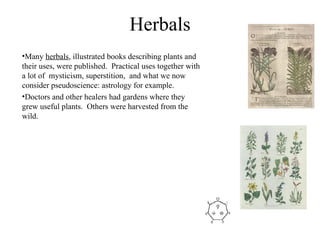
Herbals
•Many herbals, illustrated books describing plants and
their uses, were published. Practical uses together with
a lot of mysticism, superstition, and what we now
consider pseudoscience: astrology for example.
•Doctors and other healers had gardens where they
grew useful plants. Others were harvested from the
wild.
Systems of Medicine
•   Our present system, scientific medicine, is only 200 years
    old or so. There have been many other concepts in
    medicine, and there continue to be alternative systems of
    medicine. These other systems often contain concepts that
    are specifically denied or disproved by science.
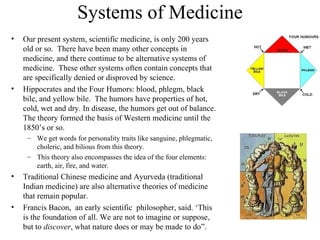
•   Hippocrates and the Four Humors: blood, phlegm, black
    bile, and yellow bile. The humors have properties of hot,
    cold, wet and dry. In disease, the humors get out of balance.
    The theory formed the basis of Western medicine until the
    1850’s or so.
     – We get words for personality traits like sanguine, phlegmatic,
       choleric, and bilious from this theory.
     – This theory also encompasses the idea of the four elements:
       earth, air, fire, and water.
•   Traditional Chinese medicine and Ayurveda (traditional
    Indian medicine) are also alternative theories of medicine
    that remain popular.
•   Francis Bacon, an early scientific philosopher, said. ‘This
    is the foundation of all. We are not to imagine or suppose,
    but to discover, what nature does or may be made to do”.
Scientific Testing
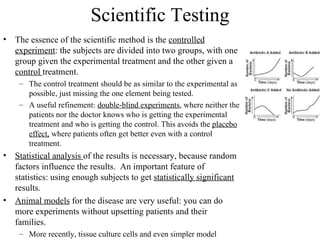
• The essence of the scientific method is the controlled
  experiment: the subjects are divided into two groups, with one
  group given the experimental treatment and the other given a
  control treatment.
    – The control treatment should be as similar to the experimental as
      possible, just missing the one element being tested.
    – A useful refinement: double-blind experiments, where neither the
      patients nor the doctor knows who is getting the experimental
      treatment and who is getting the control. This avoids the placebo
      effect, where patients often get better even with a control
      treatment.
• Statistical analysis of the results is necessary, because random
  factors influence the results. An important feature of
  statistics: using enough subjects to get statistically significant
  results.
• Animal models for the disease are very useful: you can do
  more experiments without upsetting patients and their
  families.
    – More recently, tissue culture cells and even simpler model
Active Principles
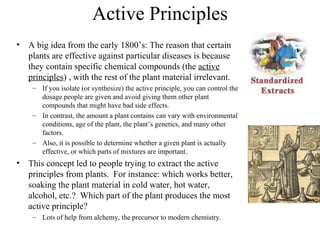
• A big idea from the early 1800’s: The reason that certain
  plants are effective against particular diseases is because
  they contain specific chemical compounds (the active
  principles) , with the rest of the plant material irrelevant.
    – If you isolate (or synthesize) the active principle, you can control the
      dosage people are given and avoid giving them other plant
      compounds that might have bad side effects.
    – In contrast, the amount a plant contains can vary with environmental
      conditions, age of the plant, the plant’s genetics, and many other
      factors.
    – Also, it is possible to determine whether a given plant is actually
      effective, or which parts of mixtures are important.
• This concept led to people trying to extract the active
  principles from plants. For instance: which works better,
  soaking the plant material in cold water, hot water,
  alcohol, etc.? Which part of the plant produces the most
  active principle?
    – Lots of help from alchemy, the precursor to modern chemistry.
Medicinal Chemistry
• The effect of organic chemistry and the scientific method:
  useful compounds are still isolated from plants: taxol is a
  recent example. However, once isolated, attempts are made
  to synthesize them and modify them.
    – This helps avoid the supply of the plant from being cut off due
      to disease or political or economic reasons.
    – The Germans pioneered this philosophy of self-sufficiency in
      the 1800’s because they had poor access to the ocean trade
      routes and very few overseas colonies.
    – Also, synthesizing an active principle from scratch proves that
      you really do understand its structure.
• It is worth considering whether the healing effect of a plant
  is due solely to a single active compound, with all others
  irrelevant. There are many cases where several compounds
  acted synergistically. And, healing is also helped by the
  placebo effect and also by careful individual attention from a
  healer. We are not just biological machines that respond
  uniformly to impersonal treatment.
Active Principles in Plants
• The value of plants as medicine come from specific chemical compounds
  they contain. These compounds are secondary metabolites: not directly
  related to the plant’s ability to grow or reproduce.
• Secondary metabolites are probably present as a defense against infection by
  bacteria or fungi, or to prevent insects and other animals from eating them.
    – Some secondary metabolites inhibit other plant species: they poison the soil.
    – Also, some are used to attract animals to help with pollination and seed dispersal:
      the scents of fruits and flowers, for example.
• Different species produce different secondary metabolites. Within plant
  families, the secondary metabolites are similar. For instance, the carrot
  family and mustard family.
• A 2001 study counted 122 compounds used in medicine that were derived
  from traditional herbal medicine. Of these, 80% were used for the purpose
  the herbalists said they were good for. Traditional herbal medicine is a very
  useful starting point for drug discovery.
    – It is thought that about 10,000 different plants have been used in herbal medicine
      at some point in human history.
Major Groups of Secondary Metabolites
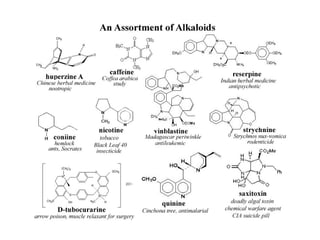
 • Alkaloids. Many different compounds, found in many plants. They
   all contain nitrogen atoms, are alkaline (basic), and taste bitter.
   Structures vary widely.
     – Often affect the nervous system. Whether this is good or bad depends on
       dosage and your point of view. For example, morphine.
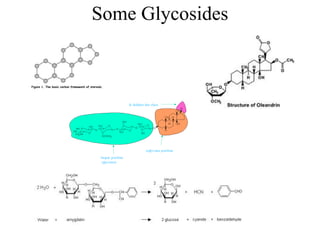
 • Glycosides. A sugar is attached to the active component. This makes
   them non-toxic until an enzyme removes the sugar, which happens in
   the digestive system.
     – Cyanogenic. Very simple: cyanide attached to a sugar. Remove the sugar
       and release the poison: it stops the ability to make ATP.
     – Steroid. Steroids have a particular ring structure and are used to make
       hormones in animals. Two main types:
         • cardioactive (meaning that they affect your heart).
         • Saponins are soapy and very toxic: they work especially well as fish
           poisons because they dissolve easily in water. The steroid found in
           yams (Dioscorea) is a saponin.
• s
  s
Some Glycosides
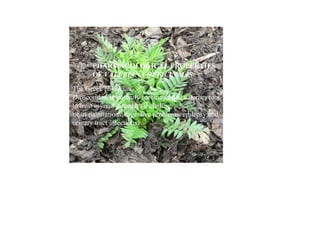
PHARMACOLOGICAL PROPERTIES
       OF VALERIANA OFFICINALIS
The Greek physician,
Dioscorides, apparently recommended valerian root
to treat myriad disorders including
heart palpitations, digestive problems, epilepsy and
urinary tract infections1.
VALERIANA ISUSED TO
TREAT NERVOUS STOMACH
ALSO AS HYPNOTICS AND
ANXIOLYTICS


     VALERENIC ACID
     HAS SPASMOLYTIC
     AND MUSCLE
     RELAXANT EFFECTS
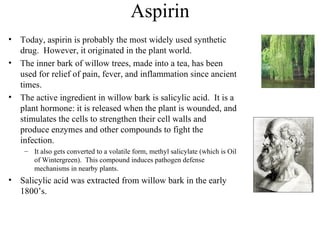
Aspirin
• Today, aspirin is probably the most widely used synthetic
  drug. However, it originated in the plant world.
• The inner bark of willow trees, made into a tea, has been
  used for relief of pain, fever, and inflammation since ancient
  times.
• The active ingredient in willow bark is salicylic acid. It is a
  plant hormone: it is released when the plant is wounded, and
  stimulates the cells to strengthen their cell walls and
  produce enzymes and other compounds to fight the
  infection.
    – It also gets converted to a volatile form, methyl salicylate (which is Oil
      of Wintergreen). This compound induces pathogen defense
      mechanisms in nearby plants.
• Salicylic acid was extracted from willow bark in the early
  1800’s.
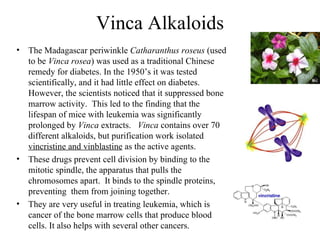
Vinca Alkaloids
• The Madagascar periwinkle Catharanthus roseus (used
  to be Vinca rosea) was used as a traditional Chinese
  remedy for diabetes. In the 1950’s it was tested
  scientifically, and it had little effect on diabetes.
  However, the scientists noticed that it suppressed bone
  marrow activity. This led to the finding that the
  lifespan of mice with leukemia was significantly
  prolonged by Vinca extracts. Vinca contains over 70
  different alkaloids, but purification work isolated
  vincristine and vinblastine as the active agents.
• These drugs prevent cell division by binding to the
  mitotic spindle, the apparatus that pulls the
  chromosomes apart. It binds to the spindle proteins,
  preventing them from joining together.
• They are very useful in treating leukemia, which is
  cancer of the bone marrow cells that produce blood
  cells. It also helps with several other cancers.
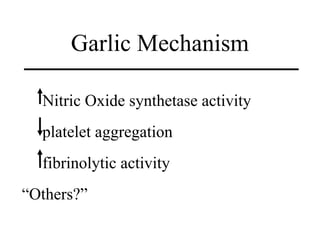
Garlic Mechanism

  Nitric Oxide synthetase activity
  platelet aggregation
  fibrinolytic activity
“Others?”
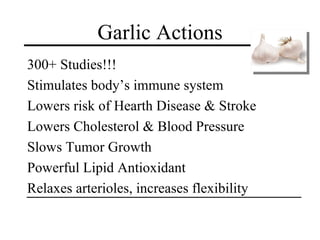
Garlic Actions
300+ Studies!!!
Stimulates body’s immune system
Lowers risk of Hearth Disease & Stroke
Lowers Cholesterol & Blood Pressure
Slows Tumor Growth
Powerful Lipid Antioxidant
Relaxes arterioles, increases flexibility
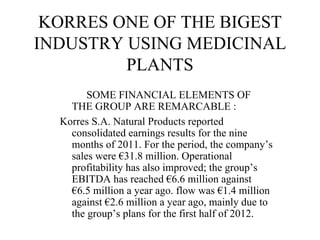
KORRES ONE OF THE BIGEST
INDUSTRY USING MEDICINAL
         PLANTS
        SOME FINANCIAL ELEMENTS OF
    THE GROUP ARE REMARCABLE :
  Korres S.A. Natural Products reported
    consolidated earnings results for the nine
    months of 2011. For the period, the company’s
    sales were €31.8 million. Operational
    profitability has also improved; the group’s
    EBITDA has reached €6.6 million against
    €6.5 million a year ago. flow was €1.4 million
    against €2.6 million a year ago, mainly due to
    the group’s plans for the first half of 2012.
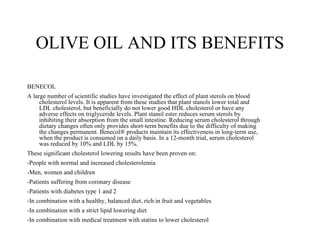
OLIVE OIL AND ITS BENEFITS

BENECOL
A large number of scientific studies have investigated the effect of plant sterols on blood
     cholesterol levels. It is apparent from these studies that plant stanols lower total and
     LDL cholesterol, but beneficially do not lower good HDL cholesterol or have any
     adverse effects on triglyceride levels. Plant stanol ester reduces serum sterols by
     inhibiting their absorption from the small intestine. Reducing serum cholesterol through
     dietary changes often only provides short-term benefits due to the difficulty of making
     the changes permanent. Benecol® products maintain its effectiveness in long-term use,
     when the product is consumed on a daily basis. In a 12-month trial, serum cholesterol
     was reduced by 10% and LDL by 15%.
These significant cholesterol lowering results have been proven on:
-People with normal and increased cholesterolemia
-Men, women and children
-Patients suffering from coronary disease
-Patients with diabetes type 1 and 2
-In combination with a healthy, balanced diet, rich in fruit and vegetables
-In combination with a strict lipid lowering diet
-In combination with medical treatment with statins to lower cholesterol
FUNCTIONAL FOODS AND
     THEIR BENEFITS
FUNCTIONAL FOODS
Functional Foods is a company that implements innovative
  ideas in the food sector. Its main goal is promoting
  Functional Foods - the latest nutritional trend - to the
  international market.
Functional foods are the latest discovery in today's healthy
  eating. They contribute to our good health, help us obtain
  our ideal weight, and prevent and fight various deseases.
Functional Foods researches the the global market and selects
  the best products for its customers.
GREEK DRY RUSK OF
    BARLEY AS FUNCTIONAL
            FOOD
CRETAN DRY RUSK
Dakos Barley Rusk
This dry rusk is kneaded in the old traditional way, without any chemical additions. It is
    prepared with unprocessed wheat and barley whole grains as well as virgin olive oil. It is
    baked in a traditional wood oven.
Dry Rusk (Seven-kneaded)
The traditional Cretan seven-kneaded dry rusk is really delicious. It takes a lot of effort to
    knead it and our knowledge and expertise gives it a special taste that can be compared
    to the dry rusks of old times.
Barley Round Rusk
This rusk is kneaded in the traditional way, without any chemical additions. It is prepared
    with unprocessed wheat and barley whole grains as well as virgin olive oil. It is baked
    in a traditional wood oven.
Wheat Rusk
Our rusk is kneaded with a lot of care, without any chemical additions, ritch in nutritional
    value and maintains its freshness and taste for a long time.
BELLEZA HERBAL
PRODUCTS
BELLEZA HERBAL INFUSIONS
Digestive
Digestive herbal infusion is a perfect blend of herbs that help to improve the digestion. It also helps to
    relieve colic, bloated feeling, cramps and stomach-aches. Anise and Fennel are well known for their
    carminative effect. Combined with the stimulation of the digestion provided by Haritaki and
    Lemongrass makes for a balanced formula towards a healthy digestive system.
Energizing
Energizing herbal infusion is a formulation that will get you going with increased energy and alertness. A
    caffeine free energy boost! Gotukola, a key ingredient, works as a brain tonic, revitalizing the brain
    and the nervous system, thereby increasing attention span and concentration.
Holistic
Holistic herbal infusion helps you to revitalize the body, brain and the nervous system thereby helping.
    The herb Guduchi accords longevity, enhances memory and improves health. A holistic approach to
    wellness and good health.
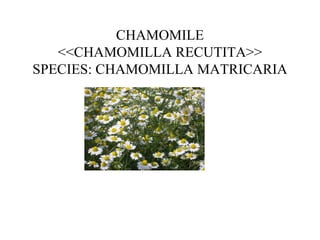
CHAMOMILE
   <<CHAMOMILLA RECUTITA>>
SPECIES: CHAMOMILLA MATRICARIA
BENEFITS OF MEDICINAL
       PLANTS TO IMMUNE
Immune
            SYSTEM
Based on an ancient Ayurvedic recipe, this blend of herbs contributes to strengthening your immune
    system. Extracts of the herb Tulsi, modulate immunity, thus promoting immune system function.
    Indian Sarsaparilla is used in Ayurveda as a tonic useful against various disorders.
Mint & Lemon
The combination of Mint & Lemon is an enticing mix of sweet, sour and savory that greets your tongue
    when you take a sip. Like so many simple dishes the final product is something that is somehow
    ethereal and infinitely sublime.
Relaxing
Relaxing herbal infusion is a formulation composed to naturally help relieve stress and anxiety and get
    you back on track to a calm, balanced state of mind. Try this flavorful and gentle organic herbal tea
    to help yourself ease from a stressful day into a restful night.
One of the key ingredients, Ashwagandha, relieves stress and helps in nurturing nervous system and
    promotes calmness and mental satisfaction.
Slimming
Slimming herbal infusion helps to regulate fats and cholesterol in the body and assists in losing weight
    naturally. The key ingredient, Guggul, helps to lower elevated serum cholesterol and triglycerides,
    while maintaining or improving the HDL to LDL ratio.
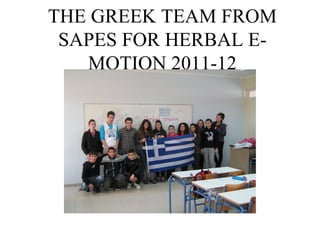
THE GREEK TEAM FROM
 SAPES FOR HERBAL E-
   MOTION 2011-12

Medicinal plants 12 sapes

  • 1.
    Medicinal Plants Generalhigh school of Sapes Names:KILINKARIDOU MELINA SAMPATZE CATHRINE MPOZANAKH STAVROULA AYGERIDOU EVAGGELIA GIANNAKOPOULOU BASILIKH POULOUTIDOU DIMITRA SKOPIANOS DIMITRIS TERSENIDIS KYRIAKOS
  • 2.
    THE MOST COMMON ORGANIC CHEMICAL ELEMENTS • Medicine in pre-scientific times • Synthetic organic chemistry and medicine • Alkaloids • glycosides • Foxglove (digoxin) • Willow bark (aspirin) • quinine • Ephidrine
  • 3.
    Herbals •Many herbals, illustratedbooks describing plants and their uses, were published. Practical uses together with a lot of mysticism, superstition, and what we now consider pseudoscience: astrology for example. •Doctors and other healers had gardens where they grew useful plants. Others were harvested from the wild.
  • 4.
    Systems of Medicine • Our present system, scientific medicine, is only 200 years old or so. There have been many other concepts in medicine, and there continue to be alternative systems of medicine. These other systems often contain concepts that are specifically denied or disproved by science. • Hippocrates and the Four Humors: blood, phlegm, black bile, and yellow bile. The humors have properties of hot, cold, wet and dry. In disease, the humors get out of balance. The theory formed the basis of Western medicine until the 1850’s or so. – We get words for personality traits like sanguine, phlegmatic, choleric, and bilious from this theory. – This theory also encompasses the idea of the four elements: earth, air, fire, and water. • Traditional Chinese medicine and Ayurveda (traditional Indian medicine) are also alternative theories of medicine that remain popular. • Francis Bacon, an early scientific philosopher, said. ‘This is the foundation of all. We are not to imagine or suppose, but to discover, what nature does or may be made to do”.
  • 5.
    Scientific Testing • Theessence of the scientific method is the controlled experiment: the subjects are divided into two groups, with one group given the experimental treatment and the other given a control treatment. – The control treatment should be as similar to the experimental as possible, just missing the one element being tested. – A useful refinement: double-blind experiments, where neither the patients nor the doctor knows who is getting the experimental treatment and who is getting the control. This avoids the placebo effect, where patients often get better even with a control treatment. • Statistical analysis of the results is necessary, because random factors influence the results. An important feature of statistics: using enough subjects to get statistically significant results. • Animal models for the disease are very useful: you can do more experiments without upsetting patients and their families. – More recently, tissue culture cells and even simpler model
  • 6.
    Active Principles • Abig idea from the early 1800’s: The reason that certain plants are effective against particular diseases is because they contain specific chemical compounds (the active principles) , with the rest of the plant material irrelevant. – If you isolate (or synthesize) the active principle, you can control the dosage people are given and avoid giving them other plant compounds that might have bad side effects. – In contrast, the amount a plant contains can vary with environmental conditions, age of the plant, the plant’s genetics, and many other factors. – Also, it is possible to determine whether a given plant is actually effective, or which parts of mixtures are important. • This concept led to people trying to extract the active principles from plants. For instance: which works better, soaking the plant material in cold water, hot water, alcohol, etc.? Which part of the plant produces the most active principle? – Lots of help from alchemy, the precursor to modern chemistry.
  • 7.
    Medicinal Chemistry • Theeffect of organic chemistry and the scientific method: useful compounds are still isolated from plants: taxol is a recent example. However, once isolated, attempts are made to synthesize them and modify them. – This helps avoid the supply of the plant from being cut off due to disease or political or economic reasons. – The Germans pioneered this philosophy of self-sufficiency in the 1800’s because they had poor access to the ocean trade routes and very few overseas colonies. – Also, synthesizing an active principle from scratch proves that you really do understand its structure. • It is worth considering whether the healing effect of a plant is due solely to a single active compound, with all others irrelevant. There are many cases where several compounds acted synergistically. And, healing is also helped by the placebo effect and also by careful individual attention from a healer. We are not just biological machines that respond uniformly to impersonal treatment.
  • 8.
    Active Principles inPlants • The value of plants as medicine come from specific chemical compounds they contain. These compounds are secondary metabolites: not directly related to the plant’s ability to grow or reproduce. • Secondary metabolites are probably present as a defense against infection by bacteria or fungi, or to prevent insects and other animals from eating them. – Some secondary metabolites inhibit other plant species: they poison the soil. – Also, some are used to attract animals to help with pollination and seed dispersal: the scents of fruits and flowers, for example. • Different species produce different secondary metabolites. Within plant families, the secondary metabolites are similar. For instance, the carrot family and mustard family. • A 2001 study counted 122 compounds used in medicine that were derived from traditional herbal medicine. Of these, 80% were used for the purpose the herbalists said they were good for. Traditional herbal medicine is a very useful starting point for drug discovery. – It is thought that about 10,000 different plants have been used in herbal medicine at some point in human history.
  • 9.
    Major Groups ofSecondary Metabolites • Alkaloids. Many different compounds, found in many plants. They all contain nitrogen atoms, are alkaline (basic), and taste bitter. Structures vary widely. – Often affect the nervous system. Whether this is good or bad depends on dosage and your point of view. For example, morphine. • Glycosides. A sugar is attached to the active component. This makes them non-toxic until an enzyme removes the sugar, which happens in the digestive system. – Cyanogenic. Very simple: cyanide attached to a sugar. Remove the sugar and release the poison: it stops the ability to make ATP. – Steroid. Steroids have a particular ring structure and are used to make hormones in animals. Two main types: • cardioactive (meaning that they affect your heart). • Saponins are soapy and very toxic: they work especially well as fish poisons because they dissolve easily in water. The steroid found in yams (Dioscorea) is a saponin.
  • 10.
  • 11.
  • 12.
    PHARMACOLOGICAL PROPERTIES OF VALERIANA OFFICINALIS The Greek physician, Dioscorides, apparently recommended valerian root to treat myriad disorders including heart palpitations, digestive problems, epilepsy and urinary tract infections1.
  • 13.
    VALERIANA ISUSED TO TREATNERVOUS STOMACH ALSO AS HYPNOTICS AND ANXIOLYTICS VALERENIC ACID HAS SPASMOLYTIC AND MUSCLE RELAXANT EFFECTS
  • 14.
    Aspirin • Today, aspirinis probably the most widely used synthetic drug. However, it originated in the plant world. • The inner bark of willow trees, made into a tea, has been used for relief of pain, fever, and inflammation since ancient times. • The active ingredient in willow bark is salicylic acid. It is a plant hormone: it is released when the plant is wounded, and stimulates the cells to strengthen their cell walls and produce enzymes and other compounds to fight the infection. – It also gets converted to a volatile form, methyl salicylate (which is Oil of Wintergreen). This compound induces pathogen defense mechanisms in nearby plants. • Salicylic acid was extracted from willow bark in the early 1800’s.
  • 15.
    Vinca Alkaloids • TheMadagascar periwinkle Catharanthus roseus (used to be Vinca rosea) was used as a traditional Chinese remedy for diabetes. In the 1950’s it was tested scientifically, and it had little effect on diabetes. However, the scientists noticed that it suppressed bone marrow activity. This led to the finding that the lifespan of mice with leukemia was significantly prolonged by Vinca extracts. Vinca contains over 70 different alkaloids, but purification work isolated vincristine and vinblastine as the active agents. • These drugs prevent cell division by binding to the mitotic spindle, the apparatus that pulls the chromosomes apart. It binds to the spindle proteins, preventing them from joining together. • They are very useful in treating leukemia, which is cancer of the bone marrow cells that produce blood cells. It also helps with several other cancers.
  • 16.
    Garlic Mechanism Nitric Oxide synthetase activity platelet aggregation fibrinolytic activity “Others?”
  • 17.
    Garlic Actions 300+ Studies!!! Stimulatesbody’s immune system Lowers risk of Hearth Disease & Stroke Lowers Cholesterol & Blood Pressure Slows Tumor Growth Powerful Lipid Antioxidant Relaxes arterioles, increases flexibility
  • 18.
    KORRES ONE OFTHE BIGEST INDUSTRY USING MEDICINAL PLANTS SOME FINANCIAL ELEMENTS OF THE GROUP ARE REMARCABLE : Korres S.A. Natural Products reported consolidated earnings results for the nine months of 2011. For the period, the company’s sales were €31.8 million. Operational profitability has also improved; the group’s EBITDA has reached €6.6 million against €6.5 million a year ago. flow was €1.4 million against €2.6 million a year ago, mainly due to the group’s plans for the first half of 2012.
  • 19.
    OLIVE OIL ANDITS BENEFITS BENECOL A large number of scientific studies have investigated the effect of plant sterols on blood cholesterol levels. It is apparent from these studies that plant stanols lower total and LDL cholesterol, but beneficially do not lower good HDL cholesterol or have any adverse effects on triglyceride levels. Plant stanol ester reduces serum sterols by inhibiting their absorption from the small intestine. Reducing serum cholesterol through dietary changes often only provides short-term benefits due to the difficulty of making the changes permanent. Benecol® products maintain its effectiveness in long-term use, when the product is consumed on a daily basis. In a 12-month trial, serum cholesterol was reduced by 10% and LDL by 15%. These significant cholesterol lowering results have been proven on: -People with normal and increased cholesterolemia -Men, women and children -Patients suffering from coronary disease -Patients with diabetes type 1 and 2 -In combination with a healthy, balanced diet, rich in fruit and vegetables -In combination with a strict lipid lowering diet -In combination with medical treatment with statins to lower cholesterol
  • 20.
    FUNCTIONAL FOODS AND THEIR BENEFITS FUNCTIONAL FOODS Functional Foods is a company that implements innovative ideas in the food sector. Its main goal is promoting Functional Foods - the latest nutritional trend - to the international market. Functional foods are the latest discovery in today's healthy eating. They contribute to our good health, help us obtain our ideal weight, and prevent and fight various deseases. Functional Foods researches the the global market and selects the best products for its customers.
  • 21.
    GREEK DRY RUSKOF BARLEY AS FUNCTIONAL FOOD CRETAN DRY RUSK Dakos Barley Rusk This dry rusk is kneaded in the old traditional way, without any chemical additions. It is prepared with unprocessed wheat and barley whole grains as well as virgin olive oil. It is baked in a traditional wood oven. Dry Rusk (Seven-kneaded) The traditional Cretan seven-kneaded dry rusk is really delicious. It takes a lot of effort to knead it and our knowledge and expertise gives it a special taste that can be compared to the dry rusks of old times. Barley Round Rusk This rusk is kneaded in the traditional way, without any chemical additions. It is prepared with unprocessed wheat and barley whole grains as well as virgin olive oil. It is baked in a traditional wood oven. Wheat Rusk Our rusk is kneaded with a lot of care, without any chemical additions, ritch in nutritional value and maintains its freshness and taste for a long time.
  • 22.
    BELLEZA HERBAL PRODUCTS BELLEZA HERBALINFUSIONS Digestive Digestive herbal infusion is a perfect blend of herbs that help to improve the digestion. It also helps to relieve colic, bloated feeling, cramps and stomach-aches. Anise and Fennel are well known for their carminative effect. Combined with the stimulation of the digestion provided by Haritaki and Lemongrass makes for a balanced formula towards a healthy digestive system. Energizing Energizing herbal infusion is a formulation that will get you going with increased energy and alertness. A caffeine free energy boost! Gotukola, a key ingredient, works as a brain tonic, revitalizing the brain and the nervous system, thereby increasing attention span and concentration. Holistic Holistic herbal infusion helps you to revitalize the body, brain and the nervous system thereby helping. The herb Guduchi accords longevity, enhances memory and improves health. A holistic approach to wellness and good health.
  • 23.
    CHAMOMILE <<CHAMOMILLA RECUTITA>> SPECIES: CHAMOMILLA MATRICARIA
  • 24.
    BENEFITS OF MEDICINAL PLANTS TO IMMUNE Immune SYSTEM Based on an ancient Ayurvedic recipe, this blend of herbs contributes to strengthening your immune system. Extracts of the herb Tulsi, modulate immunity, thus promoting immune system function. Indian Sarsaparilla is used in Ayurveda as a tonic useful against various disorders. Mint & Lemon The combination of Mint & Lemon is an enticing mix of sweet, sour and savory that greets your tongue when you take a sip. Like so many simple dishes the final product is something that is somehow ethereal and infinitely sublime. Relaxing Relaxing herbal infusion is a formulation composed to naturally help relieve stress and anxiety and get you back on track to a calm, balanced state of mind. Try this flavorful and gentle organic herbal tea to help yourself ease from a stressful day into a restful night. One of the key ingredients, Ashwagandha, relieves stress and helps in nurturing nervous system and promotes calmness and mental satisfaction. Slimming Slimming herbal infusion helps to regulate fats and cholesterol in the body and assists in losing weight naturally. The key ingredient, Guggul, helps to lower elevated serum cholesterol and triglycerides, while maintaining or improving the HDL to LDL ratio.
  • 25.
    THE GREEK TEAMFROM SAPES FOR HERBAL E- MOTION 2011-12

Editor's Notes