





The document outlines the essentials of medical coding, emphasizing the need for trained individuals in the healthcare industry for billing and documentation purposes. It details coding classifications such as ICD-10, CPT, and HCPCS, which are crucial for accurate medical coding and reimbursement processes. Additionally, it highlights the qualities required for medical coders and the significance of precise clinical documentation.
The medicalindustry is experiencing a high demand for
individuals with knowledge of medical office operations,
transcription, billing and coding. The business office of
every health care provider must submit the proper
documentation to a number of insurance companies for
reimbursement in order to financially succeed and avoid
fraud charges
The requirement has created numerous opportunities
for trained individuals to be employed in medical
offices, clinics, hospitals, insurance companies and do
home-based opportunities
3.
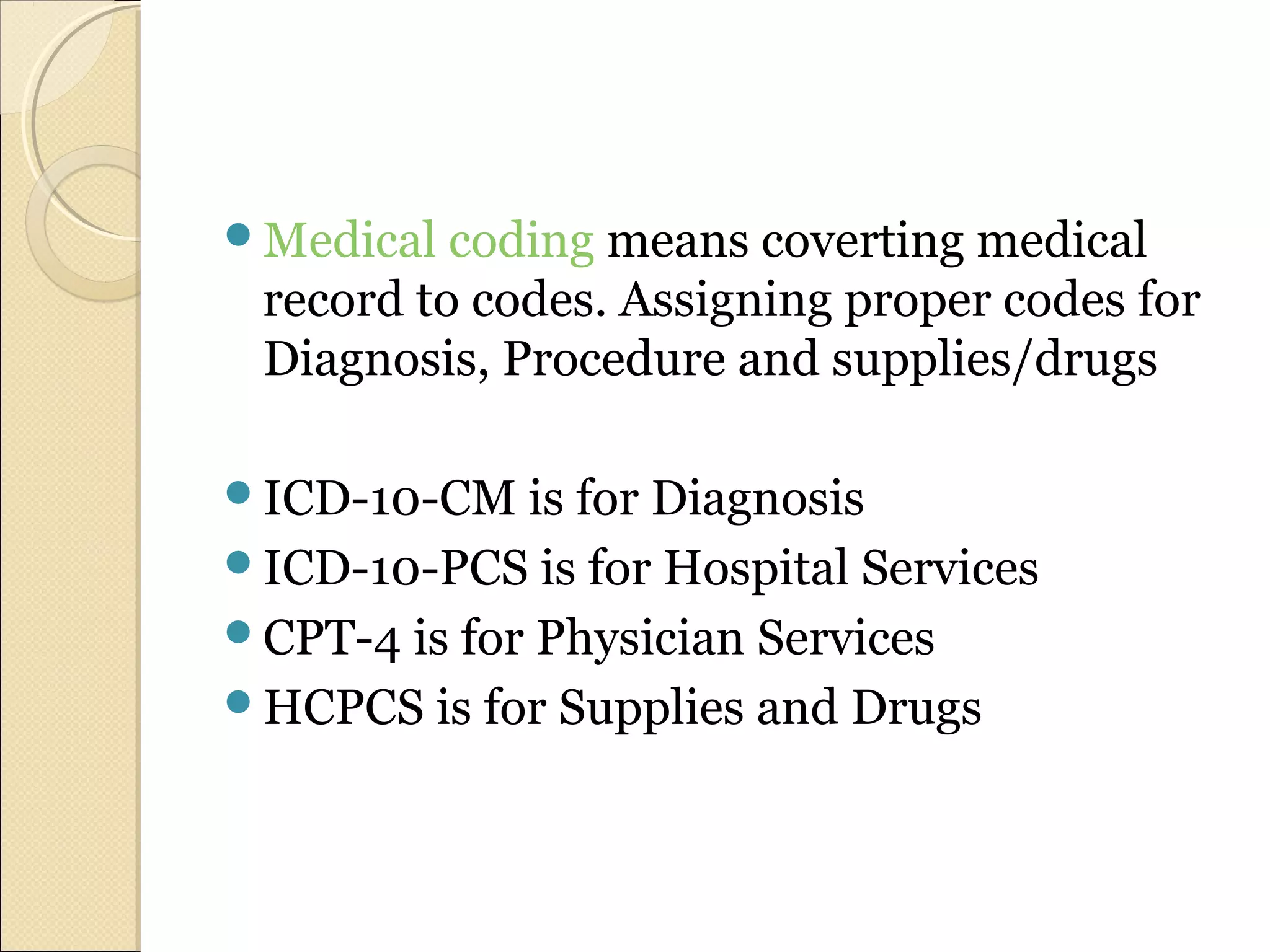
Medical coding meanscoverting medical
record to codes. Assigning proper codes for
Diagnosis, Procedure and supplies/drugs
ICD-10-CM is for Diagnosis
ICD-10-PCS is for Hospital Services
CPT-4 is for Physician Services
HCPCS is for Supplies and Drugs
4.
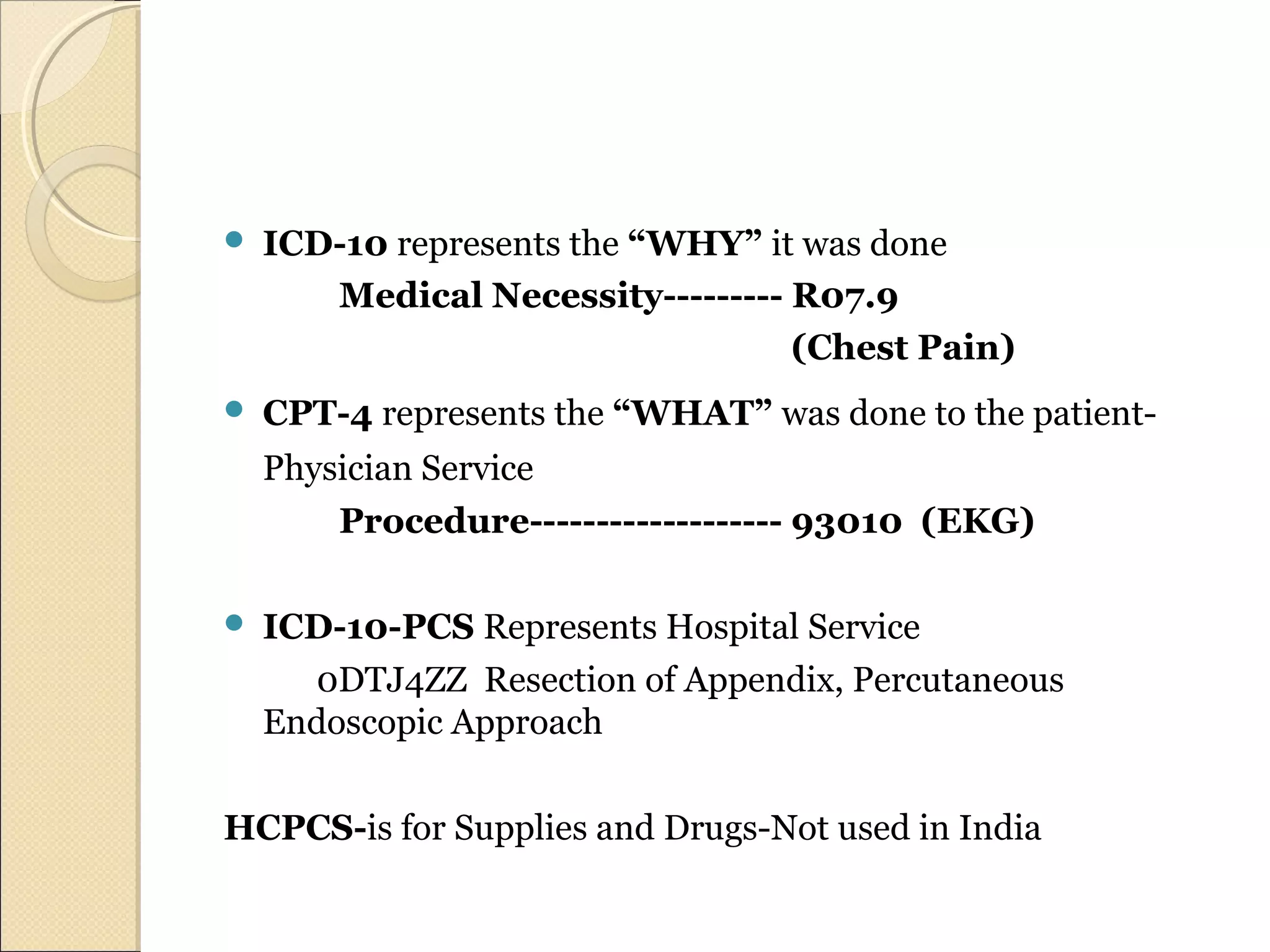
ICD-10 representsthe “WHY” it was done
Medical Necessity--------- R07.9
(Chest Pain)
CPT-4 represents the “WHAT” was done to the patient-
Physician Service
Procedure------------------- 93010 (EKG)
ICD-10-PCS Represents Hospital Service
0DTJ4ZZ Resection of Appendix, Percutaneous
Endoscopic Approach
HCPCS-is for Supplies and Drugs-Not used in India
5.
Key medical termsare identified &
abstracted from the medical record.
Specific codes are assigned to each term.
Resources You Need
ICD-10-CM Manual-2017
ICD-10-PCS Manual-2017
CPT 2017
HCPCS 2017
6.
AKA’s of theMedical CoderAKA’s of the Medical Coder
Health Information Technician
Health Information Coder
Medical Record Coder
Coder / Abstractor
Coding Specialist
Insurance Specialist
7.
Qualities of theMedical CoderQualities of the Medical Coder
Knowledge of medical terminology
Knowledge of anatomy & physiology
Detail oriented
Accuracy
Critical thinking
Willingness to learn
Self-motivated • Flexibility • Computer
skills
8.
Principle of MedicalCodingPrinciple of Medical Coding
If it’s not documented, it
wasn’t done
9.
ICD-10-CM-2017ICD-10-CM-2017
The International Classificationof Diseases (ICD) is
the international standard diagnostic classification
for all general epidemiological purposes, many health
management purposes, and for clinical use.
ICD-10, Clinical Modification (ICD-10-CM) was
developed by the U.S. National Center for Health
Statistics (NCHS) along with an advisory panel to
ensure accuracy and utility in 1993.
10.
The WHO iscurrently crafting the 11th revision,
which is expected to be release in 2018/2019.
ICD-10, Clinical Modification (ICD-10-CM) was
developed by the U.S. National Center for Health
Statistics (NCHS) along with an advisory panel to
ensure accuracy and utility in 1993.
ICD-10 codes allow for greater specificity and
exactness in describing a patient’s diagnosis
and in classifying inpatient procedures.
11.
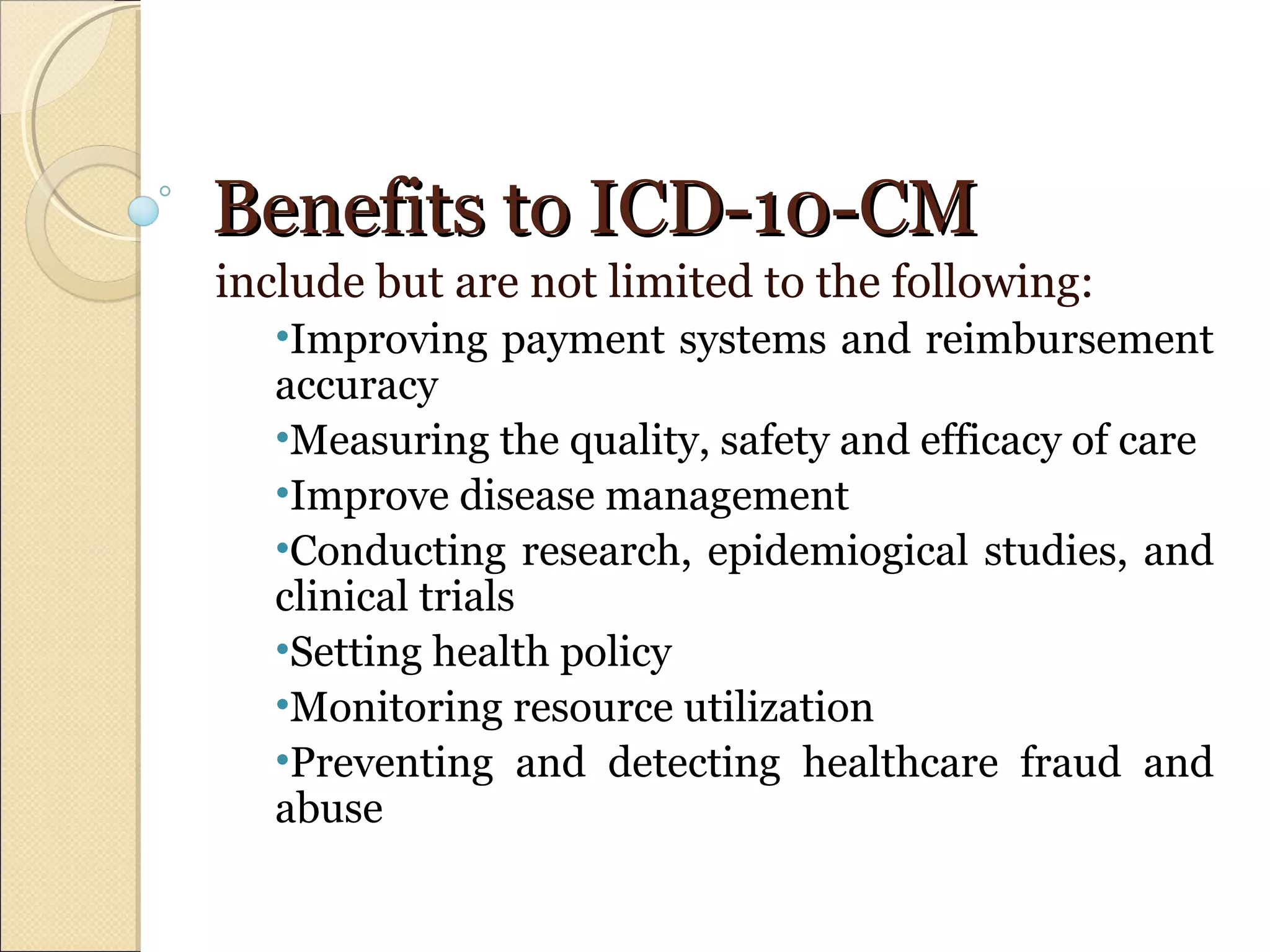
Benefits to ICD-10-CMBenefitsto ICD-10-CM
include but are not limited to the following:
•Improving payment systems and reimbursement
accuracy
•Measuring the quality, safety and efficacy of care
•Improve disease management
•Conducting research, epidemiogical studies, and
clinical trials
•Setting health policy
•Monitoring resource utilization
•Preventing and detecting healthcare fraud and
abuse
12.
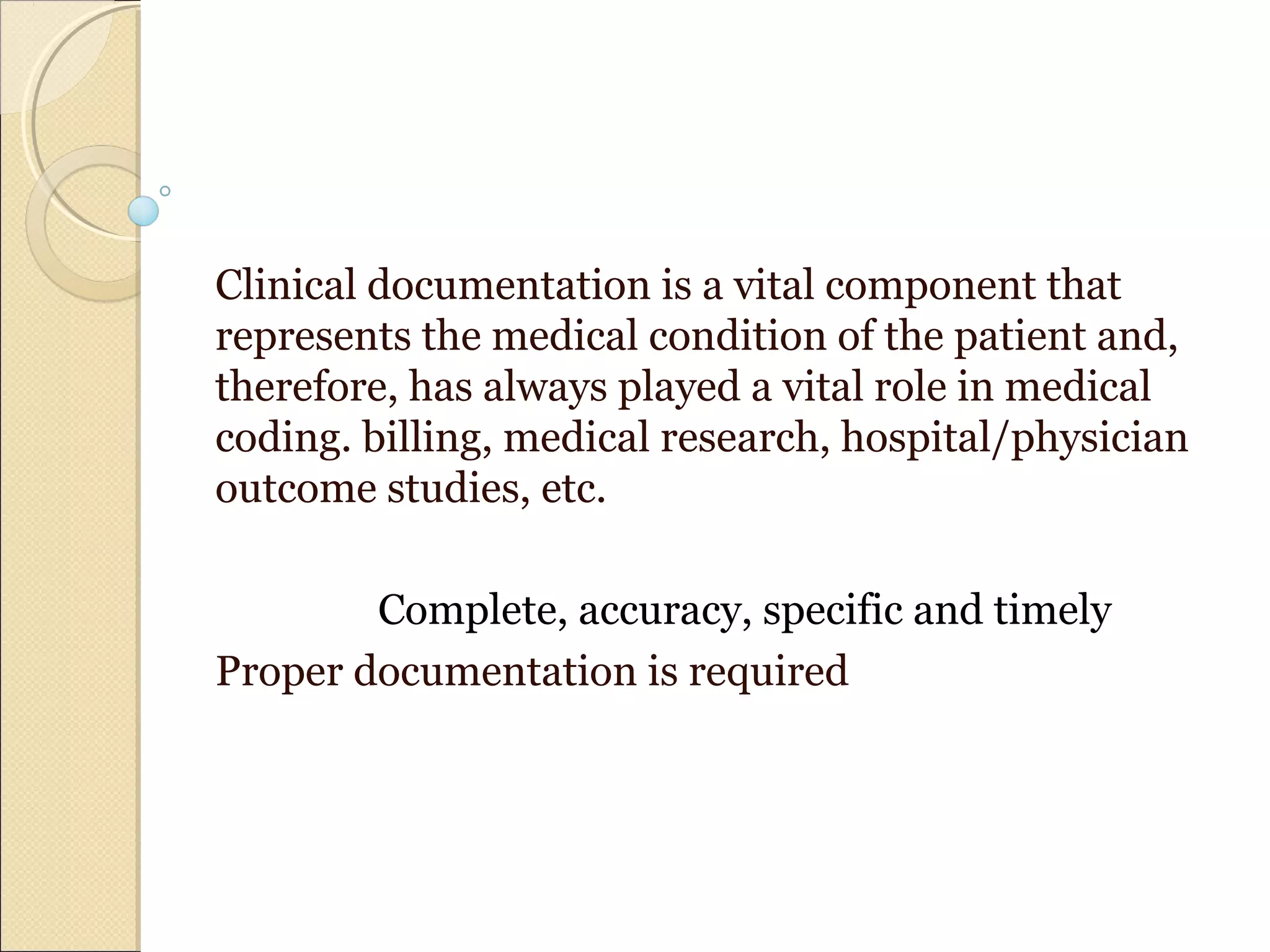
Clinical documentation isa vital component that
represents the medical condition of the patient and,
therefore, has always played a vital role in medical
coding. billing, medical research, hospital/physician
outcome studies, etc.
Complete, accuracy, specific and timely
Proper documentation is required
13.
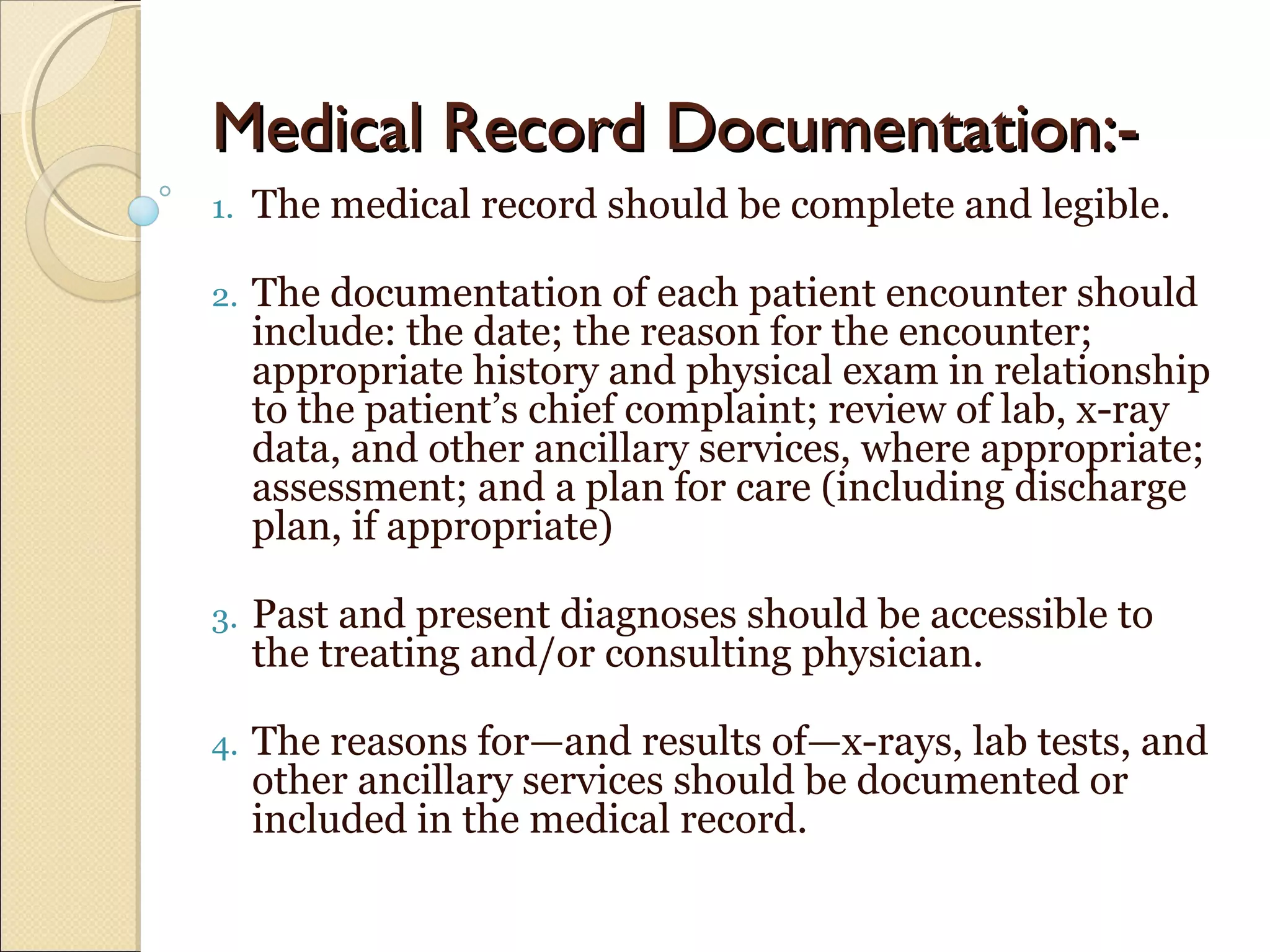
Medical Record Documentation:-MedicalRecord Documentation:-
1. The medical record should be complete and legible.
2. The documentation of each patient encounter should
include: the date; the reason for the encounter;
appropriate history and physical exam in relationship
to the patient’s chief complaint; review of lab, x-ray
data, and other ancillary services, where appropriate;
assessment; and a plan for care (including discharge
plan, if appropriate)
3. Past and present diagnoses should be accessible to
the treating and/or consulting physician.
4. The reasons for—and results of—x-rays, lab tests, and
other ancillary services should be documented or
included in the medical record.
14.
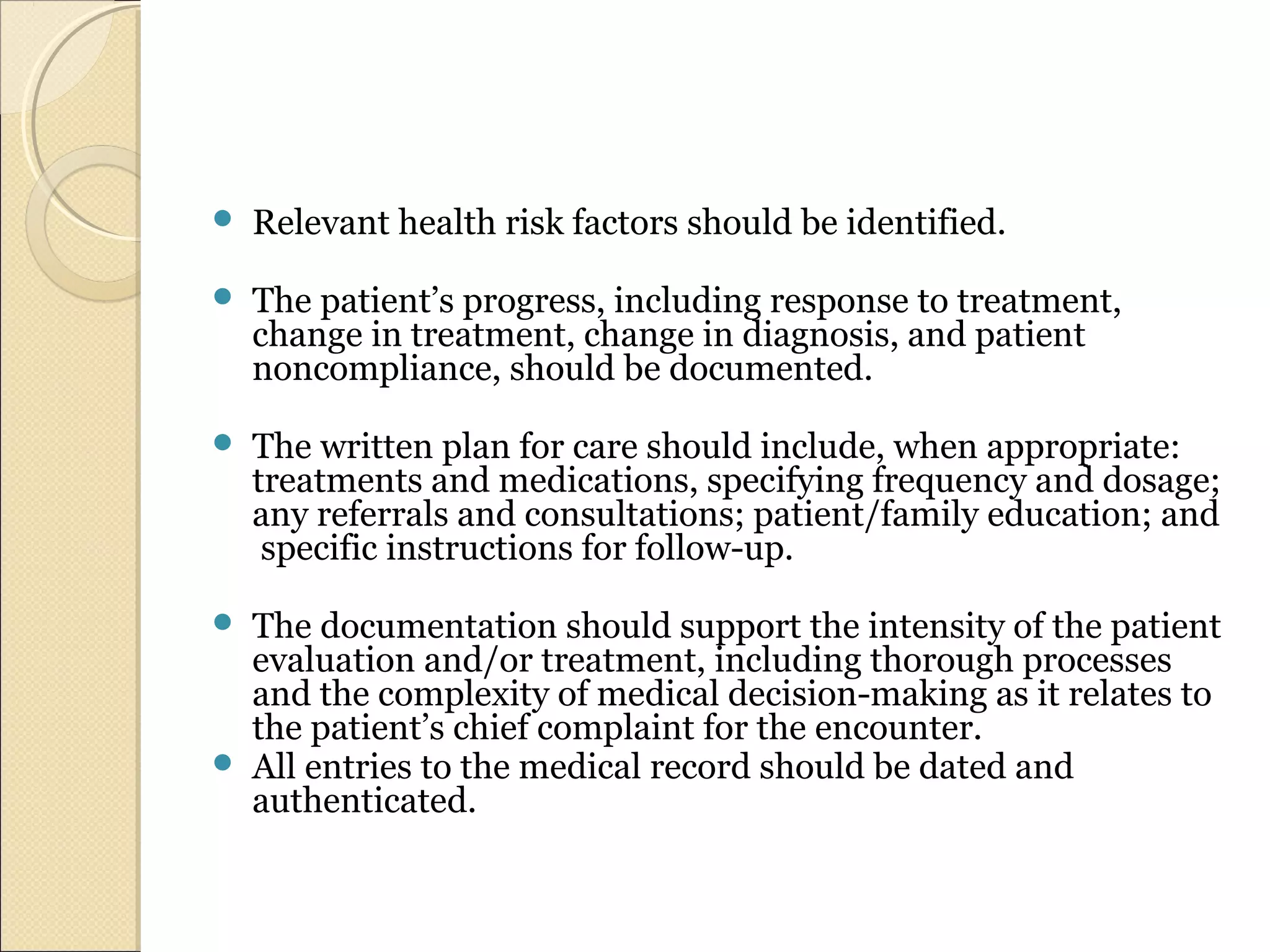
Relevant healthrisk factors should be identified.
The patient’s progress, including response to treatment,
change in treatment, change in diagnosis, and patient
noncompliance, should be documented.
The written plan for care should include, when appropriate:
treatments and medications, specifying frequency and dosage;
any referrals and consultations; patient/family education; and
specific instructions for follow-up.
The documentation should support the intensity of the patient
evaluation and/or treatment, including thorough processes
and the complexity of medical decision-making as it relates to
the patient’s chief complaint for the encounter.
All entries to the medical record should be dated and
authenticated.
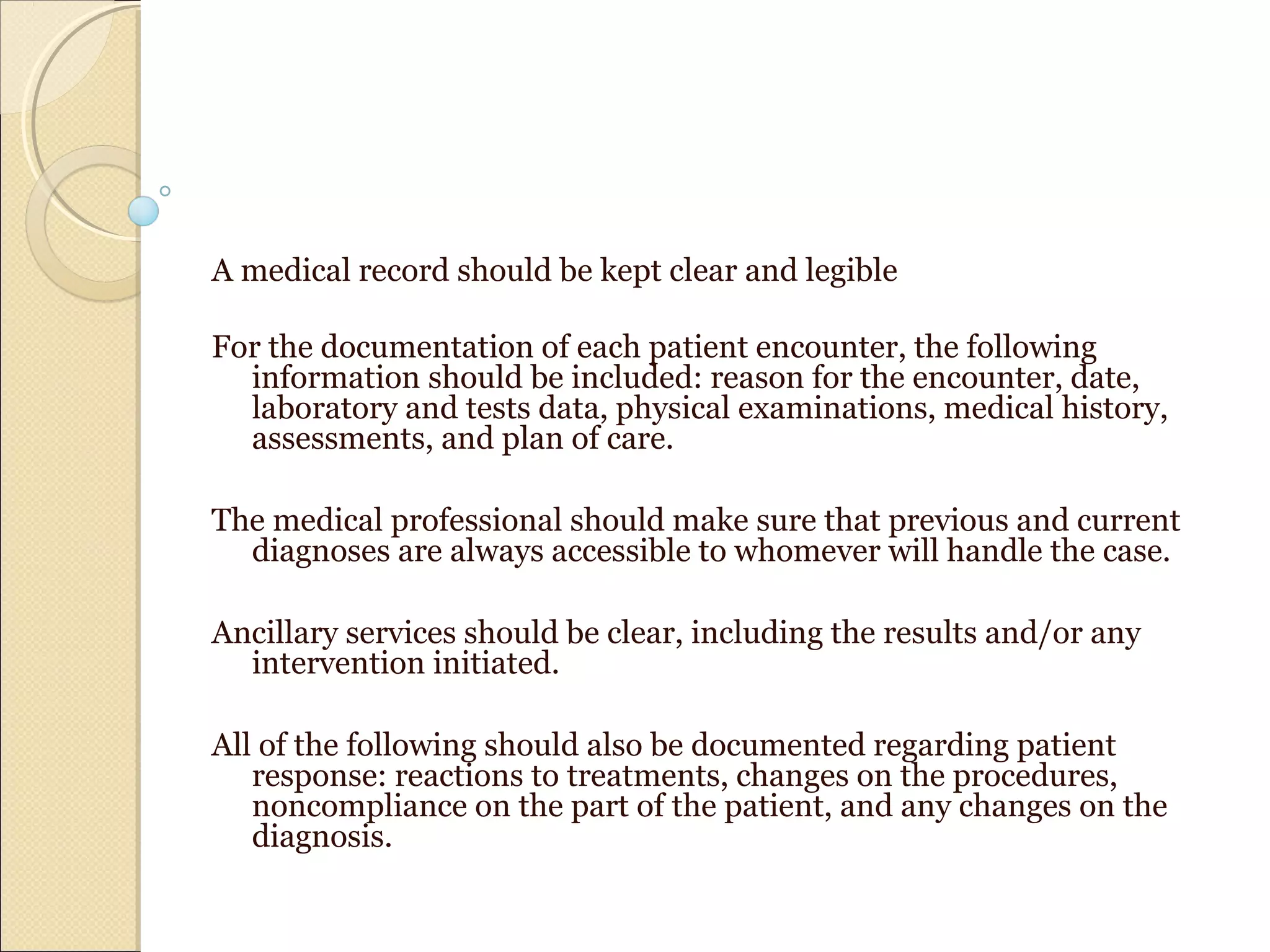
A medical recordshould be kept clear and legible
For the documentation of each patient encounter, the following
information should be included: reason for the encounter, date,
laboratory and tests data, physical examinations, medical history,
assessments, and plan of care.
The medical professional should make sure that previous and current
diagnoses are always accessible to whomever will handle the case.
Ancillary services should be clear, including the results and/or any
intervention initiated.
All of the following should also be documented regarding patient
response: reactions to treatments, changes on the procedures,
noncompliance on the part of the patient, and any changes on the
diagnosis.
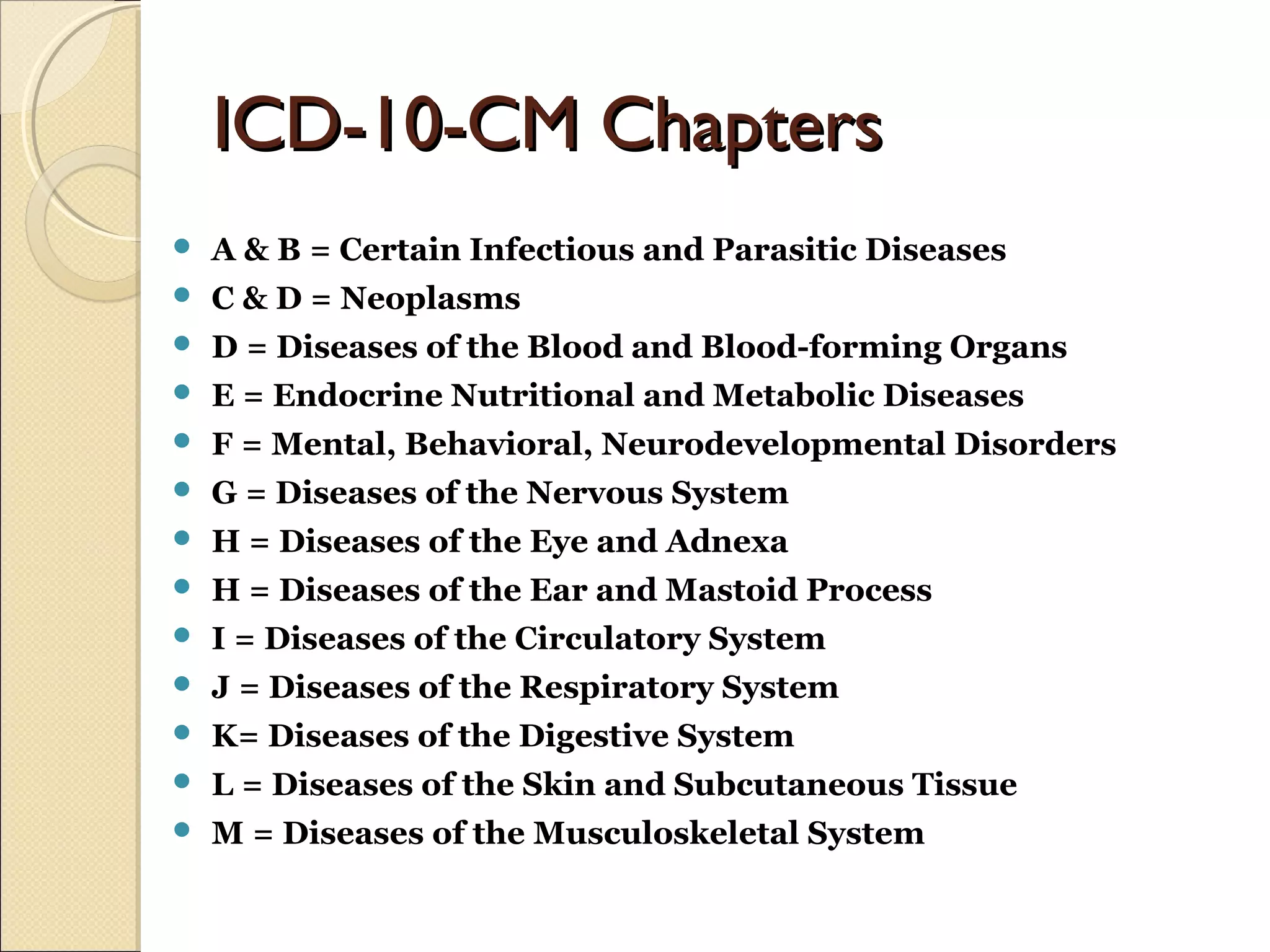
17.
A &B = Certain Infectious and Parasitic Diseases
C & D = Neoplasms
D = Diseases of the Blood and Blood-forming Organs
E = Endocrine Nutritional and Metabolic Diseases
F = Mental, Behavioral, Neurodevelopmental Disorders
G = Diseases of the Nervous System
H = Diseases of the Eye and Adnexa
H = Diseases of the Ear and Mastoid Process
I = Diseases of the Circulatory System
J = Diseases of the Respiratory System
K= Diseases of the Digestive System
L = Diseases of the Skin and Subcutaneous Tissue
M = Diseases of the Musculoskeletal System
ICD-10-CM ChaptersICD-10-CM Chapters
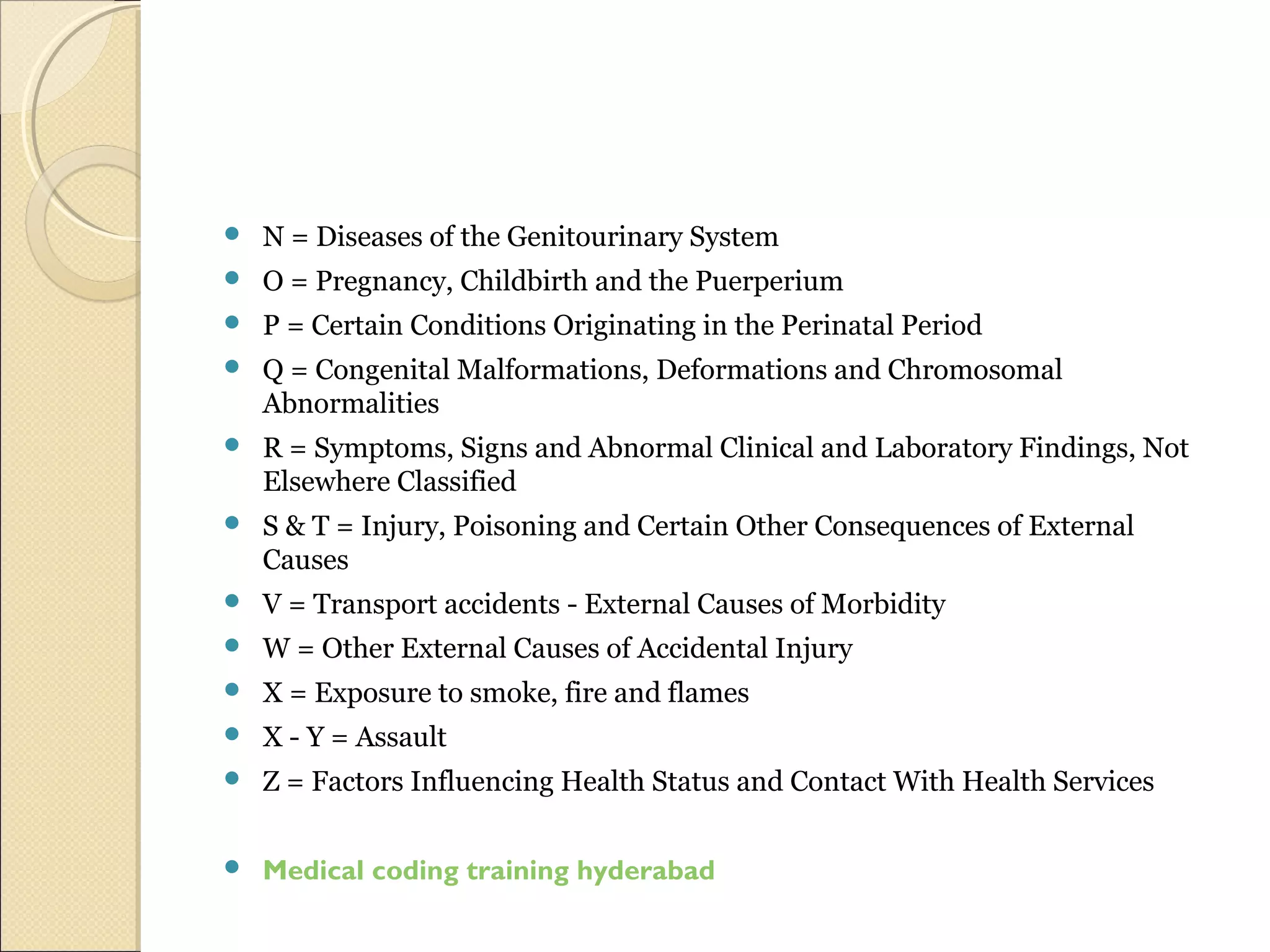
18.
N =Diseases of the Genitourinary System
O = Pregnancy, Childbirth and the Puerperium
P = Certain Conditions Originating in the Perinatal Period
Q = Congenital Malformations, Deformations and Chromosomal
Abnormalities
R = Symptoms, Signs and Abnormal Clinical and Laboratory Findings, Not
Elsewhere Classified
S & T = Injury, Poisoning and Certain Other Consequences of External
Causes
V = Transport accidents - External Causes of Morbidity
W = Other External Causes of Accidental Injury
X = Exposure to smoke, fire and flames
X - Y = Assault
Z = Factors Influencing Health Status and Contact With Health Services
Medical coding training hyderabad
19.
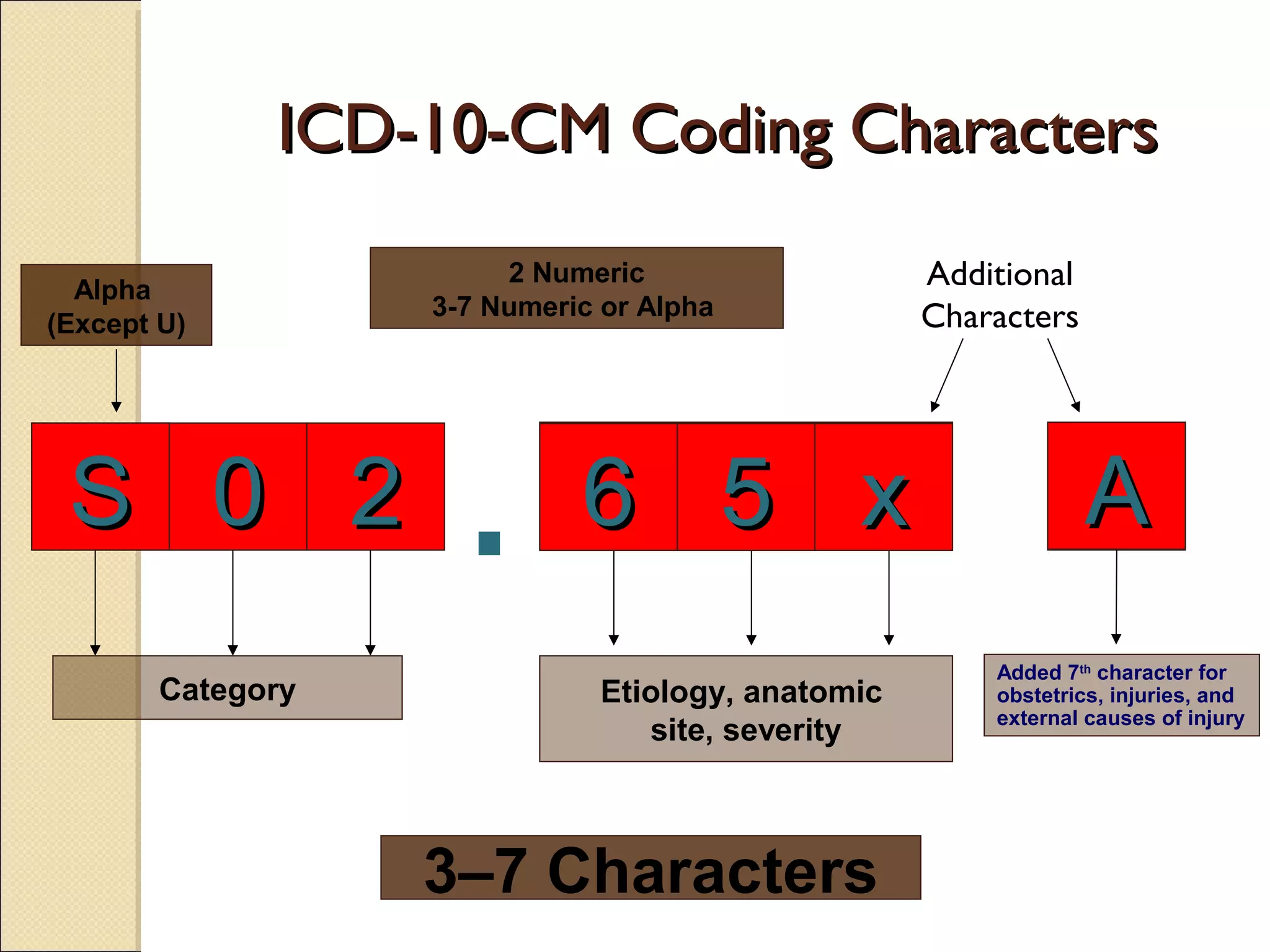
XX XX XXXX
Category
.
Etiology, anatomic
site, severity
Added 7th
character for
obstetrics, injuries, and
external causes of injury
ICD-10-CM Coding CharactersICD-10-CM Coding Characters
XX XX XXAAMMSS 00 22 66. 55 xx AA
Additional
Characters
Alpha
(Except U)
2 Numeric
3-7 Numeric or Alpha
3–7 Characters
20.
55thth
Character “x”Character “x”
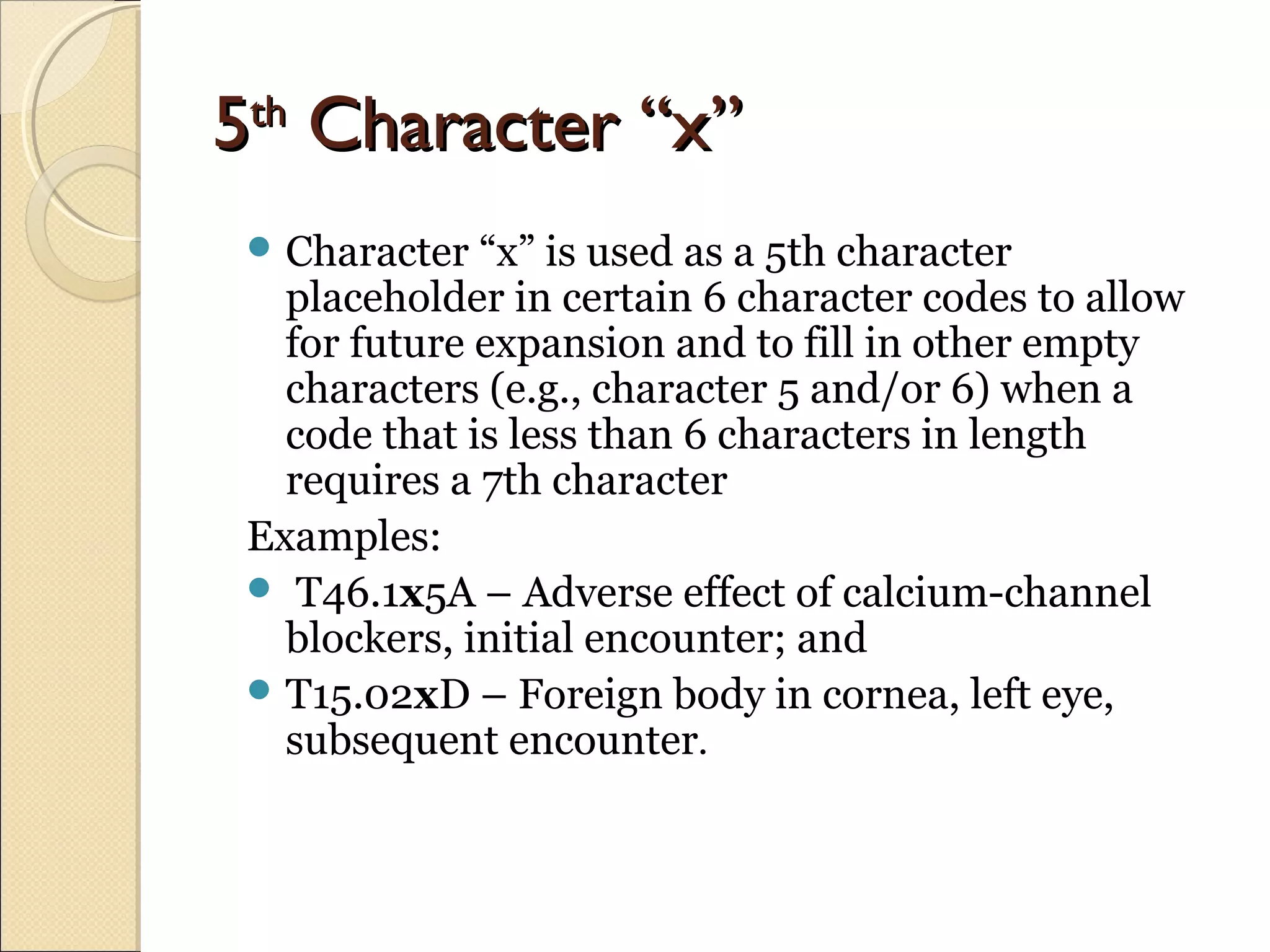
Character “x” is used as a 5th character
placeholder in certain 6 character codes to allow
for future expansion and to fill in other empty
characters (e.g., character 5 and/or 6) when a
code that is less than 6 characters in length
requires a 7th character
Examples:
T46.1x5A – Adverse effect of calcium-channel
blockers, initial encounter; and
T15.02xD – Foreign body in cornea, left eye,
subsequent encounter.
21.
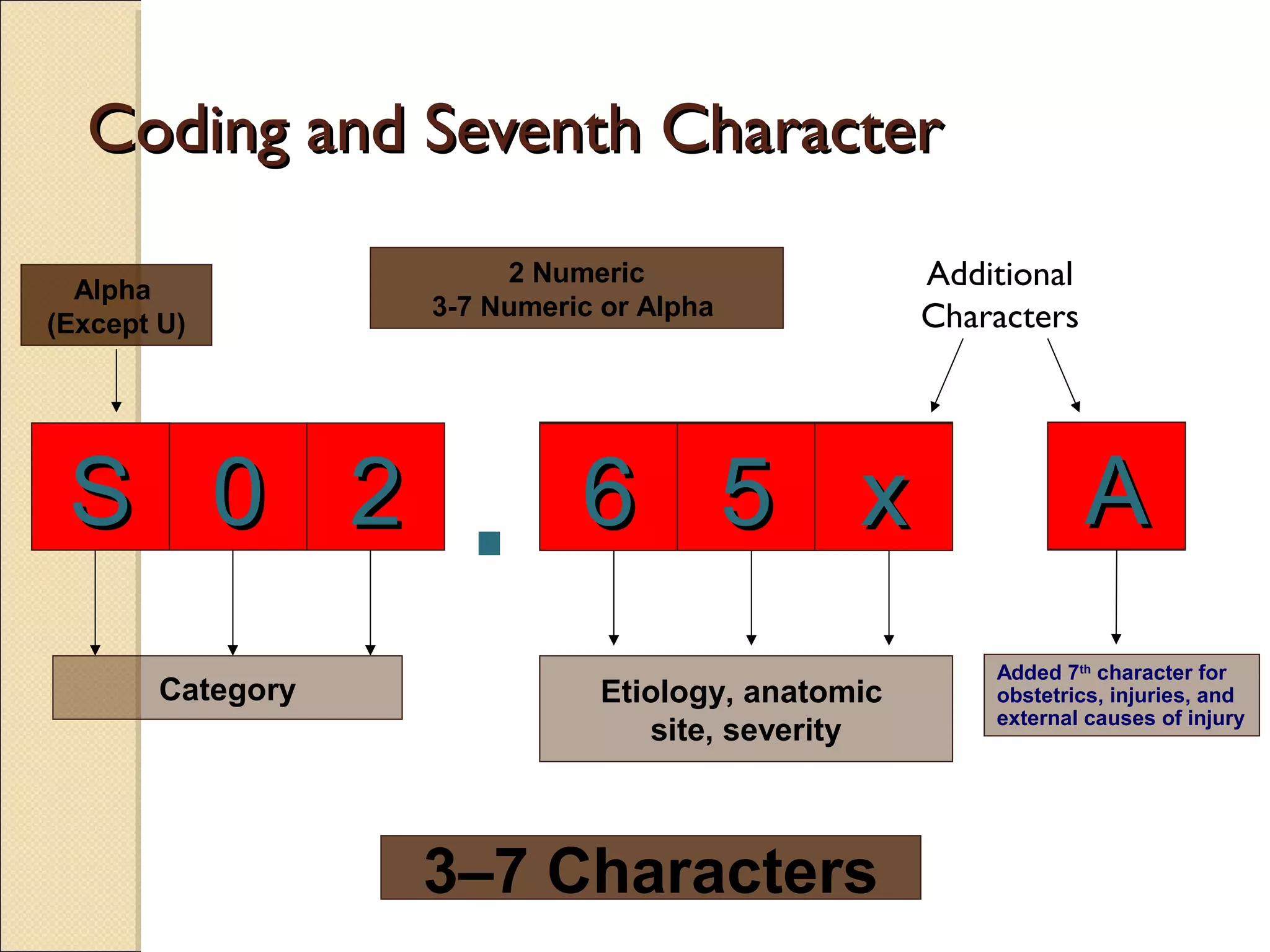
XX XX XXXX
Category
.
Etiology, anatomic
site, severity
Added 7th
character for
obstetrics, injuries, and
external causes of injury
Coding and Seventh CharacterCoding and Seventh Character
XX XX XXAAMMSS 00 22 66. 55 xx AA
Additional
Characters
Alpha
(Except U)
2 Numeric
3-7 Numeric or Alpha
3–7 Characters
22.
CODING AND USEOF SEVENTH CHARACTERCODING AND USE OF SEVENTH CHARACTER
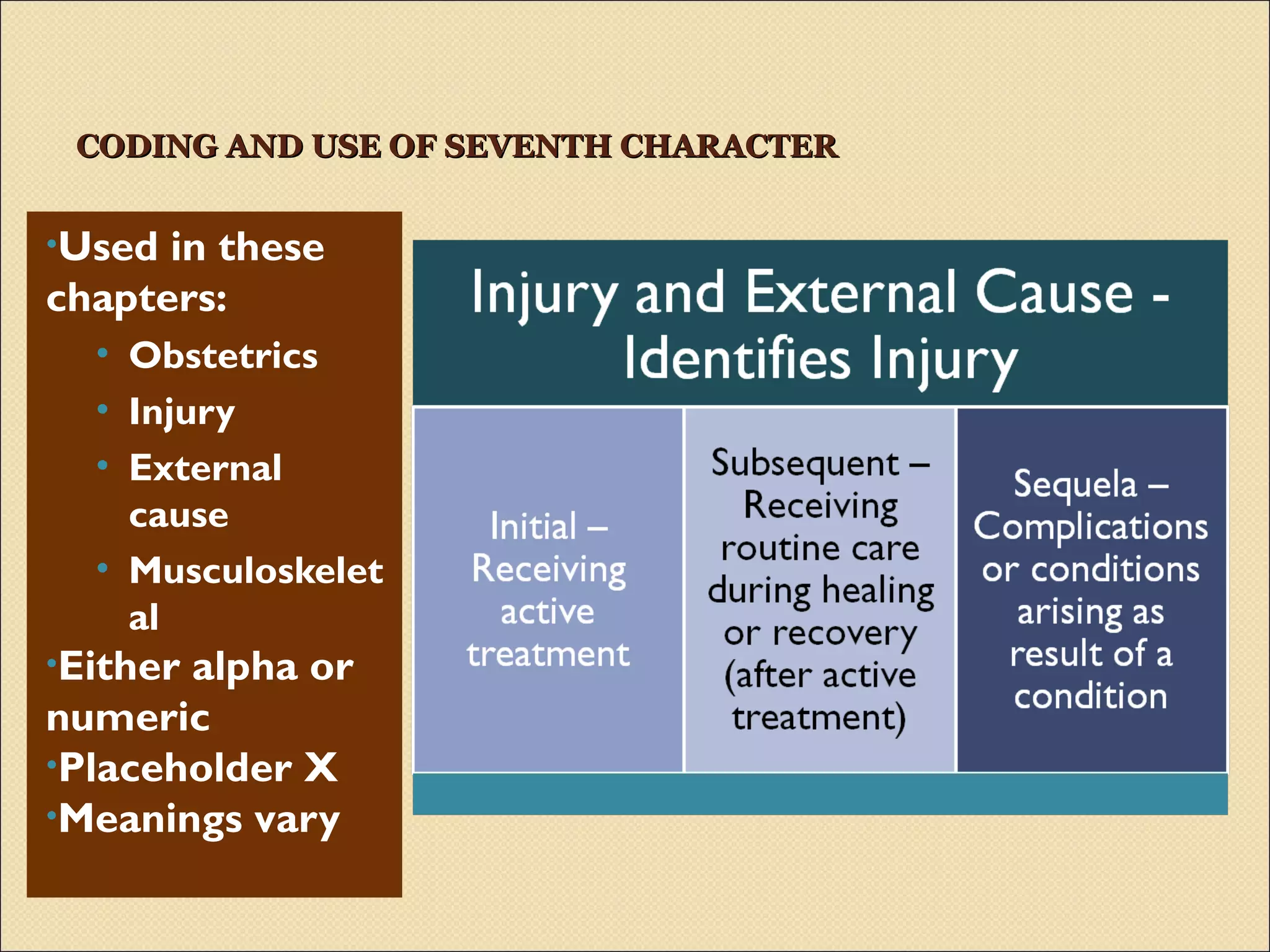
•Used in these
chapters:
• Obstetrics
• Injury
• External
cause
• Musculoskelet
al
•Either alpha or
numeric
•Placeholder X
•Meanings vary
23.
Surgeon performs anopen
cholecystectomy for acute cholecystitis
with cholelithiasis.
K80.00 Calculus of gallbladder with
acute cholecystitis, without
obstruction
0FT40ZZ Open resection of
gallbladder
25.
Introduction to CPTCodingIntroduction to CPT Coding
CPT-4 represents the “WHAT” was done to the patient
Procedure------------------- 93010 (EKG)-5 Digit
Code
Text organized in 6 major sections
Evaluation and Management (99201 - 99499)
Anesthesiology (00100 - 01999,
99100 - 99140)
Surgery (10040 - 69990)
Radiology (70010 - 79999)
Pathology and Laboratory (80049 - 89399)
Medicine (90281 - 99199)
26.
CPT CodesCPT Codes
Developed as a stand-alone descriptions of the
procedures
To conserve space, some are not printed in their
entirety but refer back to a common portion
listed in a preceding entry**
Example:
25100-arthrotomy, wrist joint; for biopsy
25105 for synovectomy
27.
Seven Character AlphanumericCode
◦ AllAll procedure codes will be seven characters long
◦ “II” and “OO” (letters) are never used
34 possible values for each character
◦ Digits 0 – 9
◦ Letters A-H, J-N, P-Z
27
ICD-10-PCS: Code StructureICD-10-PCS: Code Structure
28.
A charactercharacter isa stable, standardized code
component
◦ Holds a fixed place in the code
◦ Retains its meaning across a range of codes
A valuevalue is an individual unit defined for
each character
28
ICD-10-PCS StructureICD-10-PCS Structure
(Characters and Values)(Characters and Values)
29.
1st
character = SSection
2nd
character= BBody System
3rd
character = RRoot Operation
4th
character = BBody Part
5th
character = AApproach
6th
character = DDevice
7th
character = QQualifier
SSusieusie BBuysuys RRootoot BBeereer AAtt DDairyairy
QQueenueen
29
30.
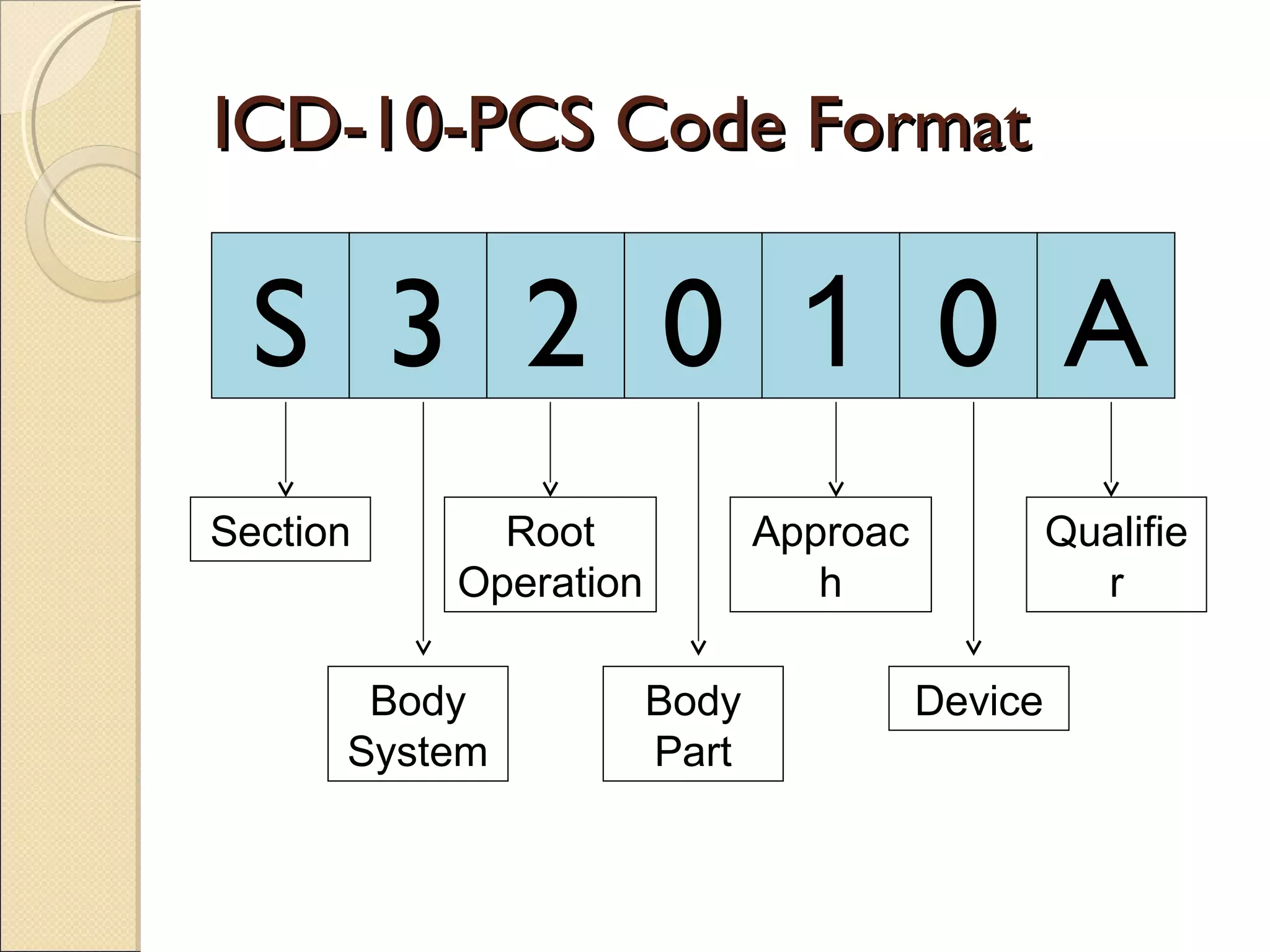
ICD-10-PCS Code FormatICD-10-PCSCode Format
S 3 2 0 1 0 A
Section
Body
System
Root
Operation
Body
Part
Approac
h
Device
Qualifie
r
31.
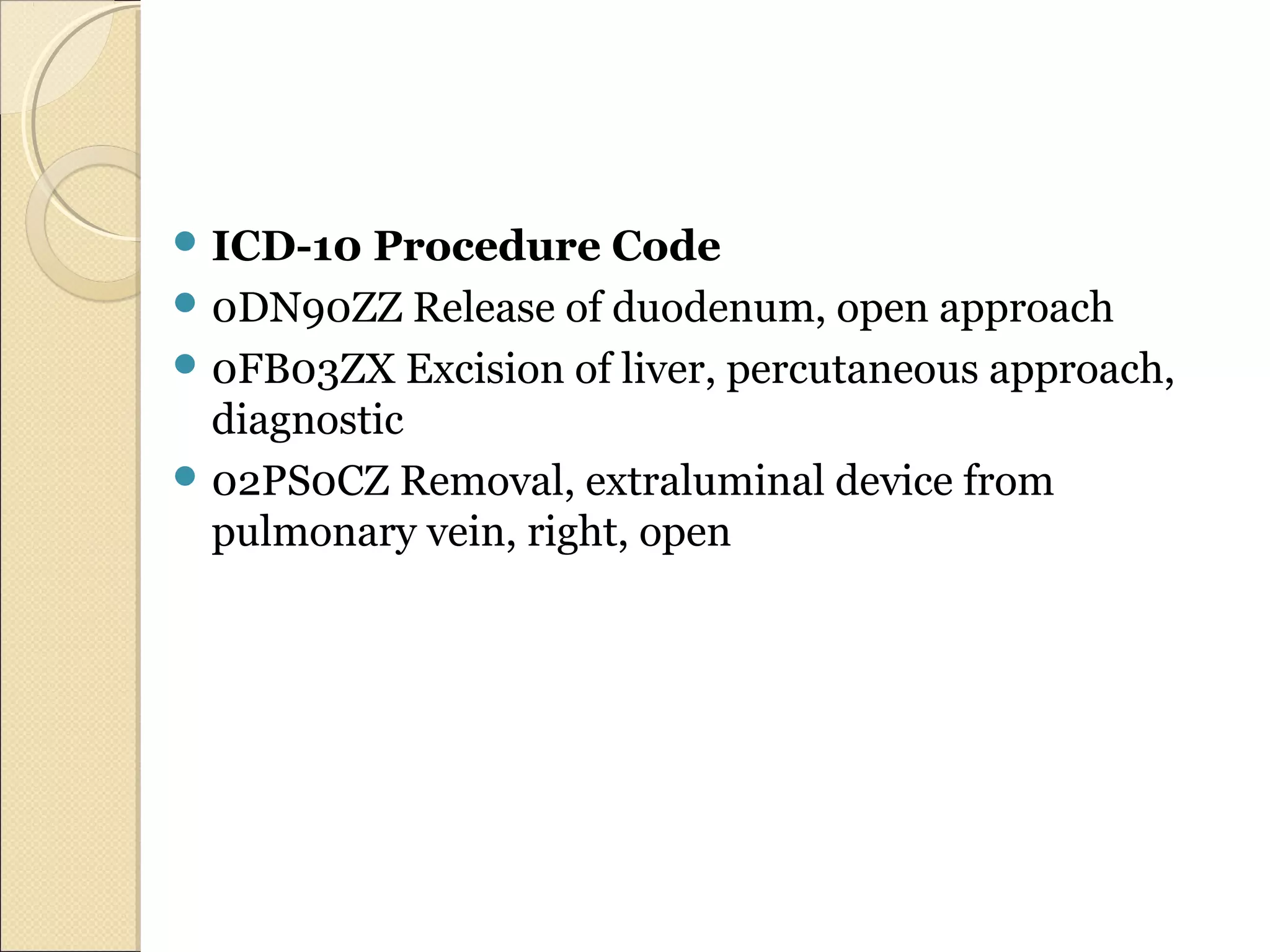
ICD-10 ProcedureCode
0DN90ZZ Release of duodenum, open approach
0FB03ZX Excision of liver, percutaneous approach,
diagnostic
02PS0CZ Removal, extraluminal device from
pulmonary vein, right, open
32.
Board Exams-USA (AAPCandBoard Exams-USA (AAPC and
AHIMA)AHIMA)
AAPC: American Academy of Professional Coders-USA
Exam-CPC: Certified Professional Coder
Fees: 500 USD, 2 attempts
Exam Center- Delhi, Mumbai, Chennai, Bangalore, Hyderabad
Required minimum 200 hours of training to clear the exam.
Should learn Coding conventions, HIPAA complaince,
Medical Billing
Medesun Healthcare Solutions-
33.
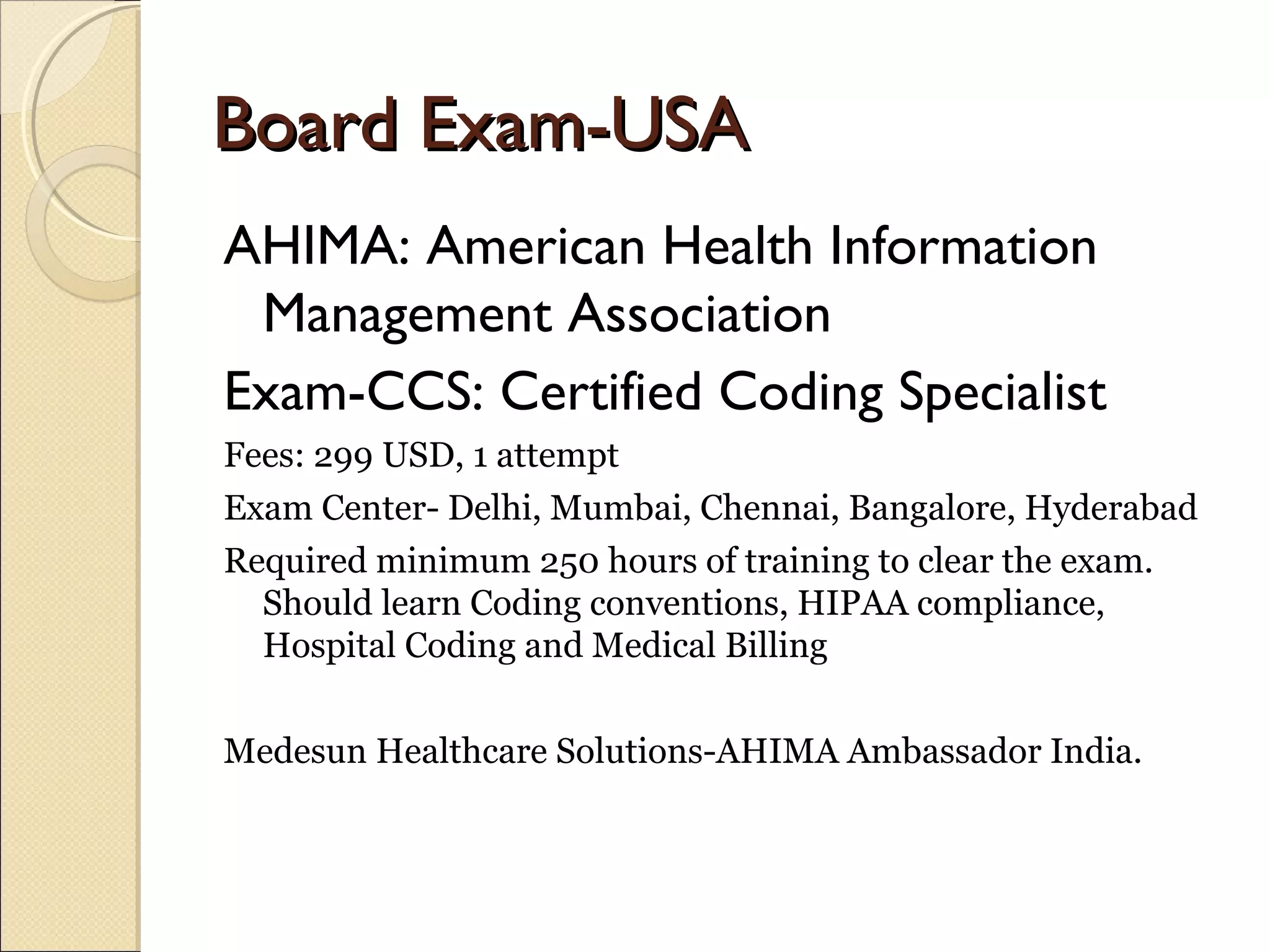
Board Exam-USABoard Exam-USA
AHIMA:American Health Information
Management Association
Exam-CCS: Certified Coding Specialist
Fees: 299 USD, 1 attempt
Exam Center- Delhi, Mumbai, Chennai, Bangalore, Hyderabad
Required minimum 250 hours of training to clear the exam.
Should learn Coding conventions, HIPAA compliance,
Hospital Coding and Medical Billing
Medesun Healthcare Solutions-AHIMA Ambassador India.
#18 Instructor/Speaker:
YOU may want to become familiar with the first character of each possible chapter code……..
For example: F = Mental and behavioral disorders; K= Diseases of the digestive system, and the like.
THESE alpha characters will always remain the same.
(PAUSE AND MOVE TO NEXT SLIDE)
#20 Instructor/Speaker: (Read the Slide)
…….Understanding the Coding Character, yes CHARACTER NOT DIGITS as IN ICD-9.
Let’s review this slide
(INSTRUCTOR………walk through the slide, left to right….)
(PAUSE and move to next slide)
#21 INSTRUCTOR/SPEAKER: …………
Character “x” is used as a 5th character placeholder in certain 6 character codes to allow for future expansion and to fill in other empty characters (e.g., character 5 and/or 6) when a code that is less than 6 characters in length requires a 7th character
Examples:
T46.1x5A – Adverse effect of calcium-channel blockers, initial encounter; and
T15.02xD – Foreign body in cornea, left eye, subsequent encounter.
ANY QUESTIONS?(PAUSE……….move to next slide)
#22 Instructor/Speaker: Again look at the characters. The seventh character extenders are usually a letter, and are used to identify the encounter type. The most common seventh character extenders used in ICD-10-CM are:
A – Initial encounter
D – Subsequent encounter
S – Sequela
The 7th character is used in several chapters and the meaning is different depending on the chapter. (e.g., the Obstetrics, Injury, Musculoskeletal, and External Cause chapters
(PAUSE and …………NEXT SLIDE)
#23 Instructor/Speaker:
The seventh character is required for all codes within the category, or as stated by the tabular list instructions.
In ICD-10-CM, in order to allow the seventh character to remain the seventh character, a dummy placeholder “x” must be used to fill in any empty character(s)………..FOR INJURY AND EXTENRAL CAUSE THE 7th CHARACTER IN THE CODE IDENTIFIES THE INJURY encounter and sequela information AND also for FRACTURE CODES this 7th character identifies the initial encounter, subsequent and sequela……..open you code books to page 803 and look at code S02……….
(PAUSE and ……..NEXT SLIDE)
#26 INSTRUCTOR/SPEAKER: …………
Character “x” is used as a 5th character placeholder in certain 6 character codes to allow for future expansion and to fill in other empty characters (e.g., character 5 and/or 6) when a code that is less than 6 characters in length requires a 7th character
Examples:
T46.1x5A – Adverse effect of calcium-channel blockers, initial encounter; and
T15.02xD – Foreign body in cornea, left eye, subsequent encounter.
ANY QUESTIONS?(PAUSE……….move to next slide)
#27 INSTRUCTOR/SPEAKER: …………
Character “x” is used as a 5th character placeholder in certain 6 character codes to allow for future expansion and to fill in other empty characters (e.g., character 5 and/or 6) when a code that is less than 6 characters in length requires a 7th character
Examples:
T46.1x5A – Adverse effect of calcium-channel blockers, initial encounter; and
T15.02xD – Foreign body in cornea, left eye, subsequent encounter.
ANY QUESTIONS?(PAUSE……….move to next slide)
#32 INSTRUCTOR/SPEAKER: …………
Character “x” is used as a 5th character placeholder in certain 6 character codes to allow for future expansion and to fill in other empty characters (e.g., character 5 and/or 6) when a code that is less than 6 characters in length requires a 7th character
Examples:
T46.1x5A – Adverse effect of calcium-channel blockers, initial encounter; and
T15.02xD – Foreign body in cornea, left eye, subsequent encounter.
ANY QUESTIONS?(PAUSE……….move to next slide)