Revenue Cycle Management
US HEALTHCARE
RCM - Revenue Cycle Management
Revenue Cycle Management is the process used by healthcare industry in the
United States to track the revenue from Insurance company and / or patient.
• The Revenue Cycle Management process begins when a patient schedules
an appointment and it ends when the healthcare provider has accepted all
payments.
• Errors in Revenue Cycle Management can lead to the healthcare provider
receiving delayed payments or no payment at all.
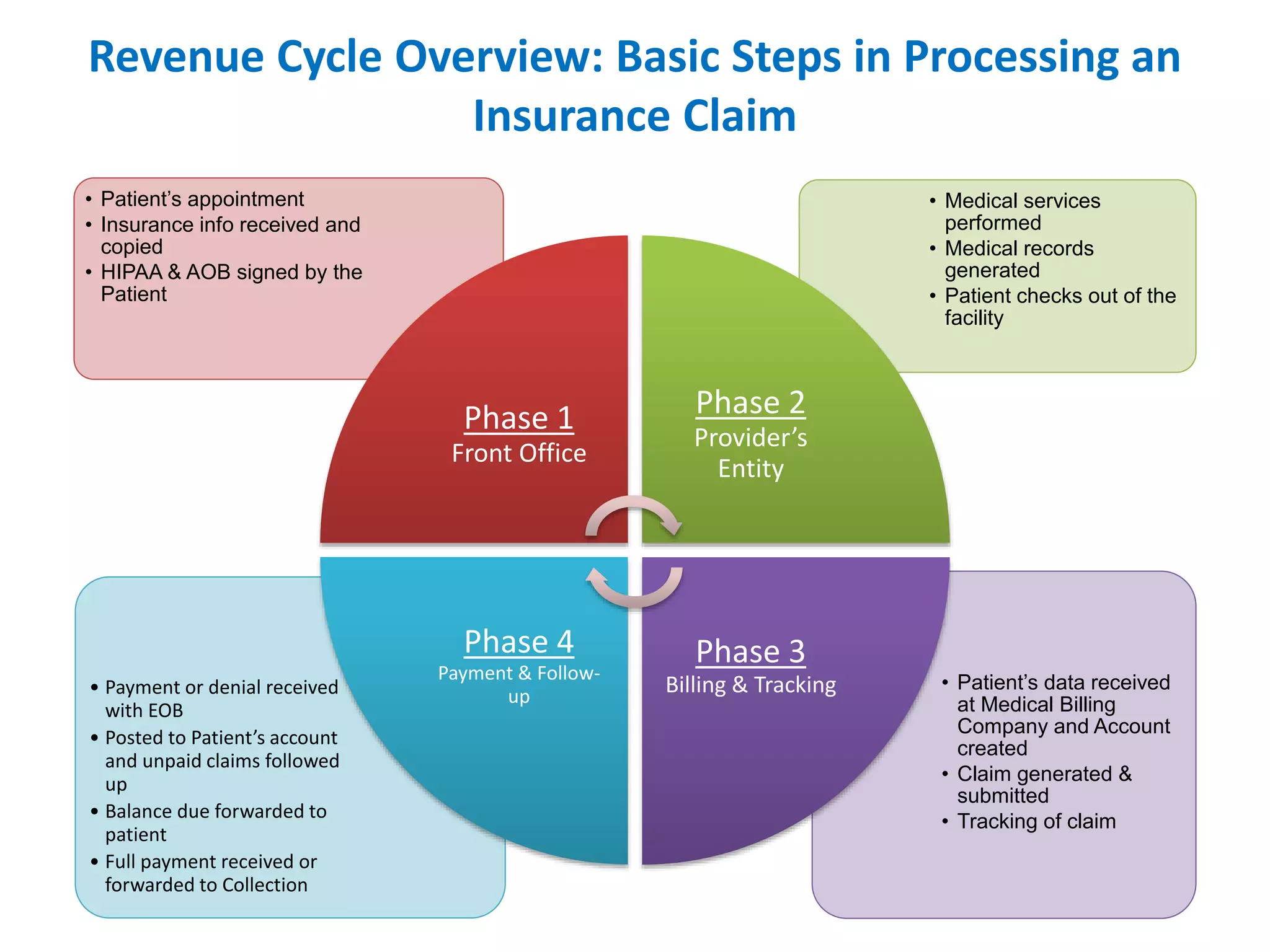
• Patient’s data received
at Medical Billing
Company and Account
created
• Claim generated &
submitted
• Tracking of claim
• Payment or denial received
with EOB
• Posted to Patient’s account
and unpaid claims followed
up
• Balance due forwarded to
patient
• Full payment received or
forwarded to Collection
• Medical services
performed
• Medical records
generated
• Patient checks out of the
facility
• Patient’s appointment
• Insurance info received and
copied
• HIPAA & AOB signed by the
Patient
Phase 1
Front Office
Phase 2
Provider’s
Entity
Phase 3
Billing & Tracking
Phase 4
Payment & Follow-
up
Revenue Cycle Overview: Basic Steps in Processing an
Insurance Claim
Front Office:
• Patient’s appointment – Patient visits the Provider’s office
• Insurance info received and copied – Receptionist collects patient’s insurance
ID cards and keeps a copy
• HIPAA & AOB signed by the Patient – Patient signs all necessary documents
RCM - Phase 1
Provider’s Entity:
• Medical services performed – Provider sees the patient and performs medical services
• Medical records generated – Reports related to the medical service by the provider
generated
• Patient checks out of the facility – Patient leaves the Provider’s office
RCM - Phase 2
Billing & Tracking
• Patient’s data received and Account created – Provider sends Medical records to the
Medical Billing Company.
• Claim generated & submitted – Generate Claim through Software and submits to
Insurance company
• Tracking of claim – Claim is tracked through Websites and RM
RCM - Phase 3
Payment & Follow-up
• Payment or denial received with EOB – Post
adjudication we receive payment/denial along with
EOB
• Posted to Patient’s account and unpaid claims followed up – Post payment/denial as
per EOB
• Balance due forwarded to patient – Statement sent to patient if there is a patient
liability
• Full payment received or forwarded to Collection –
Close the account if full payment received or
forwarded to Collection agency if full payment
is not received.
RCM - Phase 4
Methods of submitting a claim:
Different methods exist for processing insurance claims. The most common are as
followed:
1. Paper Claims - After posting charges in Software and submitting to the insurance
payer on legacy paper CMS-1500 (Centers for Medicare & Medicaid Services) claim
form.
2. Electronic claims transmitted from Software. We partner with a Clearinghouse to
submit claims to the appropriate payer in the correct format.
3. Direct Data Entry (DDE) into the payer’s system. Specialist of billing industry would
log directly into the insurance company’s system and key in the information needed
to process the claim.
Claim Adjudication:
Claims adjudication is a term used in the insurance
industry to refer to the process of paying claims
submitted or denying them after comparing claims to the
benefit or coverage requirements.
Components of an EOB
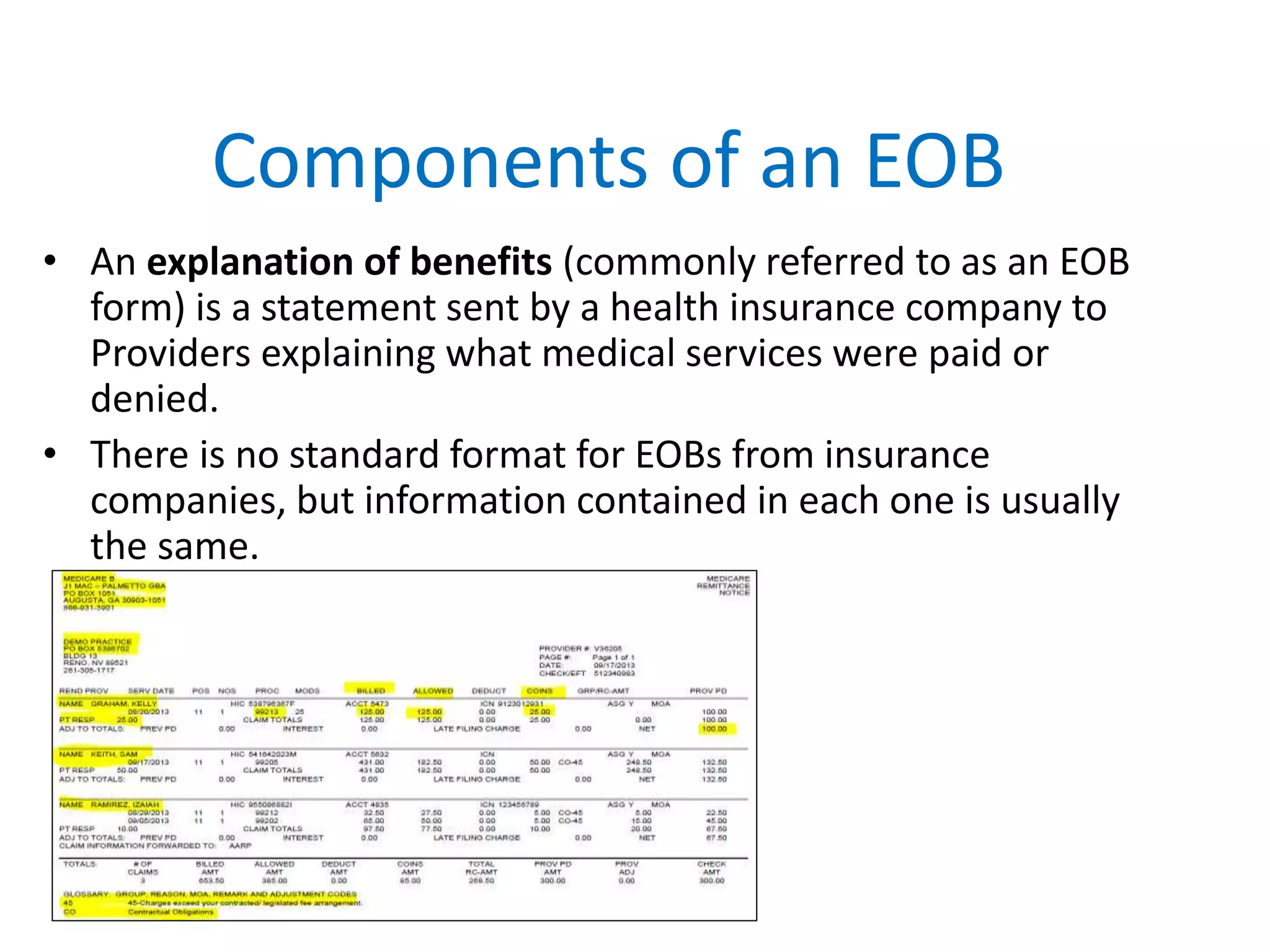
• An explanation of benefits (commonly referred to as an EOB
form) is a statement sent by a health insurance company to
Providers explaining what medical services were paid or
denied.
• There is no standard format for EOBs from insurance
companies, but information contained in each one is usually
the same.
Claim Inquires and Follow Up Procedures:
The following are some reasons for making inquiries:
1. There was no response to a submitted claim within 45 days or a time
frame indicated by the AR Analysis
2. Payment received but the amount is incorrect
3. EOB shows that a professional or diagnostic code was change
4. Additional information / records are required
Any question?
Thank You
Santanu Patwari

Revenue cycle rcm

  • 1.
  • 2.
    RCM - RevenueCycle Management Revenue Cycle Management is the process used by healthcare industry in the United States to track the revenue from Insurance company and / or patient. • The Revenue Cycle Management process begins when a patient schedules an appointment and it ends when the healthcare provider has accepted all payments. • Errors in Revenue Cycle Management can lead to the healthcare provider receiving delayed payments or no payment at all.
  • 3.
    • Patient’s datareceived at Medical Billing Company and Account created • Claim generated & submitted • Tracking of claim • Payment or denial received with EOB • Posted to Patient’s account and unpaid claims followed up • Balance due forwarded to patient • Full payment received or forwarded to Collection • Medical services performed • Medical records generated • Patient checks out of the facility • Patient’s appointment • Insurance info received and copied • HIPAA & AOB signed by the Patient Phase 1 Front Office Phase 2 Provider’s Entity Phase 3 Billing & Tracking Phase 4 Payment & Follow- up Revenue Cycle Overview: Basic Steps in Processing an Insurance Claim
  • 4.
    Front Office: • Patient’sappointment – Patient visits the Provider’s office • Insurance info received and copied – Receptionist collects patient’s insurance ID cards and keeps a copy • HIPAA & AOB signed by the Patient – Patient signs all necessary documents RCM - Phase 1
  • 5.
    Provider’s Entity: • Medicalservices performed – Provider sees the patient and performs medical services • Medical records generated – Reports related to the medical service by the provider generated • Patient checks out of the facility – Patient leaves the Provider’s office RCM - Phase 2
  • 6.
    Billing & Tracking •Patient’s data received and Account created – Provider sends Medical records to the Medical Billing Company. • Claim generated & submitted – Generate Claim through Software and submits to Insurance company • Tracking of claim – Claim is tracked through Websites and RM RCM - Phase 3
  • 7.
    Payment & Follow-up •Payment or denial received with EOB – Post adjudication we receive payment/denial along with EOB • Posted to Patient’s account and unpaid claims followed up – Post payment/denial as per EOB • Balance due forwarded to patient – Statement sent to patient if there is a patient liability • Full payment received or forwarded to Collection – Close the account if full payment received or forwarded to Collection agency if full payment is not received. RCM - Phase 4
  • 8.
    Methods of submittinga claim: Different methods exist for processing insurance claims. The most common are as followed: 1. Paper Claims - After posting charges in Software and submitting to the insurance payer on legacy paper CMS-1500 (Centers for Medicare & Medicaid Services) claim form. 2. Electronic claims transmitted from Software. We partner with a Clearinghouse to submit claims to the appropriate payer in the correct format. 3. Direct Data Entry (DDE) into the payer’s system. Specialist of billing industry would log directly into the insurance company’s system and key in the information needed to process the claim.
  • 9.
    Claim Adjudication: Claims adjudicationis a term used in the insurance industry to refer to the process of paying claims submitted or denying them after comparing claims to the benefit or coverage requirements.
  • 10.
    Components of anEOB • An explanation of benefits (commonly referred to as an EOB form) is a statement sent by a health insurance company to Providers explaining what medical services were paid or denied. • There is no standard format for EOBs from insurance companies, but information contained in each one is usually the same.
  • 11.
    Claim Inquires andFollow Up Procedures: The following are some reasons for making inquiries: 1. There was no response to a submitted claim within 45 days or a time frame indicated by the AR Analysis 2. Payment received but the amount is incorrect 3. EOB shows that a professional or diagnostic code was change 4. Additional information / records are required
  • 12.
  • 13.