Media Training


 Cross Platforming – The Networked Age
         Working with Radio/TV
© 2009 – M. Larry Litwin, APR, Fellow PRSA
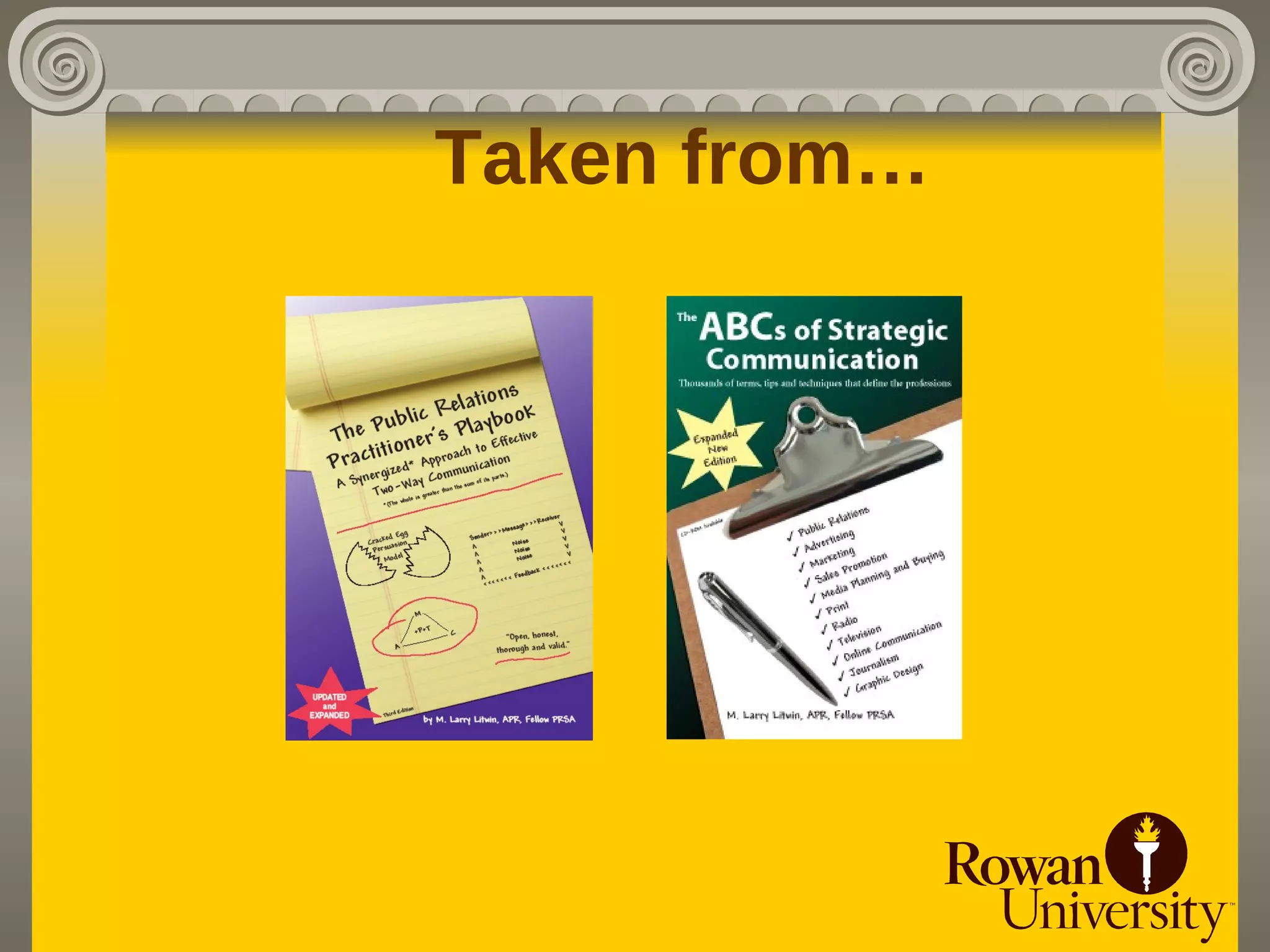
Taken from…
Goals
Goals
Help participants understand how
media operates
Goals
Help participants understand how
media operates
Share system of preparation
  Comfort
Goals
Help participants understand how
media operates
Share system of preparation
  Comfort
Help each participant grow as a
communicator
  How to better prepare
Goals
Help participants understand how media
operates
Share system of preparation
  Comfort
Help each participant grow as a
communicator
  How to better prepare
Give participants the added tools to help each
other
Communication:

A Tool of Leadership
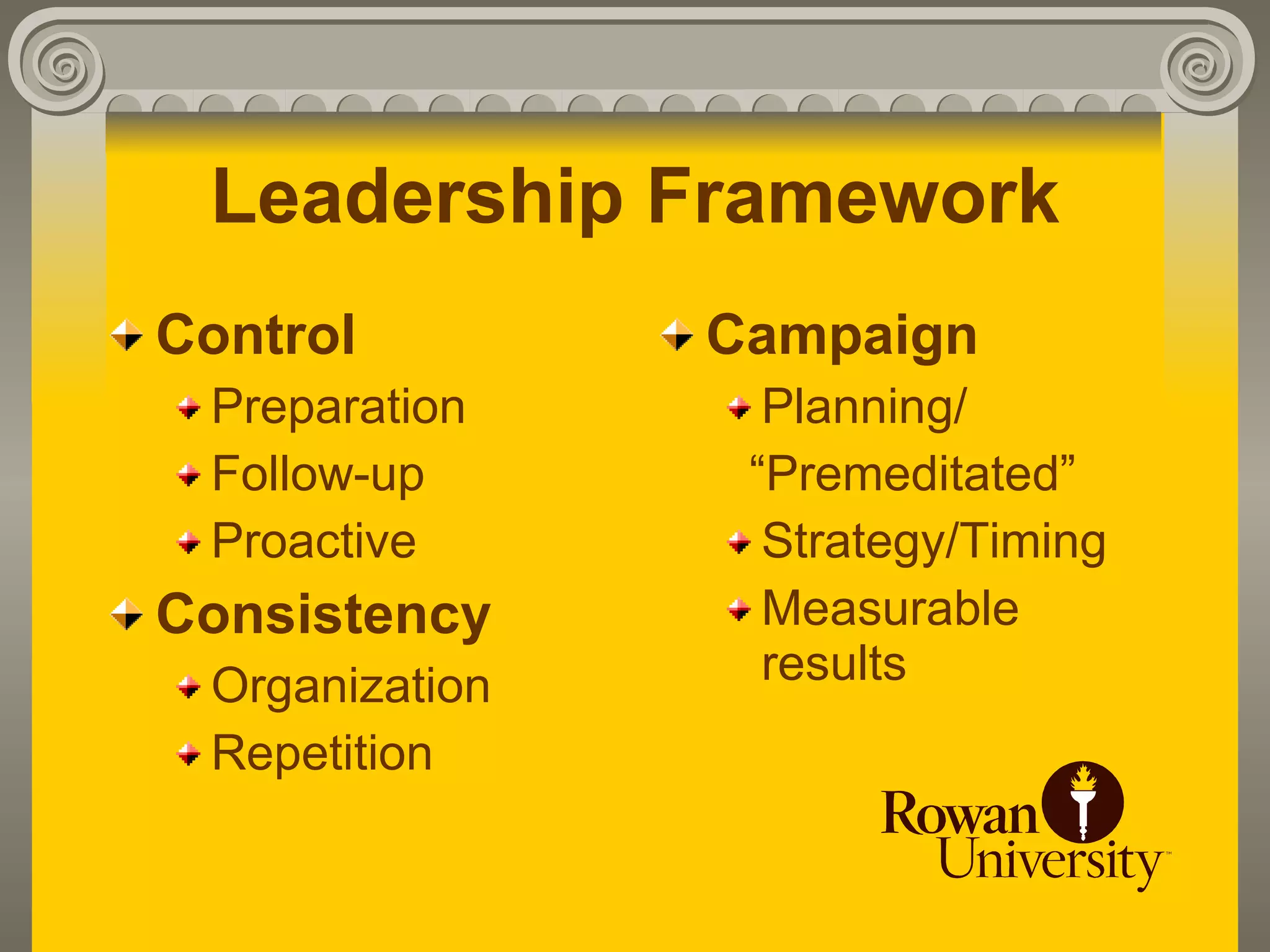
Leadership Framework
Control
Leadership Framework
Control
Consistency
Leadership Framework
Control
Consistency
Campaign
Leadership Framework
Control
 Preparation
Leadership Framework
Control
 Preparation
 Follow-up
Leadership Framework
Control
 Preparation
 Follow-up
 Proactive
Leadership Framework
Consistency
 Organization
Leadership Framework
Consistency
 Organization
 Repetition
Leadership Framework
Campaign
 Planning/“Premeditated”
Leadership Framework
Campaign
 Planning/”Premeditated”
 Strategy/Timing
Leadership Framework
Campaign
 Planning/“Premeditated”
 Strategy/Timing
 Measurable results
Leadership Framework
Control         Campaign
 Preparation      Planning/
 Follow-up       “Premeditated”
 Proactive        Strategy/Timing
Consistency       Measurable
 Organization     results
 Repetition
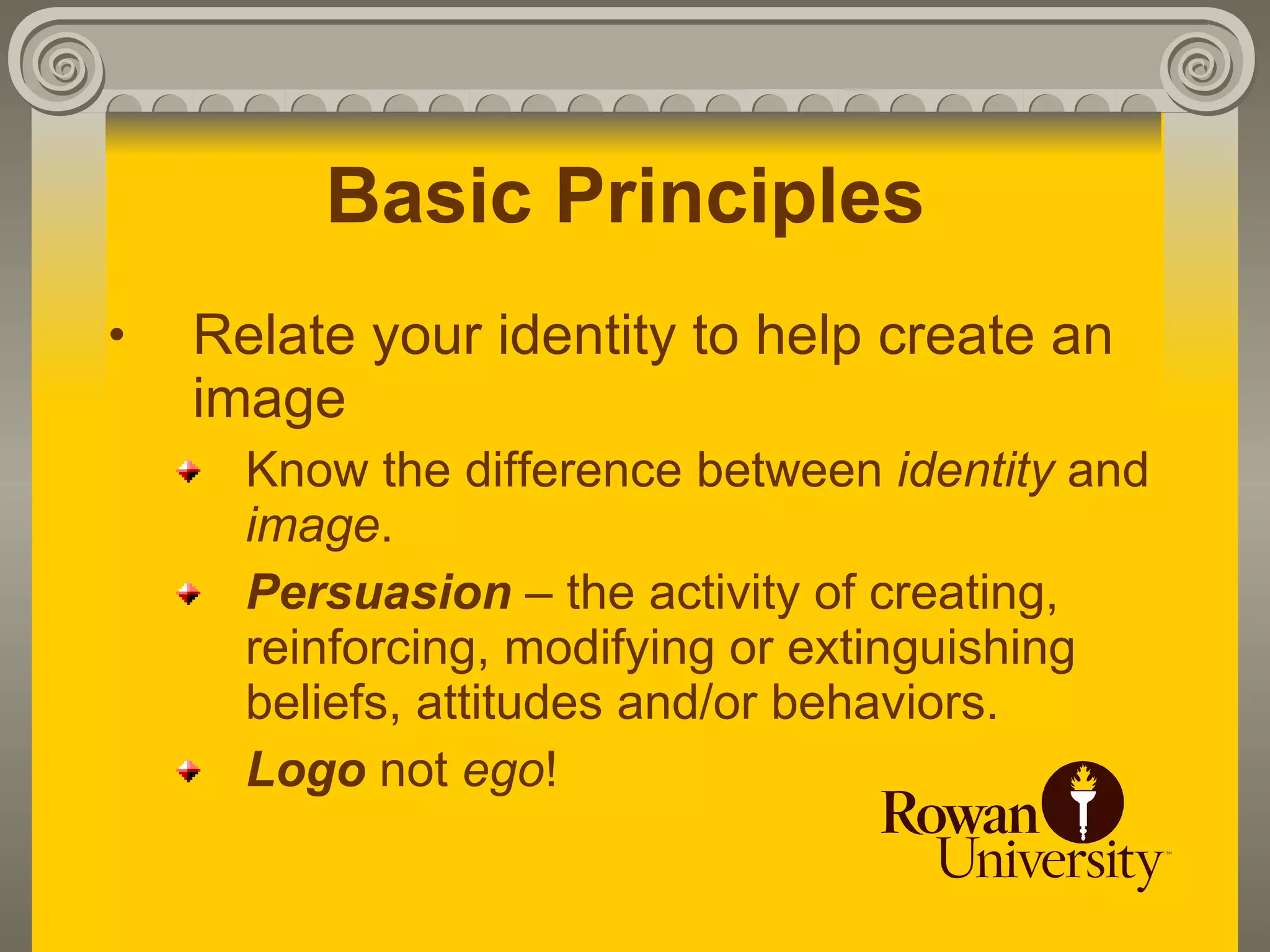
Basic Principles
Basic Principles
•   Relate your identity to help create an
    image
Basic Principles
•   Relate your identity to help create an
    image
      Know the difference between identity and
      image.
      Persuasion – the activity of creating,
      reinforcing, modifying or extinguishing
      beliefs, attitudes and/or behaviors.
      Logo not ego!
Basic Principles
Relate your identity to help create an
image
Analyze your credibility (trust) and
believability (truth)
  Credibility – is in the eye of the
  beholder.
Basic Principles
•   Relate your identity to help create an
    image
•   Analyze your credibility and
    believability
•   Exercise control
Basic Principles
•   Relate your identity to help create an
    image
•   Analyze your credibility and
    believability
•   Exercise control
•   Maintain a positive attitude
Basic Principles
•   Relate your identity to help create an
    image
•   Analyze your credibility and
    believability
•   Exercise control
•   Maintain a positive attitude
•   Demonstrate leadership listening
Credibility
Credibility
Trustworthiness
Credibility
Trustworthiness

Competence
Credibility
Trustworthiness

Competence

Communication style
Audience Analysis/Worksheet
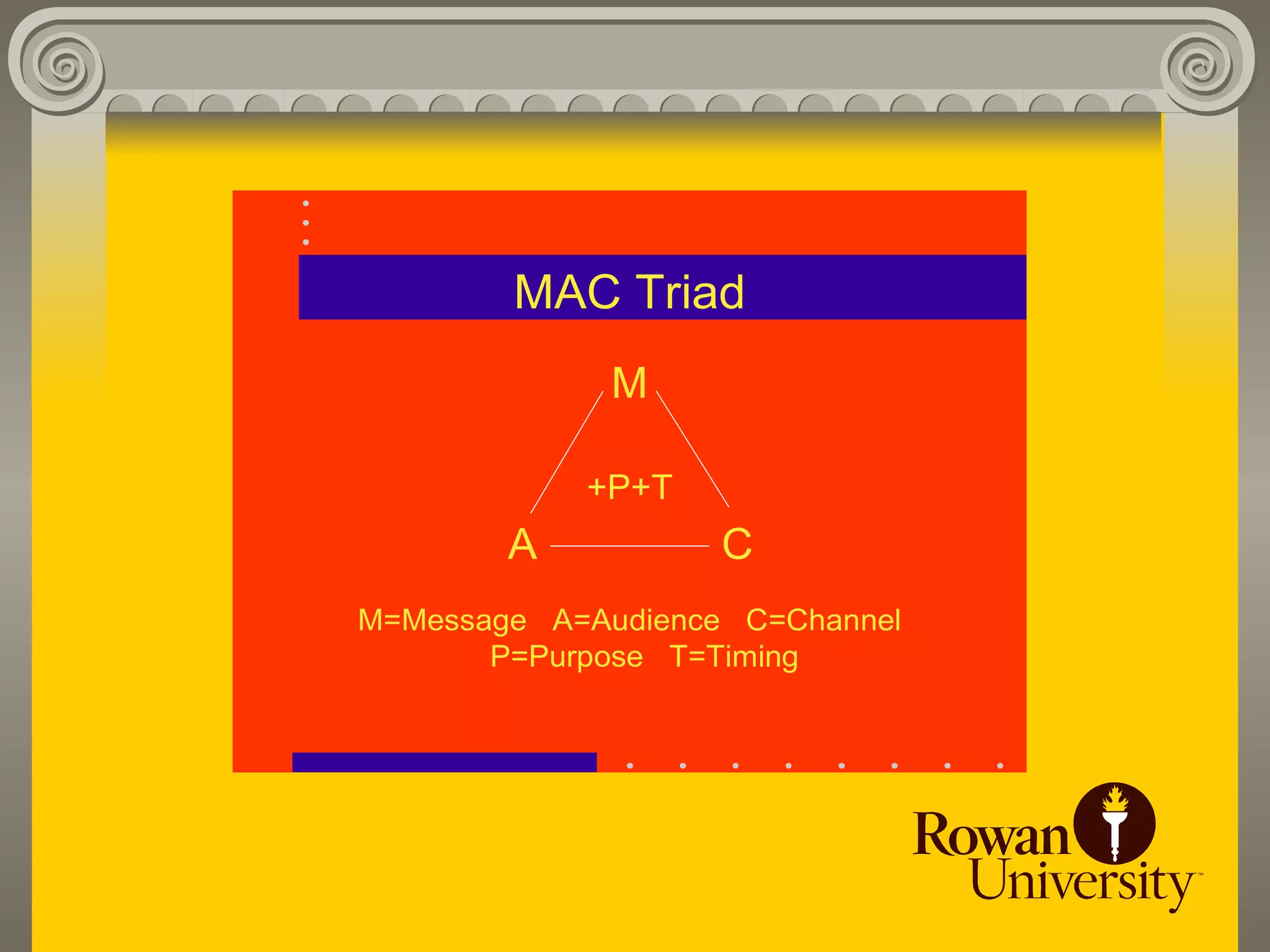
MAC Triad
           MAC Triad
               M
               M

               +P+T
              +P+T
         AA           C
                      C
   M=Message A=Audience C=Channel
M=MessageP=Purpose T=Timing
            A=Audience C=Channel
        P=Purpose T=Timing
Audience Analysis/Worksheet
•   Identify your audience.
Audience Analysis/Worksheet
•    Identify your audience.
•    Analyze your audience
     demographically.
Audience Analysis/Worksheet
•    Identify your audience.
•    Analyze your audience
     demographically, psychographically,
     geodemographically.
•    How well does your audience
     understand the issues (or topics) you
     wish to discuss?
Audience Analysis/Worksheet
•  Identify your audience.
•  Analyze your audience demographically,
   psychographically, geodemographically.
3. How well does your audience understand
   the issues (or topics) you wish to discuss?
4. What is your audience’s attitude toward your
   agenda?
Audience Analysis/Worksheet
•    Identify your audience.
•    Analyze your audience demographically,
     psychographically, geodemographically.
•    How well does your audience understand the
     issues (or topics) you wish to discuss?
•    What is your audience’s attitude toward your
     agenda?
•    What does your audience need to know or believe
     in before you can change its behavior? (What’s in
     it for them?)
Audience Analysis/Worksheet
•   Identify your audience.
•   Analyze your audience demographically,
    psychographically, geodemographically.
•   How well does your audience understand the
    issues (or topics) you wish to discuss?
•   What is your audience’s attitude toward your
    agenda?
•   What does your audience need to know or believe
    in before you can change its behavior? (What’s in
    it for them?)
•   To what type of arguments is your audience likely
    to respond?
Audience Analysis/Worksheet
•   Identify your audience.
•   Analyze your audience
    demographically, psychographically,
    geodemographically.
•   How well does your audience
    understand the issues (or topics) you
    wish to discuss?
Audience Analysis/Worksheet
4. What is your audience’s attitude
   toward your agenda?
3. What does your audience need to
   know or believe in before you can
   change its behavior? (What’s in it
   for them?)
7. To what type of arguments is your
   audience likely to respond?
Interview Goals
What outcomes do you want from
your target audience as a result of
your strategic message?
Interview Goals
What outcomes do you want from your
target audience as a result of your
strategic message?
What outcomes do you want to prevent
(if any) from your target audience?
Interview Goals
What outcomes do you want from your target
audience as a result of your strategic
message?
What outcomes do you want to prevent (if
any) from your target audience?
What points or arguments are your opponents
or competitors likely to make?
What makes
a good soundbite?
What makes
a good soundbite(byte) ?
Short and sweet
What makes
   a good soundbite?
Short and sweet
Visual
What makes
   a good soundbite?
Short and sweet
Visual
Simple
What makes
  a good soundbite?
Short and sweet
Visual
Simple
Compelling
Avoid the Media Traps
Stay calm and composed.
Avoid the Media Traps
Stay calm and composed.
Stay on message.
Avoid the Media Traps
Stay calm and composed.
Stay on message.
Don’t provide answers that could
negatively impact your reputation or
your organization’s reputation.
Avoid the Media Traps
Stay calm and composed.
Stay on message.
Don’t provide answers that could
negatively impact your reputation or
your organization’s reputation.
Don’t be caught off-guard by
questioning that you want to declare off-
limits.
Avoid the Media Traps
Stay calm and composed.
Stay on message.
Don’t provide answers that could negatively
impact your reputation or your organization’s
reputation.
Don’t be caught off-guard by questioning that
you want to declare off-limits.
Listen carefully to the reporter’s choice of
words and don’t repeat the negatives.
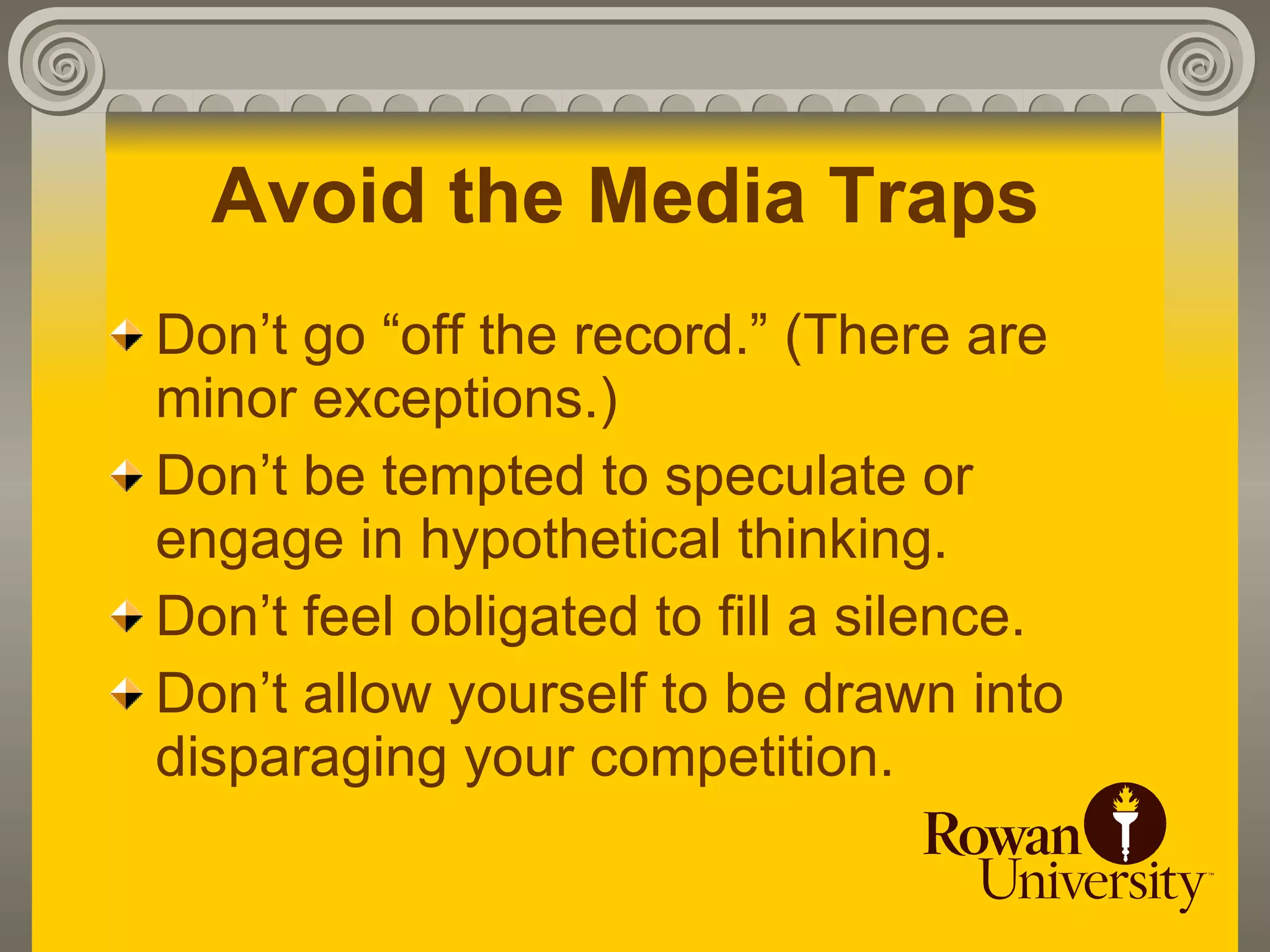
Avoid the Media Traps
Don’t go “off the record.” (There are
minor exceptions.)
Avoid the Media Traps
Don’t go “off the record.” (There are
minor exceptions.)
Don’t be tempted to speculate or
engage in hypothetical thinking.
Avoid the Media Traps
Don’t go “off the record.” (There are
minor exceptions.)
Don’t be tempted to speculate or
engage in hypothetical thinking.
Don’t feel obligated to fill a silence.
Avoid the Media Traps
Don’t go “off the record.” (There are
minor exceptions.)
Don’t be tempted to speculate or
engage in hypothetical thinking.
Don’t feel obligated to fill a silence.
Don’t allow yourself to be drawn into
disparaging your competition.
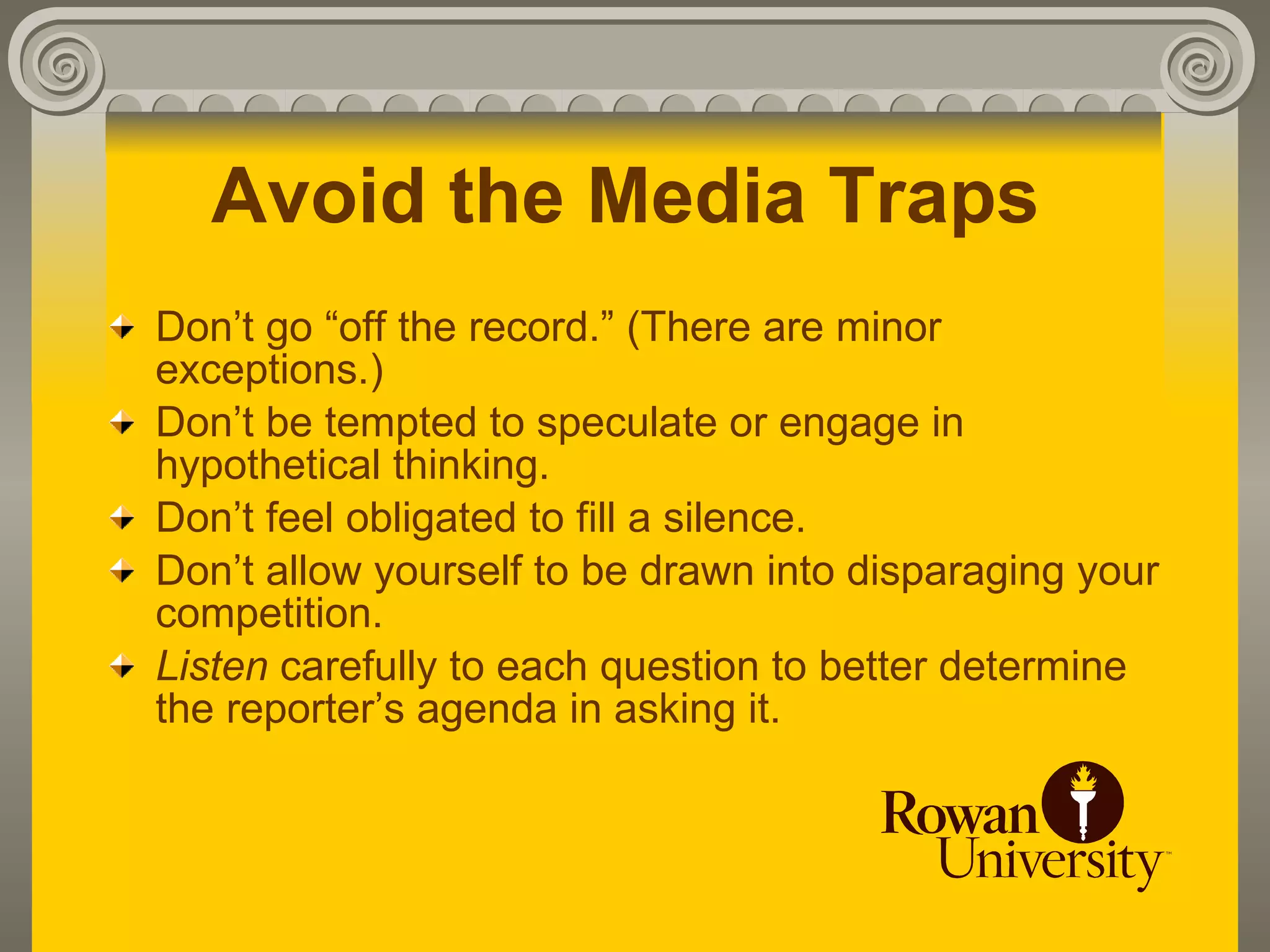
Avoid the Media Traps
Don’t go “off the record.” (There are minor
exceptions.)
Don’t be tempted to speculate or engage in
hypothetical thinking.
Don’t feel obligated to fill a silence.
Don’t allow yourself to be drawn into disparaging your
competition.
Listen carefully to each question to better determine
the reporter’s agenda in asking it.
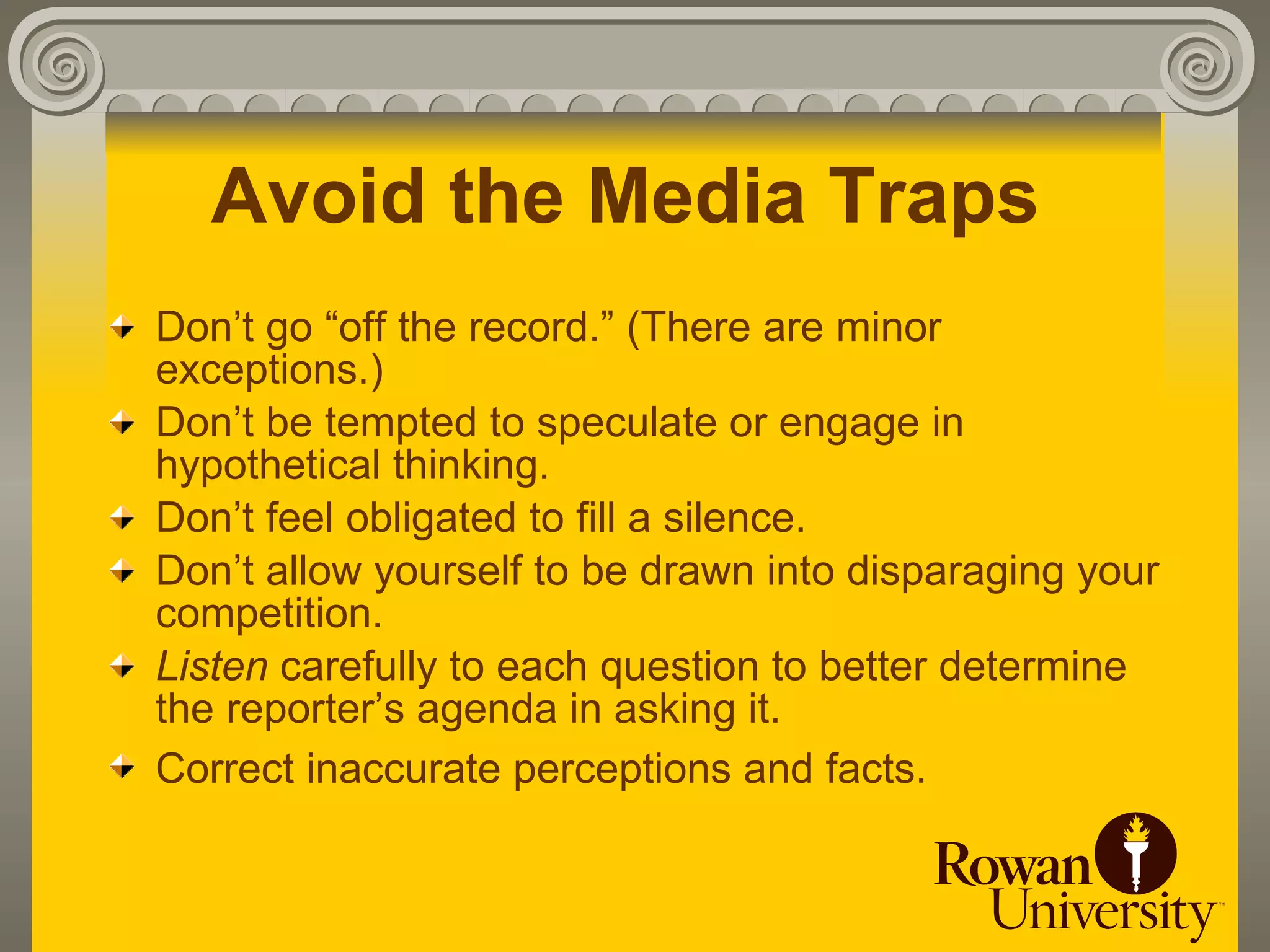
Avoid the Media Traps
Don’t go “off the record.” (There are minor
exceptions.)
Don’t be tempted to speculate or engage in
hypothetical thinking.
Don’t feel obligated to fill a silence.
Don’t allow yourself to be drawn into disparaging your
competition.
Listen carefully to each question to better determine
the reporter’s agenda in asking it.
Correct inaccurate perceptions and facts.
Successful Media Interviews
 Before the interview
Successful Media Interviews
 Before the interview
 During the interview
Successful Media Interviews
 Before the interview
 During the interview
 After the interview
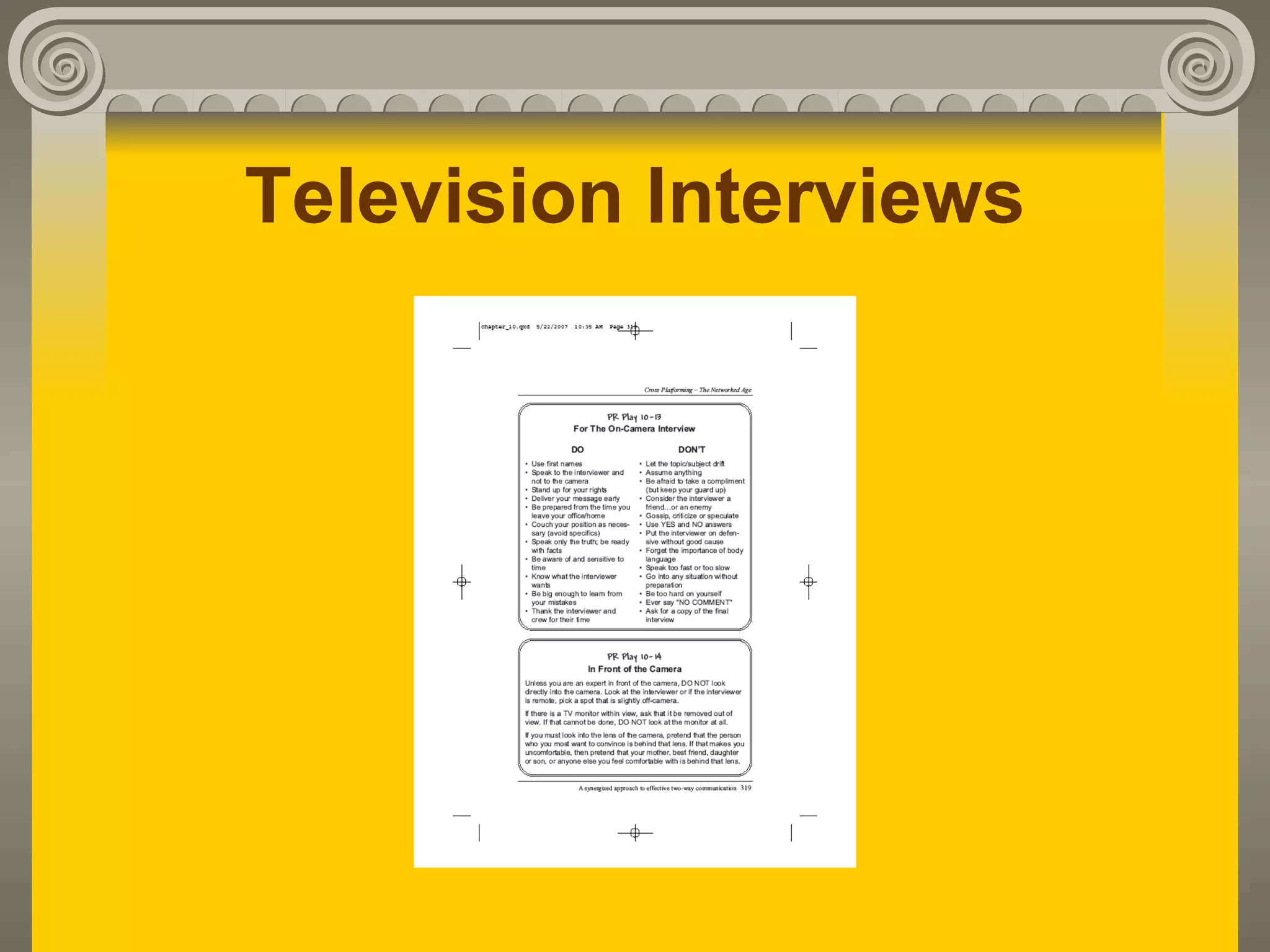
Television Interviews
Some guidelines…
Television Interviews
A Summary
A Summary
Be open, honest, thorough and
valid (relevant)
A Summary
Be open, honest, thorough and
valid
Be accessible
A Summary
Be open, honest, thorough and
valid
Be accessible
Remain calm and confident – even
in the face of adversity
A Summary
Be open, honest, thorough and
valid
Be accessible
Remain calm and confident – even
in the face of adversity
Know the subject matter (as well as
you know your own name)
A Summary continued
Explain all the facts (key message
points) in simple English
(layperson’s terms)
A Summary
Explain all the facts (key message
points) in simple English
(layperson’s terms)
Take control of the interview
A Summary
Explain all the facts (key message
points) in simple English
(layperson’s terms)
Take control of the interview
Be careful of going “off-the-record”
or giving “background information”
(not for attribution)
A Summary
Get your message and/or important
information out early (in the first few
statements). Then, drive these vital
points home by repeating them in your
closing summary.
Anticipate questions and be prepared
with the answers
Karen Friedman’s Bill of Rights
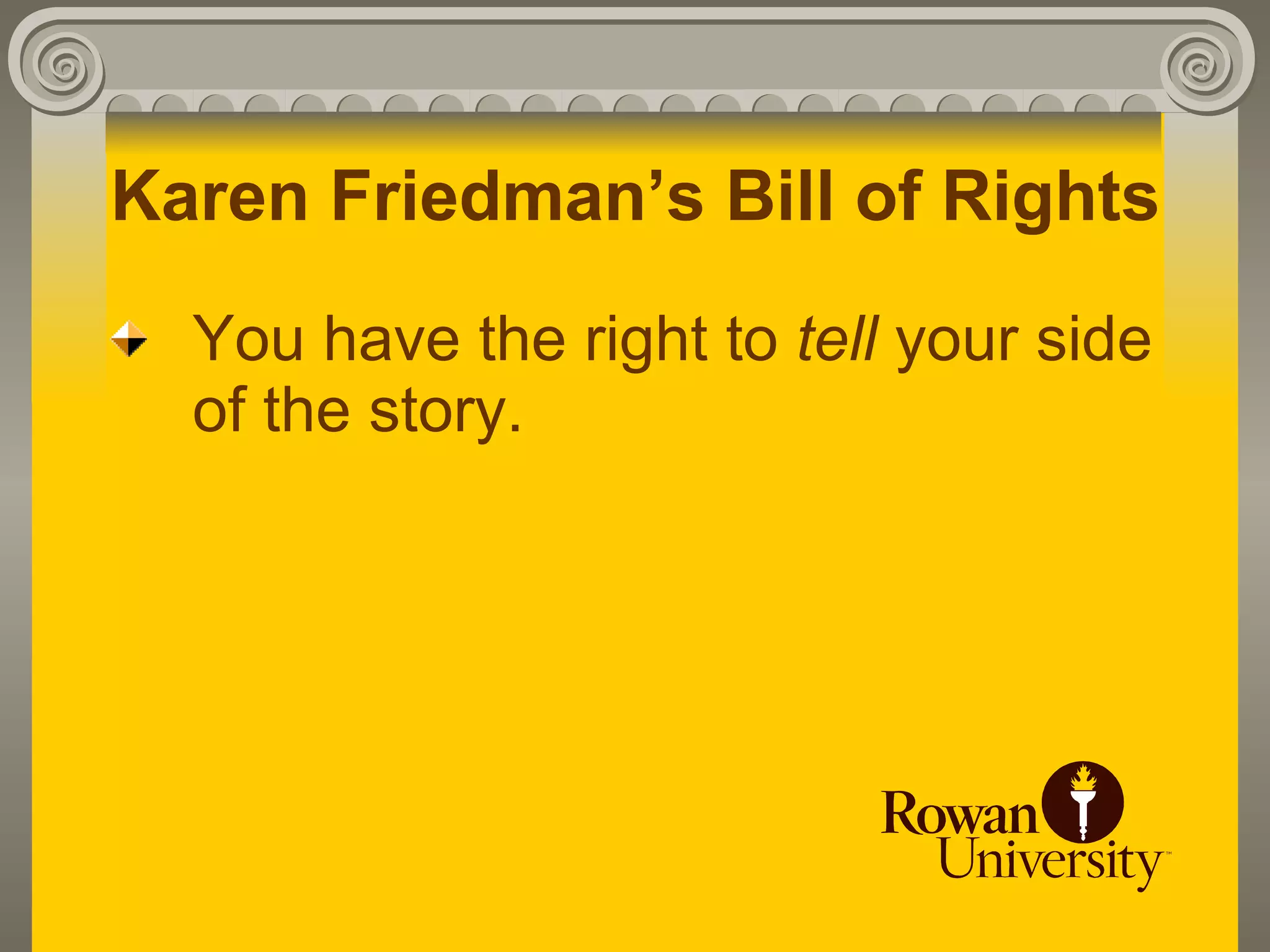
  You have the right to tell your side
  of the story.
Karen Friedman’s Bill of Rights
  You have the right to tell your side
  of the story.
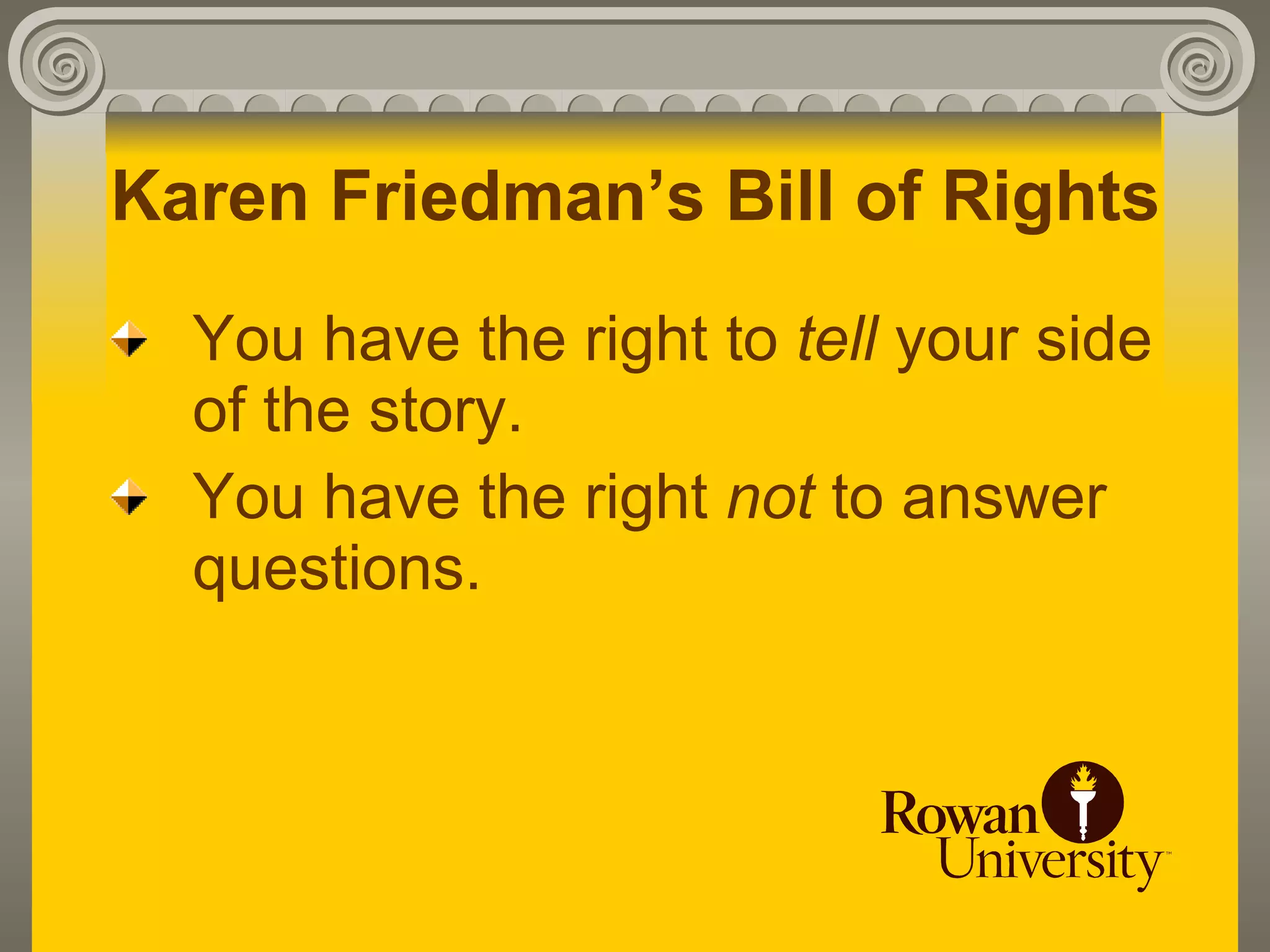
  You have the right not to answer
  questions.
Karen Friedman’s Bill of Rights
  You have the right to tell your side
  of the story.
  You have the right not to answer
  questions.
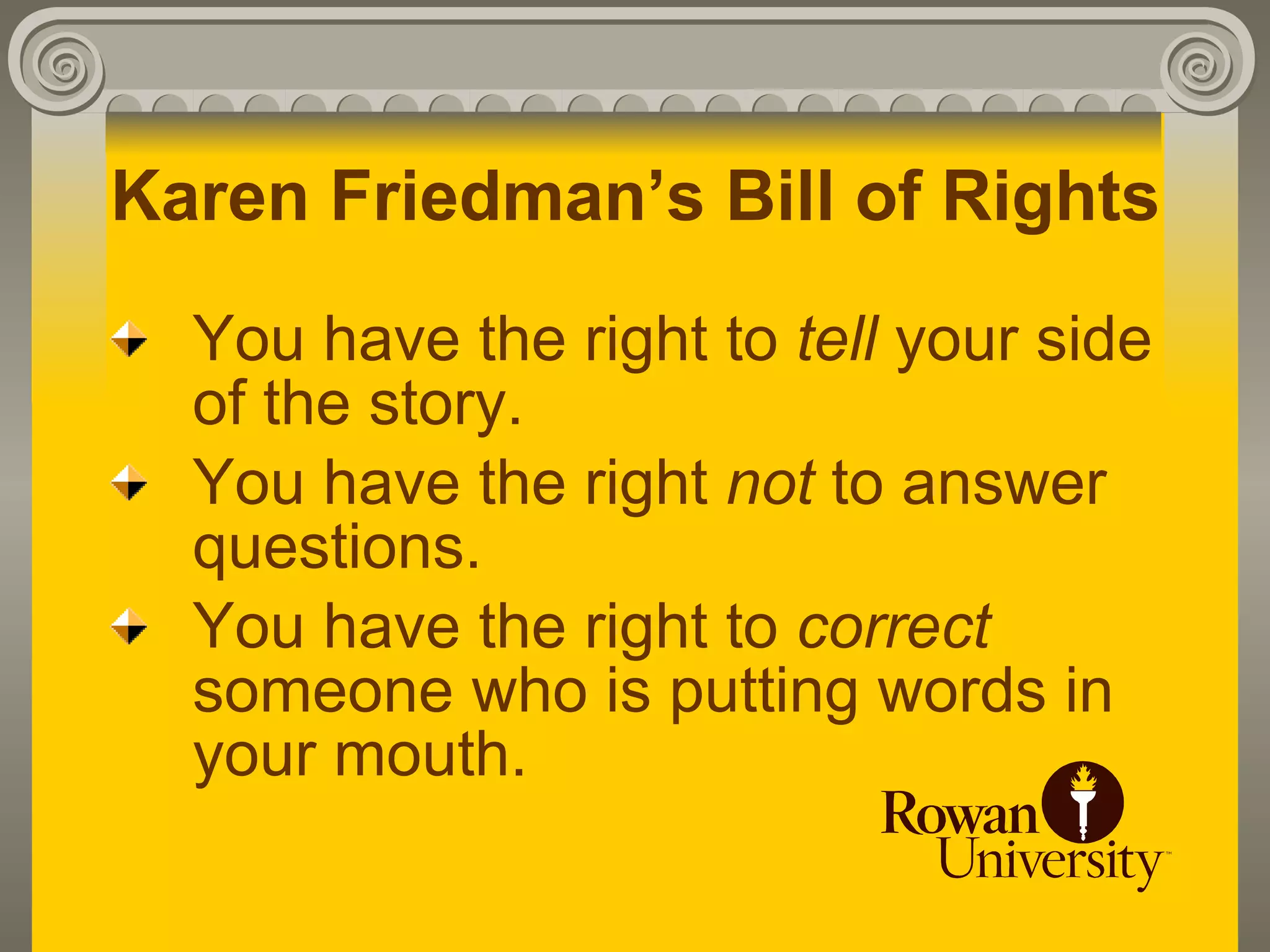
  You have the right to correct
  someone who is putting words in
  your mouth.
Karen Friedman’s Bill of Rights
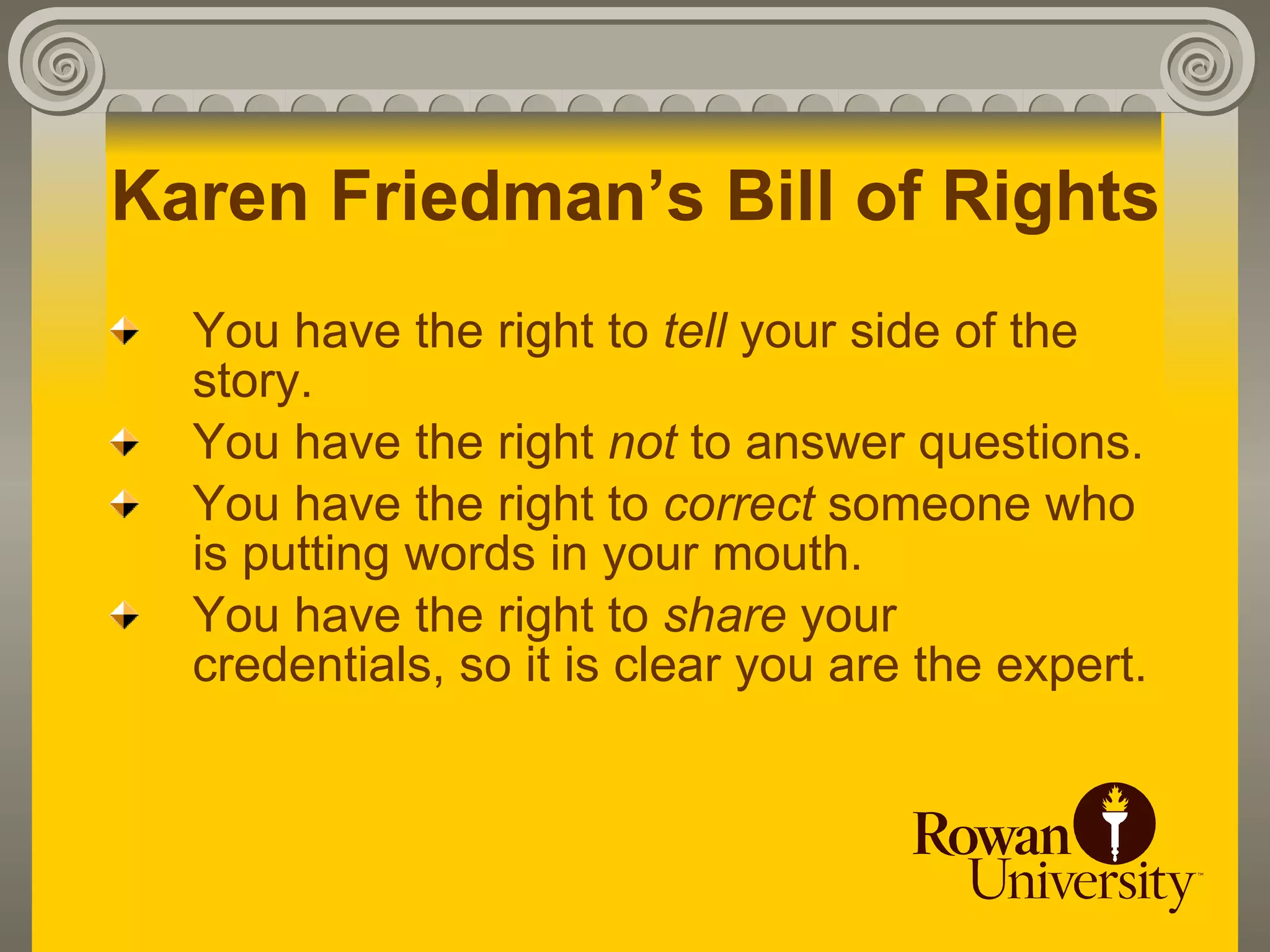
  You have the right to tell your side of the
  story.
  You have the right not to answer questions.
  You have the right to correct someone who
  is putting words in your mouth.
  You have the right to share your
  credentials, so it is clear you are the expert.
Karen Friedman’s Bill of Rights
  You have the right to take time
 to prepare.
Karen Friedman’s Bill of Rights
  You have the right to take time to
  prepare.
  You have the right to ask
  questions.
Karen Friedman’s Bill of Rights
  You have the right to take time to
  prepare.
  You have the right to ask
  questions.
  You have the right to decline to
  talk.
Karen Friedman’s Bill of Rights
  You have the right to take time to
  prepare.
  You have the right to ask questions.
  You have the right to decline to talk.
  You have the right to explain your
  point of view.
Karen Friedman’s Bill of Rights
  You have the right to take time to
  prepare.
  You have the right to ask questions.
  You have the right to decline to talk.
  You have the right to explain your
  point of view.
  You have the right to be human.
Karen Friedman’s Bill of Rights
  You have the right to take time to prepare.
  You have the right to ask questions.
  You have the right to decline to talk.
  You have the right to explain your point of
  view.
  You have the right to be human.
  You have the right to make a mistake and
  correct it.
Questions
M. Larry Litwin, APR
Rowan University
larry@larrylitwin.com
www.larrylitwin.com

                        © 2009

Media Training – Using Radio and TV in Public Relations 071609