Forms, Conventions & Intertextuality
 To develop understanding of the conventions
of music videos
 To know the different types of intertextuality
 To develop analytical skills in exploring the
music video genre
 Can you think of 5 conventions of music
video?
 Andrew Goodwin identifies a number of key
features which distinguishes the music video
as a form…
 A relationship between the lyrics and visuals
(illustrating, amplifying or contradicting the lyrics)
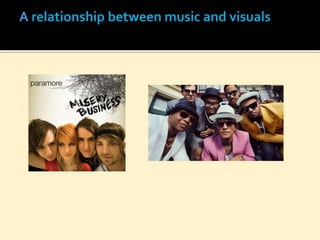
 A relationship between music and visuals
 Particular genres may have their own video style and
iconography
 A demand from the record company for lots of close-
ups of the main artist
 Artist develops their own star iconography in and out
of their videos
 Reference to voyeurism (screen within screen,
binoculars, cameras…)
 Intertextual references
 Shot movement, angle and distance all need
to be analysed
 Camera may move alongside the artist as
they walk but could also be used to create a
more dramatic feel to a stage performance
 Close-ups predominate partly because of the
size of the screen but also to create a sense of
intimacy
 Mainly fast cut montage making most images
impossible to grasp on first viewing
 Some may have a slower, gentler pace with
gentler transitions to establish mood, thus
appealing to a wider audience
 Editing can be used to position the audience
on the side of the artist within the story
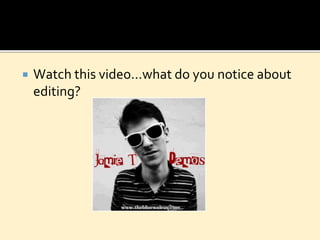
 Watch this video…what do you notice about
editing?
 Many film directors started as music video
directors or also direct music videos
 Jonas Akurlund
 MichelGondry
 Spike Jonze
 John Landis
 Sofia Coppola
 Michael Bay
 BenWheatley
 Influences mainly from fashion, film and art
photography
 Specific catwalk references
 Now video games to appeal to a younger
demographic
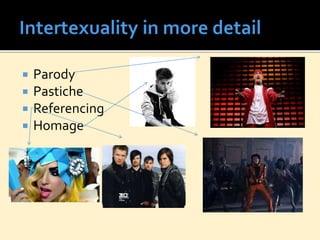
 Parody
 Pastiche
 Referencing
 Homage
 Pastiche is the imitation of a text’s
features by another text.
 It could be in the same style or feature similar
motifs or even be a copy of the original.
 Sometimes a pastiche copies the style from a
period in time.
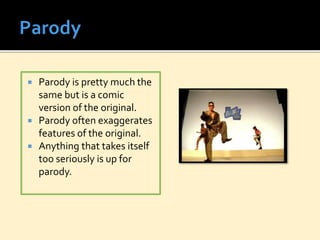
 Parody is pretty much the
same but is a comic
version of the original.
 Parody often exaggerates
features of the original.
 Anything that takes itself
too seriously is up for
parody.
 This is when particular elements of the video
borrow from other texts
 This could be a prop, costume, or hair style.
 This is when the video pays tribute to another
media text
 These four types of intertextuality do not
have to exist exclusive of one another
 A video can be a mix of any four
 Sigmund Freud
 Erotic pleasure
gained from looking
at a sexual object
who is unaware they
are being looked at
 Screen within
screens
 Webcams/CCTV/
Binoculars
 The Male Gaze
 Argues the main viewpoint
is male
 Women sexualised in the
media
 A powerful controlling
gaze at the female on
display
 She is passive
 Sexually provocative and in control of it
 Inviting sexual gaze
 Is the female flesh on display simply a cynical
exploitation of the female body to increase
(largely) male profit margins, or a life-
enhancing assertion of female self-
confidence and sexual independence?
 Analyse three music video examples from
three different genre
 Write up to 500 words for each
 Bullet points/table/annotation of print
screens

Media language power point

  • 1.
    Forms, Conventions &Intertextuality
  • 2.
     To developunderstanding of the conventions of music videos  To know the different types of intertextuality  To develop analytical skills in exploring the music video genre
  • 3.
     Can youthink of 5 conventions of music video?  Andrew Goodwin identifies a number of key features which distinguishes the music video as a form…
  • 4.
     A relationshipbetween the lyrics and visuals (illustrating, amplifying or contradicting the lyrics)  A relationship between music and visuals  Particular genres may have their own video style and iconography  A demand from the record company for lots of close- ups of the main artist  Artist develops their own star iconography in and out of their videos  Reference to voyeurism (screen within screen, binoculars, cameras…)  Intertextual references
  • 5.
     Shot movement,angle and distance all need to be analysed  Camera may move alongside the artist as they walk but could also be used to create a more dramatic feel to a stage performance
  • 6.
     Close-ups predominatepartly because of the size of the screen but also to create a sense of intimacy
  • 7.
     Mainly fastcut montage making most images impossible to grasp on first viewing  Some may have a slower, gentler pace with gentler transitions to establish mood, thus appealing to a wider audience  Editing can be used to position the audience on the side of the artist within the story
  • 8.
     Watch thisvideo…what do you notice about editing?
  • 9.
     Many filmdirectors started as music video directors or also direct music videos  Jonas Akurlund  MichelGondry  Spike Jonze  John Landis  Sofia Coppola  Michael Bay  BenWheatley
  • 11.
     Influences mainlyfrom fashion, film and art photography  Specific catwalk references  Now video games to appeal to a younger demographic
  • 12.
     Parody  Pastiche Referencing  Homage
  • 13.
     Pastiche isthe imitation of a text’s features by another text.  It could be in the same style or feature similar motifs or even be a copy of the original.  Sometimes a pastiche copies the style from a period in time.
  • 15.
     Parody ispretty much the same but is a comic version of the original.  Parody often exaggerates features of the original.  Anything that takes itself too seriously is up for parody.
  • 17.
     This iswhen particular elements of the video borrow from other texts  This could be a prop, costume, or hair style.
  • 18.
     This iswhen the video pays tribute to another media text
  • 20.
     These fourtypes of intertextuality do not have to exist exclusive of one another  A video can be a mix of any four
  • 21.
     Sigmund Freud Erotic pleasure gained from looking at a sexual object who is unaware they are being looked at  Screen within screens  Webcams/CCTV/ Binoculars
  • 22.
     The MaleGaze  Argues the main viewpoint is male  Women sexualised in the media  A powerful controlling gaze at the female on display  She is passive
  • 23.
     Sexually provocativeand in control of it  Inviting sexual gaze  Is the female flesh on display simply a cynical exploitation of the female body to increase (largely) male profit margins, or a life- enhancing assertion of female self- confidence and sexual independence?
  • 34.
     Analyse threemusic video examples from three different genre  Write up to 500 words for each  Bullet points/table/annotation of print screens