Mechanisms of Excitatory Synapse
Maturation by Trans-Synaptic
Organizing Complexes
Hasan Arafat
5th Year Medical Student
An-Najah University
Nablus
Introduction-General Terms
Synapse: specialized cell-cell adhesion contacts that mediate communication
within neural networks.
Synaptic Transmission: the transfer of information at the synapse from one
neuron to another.
Neurotransmitter: a chemical agent found stored in vesicles in the
presynaptic space, released
upon stimulation to the synaptic cleft. Different neurotransmitters are
used by different types of neurons.
Neuroscience : exploring the brain. Mark F. Bear, Barry W. Connors, Michael A. Paradiso. — Fourth edition.
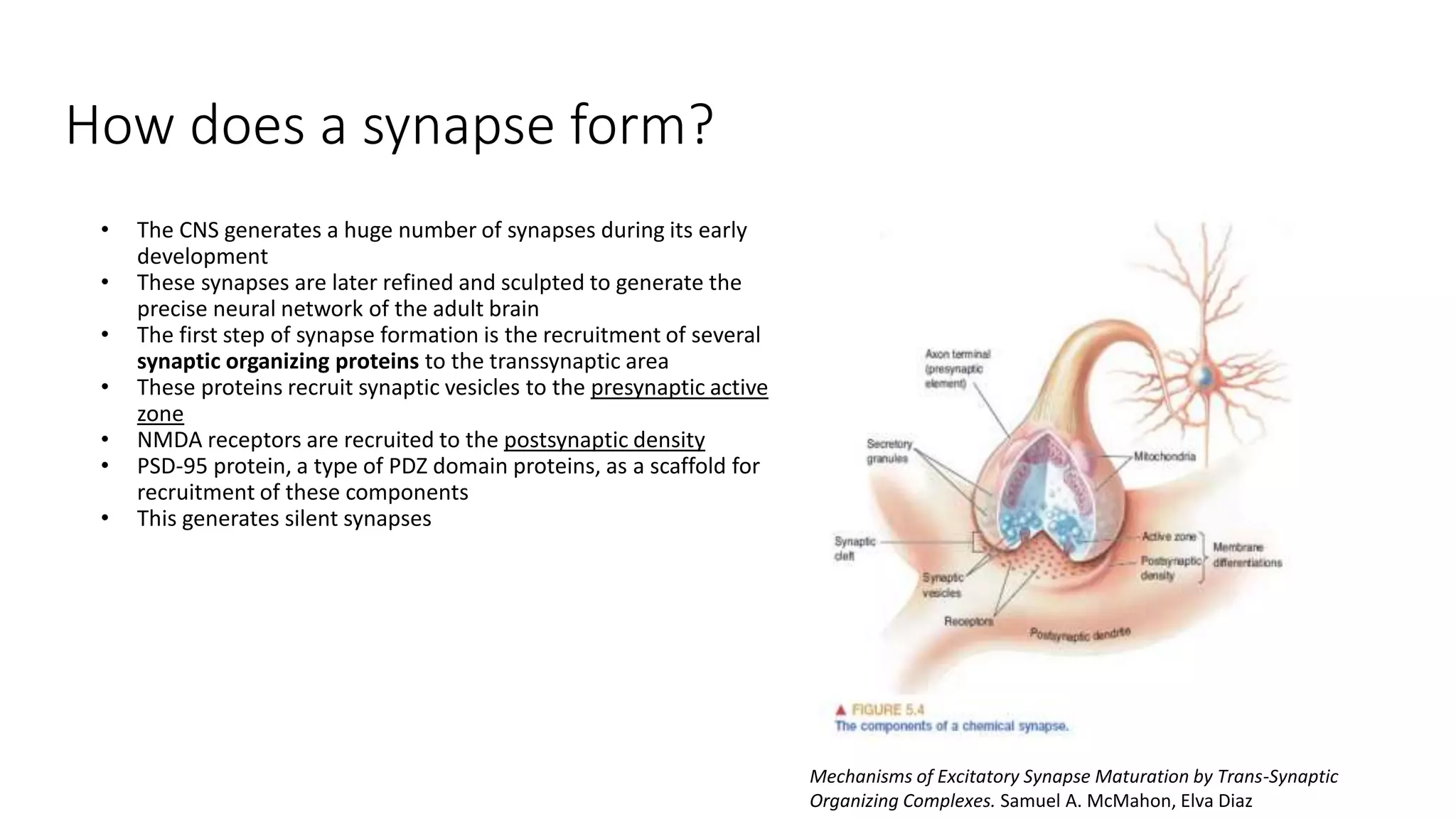
How does a synapse form?
• The CNS generates a huge number of synapses during its early
development
• These synapses are later refined and sculpted to generate the
precise neural network of the adult brain
• The first step of synapse formation is the recruitment of several
synaptic organizing proteins to the transsynaptic area
• These proteins recruit synaptic vesicles to the presynaptic active
zone
• NMDA receptors are recruited to the postsynaptic density
• PSD-95 protein, a type of PDZ domain proteins, as a scaffold for
recruitment of these components
• This generates silent synapses
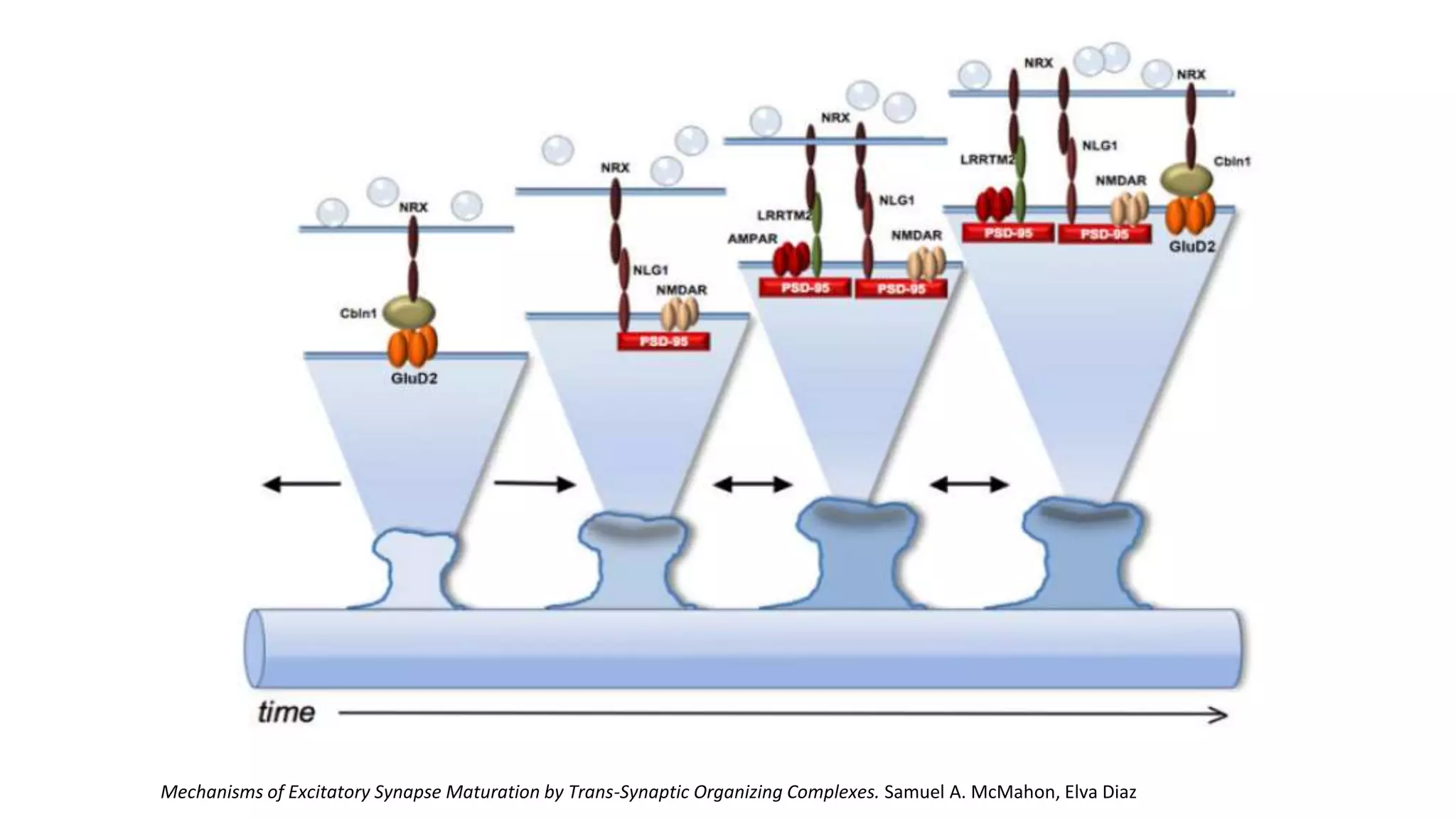
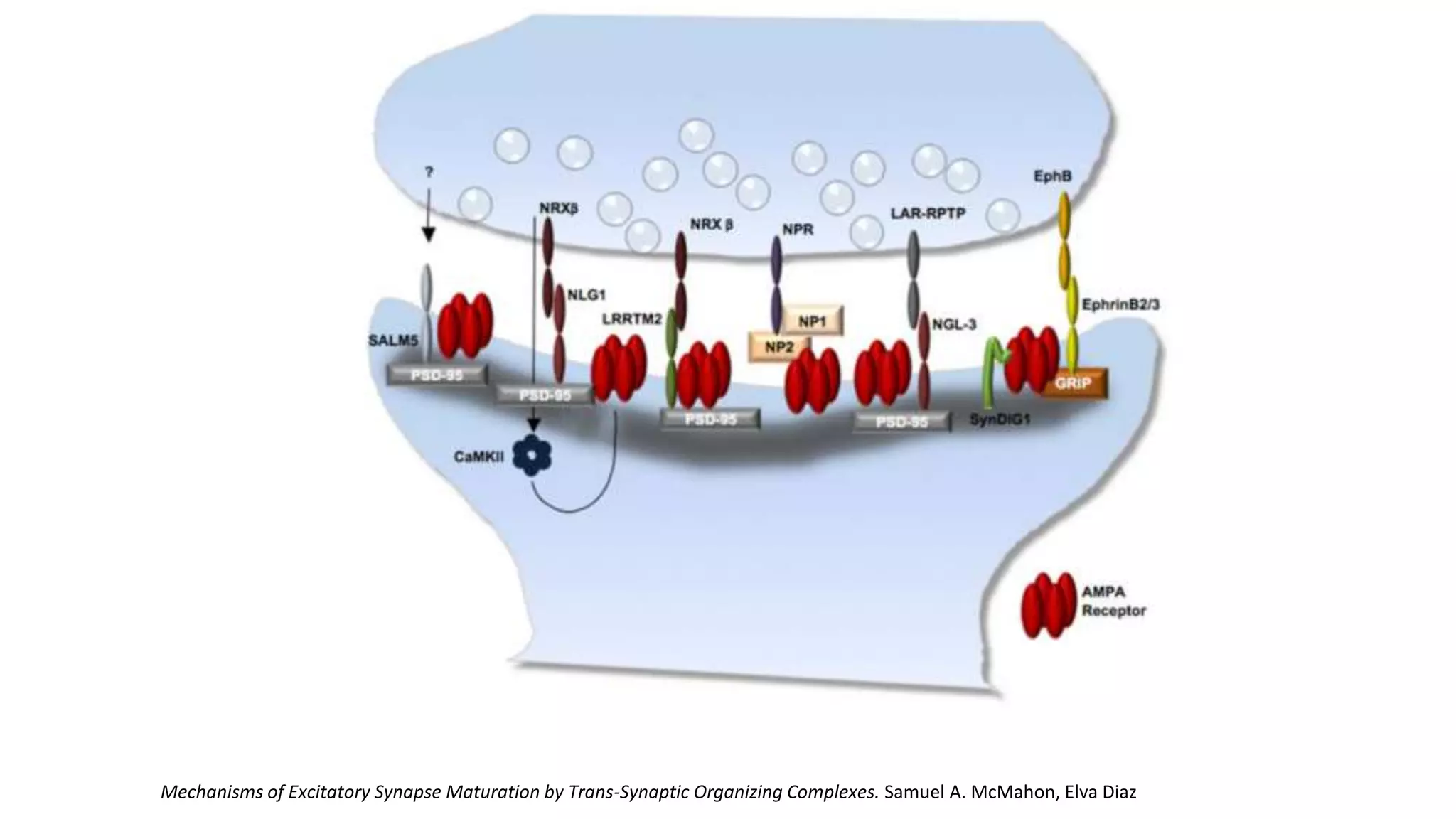
Mechanisms of Excitatory Synapse Maturation by Trans-Synaptic
Organizing Complexes. Samuel A. McMahon, Elva Diaz
What is AMPA receptor?
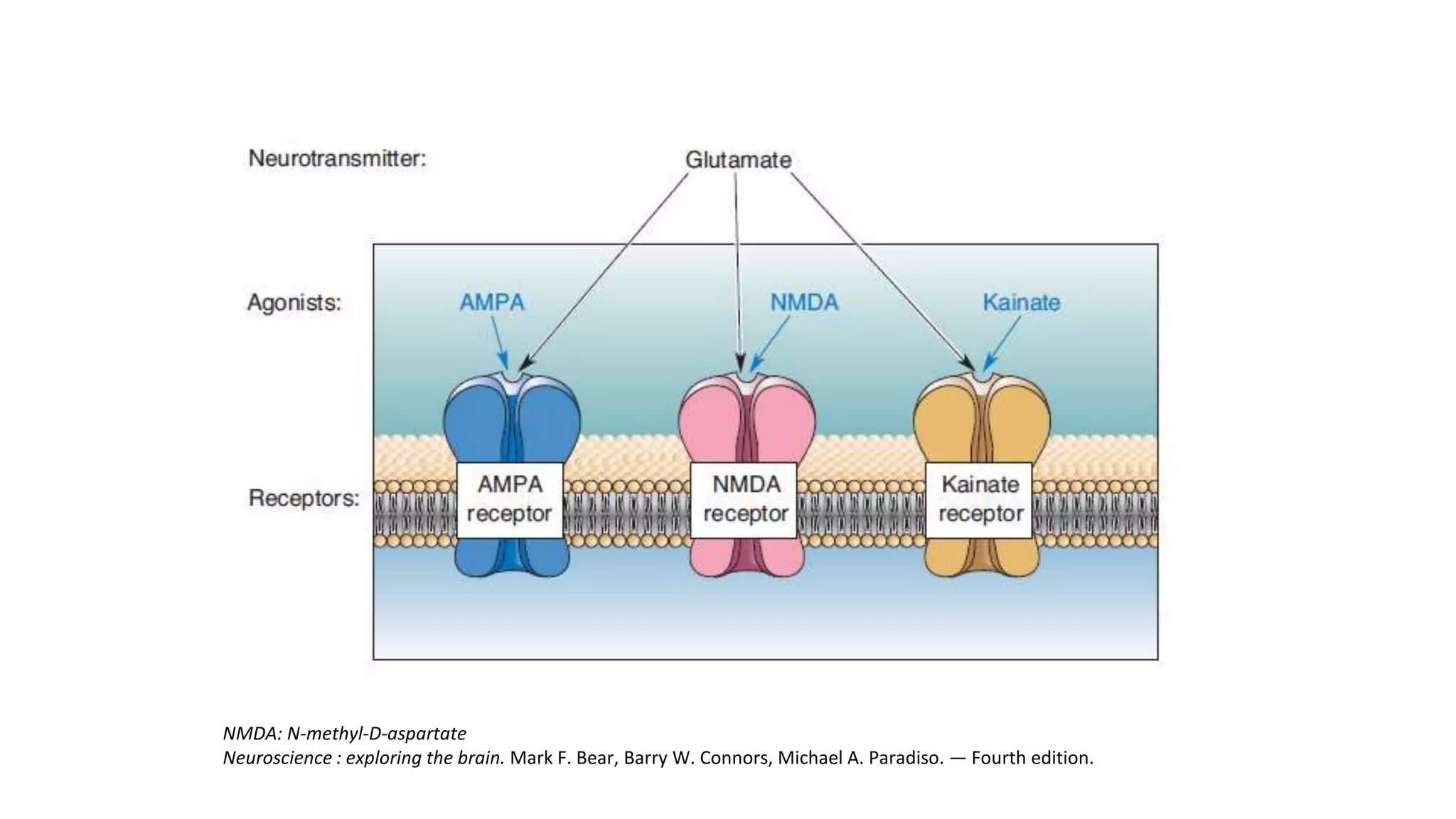
● AMPA: α-amino-3-hydroxy-5-methyl-4-isoxazolepropionic acid.
● they are ligand-gated ion channels composed of combinations of four
separate subunits (GluA1-4).
● These subunits differ from each other by their biophysical properties,
trafficking and binding partners
● AMPARs are highly mobile proteins that undergo constitutive and
activity-dependent translocation to/ recycling at/ and removal from,
synapses.
● Aberrant AMPAR trafficking is implicated in neurodegenerative
diseases.
AMPA receptor trafficking and the mechanisms underlying synaptic plasticity and cognitive aging. Jeremy M. Henley, Kevin A. Wilkinson
Neuroscience : exploring the brain. Mark F. Bear, Barry W. Connors, Michael A. Paradiso. — Fourth edition.
NMDA: N-methyl-D-aspartate
Neuroscience : exploring the brain. Mark F. Bear, Barry W. Connors, Michael A. Paradiso. — Fourth edition.
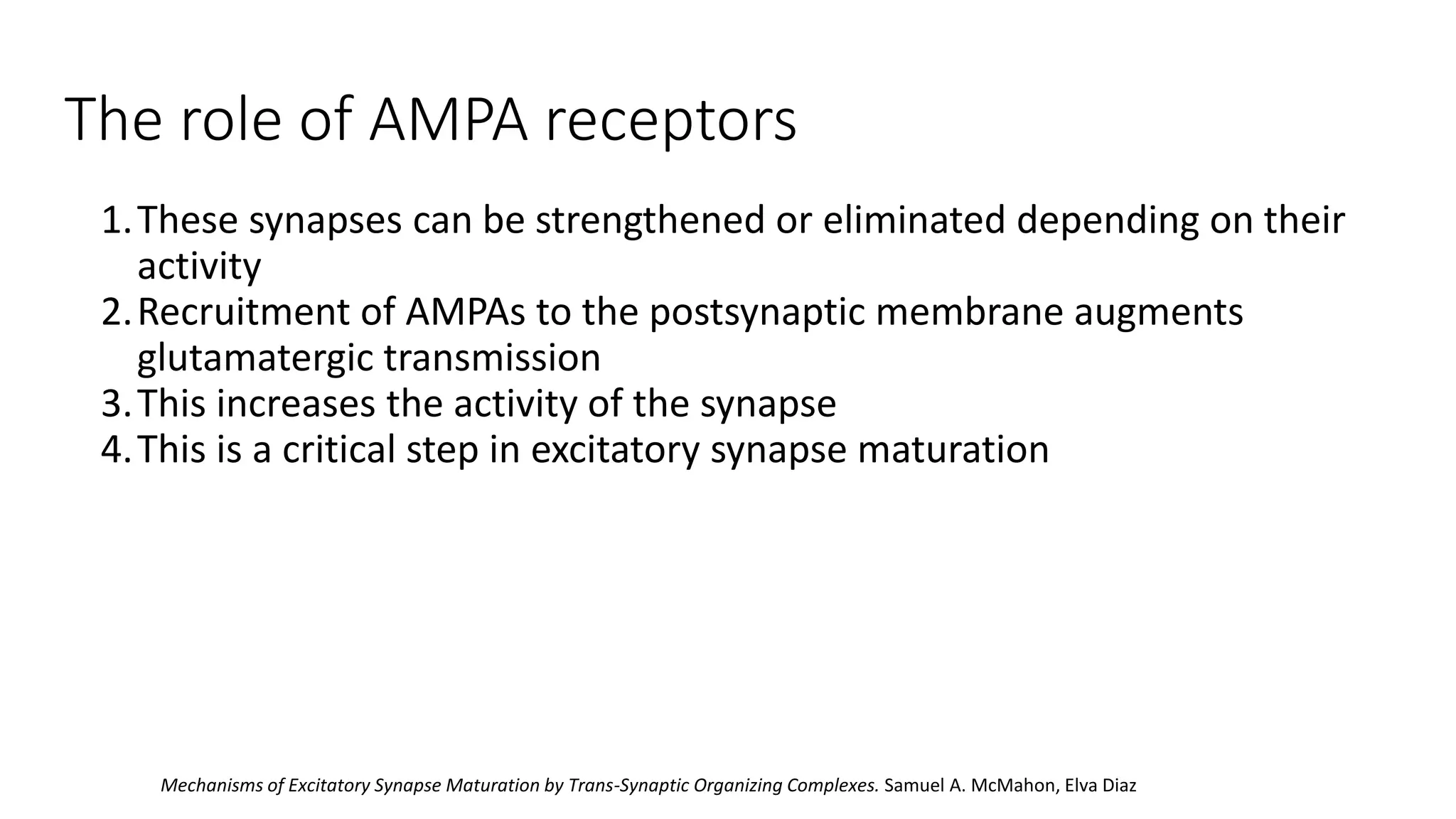
The role of AMPA receptors
1.These synapses can be strengthened or eliminated depending on their
activity
2.Recruitment of AMPAs to the postsynaptic membrane augments
glutamatergic transmission
3.This increases the activity of the synapse
4.This is a critical step in excitatory synapse maturation
Mechanisms of Excitatory Synapse Maturation by Trans-Synaptic Organizing Complexes. Samuel A. McMahon, Elva Diaz
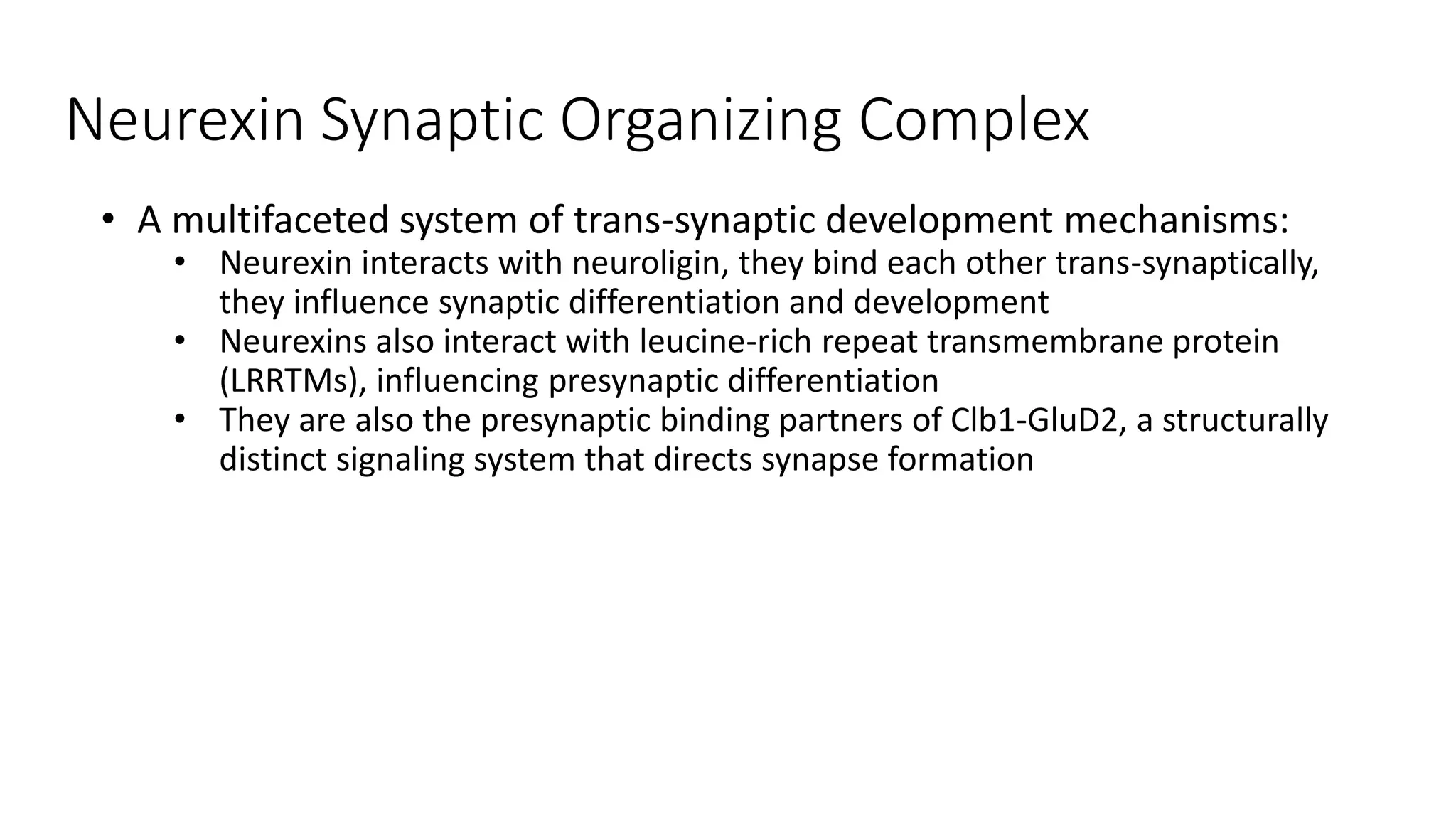
Neurexin Synaptic Organizing Complex
• A multifaceted system of trans-synaptic development mechanisms:
• Neurexin interacts with neuroligin, they bind each other trans-synaptically,
they influence synaptic differentiation and development
• Neurexins also interact with leucine-rich repeat transmembrane protein
(LRRTMs), influencing presynaptic differentiation
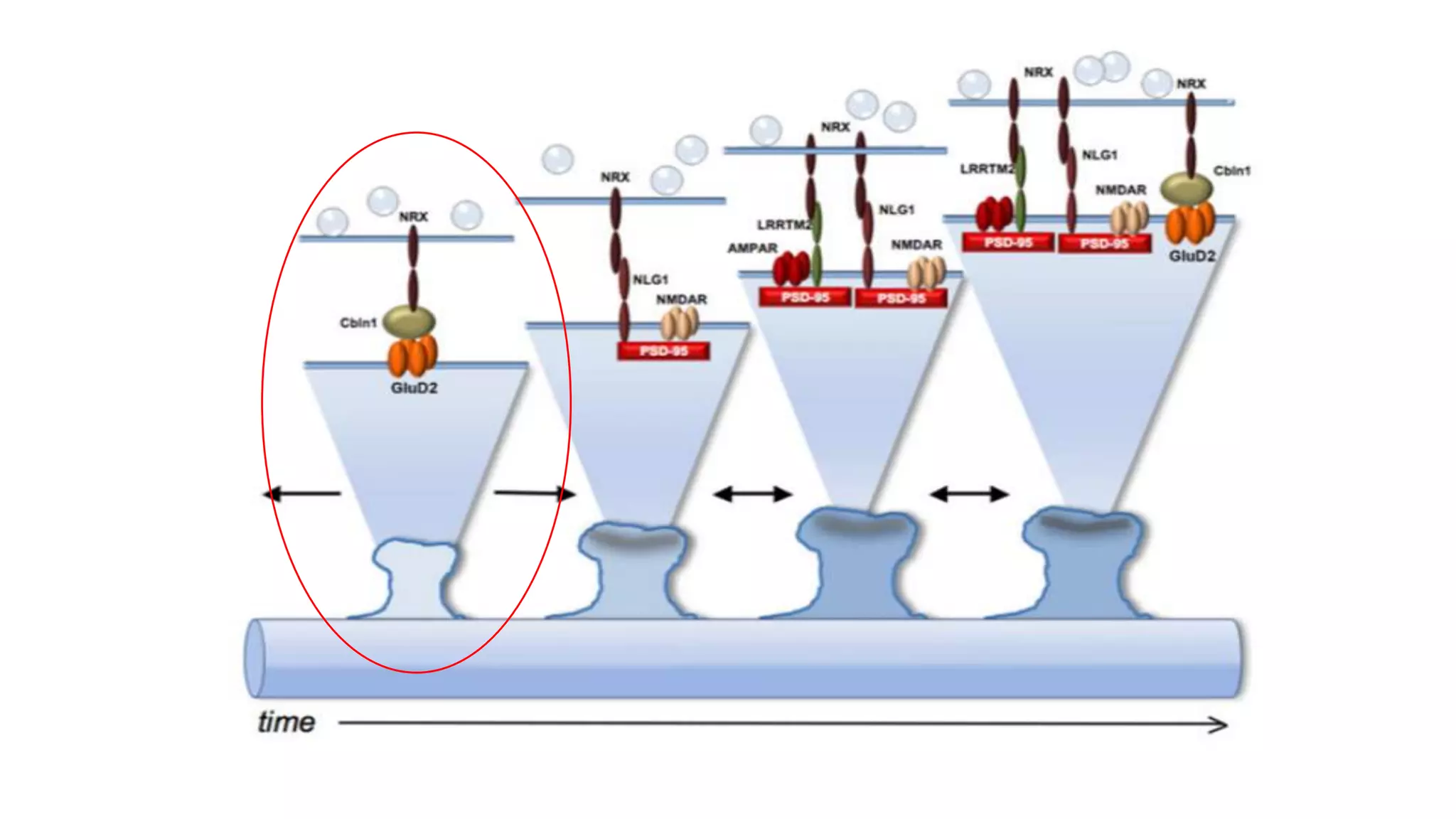
• They are also the presynaptic binding partners of Clb1-GluD2, a structurally
distinct signaling system that directs synapse formation
Neurexin-Neuroligin Recruitment of AMPA
• Experiments showed that the application of glutamate at neurexin-
neuroligin contact sites induced GluA1-containing AMPA clustering.
• Transfected neurons that express neuroligin showed increased synapse
formation only when glutamate is applied
• GluA2-containing AMPA receptors clustering showed a different pattern
• In hippocampal cells expressing neuroligin-1, the later showed
increased recruitment of GluA2 AMPAs in activity-independent pattern
• GluA1-containing AMPAs were not recruited
• CONCLUSION: recruitment is subunit-specific
LRRTMs influence of AMPA recruitment
• LRRTMs were shown to induce synapse formation in non neuronal cells expressing them
• LRRTMs were shown to induce presynaptic differentiation in contacting axons when
expressed in non neuronal cells, the same happened with neuroligin.
• Co-culture of neuronal and non-neuronal cells expressing NMDA and LRRTMs lead to
spontaneous current
• Knockout of LRRTM in hippocampal cells showed decreased GluA1-AMPAs and decreased
current.
• mEPSC amplitude was modestly but insignificantly affected, while frequency was
unchanged
• These data suggest that LRRTM primarily regulates synapse efficacy and plays a minor role
postsynaptic AMPA receptor density regulation.
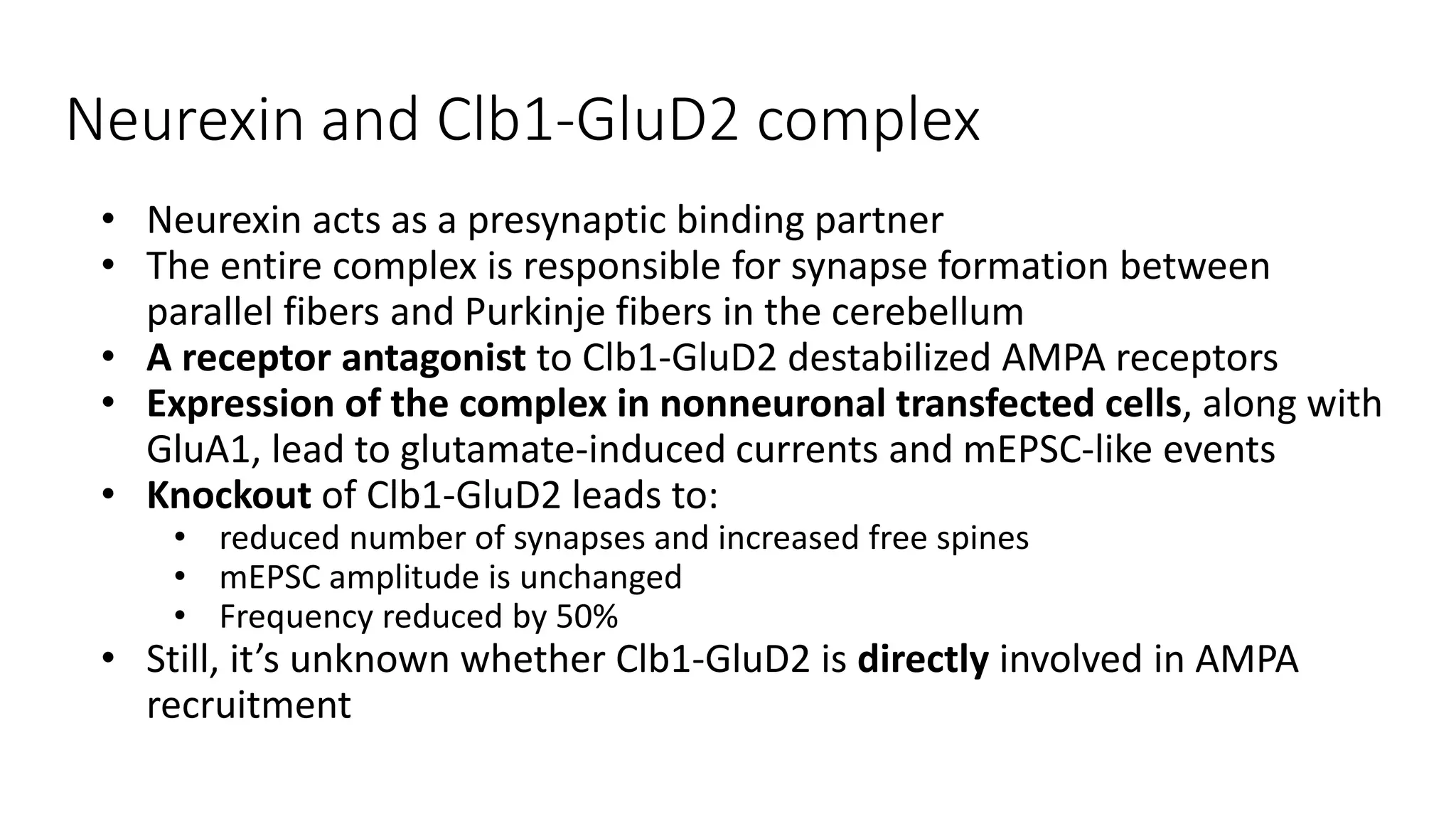
Neurexin and Clb1-GluD2 complex
• Neurexin acts as a presynaptic binding partner
• The entire complex is responsible for synapse formation between
parallel fibers and Purkinje fibers in the cerebellum
• A receptor antagonist to Clb1-GluD2 destabilized AMPA receptors
• Expression of the complex in nonneuronal transfected cells, along with
GluA1, lead to glutamate-induced currents and mEPSC-like events
• Knockout of Clb1-GluD2 leads to:
• reduced number of synapses and increased free spines
• mEPSC amplitude is unchanged
• Frequency reduced by 50%
• Still, it’s unknown whether Clb1-GluD2 is directly involved in AMPA
recruitment
Mechanisms of Excitatory Synapse Maturation by Trans-Synaptic Organizing Complexes. Samuel A. McMahon, Elva Diaz
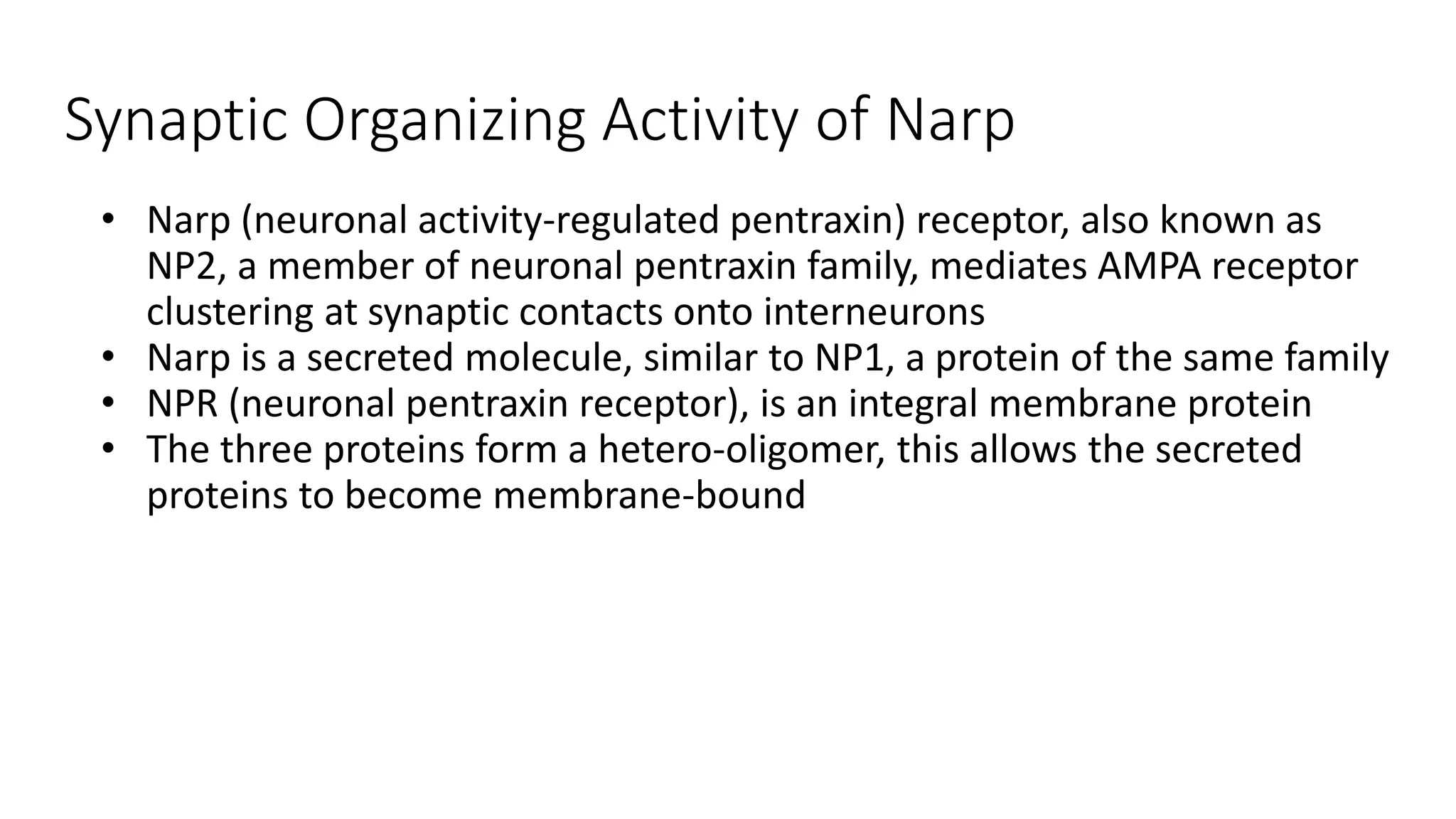
Synaptic Organizing Activity of Narp
• Narp (neuronal activity-regulated pentraxin) receptor, also known as
NP2, a member of neuronal pentraxin family, mediates AMPA receptor
clustering at synaptic contacts onto interneurons
• Narp is a secreted molecule, similar to NP1, a protein of the same family
• NPR (neuronal pentraxin receptor), is an integral membrane protein
• The three proteins form a hetero-oligomer, this allows the secreted
proteins to become membrane-bound
Testing the role of Narp/NP1
• In transfected nonneuronal cells, the expression of neuroligin-1 was
required for the interaction between the hetero-oligomer and GluA
• Knockout of Narp/NP1 reduced AMPA receptor-mediated transmission
• This was tested in the retinogeniculate pathway
• This lead to increased number of silent synapses during the eye-
refinement stage of retinogeniculate pathway development
• CONCLUSION: Narp/NP1 complex is required for segregation of optic
fibers in the retinogeniculate pathway, which is an activity-dependent
strengthening and elimination process
The Retinogeniculate Pathway
Neuroscience : exploring the brain. Mark F. Bear, Barry W. Connors, Michael A. Paradiso. — Fourth edition.
Other Synaptic Organizing Complexes:
ephrins/Eph• Ephrins and Eph complexes: axon guidance proteins, increasingly
appreciated for their role in synapse development
• It was found that postsynaptic ephrinB2 interacts with presynaptic
EphB2 to stabilize AMPA in neuronal cells, while their knockout
decreases the amplitude of mEPSC
• A decrease in amplitude suggests that the number of AMPA receptors
was reduced
• CONCLUSION: ephrin/Eph is involved in AMPA recruitment
Other Synaptic Organizing Complexes: LAR
• LAR: Leukocyte common Antigen Related Protein
• Presynaptic LAR family protein tyrosine phosphatase receptors (PTRPs)
signal through the ligand NGL-3 to induce excitatory synapse
development
• it has been shown to selectively cluster postsynaptic excitatory
components, including GluA2 AMPA receptor subunits
• In the same study, it was found that frequency, but not amplitude, of
mEPSCs was reduced with NGL-3 knockdown
• It’s still unclear whether this effect is direct or not
Other Synaptic Organizing Complexes: SALMs
• SALMs: synaptic adhesion-like molecules
• Coimmunoprecipitation experiments showed that SALM2 interacts with
both NMDA and AMPA receptors
• This regulates the maturation of excitatory synapses
• SALM5 knockdown reduces both amplitude and frequency of mEPSCs
and mIPSCs
• This suggests that SALM5 promotes both excitatory and inhibitory
synaptic differentiation
Other Synaptic Organizing Complexes: SynDIG1
• SynDIG1: synapse differentiation induced gene 1
• A novel regulator of excitatory synapse maturation
• SynDIG1 coimmunoprecipitates with AMPA receptor subunits in
heterologous cells
• Knock-down of SynDIG1 in dissociated rat hippocampal neurons reduces
AMPA receptor content at developing synapses by ~50%
• This was determined by immunocytochemistry and electrophysiology
• SynDIG1 did not influence NMDA receptor containing synapses
• CONCLUSION: SynDIG1 is a selective regulator of excitatory synapse
maturation
Mechanisms of Excitatory Synapse Maturation by Trans-Synaptic Organizing Complexes. Samuel A. McMahon, Elva Diaz

Mechanisms of excitatory synapse maturation by trans synaptic organizing complexes

  • 1.
    Mechanisms of ExcitatorySynapse Maturation by Trans-Synaptic Organizing Complexes Hasan Arafat 5th Year Medical Student An-Najah University Nablus
  • 2.
    Introduction-General Terms Synapse: specializedcell-cell adhesion contacts that mediate communication within neural networks. Synaptic Transmission: the transfer of information at the synapse from one neuron to another. Neurotransmitter: a chemical agent found stored in vesicles in the presynaptic space, released upon stimulation to the synaptic cleft. Different neurotransmitters are used by different types of neurons. Neuroscience : exploring the brain. Mark F. Bear, Barry W. Connors, Michael A. Paradiso. — Fourth edition.
  • 3.
    How does asynapse form? • The CNS generates a huge number of synapses during its early development • These synapses are later refined and sculpted to generate the precise neural network of the adult brain • The first step of synapse formation is the recruitment of several synaptic organizing proteins to the transsynaptic area • These proteins recruit synaptic vesicles to the presynaptic active zone • NMDA receptors are recruited to the postsynaptic density • PSD-95 protein, a type of PDZ domain proteins, as a scaffold for recruitment of these components • This generates silent synapses Mechanisms of Excitatory Synapse Maturation by Trans-Synaptic Organizing Complexes. Samuel A. McMahon, Elva Diaz
  • 4.
    What is AMPAreceptor? ● AMPA: α-amino-3-hydroxy-5-methyl-4-isoxazolepropionic acid. ● they are ligand-gated ion channels composed of combinations of four separate subunits (GluA1-4). ● These subunits differ from each other by their biophysical properties, trafficking and binding partners ● AMPARs are highly mobile proteins that undergo constitutive and activity-dependent translocation to/ recycling at/ and removal from, synapses. ● Aberrant AMPAR trafficking is implicated in neurodegenerative diseases. AMPA receptor trafficking and the mechanisms underlying synaptic plasticity and cognitive aging. Jeremy M. Henley, Kevin A. Wilkinson
  • 5.
    Neuroscience : exploringthe brain. Mark F. Bear, Barry W. Connors, Michael A. Paradiso. — Fourth edition.
  • 6.
    NMDA: N-methyl-D-aspartate Neuroscience :exploring the brain. Mark F. Bear, Barry W. Connors, Michael A. Paradiso. — Fourth edition.
  • 7.
    The role ofAMPA receptors 1.These synapses can be strengthened or eliminated depending on their activity 2.Recruitment of AMPAs to the postsynaptic membrane augments glutamatergic transmission 3.This increases the activity of the synapse 4.This is a critical step in excitatory synapse maturation Mechanisms of Excitatory Synapse Maturation by Trans-Synaptic Organizing Complexes. Samuel A. McMahon, Elva Diaz
  • 8.
    Neurexin Synaptic OrganizingComplex • A multifaceted system of trans-synaptic development mechanisms: • Neurexin interacts with neuroligin, they bind each other trans-synaptically, they influence synaptic differentiation and development • Neurexins also interact with leucine-rich repeat transmembrane protein (LRRTMs), influencing presynaptic differentiation • They are also the presynaptic binding partners of Clb1-GluD2, a structurally distinct signaling system that directs synapse formation
  • 9.
    Neurexin-Neuroligin Recruitment ofAMPA • Experiments showed that the application of glutamate at neurexin- neuroligin contact sites induced GluA1-containing AMPA clustering. • Transfected neurons that express neuroligin showed increased synapse formation only when glutamate is applied • GluA2-containing AMPA receptors clustering showed a different pattern • In hippocampal cells expressing neuroligin-1, the later showed increased recruitment of GluA2 AMPAs in activity-independent pattern • GluA1-containing AMPAs were not recruited • CONCLUSION: recruitment is subunit-specific
  • 11.
    LRRTMs influence ofAMPA recruitment • LRRTMs were shown to induce synapse formation in non neuronal cells expressing them • LRRTMs were shown to induce presynaptic differentiation in contacting axons when expressed in non neuronal cells, the same happened with neuroligin. • Co-culture of neuronal and non-neuronal cells expressing NMDA and LRRTMs lead to spontaneous current • Knockout of LRRTM in hippocampal cells showed decreased GluA1-AMPAs and decreased current. • mEPSC amplitude was modestly but insignificantly affected, while frequency was unchanged • These data suggest that LRRTM primarily regulates synapse efficacy and plays a minor role postsynaptic AMPA receptor density regulation.
  • 13.
    Neurexin and Clb1-GluD2complex • Neurexin acts as a presynaptic binding partner • The entire complex is responsible for synapse formation between parallel fibers and Purkinje fibers in the cerebellum • A receptor antagonist to Clb1-GluD2 destabilized AMPA receptors • Expression of the complex in nonneuronal transfected cells, along with GluA1, lead to glutamate-induced currents and mEPSC-like events • Knockout of Clb1-GluD2 leads to: • reduced number of synapses and increased free spines • mEPSC amplitude is unchanged • Frequency reduced by 50% • Still, it’s unknown whether Clb1-GluD2 is directly involved in AMPA recruitment
  • 15.
    Mechanisms of ExcitatorySynapse Maturation by Trans-Synaptic Organizing Complexes. Samuel A. McMahon, Elva Diaz
  • 16.
    Synaptic Organizing Activityof Narp • Narp (neuronal activity-regulated pentraxin) receptor, also known as NP2, a member of neuronal pentraxin family, mediates AMPA receptor clustering at synaptic contacts onto interneurons • Narp is a secreted molecule, similar to NP1, a protein of the same family • NPR (neuronal pentraxin receptor), is an integral membrane protein • The three proteins form a hetero-oligomer, this allows the secreted proteins to become membrane-bound
  • 17.
    Testing the roleof Narp/NP1 • In transfected nonneuronal cells, the expression of neuroligin-1 was required for the interaction between the hetero-oligomer and GluA • Knockout of Narp/NP1 reduced AMPA receptor-mediated transmission • This was tested in the retinogeniculate pathway • This lead to increased number of silent synapses during the eye- refinement stage of retinogeniculate pathway development • CONCLUSION: Narp/NP1 complex is required for segregation of optic fibers in the retinogeniculate pathway, which is an activity-dependent strengthening and elimination process
  • 18.
    The Retinogeniculate Pathway Neuroscience: exploring the brain. Mark F. Bear, Barry W. Connors, Michael A. Paradiso. — Fourth edition.
  • 19.
    Other Synaptic OrganizingComplexes: ephrins/Eph• Ephrins and Eph complexes: axon guidance proteins, increasingly appreciated for their role in synapse development • It was found that postsynaptic ephrinB2 interacts with presynaptic EphB2 to stabilize AMPA in neuronal cells, while their knockout decreases the amplitude of mEPSC • A decrease in amplitude suggests that the number of AMPA receptors was reduced • CONCLUSION: ephrin/Eph is involved in AMPA recruitment
  • 20.
    Other Synaptic OrganizingComplexes: LAR • LAR: Leukocyte common Antigen Related Protein • Presynaptic LAR family protein tyrosine phosphatase receptors (PTRPs) signal through the ligand NGL-3 to induce excitatory synapse development • it has been shown to selectively cluster postsynaptic excitatory components, including GluA2 AMPA receptor subunits • In the same study, it was found that frequency, but not amplitude, of mEPSCs was reduced with NGL-3 knockdown • It’s still unclear whether this effect is direct or not
  • 21.
    Other Synaptic OrganizingComplexes: SALMs • SALMs: synaptic adhesion-like molecules • Coimmunoprecipitation experiments showed that SALM2 interacts with both NMDA and AMPA receptors • This regulates the maturation of excitatory synapses • SALM5 knockdown reduces both amplitude and frequency of mEPSCs and mIPSCs • This suggests that SALM5 promotes both excitatory and inhibitory synaptic differentiation
  • 22.
    Other Synaptic OrganizingComplexes: SynDIG1 • SynDIG1: synapse differentiation induced gene 1 • A novel regulator of excitatory synapse maturation • SynDIG1 coimmunoprecipitates with AMPA receptor subunits in heterologous cells • Knock-down of SynDIG1 in dissociated rat hippocampal neurons reduces AMPA receptor content at developing synapses by ~50% • This was determined by immunocytochemistry and electrophysiology • SynDIG1 did not influence NMDA receptor containing synapses • CONCLUSION: SynDIG1 is a selective regulator of excitatory synapse maturation
  • 23.
    Mechanisms of ExcitatorySynapse Maturation by Trans-Synaptic Organizing Complexes. Samuel A. McMahon, Elva Diaz

Editor's Notes

  • #2 Doctor Mohammad, my dear colleagues, I am happy that you could make it today to my presentation. I am Hasan Arafat, a 5th year medical student at An Najah University and today I will talk about mechanisms of excitatory synapse maturation by trans-synaptic organizing complexes. Hope you find it interesting
  • #3 So let’s starts with th difinition of synapse, what is a synapse? A synapse has 2 sides: one presynaptic and the other postsynaptic. These names indicate the usual direction of flow from “pre” to “post”. And this process of information transmission is known as synaptic transmission, which faciliates the transfer of information from one neuron to another So what do you think is the type of stimulus that triggers neurotransmitter release? It’s an electrical stimulus So, what part of the neuron makes the presynaptic side? The axon And what about the postsynaptic side? The soma or the dendrite
  • #4 Remember this point, because we will mention it again at the end of the presentation.
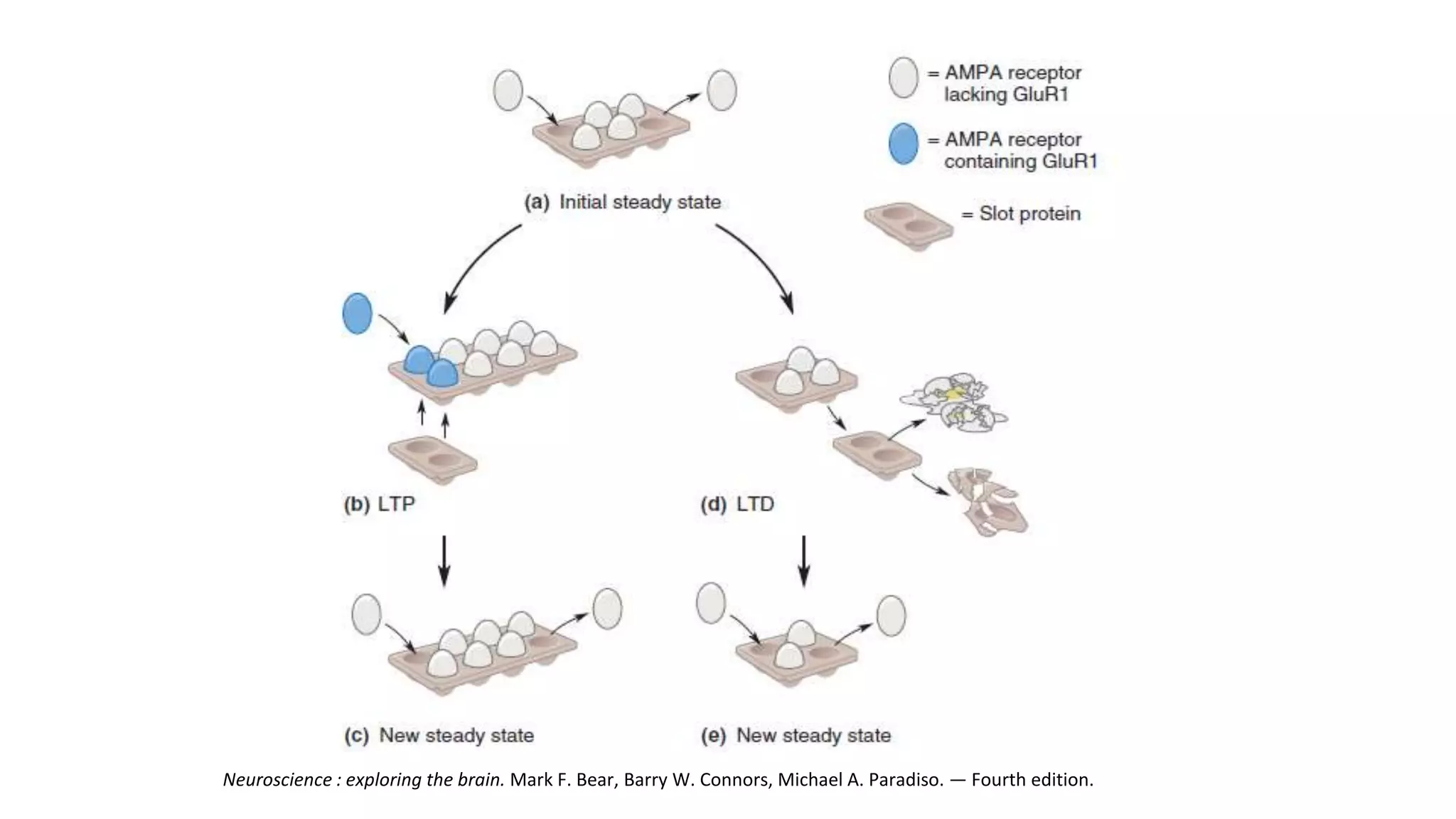
  • #5 AMPA is an abbreviation for … This is a family of ligand gated ion channels, made by a combination of 4 proteins, with a number from 1-4 given to each subunit, these proteins are highly dynamic, modulated by the activity at the given synapse, decreasing in density with long term depression and increasing in density with long term potentiation, as we saw in the previous illustration.
  • #6 So, we can think of the scaffold protein as an egg carton,
  • #8 AMPA receptors are activity dependant, their presence at the synapse augments glutamate transmission, which lead to activity dependent strengthening and maturation, this is a critical step in synapse maturation
  • #9 Multifaceted: works by more than one aspect
  • #10 suggesting that neuroligin-neurexin induced synapse maturation is activity regulated. Transfection: the introduction of non viral nucleic acid into eukaryotic cells. So, we infer from that, that the recruitment of different AMPAs require different conditions
  • #12 Nonneuronal cells were transfected to induce LRRTMs transcription and translation, when these cells were made into contact with neural axons, presynaptic membrane differentiation was induced, while the co-culture of nonneuronal cells with neuronal cells expressing both LRRTM and NMDA lead to a spontaneous current. In another experiment, in which LRRTM was knokced out in neuronal cells, the content of AMPA’s as will as the generated current was reduced while the miniature excitatory postsynaptic current amplitude was modestly affected Knockout: making a gene in an organism inoperative to study its function after it has been sequenced Postsynaptic potentials generated from a release of neurotransmitters from a presynaptic nerve terminal in the absence of an ACTION POTENTIAL Synaptic efficacy: the capacity of a presynaptic input to influence postsynaptic output
  • #14 Neurexin acts as Clb1-GluD2 presynaptic binding partner, these are found in synapses between the parallel fibers and the granular fibers in the cerebellum (parallel fibers carry information from the granular cells found in the cerebellar cortex, transmit it to Purkinje fibers to provide cerebellar output So, how can the function of this complex be tested? First: knock out Second, testing the effect of an antagonist Third, testing the effect of expressing the receptor in nonneuronal cells But, despite all of this, there is not enough evidence on whether this complex is directly involved in AMPA recruitment Parallel fibers arise from granule cells in the cerebellar cortex and synapse with the Purkinje fibers to provide cerebellar output
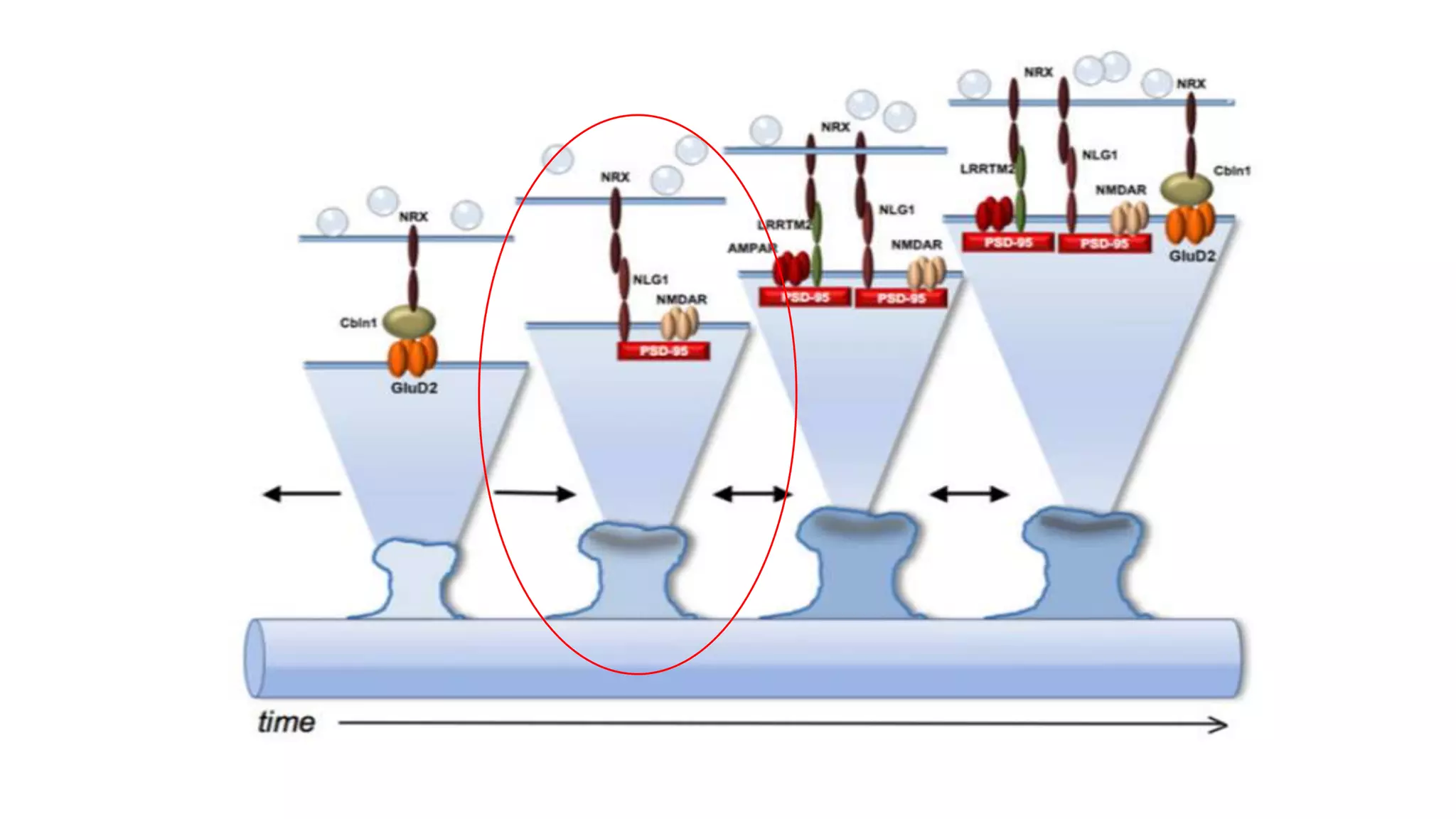
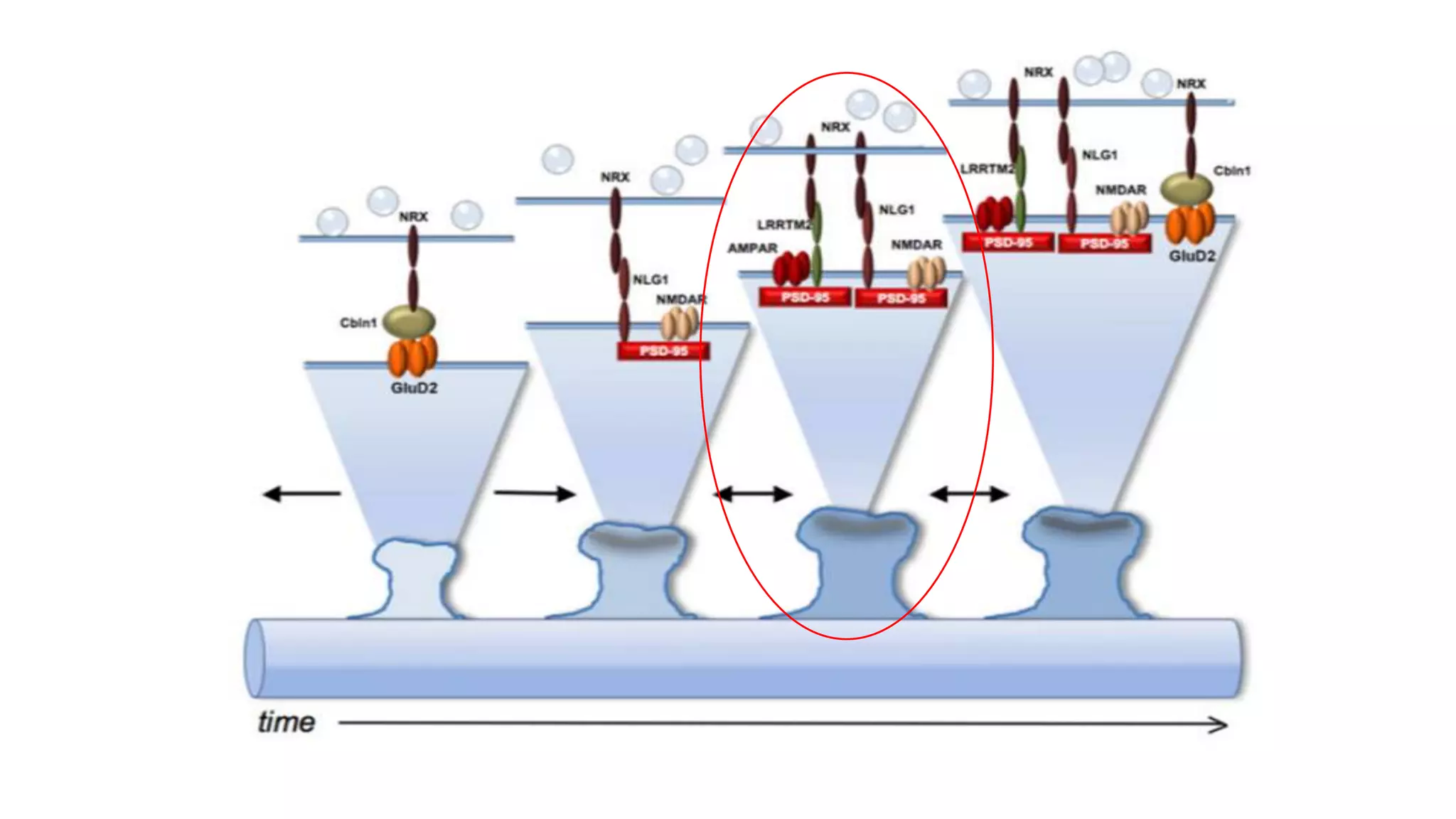
  • #16 Presynaptic Neurexin interacts with Cbln1-GluD2 complex to induce synapse formation. Subsequent interaction of Neurexin with postsynaptic Neuroligin-1 might then lead to NMDA receptor recruitment at a nascent synapse while subsequent interaction of Neurexin with LRRTM2 might also lead to AMPA receptor recruitment. With time and activity, these mechanisms and others combine to form a stable, mature and active synapse
  • #17 Narp is an abbreviation for neuronal activity-regulated pentraxin receptor, a member of neuronal pentraxin family, which mediates AMPA recruitment and clustering onto interneurons Narp, similar to its kin NP1, is a secreted protein, while NPR, an associated protein, is an integral membrane protein All of these 3 form a hetero-oligomer that allows the secreted proteins to become membrane bound
  • #18 In transfected non neuronal cells, the interaction between the NP2/NP1/NPR complex did not take place unless neuroligin-1 was present. Knockout of Narp/NP1 reduced AMPA mediated transmission. This was tested in the retinogeniculate pathway, in which eye-refinement follows the role of “neurons that fire together wire together” Silent synapses can not fire, an so can not wire leading to disturbed vision
  • #19 This is an illustration for the retinogeniculate pathway, i think you are all familiar with
  • #20 Ephrins and Eph proteins are appreciated for their role in synapse development, when these proteins are knocked out, the amplitude of mEPSC decreases. Remember this as a role of thimb “a decrease in amplitude of mEPSC means that the AMPA receptor content was reduced”
  • #21 Notice that the complex itself was not knocked out
  • #22 Coimmunoprecipitation is a study of binding properties and affinities of different proteins
  • #23 What is a heterologous cell? a protein is e xperimentally put into a cell that does not normally make (i.e., express) that protein.
  • #24 And now for a quick revison of what we discussed so far, let’s start from right to left, eph interacts with ephrin, tyrosin phosphatase receptor, which is a member of LAR family interacts with NGL-3, NPR, neuropentraxin receptor, interacts with Narp/NP! , neurexin interacts with LRRTM and Neuroligin-1. Notice that the ligand of SALM and SynDIG! Is yet to be identified, and it’s not shown in this figure, also notice that the interaction between neuroxin and nueroligin is activity dependent, symbolized here by the long arrow. Notice the “egges”, the red oval shapesd AMPAs and their cartons, the PSD-95 scaffold. Be aware that this illustartuion is simplified and a single complex interacts with more that one AMPA