Glutamatergic Neurotransmission Srinath GN N Rao
OutlineChemistryPathwaysClinical implications
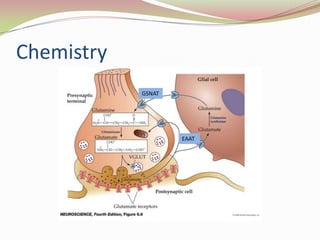
ChemistryGSNATEAAT
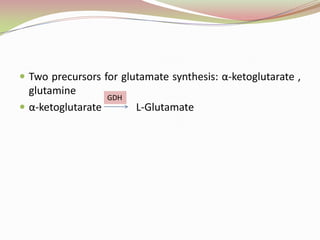
Two precursors for glutamate synthesis: α-ketoglutarate , glutamineα-ketoglutarate	        L-GlutamateGDH
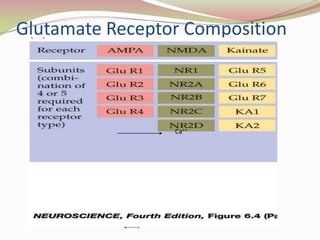
Glutamate Receptor CompositionOutInSubunits{NMDAR1NMDAR2aNMDAR2bNMDAR2cNa++NMDAK+Ca++{GLUR1GLUR2*GLUR3GLUR4Ca++AMPANa++K+Na++{GLUR5GLUR6GLUR7KA1KA2KA K+Ca++
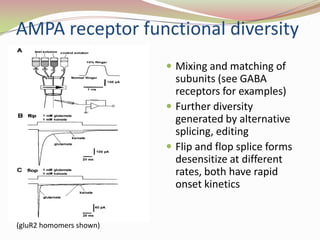
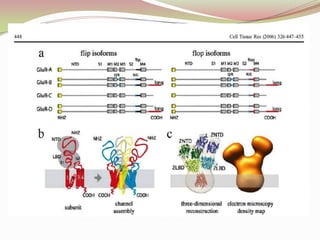
AMPA receptor functional diversityMixing and matching of subunits (see GABA receptors for examples)Further diversity generated by alternative splicing, editingFlip and flop splice forms desensitize at different rates, both have rapid onset kinetics(gluR2 homomers shown)
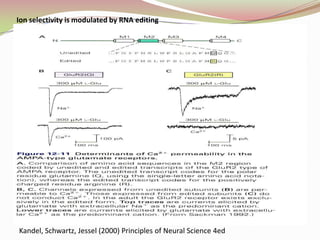
Ion selectivity is modulated by RNA editingKandel, Schwartz, Jessel (2000) Principles of Neural Science 4ed
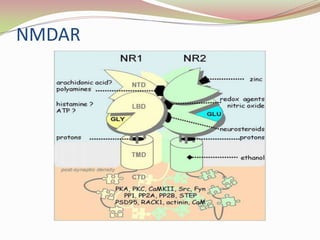
NMDAR
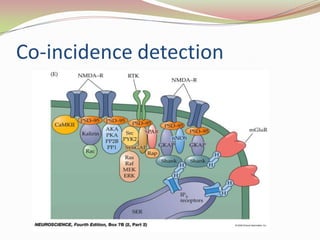
Co-incidence detection
PSDSilent synapse
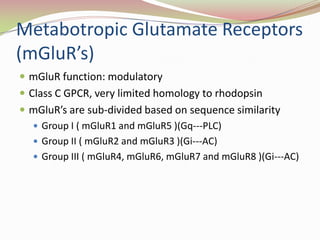
Metabotropic Glutamate Receptors (mGluR’s)mGluR function: modulatory Class C GPCR, very limited homology to rhodopsinmGluR’s are sub-divided based on sequence similarityGroup I ( mGluR1 and mGluR5 )(Gq---PLC)Group II ( mGluR2 and mGluR3 )(Gi---AC)Group III ( mGluR4, mGluR6, mGluR7 and mGluR8 )(Gi---AC)
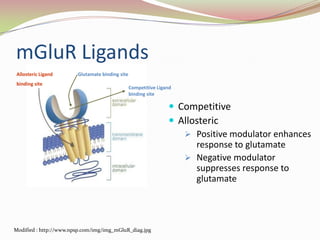
mGluR LigandsGlutamate binding siteAllosteric Ligand binding siteCompetitive Ligand binding siteCompetitive
Allosteric
Positive modulator enhances response to glutamate
Negative modulator suppresses response to glutamateModified : http://www.npsp.com/img/img_mGluR_diag.jpg
mGlu5 receptor antagonists exhibit the widest and most robust anxiolytic activity (MPEP (2-methyl-6-(phenylethynyl)-pyridine), a highly selective and brain-penetrant mGlu5 receptor antagonist)metabotropic glutamate receptor type 5 with the neuronal Ca2+-binding protein 2 modulates receptor function.activation of either mGlu(5) by positive allosteric modulators or stimulation of mGluR(2/3) receptors by agonists may offer new strategy in schizophrenia treatment.
mGlu7 receptor is prominently expressed in the basal ganglia, its role in restoring motor function in animal models of Parkinson's disease are being triedselective mGlu3 receptor agonists or enhancers are potential candidates as neuroprotective agents in Parkinson's disease, and their use might circumvent the limitations associated with the administration of exogenous GDNF.
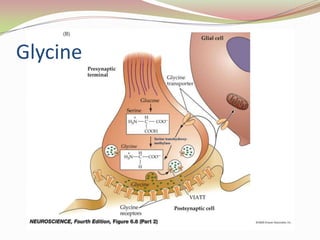
Glycine
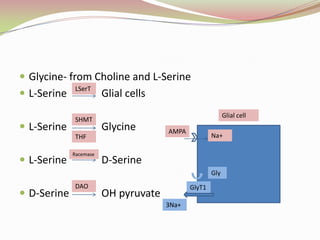
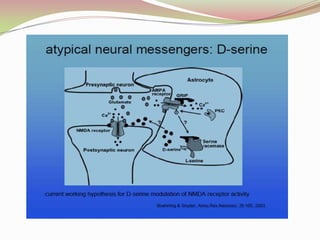
Glycine- from Choline and L-SerineL-Serine	       Glial cellsL-Serine	       GlycineL-Serine	       D-SerineD-Serine	       OH pyruvateLSerTGlial cellSHMTAMPANa+THFRacemaseGlyDAOGlyT13Na+
Pathways in the brain
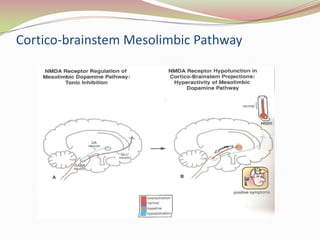
Cortico-brainstem Mesolimbic Pathway
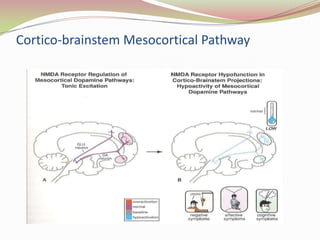
Cortico-brainstem Mesocortical Pathway
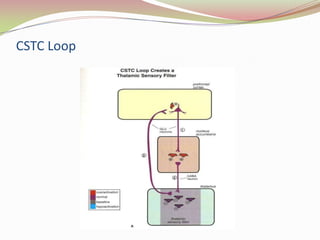
CSTC Loop
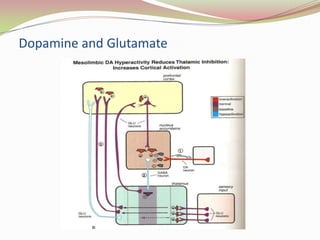
Dopamine and Glutamate
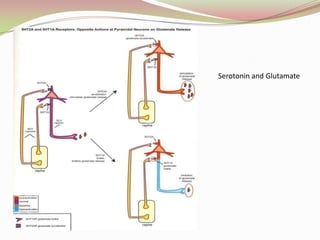
Serotonin and Glutamate
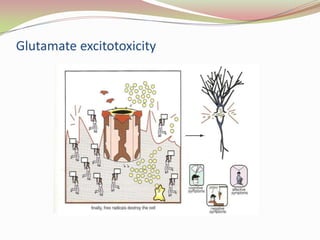
Glutamate excitotoxicity
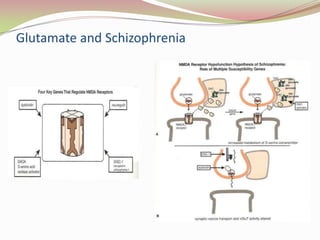
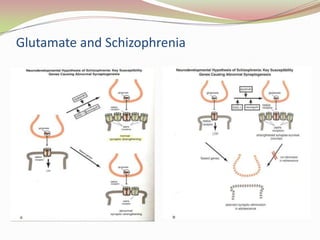
Glutamate and Schizophrenia
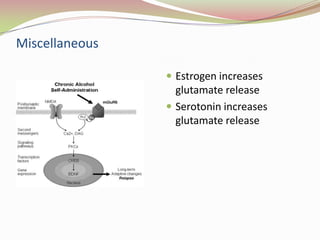
MiscellaneousEstrogen increases glutamate releaseSerotonin increases glutamate release

Glutamate