Mechanical Energy Storage 
Created by Nick Stroud
Three Types of Storage 
• Pumped hydroelectric 
storage (PHS) 
• Compressed air energy 
storage (CAES) 
• Flywheels
Pumped Hydroelectric 
Storage (PHS) 
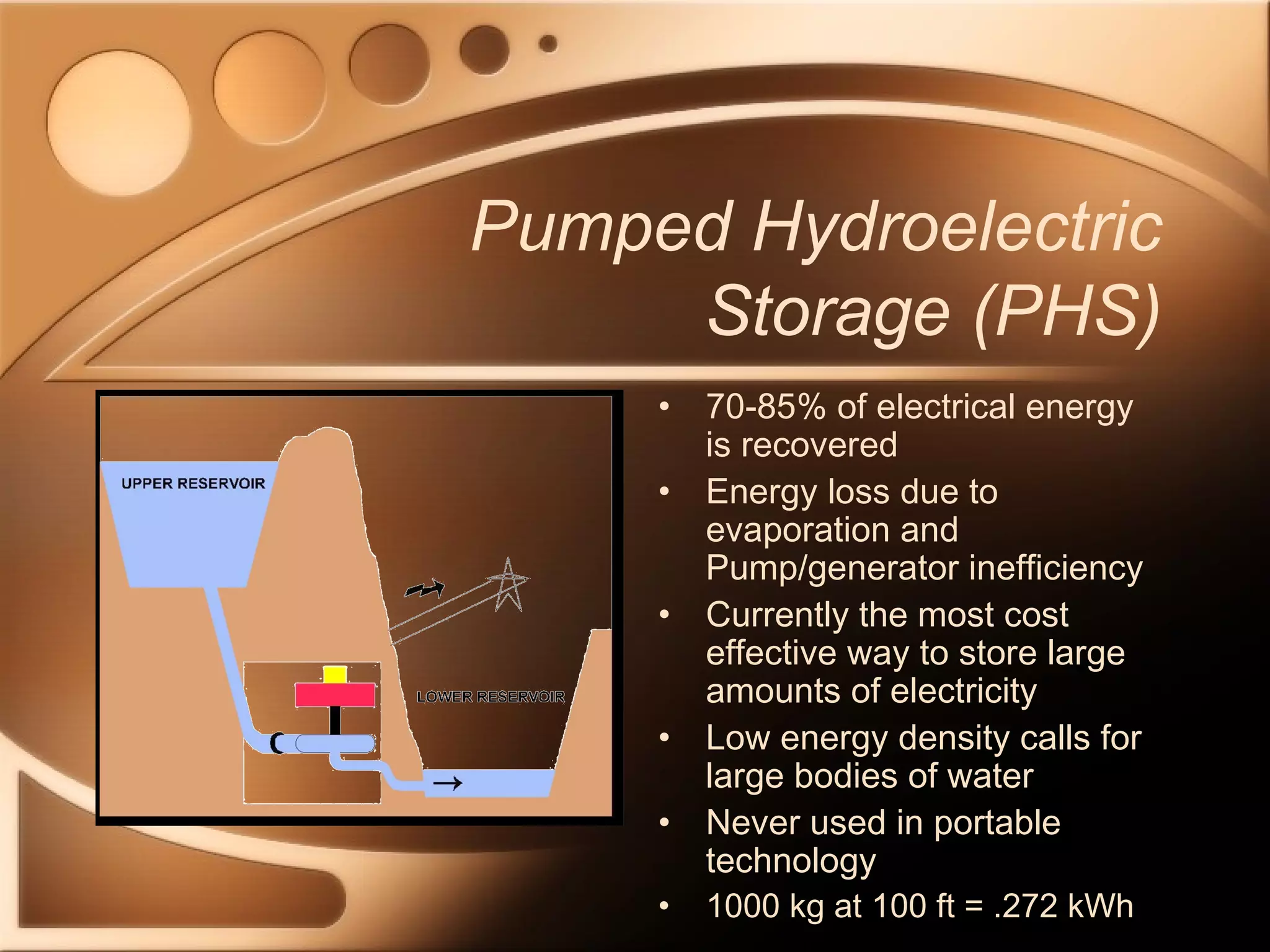
• Used for load balancing of 
energy 
• Water is pumped up in 
elevation during time of low 
demand 
• Water flows back down 
during times of high demand 
• Turbines recapture the 
energy.
Pumped Hydroelectric 
Storage (PHS) 
• 70-85% of electrical energy 
is recovered 
• Energy loss due to 
evaporation and 
Pump/generator inefficiency 
• Currently the most cost 
effective way to store large 
amounts of electricity 
• Low energy density calls for 
large bodies of water 
• Never used in portable 
technology 
• 1000 kg at 100 ft = .272 kWh
Pumps: On the Grid 
• The Us has 19.5 gigawatts 
capacity 
• 2.5% of baseload 
• Technology is in use world 
wide 
• Hundreds of plants around 
the world 
• Man made reservoirs as well 
as natural reservoirs
Future Of PHS 
• This energy storage can 
be used to level the grid 
for renewable energy 
• Wind power and solar 
power are not 
constantly on 
• Using salt mines to 
increase energy density
Compressed air 
energy storage (CAES) 
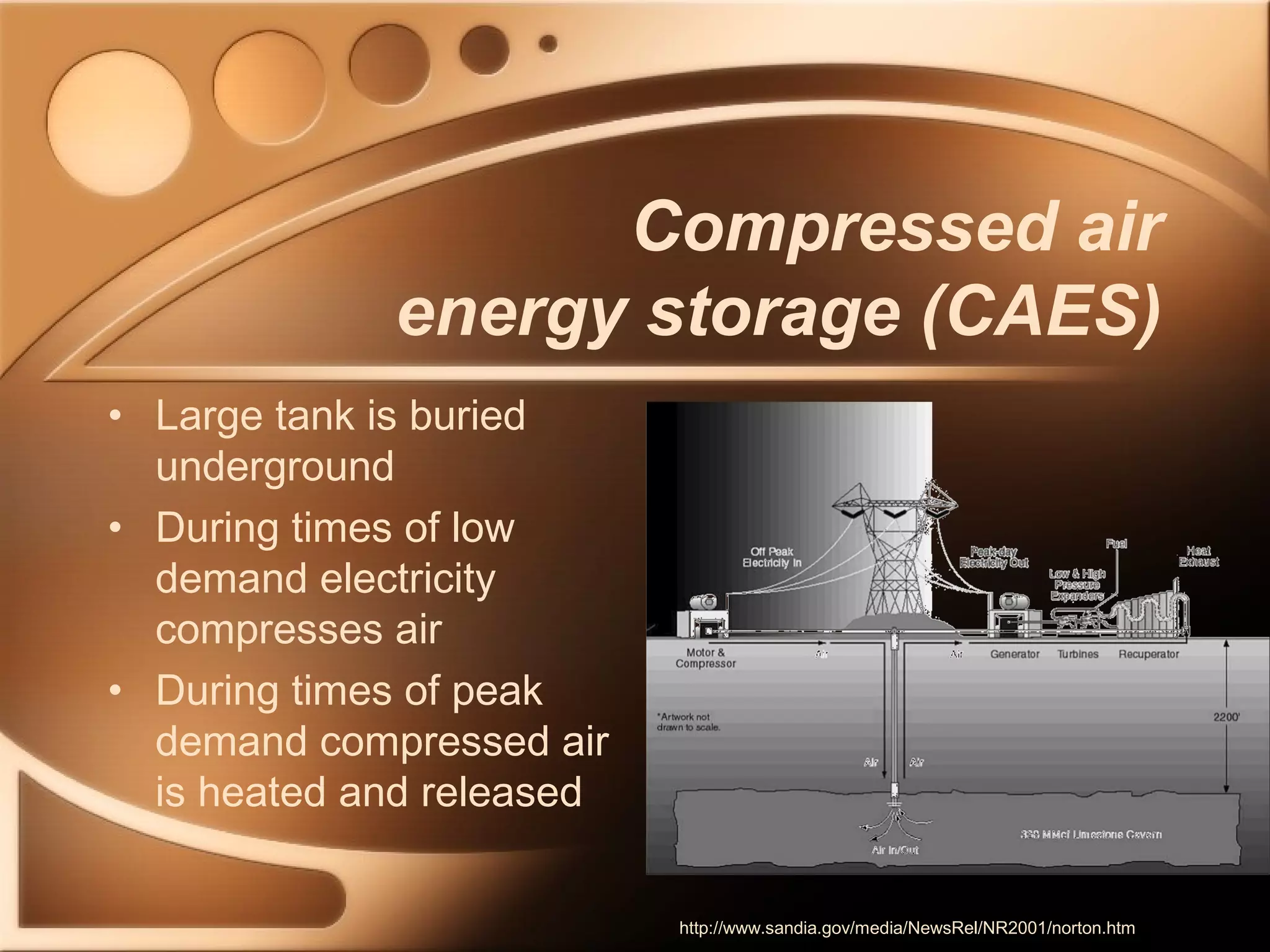
• Large tank is buried 
underground 
• During times of low 
demand electricity 
compresses air 
• During times of peak 
demand compressed air 
is heated and released 
http://www.sandia.gov/media/NewsRel/NR2001/norton.htm
Types Of CAES 
• Adiabatic storage 
• Heat from compression is 
captured and stored in a 
solid or liquid 
• Hot Oil 3000C 
• Molten Salt 6000C 
• Heat is reincorporated 
during release 
• Close to 100% efficiency 
• No utility scale plants 
• Diabatic storage 
• Heat is lost through 
cooling 
• Natural gas is burned to 
reheat compressed air 
• Very inefficient 38-68% 
• Uses 1/2 gas of an all 
gas plant
More about CAES 
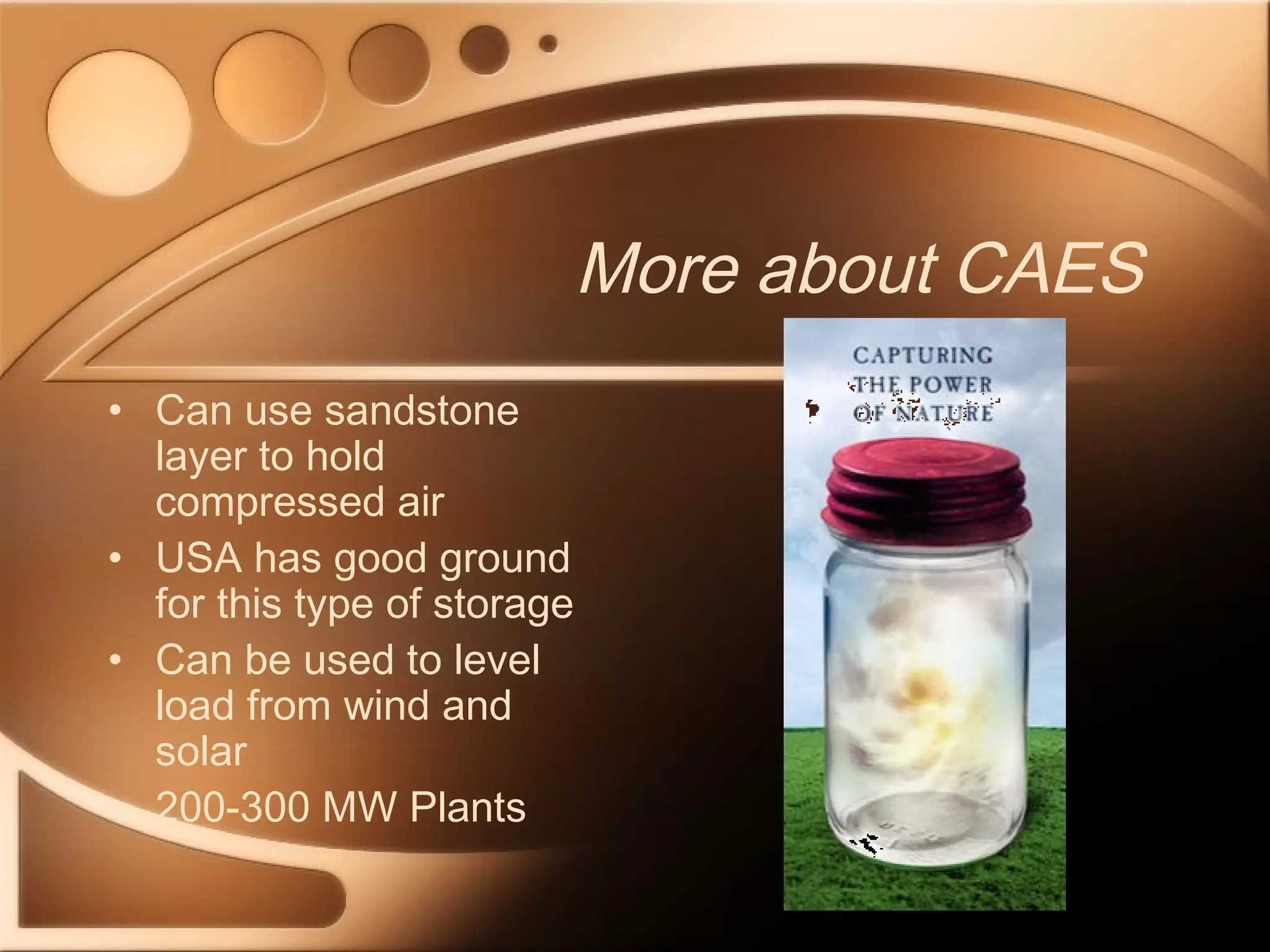
• Can use sandstone 
layer to hold 
compressed air 
• USA has good ground 
for this type of storage 
• Can be used to level 
load from wind and 
solar 
• 200-300 MW Plants
Compressed air in Cars 
• Zero pollution Motors 
• Stores air at around 300atm 
• Under 35 mph it is zero 
emissions 
• Over 35 mph uses 
combustion engine to 
compress air 
• Runs on many different types 
of fuel 
• 1 air tank + 8 gal gas= 848 miles
Fueling/Refueling 
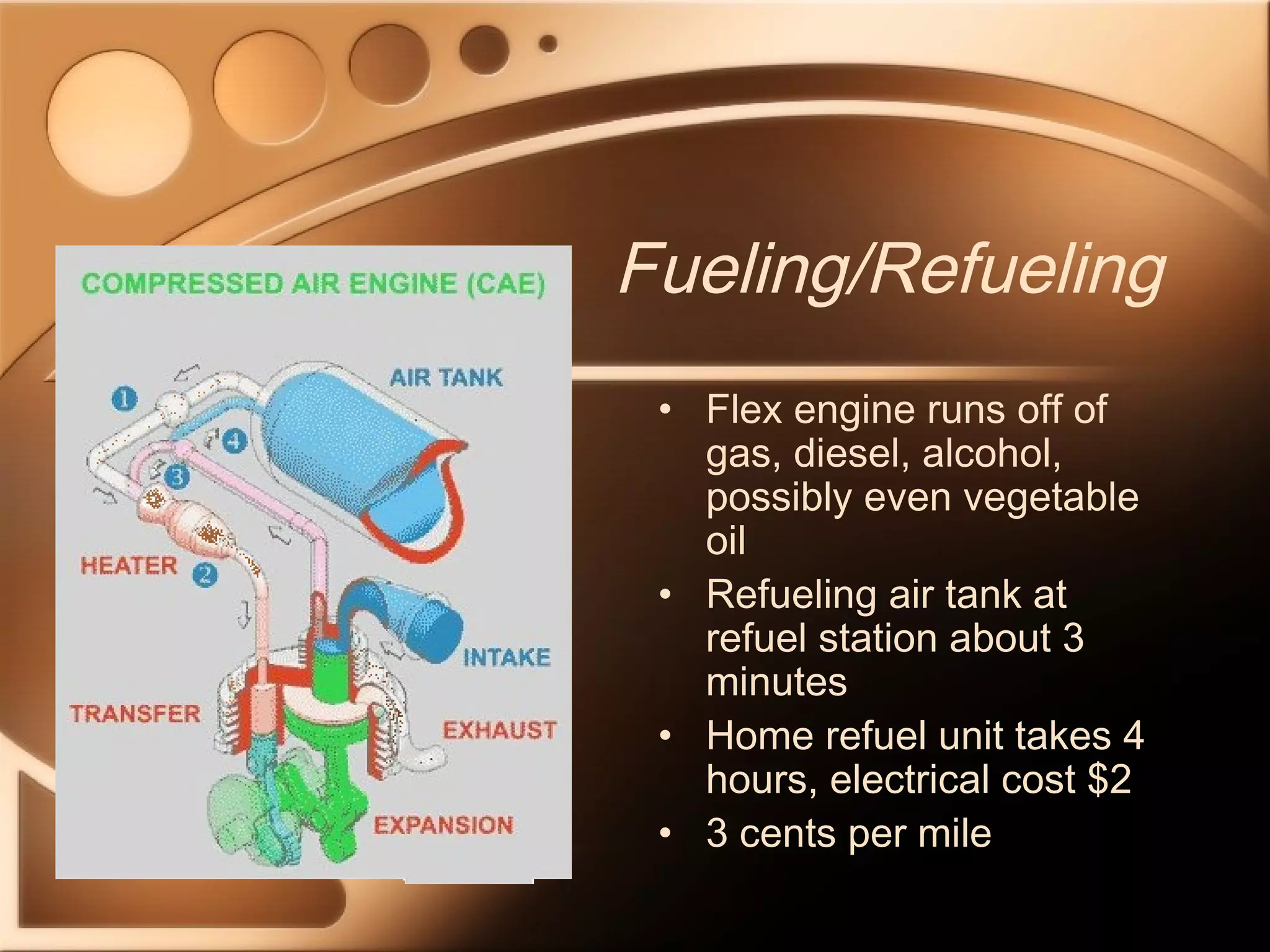
• Flex engine runs off of 
gas, diesel, alcohol, 
possibly even vegetable 
oil 
• Refueling air tank at 
refuel station about 3 
minutes 
• Home refuel unit takes 4 
hours, electrical cost $2 
• 3 cents per mile
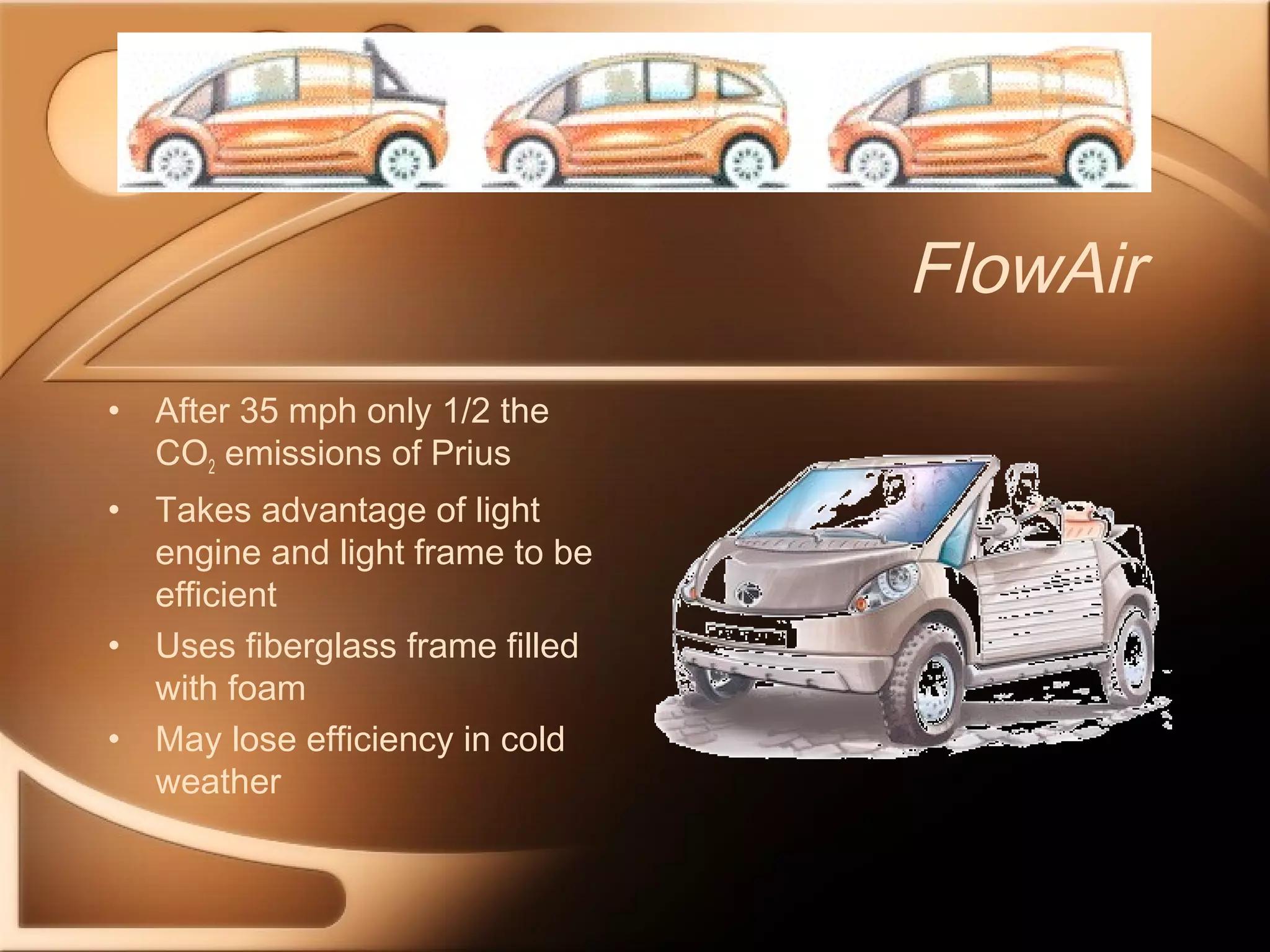
FlowAir 
• After 35 mph only 1/2 the 
CO2 emissions of Prius 
• Takes advantage of light 
engine and light frame to be 
efficient 
• Uses fiberglass frame filled 
with foam 
• May lose efficiency in cold 
weather
Future of Air Vehicles 
• Flowair- release in 2010 
• First needs to pass US 
safety ratings 
• 6 seats 
• 106 mpg 
• 800-1000 mile range 
• Top speed 96 mph 
• $17500
Flywheels 
• Captures energy in a rotating 
Mass 
• Flywheel is charged using 
electric motor 
• Electric generator extracts 
energy 
http://en.wikipedia.org/wiki/Image:G2_front2.jpg#filehistory
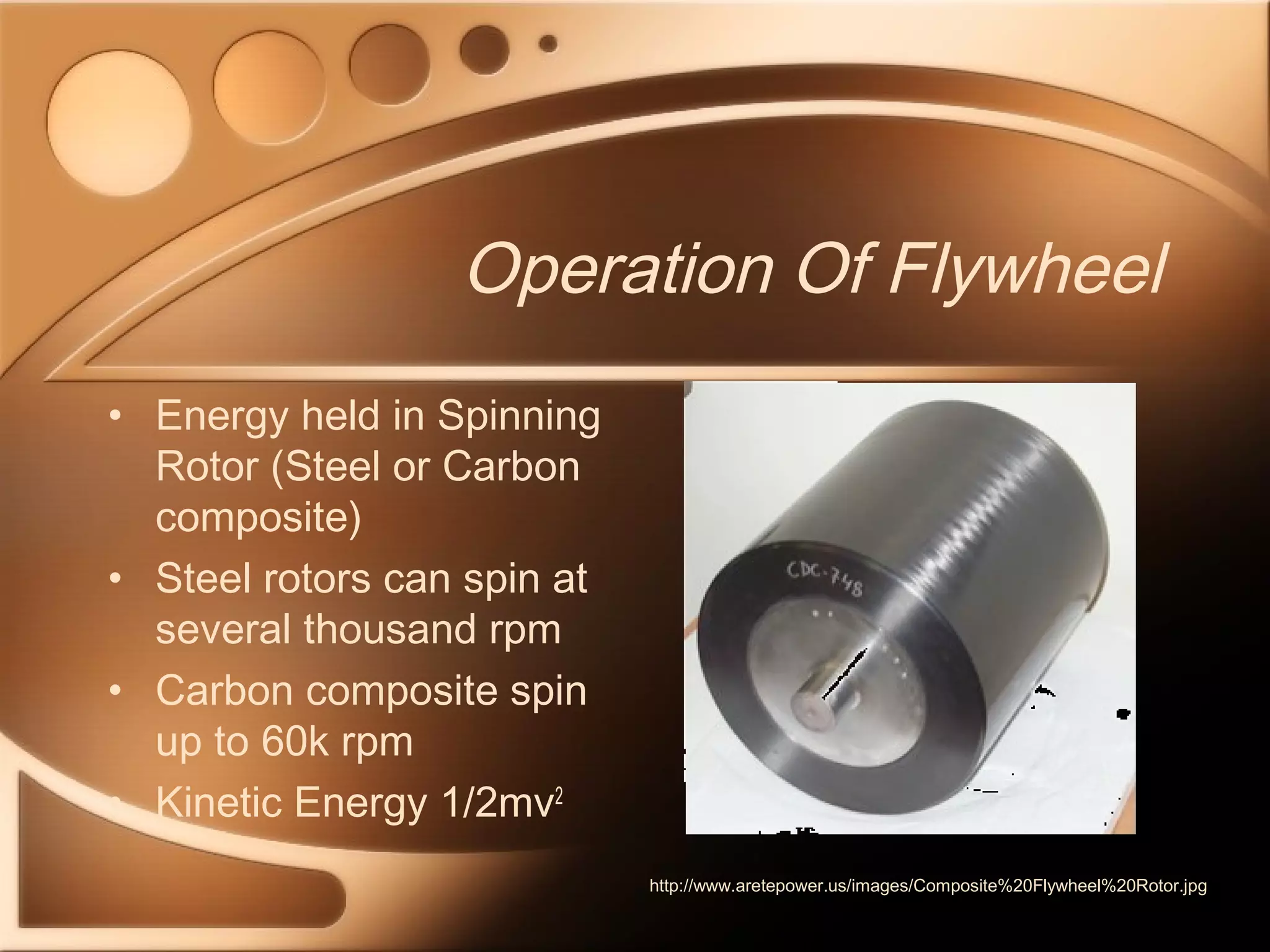
Operation Of Flywheel 
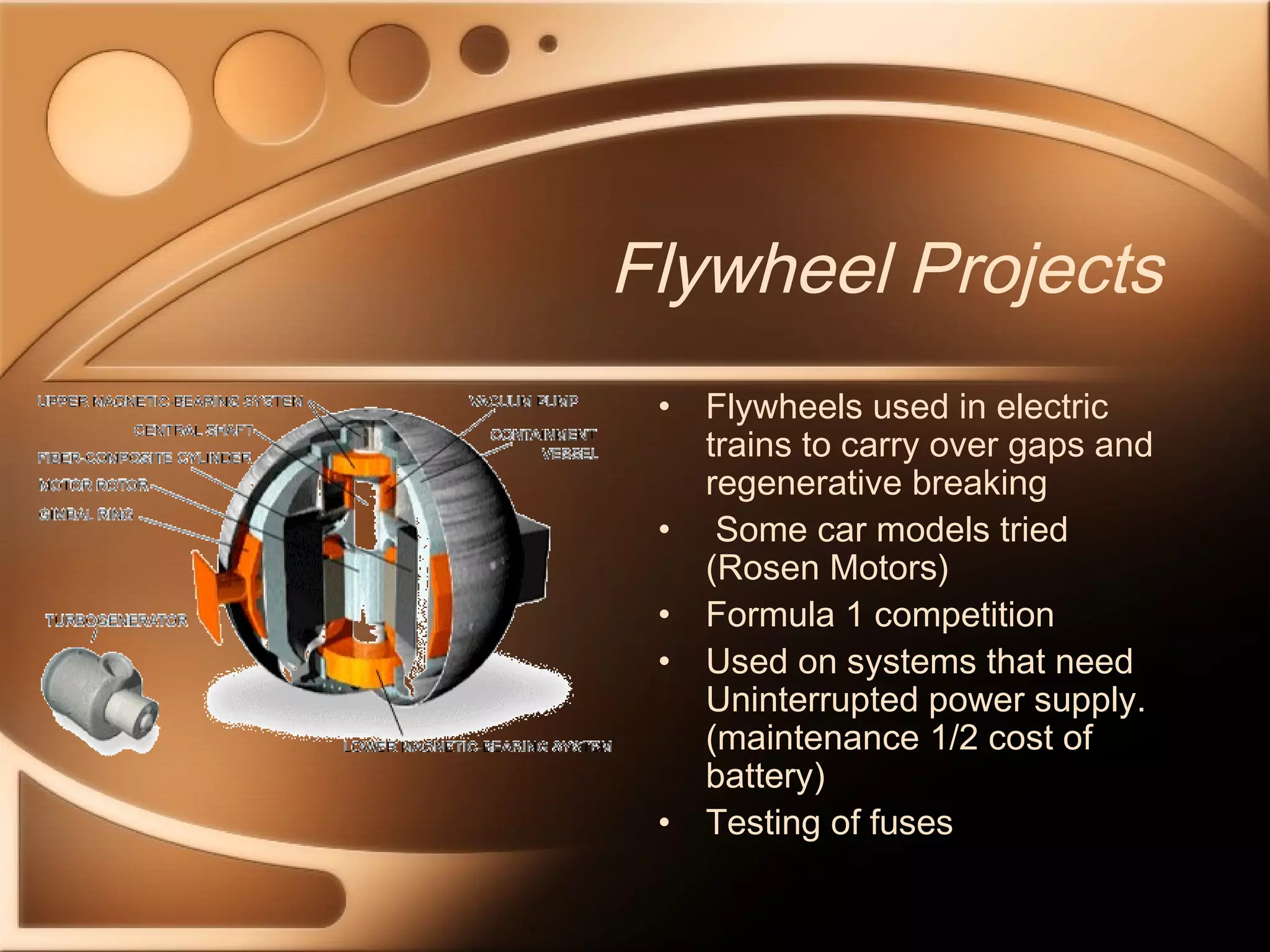
• Energy held in Spinning 
Rotor (Steel or Carbon 
composite) 
• Steel rotors can spin at 
several thousand rpm 
• Carbon composite spin 
up to 60k rpm 
• Kinetic Energy 1/2mv2 
http://www.aretepower.us/images/Composite%20Flywheel%20Rotor.jpg
Bearings 
• Mechanical bearings 
not practical 
• Friction is directly 
proportional to speed 
• Magnetic bearings used 
to minimize friction 
• Rotor is suspended-state 
of levitation 
• Operates in a Vacuum
Superconductors 
• New technology uses high temperature 
superconductors (HTSC) 
• HTSC operate at -1960C or -3210F 
• Diamagnetism- creates a field of opposition to a 
magnetic field 
• Hybrid systems use conventional magnets to levitate 
and superconductors to stabilize
Flywheels Vs. Batteries 
Pros 
• Not effected by 
temperature changes 
• No Memory Effect 
• Made more 
environmentally friendly 
• Easy energy content 
identification 
Cons 
• Shattering due to 
overload 
• Safety devices add lots 
of mass 
• Gyroscope (duel FES 
systems)
Energy Stats 
Composite Flywheel Li-ion Battery 
Cycles 100,000 to 10 million Around 1200 
Energy Density 130 Wh/kg 160 Wh/kg 
Capacity Range from 3 kWh to 
Max of 133 KWh 
Equal to 13,825 18650 
Li-ion 
Over 4 times what is 
used to power the Tesla 
Charge Time 15 min Several Hours 
Self discharge time “0 run down time”- Years 10-20 months 
Energy Exchange Limited by generator Limited by chemical 
process
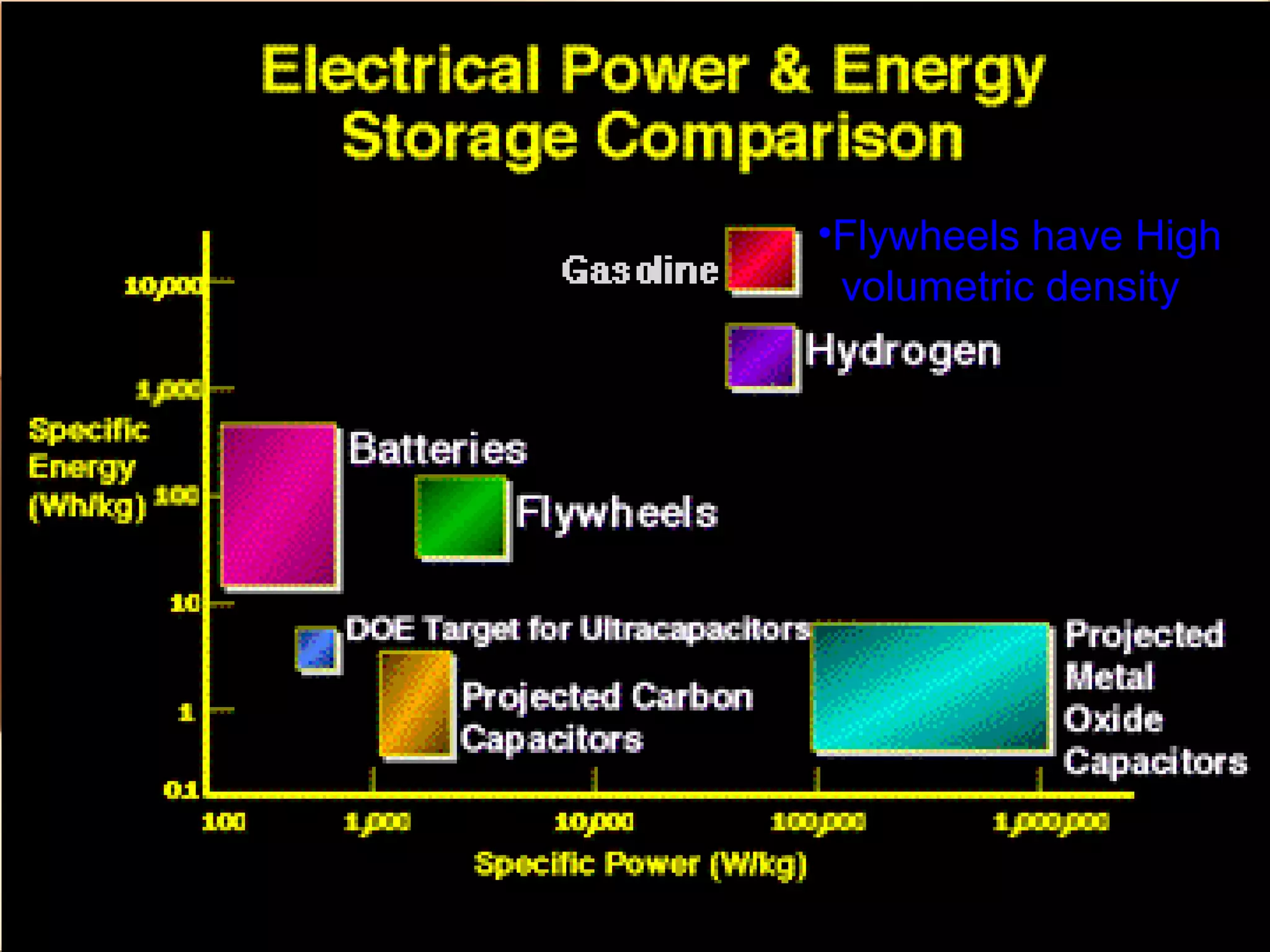
•Flywheels have High 
volumetric density
Flywheel Projects 
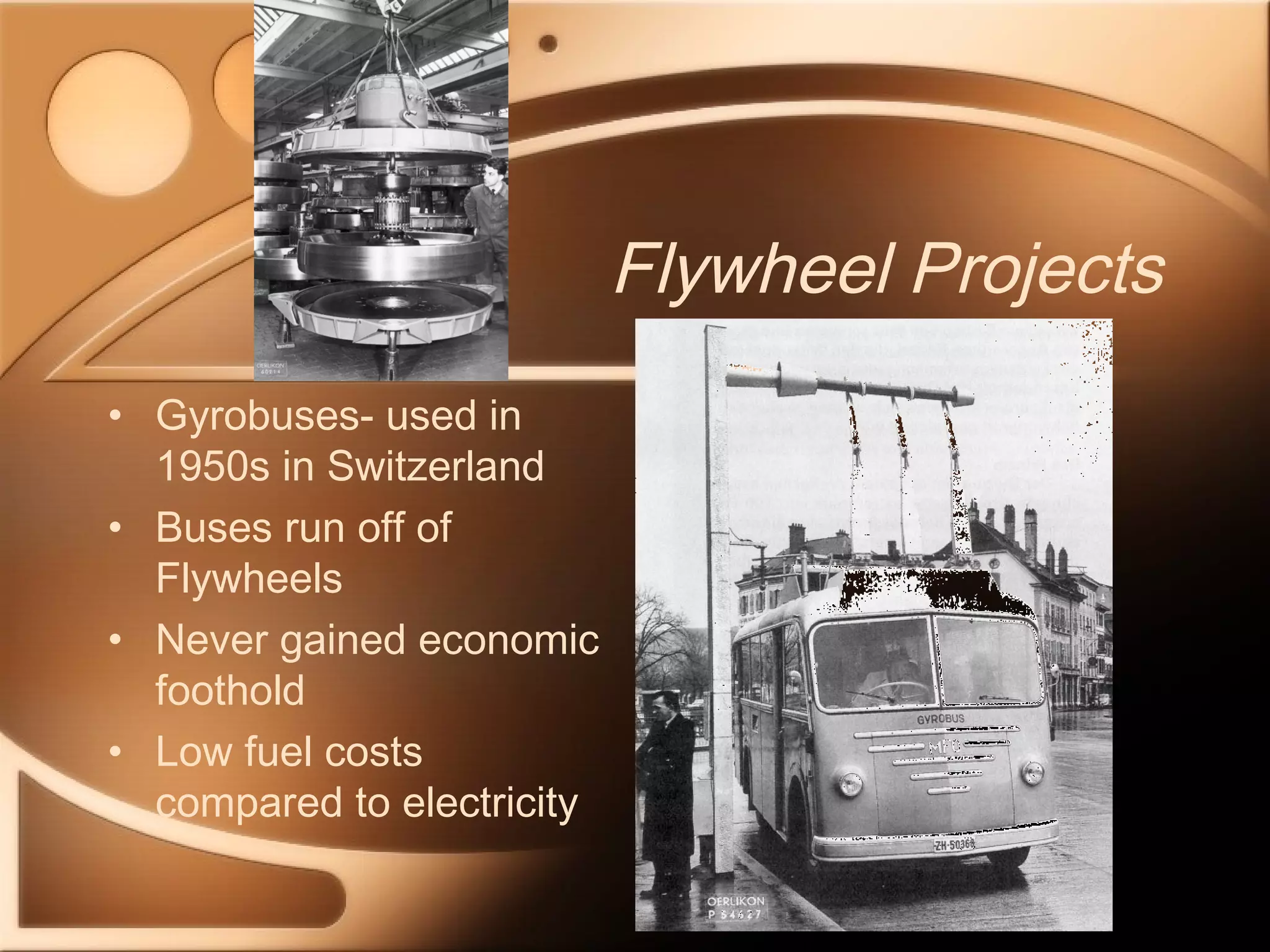
• Gyrobuses- used in 
1950s in Switzerland 
• Buses run off of 
Flywheels 
• Never gained economic 
foothold 
• Low fuel costs 
compared to electricity
Flywheel Projects 
• Flywheels used in electric 
trains to carry over gaps and 
regenerative breaking 
• Some car models tried 
(Rosen Motors) 
• Formula 1 competition 
• Used on systems that need 
Uninterrupted power supply. 
(maintenance 1/2 cost of 
battery) 
• Testing of fuses
Sources 
• http://photo.proaktiva.eu/digest/2008_gyrobus.html 
• http://eco-energy.info/asp/index.asp?uc=&k=3165 
• http://www1.eere.energy.gov/femp/pdfs/fta_flywheel.pdf 
• http://www.vyconenergy.com/pages/flywheeltech.htm 
• http://www.isepa.com/about_isep.asp 
• http://finance.yahoo.com/family-home/article/106040/Air-Cars:- 
A-New-Wind-for-America's-Roads 
• http://gas2.org/2008/07/15/an-air-car-you-could-see-in-2009- 
zpms-106-mpg-compressed-air-hybrid/ 
• http://zeropollutionmotors.us/

Mechanical energy storage

  • 1.
    Mechanical Energy Storage Created by Nick Stroud
  • 2.
    Three Types ofStorage • Pumped hydroelectric storage (PHS) • Compressed air energy storage (CAES) • Flywheels
  • 3.
    Pumped Hydroelectric Storage(PHS) • Used for load balancing of energy • Water is pumped up in elevation during time of low demand • Water flows back down during times of high demand • Turbines recapture the energy.
  • 4.
    Pumped Hydroelectric Storage(PHS) • 70-85% of electrical energy is recovered • Energy loss due to evaporation and Pump/generator inefficiency • Currently the most cost effective way to store large amounts of electricity • Low energy density calls for large bodies of water • Never used in portable technology • 1000 kg at 100 ft = .272 kWh
  • 5.
    Pumps: On theGrid • The Us has 19.5 gigawatts capacity • 2.5% of baseload • Technology is in use world wide • Hundreds of plants around the world • Man made reservoirs as well as natural reservoirs
  • 6.
    Future Of PHS • This energy storage can be used to level the grid for renewable energy • Wind power and solar power are not constantly on • Using salt mines to increase energy density
  • 7.
    Compressed air energystorage (CAES) • Large tank is buried underground • During times of low demand electricity compresses air • During times of peak demand compressed air is heated and released http://www.sandia.gov/media/NewsRel/NR2001/norton.htm
  • 8.
    Types Of CAES • Adiabatic storage • Heat from compression is captured and stored in a solid or liquid • Hot Oil 3000C • Molten Salt 6000C • Heat is reincorporated during release • Close to 100% efficiency • No utility scale plants • Diabatic storage • Heat is lost through cooling • Natural gas is burned to reheat compressed air • Very inefficient 38-68% • Uses 1/2 gas of an all gas plant
  • 9.
    More about CAES • Can use sandstone layer to hold compressed air • USA has good ground for this type of storage • Can be used to level load from wind and solar • 200-300 MW Plants
  • 10.
    Compressed air inCars • Zero pollution Motors • Stores air at around 300atm • Under 35 mph it is zero emissions • Over 35 mph uses combustion engine to compress air • Runs on many different types of fuel • 1 air tank + 8 gal gas= 848 miles
  • 11.
    Fueling/Refueling • Flexengine runs off of gas, diesel, alcohol, possibly even vegetable oil • Refueling air tank at refuel station about 3 minutes • Home refuel unit takes 4 hours, electrical cost $2 • 3 cents per mile
  • 12.
    FlowAir • After35 mph only 1/2 the CO2 emissions of Prius • Takes advantage of light engine and light frame to be efficient • Uses fiberglass frame filled with foam • May lose efficiency in cold weather
  • 13.
    Future of AirVehicles • Flowair- release in 2010 • First needs to pass US safety ratings • 6 seats • 106 mpg • 800-1000 mile range • Top speed 96 mph • $17500
  • 14.
    Flywheels • Capturesenergy in a rotating Mass • Flywheel is charged using electric motor • Electric generator extracts energy http://en.wikipedia.org/wiki/Image:G2_front2.jpg#filehistory
  • 15.
    Operation Of Flywheel • Energy held in Spinning Rotor (Steel or Carbon composite) • Steel rotors can spin at several thousand rpm • Carbon composite spin up to 60k rpm • Kinetic Energy 1/2mv2 http://www.aretepower.us/images/Composite%20Flywheel%20Rotor.jpg
  • 16.
    Bearings • Mechanicalbearings not practical • Friction is directly proportional to speed • Magnetic bearings used to minimize friction • Rotor is suspended-state of levitation • Operates in a Vacuum
  • 17.
    Superconductors • Newtechnology uses high temperature superconductors (HTSC) • HTSC operate at -1960C or -3210F • Diamagnetism- creates a field of opposition to a magnetic field • Hybrid systems use conventional magnets to levitate and superconductors to stabilize
  • 19.
    Flywheels Vs. Batteries Pros • Not effected by temperature changes • No Memory Effect • Made more environmentally friendly • Easy energy content identification Cons • Shattering due to overload • Safety devices add lots of mass • Gyroscope (duel FES systems)
  • 20.
    Energy Stats CompositeFlywheel Li-ion Battery Cycles 100,000 to 10 million Around 1200 Energy Density 130 Wh/kg 160 Wh/kg Capacity Range from 3 kWh to Max of 133 KWh Equal to 13,825 18650 Li-ion Over 4 times what is used to power the Tesla Charge Time 15 min Several Hours Self discharge time “0 run down time”- Years 10-20 months Energy Exchange Limited by generator Limited by chemical process
  • 21.
    •Flywheels have High volumetric density
  • 22.
    Flywheel Projects •Gyrobuses- used in 1950s in Switzerland • Buses run off of Flywheels • Never gained economic foothold • Low fuel costs compared to electricity
  • 23.
    Flywheel Projects •Flywheels used in electric trains to carry over gaps and regenerative breaking • Some car models tried (Rosen Motors) • Formula 1 competition • Used on systems that need Uninterrupted power supply. (maintenance 1/2 cost of battery) • Testing of fuses
  • 24.
    Sources • http://photo.proaktiva.eu/digest/2008_gyrobus.html • http://eco-energy.info/asp/index.asp?uc=&k=3165 • http://www1.eere.energy.gov/femp/pdfs/fta_flywheel.pdf • http://www.vyconenergy.com/pages/flywheeltech.htm • http://www.isepa.com/about_isep.asp • http://finance.yahoo.com/family-home/article/106040/Air-Cars:- A-New-Wind-for-America's-Roads • http://gas2.org/2008/07/15/an-air-car-you-could-see-in-2009- zpms-106-mpg-compressed-air-hybrid/ • http://zeropollutionmotors.us/

Editor's Notes

  • #2 Nick � I like this topic very much. I think you could possibly choose all three, with a brief overview of each, comparison of advantages and disadvantages between them, and I think the most course-relevant part which a comparison with electrochemical storage (battery, capacitor, fuel cell). Go for it.