


A Case study on
Definition
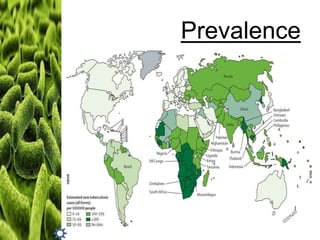
Prevalence
The subject
Subjective
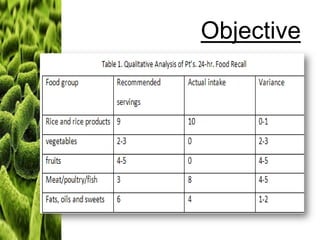
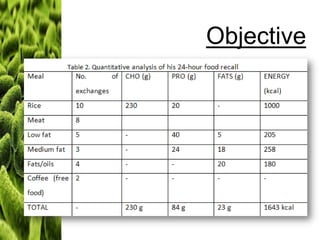
Objective
Assessment
Plan
Intervention
Evaluation

Multi-drug-resistant
TB

•
•
•
•
•
•
•
•
•
Definition
• Multi-drug-resistant tuberculosis
(MDR-TB), resistant to:
- Isoniazid (INH)
- Rifampicin (RMP)
• Mycobacterium tuberculosis
• spread from person to person as
readily as drug-sensitive TB
Prevalence
MORTALITY: TEN LEADING CAUSES
PHILIPPINES, 2009
1.
2.
3.
4.
5.
6.
7.
8.
9.
10.

Diseases of the Heart
Diseases of Vascular System
Malignant Neoplasms
Pneumonia
Accidents
Tuberculosis, all forms
Chronic lower respiratory diseases
Diabetes Mellitus
Nephritis, nephritic syndrome and nephrosis
Certain conditions originating in the perinatal period
Prevalence
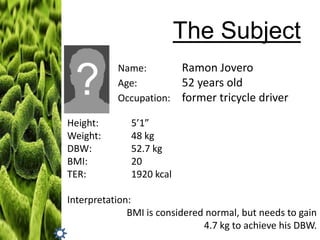
The Subject
Name:
Age:
Occupation:
Height:
Weight:
DBW:
BMI:
TER:

Ramon Jovero
52 years old
former tricycle driver

5’1”
48 kg
52.7 kg
20
1920 kcal

Interpretation:
BMI is considered normal, but needs to gain
4.7 kg to achieve his DBW.
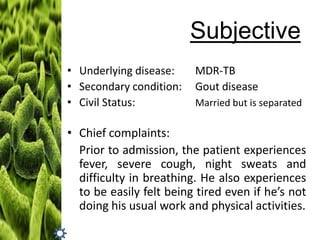
Subjective
• Underlying disease:
• Secondary condition:
• Civil Status:

MDR-TB
Gout disease
Married but is separated

• Chief complaints:
Prior to admission, the patient experiences
fever, severe cough, night sweats and
difficulty in breathing. He also experiences
to be easily felt being tired even if he’s not
doing his usual work and physical activities.
Objective
Objective
Objective
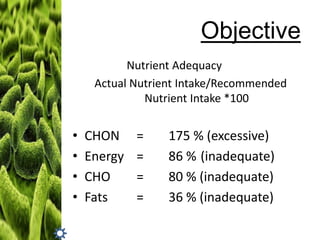
Nutrient Adequacy
Actual Nutrient Intake/Recommended
Nutrient Intake *100

•
•
•
•

CHON
Energy
CHO
Fats

=
=
=
=

175 % (excessive)
86 % (inadequate)
80 % (inadequate)
36 % (inadequate)
Assessment
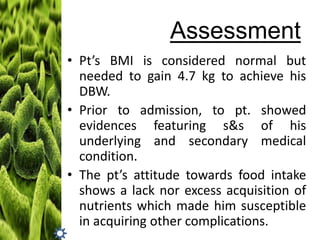
• Pt’s BMI is considered normal but
needed to gain 4.7 kg to achieve his
DBW.
• Prior to admission, to pt. showed
evidences featuring s&s of his
underlying and secondary medical
condition.
• The pt’s attitude towards food intake
shows a lack nor excess acquisition of
nutrients which made him susceptible
in acquiring other complications.
Plan
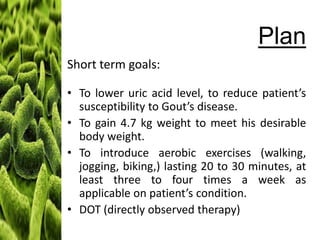
Short term goals:
• To lower uric acid level, to reduce patient’s
susceptibility to Gout’s disease.
• To gain 4.7 kg weight to meet his desirable
body weight.
• To introduce aerobic exercises (walking,
jogging, biking,) lasting 20 to 30 minutes, at
least three to four times a week as
applicable on patient’s condition.
• DOT (directly observed therapy)
Plan
Long term goals:
• Proper education and awareness.
• To encourage the patient follow the
prescribed diet for lowering of uric
acid level until the normal value will
be achieve.
• To encourage the patient follow the
prescribed medication to eliminate
MDR-TB.
Intervention
• Nutrition counseling to the patient and
his family, allowing them to learn and be
independent in applying and maintaining
the nutritional guidelines given to their
affected family member/s.
• Making of follow up schedules to check
the patient’s compliance to the
prescribed diet and medications.
Intervention
• Facilitation of normal weight
maintenance
by
encouraging
structured programs that emphasize
therapeutic
lifestyle
changes
including nutrition
and physical
education, management of fat and
calorie intake, appropriate physical
activities and regular checkups.
Evaluation
• Reassessment on patient’s nutritional
status.
• Checking food intake/dietary history
through his food records/diary to
confirm if the recommended diet for
the patient was been prepared and
implemented by the patient and his
family.
• Monitor patient’s physical activities
on weekly basis.
Mdr tb

Mdr tb

  • 1.
  • 2.
  • 4.
    Definition • Multi-drug-resistant tuberculosis (MDR-TB),resistant to: - Isoniazid (INH) - Rifampicin (RMP) • Mycobacterium tuberculosis • spread from person to person as readily as drug-sensitive TB
  • 5.
    Prevalence MORTALITY: TEN LEADINGCAUSES PHILIPPINES, 2009 1. 2. 3. 4. 5. 6. 7. 8. 9. 10. Diseases of the Heart Diseases of Vascular System Malignant Neoplasms Pneumonia Accidents Tuberculosis, all forms Chronic lower respiratory diseases Diabetes Mellitus Nephritis, nephritic syndrome and nephrosis Certain conditions originating in the perinatal period
  • 6.
  • 7.
    The Subject Name: Age: Occupation: Height: Weight: DBW: BMI: TER: Ramon Jovero 52years old former tricycle driver 5’1” 48 kg 52.7 kg 20 1920 kcal Interpretation: BMI is considered normal, but needs to gain 4.7 kg to achieve his DBW.
  • 8.
    Subjective • Underlying disease: •Secondary condition: • Civil Status: MDR-TB Gout disease Married but is separated • Chief complaints: Prior to admission, the patient experiences fever, severe cough, night sweats and difficulty in breathing. He also experiences to be easily felt being tired even if he’s not doing his usual work and physical activities.
  • 9.
  • 10.
  • 11.
    Objective Nutrient Adequacy Actual NutrientIntake/Recommended Nutrient Intake *100 • • • • CHON Energy CHO Fats = = = = 175 % (excessive) 86 % (inadequate) 80 % (inadequate) 36 % (inadequate)
  • 12.
    Assessment • Pt’s BMIis considered normal but needed to gain 4.7 kg to achieve his DBW. • Prior to admission, to pt. showed evidences featuring s&s of his underlying and secondary medical condition. • The pt’s attitude towards food intake shows a lack nor excess acquisition of nutrients which made him susceptible in acquiring other complications.
  • 13.
    Plan Short term goals: •To lower uric acid level, to reduce patient’s susceptibility to Gout’s disease. • To gain 4.7 kg weight to meet his desirable body weight. • To introduce aerobic exercises (walking, jogging, biking,) lasting 20 to 30 minutes, at least three to four times a week as applicable on patient’s condition. • DOT (directly observed therapy)
  • 14.
    Plan Long term goals: •Proper education and awareness. • To encourage the patient follow the prescribed diet for lowering of uric acid level until the normal value will be achieve. • To encourage the patient follow the prescribed medication to eliminate MDR-TB.
  • 15.
    Intervention • Nutrition counselingto the patient and his family, allowing them to learn and be independent in applying and maintaining the nutritional guidelines given to their affected family member/s. • Making of follow up schedules to check the patient’s compliance to the prescribed diet and medications.
  • 16.
    Intervention • Facilitation ofnormal weight maintenance by encouraging structured programs that emphasize therapeutic lifestyle changes including nutrition and physical education, management of fat and calorie intake, appropriate physical activities and regular checkups.
  • 17.
    Evaluation • Reassessment onpatient’s nutritional status. • Checking food intake/dietary history through his food records/diary to confirm if the recommended diet for the patient was been prepared and implemented by the patient and his family. • Monitor patient’s physical activities on weekly basis.