BY
SAI AKHILESH(118923)
1.    Introduction
2.    The McKinsey Way of Thinking
     1.   Building the solution
     2.   Developing the approach
     3.   80:20 and other rules
3.    The Mckinsey Way of Working to Solve Business
      Problems
4.    The Mckinsey Way of Selling Solutions
5.    Surviving at Mckinsey
6.    Life after McKinsey
7.    Growth Model of Mckinsey.
   McKinsey & Company was founded in Chicago in
    1926 by James O. ("Mac") McKinsey,        an
    accounting professor at the University of
    Chicago,    Booth School of Business, who
    pioneered budgeting as a management tool.

 84 offices in 89 countries
 100 of the top 150 organizations
 90% of governments have consulted them


   The Mckinsey Way book is writthen by Ethan M
    Rasiel
Firm’s problem solving process has
    three attributes
   Fact based
   Rigidly structured
   Hypothesis driven
 The  problem is not always the problem
 Don’t reinvent the wheel
 Frameworks - focus their thinking on the
  drivers of the problem
 Trust and Verify
 Don’t make your facts fit your solution
 Make sure your solution fits your client
 Finite resources everywhere
 Toll guarding the bridge – understand politics
 80:20  rule is all about data and analysis
 Find the key drivers – drill to the core of the
  problem – focus and ignore
 Make a chart everyday – review learning
  gained
 Look at the big picture
 Just say ‘I don’t know’
 Don’t accept I have no idea - Probe
1.    McKinsey does not sell; it markets
2.    Be careful what you promise: Structuring an
      engagement
3.    Team Morale – never blame, self pity
4.    Practice development
5.    Make your boss look good
6.    Manage hierarchy
7.    Listen, Guide, Paraphrase
8.    Make interviewee feel reassured
9.    Write a Thank you note always
10.   Brainstorming
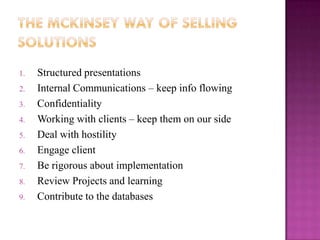
1.   Structured presentations
2.   Internal Communications – keep info flowing
3.   Confidentiality
4.   Working with clients – keep them on our side
5.   Deal with hostility
6.   Engage client
7.   Be rigorous about implementation
8.   Review Projects and learning
9.   Contribute to the databases
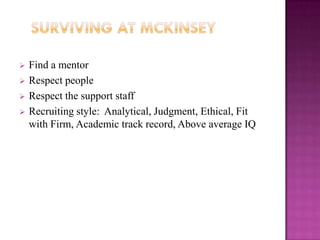
   Find a mentor
   Respect people
   Respect the support staff
   Recruiting style: Analytical, Judgment, Ethical, Fit
    with Firm, Academic track record, Above average IQ
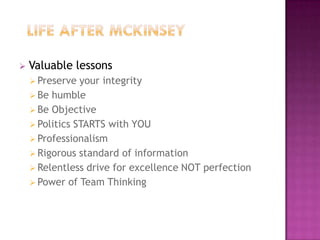
   Valuable lessons
     Preserve  your integrity
     Be humble
     Be Objective
     Politics STARTS with YOU
     Professionalism
     Rigorous standard of information
     Relentless drive for excellence NOT perfection
     Power of Team Thinking
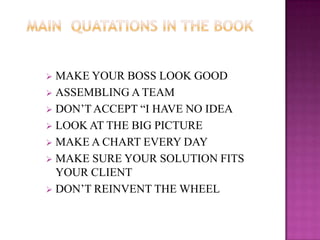
 MAKE YOUR BOSS LOOK GOOD
 ASSEMBLING A TEAM
 DON’T ACCEPT “I HAVE NO IDEA
 LOOK AT THE BIG PICTURE
 MAKE A CHART EVERY DAY
 MAKE SURE YOUR SOLUTION FITS
  YOUR CLIENT
 DON’T REINVENT THE WHEEL
The McKinsey model argues that businesses should
    develop their growth strategies based on:

 Operational skills
 Privileged assets
 Growth skills
 Special relationships
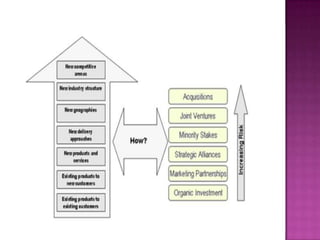
 Existing products to existing customers
 Existing products to new customers
 New products and services
 New delivery approaches
 New geographies
 New industry structure
 New competitive arenas
 The mckinsey way book by Ethan M Rasiel.
 The mckinsey growth strategies, from
  http//:www.tutor2u.commckinseygrowthstategies.
 The mckinsey way from The MBA dairy of Ethan
  M Rasiel.

Mckinsey

  • 1.
  • 2.
    1. Introduction 2. The McKinsey Way of Thinking 1. Building the solution 2. Developing the approach 3. 80:20 and other rules 3. The Mckinsey Way of Working to Solve Business Problems 4. The Mckinsey Way of Selling Solutions 5. Surviving at Mckinsey 6. Life after McKinsey 7. Growth Model of Mckinsey.
  • 3.
    McKinsey & Company was founded in Chicago in 1926 by James O. ("Mac") McKinsey, an accounting professor at the University of Chicago, Booth School of Business, who pioneered budgeting as a management tool.  84 offices in 89 countries  100 of the top 150 organizations  90% of governments have consulted them  The Mckinsey Way book is writthen by Ethan M Rasiel
  • 4.
    Firm’s problem solvingprocess has three attributes  Fact based  Rigidly structured  Hypothesis driven
  • 5.
     The problem is not always the problem  Don’t reinvent the wheel  Frameworks - focus their thinking on the drivers of the problem  Trust and Verify  Don’t make your facts fit your solution  Make sure your solution fits your client  Finite resources everywhere  Toll guarding the bridge – understand politics
  • 6.
     80:20 rule is all about data and analysis  Find the key drivers – drill to the core of the problem – focus and ignore  Make a chart everyday – review learning gained  Look at the big picture  Just say ‘I don’t know’  Don’t accept I have no idea - Probe
  • 7.
    1. McKinsey does not sell; it markets 2. Be careful what you promise: Structuring an engagement 3. Team Morale – never blame, self pity 4. Practice development 5. Make your boss look good 6. Manage hierarchy 7. Listen, Guide, Paraphrase 8. Make interviewee feel reassured 9. Write a Thank you note always 10. Brainstorming
  • 8.
    1. Structured presentations 2. Internal Communications – keep info flowing 3. Confidentiality 4. Working with clients – keep them on our side 5. Deal with hostility 6. Engage client 7. Be rigorous about implementation 8. Review Projects and learning 9. Contribute to the databases
  • 9.
    Find a mentor  Respect people  Respect the support staff  Recruiting style: Analytical, Judgment, Ethical, Fit with Firm, Academic track record, Above average IQ
  • 10.
    Valuable lessons  Preserve your integrity  Be humble  Be Objective  Politics STARTS with YOU  Professionalism  Rigorous standard of information  Relentless drive for excellence NOT perfection  Power of Team Thinking
  • 11.
     MAKE YOURBOSS LOOK GOOD  ASSEMBLING A TEAM  DON’T ACCEPT “I HAVE NO IDEA  LOOK AT THE BIG PICTURE  MAKE A CHART EVERY DAY  MAKE SURE YOUR SOLUTION FITS YOUR CLIENT  DON’T REINVENT THE WHEEL
  • 12.
    The McKinsey modelargues that businesses should develop their growth strategies based on:  Operational skills  Privileged assets  Growth skills  Special relationships
  • 14.
     Existing productsto existing customers  Existing products to new customers  New products and services  New delivery approaches  New geographies  New industry structure  New competitive arenas
  • 15.
     The mckinseyway book by Ethan M Rasiel.  The mckinsey growth strategies, from http//:www.tutor2u.commckinseygrowthstategies.  The mckinsey way from The MBA dairy of Ethan M Rasiel.