StrongMobile Flying Car Projecthttp://www.strongware.com/dragon“Welcome to the Wide & Wonderful World of Wheels and Wings"Richard Allen Strong, B.Sc. Aero. & Astro. Engrg, MA (Major,USAF,Retired)  Commercial Pilot, ASELIProprietor, Safety Analysis Systems Co.Copyright © 2008 Richard Allen Strong
“The Future Belongs to Those Who Can See It”“Dost thou love life? Then do not squander time, for that is the stuff life is made of."   Benjamin Franklin "Do not go where the path may lead. Go where there is no path and leave a trail..."   Ralph Waldo Emerson, Philosopher"Any sufficiently advanced technology is indistinguishable from magic."         Arthur C. Clarke "Mark my word: A combination airplane and motor car is coming.                               You may smile, but it will come."  Henry Ford"At first, people refuse to believe that a strange new thing can be done, then they begin to hope it can be done, then they see it can be done - then it is done, and all the world wonders why it took so long."    Secret Garden, Frances Hodgson Burnett"If you don't have a consensus that it is nonsense, you don't have a breakthrough."   Burt Rutan, Scaled Composites"When you design your aircraft, distort the specifications to be different!“   Prof. Ed Lesher, University of Michigan, Speed Record Engineer-Pilot“The greatest obstacle to scientific progress is the illusion of complete knowledge.” Prof. Disney, Hubble Telescope CommitteeThose who say “It can’t be done!” should not interrupt those who are doing it. At the end of the movie, Back to the Future, Doc Brown says to Marty:"Roads? Where we're going, we don't need roads."0
Problem Statement & Proposed SolutionThe problem to be solved recognizes that there are hundreds of cities that are hundreds of miles apart, and many business travelers and cargo movers want to go between and within them quickly and easily on a door-to-door, daily basis.
 The highway system is forecast to be more congested and slower, with no relief in sight. Air travellers still need to spend time to convert from one mode to another mode for local travel.
 Proposed solution is an aircar with an optimum payload and adequate performance for a core market offrequent regional business travelers that is quicker, with lower net cost from time savings and higher production rates than current airplanes.
  The potential marketof thousandsof operators avoiding spending millions of hours driving or changing modes may establisha billion-dollarindustry within a decade from start-up.1
Some Common Fallacies and TruthsThe common fallacies are:1)    cars are too heavy to fly; 2)    "average" drivers are too dangerous to fly;  the sky is too small for millions of aircars; andflyable automobiles would cost too much.The truths are: 1)  StrongMobile designs are adequate for good performance; 2)  licensed pilots are better trained, regulated and qualified; 3)  the skies are big enough and control is adequate for hundreds of thousands of aircars; and4)  avoiding payroll and support costs of business operators vs. other travel modes offsets costs of StrongMobiles.
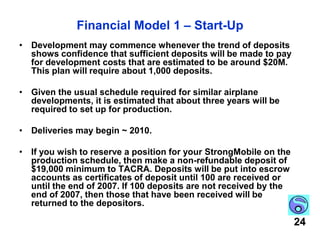
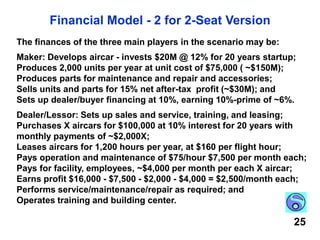
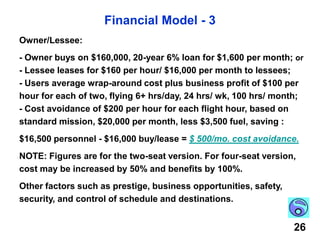
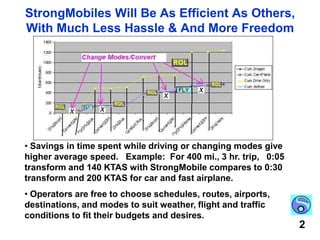
StrongMobiles Will Be As Efficient As Others,With Much Less Hassle & And More Freedom Savings in time spentwhiledriving orchanging modes give higher average speed.   Example:  For 400 mi., 3 hr. trip,   0:05 transform and 140 KTAS with StrongMobile compares to 0:30 transform and 200 KTAS for car and fast airplane.
 Operators are free to choose schedules, routes, airports, destinations, and modes to suit weather, flight and traffic conditions to fit their budgets and desires. 2
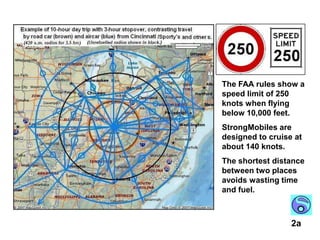
The FAA rules show a speed limit of 250 knots when flying below 10,000 feet.StrongMobiles are designed to cruise at about 140 knots.The shortest distance between two places avoids wasting time and fuel.2a
In general, you can plan your trip for various situationsPlan A - VFR or IFR direct [probability of about 80%]; orPlan B - weather or TFR deviations of less than one hour [probability of about 15%]; orPlan C - deviations of more than one hour, but less than two hours [probability of about 3%]; orPlan D - Driving only [probability of about 2%], orPlan E - Airports and Roads closed [probability less than 1%], orPlan F - Aborted trip en route and overnight or more delay [probability of less than 1%].2b
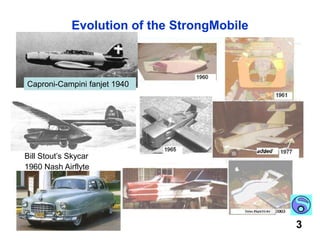
Evolution of the StrongMobileCaproni-Campini fanjet 1940Bill Stout’s Skycar1960 Nash Airflyte3
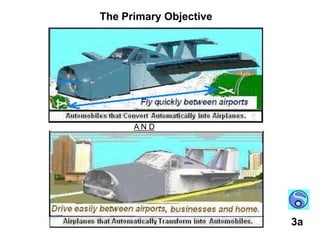
The Primary ObjectiveA N D3a
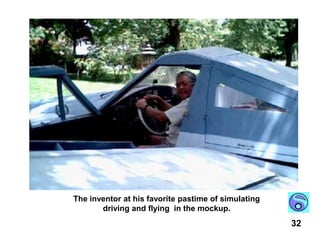
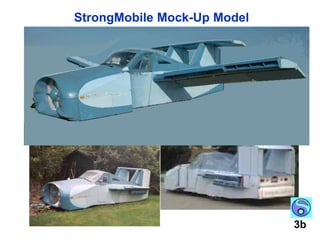
StrongMobile Mock-Up Model3b
1971 StrongMobile Design (U.S. Patent 3,612,440)The lifting body-fuselage presents an automobile appearance;  it may provide about 1/3 of the lift and allow use of a smaller wing.
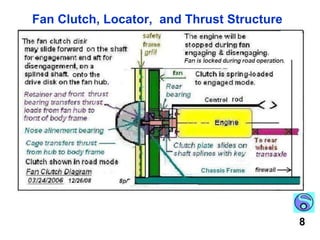
The ducted fan is quieter than a propeller; the jetwash blows on the wing to boost lift. A clutch disengages the fan for driving.
The wing has spoiler ailerons and full-span flaps to give angle   of attack while the body is level for lifting the front for take-off.4
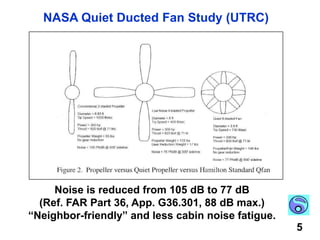
NASA Quiet Ducted Fan Study (UTRC)Noise is reduced from 105 dB to 77 dB             (Ref. FAR Part 36, App. G36.301, 88 dB max.) “Neighbor-friendly” and less cabin noise fatigue.  5
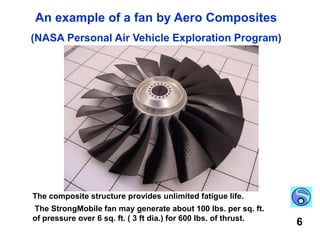
An example of a fan by Aero Composites(NASA Personal Air Vehicle Exploration Program)The composite structure provides unlimited fatigue life. The StrongMobile fan may generate about 100 lbs. per sq. ft. of pressure over 6 sq. ft. ( 3 ft dia.) for 600 lbs. of thrust.6
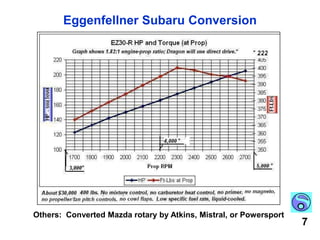
Eggenfellner Subaru ConversionOthers:  Converted Mazda rotary by Atkins, Mistral, or Powersport7
Fan Clutch, Locator,  and Thrust Structure8
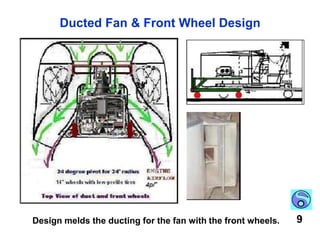
Ducted Fan & Front Wheel Design9Design melds the ducting for the fan with the front wheels.
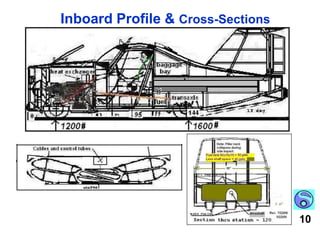
Inboard Profile & Cross-Sections10
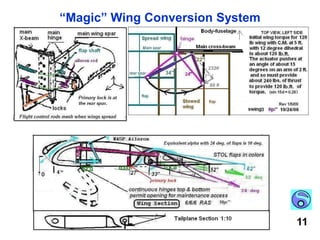
“Magic” Wing Conversion System11
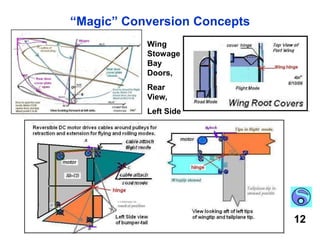
“Magic” Conversion ConceptsWing Stowage Bay Doors, Rear View,Left Side12
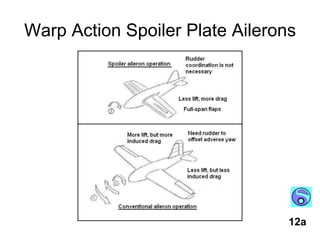
Warp Action Spoiler Plate Ailerons12a
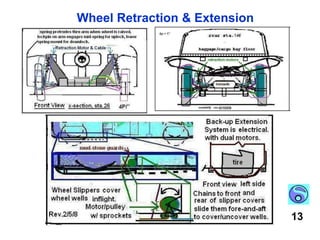
Wheel Retraction & Extension13
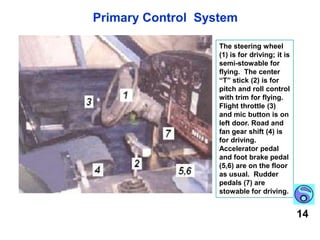
Primary Control  SystemThe steering wheel (1) is for driving; it is semi-stowable for flying.  The center “T” stick (2) is for pitch and roll control with trim for flying. Flight throttle (3) and mic button is on left door. Road and fan gear shift (4) is for driving. Accelerator pedal and foot brake pedal (5,6) are on the floor as usual.  Rudder pedals (7) are stowable for driving. 14
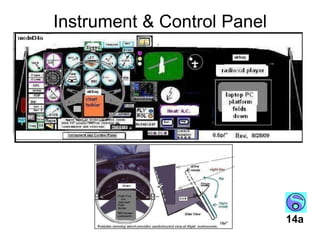
Instrument & Control Panel14a
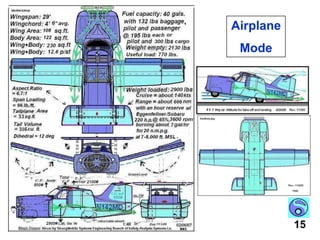
AirplaneMode15
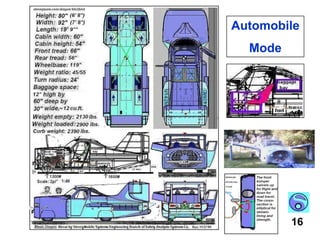
AutomobileMode16
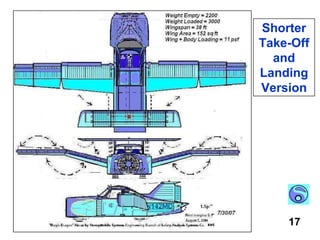
Shorter Take-Off and Landing Version17
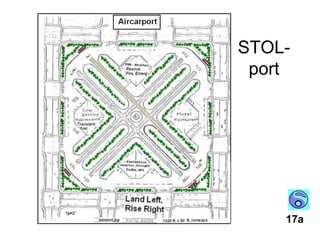
STOL-port17a
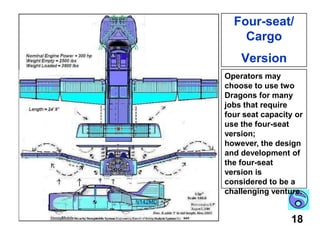
Four-seat/Cargo VersionOperators may choose to use two Dragons for many jobs that require four seat capacity or use the four-seat version; however, the design and development of the four-seat version is considered to be a challenging venture.18
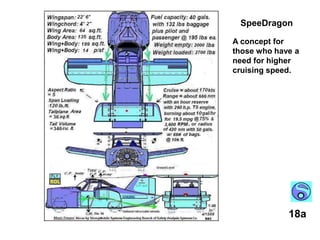
SpeeDragonA concept for those who have a need for higher cruising speed.18a
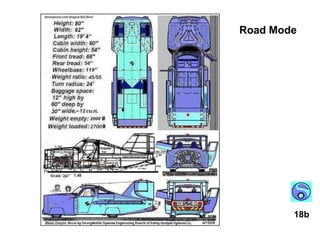
Road Mode18b
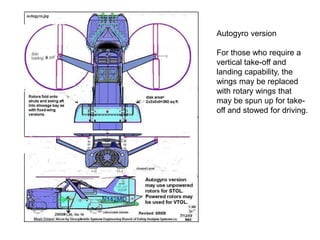
Autogyro versionFor those who require a vertical take-off and landing capability, the wings may be replaced with rotary wings that may be spun up for take-off and stowed for driving.
Current Airplane InconveniencesMay Be Eliminated in StrongMobileexpense of hangaring;handling tie-downs and chocks;tow bars and towing machines;using step-stools to check fuel quantity; using steps and handholds for entry and exit; only one cabin door, noisy, narrow cabins;steering while taxiing with foot pedals; left and right brake pedals; complex engine & propeller displays and controls; potentially lethal propeller; andneed for rental cars for local transportation.19
Recap of Requirements and FeaturesAutomobile-type lifting body and suspension;
Modified COTS automotive engine & road drive;
Automated transformation in minimum time;
Quiet fan with clutch and vectored jetwash lift;
Full-span flaps, spoiler ailerons, & fixed slats;
[2-seat] Quarter-ton payload and fuel for 4+ hours;
Fully retractable wheels and covers; and
Range ~600 air miles, cruise ~ 140 knots.20
Safety, Compared to Other LightplanesAutomobile braking, steering, & 4-wheel stability decrease risk of over-run or flip-over;
Ducted fan gives: less risk of injuries; governing; more static thrust; vectored lift jets; quieter ops;
Simpler automobile engine controls;
Lifting body & full-span flaps cushion landings, slats decrease risk of stall; alpha gauge; and
When weather turns bad or plans change, option to drive home from alternate airport , or drive to alternate airport with good weather for take-off.21
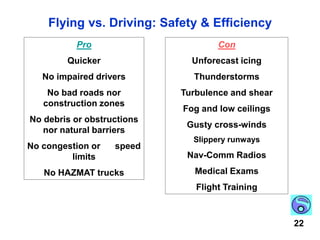
Automobile & Airplane SafetyMany people put a priority on safety, so they look at the U. S. historical data what shows vehicles have about 1.54 fatal accidents per 100 million miles driven, as compared to 22 fatal accidents per million hours flown in "general aviation". If you figure that airplanes average 150 miles per hour, then general aviation airplanes have a rate of 14 fatal accidents per 100 million miles flown, about 1 per 7 lifetimes.So, you can conclude that driving is about 10 times safer than flying. However, flying StrongMobiles may be much safer in contrast to "general aviation", when you consider their safety features.
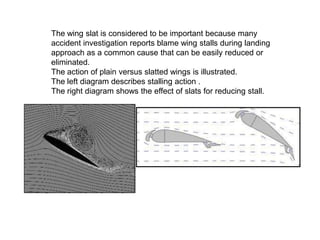
                                                                       The wing slat is considered to be important because many accident investigation reports blame wing stalls during landing approach as a common cause that can be easily reduced or eliminated. The action of plain versus slatted wings is illustrated.              The left diagram describes stalling action .                              The right diagram shows the effect of slats for reducing stall.

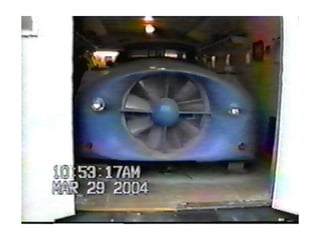
Mazda Rotary Engine Conversion Prototype

  • 1.
    StrongMobile Flying CarProjecthttp://www.strongware.com/dragon“Welcome to the Wide & Wonderful World of Wheels and Wings"Richard Allen Strong, B.Sc. Aero. & Astro. Engrg, MA (Major,USAF,Retired) Commercial Pilot, ASELIProprietor, Safety Analysis Systems Co.Copyright © 2008 Richard Allen Strong
  • 2.
    “The Future Belongsto Those Who Can See It”“Dost thou love life? Then do not squander time, for that is the stuff life is made of." Benjamin Franklin "Do not go where the path may lead. Go where there is no path and leave a trail..." Ralph Waldo Emerson, Philosopher"Any sufficiently advanced technology is indistinguishable from magic." Arthur C. Clarke "Mark my word: A combination airplane and motor car is coming. You may smile, but it will come." Henry Ford"At first, people refuse to believe that a strange new thing can be done, then they begin to hope it can be done, then they see it can be done - then it is done, and all the world wonders why it took so long." Secret Garden, Frances Hodgson Burnett"If you don't have a consensus that it is nonsense, you don't have a breakthrough." Burt Rutan, Scaled Composites"When you design your aircraft, distort the specifications to be different!“ Prof. Ed Lesher, University of Michigan, Speed Record Engineer-Pilot“The greatest obstacle to scientific progress is the illusion of complete knowledge.” Prof. Disney, Hubble Telescope CommitteeThose who say “It can’t be done!” should not interrupt those who are doing it. At the end of the movie, Back to the Future, Doc Brown says to Marty:"Roads? Where we're going, we don't need roads."0
  • 3.
    Problem Statement &Proposed SolutionThe problem to be solved recognizes that there are hundreds of cities that are hundreds of miles apart, and many business travelers and cargo movers want to go between and within them quickly and easily on a door-to-door, daily basis.
  • 4.
    The highwaysystem is forecast to be more congested and slower, with no relief in sight. Air travellers still need to spend time to convert from one mode to another mode for local travel.
  • 5.
    Proposed solutionis an aircar with an optimum payload and adequate performance for a core market offrequent regional business travelers that is quicker, with lower net cost from time savings and higher production rates than current airplanes.
  • 6.
    Thepotential marketof thousandsof operators avoiding spending millions of hours driving or changing modes may establisha billion-dollarindustry within a decade from start-up.1
  • 7.
    Some Common Fallaciesand TruthsThe common fallacies are:1) cars are too heavy to fly; 2) "average" drivers are too dangerous to fly; the sky is too small for millions of aircars; andflyable automobiles would cost too much.The truths are: 1) StrongMobile designs are adequate for good performance; 2) licensed pilots are better trained, regulated and qualified; 3) the skies are big enough and control is adequate for hundreds of thousands of aircars; and4) avoiding payroll and support costs of business operators vs. other travel modes offsets costs of StrongMobiles.
  • 8.
    StrongMobiles Will BeAs Efficient As Others,With Much Less Hassle & And More Freedom Savings in time spentwhiledriving orchanging modes give higher average speed. Example: For 400 mi., 3 hr. trip, 0:05 transform and 140 KTAS with StrongMobile compares to 0:30 transform and 200 KTAS for car and fast airplane.
  • 9.
    Operators arefree to choose schedules, routes, airports, destinations, and modes to suit weather, flight and traffic conditions to fit their budgets and desires. 2
  • 10.
    The FAA rulesshow a speed limit of 250 knots when flying below 10,000 feet.StrongMobiles are designed to cruise at about 140 knots.The shortest distance between two places avoids wasting time and fuel.2a
  • 11.
    In general, youcan plan your trip for various situationsPlan A - VFR or IFR direct [probability of about 80%]; orPlan B - weather or TFR deviations of less than one hour [probability of about 15%]; orPlan C - deviations of more than one hour, but less than two hours [probability of about 3%]; orPlan D - Driving only [probability of about 2%], orPlan E - Airports and Roads closed [probability less than 1%], orPlan F - Aborted trip en route and overnight or more delay [probability of less than 1%].2b
  • 12.
    Evolution of theStrongMobileCaproni-Campini fanjet 1940Bill Stout’s Skycar1960 Nash Airflyte3
  • 13.
  • 14.
  • 15.
    1971 StrongMobile Design(U.S. Patent 3,612,440)The lifting body-fuselage presents an automobile appearance; it may provide about 1/3 of the lift and allow use of a smaller wing.
  • 16.
    The ducted fanis quieter than a propeller; the jetwash blows on the wing to boost lift. A clutch disengages the fan for driving.
  • 17.
    The wing hasspoiler ailerons and full-span flaps to give angle of attack while the body is level for lifting the front for take-off.4
  • 18.
    NASA Quiet DuctedFan Study (UTRC)Noise is reduced from 105 dB to 77 dB (Ref. FAR Part 36, App. G36.301, 88 dB max.) “Neighbor-friendly” and less cabin noise fatigue. 5
  • 19.
    An example ofa fan by Aero Composites(NASA Personal Air Vehicle Exploration Program)The composite structure provides unlimited fatigue life. The StrongMobile fan may generate about 100 lbs. per sq. ft. of pressure over 6 sq. ft. ( 3 ft dia.) for 600 lbs. of thrust.6
  • 20.
    Eggenfellner Subaru ConversionOthers: Converted Mazda rotary by Atkins, Mistral, or Powersport7
  • 21.
    Fan Clutch, Locator, and Thrust Structure8
  • 22.
    Ducted Fan &Front Wheel Design9Design melds the ducting for the fan with the front wheels.
  • 23.
    Inboard Profile &Cross-Sections10
  • 24.
  • 25.
    “Magic” Conversion ConceptsWingStowage Bay Doors, Rear View,Left Side12
  • 26.
    Warp Action SpoilerPlate Ailerons12a
  • 27.
  • 28.
    Primary Control SystemThe steering wheel (1) is for driving; it is semi-stowable for flying. The center “T” stick (2) is for pitch and roll control with trim for flying. Flight throttle (3) and mic button is on left door. Road and fan gear shift (4) is for driving. Accelerator pedal and foot brake pedal (5,6) are on the floor as usual. Rudder pedals (7) are stowable for driving. 14
  • 29.
  • 30.
  • 31.
  • 32.
    Shorter Take-Off andLanding Version17
  • 33.
  • 34.
    Four-seat/Cargo VersionOperators maychoose to use two Dragons for many jobs that require four seat capacity or use the four-seat version; however, the design and development of the four-seat version is considered to be a challenging venture.18
  • 35.
    SpeeDragonA concept forthose who have a need for higher cruising speed.18a
  • 36.
  • 37.
    Autogyro versionFor thosewho require a vertical take-off and landing capability, the wings may be replaced with rotary wings that may be spun up for take-off and stowed for driving.
  • 38.
    Current Airplane InconveniencesMayBe Eliminated in StrongMobileexpense of hangaring;handling tie-downs and chocks;tow bars and towing machines;using step-stools to check fuel quantity; using steps and handholds for entry and exit; only one cabin door, noisy, narrow cabins;steering while taxiing with foot pedals; left and right brake pedals; complex engine & propeller displays and controls; potentially lethal propeller; andneed for rental cars for local transportation.19
  • 39.
    Recap of Requirementsand FeaturesAutomobile-type lifting body and suspension;
  • 40.
    Modified COTS automotiveengine & road drive;
  • 41.
  • 42.
    Quiet fan withclutch and vectored jetwash lift;
  • 43.
    Full-span flaps, spoilerailerons, & fixed slats;
  • 44.
    [2-seat] Quarter-ton payloadand fuel for 4+ hours;
  • 45.
  • 46.
    Range ~600 airmiles, cruise ~ 140 knots.20
  • 47.
    Safety, Compared toOther LightplanesAutomobile braking, steering, & 4-wheel stability decrease risk of over-run or flip-over;
  • 48.
    Ducted fan gives:less risk of injuries; governing; more static thrust; vectored lift jets; quieter ops;
  • 49.
  • 50.
    Lifting body &full-span flaps cushion landings, slats decrease risk of stall; alpha gauge; and
  • 51.
    When weather turnsbad or plans change, option to drive home from alternate airport , or drive to alternate airport with good weather for take-off.21
  • 52.
    Automobile & AirplaneSafetyMany people put a priority on safety, so they look at the U. S. historical data what shows vehicles have about 1.54 fatal accidents per 100 million miles driven, as compared to 22 fatal accidents per million hours flown in "general aviation". If you figure that airplanes average 150 miles per hour, then general aviation airplanes have a rate of 14 fatal accidents per 100 million miles flown, about 1 per 7 lifetimes.So, you can conclude that driving is about 10 times safer than flying. However, flying StrongMobiles may be much safer in contrast to "general aviation", when you consider their safety features.
  • 53.
                                                                         The wing slat is considered to be important because many accident investigation reports blame wing stalls during landing approach as a common cause that can be easily reduced or eliminated. The action of plain versus slatted wings is illustrated. The left diagram describes stalling action . The right diagram shows the effect of slats for reducing stall.