MATERNAL PHYSIOLOGY & 
ENDOCRINAL CHANGES DURING 
NORMAL PREGNANCY 
By 
Dr. Ram Lochan Yadav
Introduction 
 In all mammalian species, there are extensive 
biochemical, physiological and structural changes 
during pregnancy: 
 Any female of reproductive age could be pregnant 
 Virtually every organ system affected 
 The causes of these changes are: 
1.To provide a suitable environment for nutrition, growth 
and development of fetus 
2 . To prepare the mother for the process of parturition 
and subsequent support of the new born baby.
Mission 
 Understanding the adaptations to pregnancy 
Anatomical 
Physiological
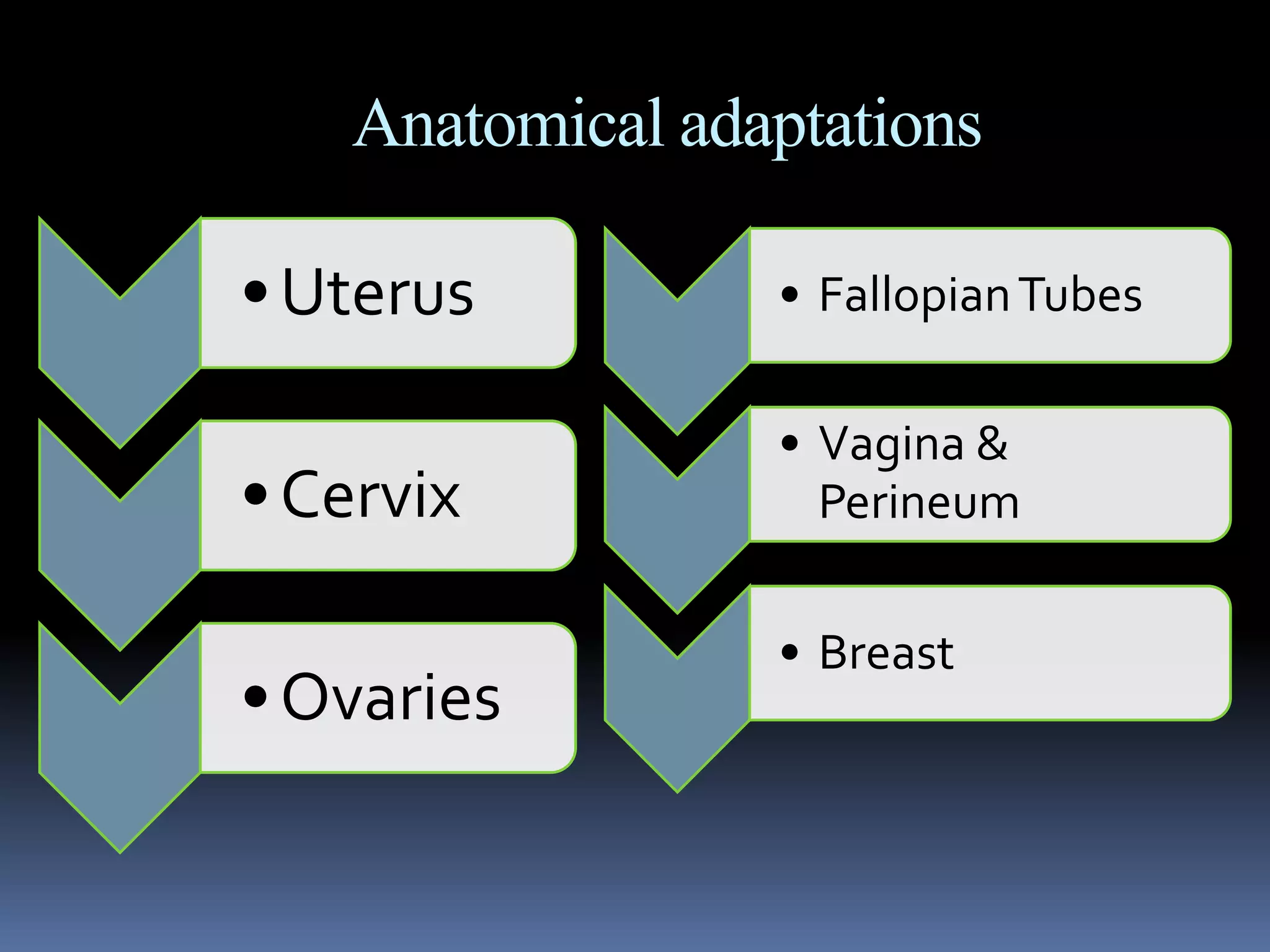
Anatomical adaptations 
• Uterus 
• Cervix 
• Ovaries 
• Fallopian Tubes 
• Vagina & 
Perineum 
• Breast
Physiological adaptations 
• Cardio Vascular 
• Hematologic 
• Respiratory 
• Gastrointestinal 
• Hepatobiliary 
• Urinary 
• Neurological 
• Musculoskeletal 
• Endocrine 
• Metabolic 
• Weight Change 
• Dermatological 
• Ophthalmological 
• Dental
Uterus 
Non Pregnant 
Uterus 
Pregnant Uterus 
Muscular 
Structure 
Almost Solid Relatively thin – 
walled (≤ 1.5 cm) 
weight ≈ 70 gm Approx. 1100 gm by 
the end of pregnancy 
Volume ≤ 10 mL ≈ 5 L by the end of 
pregnancy
Mechanism Of Uterine Enlargement 
Stretching & marked hypertrophy & 
hyperpalsia myometrial cells (d/t 
high level of maternal estradiol & 
progesterone 
Individual muscle fibres increasing in 
length by 15 fold along with 
specialized cellular connections (gap 
junctions); spiral arteries changed 
into floppy thin-walled vessel. 
Accumulation of elastic tissue & 
fibrous tissue, particularly in the 
external muscle layer.
Uterine size, shape & position 
 First few weeks, original peer shaped organ 
 As pregnancy advances, corpus & fundus 
assumes a more globular form. 
 By 12 weeks, the uterus becomes almost 
spherical . 
 Subsequently, uterus increases rapidly in 
length than in width & assumes an ovoid 
shape. 
 With ascent of uterus from pelvis, it usually 
undergoes Dextrorotation (caused by the 
rectosigmoid colon on the left side)
Cervix 
 As early as 1 month after conception the cervix 
begins to undergo profound swelling, softening 
&cyanosis due to : (estradiol & progesterone) 
Increased vascularity & edema of the entire cervix. 
Hypertrophy & hyperplasia of the cervical glands. 
Endocervical mucosal cells produce copious amounts 
of a tenacious mucus that obstructs the cervical canal 
soon after conception(mucus plug) 
Estradiol stimulates growth of the columnar 
epithelium of cervical canal that becomes visible on 
ectocervix called ectropion
Ovaries 
 Cessation of ovulation & arrest of maturation of new follicles. 
 Single corpus luteum is found in ovaries of pregnant women 
that contributes to progesterone production maximally during 
the first 6 to 7 weeks of pregnancy 
 This explains the rapid fall in serum progesterone & the 
occurrence of spontaneous abortion upon removal of the 
corpus luteum before 7 wks.
Fallopian Tubes 
 The musculature of the fallopian tubes 
undergoes little hypertrophy 
 The epithelium of the tubal mucosa becomes 
somewhat flattened
Vagina & Perineum 
 Increased vascularity prominently affects the vagina 
resulting in the violet color (chadwick sign). 
 Considerable increase in the thickness of the vaginal 
mucosa, loosening of the connective tissue, 
hypertrophy of smooth muscle cells. 
 Vaginal epitheliumthickerdesquamationacidic 
discharge
Breast changes 
• Increased size and vascularity 
warm, tense & tender 
• Increased pigmentation of the nipple & areola 
• Secondary areola appear 
(light pigmentation around the 1ry areola) 
• Montgomery tubercules appear on the areola 
(dilated sebaceous glands) 
• Colostrum like fluid is expressed at the end of the 3rd month
Breast changes
Volume haemostasis 
 Fliud retention 8-10 kg of average maternal weight 
 Some innrease in intracellular water, but most marked expansion 
occurs in ECF (↑by 7 liter,~40% above prepregnant), especially 
plasma volume 70% increase in blood volume 
 Factors contributing to fluid retention: 
 Na & H2O retention: 900 mmol (3-4 mmol/day), ↑anti-natriuretic 
hormone (aldosterone & deoxycorticosterone) 
 Plasma osmolality – resetting osmostat 
 Decrease thirst thresold 
 Decrease in plasma oncotic pressure by 20%: major contributing 
to starling mechanism & peripheral edema
HAEMATOLOGY 
 ↑ Erthropoietin & hPL in pregnanacy stimulate 
hemopoiesis 
 Erythrocytes rises (no. & size) by 20-30% after 16 wks 
 ↑ in RBC mass is slower & lesser than the ↑ in plasma 
volume hemodilution physiological anemia of 
pregnancy 
 Total WBC count ↑ due to ↑ed polymorphonuclear 
leukocytes (d/t ↑ estrogen) 
 T & B lymphocytes counts do not change rather their 
function is suppressed pregnant women more suceptible 
to viral infections, malaria & leprosy
HAEMATOLOGY
COAGULATION 
Several procoagulent factors (factors VII, VIII & X, & 
Plasma fibrinogen doubles) rise from the end of 1st 
trimester  hypercoagulable state (advantage or 
disadvantage??) 
Antithombin III (inhibitor of coagulation) falls 
ESR rises due to increase in fibrinogen favors 
rouleaux formation 
Protein C (inactivates factor V & VIII)unchanged 
but protein S fall during 1st two trimesters 
Plasma fibrinolytic activity is decresed
CardioVascular 
 Elevated progesterone & estrogen vasodilation 
 Endothelium derived vasoactive (eg.NO) 
 Vasodilation ↓TPR ↓afterload& BP, & perceived as 
circulatory underfilling that acivates RAS↑ALD↑CO 
 Probably fall in baroreflex sensitivity as pregnancy 
progresses & HRV falls & HR increases  ↑CO 
 Small fall in SBP but greter fall in DBP. The BP then rises 
steadly in parallel with ↑sympthetic activity (thus, ↑in PP). 
 MAP usually decreases during mid pregnancy & rises in 3rd 
trimester remains at or below nomal (Why??) 
 No change in pressure in the right ventricle, WHY??
CardioVascular 
 Stroke volume 
 Heart rate 
 CO 
 SVR 
 Systolic BP 
 Diastolic BP 
 Mean BP 
 O2 Consumption 
( 10%) 
( 15%) 
( 35%) 
( 35%) 
( 5-10 mmHg) 
( 15 mmHg) 
( 10%) 
( 20%)
CardioVascular
ECG Changes 
 Increased heart rate ( 15%) 
 15° left axis deviation. 
 Inverted T-wave in lead ІІІ. 
 Q in lead ІІІ & AVF 
 Unspecific ST changes
Pulmonary Function 
 ↓RV & FRC due to elevation of 
diaphragm. No change in VC, 
pulmonary compliance, FEV1 & 
PEFR. 
 Though respiratory rate is little 
changed, TV↑(~40%)---> ↑alveolar 
ventilation. TV is ↑ed as 
progesterone ↓ the thresold & ↑ the 
sensityvity of medulla oblogata to 
CO2 
 Pco2 is lowest in early gestation (↑ 
Va + ↑CA in RBC) facilitates CO2 
transfer from fetus to mother; 
↓maternal plasma osmolaity (due to 
↓HCO3- ) 
 ↑2,3 DPG in maternal RBCs
Pulmonary Function 
Fig 5.9 baker
Gastrointestinal 
 Due to relaxation of smooth 
muscle ( d/t high 
progesterone level) 
 Pyrosis (heartburn) is 
common &is caused by 
reflux of acidic secretions 
into lower esophagus & 
decreased tone of sphincter.
Gastrointestinal 
 Slight reduction in gastric secretion and 
diminished gastric motility result in slow 
emptying and may lead to nausea. 
 Reduced intestinal motility lead to increase time 
for water absorption , which tends to induce 
constipation
Gastrointestinal 
 Growth of conceptus and uterus 
leads to increase appetite and 
thirst. 
 In late pregnancy pressure of the 
uterus reduces capacity for large 
meals leads to frequent small 
snacks
Hepatobiliary 
 No distinct changes in morphology & size of liver in 
pregnancy. Despite this, there is increase in diameter of 
portal vein &its blood flow 
 Serum alkaline phosphatase almost doubles (heat stable 
placental alkaline phosphatase isozymes) 
 Serum AST,ALT,GGT, bilirubin levels are slightly lower 
than non pregnant normal values 
 Decrease in albumin to globulin ratio occurs due to 
combined reduction in albumin concentration & slight 
increase in serum globulin levels
Gallbladder changes 
 Reduced contractility of the gallbladder & rlaxation of biliary 
tract. Hence, bile flow decreases. 
 Progesterone impairs gallbladder contraction by inhibiting CCK 
mediated smooth muscle stimulation (1ry regulator of gallbladder 
contraction) 
 Impaired motility leads to stasis, associated with increase in 
cholesterol saturation of pregnancy. 
 Pregnancy causes intrahepatic cholestasis from retained bile salts. 
 Cholestasis of pregnancy is linked to high levels of estrogen which 
inhibit transductal transport of bile acids.
Urinary system 
 Kidney increases in size mainly 
because parenchymal volume rises 
by about 70% with marked 
dilatation of caluces, pelvis & 
ureters. 
 ↑ RBF(65-75%)↑ GFR (50%) 
↑clearance of no. of substances 
 Plasma concn of urea & creatinine 
fall to mid pregnanacy & increase at 
term. 
 Frequency of micturition is a 
common symptom of early 
pregnancy and again at term.
Urinary System 
 Glycosuria - may rise 10-fold as the greater filterd 
load exceeds the proximal tubular Tmax for glucose 
(~1.6-1.9 mmol/min) 
 Excretion of most of amino acids increases 
microalbuminuria (0.3 g/day) 
 Urinary Calcium excretion is increased even though 
tubular reabsorption is enhanced under the influence 
of 1,25-dihydrxyvitamin D. 
 ↑TBW (~20%) with fall in plasma osmolality about 
4-6 wks of pregnancy (d/t hCG) edema
Neurological 
 Women often report 
problems with attention, 
concentration, &memory 
throughout pregnancy & 
early postpartum period.
Neurological 
 In a longtudinal study done by keenan 
&colleagues (1998) investigating memory 
in pregnant women by a matched control 
group, they found pregnancy related 
decline in memory limited to 3rd trimester 
an attributable to depression, anxiety, sleep 
deprivation or any other physical changes 
associated with pregnancy
Neurological 
 Zeeman and co-workers (2003) used MRI to measure 
cerebral blood flow across pregnancy in 10 healthy 
women. 
 They found that mean blood flow bilaterally in the 
middle and posterior cerebral arteries decreased 
progressively from 147 and 56 ml/min when non 
pregnant to 118 and 44 ml/min late in the third 
trimester, respectively. 
 The mechanism and clinical significance of this 
decrease, and whether it relates to the diminished 
memory observed during pregnancy is unknown.
Musculoskeletal 
 Progressive lordosis compensates 
for the anterior position of the 
enlarging uterus. 
 Increased mobility of sacroiliac, 
sacrococcygeal &pubic joints 
leading to wadling gait, correlated 
to increased levels of maternal 
estrogen, progesterone & relaxin 
levels. 
 Joint mobility causes low back 
pain which is bothersome late in 
pregnancy.
Dermatological 
 Reddish, slightly 
depressed streaks 
commonly develop in 
the skin of the abdomen 
and sometimes in the 
skin over the breasts 
and thighs. 
Striae gravidarum
Dermatological 
 The midline of the 
abdominal skin “linea 
alba” becomes 
markedly pigmented, 
assuming a brownish-black 
color to form the 
linea nigra.
Dermatological 
chloasma or 
melasma 
gravidarum
Weight Changes 
 Metabolic changes, accompanied by fetal 
growth, result in an increase in weight of 
around 25% of the non-pregnant weight. 
 Approximately 12.5 kg in the average woman 
(usually at a rate of 0.5 kg/wk for the last 
20wks).
Weight Changes 
5kg is the fetus, placenta, membranes and amniotic fluid 
and the rest maternal stores of fat and protein and increased 
intra and extra-vascular volume. 
Weight gain is produced by: 
Fetus 3.63-3.88 Kg 
Placenta 0.48-0.72 Kg 
Amniotic fluid 0.72-0.97 Kg 
Uterus and breasts 2.42-2.66 Kg 
Blood and fluid 1.94-3.99 Kg 
Muscle and fat 0.48-2.91 kg total= 9.70-14.55Kg
Ophthalmic 
 Decrease in intraocular pressure due to increased 
vitreous outflow 
 Decreased corneal sensitivity especially, late in 
gestation 
 Slight increase in corneal thickness thought to be 
due to edema 
 Visual function remains unaffected except for 
transient loss of accomodation
Dental 
 Gums may become hyperemic & soft during 
pregnancy and may bleed if mildly traumatized 
as with a toothbrush  GINGIVITIS OF 
PREGNANACY
Dental 
Epulis gravidarum: 
regress 1-2 mths after 
delivery excise if 
persistent or excessive 
bleeding - 
PREGNANACY 
GINGIVAL TUMOR
Human Chorionic Gonadotropin 
 secreted by the syncytial trophoblast 
cells, starts at 8-9 days after 
ovulation, maximum10-12 wks of 
pregnanacy. 
 prevent involution of the corpus 
luteum at the end of sexual cycle. 
Instead, it causes the corpus luteum 
to secrete sex hormones— 
progesterone & estrogens (for the 
next few months) 
 hCG acts interstitial cell 
(stimulating effect on testes of male 
feteus) to produce testesterone untill 
the time of birth
Estrogens by the Placenta 
 Trophoblast cell of placenta form estradiol, estrone, 
& estriol from dehydroepiandrosterone & 16- 
hydroxydehydroepiandrosterone, which are formed 
from adrenal glands of mother & fetus 
 Functions: 
 Enlargment of mother’s uterus, breasts & growth of 
ductal structure, external genitalia 
 Relax the pelvic ligaments, sacroiliac joints become 
limber, pubic symphysis becomes elastic
progesterone by the Placenta 
 Functions: 
 Causes decidual cells to develop in uterine endometrium & provide 
nutrition 
 Prevent uterine contractions from causing spontaneous abortion 
 Development of conceptus before implantation 
 During pregnancy helps estrogen prepare the mother’s breasts for 
lactation 
 Human chorionic somatomammotropin (hCS): 
 Partial development of animal’s breast & lactation (also 
K/A hPL) 
 Acts like GH; ↓insulin sensitvity & ↓glucose utilisation, 
& release free fats in mother to provde more glucose to 
fetus
The hypothalamus & pituitary gland 
 Size of anterior pituitary lobe increases (2-3 times) due to 
growth of prolactin secreting cells. Prolactin secretion 
increase by 10-20 times from the end of 1st trimester 
 Hypothalamo-pituitary-ovarian axis is suppressed by high 
level of sex steroids. This decrease LH & FSH secretion & 
thus prevents ovulation in pregnancy. 
 TSH secretion responds normally to hypothalamic 
thyrotropin-releasing hormone (also formed by placenta) 
 ACTH concentrations rise during pregnancy partly 
because of placental synthesis of ACTH & corticotropin-releasing 
hormone & do not respond to normal control 
mechanisms
THE ADRENAL GLAND 
 Plasma total & unbound cortisol, cortsol binding globulin 
(CBG) & other corticosteroid concentration increase 
 Excess glucocorticoid inhibit fetal growth . However, the 
placenta synthesizes a pregnancy-specific 11β- 
hydroxysteroid dehydrogenase, which inhibits transfer 
of maternal cortisol. 
THE THYROID GLAND 
 Maternal iodine requirements ↑ because of active 
transport of iodine to feto-placental unit & because ↑ed 
iodine renal clearance. Because the plasma level falls, 
thyroid gland increases iodine uptake from the blood. If 
there is dietary insufficiency,thyroid gland hypertrophies.
Parathyroid glands & Ca metabolism 
 The increased demand of Ca for fetal growth is achieved 
by increased absorption of Ca form GIT by vit. D & by 
increase in PTH secretion--- so, Ca supplement is imp. 
 Maternal total plasma Ca falls as albumin level also falls, 
but unbound ionized Ca unchanged. 
 PTH regulates synthesis of 1,25-dihydroxycholecalciferol 
(vit. D) in proximal convoluted tubule. 
 PTHrP, from fetal parathyroid gland & placenta, is 
transferred to maternal circulation & affects Ca 
haemostasis by acting trough PTH receptor
Renal hormones 
 RAS is activated from early oregnanacy 
 A vasodilator component of RAS has recently been 
described in which angiotensin 1-7 is the agonist, which 
rises during pregnancy, which stimulate the release of NO 
& prostacyclin 
 Erthropoietin synthesis stimulated by hCG 
THE PANCREAS 
 No. of β cells & size of islet of Langerhan’s increase in 
pregnancy
Energy requirements 
 BMR increased by ~5% by 3rd trimester 
 Additional protein (30gm/day): to meet the demand of 
the growing fetus, placenta, uterus, and breasts, as well 
as the increased maternal blood volume. 
 iron (60 mg/day): to support the expanding maternal 
hemoglobin mass, the placenta, and the fetus . iron 
uptake increased in pregnancy (from 1.5 to 7 mg/day) 
 Folate (400 to 800 μg/day): for blood cells formation
Carbohydrate s & lipids 
 Pregnancy is hyperlipiadaemic & glucosuric 
 After mid pregnancy insulin resistance develops 
progressively (why??) & plasma glucose concentration 
rise. 
 Resistani is beneficial to fetus as glucose crosses the 
placenta readily & fetus uses glucose as its primary enery 
substrates. 
 Increased maternal blood glucose stimulates glycogen 
synthesis & storage, deposition of fat & transport of 
amino acids into cells. 
 ↑ VLDL, HDL, free fatty acids, triglycerides
Preclampsia & eclampsia 
 rapid rise in BP to hypertensive levels during the last few 
months of pregnancy & with leakage of large amounts 
of protein into the urine. This condition is called 
preeclampsia or toxemia of pregnancy. 
 characterized by excess salt and water retention by the 
mother’s kidneys and by weight gain and development 
of edema and hypertension , impaired function of the 
vascular endothelium, & arterial spasm in many parts of 
the mother’s body, especially in the kidneys, brain, and 
liver. 
 Both the renal blood flow and the glomerular filtration 
rate are decreased, which is exactly opposite to the 
changes that occur in the normal pregnant woman.
Preclampsia & eclampsia 
 Causes: unknown 
 results from some type of autoimmunity or allergy in the 
mother caused by the presence of the fetus 
 caused by excessive secretion of placental or adrenal 
hormones 
 insufficient blood supply to the placenta 
 increased levels of inflammatory cytokines such as tumor 
necrosis factor-a and interleukin-6.
References: 
 Dewhurst’s textbook of Obstetrics & Gynaecology, 8th 
edt. 
 Obstetrics by Ten Teachers, N. Baker- 18th ed. 
 Textbook of medical physiology- GK Pal 
 Textbook of medical physiology- Guyton, 11th ed 
 Textbook of medical physiology-Walter F. Boron
Maternal physiology in pregnancy

Maternal physiology in pregnancy

  • 1.
    MATERNAL PHYSIOLOGY & ENDOCRINAL CHANGES DURING NORMAL PREGNANCY By Dr. Ram Lochan Yadav
  • 2.
    Introduction  Inall mammalian species, there are extensive biochemical, physiological and structural changes during pregnancy:  Any female of reproductive age could be pregnant  Virtually every organ system affected  The causes of these changes are: 1.To provide a suitable environment for nutrition, growth and development of fetus 2 . To prepare the mother for the process of parturition and subsequent support of the new born baby.
  • 3.
    Mission  Understandingthe adaptations to pregnancy Anatomical Physiological
  • 4.
    Anatomical adaptations •Uterus • Cervix • Ovaries • Fallopian Tubes • Vagina & Perineum • Breast
  • 5.
    Physiological adaptations •Cardio Vascular • Hematologic • Respiratory • Gastrointestinal • Hepatobiliary • Urinary • Neurological • Musculoskeletal • Endocrine • Metabolic • Weight Change • Dermatological • Ophthalmological • Dental
  • 7.
    Uterus Non Pregnant Uterus Pregnant Uterus Muscular Structure Almost Solid Relatively thin – walled (≤ 1.5 cm) weight ≈ 70 gm Approx. 1100 gm by the end of pregnancy Volume ≤ 10 mL ≈ 5 L by the end of pregnancy
  • 8.
    Mechanism Of UterineEnlargement Stretching & marked hypertrophy & hyperpalsia myometrial cells (d/t high level of maternal estradiol & progesterone Individual muscle fibres increasing in length by 15 fold along with specialized cellular connections (gap junctions); spiral arteries changed into floppy thin-walled vessel. Accumulation of elastic tissue & fibrous tissue, particularly in the external muscle layer.
  • 9.
    Uterine size, shape& position  First few weeks, original peer shaped organ  As pregnancy advances, corpus & fundus assumes a more globular form.  By 12 weeks, the uterus becomes almost spherical .  Subsequently, uterus increases rapidly in length than in width & assumes an ovoid shape.  With ascent of uterus from pelvis, it usually undergoes Dextrorotation (caused by the rectosigmoid colon on the left side)
  • 11.
    Cervix  Asearly as 1 month after conception the cervix begins to undergo profound swelling, softening &cyanosis due to : (estradiol & progesterone) Increased vascularity & edema of the entire cervix. Hypertrophy & hyperplasia of the cervical glands. Endocervical mucosal cells produce copious amounts of a tenacious mucus that obstructs the cervical canal soon after conception(mucus plug) Estradiol stimulates growth of the columnar epithelium of cervical canal that becomes visible on ectocervix called ectropion
  • 13.
    Ovaries  Cessationof ovulation & arrest of maturation of new follicles.  Single corpus luteum is found in ovaries of pregnant women that contributes to progesterone production maximally during the first 6 to 7 weeks of pregnancy  This explains the rapid fall in serum progesterone & the occurrence of spontaneous abortion upon removal of the corpus luteum before 7 wks.
  • 14.
    Fallopian Tubes The musculature of the fallopian tubes undergoes little hypertrophy  The epithelium of the tubal mucosa becomes somewhat flattened
  • 15.
    Vagina & Perineum  Increased vascularity prominently affects the vagina resulting in the violet color (chadwick sign).  Considerable increase in the thickness of the vaginal mucosa, loosening of the connective tissue, hypertrophy of smooth muscle cells.  Vaginal epitheliumthickerdesquamationacidic discharge
  • 16.
    Breast changes •Increased size and vascularity warm, tense & tender • Increased pigmentation of the nipple & areola • Secondary areola appear (light pigmentation around the 1ry areola) • Montgomery tubercules appear on the areola (dilated sebaceous glands) • Colostrum like fluid is expressed at the end of the 3rd month
  • 17.
  • 19.
    Volume haemostasis Fliud retention 8-10 kg of average maternal weight  Some innrease in intracellular water, but most marked expansion occurs in ECF (↑by 7 liter,~40% above prepregnant), especially plasma volume 70% increase in blood volume  Factors contributing to fluid retention:  Na & H2O retention: 900 mmol (3-4 mmol/day), ↑anti-natriuretic hormone (aldosterone & deoxycorticosterone)  Plasma osmolality – resetting osmostat  Decrease thirst thresold  Decrease in plasma oncotic pressure by 20%: major contributing to starling mechanism & peripheral edema
  • 21.
    HAEMATOLOGY  ↑Erthropoietin & hPL in pregnanacy stimulate hemopoiesis  Erythrocytes rises (no. & size) by 20-30% after 16 wks  ↑ in RBC mass is slower & lesser than the ↑ in plasma volume hemodilution physiological anemia of pregnancy  Total WBC count ↑ due to ↑ed polymorphonuclear leukocytes (d/t ↑ estrogen)  T & B lymphocytes counts do not change rather their function is suppressed pregnant women more suceptible to viral infections, malaria & leprosy
  • 22.
  • 23.
    COAGULATION Several procoagulentfactors (factors VII, VIII & X, & Plasma fibrinogen doubles) rise from the end of 1st trimester  hypercoagulable state (advantage or disadvantage??) Antithombin III (inhibitor of coagulation) falls ESR rises due to increase in fibrinogen favors rouleaux formation Protein C (inactivates factor V & VIII)unchanged but protein S fall during 1st two trimesters Plasma fibrinolytic activity is decresed
  • 25.
    CardioVascular  Elevatedprogesterone & estrogen vasodilation  Endothelium derived vasoactive (eg.NO)  Vasodilation ↓TPR ↓afterload& BP, & perceived as circulatory underfilling that acivates RAS↑ALD↑CO  Probably fall in baroreflex sensitivity as pregnancy progresses & HRV falls & HR increases  ↑CO  Small fall in SBP but greter fall in DBP. The BP then rises steadly in parallel with ↑sympthetic activity (thus, ↑in PP).  MAP usually decreases during mid pregnancy & rises in 3rd trimester remains at or below nomal (Why??)  No change in pressure in the right ventricle, WHY??
  • 26.
    CardioVascular  Strokevolume  Heart rate  CO  SVR  Systolic BP  Diastolic BP  Mean BP  O2 Consumption ( 10%) ( 15%) ( 35%) ( 35%) ( 5-10 mmHg) ( 15 mmHg) ( 10%) ( 20%)
  • 27.
  • 28.
    ECG Changes Increased heart rate ( 15%)  15° left axis deviation.  Inverted T-wave in lead ІІІ.  Q in lead ІІІ & AVF  Unspecific ST changes
  • 29.
    Pulmonary Function ↓RV & FRC due to elevation of diaphragm. No change in VC, pulmonary compliance, FEV1 & PEFR.  Though respiratory rate is little changed, TV↑(~40%)---> ↑alveolar ventilation. TV is ↑ed as progesterone ↓ the thresold & ↑ the sensityvity of medulla oblogata to CO2  Pco2 is lowest in early gestation (↑ Va + ↑CA in RBC) facilitates CO2 transfer from fetus to mother; ↓maternal plasma osmolaity (due to ↓HCO3- )  ↑2,3 DPG in maternal RBCs
  • 31.
  • 32.
    Gastrointestinal  Dueto relaxation of smooth muscle ( d/t high progesterone level)  Pyrosis (heartburn) is common &is caused by reflux of acidic secretions into lower esophagus & decreased tone of sphincter.
  • 33.
    Gastrointestinal  Slightreduction in gastric secretion and diminished gastric motility result in slow emptying and may lead to nausea.  Reduced intestinal motility lead to increase time for water absorption , which tends to induce constipation
  • 34.
    Gastrointestinal  Growthof conceptus and uterus leads to increase appetite and thirst.  In late pregnancy pressure of the uterus reduces capacity for large meals leads to frequent small snacks
  • 35.
    Hepatobiliary  Nodistinct changes in morphology & size of liver in pregnancy. Despite this, there is increase in diameter of portal vein &its blood flow  Serum alkaline phosphatase almost doubles (heat stable placental alkaline phosphatase isozymes)  Serum AST,ALT,GGT, bilirubin levels are slightly lower than non pregnant normal values  Decrease in albumin to globulin ratio occurs due to combined reduction in albumin concentration & slight increase in serum globulin levels
  • 36.
    Gallbladder changes Reduced contractility of the gallbladder & rlaxation of biliary tract. Hence, bile flow decreases.  Progesterone impairs gallbladder contraction by inhibiting CCK mediated smooth muscle stimulation (1ry regulator of gallbladder contraction)  Impaired motility leads to stasis, associated with increase in cholesterol saturation of pregnancy.  Pregnancy causes intrahepatic cholestasis from retained bile salts.  Cholestasis of pregnancy is linked to high levels of estrogen which inhibit transductal transport of bile acids.
  • 37.
    Urinary system Kidney increases in size mainly because parenchymal volume rises by about 70% with marked dilatation of caluces, pelvis & ureters.  ↑ RBF(65-75%)↑ GFR (50%) ↑clearance of no. of substances  Plasma concn of urea & creatinine fall to mid pregnanacy & increase at term.  Frequency of micturition is a common symptom of early pregnancy and again at term.
  • 39.
    Urinary System Glycosuria - may rise 10-fold as the greater filterd load exceeds the proximal tubular Tmax for glucose (~1.6-1.9 mmol/min)  Excretion of most of amino acids increases microalbuminuria (0.3 g/day)  Urinary Calcium excretion is increased even though tubular reabsorption is enhanced under the influence of 1,25-dihydrxyvitamin D.  ↑TBW (~20%) with fall in plasma osmolality about 4-6 wks of pregnancy (d/t hCG) edema
  • 40.
    Neurological  Womenoften report problems with attention, concentration, &memory throughout pregnancy & early postpartum period.
  • 41.
    Neurological  Ina longtudinal study done by keenan &colleagues (1998) investigating memory in pregnant women by a matched control group, they found pregnancy related decline in memory limited to 3rd trimester an attributable to depression, anxiety, sleep deprivation or any other physical changes associated with pregnancy
  • 42.
    Neurological  Zeemanand co-workers (2003) used MRI to measure cerebral blood flow across pregnancy in 10 healthy women.  They found that mean blood flow bilaterally in the middle and posterior cerebral arteries decreased progressively from 147 and 56 ml/min when non pregnant to 118 and 44 ml/min late in the third trimester, respectively.  The mechanism and clinical significance of this decrease, and whether it relates to the diminished memory observed during pregnancy is unknown.
  • 43.
    Musculoskeletal  Progressivelordosis compensates for the anterior position of the enlarging uterus.  Increased mobility of sacroiliac, sacrococcygeal &pubic joints leading to wadling gait, correlated to increased levels of maternal estrogen, progesterone & relaxin levels.  Joint mobility causes low back pain which is bothersome late in pregnancy.
  • 44.
    Dermatological  Reddish,slightly depressed streaks commonly develop in the skin of the abdomen and sometimes in the skin over the breasts and thighs. Striae gravidarum
  • 45.
    Dermatological  Themidline of the abdominal skin “linea alba” becomes markedly pigmented, assuming a brownish-black color to form the linea nigra.
  • 46.
    Dermatological chloasma or melasma gravidarum
  • 47.
    Weight Changes Metabolic changes, accompanied by fetal growth, result in an increase in weight of around 25% of the non-pregnant weight.  Approximately 12.5 kg in the average woman (usually at a rate of 0.5 kg/wk for the last 20wks).
  • 48.
    Weight Changes 5kgis the fetus, placenta, membranes and amniotic fluid and the rest maternal stores of fat and protein and increased intra and extra-vascular volume. Weight gain is produced by: Fetus 3.63-3.88 Kg Placenta 0.48-0.72 Kg Amniotic fluid 0.72-0.97 Kg Uterus and breasts 2.42-2.66 Kg Blood and fluid 1.94-3.99 Kg Muscle and fat 0.48-2.91 kg total= 9.70-14.55Kg
  • 49.
    Ophthalmic  Decreasein intraocular pressure due to increased vitreous outflow  Decreased corneal sensitivity especially, late in gestation  Slight increase in corneal thickness thought to be due to edema  Visual function remains unaffected except for transient loss of accomodation
  • 50.
    Dental  Gumsmay become hyperemic & soft during pregnancy and may bleed if mildly traumatized as with a toothbrush  GINGIVITIS OF PREGNANACY
  • 51.
    Dental Epulis gravidarum: regress 1-2 mths after delivery excise if persistent or excessive bleeding - PREGNANACY GINGIVAL TUMOR
  • 53.
    Human Chorionic Gonadotropin  secreted by the syncytial trophoblast cells, starts at 8-9 days after ovulation, maximum10-12 wks of pregnanacy.  prevent involution of the corpus luteum at the end of sexual cycle. Instead, it causes the corpus luteum to secrete sex hormones— progesterone & estrogens (for the next few months)  hCG acts interstitial cell (stimulating effect on testes of male feteus) to produce testesterone untill the time of birth
  • 54.
    Estrogens by thePlacenta  Trophoblast cell of placenta form estradiol, estrone, & estriol from dehydroepiandrosterone & 16- hydroxydehydroepiandrosterone, which are formed from adrenal glands of mother & fetus  Functions:  Enlargment of mother’s uterus, breasts & growth of ductal structure, external genitalia  Relax the pelvic ligaments, sacroiliac joints become limber, pubic symphysis becomes elastic
  • 55.
    progesterone by thePlacenta  Functions:  Causes decidual cells to develop in uterine endometrium & provide nutrition  Prevent uterine contractions from causing spontaneous abortion  Development of conceptus before implantation  During pregnancy helps estrogen prepare the mother’s breasts for lactation  Human chorionic somatomammotropin (hCS):  Partial development of animal’s breast & lactation (also K/A hPL)  Acts like GH; ↓insulin sensitvity & ↓glucose utilisation, & release free fats in mother to provde more glucose to fetus
  • 56.
    The hypothalamus &pituitary gland  Size of anterior pituitary lobe increases (2-3 times) due to growth of prolactin secreting cells. Prolactin secretion increase by 10-20 times from the end of 1st trimester  Hypothalamo-pituitary-ovarian axis is suppressed by high level of sex steroids. This decrease LH & FSH secretion & thus prevents ovulation in pregnancy.  TSH secretion responds normally to hypothalamic thyrotropin-releasing hormone (also formed by placenta)  ACTH concentrations rise during pregnancy partly because of placental synthesis of ACTH & corticotropin-releasing hormone & do not respond to normal control mechanisms
  • 57.
    THE ADRENAL GLAND  Plasma total & unbound cortisol, cortsol binding globulin (CBG) & other corticosteroid concentration increase  Excess glucocorticoid inhibit fetal growth . However, the placenta synthesizes a pregnancy-specific 11β- hydroxysteroid dehydrogenase, which inhibits transfer of maternal cortisol. THE THYROID GLAND  Maternal iodine requirements ↑ because of active transport of iodine to feto-placental unit & because ↑ed iodine renal clearance. Because the plasma level falls, thyroid gland increases iodine uptake from the blood. If there is dietary insufficiency,thyroid gland hypertrophies.
  • 58.
    Parathyroid glands &Ca metabolism  The increased demand of Ca for fetal growth is achieved by increased absorption of Ca form GIT by vit. D & by increase in PTH secretion--- so, Ca supplement is imp.  Maternal total plasma Ca falls as albumin level also falls, but unbound ionized Ca unchanged.  PTH regulates synthesis of 1,25-dihydroxycholecalciferol (vit. D) in proximal convoluted tubule.  PTHrP, from fetal parathyroid gland & placenta, is transferred to maternal circulation & affects Ca haemostasis by acting trough PTH receptor
  • 59.
    Renal hormones RAS is activated from early oregnanacy  A vasodilator component of RAS has recently been described in which angiotensin 1-7 is the agonist, which rises during pregnancy, which stimulate the release of NO & prostacyclin  Erthropoietin synthesis stimulated by hCG THE PANCREAS  No. of β cells & size of islet of Langerhan’s increase in pregnancy
  • 61.
    Energy requirements BMR increased by ~5% by 3rd trimester  Additional protein (30gm/day): to meet the demand of the growing fetus, placenta, uterus, and breasts, as well as the increased maternal blood volume.  iron (60 mg/day): to support the expanding maternal hemoglobin mass, the placenta, and the fetus . iron uptake increased in pregnancy (from 1.5 to 7 mg/day)  Folate (400 to 800 μg/day): for blood cells formation
  • 62.
    Carbohydrate s &lipids  Pregnancy is hyperlipiadaemic & glucosuric  After mid pregnancy insulin resistance develops progressively (why??) & plasma glucose concentration rise.  Resistani is beneficial to fetus as glucose crosses the placenta readily & fetus uses glucose as its primary enery substrates.  Increased maternal blood glucose stimulates glycogen synthesis & storage, deposition of fat & transport of amino acids into cells.  ↑ VLDL, HDL, free fatty acids, triglycerides
  • 63.
    Preclampsia & eclampsia  rapid rise in BP to hypertensive levels during the last few months of pregnancy & with leakage of large amounts of protein into the urine. This condition is called preeclampsia or toxemia of pregnancy.  characterized by excess salt and water retention by the mother’s kidneys and by weight gain and development of edema and hypertension , impaired function of the vascular endothelium, & arterial spasm in many parts of the mother’s body, especially in the kidneys, brain, and liver.  Both the renal blood flow and the glomerular filtration rate are decreased, which is exactly opposite to the changes that occur in the normal pregnant woman.
  • 64.
    Preclampsia & eclampsia  Causes: unknown  results from some type of autoimmunity or allergy in the mother caused by the presence of the fetus  caused by excessive secretion of placental or adrenal hormones  insufficient blood supply to the placenta  increased levels of inflammatory cytokines such as tumor necrosis factor-a and interleukin-6.
  • 65.
    References:  Dewhurst’stextbook of Obstetrics & Gynaecology, 8th edt.  Obstetrics by Ten Teachers, N. Baker- 18th ed.  Textbook of medical physiology- GK Pal  Textbook of medical physiology- Guyton, 11th ed  Textbook of medical physiology-Walter F. Boron