Cost & Works Accounting
Material Accounting
(Methods/Techniques of Inventory control)
Prof.Uday Teke
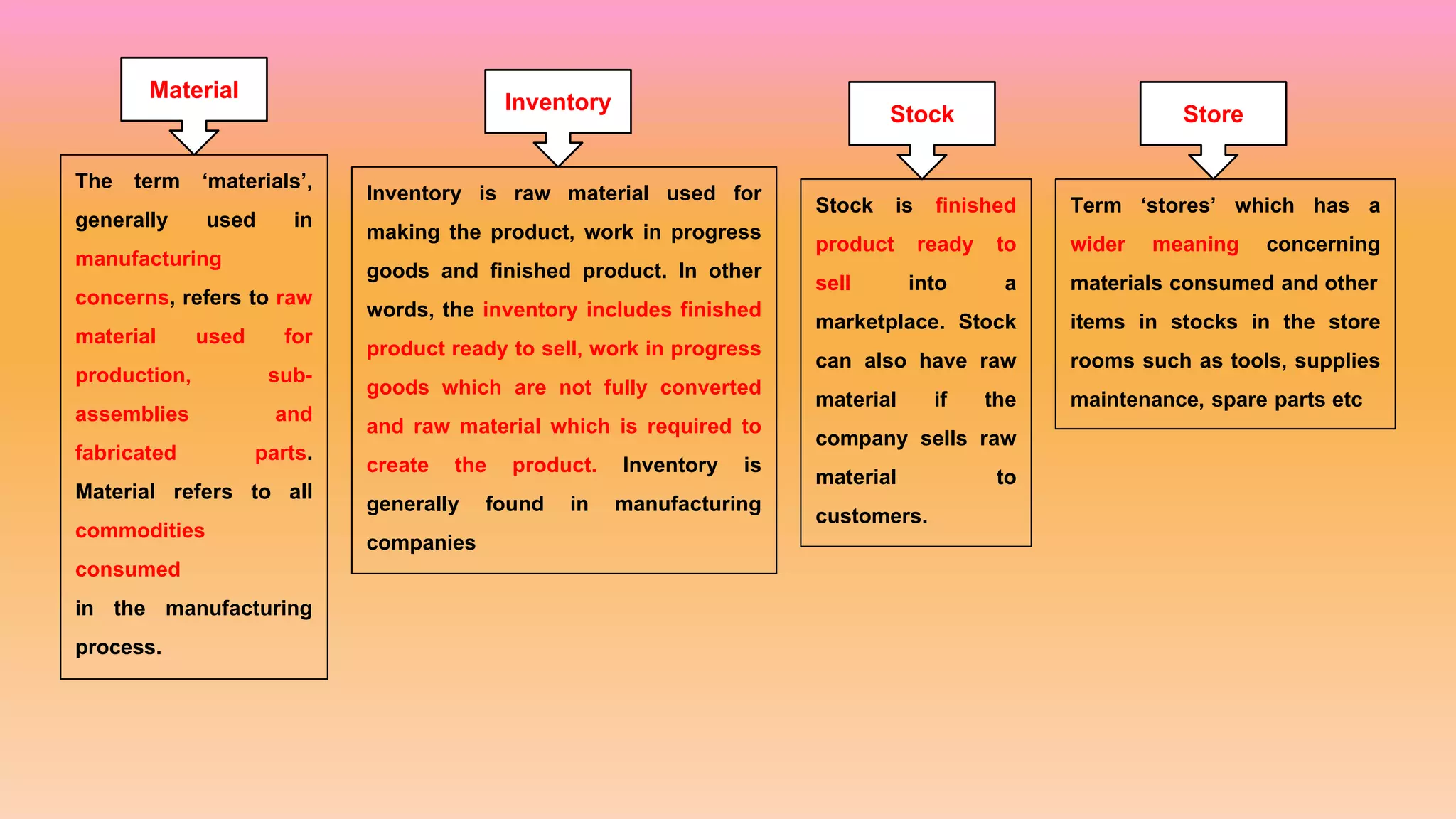
Inventory is raw material used for
making the product, work in progress
goods and finished product. In other
words, the inventory includes finished
product ready to sell, work in progress
goods which are not fully converted
and raw material which is required to
create the product. Inventory is
generally found in manufacturing
companies
Stock is finished
product ready to
sell into a
marketplace. Stock
can also have raw
material if the
company sells raw
material to
customers.
The term ‘materials’,
generally used in
manufacturing
concerns, refers to raw
material used for
production, sub-
assemblies and
fabricated parts.
Material refers to all
commodities
consumed
in the manufacturing
process.
Term ‘stores’ which has a
wider meaning concerning
materials consumed and other
items in stocks in the store
rooms such as tools, supplies
maintenance, spare parts etc
Material Inventory Store
Stock
Methods of Inventory/Material Control
1.Stock Level/Level Setting
2. Economic Ordering Quantity
3. Just-in-Time Inventory System
4. Stock Control through ABC Analysis
5. VED Analysis
6. Perpetual Inventory System
7. Double Bin System
8. Material (or Inventory) Turnover Ratio
9. FNSD Analysis
10. Material (Inventory) Cost Reports
Stock Levels
Effective stock control system should ensure the minimization of inventory carrying cost and materials holding cost.
Level of stock is the important aspect of inventory control. Stock level refers to the different levels of stock which
are required for an efficient and effective control of materials and to avoid over and under-stocking of materials. The
purpose of materials control is to maintain the stock of raw materials as low as possible and at the same time they
may be available as and when required. To avoid over and under-stocking, the storekeeper must fix the inventory
level, which is also known as a demand and supply method of stock control. In a scientific system of inventory
control the following levels of materials are fixed.
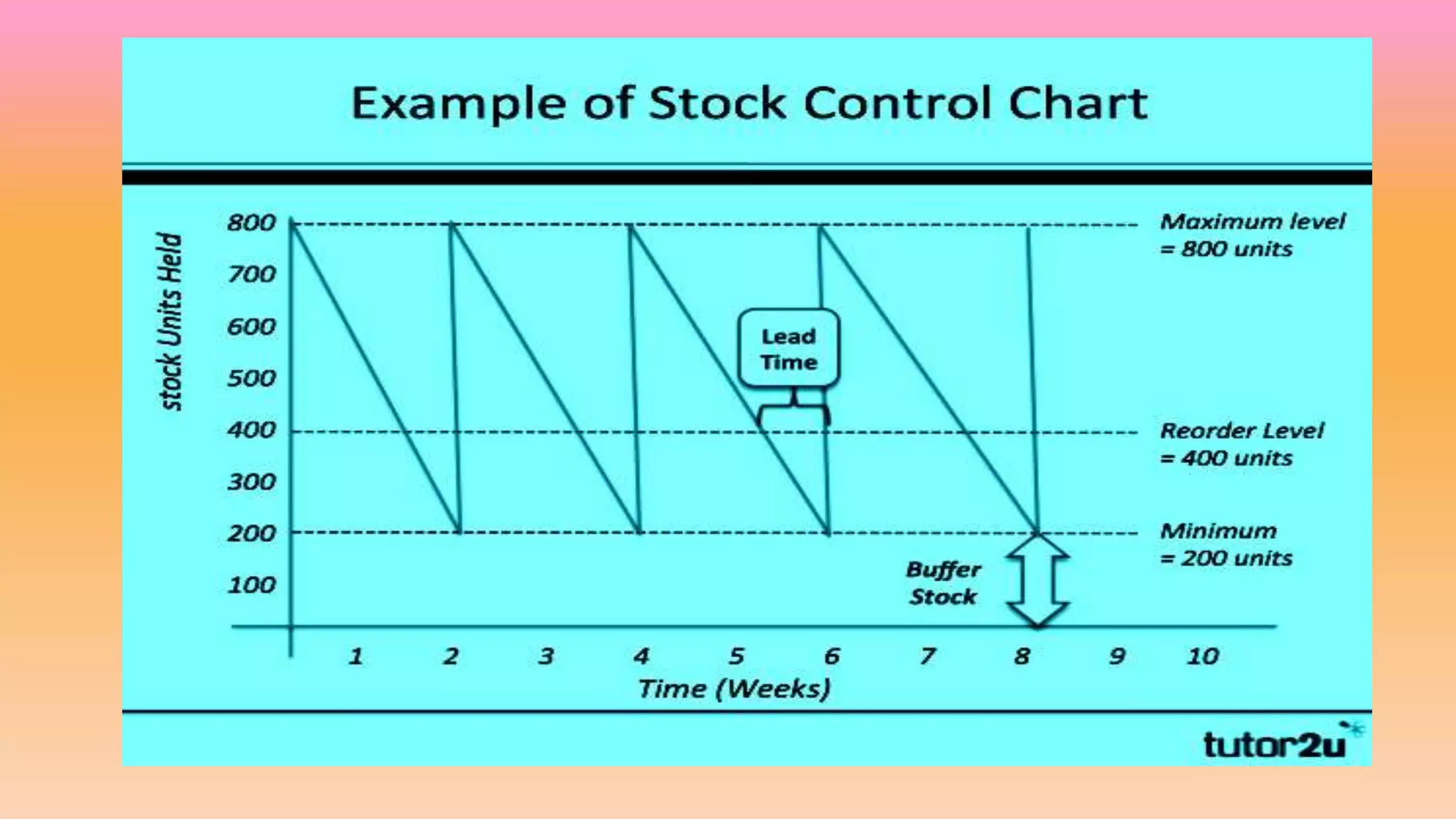
1. Re-order Level 2. Minimum Level or Safety Level 3. Maximum Level
4. Average stock Level 5. Danger Level
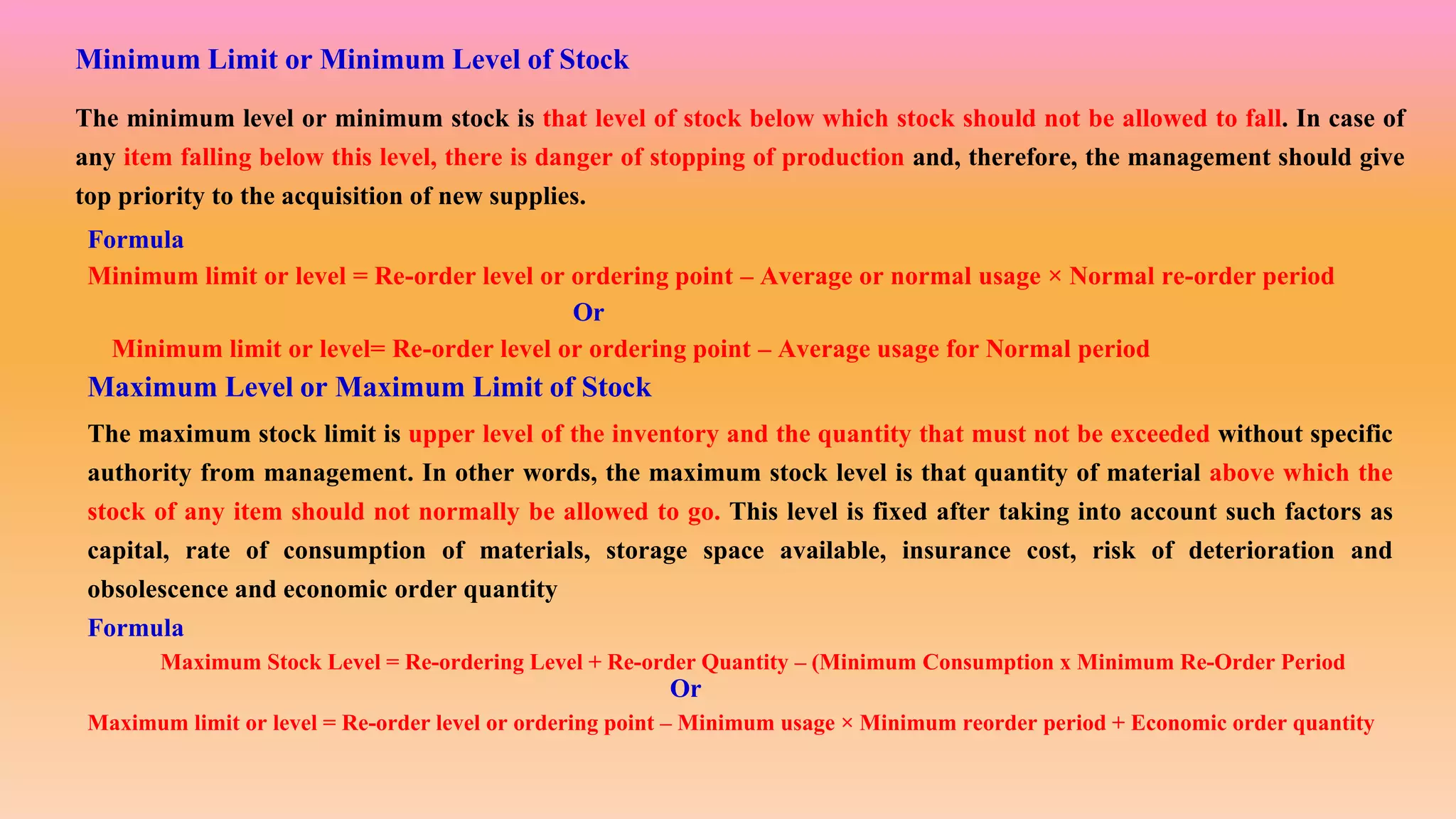
Minimum Limit or Minimum Level of Stock
The minimum level or minimum stock is that level of stock below which stock should not be allowed to fall. In case of
any item falling below this level, there is danger of stopping of production and, therefore, the management should give
top priority to the acquisition of new supplies.
Formula
Minimum limit or level = Re-order level or ordering point – Average or normal usage × Normal re-order period
Minimum limit or level= Re-order level or ordering point – Average usage for Normal period
Or
Maximum Level or Maximum Limit of Stock
The maximum stock limit is upper level of the inventory and the quantity that must not be exceeded without specific
authority from management. In other words, the maximum stock level is that quantity of material above which the
stock of any item should not normally be allowed to go. This level is fixed after taking into account such factors as
capital, rate of consumption of materials, storage space available, insurance cost, risk of deterioration and
obsolescence and economic order quantity
Formula
Maximum Stock Level = Re-ordering Level + Re-order Quantity – (Minimum Consumption x Minimum Re-Order Period
Maximum limit or level = Re-order level or ordering point – Minimum usage × Minimum reorder period + Economic order quantity
Or
Re-order Level or Ordering Point or Ordering Level
This is that level of materials at which a new order for supply of materials is to be placed. In other words, at this
level a purchase requisition is made out. This level is fixed somewhere between maximum and minimum levels.
Order points are based on usage during time necessary to requisition order, and receive materials, plus an
allowance for protection against stock out.
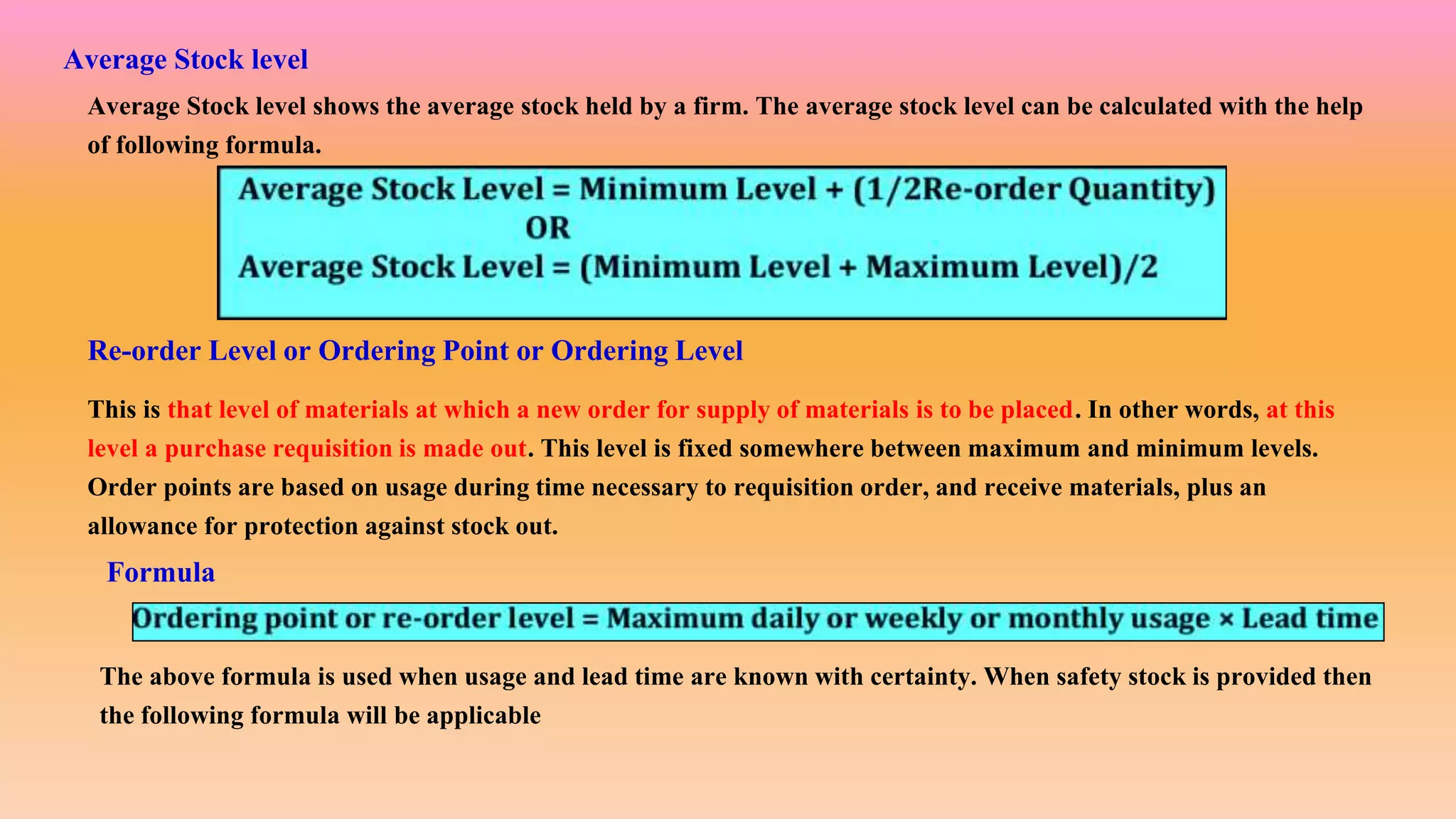
Average Stock level
Average Stock level shows the average stock held by a firm. The average stock level can be calculated with the help
of following formula.
Formula
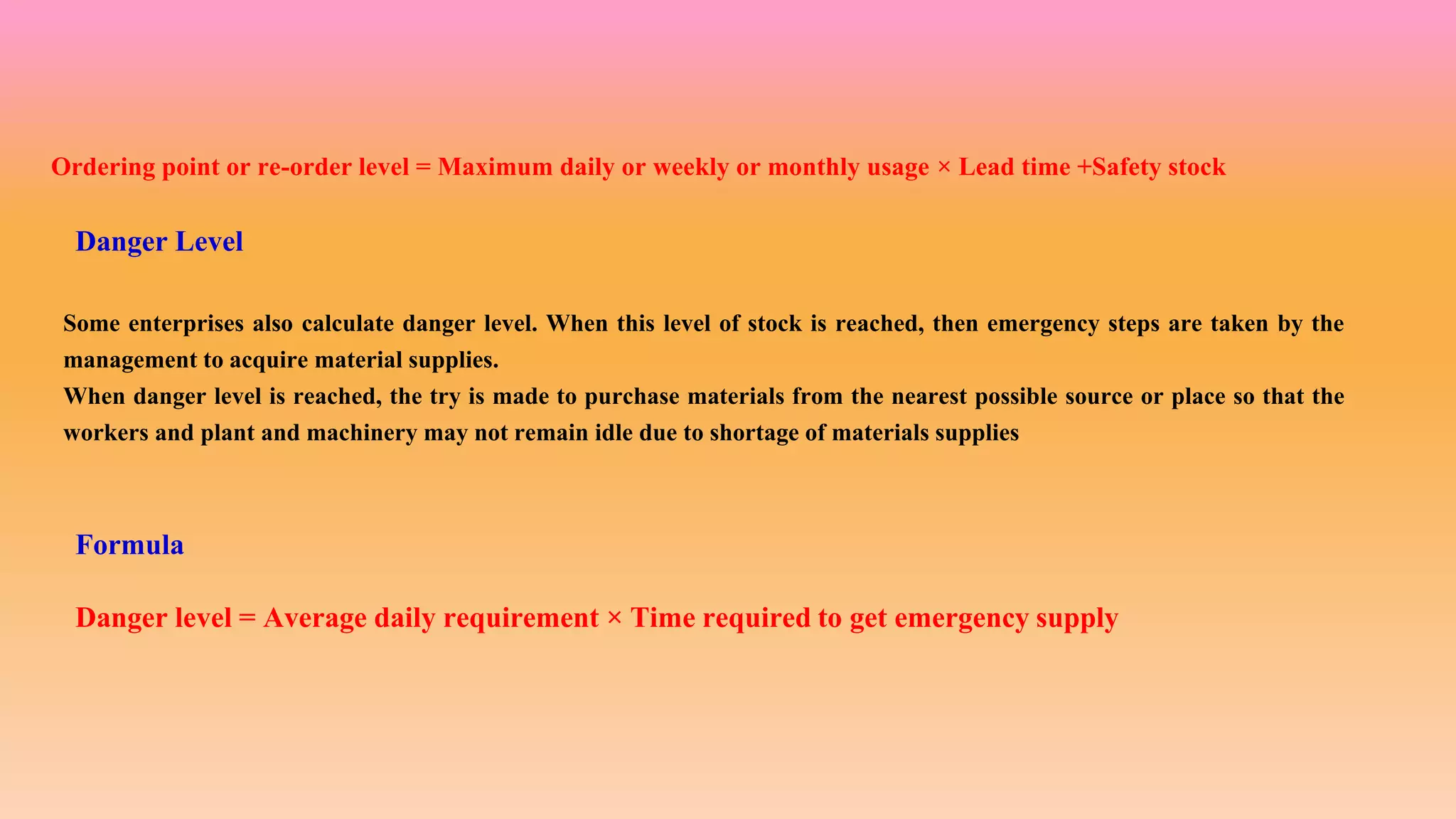
The above formula is used when usage and lead time are known with certainty. When safety stock is provided then
the following formula will be applicable
Ordering point or re-order level = Maximum daily or weekly or monthly usage × Lead time +Safety stock
Danger Level
Some enterprises also calculate danger level. When this level of stock is reached, then emergency steps are taken by the
management to acquire material supplies.
When danger level is reached, the try is made to purchase materials from the nearest possible source or place so that the
workers and plant and machinery may not remain idle due to shortage of materials supplies
Formula
Danger level = Average daily requirement × Time required to get emergency supply
Important Concepts
Lead Time/Reorder Period
A purchasing firm requires some time to process the order and time is also required by the supplier/vendor to execute the order.
The time taken in processing the order and then executing it is known as lead time. It is essential to maintain some inventory
during this period to meet production requirements.
Rate of Consumption
It is consumption or use of material per day (or per week/per month) by production department. These rates will be maximum
and minimum, the simple average of maximum and minimum rates is average consumption rate per day or per Week
Reorder Quantity
Quantity of a particular materials to be purchased at a time

Material control methods

  • 1.
    Cost & WorksAccounting Material Accounting (Methods/Techniques of Inventory control) Prof.Uday Teke
  • 2.
    Inventory is rawmaterial used for making the product, work in progress goods and finished product. In other words, the inventory includes finished product ready to sell, work in progress goods which are not fully converted and raw material which is required to create the product. Inventory is generally found in manufacturing companies Stock is finished product ready to sell into a marketplace. Stock can also have raw material if the company sells raw material to customers. The term ‘materials’, generally used in manufacturing concerns, refers to raw material used for production, sub- assemblies and fabricated parts. Material refers to all commodities consumed in the manufacturing process. Term ‘stores’ which has a wider meaning concerning materials consumed and other items in stocks in the store rooms such as tools, supplies maintenance, spare parts etc Material Inventory Store Stock
  • 3.
    Methods of Inventory/MaterialControl 1.Stock Level/Level Setting 2. Economic Ordering Quantity 3. Just-in-Time Inventory System 4. Stock Control through ABC Analysis 5. VED Analysis 6. Perpetual Inventory System 7. Double Bin System 8. Material (or Inventory) Turnover Ratio 9. FNSD Analysis 10. Material (Inventory) Cost Reports
  • 4.
    Stock Levels Effective stockcontrol system should ensure the minimization of inventory carrying cost and materials holding cost. Level of stock is the important aspect of inventory control. Stock level refers to the different levels of stock which are required for an efficient and effective control of materials and to avoid over and under-stocking of materials. The purpose of materials control is to maintain the stock of raw materials as low as possible and at the same time they may be available as and when required. To avoid over and under-stocking, the storekeeper must fix the inventory level, which is also known as a demand and supply method of stock control. In a scientific system of inventory control the following levels of materials are fixed. 1. Re-order Level 2. Minimum Level or Safety Level 3. Maximum Level 4. Average stock Level 5. Danger Level
  • 5.
    Minimum Limit orMinimum Level of Stock The minimum level or minimum stock is that level of stock below which stock should not be allowed to fall. In case of any item falling below this level, there is danger of stopping of production and, therefore, the management should give top priority to the acquisition of new supplies. Formula Minimum limit or level = Re-order level or ordering point – Average or normal usage × Normal re-order period Minimum limit or level= Re-order level or ordering point – Average usage for Normal period Or Maximum Level or Maximum Limit of Stock The maximum stock limit is upper level of the inventory and the quantity that must not be exceeded without specific authority from management. In other words, the maximum stock level is that quantity of material above which the stock of any item should not normally be allowed to go. This level is fixed after taking into account such factors as capital, rate of consumption of materials, storage space available, insurance cost, risk of deterioration and obsolescence and economic order quantity Formula Maximum Stock Level = Re-ordering Level + Re-order Quantity – (Minimum Consumption x Minimum Re-Order Period Maximum limit or level = Re-order level or ordering point – Minimum usage × Minimum reorder period + Economic order quantity Or
  • 6.
    Re-order Level orOrdering Point or Ordering Level This is that level of materials at which a new order for supply of materials is to be placed. In other words, at this level a purchase requisition is made out. This level is fixed somewhere between maximum and minimum levels. Order points are based on usage during time necessary to requisition order, and receive materials, plus an allowance for protection against stock out. Average Stock level Average Stock level shows the average stock held by a firm. The average stock level can be calculated with the help of following formula. Formula The above formula is used when usage and lead time are known with certainty. When safety stock is provided then the following formula will be applicable
  • 7.
    Ordering point orre-order level = Maximum daily or weekly or monthly usage × Lead time +Safety stock Danger Level Some enterprises also calculate danger level. When this level of stock is reached, then emergency steps are taken by the management to acquire material supplies. When danger level is reached, the try is made to purchase materials from the nearest possible source or place so that the workers and plant and machinery may not remain idle due to shortage of materials supplies Formula Danger level = Average daily requirement × Time required to get emergency supply
  • 9.
    Important Concepts Lead Time/ReorderPeriod A purchasing firm requires some time to process the order and time is also required by the supplier/vendor to execute the order. The time taken in processing the order and then executing it is known as lead time. It is essential to maintain some inventory during this period to meet production requirements. Rate of Consumption It is consumption or use of material per day (or per week/per month) by production department. These rates will be maximum and minimum, the simple average of maximum and minimum rates is average consumption rate per day or per Week Reorder Quantity Quantity of a particular materials to be purchased at a time