Dr Rajendra Prasad Central Agricultural University
Project Management and Entrepreneurship
Development
Topic – Market Feasibility
Presented by
Rajanbeer Singh
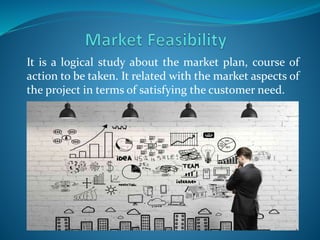
It is a logical study about the market plan, course of
action to be taken. It related with the market aspects of
the project in terms of satisfying the customer need.
Importance
 Estimating the potential size of the market for the
product to be proposed
 Get clear cut idea of market share
 Aggregate demand of the product
 patterns of consumption
 composition of market
 availability of substitutes
 environmental changes that have impact on earning
and spending
 consumer behavior
 competitor study
 4p’s marketing mix
 Different barriers
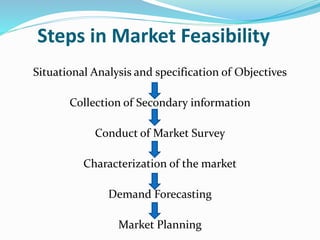
Steps in Market Feasibility
Situational Analysis and specification of Objectives
Collection of Secondary information
Conduct of Market Survey
Characterization of the market
Demand Forecasting
Market Planning
Situational Analysis and specification
of Objectives
It Includes
 Who are the buyer of the product
 What is the current demand
 How the market is segmented
 What will be the break even analysis
 What prices customer willing to pay
 How the product will be distributed among the
consumer( what is the communication or promotion
mix)
 Import and export policies
 Method of branding for immediate sale
 Secondary information is one which is already
collected and compiled which may be published or
unpublished either by government departments or
private bodies and individuals.
 To answer the question designed in the light of the
objectives of the market study, the necessary
information can be obtained from secondary or
primary source or both
 Census of India : it is publication of GOI published every 10
years
 National sample survey : Reports release by cabinet secretary
 Plan Reports : planning commission of India
 Statistical abstract of the Indian union: Publication done by
Central Statistical Organization
 India year book : publication of Ministry of Information and
Broadcasting
 Economic survey annual publication of the ministry of finance,
GOI
 Annual survey of industries: annual publication of central
statistical organization
 Annual reports on development wing : annual publication by
ministries of commerce and industry
 Annual bulletin of statistical of exports and imports:
 Annual publication by ministry of commerce and GOI
 Techno economic survey : NCAER (National council of
applied Economic Research)
 Industry potential surveys : by IDBI along with other
 Financial institution
 The stock
 Monthly bulletin of RBI
 Publications of advertising agencies
 Statistical year book
Conduct of Market Survey
In this step, Socio-economic character, choice and
preference, Need & Demand, Satisfaction level from
the customer is collected directly. It helps in more real
data collection method from the market.
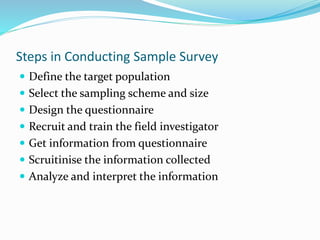
Steps in Conducting Sample Survey
 Define the target population
 Select the sampling scheme and size
 Design the questionnaire
 Recruit and train the field investigator
 Get information from questionnaire
 Scruitinise the information collected
 Analyze and interpret the information
Characterization of the Market
The market for the product can be described in terms
of clear cut characteristic based on the information
gathered from secondary sources and through the
market survey or primary sources.
 Past and present effective Demand
 Break down of total demand
 The price
 Method of distribution and sales promotion
 The consumers
 Supply and Competition
 The Government policy
Demand Forecasting
Demand forecasting is predicting future demand for
the product.
In other words, it refers to the prediction of a future
demand for a product or a service on the basis of the
past events and prevailing trends in the present.
Forecasting Techniques
 Qualititative – subjective, judge-mental, based on
estimates and opinions.
 Time Series analysis – based on the idea that the history
of occurrence over time can be used to predict the future
 Casual - tries to understand the system underlying and
surroundings the item being forecast.
For eg. Sale may be affected by advertising, quality and
competitors
 Simulation Model – Dynamic model usually computer
based, that allow the forecaster to make assumption about
the interval variables and external environment in model.
Market Planning
 A marketing planning is to design a market mix to
various target markets or market segments
 A suitable market-mix covers four dimension namely
Product- Product line, Design, Package, Quality, Labeling,
Branding etc
Price – Transportation, Warehousing, Inventory levels
Place – Pricing policies and strategies, term of credit, term of
delivery, margin
Promotion – Personal selling, advertising, Sales promotion,
Public relation, Publicity
References
 V.C Sontakki, Project Management, Himalaya
Publishing House
Market feasibility

Market feasibility

  • 1.
    Dr Rajendra PrasadCentral Agricultural University Project Management and Entrepreneurship Development Topic – Market Feasibility Presented by Rajanbeer Singh
  • 2.
    It is alogical study about the market plan, course of action to be taken. It related with the market aspects of the project in terms of satisfying the customer need.
  • 3.
    Importance  Estimating thepotential size of the market for the product to be proposed  Get clear cut idea of market share  Aggregate demand of the product  patterns of consumption  composition of market
  • 4.
     availability ofsubstitutes  environmental changes that have impact on earning and spending  consumer behavior  competitor study  4p’s marketing mix  Different barriers
  • 5.
    Steps in MarketFeasibility Situational Analysis and specification of Objectives Collection of Secondary information Conduct of Market Survey Characterization of the market Demand Forecasting Market Planning
  • 6.
    Situational Analysis andspecification of Objectives It Includes  Who are the buyer of the product  What is the current demand  How the market is segmented  What will be the break even analysis  What prices customer willing to pay  How the product will be distributed among the consumer( what is the communication or promotion mix)  Import and export policies  Method of branding for immediate sale
  • 7.
     Secondary informationis one which is already collected and compiled which may be published or unpublished either by government departments or private bodies and individuals.  To answer the question designed in the light of the objectives of the market study, the necessary information can be obtained from secondary or primary source or both
  • 8.
     Census ofIndia : it is publication of GOI published every 10 years  National sample survey : Reports release by cabinet secretary  Plan Reports : planning commission of India  Statistical abstract of the Indian union: Publication done by Central Statistical Organization  India year book : publication of Ministry of Information and Broadcasting  Economic survey annual publication of the ministry of finance, GOI  Annual survey of industries: annual publication of central statistical organization  Annual reports on development wing : annual publication by ministries of commerce and industry
  • 9.
     Annual bulletinof statistical of exports and imports:  Annual publication by ministry of commerce and GOI  Techno economic survey : NCAER (National council of applied Economic Research)  Industry potential surveys : by IDBI along with other  Financial institution  The stock  Monthly bulletin of RBI  Publications of advertising agencies  Statistical year book
  • 10.
    Conduct of MarketSurvey In this step, Socio-economic character, choice and preference, Need & Demand, Satisfaction level from the customer is collected directly. It helps in more real data collection method from the market.
  • 11.
    Steps in ConductingSample Survey  Define the target population  Select the sampling scheme and size  Design the questionnaire  Recruit and train the field investigator  Get information from questionnaire  Scruitinise the information collected  Analyze and interpret the information
  • 12.
    Characterization of theMarket The market for the product can be described in terms of clear cut characteristic based on the information gathered from secondary sources and through the market survey or primary sources.
  • 13.
     Past andpresent effective Demand  Break down of total demand  The price  Method of distribution and sales promotion  The consumers  Supply and Competition  The Government policy
  • 14.
    Demand Forecasting Demand forecastingis predicting future demand for the product. In other words, it refers to the prediction of a future demand for a product or a service on the basis of the past events and prevailing trends in the present.
  • 15.
    Forecasting Techniques  Qualititative– subjective, judge-mental, based on estimates and opinions.  Time Series analysis – based on the idea that the history of occurrence over time can be used to predict the future  Casual - tries to understand the system underlying and surroundings the item being forecast. For eg. Sale may be affected by advertising, quality and competitors  Simulation Model – Dynamic model usually computer based, that allow the forecaster to make assumption about the interval variables and external environment in model.
  • 16.
    Market Planning  Amarketing planning is to design a market mix to various target markets or market segments  A suitable market-mix covers four dimension namely Product- Product line, Design, Package, Quality, Labeling, Branding etc Price – Transportation, Warehousing, Inventory levels Place – Pricing policies and strategies, term of credit, term of delivery, margin Promotion – Personal selling, advertising, Sales promotion, Public relation, Publicity
  • 17.
    References  V.C Sontakki,Project Management, Himalaya Publishing House