1
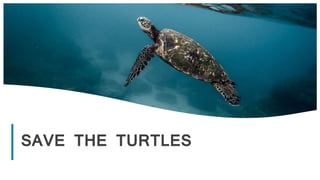
SAVE THE TURTLES
2
2
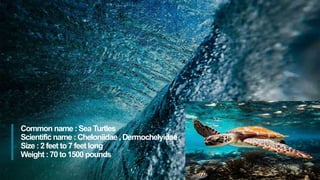
Common name : Sea Turtles
Scientific name : Cheloniidae , Dermochelyidae
Size : 2feet to7 feet long
Weight : 70 to1500 pounds
2
3
• Sea Turtles are ancient mariners. They have existed since the time of dinosaurs around a
110 million years
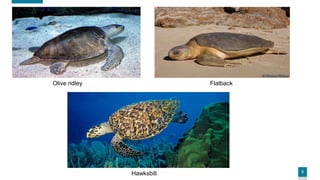
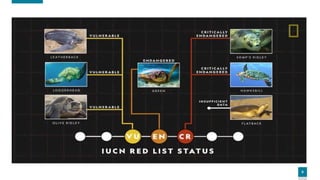
• There are seven different species of sea turtles. Six of them: Leatherback ,loggerhead
,kemp’s ridley, green, olive ridley, hawksbill and Flatback.
• Leatherback is the largest sea turtle and they weigh up to 2000 pounds.
• After years of travelling in the open ocean, they come back to the nesting ground where they
were born to lay eggs.
• Sea turtles can lay more than 150 eggs at a time but only fewer than 0.1% of hatchlings
survive to adulthood because of the numerous predators on the beach.
• All the seven sea turtles are threatened or endangered.
• Leatherback turtles are facing extinction risk within 20 years
4
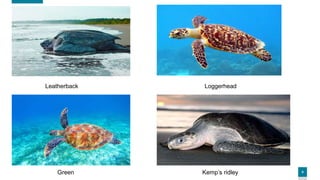
Leatherback Loggerhead
Green Kemp’s ridley
5
Olive ridley Flatback
Hawksbill
6
7
7
Why they matter?
7
8
8
• Helps in controlling their prey.
Coral reefs gets smothered by certain species of sponges. Hawksbill
turtles help them by eating the sponges.
Leatherback controls the population explosions of jelly fish by eating.
• Healthy sea beds.
Green turtles eats the seagrasses making the sea bed healthy.
• Important sources of food
Birds ,fishes, and mammals during the nesting season rely on the
hatchlings for survival.
• Economy and Communities
Many coastal places rely on turtle watching or diving for jobs and income.
There are communities which consider sea turtles as sacred.
9
9
Why are they endangered?
9
10
• Pollution
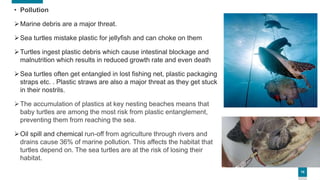
Marine debris are a major threat.
Sea turtles mistake plastic for jellyfish and can choke on them
Turtles ingest plastic debris which cause intestinal blockage and
malnutrition which results in reduced growth rate and even death
Sea turtles often get entangled in lost fishing net, plastic packaging
straps etc. . Plastic straws are also a major threat as they get stuck
in their nostrils.
The accumulation of plastics at key nesting beaches means that
baby turtles are among the most risk from plastic entanglement,
preventing them from reaching the sea.
Oil spill and chemical run-off from agriculture through rivers and
drains cause 36% of marine pollution. This affects the habitat that
turtles depend on. The sea turtles are at the risk of losing their
habitat.
11
• Over-Harvesting
In many coastal areas turtles are considered a food source.
During the nesting season the nesting female turtles are hunted for meat and eggs.
Consumption of sea turtle meat in the observance of religious holidays. In Mexico, thousands
of inland residents journey to Pacific coastal communities during the week preceding Easter
in search of sea turtles. Around 5000 turtles are being consumed in that region alone.
• Climate change
The sex of the offspring depends upon the temperature. The unusual warm temperature
caused by climate change results in the fewer hatching of male hatchlings.
Warmer sea surface temperature can cause an increase in sea level which can destroy the
nesting beaches and damage the nest
12
• Artificial Lighting
Nesting turtles depend on dark and quite beaches to reproduce successfully.
This discourages the female turtle from nesting.
Near shore lighting cause sea turtle hatchlings to become disoriented when they are born.
Instead, they will wander inland where they often die of dehydration, predation, or even from
being run over on busy coastal streets.
• Illegal Sea Turtle shell trade
Hawksbill sea turtles hunted for centuries for their beautiful gold and brown shells to create
jewellery and other luxury items.
Scientists estimate that hawksbill populations have plummeted by 90 per cent during the
past 100 years.
While illegal trade is the primary cause of this decline, the demand for shells continues today
on the black market.
13
13
How can we help?
13
14
• Eight million metric tons of plastic are leaking into our oceans every year.
• Reuse and recycle plastics , reduce their usage and switch to eco-friendly items. Like paper
bags, fabric or jute bags, glass ,ceramic or stainless steel bottles that can be reused.Avoid
using plastic straws.
• Participate in coastal clean-ups to keep our beaches and ocean clean.
• Refrain from releasing balloons, they'll likely end up in the ocean where sea turtles can
mistake them for prey and consume them.
• Many organization like World Wildlife (WWF) allow you to adopt sea turtles and also name it.
• Adopt a turtle or a sea turtle nest so that we can provide a safe environment for nesting and
they will be monitored by the organizations.
• Don’t use fire crackers at the nesting beaches as it may scare the nesting turtles away
15
THANK YOU

Turtles

  • 1.
  • 2.
    2 2 Common name :Sea Turtles Scientific name : Cheloniidae , Dermochelyidae Size : 2feet to7 feet long Weight : 70 to1500 pounds 2
  • 3.
    3 • Sea Turtlesare ancient mariners. They have existed since the time of dinosaurs around a 110 million years • There are seven different species of sea turtles. Six of them: Leatherback ,loggerhead ,kemp’s ridley, green, olive ridley, hawksbill and Flatback. • Leatherback is the largest sea turtle and they weigh up to 2000 pounds. • After years of travelling in the open ocean, they come back to the nesting ground where they were born to lay eggs. • Sea turtles can lay more than 150 eggs at a time but only fewer than 0.1% of hatchlings survive to adulthood because of the numerous predators on the beach. • All the seven sea turtles are threatened or endangered. • Leatherback turtles are facing extinction risk within 20 years
  • 4.
  • 5.
  • 6.
  • 7.
  • 8.
    8 8 • Helps incontrolling their prey. Coral reefs gets smothered by certain species of sponges. Hawksbill turtles help them by eating the sponges. Leatherback controls the population explosions of jelly fish by eating. • Healthy sea beds. Green turtles eats the seagrasses making the sea bed healthy. • Important sources of food Birds ,fishes, and mammals during the nesting season rely on the hatchlings for survival. • Economy and Communities Many coastal places rely on turtle watching or diving for jobs and income. There are communities which consider sea turtles as sacred.
  • 9.
    9 9 Why are theyendangered? 9
  • 10.
    10 • Pollution Marine debrisare a major threat. Sea turtles mistake plastic for jellyfish and can choke on them Turtles ingest plastic debris which cause intestinal blockage and malnutrition which results in reduced growth rate and even death Sea turtles often get entangled in lost fishing net, plastic packaging straps etc. . Plastic straws are also a major threat as they get stuck in their nostrils. The accumulation of plastics at key nesting beaches means that baby turtles are among the most risk from plastic entanglement, preventing them from reaching the sea. Oil spill and chemical run-off from agriculture through rivers and drains cause 36% of marine pollution. This affects the habitat that turtles depend on. The sea turtles are at the risk of losing their habitat.
  • 11.
    11 • Over-Harvesting In manycoastal areas turtles are considered a food source. During the nesting season the nesting female turtles are hunted for meat and eggs. Consumption of sea turtle meat in the observance of religious holidays. In Mexico, thousands of inland residents journey to Pacific coastal communities during the week preceding Easter in search of sea turtles. Around 5000 turtles are being consumed in that region alone. • Climate change The sex of the offspring depends upon the temperature. The unusual warm temperature caused by climate change results in the fewer hatching of male hatchlings. Warmer sea surface temperature can cause an increase in sea level which can destroy the nesting beaches and damage the nest
  • 12.
    12 • Artificial Lighting Nestingturtles depend on dark and quite beaches to reproduce successfully. This discourages the female turtle from nesting. Near shore lighting cause sea turtle hatchlings to become disoriented when they are born. Instead, they will wander inland where they often die of dehydration, predation, or even from being run over on busy coastal streets. • Illegal Sea Turtle shell trade Hawksbill sea turtles hunted for centuries for their beautiful gold and brown shells to create jewellery and other luxury items. Scientists estimate that hawksbill populations have plummeted by 90 per cent during the past 100 years. While illegal trade is the primary cause of this decline, the demand for shells continues today on the black market.
  • 13.
  • 14.
    14 • Eight millionmetric tons of plastic are leaking into our oceans every year. • Reuse and recycle plastics , reduce their usage and switch to eco-friendly items. Like paper bags, fabric or jute bags, glass ,ceramic or stainless steel bottles that can be reused.Avoid using plastic straws. • Participate in coastal clean-ups to keep our beaches and ocean clean. • Refrain from releasing balloons, they'll likely end up in the ocean where sea turtles can mistake them for prey and consume them. • Many organization like World Wildlife (WWF) allow you to adopt sea turtles and also name it. • Adopt a turtle or a sea turtle nest so that we can provide a safe environment for nesting and they will be monitored by the organizations. • Don’t use fire crackers at the nesting beaches as it may scare the nesting turtles away
  • 15.