Marginal Product of
Labor
What is it and why is it important?
Definitions
 Labor, or a labor force, is the number of workers at a
producer’s facility.
 These Laborers utilize capital resources to produce a
product.
 Without a labor force, a producer cannot produce.
 A question faced by all producers is the size of a
labor force to employ.
 Producers must determine the most efficient number of
workers to meet their production needs.
 This number is determined by analyzing the Marginal
Product of Labor.
 This is the amount of the change in production
produced by each additional worker.
 This change can take on three forms.
Form 1 – Increasing Marginal Returns
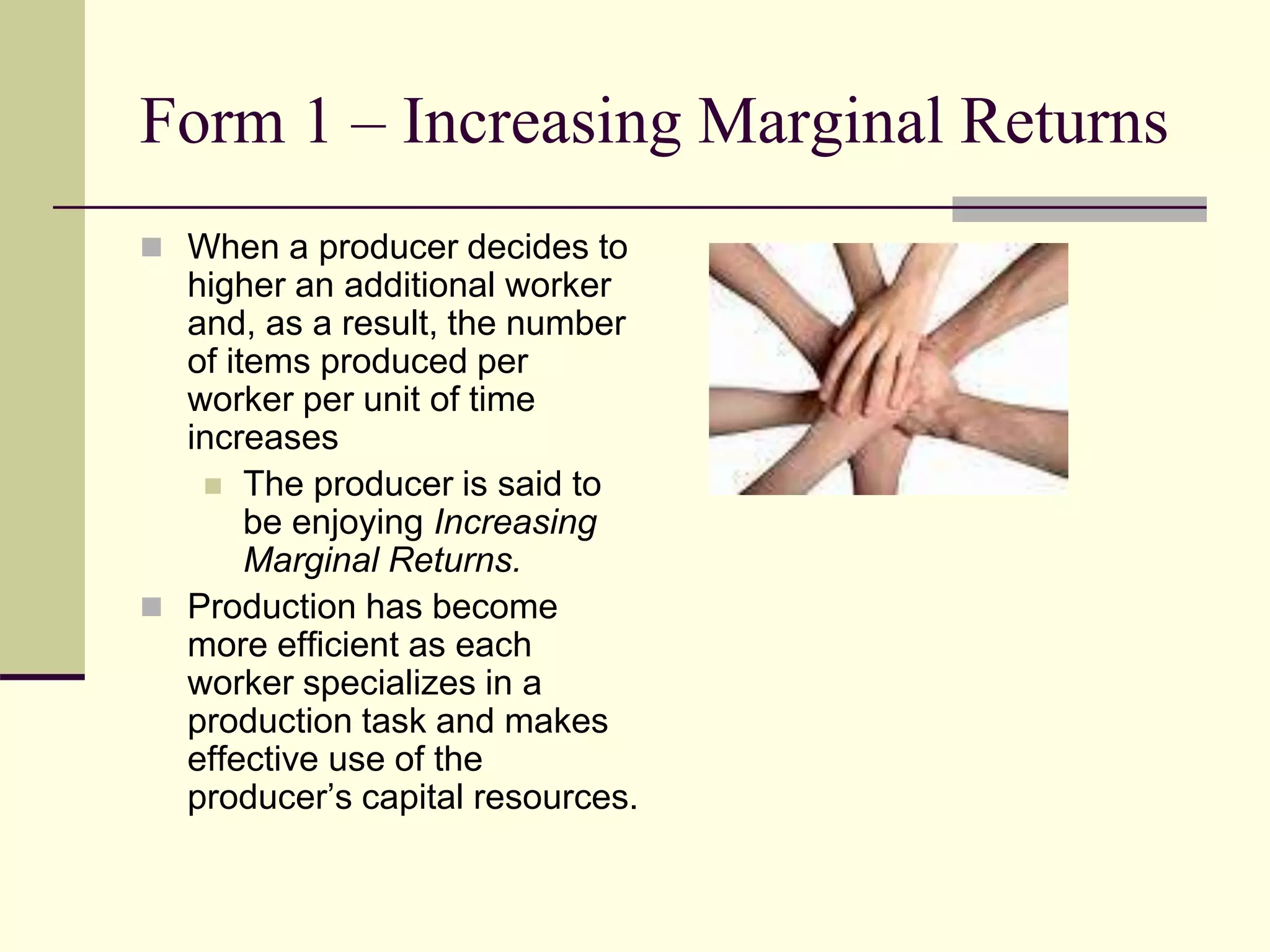
 When a producer decides to
higher an additional worker
and, as a result, the number
of items produced per
worker per unit of time
increases
 The producer is said to
be enjoying Increasing
Marginal Returns.
 Production has become
more efficient as each
worker specializes in a
production task and makes
effective use of the
producer’s capital resources.
Form 2 – Diminishing Marginal
Returns
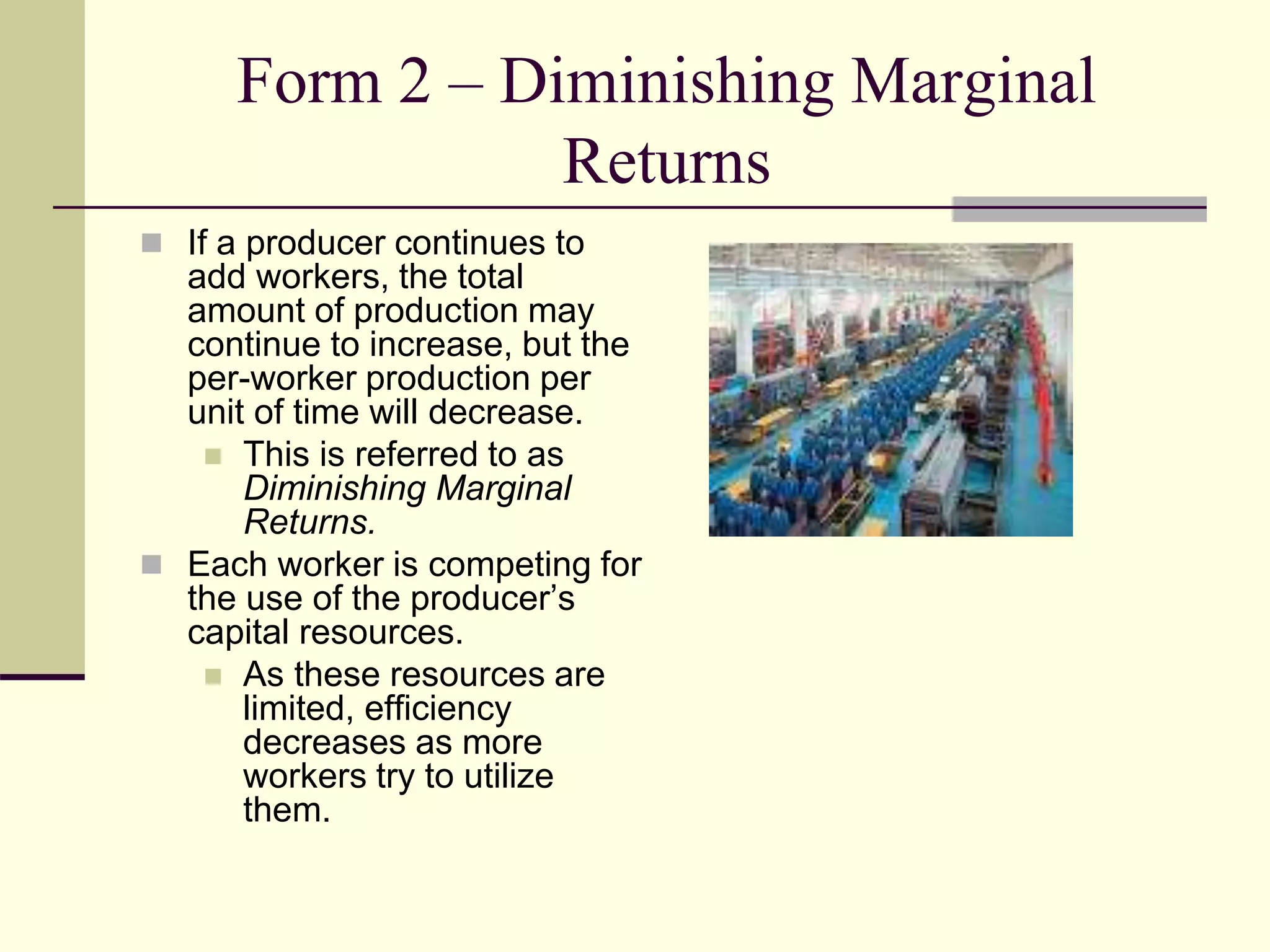
 If a producer continues to
add workers, the total
amount of production may
continue to increase, but the
per-worker production per
unit of time will decrease.
 This is referred to as
Diminishing Marginal
Returns.
 Each worker is competing for
the use of the producer’s
capital resources.
 As these resources are
limited, efficiency
decreases as more
workers try to utilize
them.
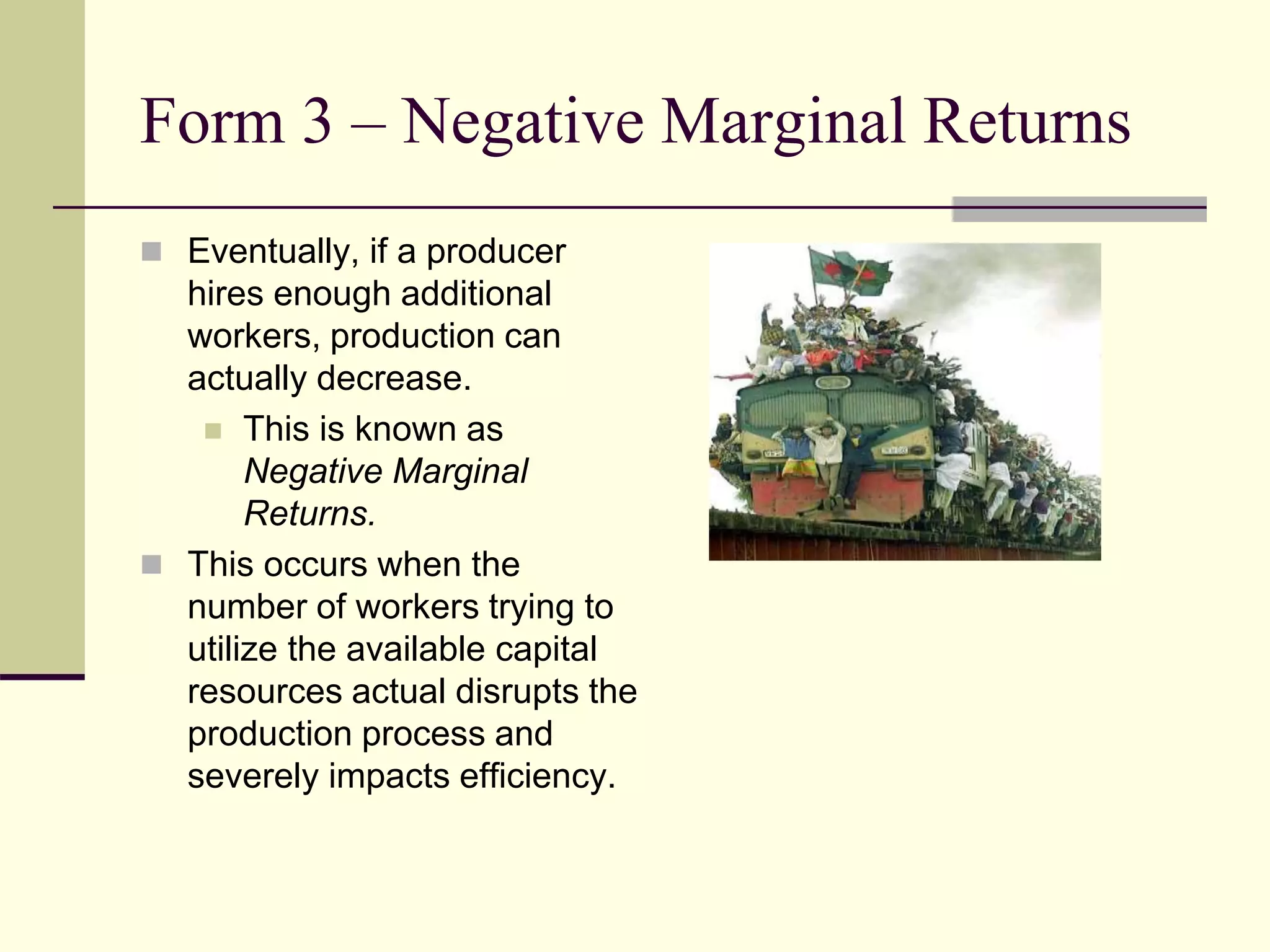
Form 3 – Negative Marginal Returns
 Eventually, if a producer
hires enough additional
workers, production can
actually decrease.
 This is known as
Negative Marginal
Returns.
 This occurs when the
number of workers trying to
utilize the available capital
resources actual disrupts the
production process and
severely impacts efficiency.

Marginal Product of Labor

  • 1.
    Marginal Product of Labor Whatis it and why is it important?
  • 2.
    Definitions  Labor, ora labor force, is the number of workers at a producer’s facility.  These Laborers utilize capital resources to produce a product.  Without a labor force, a producer cannot produce.  A question faced by all producers is the size of a labor force to employ.  Producers must determine the most efficient number of workers to meet their production needs.  This number is determined by analyzing the Marginal Product of Labor.  This is the amount of the change in production produced by each additional worker.  This change can take on three forms.
  • 3.
    Form 1 –Increasing Marginal Returns  When a producer decides to higher an additional worker and, as a result, the number of items produced per worker per unit of time increases  The producer is said to be enjoying Increasing Marginal Returns.  Production has become more efficient as each worker specializes in a production task and makes effective use of the producer’s capital resources.
  • 4.
    Form 2 –Diminishing Marginal Returns  If a producer continues to add workers, the total amount of production may continue to increase, but the per-worker production per unit of time will decrease.  This is referred to as Diminishing Marginal Returns.  Each worker is competing for the use of the producer’s capital resources.  As these resources are limited, efficiency decreases as more workers try to utilize them.
  • 5.
    Form 3 –Negative Marginal Returns  Eventually, if a producer hires enough additional workers, production can actually decrease.  This is known as Negative Marginal Returns.  This occurs when the number of workers trying to utilize the available capital resources actual disrupts the production process and severely impacts efficiency.