



Manpower Planning &
              Recruitment Process:

                   @Phonersis Consulting
                       June , 2012


Delivered By
Leke Oshiyemi
Head, Human Resources
Verod Capital Management Limited
About me


           My Contact Details:
           leke_oshiyemi@yahoo.com
           www.linkedin.com/in/lekeoshiyemi
           www.facebook.com/lekeoshiyemi
           www.twitter.com/lekeoshiyemi
           (Mobile)+2348033071649
Learning Objectives
•   To demystify Manpower planning/ Recruitment Process
•   Enlighten on How to Get a Job in 2012.
•   Determining what your exact “hiring needs” are
•   Demonstrate how to Initiate a recruitment action

    *All my submissions will be discussed from the perspective of
                 “The Employer” & “The Employee”


                       &
Our Take away

“To understand the importance of Manpower Planning
  and How Human Resources creates organizational
  effectiveness (Value creation) by an excellent
  recruitment process.
Conceptual Clarification
What is HRP/Manpower Planning?
“ The Process by which an organization ensures that it
  has the right number and kind of people at the right
  place and at the right time, capable of effectively and
  efficiently completing those tasks that help the
  organization achieve its overall objectives”.

What is Recruitment Process?
“The process of identifying and hiring the best-
  qualified candidate (from within or outside of 
  an organization) for a job vacancy, in a most 
  timely and cost effective manner- - businessdictionary.com
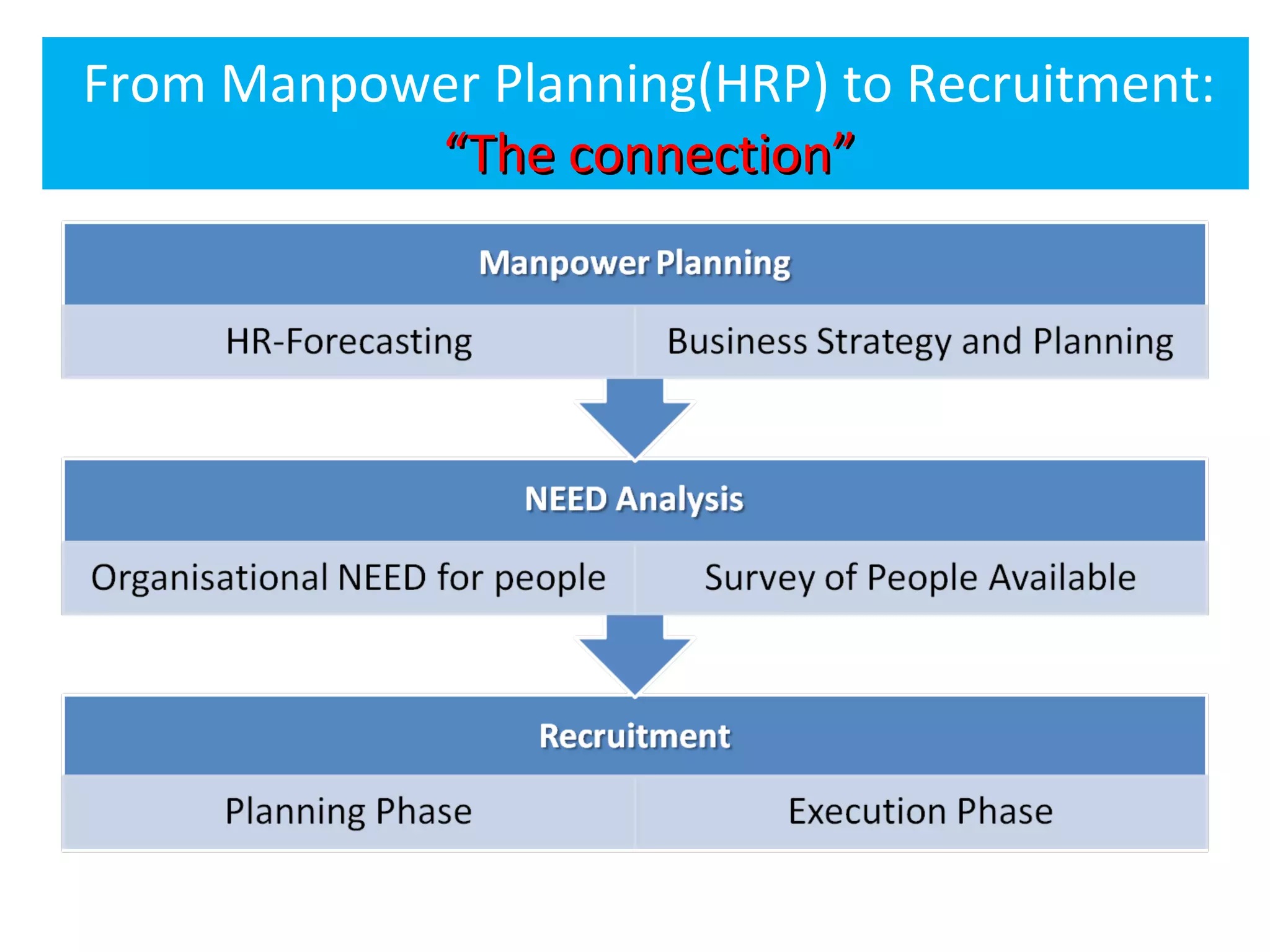
From Manpower Planning(HRP) to Recruitment:
           “The connection”
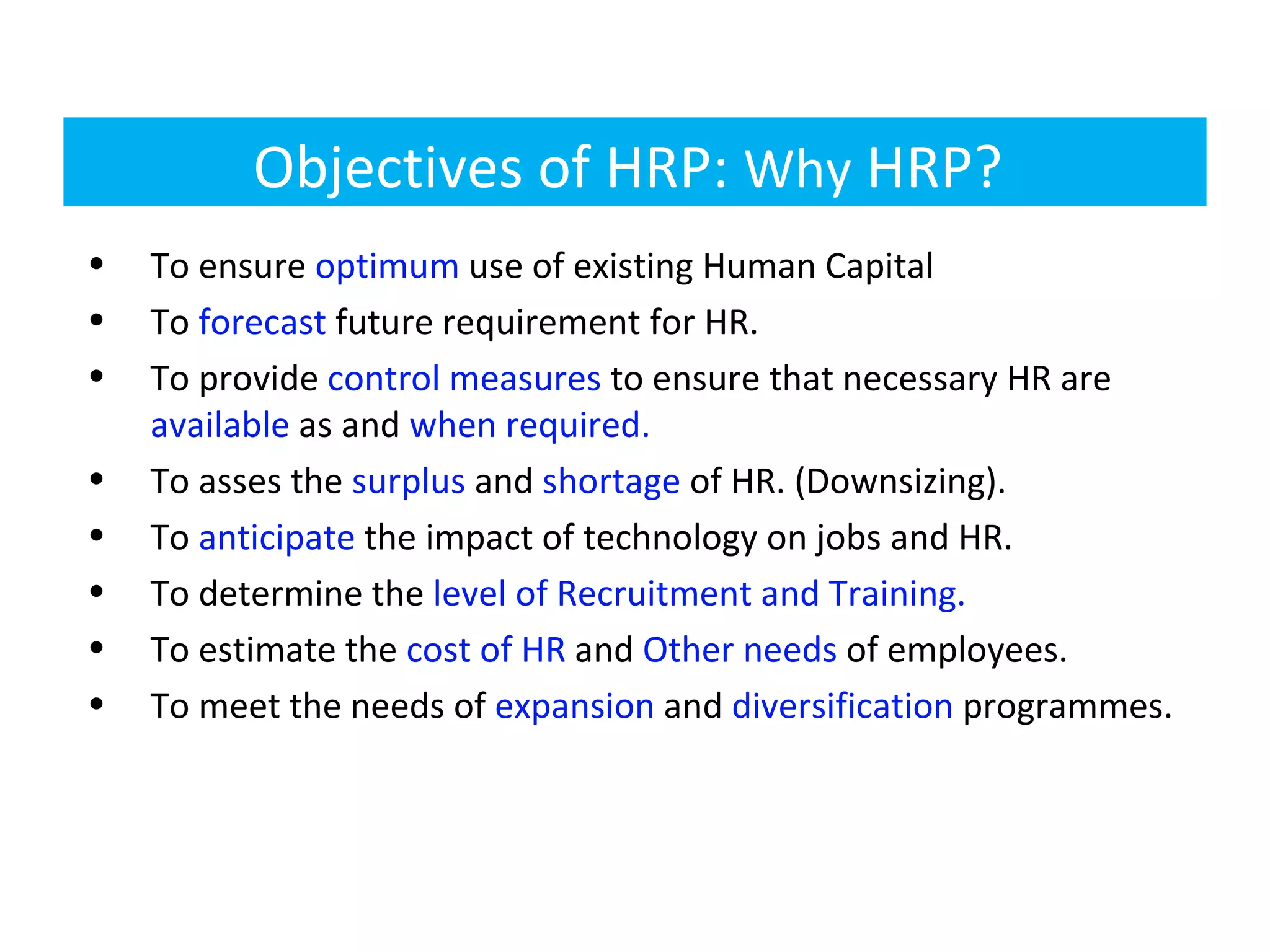
Objectives of HRP: Why HRP?
•   To ensure optimum use of existing Human Capital
•   To forecast future requirement for HR.
•   To provide control measures to ensure that necessary HR are
    available as and when required.
•   To asses the surplus and shortage of HR. (Downsizing).
•   To anticipate the impact of technology on jobs and HR.
•   To determine the level of Recruitment and Training.
•   To estimate the cost of HR and Other needs of employees.
•   To meet the needs of expansion and diversification programmes.
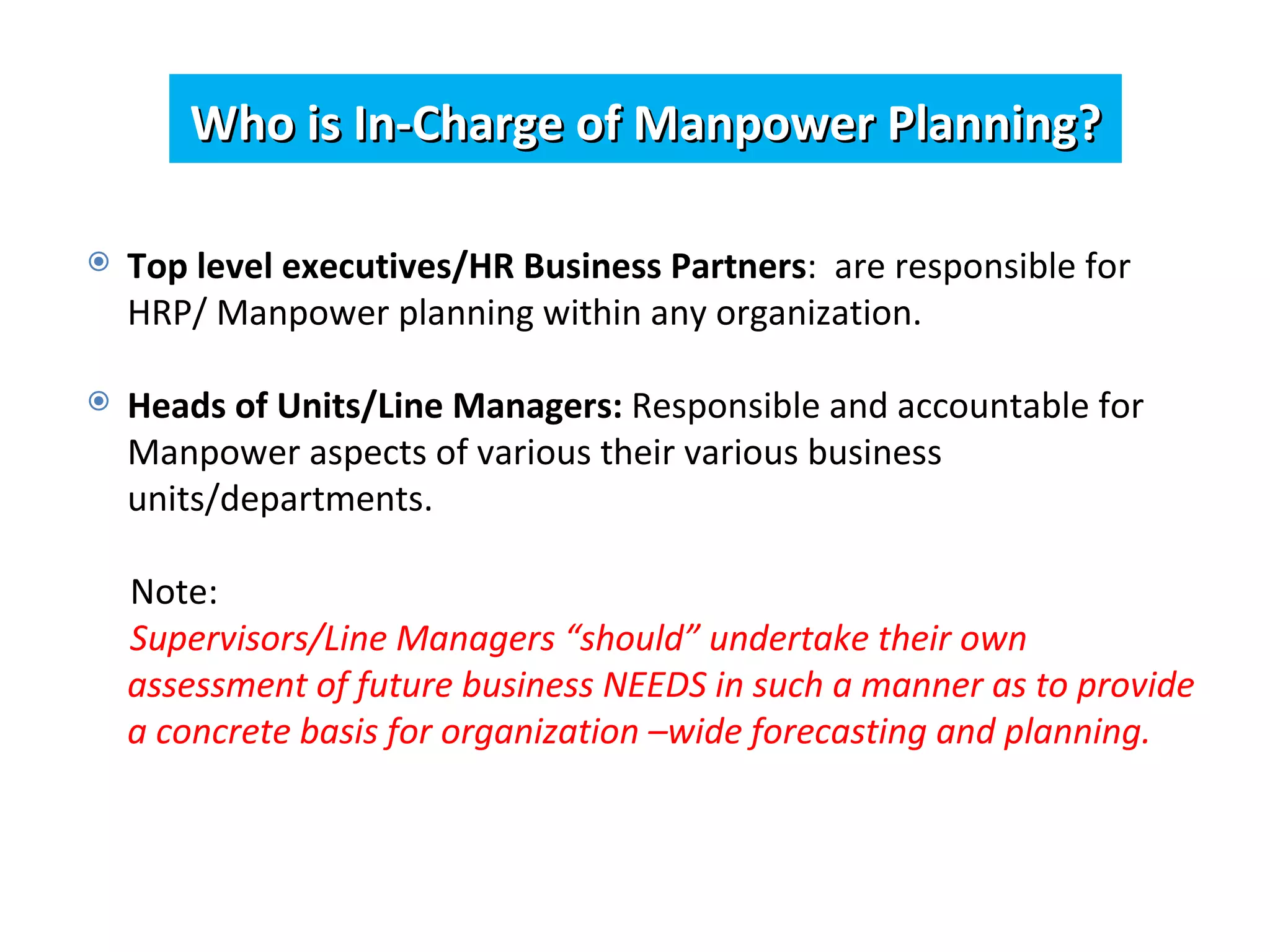
Who is In-Charge of Manpower Planning?

   Top level executives/HR Business Partners: are responsible for
    HRP/ Manpower planning within any organization.

   Heads of Units/Line Managers: Responsible and accountable for
    Manpower aspects of various their various business
    units/departments.

    Note:
    Supervisors/Line Managers “should” undertake their own
    assessment of future business NEEDS in such a manner as to provide
    a concrete basis for organization –wide forecasting and planning.
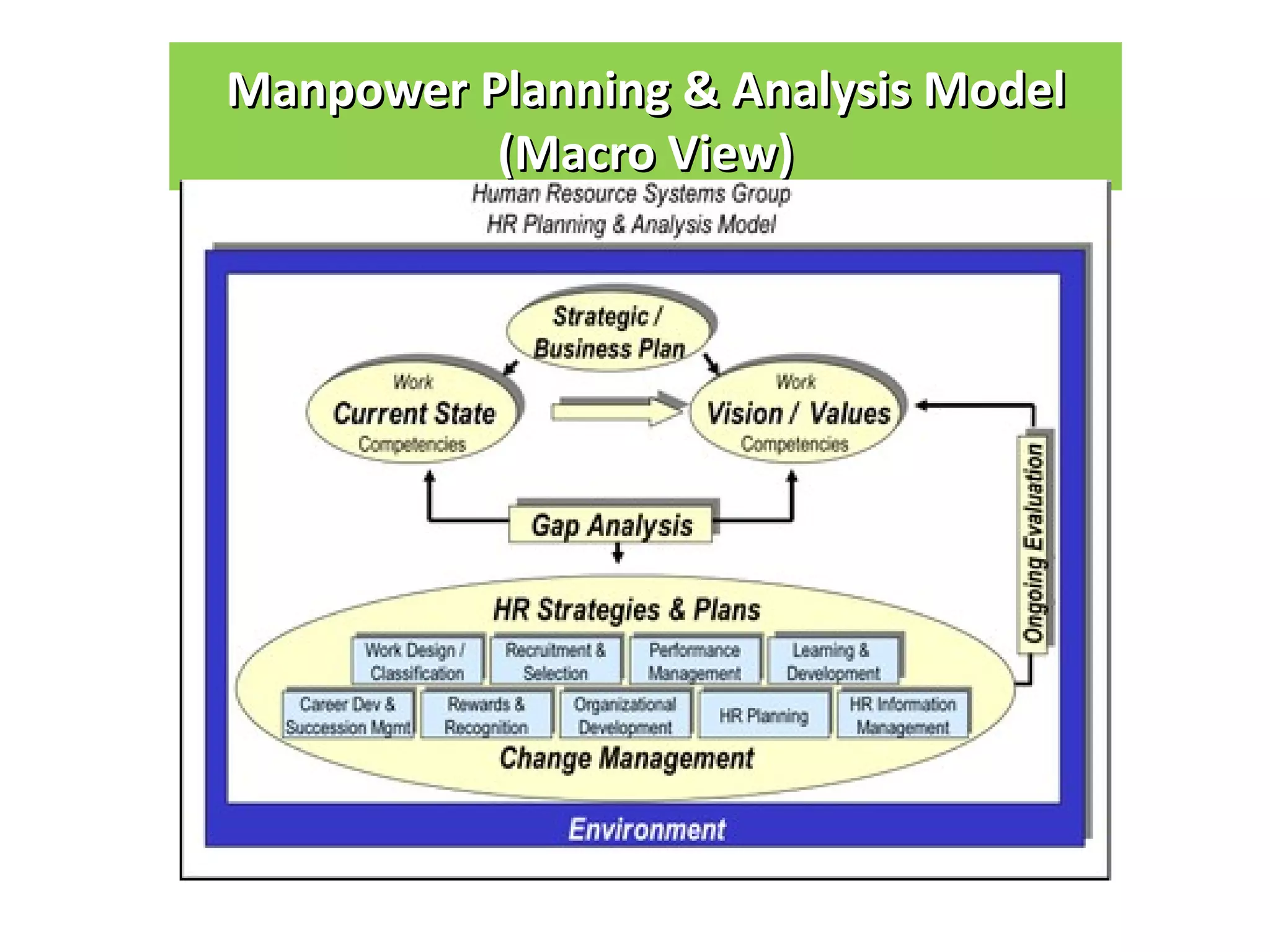
Manpower Planning & Analysis Model
          (Macro View)
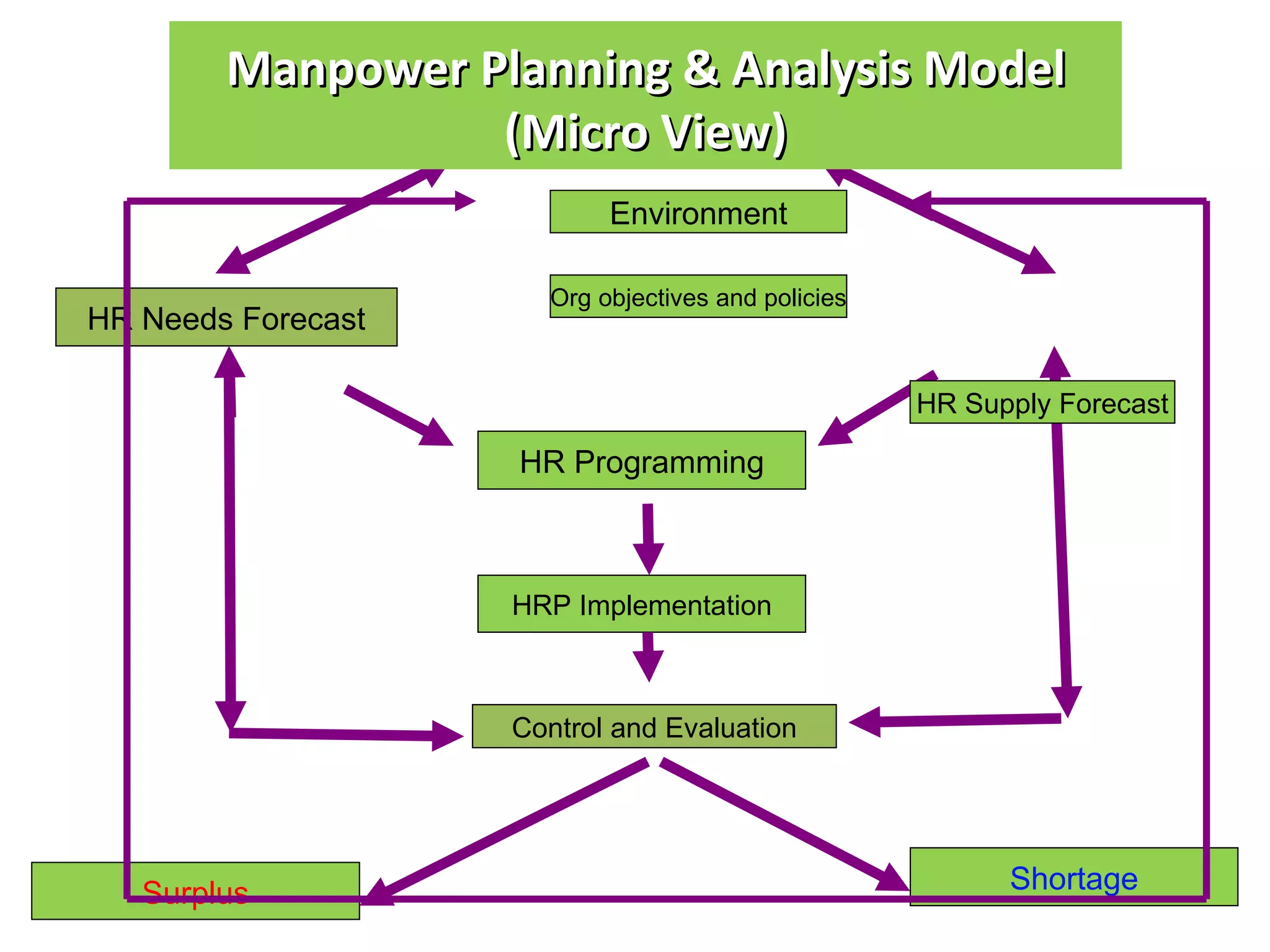
Manpower Planning & Analysis Model
                  (Micro View)
                           Environment

                      Org objectives and policies
HR Needs Forecast

                                                    HR Supply Forecast

                    HR Programming


                    HRP Implementation


                    Control and Evaluation


   Surplus                                                Shortage
Objectives of Recruitment Process
The purpose of the recruitment process is to
 attract a field of well-qualified candidates.
 Deter unsuitable candidates from applying

The purpose of the selection process is to predict
 the job performance of candidates. This is done
 by assessing/measuring the candidates
 Knowledge, Qualifications, Skills and Experience
 (KQSE) using assessment methods such as:
Review of CV/application form
Interviews
Practical tests.
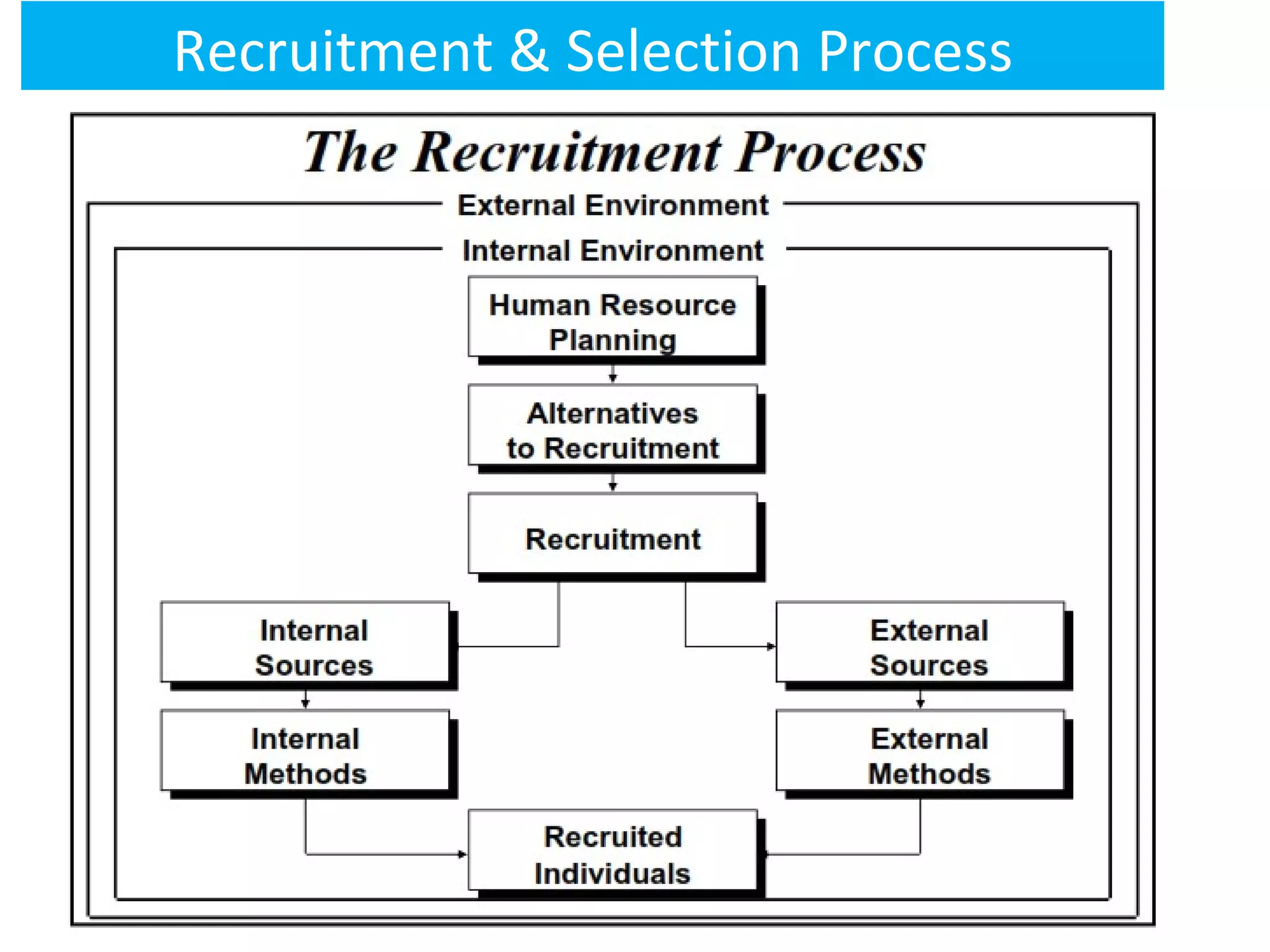
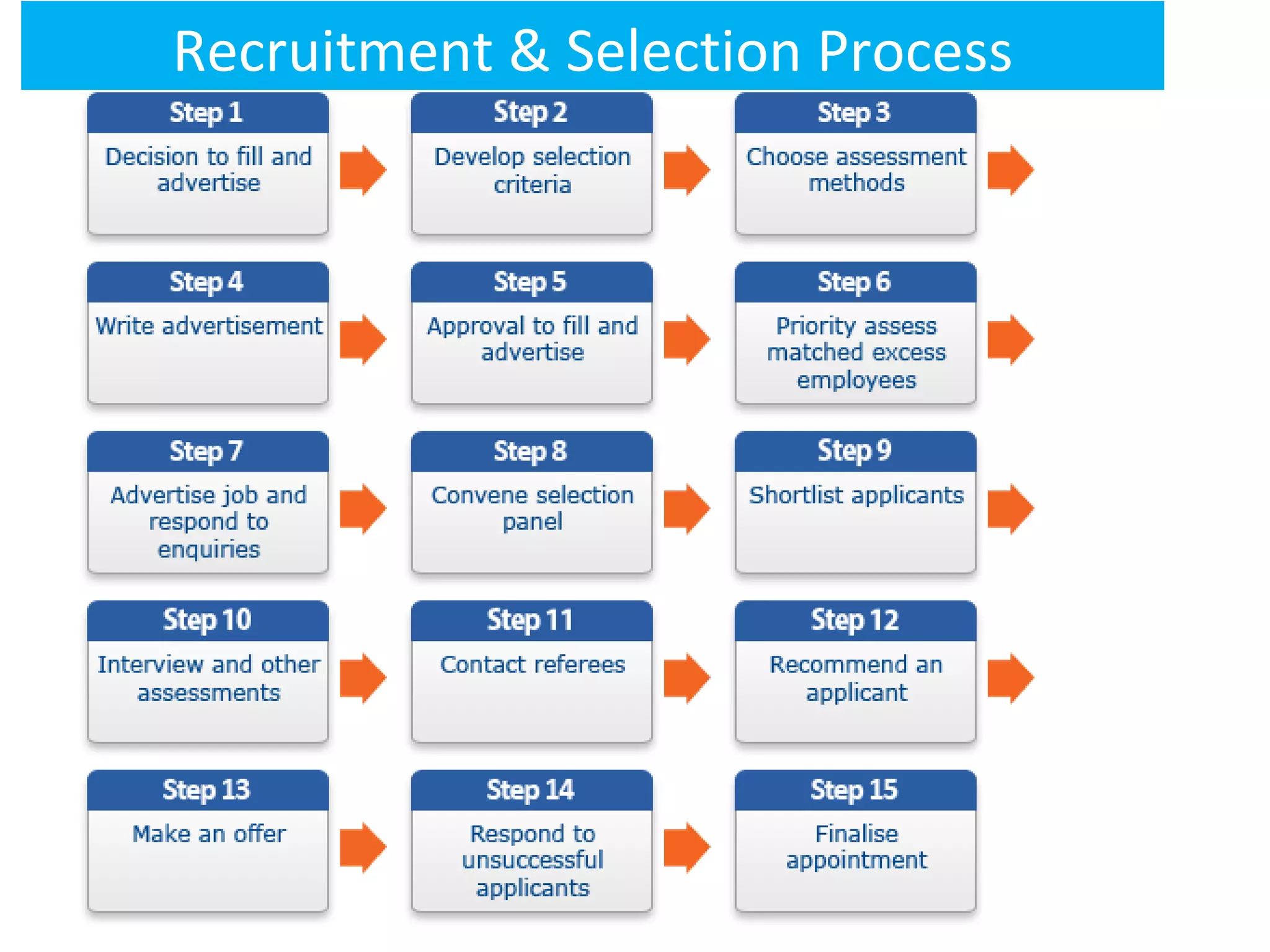
Recruitment & Selection Process
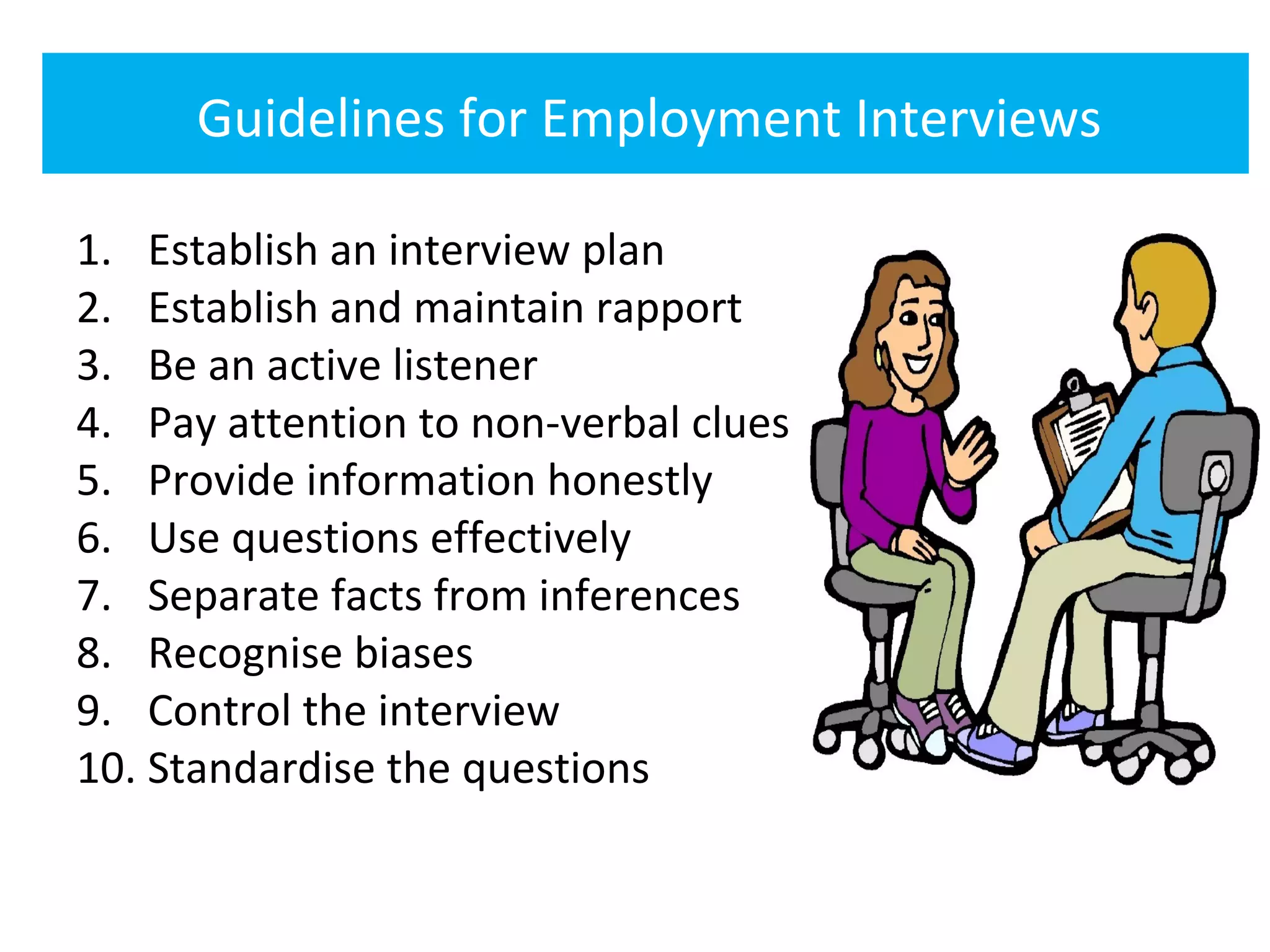
Guidelines for Employment Interviews

1. Establish an interview plan
2. Establish and maintain rapport
3. Be an active listener
4. Pay attention to non-verbal clues
5. Provide information honestly
6. Use questions effectively
7. Separate facts from inferences
8. Recognise biases
9. Control the interview
10. Standardise the questions
END
Let’s Connect
Leke Oshiyemi
HR-Expert| Recruiter | Seminar/Conference Speaker: on Human
  Resources Management and Social Media/LinkedIn.
•   leke_oshiyemi@yahoo.com
•   www.linkedin.com/in/lekeoshiyemi
•   www.facebook.com/lekeoshiyemi
•   www.twitter.com/lekeoshiyemi
•   (Mobile)+2348033071649

Manpower planning & recruitment process slides june leke oshiyemi

  • 1.
    Manpower Planning & Recruitment Process: @Phonersis Consulting June , 2012 Delivered By Leke Oshiyemi Head, Human Resources Verod Capital Management Limited
  • 2.
    About me My Contact Details: leke_oshiyemi@yahoo.com www.linkedin.com/in/lekeoshiyemi www.facebook.com/lekeoshiyemi www.twitter.com/lekeoshiyemi (Mobile)+2348033071649
  • 3.
    Learning Objectives • To demystify Manpower planning/ Recruitment Process • Enlighten on How to Get a Job in 2012. • Determining what your exact “hiring needs” are • Demonstrate how to Initiate a recruitment action *All my submissions will be discussed from the perspective of “The Employer” & “The Employee” &
  • 4.
    Our Take away “Tounderstand the importance of Manpower Planning and How Human Resources creates organizational effectiveness (Value creation) by an excellent recruitment process.
  • 5.
    Conceptual Clarification What isHRP/Manpower Planning? “ The Process by which an organization ensures that it has the right number and kind of people at the right place and at the right time, capable of effectively and efficiently completing those tasks that help the organization achieve its overall objectives”. What is Recruitment Process? “The process of identifying and hiring the best- qualified candidate (from within or outside of  an organization) for a job vacancy, in a most  timely and cost effective manner- - businessdictionary.com
  • 6.
    From Manpower Planning(HRP)to Recruitment: “The connection”
  • 7.
    Objectives of HRP:Why HRP? • To ensure optimum use of existing Human Capital • To forecast future requirement for HR. • To provide control measures to ensure that necessary HR are available as and when required. • To asses the surplus and shortage of HR. (Downsizing). • To anticipate the impact of technology on jobs and HR. • To determine the level of Recruitment and Training. • To estimate the cost of HR and Other needs of employees. • To meet the needs of expansion and diversification programmes.
  • 8.
    Who is In-Chargeof Manpower Planning?  Top level executives/HR Business Partners: are responsible for HRP/ Manpower planning within any organization.  Heads of Units/Line Managers: Responsible and accountable for Manpower aspects of various their various business units/departments. Note: Supervisors/Line Managers “should” undertake their own assessment of future business NEEDS in such a manner as to provide a concrete basis for organization –wide forecasting and planning.
  • 9.
    Manpower Planning &Analysis Model (Macro View)
  • 10.
    Manpower Planning &Analysis Model (Micro View) Environment Org objectives and policies HR Needs Forecast HR Supply Forecast HR Programming HRP Implementation Control and Evaluation Surplus Shortage
  • 11.
    Objectives of RecruitmentProcess The purpose of the recruitment process is to attract a field of well-qualified candidates.  Deter unsuitable candidates from applying The purpose of the selection process is to predict the job performance of candidates. This is done by assessing/measuring the candidates Knowledge, Qualifications, Skills and Experience (KQSE) using assessment methods such as: Review of CV/application form Interviews Practical tests.
  • 12.
  • 13.
  • 14.
    Guidelines for EmploymentInterviews 1. Establish an interview plan 2. Establish and maintain rapport 3. Be an active listener 4. Pay attention to non-verbal clues 5. Provide information honestly 6. Use questions effectively 7. Separate facts from inferences 8. Recognise biases 9. Control the interview 10. Standardise the questions
  • 15.
  • 16.
    Let’s Connect Leke Oshiyemi HR-Expert|Recruiter | Seminar/Conference Speaker: on Human Resources Management and Social Media/LinkedIn. • leke_oshiyemi@yahoo.com • www.linkedin.com/in/lekeoshiyemi • www.facebook.com/lekeoshiyemi • www.twitter.com/lekeoshiyemi • (Mobile)+2348033071649

Editor's Notes

  • #11 Environment - : Economic factors Technological Changes Demographic changes Political and legislative issues Social concerns Organizational objectives and policies-: HR plans need to be based on organizational objectives. Specifics requirements in terms of numbers and characteristics of employees must be derived from organizational objectives.