MANAGING THROUGH
WORKPLACE TRAUMA

A Manager’s Guide
EXAMPLES OF WORKPLACE TRAUMA AND
GRIEF IN THE WORKPLACE
Accidents at work involving serious injury or loss of
life
 Natural disasters
 Violence in the workplace
 Employees who commit suicide
 Employees who have losses in their personal lives
or have lost co-workers
 Downsizing

UNDERSTANDING THE IMPACT OF TRAUMATIC
STRESS




How trauma impacts employees
 Individuals all respond differently to traumatic stress
Symptoms May Include:
 Shock
 Anxiety and depression
 Physical symptoms
Chest pains
 Migraines










Anger
Poor concentration
Isolation
Guilt
Numbness
Avoidant behaviors
ORGANIZATIONAL IMPACT
Staff attrition
 Negative media in newspapers etc.
 Absenteeism and presenteeism
 Financial concerns
 Actual or perceived decreased safety
 People coping with issues of grief and loss
impacting productivity
 Increased medical and disability claims

LEADERSHIP IN TIME OF CRISIS
Responsible for Business Continuity and Recovery
 For this to occur, people must:


Be healthy enough to return to work
 Feel safe enough to return to work
 Trust their leadership so they want to
return to work




Remember: employees rely on leadership to
facilitate resilience and return to normal in the
workplace following traumatic events
LEADERSHIP FACILITATES RESILIENCY
Realize that employees/people are much more
resilient than they feel
 Education through appropriate referrals and
enlisting support from the EAP can provide
employees with the information and professional
support they need to recover
 Utilize strengths of your organization and
management teams
 Manage with purpose to facilitate return to normal

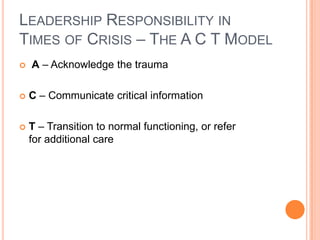
LEADERSHIP RESPONSIBILITY IN
TIMES OF CRISIS – THE A C T MODEL


A – Acknowledge the trauma



C – Communicate critical information



T – Transition to normal functioning, or refer
for additional care
ACT– ACKNOWLEDGE







Acknowledge what happened
Summarize what happened
Present credible and objective information
Deliver the information in a caring manner

This serves the purpose of controlling anxiety and
managing the rumor mill to lessen the negative
impact on employees
ACT – COMMUNICATE
Communicate competence and compassion
 Your visibilty shows compassion and comforts
employees
 Use this time to transition information about
resources that are available for support
 Provide the resources that inform employees about
what to expect as common responses to critical
incidents

ACT – TRANSITION
TRANSITION and REFER
 Provide information about coping and emphasize
resiliency
 Practical assistance- determine basic practical
needs such as possible schedule changes or shut
downs
 Linkage with support services such as United Way
or your EAP program

TYPES OF EAP REFERRALS
Self Referral
 Informal Referral
 Formal Management Referral
 Mandatory Referral

THE INFORMAL EAP REFERRAL
It is not based on performance issues although without
the referral, performance issues could occur later
 You do not receive any feedback from the EAP
 It is completely voluntary for the employee

WHEN IS IT APPROPRIATE TO MAKE AN
INFORMAL EAP REFERRAL?
 Signs








to look for indicating a troubled employee

Change in behavior such as withdrawal from co-workers
and possible emotional outbursts, crying and inappropriate
anger
Level of activity greatly reduced or animated
Coming to you with personal issues and using the manager
as the “counselor”
Mood swings, poor concentration, beginning of changes in
job performance
Knowledge of a significant personal issue such as death of
a loved one
DO’S OF MAKING AN INFORMAL REFERRAL TO THE EAP









Schedule a confidential meeting with the employee
Outline the specifics of what you have observed in a caring
way. Make sure that you do not indicate any performance
issue, just that you have noticed they are struggling or
changes in their usual behavior
Listen to what they have to say in response
Tell them that you care and inform them about the EAP
program and the benefits
Let them know that it is because you care, not because you
are the expert in personal problems, that you are making the
referral
Inform them that the EAP is completely voluntary and
completely confidential
DON’TS OF MAKING THE INFORMAL REFERRAL
TO THE EAP
Do not try to diagnose or counsel the employee
 Do not allow them to manipulate the situation by
asking for a reduced work load or special
accommodations due to personal problems
 Do not discuss or ask questions of other employees
about the employee’s personal problems
 Do not inform the employee that if they do not go to
the EAP on their own that they will be formally sent to
the EAP unless you have already documented
performance issues

IF THERE IS LOSS OF CO-WORKERS,
HOW DO I MANAGE GRIEVING
EMPLOYEES?
Realize that all employees will respond differently
 Realize that you are grieving also, so practice self
care
 Sensitivity is crucial to manage morale
 Acknowledge the loss and allow time to grieve
 Attend memorial services and provide time off for
funeral attendance
 Be patient, as grief takes time, but model
effectiveness in your daily job expectations.
Returning to a normal routine at work is important
in the healing process.
 If you see an employee who is having a more
difficult time and is struggling in their daily
functioning, inform them of the benefits of seeking
help from the EAP

HOW TO CONTACT THE EAP


Call toll-free 24 hours a day, 7 days a week

1-888-886-7988
(912) 692-0988
www.pmrsavannah.com

Managing thru grief and trauma

  • 1.
  • 2.
    EXAMPLES OF WORKPLACETRAUMA AND GRIEF IN THE WORKPLACE Accidents at work involving serious injury or loss of life  Natural disasters  Violence in the workplace  Employees who commit suicide  Employees who have losses in their personal lives or have lost co-workers  Downsizing 
  • 3.
    UNDERSTANDING THE IMPACTOF TRAUMATIC STRESS   How trauma impacts employees  Individuals all respond differently to traumatic stress Symptoms May Include:  Shock  Anxiety and depression  Physical symptoms Chest pains  Migraines        Anger Poor concentration Isolation Guilt Numbness Avoidant behaviors
  • 4.
    ORGANIZATIONAL IMPACT Staff attrition Negative media in newspapers etc.  Absenteeism and presenteeism  Financial concerns  Actual or perceived decreased safety  People coping with issues of grief and loss impacting productivity  Increased medical and disability claims 
  • 5.
    LEADERSHIP IN TIMEOF CRISIS Responsible for Business Continuity and Recovery  For this to occur, people must:  Be healthy enough to return to work  Feel safe enough to return to work  Trust their leadership so they want to return to work   Remember: employees rely on leadership to facilitate resilience and return to normal in the workplace following traumatic events
  • 6.
    LEADERSHIP FACILITATES RESILIENCY Realizethat employees/people are much more resilient than they feel  Education through appropriate referrals and enlisting support from the EAP can provide employees with the information and professional support they need to recover  Utilize strengths of your organization and management teams  Manage with purpose to facilitate return to normal 
  • 7.
    LEADERSHIP RESPONSIBILITY IN TIMESOF CRISIS – THE A C T MODEL  A – Acknowledge the trauma  C – Communicate critical information  T – Transition to normal functioning, or refer for additional care
  • 8.
    ACT– ACKNOWLEDGE      Acknowledge whathappened Summarize what happened Present credible and objective information Deliver the information in a caring manner This serves the purpose of controlling anxiety and managing the rumor mill to lessen the negative impact on employees
  • 9.
    ACT – COMMUNICATE Communicatecompetence and compassion  Your visibilty shows compassion and comforts employees  Use this time to transition information about resources that are available for support  Provide the resources that inform employees about what to expect as common responses to critical incidents 
  • 10.
    ACT – TRANSITION TRANSITIONand REFER  Provide information about coping and emphasize resiliency  Practical assistance- determine basic practical needs such as possible schedule changes or shut downs  Linkage with support services such as United Way or your EAP program 
  • 11.
    TYPES OF EAPREFERRALS Self Referral  Informal Referral  Formal Management Referral  Mandatory Referral 
  • 12.
    THE INFORMAL EAPREFERRAL It is not based on performance issues although without the referral, performance issues could occur later  You do not receive any feedback from the EAP  It is completely voluntary for the employee 
  • 13.
    WHEN IS ITAPPROPRIATE TO MAKE AN INFORMAL EAP REFERRAL?  Signs      to look for indicating a troubled employee Change in behavior such as withdrawal from co-workers and possible emotional outbursts, crying and inappropriate anger Level of activity greatly reduced or animated Coming to you with personal issues and using the manager as the “counselor” Mood swings, poor concentration, beginning of changes in job performance Knowledge of a significant personal issue such as death of a loved one
  • 14.
    DO’S OF MAKINGAN INFORMAL REFERRAL TO THE EAP       Schedule a confidential meeting with the employee Outline the specifics of what you have observed in a caring way. Make sure that you do not indicate any performance issue, just that you have noticed they are struggling or changes in their usual behavior Listen to what they have to say in response Tell them that you care and inform them about the EAP program and the benefits Let them know that it is because you care, not because you are the expert in personal problems, that you are making the referral Inform them that the EAP is completely voluntary and completely confidential
  • 15.
    DON’TS OF MAKINGTHE INFORMAL REFERRAL TO THE EAP Do not try to diagnose or counsel the employee  Do not allow them to manipulate the situation by asking for a reduced work load or special accommodations due to personal problems  Do not discuss or ask questions of other employees about the employee’s personal problems  Do not inform the employee that if they do not go to the EAP on their own that they will be formally sent to the EAP unless you have already documented performance issues 
  • 16.
    IF THERE ISLOSS OF CO-WORKERS, HOW DO I MANAGE GRIEVING EMPLOYEES? Realize that all employees will respond differently  Realize that you are grieving also, so practice self care  Sensitivity is crucial to manage morale  Acknowledge the loss and allow time to grieve  Attend memorial services and provide time off for funeral attendance  Be patient, as grief takes time, but model effectiveness in your daily job expectations. Returning to a normal routine at work is important in the healing process.  If you see an employee who is having a more difficult time and is struggling in their daily functioning, inform them of the benefits of seeking help from the EAP 
  • 17.
    HOW TO CONTACTTHE EAP  Call toll-free 24 hours a day, 7 days a week 1-888-886-7988 (912) 692-0988 www.pmrsavannah.com