

Stress and Grief in the Workplace
2021 APP Spring Conference
May 19, 2021
Cassandra D. Hirsh, DO
 I have nothing to disclose
Objectives
 Recognize contributing factors to workplace stress
 Identify strategies to identify and deal with grief
Stress
Why does it matter?
◦ 55% of Americans are stressed during the day – in
comparison the world average is 35%
◦ Americans rate their stress level as a 4.9/10
◦ Most stressed age group – 30-49
◦ Women are more stressed then men
◦ In 2018, 1/3 of survey respondents sought medical care
for a stress-related complaint
Stress
 52% of Generation Z have been diagnosed with
mental health issues compared to 41% of Baby
Boomers
 57% of respondents paralyzed by stress while 43%
report stress invigorates them
Workplace Stress
 83% of workers suffer from workplace stress
 In 2019, 94% of American workers reported stress in
their workplace
◦ 23% high, 6% unreasonably high
 35% said their main source of stress was their boss
 54% report stress from work affects their life at home
 Over a quarter of employees are at risk for burning
out in the next 12 months
Cost of Workplace Stress
 Work-related stress causes 120,000 deaths and results
in $190 billion in health costs annually
 Companies spend around 75% of an employee’s salary
to cover lost productivity or replace workers
 Workers who take sick days due to mental health
issues are seven times more likely to have further
absences than those with physical health problems
 Stress causes around 1 million workers to miss work
every day
Work Stress Response
 Fight or Flight response
 Frequent stress causes system to be constantly
activated  fatigue and weakened immune system
 increase risk of disease or injury
Causes of Job Stress
 Low Morale
 Management Style
 Job Responsibilities
 Career Concerns
 Traumatic Events
 Work Environment
Work Stress Symptoms
 Sleep disturbance
 Upset stomach
 Headache
 High blood pressure
 Indigestion
 Insomnia
 Irritability
 Short attention span
 Loss of appetite
 Procrastination
 Increased use of alcohol or
drugs
 Poor job performance
Stress Management Strategies
 Recognize work
performance
 Career development
 Create a culture that
values individual
employees
 Management actions
consistent with
organizational values
 Employee Assistance
Programs (EAP)
Grief
Some Statistics
 2.5 million people die every year in the US leaving
an average of 5 people bereaved for every death
 4 million workers experience the death of someone
close to them each year
 Hidden grief costs companies $75.1 billion dollars
annually
Types of Grief in the Workplace
 Can occur within the workplace
◦ Fatal accidents
◦ Layoffs
 Can be brought in from outside
◦ Major loss that occurs in a person’s life (divorce, death)
or indirect such as losses affecting the community
(disaster situations) that affects a person’s behavior or
performance
Workplace Risk of Encountering Death
 Primary focus: Hospice, funeral homes
 Central focus: emergency services, military
 Continuous focus: Health and social services (i.e. in
a hospital)
 Periodic focus: all other workplaces
Impact of Grief in the Workplace
• Distress of an individual showing a profound loss
Open
• Reduced level of concentration
• Poor quality of work
• Reduced quantity of output or productivity
• Tensions and irritability leading to conflict and poor communication
Hidden
Grief reactions
 Emotional cacophony
◦ May change with dizzying speed and intensity
◦ Fear
◦ Depression
◦ Anger
◦ Relief
◦ Despair
◦ Guilt
◦ Numbness
◦ Agitation
◦ Bottomless sorrow
Grief is Exhausting
https://www.youtube.com/watch?v=eoQqR
LhlkUw
How to Support a Grieving Employee
 Ask how you can help
◦ Do you want me to share information with others? And if
so, what details do you want others to know?
◦ Do you want to talk about your experience, or do you
prefer to concentrate on your work?
◦ What are your needs for privacy? time? Help with your
work?
◦ Answers may change daily*
How to Support a Grieving Co-worker
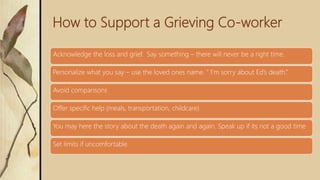
Acknowledge the loss and grief. Say something – there will never be a right time.
Personalize what you say – use the loved ones name. “ I’m sorry about Ed’s death.”
Avoid comparisons
Offer specific help (meals, transportation, childcare)
You may here the story about the death again and again. Speak up if its not a good time
Set limits if uncomfortable.
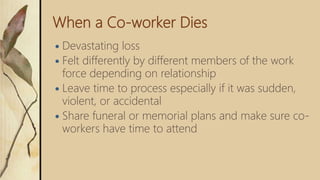
When a Co-worker Dies
 Devastating loss
 Felt differently by different members of the work
force depending on relationship
 Leave time to process especially if it was sudden,
violent, or accidental
 Share funeral or memorial plans and make sure co-
workers have time to attend
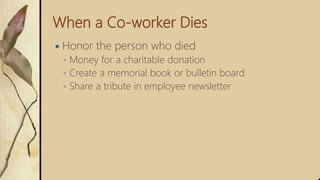
When a Co-worker Dies
 Honor the person who died
◦ Money for a charitable donation
◦ Create a memorial book or bulletin board
◦ Share a tribute in employee newsletter
Patient loss
 Acknowledge the loss
◦ Know your triggers
 Debrief as a team
 Send a condolence letter or card
 Attend funeral or memorial
Self Care
SELF CARE MYTHS
Self care is all about
pampering yourself
Self care is only for
people with poor
mental health
You need to spend
money to practice
self care
Self care is just
about things that
make you feel good
Self care is only
about taking care of
your mental health
Self care is
indulgent and
selfish
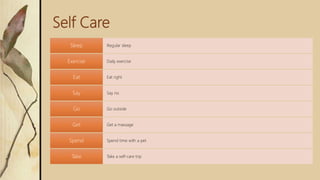
Self Care
Regular sleep
Sleep
Daily exercise
Exercise
Eat right
Eat
Say no
Say
Go outside
Go
Get a massage
Get
Spend time with a pet
Spend
Take a self-care trip
Take
Thank you!
 chirsh@akronchildrens.org
References
42 Worrying Workplace Stress Statistics - The American
Institute of Stress
Understanding Work Stress: Causes, Symptoms and Solutions
(csp.edu)
Beneath the surface: Self-care myths and facts - CMHA
National
Hazen, M. (2008). Grief and the workplace. Academy of
Management, pp 78-86.
Wilson, D, Punjami, S, Song, Q., & Low, G. (2019). A Study to
Understand the Impact of Bereavement Grief on the
Workplace. Omega-Journal of Death and Dying, pp 1-11.

Hirsh grief

  • 1.
    Stress and Griefin the Workplace 2021 APP Spring Conference May 19, 2021 Cassandra D. Hirsh, DO
  • 2.
     I havenothing to disclose
  • 3.
    Objectives  Recognize contributingfactors to workplace stress  Identify strategies to identify and deal with grief
  • 4.
    Stress Why does itmatter? ◦ 55% of Americans are stressed during the day – in comparison the world average is 35% ◦ Americans rate their stress level as a 4.9/10 ◦ Most stressed age group – 30-49 ◦ Women are more stressed then men ◦ In 2018, 1/3 of survey respondents sought medical care for a stress-related complaint
  • 5.
    Stress  52% ofGeneration Z have been diagnosed with mental health issues compared to 41% of Baby Boomers  57% of respondents paralyzed by stress while 43% report stress invigorates them
  • 6.
    Workplace Stress  83%of workers suffer from workplace stress  In 2019, 94% of American workers reported stress in their workplace ◦ 23% high, 6% unreasonably high  35% said their main source of stress was their boss  54% report stress from work affects their life at home  Over a quarter of employees are at risk for burning out in the next 12 months
  • 7.
    Cost of WorkplaceStress  Work-related stress causes 120,000 deaths and results in $190 billion in health costs annually  Companies spend around 75% of an employee’s salary to cover lost productivity or replace workers  Workers who take sick days due to mental health issues are seven times more likely to have further absences than those with physical health problems  Stress causes around 1 million workers to miss work every day
  • 8.
    Work Stress Response Fight or Flight response  Frequent stress causes system to be constantly activated  fatigue and weakened immune system  increase risk of disease or injury
  • 9.
    Causes of JobStress  Low Morale  Management Style  Job Responsibilities  Career Concerns  Traumatic Events  Work Environment
  • 10.
    Work Stress Symptoms Sleep disturbance  Upset stomach  Headache  High blood pressure  Indigestion  Insomnia  Irritability  Short attention span  Loss of appetite  Procrastination  Increased use of alcohol or drugs  Poor job performance
  • 11.
    Stress Management Strategies Recognize work performance  Career development  Create a culture that values individual employees  Management actions consistent with organizational values  Employee Assistance Programs (EAP)
  • 12.
  • 13.
    Some Statistics  2.5million people die every year in the US leaving an average of 5 people bereaved for every death  4 million workers experience the death of someone close to them each year  Hidden grief costs companies $75.1 billion dollars annually
  • 14.
    Types of Griefin the Workplace  Can occur within the workplace ◦ Fatal accidents ◦ Layoffs  Can be brought in from outside ◦ Major loss that occurs in a person’s life (divorce, death) or indirect such as losses affecting the community (disaster situations) that affects a person’s behavior or performance
  • 15.
    Workplace Risk ofEncountering Death  Primary focus: Hospice, funeral homes  Central focus: emergency services, military  Continuous focus: Health and social services (i.e. in a hospital)  Periodic focus: all other workplaces
  • 16.
    Impact of Griefin the Workplace • Distress of an individual showing a profound loss Open • Reduced level of concentration • Poor quality of work • Reduced quantity of output or productivity • Tensions and irritability leading to conflict and poor communication Hidden
  • 17.
    Grief reactions  Emotionalcacophony ◦ May change with dizzying speed and intensity ◦ Fear ◦ Depression ◦ Anger ◦ Relief ◦ Despair ◦ Guilt ◦ Numbness ◦ Agitation ◦ Bottomless sorrow
  • 18.
  • 19.
  • 20.
    How to Supporta Grieving Employee  Ask how you can help ◦ Do you want me to share information with others? And if so, what details do you want others to know? ◦ Do you want to talk about your experience, or do you prefer to concentrate on your work? ◦ What are your needs for privacy? time? Help with your work? ◦ Answers may change daily*
  • 21.
    How to Supporta Grieving Co-worker Acknowledge the loss and grief. Say something – there will never be a right time. Personalize what you say – use the loved ones name. “ I’m sorry about Ed’s death.” Avoid comparisons Offer specific help (meals, transportation, childcare) You may here the story about the death again and again. Speak up if its not a good time Set limits if uncomfortable.
  • 23.
    When a Co-workerDies  Devastating loss  Felt differently by different members of the work force depending on relationship  Leave time to process especially if it was sudden, violent, or accidental  Share funeral or memorial plans and make sure co- workers have time to attend
  • 24.
    When a Co-workerDies  Honor the person who died ◦ Money for a charitable donation ◦ Create a memorial book or bulletin board ◦ Share a tribute in employee newsletter
  • 25.
    Patient loss  Acknowledgethe loss ◦ Know your triggers  Debrief as a team  Send a condolence letter or card  Attend funeral or memorial
  • 26.
  • 27.
    SELF CARE MYTHS Selfcare is all about pampering yourself Self care is only for people with poor mental health You need to spend money to practice self care Self care is just about things that make you feel good Self care is only about taking care of your mental health Self care is indulgent and selfish
  • 28.
    Self Care Regular sleep Sleep Dailyexercise Exercise Eat right Eat Say no Say Go outside Go Get a massage Get Spend time with a pet Spend Take a self-care trip Take
  • 29.
  • 30.
    References 42 Worrying WorkplaceStress Statistics - The American Institute of Stress Understanding Work Stress: Causes, Symptoms and Solutions (csp.edu) Beneath the surface: Self-care myths and facts - CMHA National Hazen, M. (2008). Grief and the workplace. Academy of Management, pp 78-86. Wilson, D, Punjami, S, Song, Q., & Low, G. (2019). A Study to Understand the Impact of Bereavement Grief on the Workplace. Omega-Journal of Death and Dying, pp 1-11.