
This document discusses managing predictable variability in supply chains. It describes how demand for products often changes predictably due to seasonal and other factors. This can cause issues like excess inventory or stockouts. The document outlines two broad categories for handling this variability: managing supply through approaches like adjusting capacity and inventory levels, and managing demand through short-term pricing discounts and promotions. It provides examples of how companies coordinate these supply and demand management strategies across functions and with supply chain partners to maximize profitability while responding to predictable fluctuations in demand.
Outline Responding topredictable variability in a supply chain Managing supply Managing demand Implementing solutions to predictable variability in practice Supply Chain Management
3.
Responding to Predictable Variability in a Supply Chain for pdt with stable demand, devising an aggregate plan is very simple, in such cases,a firm arranges for sufficient capacity to match that demand. products can be produced close to the time when they will be sold,Therefore supply chain carries inventory. Demand for any product changes rapidly from period to period often due to predictable influence. These influences include seasonal and non seasonal factors . Predictable variability is change in demand that can be forecasted . Supply Chain Management
4.
The product thatundergo this type of change in demand causes numerous problems in the supply chain ranging from high level to stock-out during peak demand period to high level of excess inventory during period of low demand. This problem increases the cost and decreases the responsiveness of supply chain . Supply and demand management have impact on when applied to predictably variable product. A firm choose to handle predictable variability by utilizing techniques in two broad categories Manage supply using capacity, inventory, subcontracting, and backlogs Manage demand using short-term price discounts and trade promotions Supply Chain Management
5.
One way tomeet demand requires enough manufacturing capacity to meet demand in any period. Another approach to meet demand would be to build up inventory during the off season to keep the production stable year around Third approach -to work with their retail partners in the supply chain to offer a price promotion before the spring month during periods of low demand. Often co. divide the task of supply and demand mngt b/w different functions Marketing typically manages demand Operation typically manages supply Therefore maximizing profitability depends on the decisions being made in co-ordination fashion and requires supply chain partners to work together across enterprise. Supply Chain Management
6.
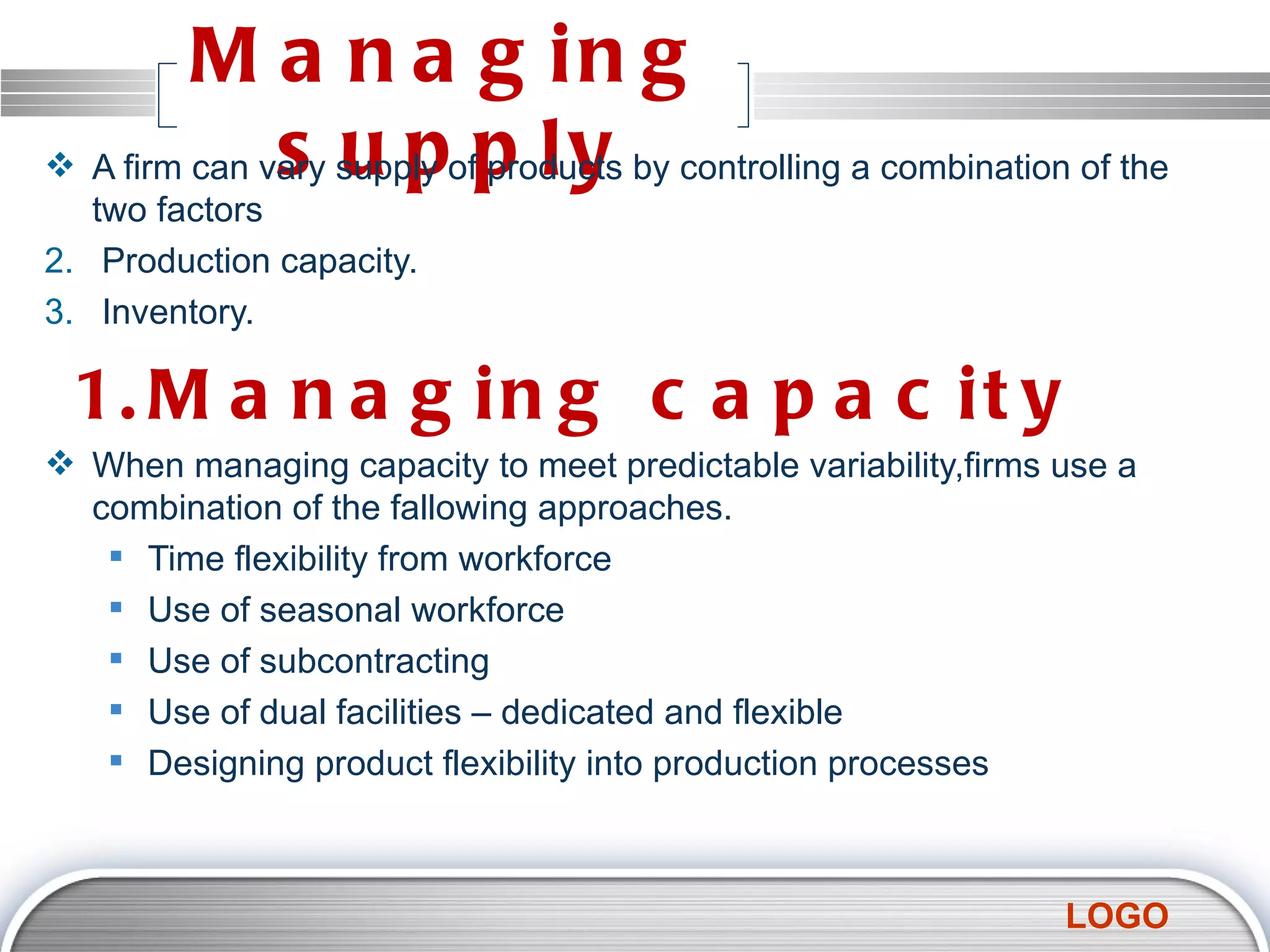
Managing supply Afirm can vary supply of products by controlling a combination of the two factors Production capacity. Inventory. 1.Managing capacity When managing capacity to meet predictable variability,firms use a combination of the fallowing approaches. Time flexibility from workforce Use of seasonal workforce Use of subcontracting Use of dual facilities – dedicated and flexible Designing product flexibility into production processes
7.
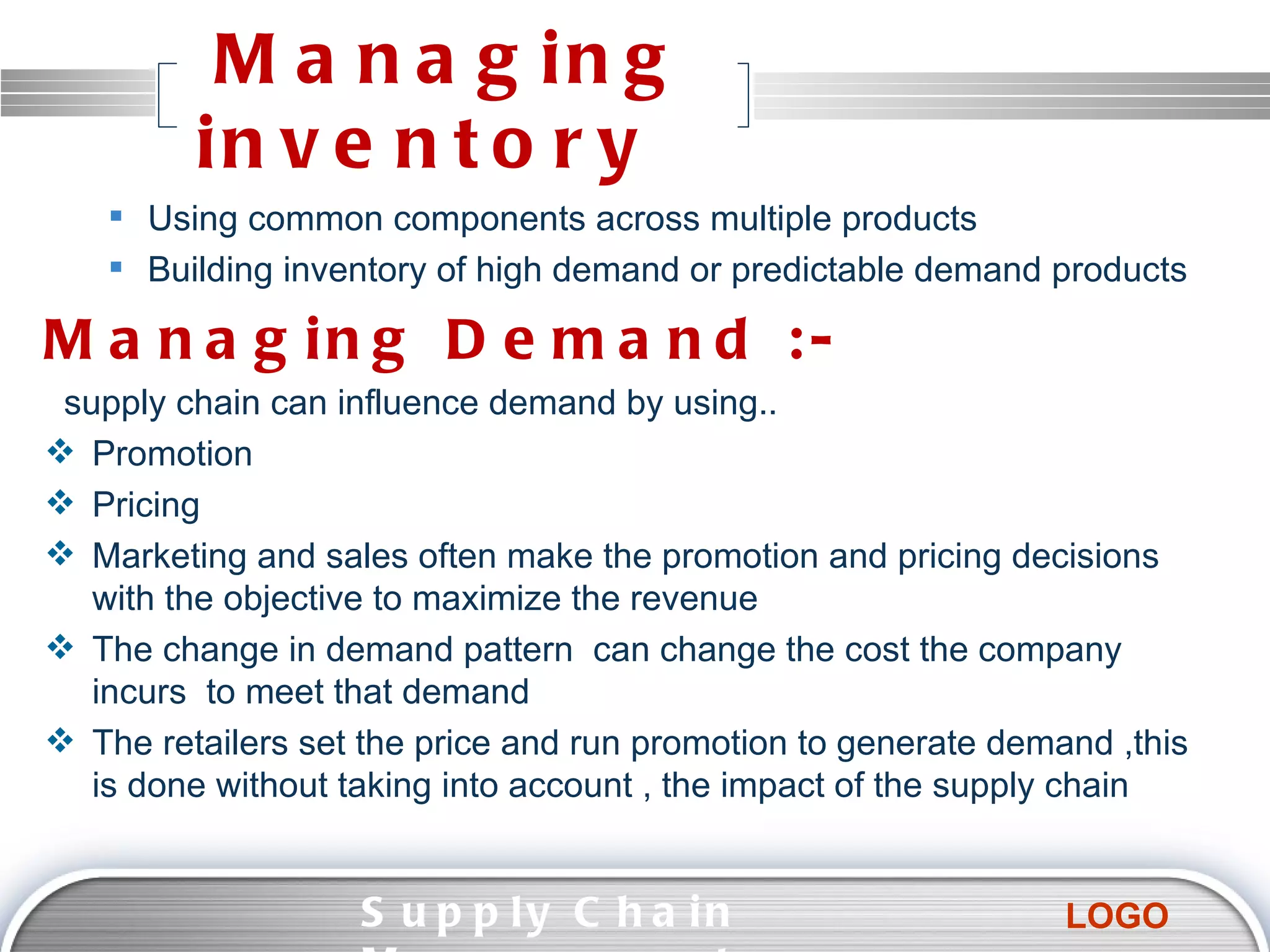
Managing inventory Using common components across multiple products Building inventory of high demand or predictable demand products Managing Demand :- supply chain can influence demand by using.. Promotion Pricing Marketing and sales often make the promotion and pricing decisions with the objective to maximize the revenue The change in demand pattern can change the cost the company incurs to meet that demand The retailers set the price and run promotion to generate demand ,this is done without taking into account , the impact of the supply chain Supply Chain Management
8.
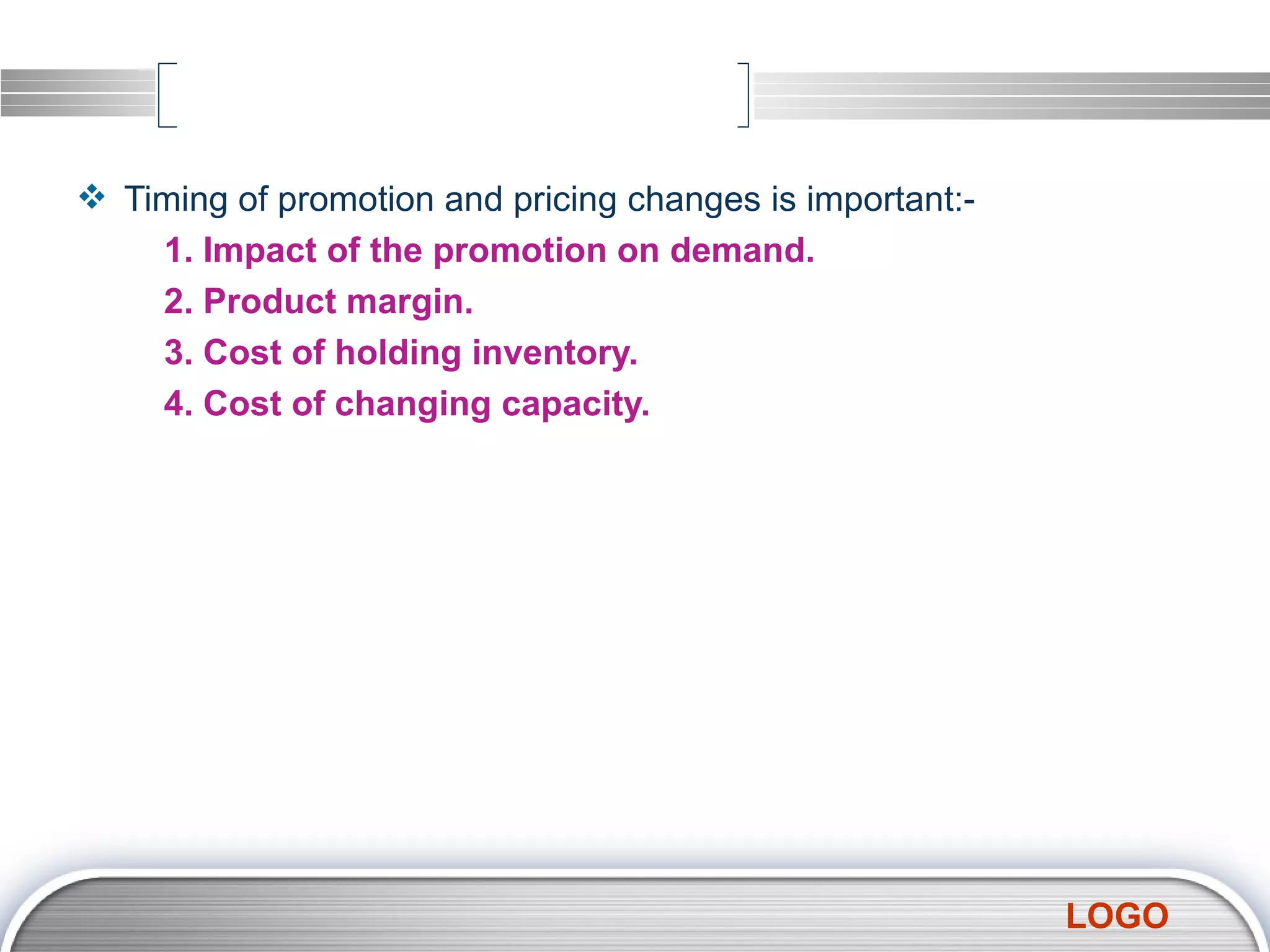
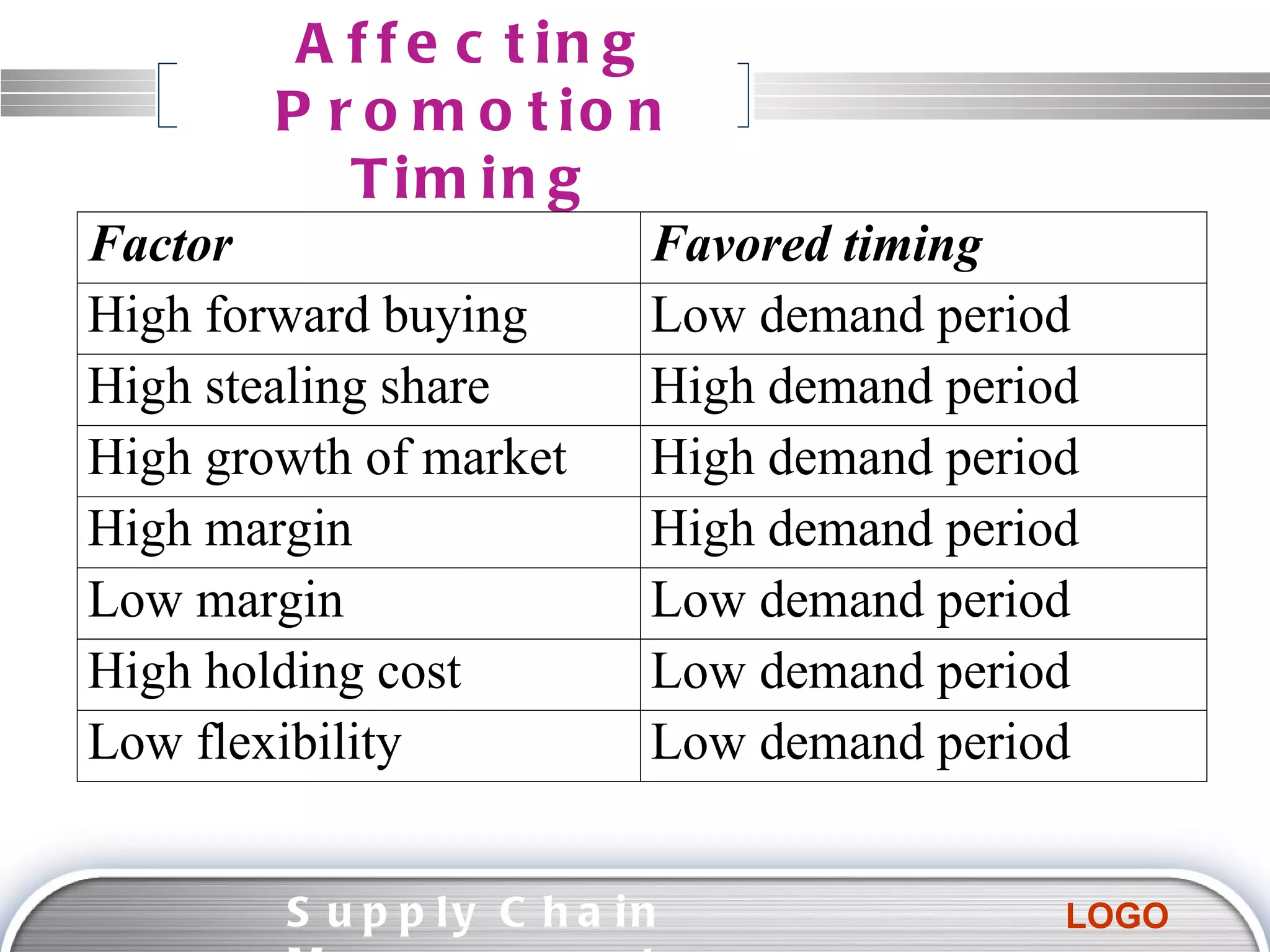
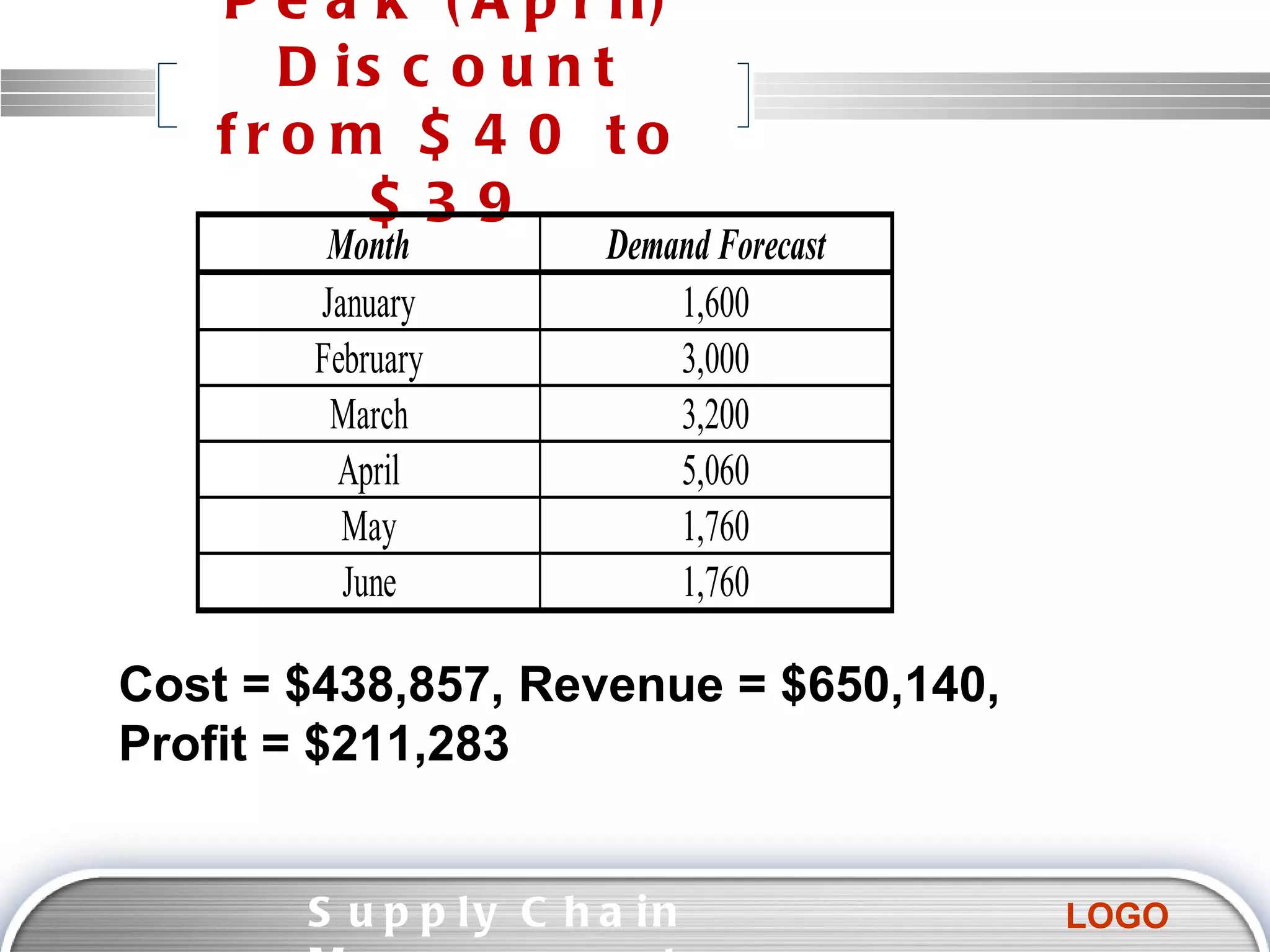
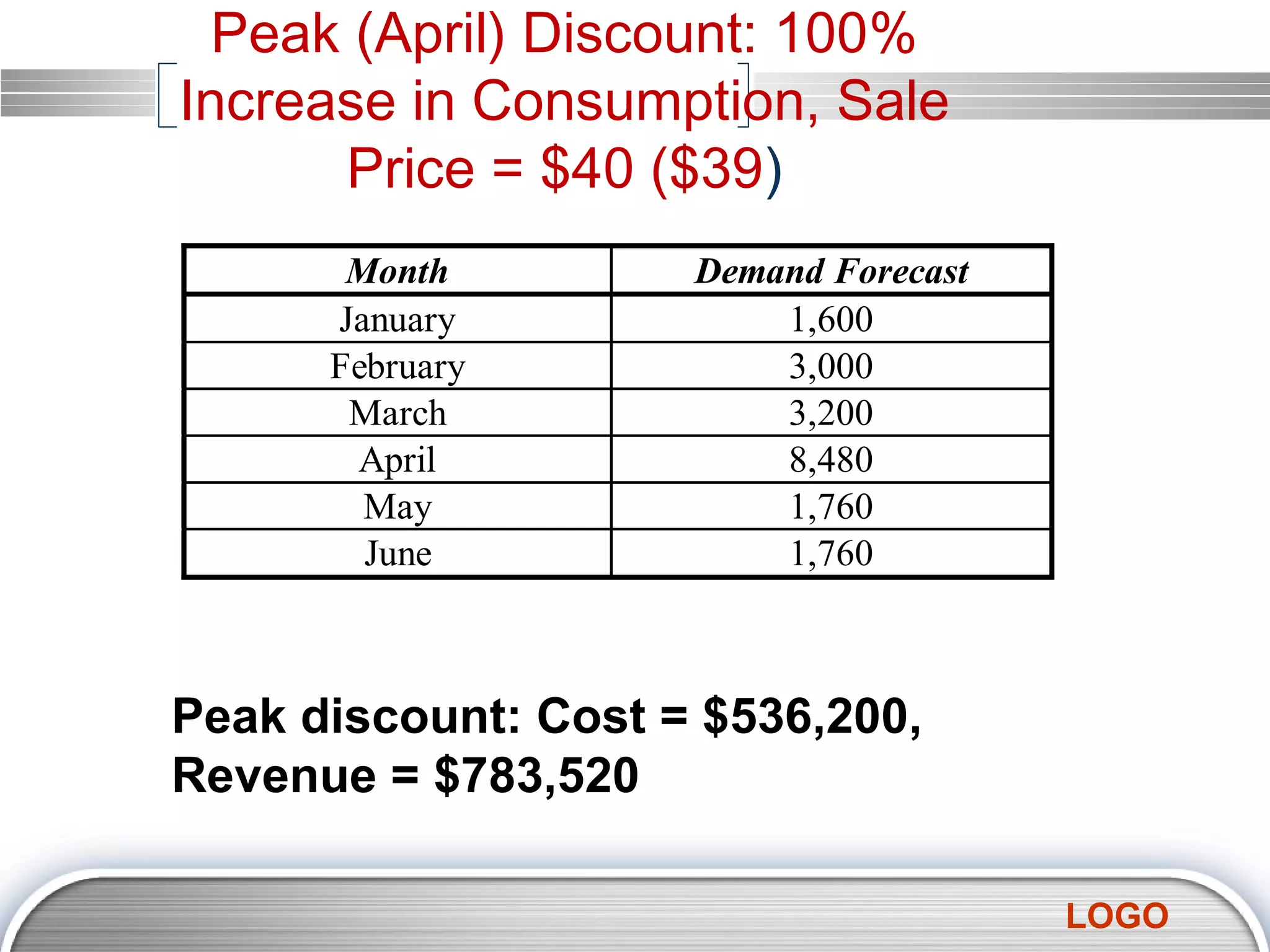
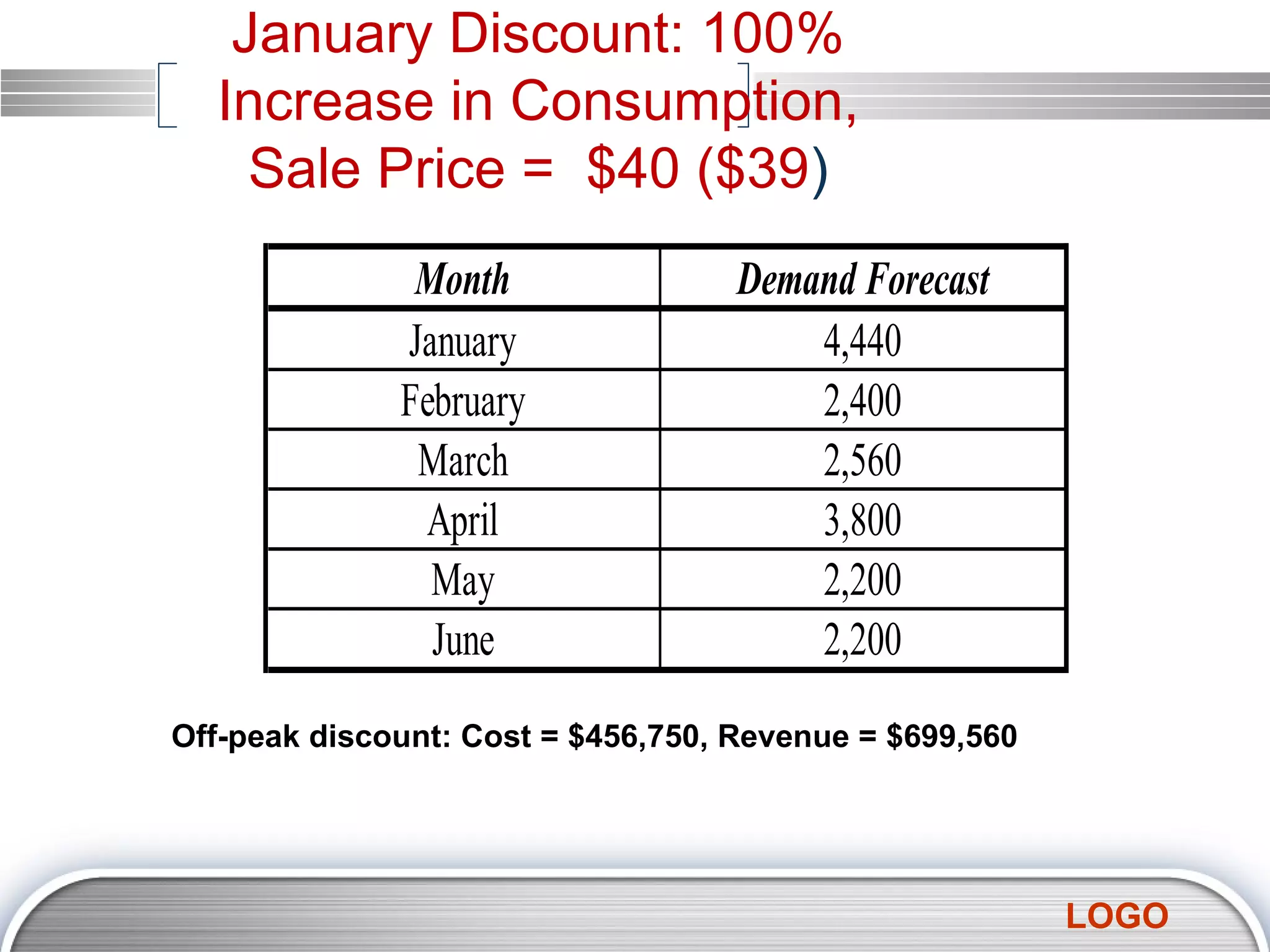
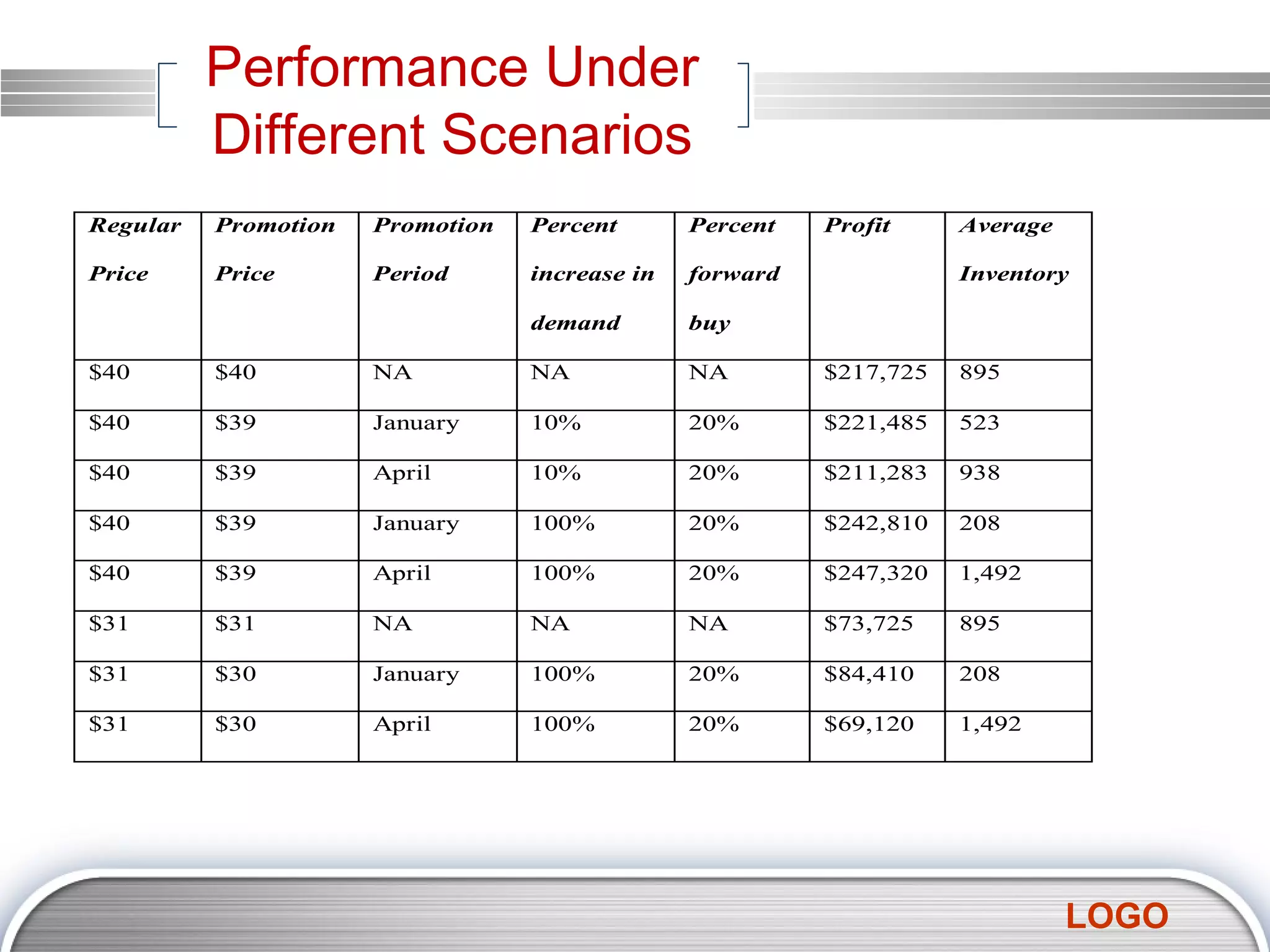
Timing of promotionand pricing changes is important:- 1. Impact of the promotion on demand. 2. Product margin. 3. Cost of holding inventory. 4. Cost of changing capacity.
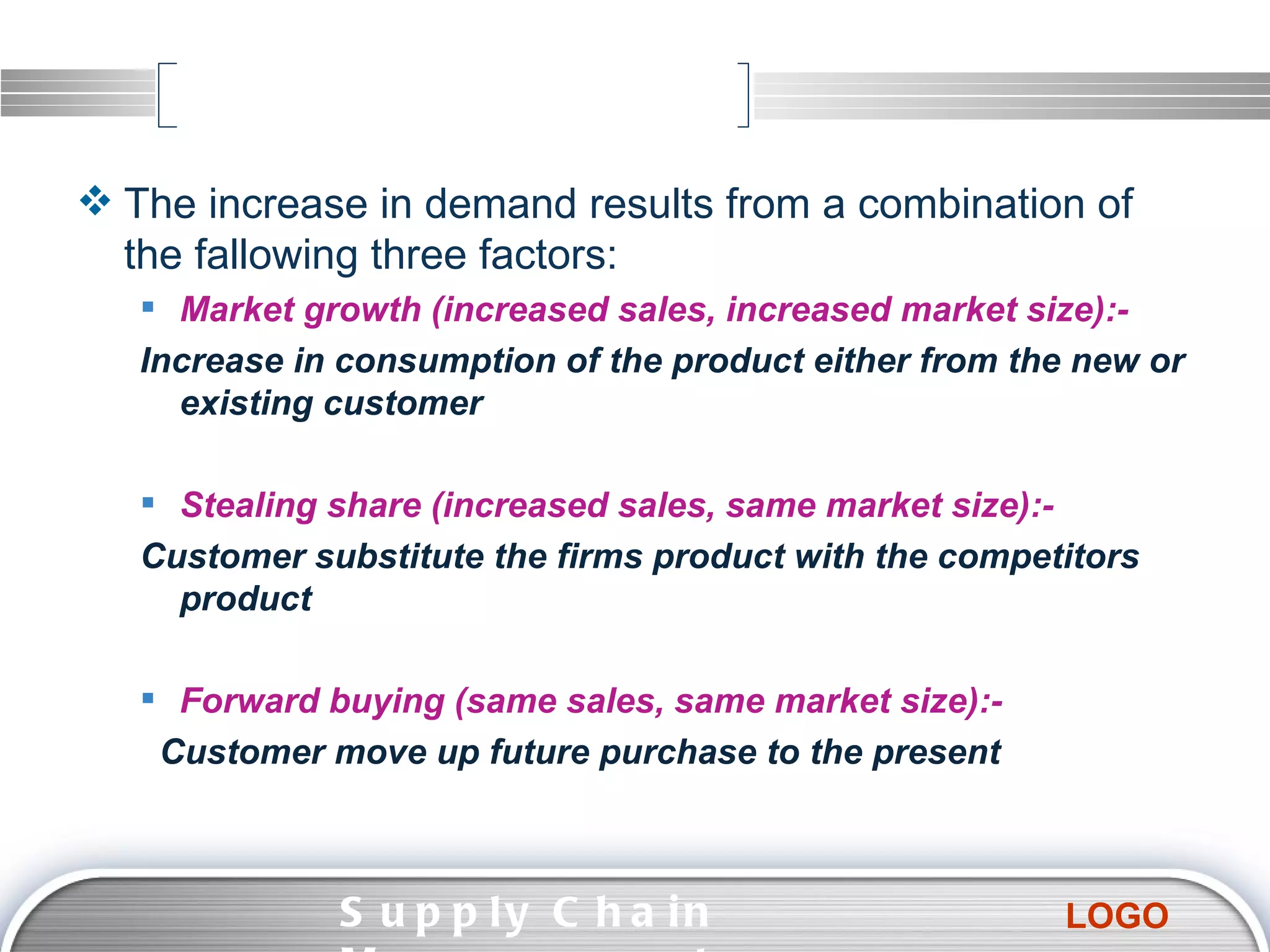
The increase indemand results from a combination of the fallowing three factors: Market growth (increased sales, increased market size):- Increase in consumption of the product either from the new or existing customer Stealing share (increased sales, same market size):- Customer substitute the firms product with the competitors product Forward buying (same sales, same market size):- Customer move up future purchase to the present Supply Chain Management
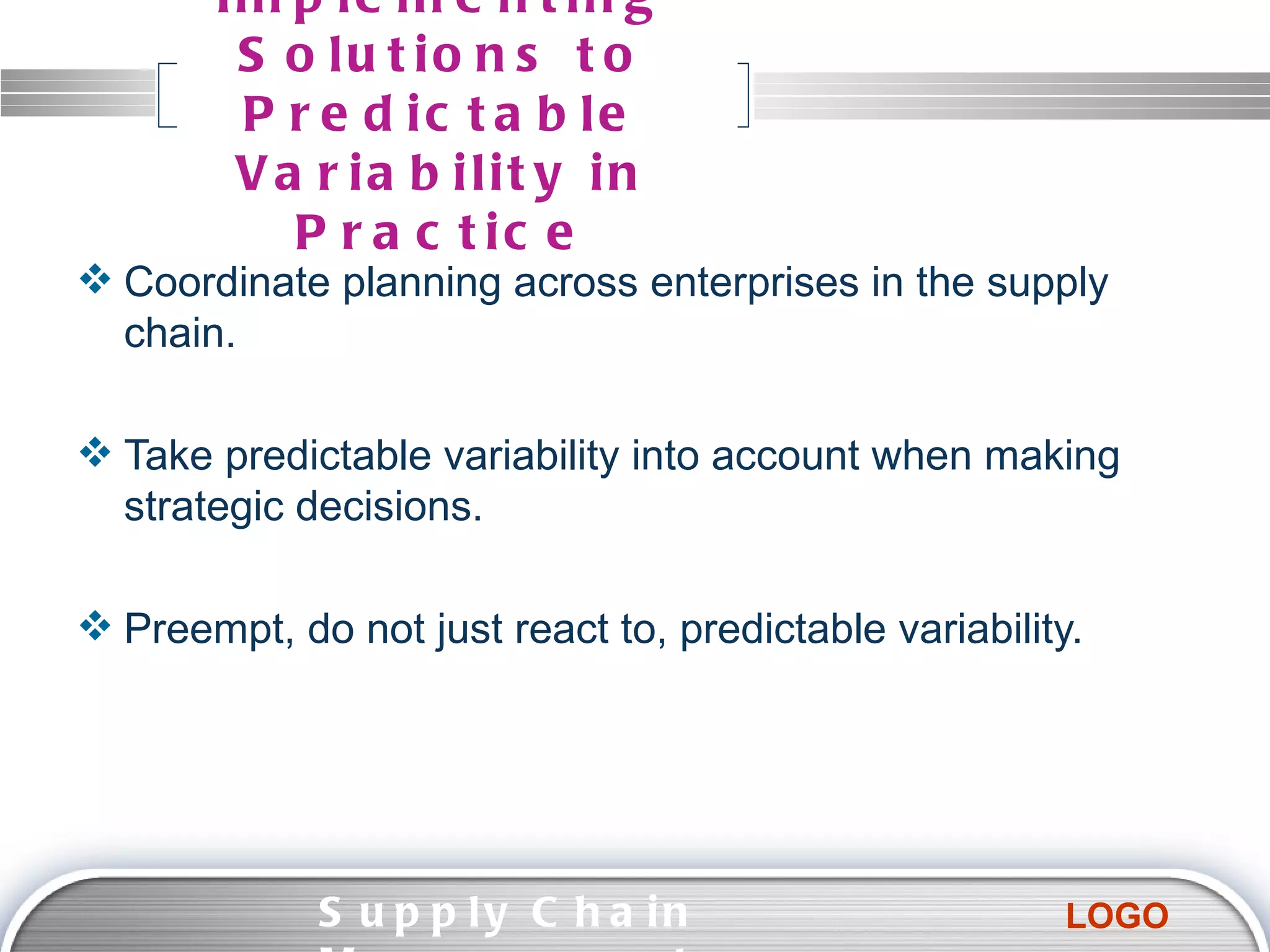
Implementing Solutions toPredictable Variability in Practice Coordinate planning across enterprises in the supply chain. Take predictable variability into account when making strategic decisions. Preempt, do not just react to, predictable variability. Supply Chain Management