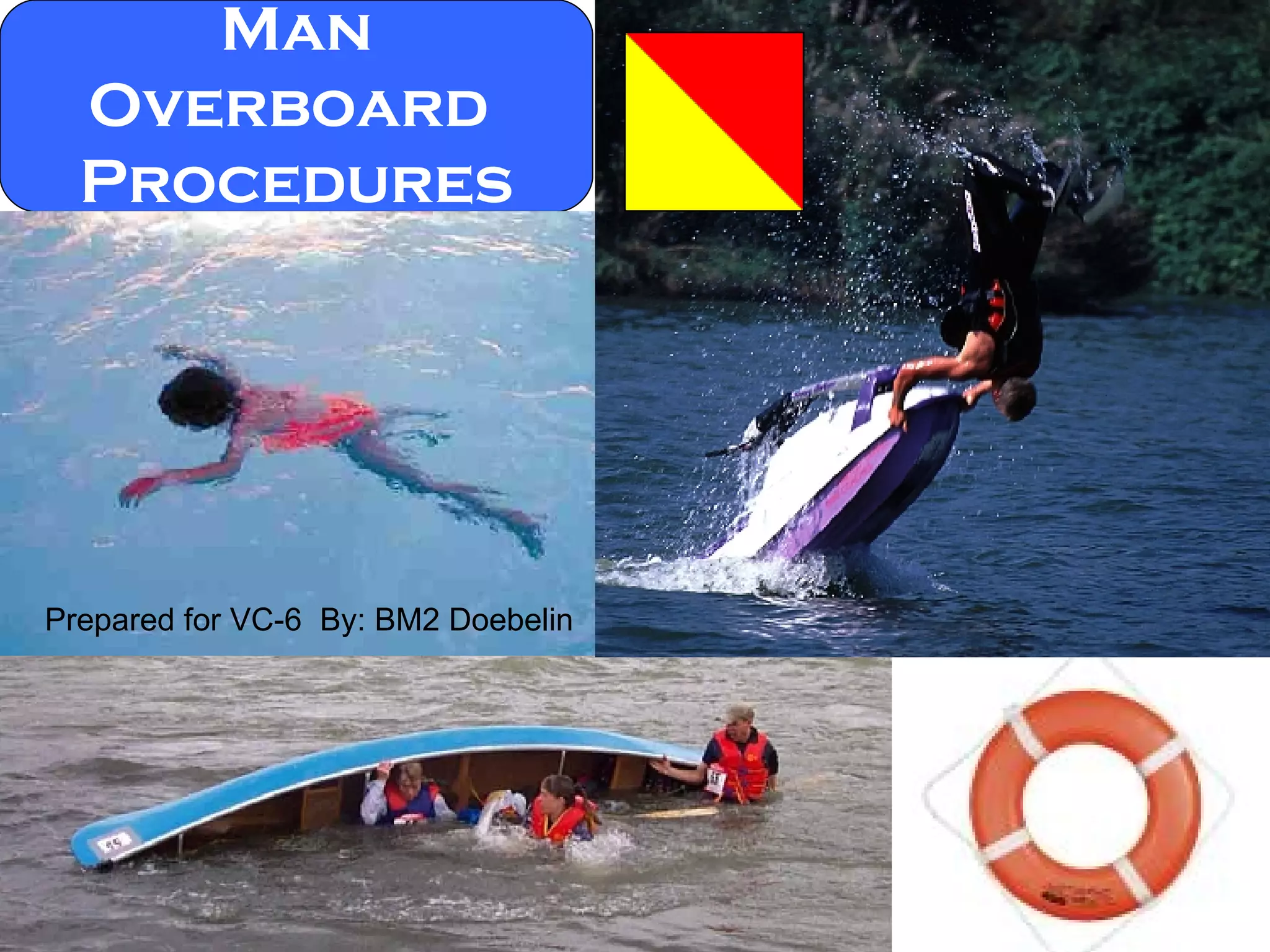
Man Overboard  Procedures Prepared for VC-6  By: BM2 Doebelin
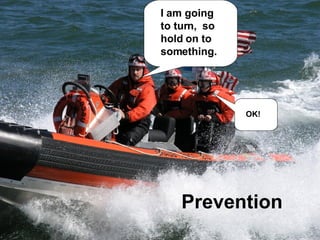
Prevention I am going  to turn,  so hold on to  something. OK!
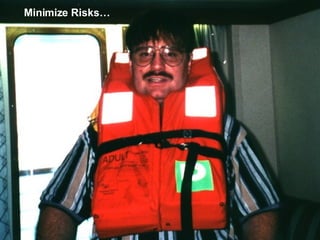
Minimize Risks…
Wear shoes that provide good traction
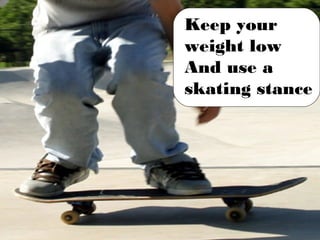
Keep your weight low And use a skating stance
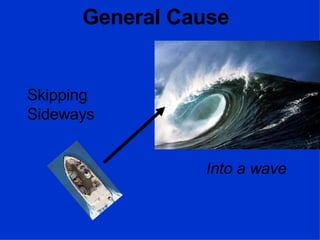
Skipping Sideways Into a wave General Cause
Practice, so you know what to do!
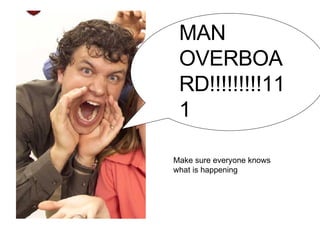
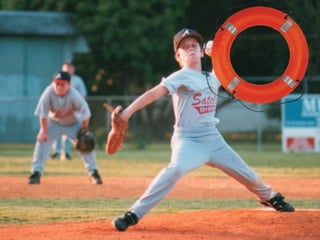
MAN OVERBOARD!!!!!!!!!111 Make sure everyone knows what is happening
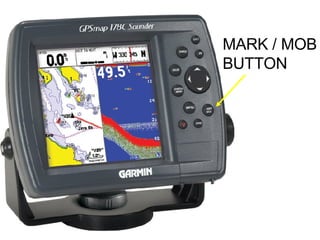
MARK / MOB  BUTTON
 
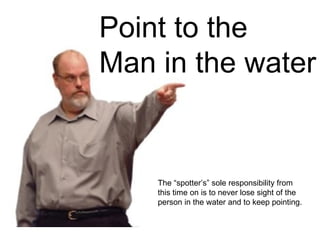
Point to the Man in the water The “spotter’s” sole responsibility from this time on is to never lose sight of the person in the water and to keep pointing.
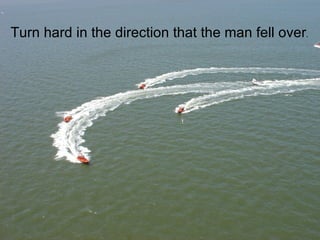
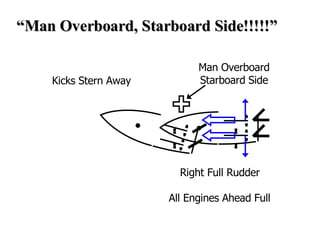
Turn hard in the direction that the man fell over .
Right Full Rudder All Engines Ahead Full Kicks Stern Away “ Man Overboard, Starboard Side!!!!!” Man Overboard Starboard Side
5 SHORT BLASTS  (or more) ON YOUR WARNING HORN
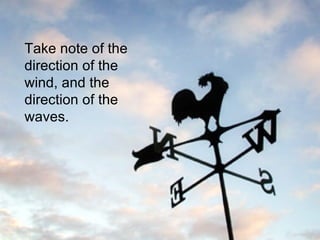
Take note of the direction of the wind, and the direction of the waves.
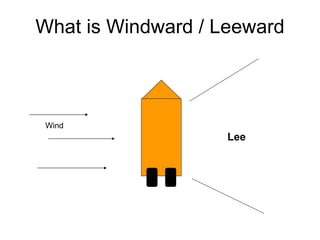
What is Windward / Leeward Wind Lee
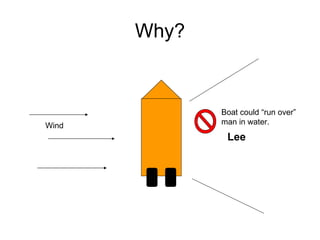
Why? Wind Lee Boat could “run over” man in water.
Let the wind and waves bring the man to you.
Recovery Methods Figure 8 Turn Williamson Turn Anderson Turn Race Track Y-Turn
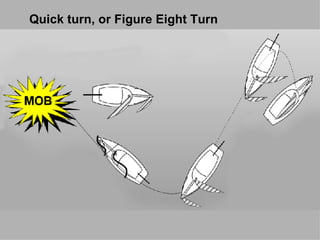
Quick turn, or Figure Eight Turn
The other turns Invented with large ships in mind Won’t hurt to be familiar with them
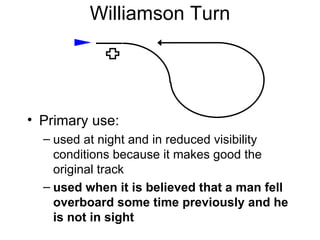
Williamson Turn Primary use: used at night and in reduced visibility conditions because it makes good the original track  used when it is believed that a man fell overboard some time previously and he is not in sight
Williamson Turn Advantages: simple makes good original track Disadvantages:  slow takes boat a relatively great distance from man, when sight may be lost
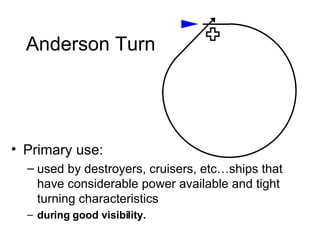
Anderson Turn Primary use: used by destroyers, cruisers, etc…ships that have considerable power available and tight turning characteristics during good visibility.
Anderson Turn Advantages: fastest recovery method Disadvantages: requires high degree of proficiency in shiphandling due to lack of straight-a-way approach to man often impossible for single screw ship
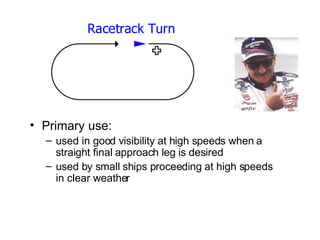
Primary use: used in good visibility at high speeds when a straight final approach leg is desired used by small ships proceeding at high speeds in clear weather
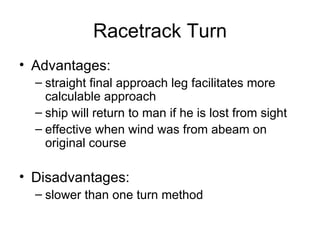
Racetrack Turn Advantages: straight final approach leg facilitates more calculable approach ship will return to man if he is lost from sight effective when wind was from abeam on original course Disadvantages: slower than one turn method
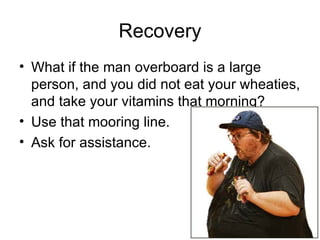
Recovery What if the man overboard is a large person, and you did not eat your wheaties, and take your vitamins that morning? Use that mooring line.  Ask for assistance.
Render First Aid CPR Airway:  Make sure the nose and mouth are clear.  Breathing:  Loosen upper clothing and observe chest movement.  Feel and listen for breath from the nose and mouth.  Circulation:  Check the colour of face and lips.  Listen for a heartbeat on the left side of the patient's chest.  Feel for the pulse in the neck.
Hypothermia Treatment Put the patient in shelter, protected from wind and rain.  Prevent further heat loss by removing wet clothing and wrapping in layers of dry clothes, blankets, newspaper, or sleeping bag.  Use your own body heat to warm the patient.  Huddle together or share a sleeping bag.  It is important to minimise movement and disturbance to a person suffering hypothermia.

MAN OVERBOARD

  • 1.
    Man Overboard Procedures Prepared for VC-6 By: BM2 Doebelin
  • 2.
    Prevention I amgoing to turn, so hold on to something. OK!
  • 3.
  • 4.
    Wear shoes thatprovide good traction
  • 5.
    Keep your weightlow And use a skating stance
  • 6.
    Skipping Sideways Intoa wave General Cause
  • 7.
    Practice, so youknow what to do!
  • 8.
    MAN OVERBOARD!!!!!!!!!111 Makesure everyone knows what is happening
  • 9.
    MARK / MOB BUTTON
  • 10.
  • 11.
    Point to theMan in the water The “spotter’s” sole responsibility from this time on is to never lose sight of the person in the water and to keep pointing.
  • 12.
    Turn hard inthe direction that the man fell over .
  • 13.
    Right Full RudderAll Engines Ahead Full Kicks Stern Away “ Man Overboard, Starboard Side!!!!!” Man Overboard Starboard Side
  • 14.
    5 SHORT BLASTS (or more) ON YOUR WARNING HORN
  • 15.
    Take note ofthe direction of the wind, and the direction of the waves.
  • 16.
    What is Windward/ Leeward Wind Lee
  • 17.
    Why? Wind LeeBoat could “run over” man in water.
  • 18.
    Let the windand waves bring the man to you.
  • 19.
    Recovery Methods Figure8 Turn Williamson Turn Anderson Turn Race Track Y-Turn
  • 20.
    Quick turn, orFigure Eight Turn
  • 21.
    The other turnsInvented with large ships in mind Won’t hurt to be familiar with them
  • 22.
    Williamson Turn Primaryuse: used at night and in reduced visibility conditions because it makes good the original track used when it is believed that a man fell overboard some time previously and he is not in sight
  • 23.
    Williamson Turn Advantages:simple makes good original track Disadvantages: slow takes boat a relatively great distance from man, when sight may be lost
  • 24.
    Anderson Turn Primaryuse: used by destroyers, cruisers, etc…ships that have considerable power available and tight turning characteristics during good visibility.
  • 25.
    Anderson Turn Advantages:fastest recovery method Disadvantages: requires high degree of proficiency in shiphandling due to lack of straight-a-way approach to man often impossible for single screw ship
  • 26.
    Primary use: usedin good visibility at high speeds when a straight final approach leg is desired used by small ships proceeding at high speeds in clear weather
  • 27.
    Racetrack Turn Advantages:straight final approach leg facilitates more calculable approach ship will return to man if he is lost from sight effective when wind was from abeam on original course Disadvantages: slower than one turn method
  • 28.
    Recovery What ifthe man overboard is a large person, and you did not eat your wheaties, and take your vitamins that morning? Use that mooring line. Ask for assistance.
  • 29.
    Render First AidCPR Airway: Make sure the nose and mouth are clear. Breathing: Loosen upper clothing and observe chest movement.  Feel and listen for breath from the nose and mouth. Circulation: Check the colour of face and lips.  Listen for a heartbeat on the left side of the patient's chest.  Feel for the pulse in the neck.
  • 30.
    Hypothermia Treatment Putthe patient in shelter, protected from wind and rain. Prevent further heat loss by removing wet clothing and wrapping in layers of dry clothes, blankets, newspaper, or sleeping bag. Use your own body heat to warm the patient.  Huddle together or share a sleeping bag. It is important to minimise movement and disturbance to a person suffering hypothermia.