MalabsorptionPatrick Carter MPAS, PA-CFebruary 7, 2011Clinical Medicine I
ObjectivesList and describe the 3 phases of normal digestion and absorption.Discuss the normal process of digestion and absorption including anatomical locations of absorption for:VitaminsCarbohydratesFatsProtein
ObjectivesDefine malabsorptionDescribe the following in terms of etiology, epidemiology, risk factors, signs and symptoms, diagnostic work-up, treatment, and complications:Celiac diseaseWhipple’s Bacterial overgrowth Compare and contrast the causes of short bowel syndrome, and discuss the resulting malabsorptions from each cause.Describe lactase deficiency in terms of etiology, epidemiology, risk factors, signs and symptoms, diagnostic work-up, and treatment.
Normal DigestionFunctions of intestinal epitheliumNutrient digestion and absorptionBarrier and immune defenseFluid and electrolyte balanceProduction of proteins, amines, and peptides
Normal DigestionThree phases of digestionIntraluminal phase (digestive)Dietary fats, proteins and carbohydrates are hydrolyzed and solubilized by pancreatic and biliary secretionMucosal phase (absorptive)Occurs in small intestine by brush border enzymesDelivery phase (post-absorptive)Dysfunction in this stage can lead to significant protein losses
MalabsorptionDisruption of digestion and nutrient absorptionSigns and symptomsSteatorrheaDiarrheaWeight loss, malnutritionIron deficiency anemia/megaloblastic anemia
MalabsorptionSigns and symptomsBone pain and fracturesParesthesia and tetanyBleeding problemsEdemaMilk intoleranceNocturia; abdominal distention
MalabsorptionDiagnostic testingLabs – CBC, PT, alkphos, CMP, folate, B12, iron, amylase, lipaseFecal fatUpper endoscopy with biopsyBarium study of the small bowel
Celiac DiseaseAKA celiac spruePermanent dietary disorder caused by an immunologic response to glutenThe disease is present in 1:100 caucasians of Northern European descentOnly 60% of those will have symptoms
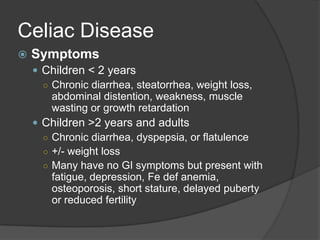
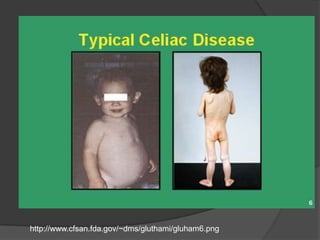
Celiac DiseaseSymptomsChildren < 2 yearsChronic diarrhea, steatorrhea, weight loss, abdominal distention, weakness, muscle wasting or growth retardation Children >2 years and adultsChronic diarrhea, dyspepsia, or flatulence+/- weight lossMany have no GI symptoms but present with fatigue, depression, Fe def anemia, osteoporosis, short stature, delayed puberty or reduced fertility
http://www.cfsan.fda.gov/~dms/gluthami/gluham6.png
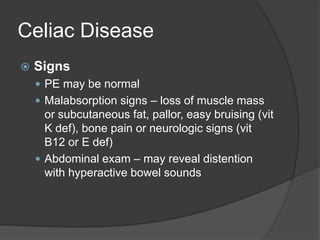
Celiac DiseaseSignsPE may be normalMalabsorption signs – loss of muscle mass or subcutaneous fat, pallor, easy bruising (vit K def), bone pain or neurologic signs (vit B12 or E def)Abdominal exam – may reveal distention with hyperactive bowel sounds
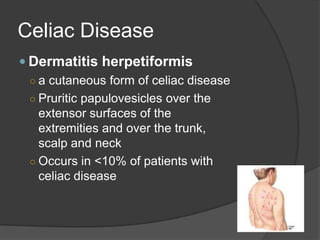
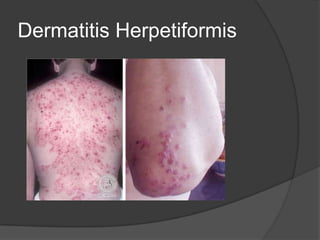
Celiac DiseaseDermatitis herpetiformisa cutaneous form of celiac diseasePruriticpapulovesicles over the extensor surfaces of the extremities and over the trunk, scalp and neckOccurs in <10% of patients with celiac disease
Dermatitis Herpetiformis
Celiac DiseaseLaboratory findingsMicrocytic anemia or megaloblastic anemia on CBCLow calcium or elevated alkphosIncreased prothrombin timeSpecific testsStool for fecal fatSerologic tests for celiac diseaseIgAendomysial antibody and IgAtTG antibody
Celiac DiseaseSpecial tests (cont’d)Endoscopic mucosal biopsy of the distal duodenum or proximal jejunumConfirms the diagnosis in pt with positive serologic testsDifferential diagnosisIBSBacterial overgrowthLactose intolerance
Celiac DiseaseTreatmentGluten-free diet (wheat, rye, barley)Clinical improvement on gluten-free diet after a few weeksDietary supplements (folate, iron, Ca, Vit A, B12, D and E) should be provided in the initial stages of therapyPrognosis – excellent once diagnosed
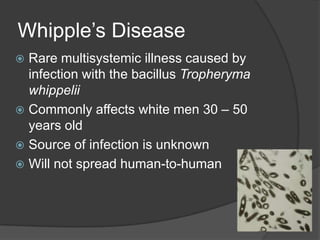
Whipple’s DiseaseRare multisystemic illness caused by infection with the bacillus TropherymawhippeliiCommonly affects white men 30 – 50 years oldSource of infection is unknownWill not spread human-to-human
Whipple’s DiseaseSymptomsWeight loss (most common presenting symptom)Arthalgias or migratory non-deforming arthritisGI symptoms – abdominal pain, diarrhea, malabsorption, flatulence, steatorrheaIntermittent low-grade feverSignsEnteric protein loss with edema and hypoalbuminemiaGeneralized LADEnlarged and warm peripheral joints
Whipple’s DiseaseSigns (cont’d)Ocular symptoms (uveitis, retinitis, etc.)Congestive heart failure or valvular regurgitationDiagnostic studiesLabs may show malabsorptionDiagnosis is made by endoscopic biopsy of the duodenum showing the Whipple bacillus
Whipple’s DiseaseDifferential diagnosisOther malabsorptive conditionsFUOCeliac sprueMycobacterium avium complex (MAC) infectionSarcoidosis and other autoimmune diseases
Whipple’s DiseaseTreatment Antibiotic therapy for at least one yearIV Rocephin (ceftriaxone) 2 g daily for 2 weeks Bactrim DS (TMP-SMX) 1 po bid for 1 yearDoxycycline if allergic to sulfaPrognosisFatal if untreatedPatients must be followed closely for recurrence
Bacterial OvergrowthOvergrowth damages mucosa of small intestine and interferes with absorptionCauses of overgrowthGastric achlorhydriaAnatomic abnormalities with stagnationMotility disordersGastrocolic or coloenteric fistula
Bacterial OvergrowthSigns and symptomsMost patients are asymptomaticS/S of malabsorption – distention, weight loss and steatorrhea or watery diarrheaDiagnostic testingFecal fatAspiration and culture of proximal jejunum secretions (invasive)Lactose breath test (noninvasive)
Bacterial OvergrowthTreatmentCorrection of anatomic defect if neededBroad-spectrum antibiotics for 1-2 weeksCipro 500 mg PO bidAmoxicillin clavulanate 875 mg PO bidMay need cyclic antibiotic therapy (1 week out of every 4 weeks)
Short Bowel SyndromeMalabsorptive condition that arises secondary  to removal of significant segments of small intestineCrohn’s diseaseMesenteric infarctionTraumaRadiation enteritisTumor resectionTraumaCan usually tolerate resection of 40-50% of the small intestine
Short Bowel SyndromeTerminal ileum resectionMalabsorption of bile salts and B12Treatment is low-fat diet, cholestyramine, and vitaminsExtensive small bowel resectionWeight loss and diarrheaTreatmentParenteral vitamin and mineral supplementationLperamide – slows transit and reduces diarrheal volumeTPN in most severe cases

Lactase DeficiencyLactase is a brush border enzyme that hydolyzes lactose into glucose and galactoseLactase enzyme levels decline with age in most people of non-European ancestry50 million Americans95% of Native Americans90% of Asian Americans70% of African Americans60% of Jewish Americans 50% of Mexican Americans<25% Caucasian Americans
Lactase DeficiencyFoods high in lactoseMilk (12g/cup)Ice cream (9g/cup)Cottage cheese (8g/cup)Aged cheeses (0.5g/cup)
Lactase DeficiencySigns and symptomsVary with severity of deficiency and amount of lactose ingestedMost can drink one or two 8 oz glasses of mild daily without symptoms, if taken with food and at wide intervalsBloating, abdominal cramps, flatulence and diarrhea after lactose ingestionNo weight lossLaboratory findingsHydrogen breath test
Lactase DeficiencyDifferential diagnosisIBDMalabsorptive disordersIBSTreatmentGoal is patient comfortLimit lactose containing foods to threshold Lactase enzyme replacement (Lactaid)
Questions?

Malabsorption2011

  • 1.
    MalabsorptionPatrick Carter MPAS,PA-CFebruary 7, 2011Clinical Medicine I
  • 2.
    ObjectivesList and describethe 3 phases of normal digestion and absorption.Discuss the normal process of digestion and absorption including anatomical locations of absorption for:VitaminsCarbohydratesFatsProtein
  • 3.
    ObjectivesDefine malabsorptionDescribe thefollowing in terms of etiology, epidemiology, risk factors, signs and symptoms, diagnostic work-up, treatment, and complications:Celiac diseaseWhipple’s Bacterial overgrowth Compare and contrast the causes of short bowel syndrome, and discuss the resulting malabsorptions from each cause.Describe lactase deficiency in terms of etiology, epidemiology, risk factors, signs and symptoms, diagnostic work-up, and treatment.
  • 4.
    Normal DigestionFunctions ofintestinal epitheliumNutrient digestion and absorptionBarrier and immune defenseFluid and electrolyte balanceProduction of proteins, amines, and peptides
  • 5.
    Normal DigestionThree phasesof digestionIntraluminal phase (digestive)Dietary fats, proteins and carbohydrates are hydrolyzed and solubilized by pancreatic and biliary secretionMucosal phase (absorptive)Occurs in small intestine by brush border enzymesDelivery phase (post-absorptive)Dysfunction in this stage can lead to significant protein losses
  • 6.
    MalabsorptionDisruption of digestionand nutrient absorptionSigns and symptomsSteatorrheaDiarrheaWeight loss, malnutritionIron deficiency anemia/megaloblastic anemia
  • 7.
    MalabsorptionSigns and symptomsBonepain and fracturesParesthesia and tetanyBleeding problemsEdemaMilk intoleranceNocturia; abdominal distention
  • 8.
    MalabsorptionDiagnostic testingLabs –CBC, PT, alkphos, CMP, folate, B12, iron, amylase, lipaseFecal fatUpper endoscopy with biopsyBarium study of the small bowel
  • 9.
    Celiac DiseaseAKA celiacspruePermanent dietary disorder caused by an immunologic response to glutenThe disease is present in 1:100 caucasians of Northern European descentOnly 60% of those will have symptoms
  • 10.
    Celiac DiseaseSymptomsChildren <2 yearsChronic diarrhea, steatorrhea, weight loss, abdominal distention, weakness, muscle wasting or growth retardation Children >2 years and adultsChronic diarrhea, dyspepsia, or flatulence+/- weight lossMany have no GI symptoms but present with fatigue, depression, Fe def anemia, osteoporosis, short stature, delayed puberty or reduced fertility
  • 11.
  • 12.
    Celiac DiseaseSignsPE maybe normalMalabsorption signs – loss of muscle mass or subcutaneous fat, pallor, easy bruising (vit K def), bone pain or neurologic signs (vit B12 or E def)Abdominal exam – may reveal distention with hyperactive bowel sounds
  • 13.
    Celiac DiseaseDermatitis herpetiformisacutaneous form of celiac diseasePruriticpapulovesicles over the extensor surfaces of the extremities and over the trunk, scalp and neckOccurs in <10% of patients with celiac disease
  • 14.
  • 15.
    Celiac DiseaseLaboratory findingsMicrocyticanemia or megaloblastic anemia on CBCLow calcium or elevated alkphosIncreased prothrombin timeSpecific testsStool for fecal fatSerologic tests for celiac diseaseIgAendomysial antibody and IgAtTG antibody
  • 16.
    Celiac DiseaseSpecial tests(cont’d)Endoscopic mucosal biopsy of the distal duodenum or proximal jejunumConfirms the diagnosis in pt with positive serologic testsDifferential diagnosisIBSBacterial overgrowthLactose intolerance
  • 17.
    Celiac DiseaseTreatmentGluten-free diet(wheat, rye, barley)Clinical improvement on gluten-free diet after a few weeksDietary supplements (folate, iron, Ca, Vit A, B12, D and E) should be provided in the initial stages of therapyPrognosis – excellent once diagnosed
  • 18.
    Whipple’s DiseaseRare multisystemicillness caused by infection with the bacillus TropherymawhippeliiCommonly affects white men 30 – 50 years oldSource of infection is unknownWill not spread human-to-human
  • 19.
    Whipple’s DiseaseSymptomsWeight loss(most common presenting symptom)Arthalgias or migratory non-deforming arthritisGI symptoms – abdominal pain, diarrhea, malabsorption, flatulence, steatorrheaIntermittent low-grade feverSignsEnteric protein loss with edema and hypoalbuminemiaGeneralized LADEnlarged and warm peripheral joints
  • 20.
    Whipple’s DiseaseSigns (cont’d)Ocularsymptoms (uveitis, retinitis, etc.)Congestive heart failure or valvular regurgitationDiagnostic studiesLabs may show malabsorptionDiagnosis is made by endoscopic biopsy of the duodenum showing the Whipple bacillus
  • 21.
    Whipple’s DiseaseDifferential diagnosisOthermalabsorptive conditionsFUOCeliac sprueMycobacterium avium complex (MAC) infectionSarcoidosis and other autoimmune diseases
  • 22.
    Whipple’s DiseaseTreatment Antibiotictherapy for at least one yearIV Rocephin (ceftriaxone) 2 g daily for 2 weeks Bactrim DS (TMP-SMX) 1 po bid for 1 yearDoxycycline if allergic to sulfaPrognosisFatal if untreatedPatients must be followed closely for recurrence
  • 23.
    Bacterial OvergrowthOvergrowth damagesmucosa of small intestine and interferes with absorptionCauses of overgrowthGastric achlorhydriaAnatomic abnormalities with stagnationMotility disordersGastrocolic or coloenteric fistula
  • 24.
    Bacterial OvergrowthSigns andsymptomsMost patients are asymptomaticS/S of malabsorption – distention, weight loss and steatorrhea or watery diarrheaDiagnostic testingFecal fatAspiration and culture of proximal jejunum secretions (invasive)Lactose breath test (noninvasive)
  • 25.
    Bacterial OvergrowthTreatmentCorrection ofanatomic defect if neededBroad-spectrum antibiotics for 1-2 weeksCipro 500 mg PO bidAmoxicillin clavulanate 875 mg PO bidMay need cyclic antibiotic therapy (1 week out of every 4 weeks)
  • 26.
    Short Bowel SyndromeMalabsorptivecondition that arises secondary to removal of significant segments of small intestineCrohn’s diseaseMesenteric infarctionTraumaRadiation enteritisTumor resectionTraumaCan usually tolerate resection of 40-50% of the small intestine
  • 27.
    Short Bowel SyndromeTerminalileum resectionMalabsorption of bile salts and B12Treatment is low-fat diet, cholestyramine, and vitaminsExtensive small bowel resectionWeight loss and diarrheaTreatmentParenteral vitamin and mineral supplementationLperamide – slows transit and reduces diarrheal volumeTPN in most severe cases
  • 28.
    Lactase DeficiencyLactase isa brush border enzyme that hydolyzes lactose into glucose and galactoseLactase enzyme levels decline with age in most people of non-European ancestry50 million Americans95% of Native Americans90% of Asian Americans70% of African Americans60% of Jewish Americans 50% of Mexican Americans<25% Caucasian Americans
  • 29.
    Lactase DeficiencyFoods highin lactoseMilk (12g/cup)Ice cream (9g/cup)Cottage cheese (8g/cup)Aged cheeses (0.5g/cup)
  • 30.
    Lactase DeficiencySigns andsymptomsVary with severity of deficiency and amount of lactose ingestedMost can drink one or two 8 oz glasses of mild daily without symptoms, if taken with food and at wide intervalsBloating, abdominal cramps, flatulence and diarrhea after lactose ingestionNo weight lossLaboratory findingsHydrogen breath test
  • 31.
    Lactase DeficiencyDifferential diagnosisIBDMalabsorptivedisordersIBSTreatmentGoal is patient comfortLimit lactose containing foods to threshold Lactase enzyme replacement (Lactaid)
  • 32.