MAKING A BUSINESS PLAN
Objectives
• To understand how a business plan is divided into
sections
• To list the uses of a business plan
• To lay out the steps involved in writing a business plan
• To list out data required in drawing up a business plan
• To discuss about the various types of business plan
• To understand the significance of an executive summary
• To understand the structure and composition of various
sections of a business plan
• To list the various appendices and exhibits needed in a
business plan
Uses of a Business Plan
• Equity funding
• Bank finance
• Alliances
• Recruitment
• Clarify the business
• Others
Kinds of Business Plans
• Summary Plan
• Executive summary
• Full Business Plan
• Operational Business Plan
• The oral presentation
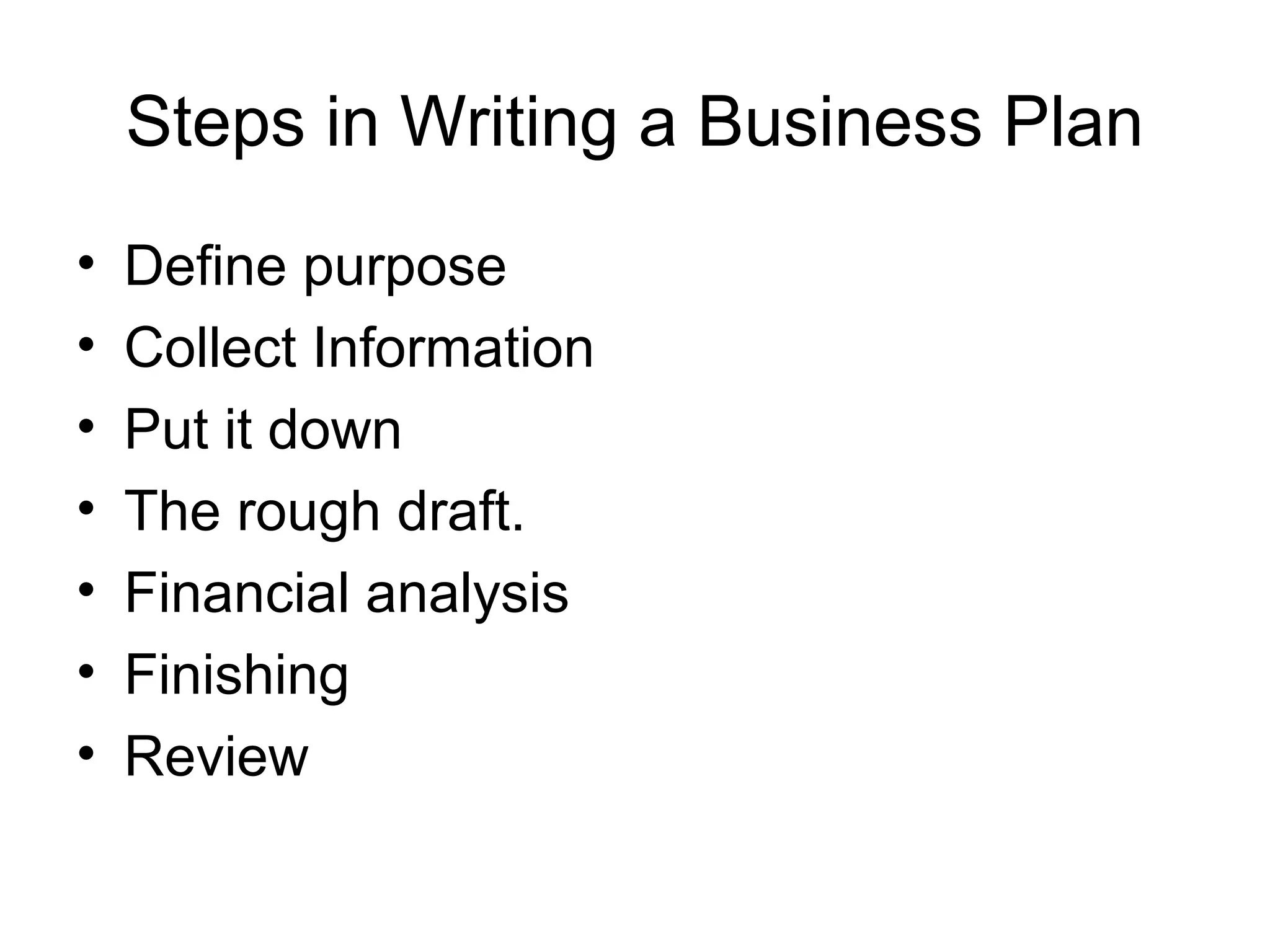
Steps in Writing a Business Plan
• Define purpose
• Collect Information
• Put it down
• The rough draft.
• Financial analysis
• Finishing
• Review
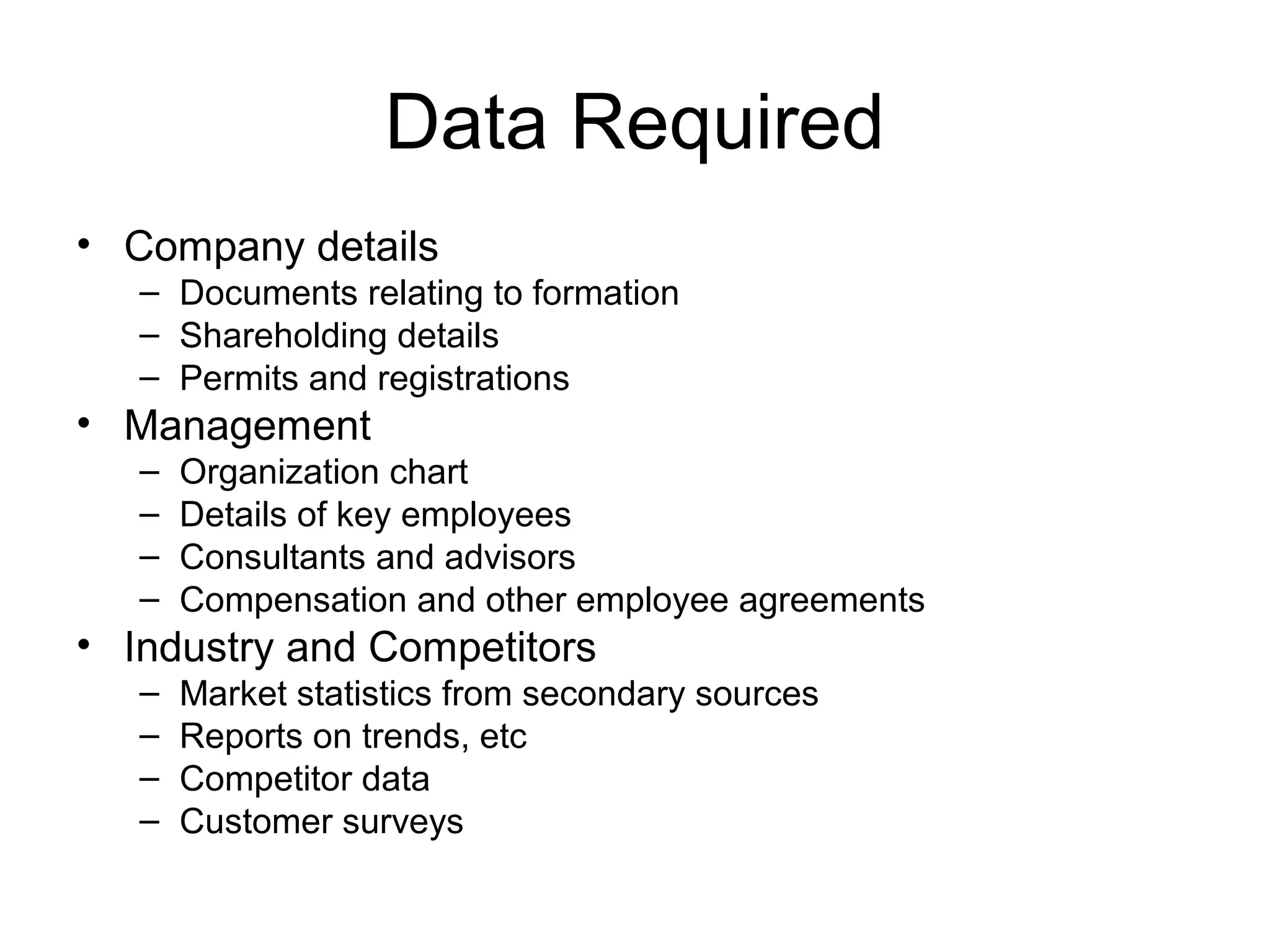
Data Required
• Company details
– Documents relating to formation
– Shareholding details
– Permits and registrations
• Management
– Organization chart
– Details of key employees
– Consultants and advisors
– Compensation and other employee agreements
• Industry and Competitors
– Market statistics from secondary sources
– Reports on trends, etc
– Competitor data
– Customer surveys
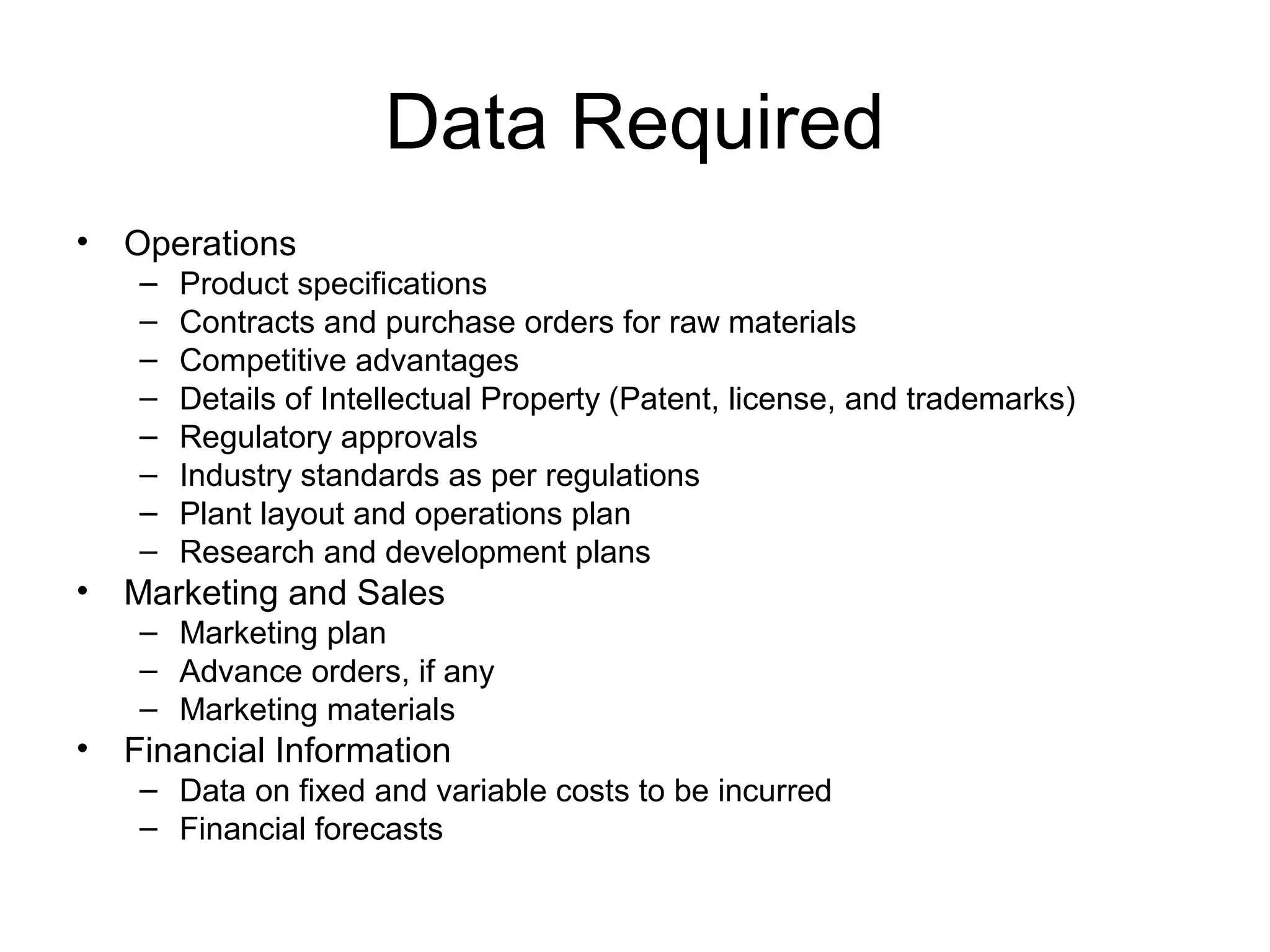
Data Required
• Operations
– Product specifications
– Contracts and purchase orders for raw materials
– Competitive advantages
– Details of Intellectual Property (Patent, license, and trademarks)
– Regulatory approvals
– Industry standards as per regulations
– Plant layout and operations plan
– Research and development plans
• Marketing and Sales
– Marketing plan
– Advance orders, if any
– Marketing materials
• Financial Information
– Data on fixed and variable costs to be incurred
– Financial forecasts
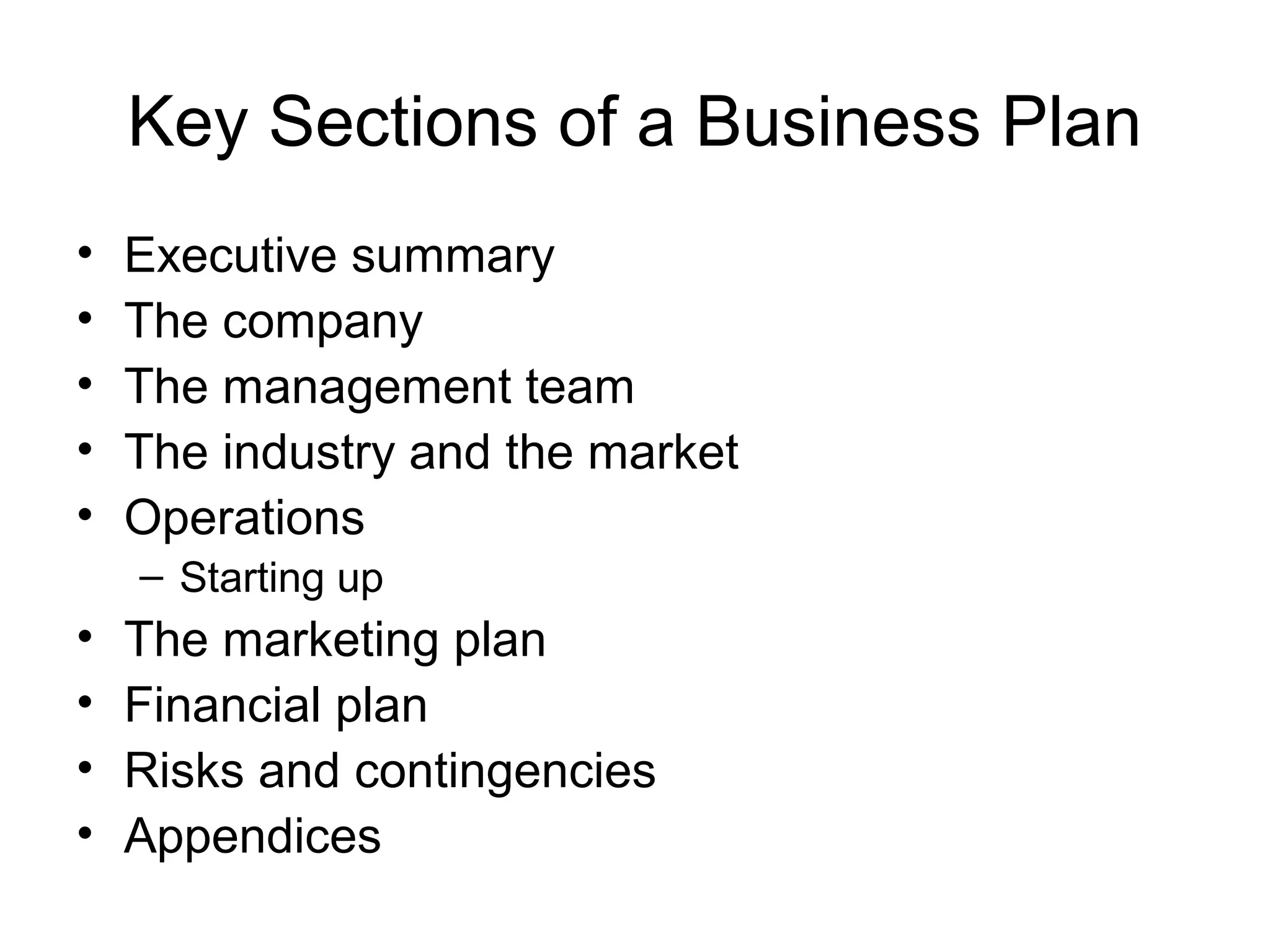
Key Sections of a Business Plan
• Executive summary
• The company
• The management team
• The industry and the market
• Operations
– Starting up
• The marketing plan
• Financial plan
• Risks and contingencies
• Appendices
Executive Summary
The executive summary is probably the
most important section of the business
plan.
It is basically the whole business plan
condensed into a few pages
The main objective of the executive
summary is to entice the reader to go
through the entire plan.
The Company
• History
• Current Status
• Future
The Management Team
• Technical and professional qualifications
• Quality of work experience
• Experience in the relevant sector
• Reputation in the business community
• Evidence of moral integrity
• Financial capacity
• Networking with other vital people in the
industry
The Industry and the market
• An industry is a collection of sellers
• A market is a collection of buyers
– Concentrate on the relevant segments
• Competition
Operations
• Gantt chart outline setup
• Technology
• Raw material strategy
• Production planning
• Quality
• HR policy
Marketing
• Target Segments
• Branding
• Product
• Packaging
• Pricing
• Distribution
• Promotion
Finance
• Funds sought
• Projected financial statements
• Costing details
• Break even and payback analysis
Risks and Contingencies
Identify major threats and risks
Outline strategies for countering them
Appendices
• Copy of documents pertaining to incorporation or
formalisation of partnership.
• CV’s of the entrepreneur/s and of key employees
• Copies of various permits or permissions granted.
• Copies of papers pertaining to sale or lease of land for
the business
• Copies of documentation of proprietary intellectual
property
• Graphical representation of schedule including
milestones and dates
• Photographs of location
• Factory or plant layout
• Graphical representation of production process
Appendices
• Findings of market survey conducted
• Photograph of product or prototype
• Storyboards or mock-ups of advertisements
• Projected balance sheets
• Projected profit and loss accounts
• Projected cash flow statements
• Sensitivity analysis of P&L a/c
• Break even analysis
• Financial ratios

Making a business plan

  • 1.
  • 2.
    Objectives • To understandhow a business plan is divided into sections • To list the uses of a business plan • To lay out the steps involved in writing a business plan • To list out data required in drawing up a business plan • To discuss about the various types of business plan • To understand the significance of an executive summary • To understand the structure and composition of various sections of a business plan • To list the various appendices and exhibits needed in a business plan
  • 3.
    Uses of aBusiness Plan • Equity funding • Bank finance • Alliances • Recruitment • Clarify the business • Others
  • 4.
    Kinds of BusinessPlans • Summary Plan • Executive summary • Full Business Plan • Operational Business Plan • The oral presentation
  • 5.
    Steps in Writinga Business Plan • Define purpose • Collect Information • Put it down • The rough draft. • Financial analysis • Finishing • Review
  • 6.
    Data Required • Companydetails – Documents relating to formation – Shareholding details – Permits and registrations • Management – Organization chart – Details of key employees – Consultants and advisors – Compensation and other employee agreements • Industry and Competitors – Market statistics from secondary sources – Reports on trends, etc – Competitor data – Customer surveys
  • 7.
    Data Required • Operations –Product specifications – Contracts and purchase orders for raw materials – Competitive advantages – Details of Intellectual Property (Patent, license, and trademarks) – Regulatory approvals – Industry standards as per regulations – Plant layout and operations plan – Research and development plans • Marketing and Sales – Marketing plan – Advance orders, if any – Marketing materials • Financial Information – Data on fixed and variable costs to be incurred – Financial forecasts
  • 8.
    Key Sections ofa Business Plan • Executive summary • The company • The management team • The industry and the market • Operations – Starting up • The marketing plan • Financial plan • Risks and contingencies • Appendices
  • 9.
    Executive Summary The executivesummary is probably the most important section of the business plan. It is basically the whole business plan condensed into a few pages The main objective of the executive summary is to entice the reader to go through the entire plan.
  • 10.
    The Company • History •Current Status • Future
  • 11.
    The Management Team •Technical and professional qualifications • Quality of work experience • Experience in the relevant sector • Reputation in the business community • Evidence of moral integrity • Financial capacity • Networking with other vital people in the industry
  • 12.
    The Industry andthe market • An industry is a collection of sellers • A market is a collection of buyers – Concentrate on the relevant segments • Competition
  • 13.
    Operations • Gantt chartoutline setup • Technology • Raw material strategy • Production planning • Quality • HR policy
  • 14.
    Marketing • Target Segments •Branding • Product • Packaging • Pricing • Distribution • Promotion
  • 15.
    Finance • Funds sought •Projected financial statements • Costing details • Break even and payback analysis
  • 16.
    Risks and Contingencies Identifymajor threats and risks Outline strategies for countering them
  • 17.
    Appendices • Copy ofdocuments pertaining to incorporation or formalisation of partnership. • CV’s of the entrepreneur/s and of key employees • Copies of various permits or permissions granted. • Copies of papers pertaining to sale or lease of land for the business • Copies of documentation of proprietary intellectual property • Graphical representation of schedule including milestones and dates • Photographs of location • Factory or plant layout • Graphical representation of production process
  • 18.
    Appendices • Findings ofmarket survey conducted • Photograph of product or prototype • Storyboards or mock-ups of advertisements • Projected balance sheets • Projected profit and loss accounts • Projected cash flow statements • Sensitivity analysis of P&L a/c • Break even analysis • Financial ratios