Creativity and Entrepreneurial
Plan
Creativity
• Creativity relates to the ability to create an
idea for new product, service, methods or
process.
• The creativity in case of need does not only
create the degree of negotiation and business
and marketing ideas, but also plays a
remarkable role in solution of problems.
• In order to achieve success in
entrepreneurship, creativity is indispensable.
Its cope is dependable on some situation
factors, viz., (i) easy availability of data, (ii)
pressure of work, (iii) strict adherence to
control, (iv)outcome of failure and (v)
conditional thought.
Creativity Process
Creativity is recognized as a mental or internal
process.
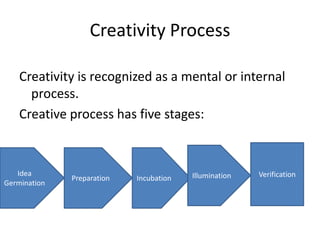
Creative process has five stages:
Idea
Germination
Preparation Incubation Illumination Verification
Idea Generation and Screening
and Project Identification
Generation of Ideas
Someone with specialized technical knowledge
or marketing expertise or some other
competence feels that he can offer a product
or service which can cater to a presently
unmet need or serve a market where demand
exceeds supply or effectively compete with
similar products or services because of certain
favorable features like better quality or lower
prices.
Steps in Project Identification
1. SWOT Analysis
2. Clear Articulation of Objectives
* Cost Reduction
* Productivity Improvement
* Increase in capacity utilization
* Improvement in contribution margin
* Expansion into promising fields
3. Fostering a conducive environment
Bell Telephone Laboratory and 3 M Corporation and HUL
4. Monitoring the Environment
For purposes of monitoring, the business environment may be
divided into six broad sectors:
i. Economic
ii. Government Sector
iii. Technological Sector
iv. Socio-demographic Sector
v. Competition Sector
vi. Supplier Sector
5. Corporate Appraisal
Broad Areas:
i. Marketing and Distribution
ii. Production and Operations
iii. Research and Development
iv. Corporate Resources and Personnel
v. Finance and accounting
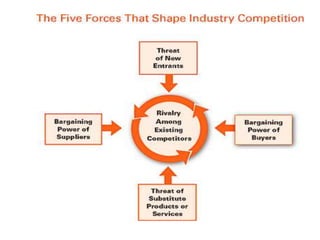
* Tools for Identifying Investment
Opportunities
i. Porter Model
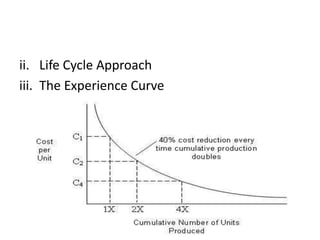
ii. Life Cycle Approach
iii. The Experience Curve
6. Scouting for Project Ideas
i. Analyze the performance of existing industries
ii. Examine the inputs and outputs of various industries
iii. Review imports and exports
iv. Study plan outlays and governmental guidelines
v. Look at the suggestions of financial institutions and
developmental agencies
vi. Investigate local materials and Resources
vii. Analyze Economic and Social Trends
viii. Study new technological developments
ix. Draw clues from consumption abroad
x. Explore the possibility of reviving sick units
xi. Identify unfulfilled psychological needs
xii. Attend trade fairs
xiii. Stimulate creativity for generating new product ideas
xiv. Hope that chance factor will favor you.
7. Preliminary Screening
i. Compatibility with the promoter
ii. Consistency with governmental priorities
iii. Availability of inputs
iv. Adequacy of market
v. Reasonableness of cost
vi. Acceptability of risk level
Project
• Is one-shot, time limited, goal-oriented , a
major undertaking, requiring the
commitment of varied skills and resources.
• Project as the whole complex of activities
involved in using resources to gain benefits.
Characteristics of project
• Objective
• Life-span
• Single entity
• Teamwork
• Life-cycle
• Uniqueness
• Change
• Made to order
• Unity in diversity
• High level of sub-contracting
• Risk and uncertainty
Project classification
1.Quantifiable and non-quantifiable projects
2. Sectoral project
• Agriculture sector
• Irrigation sector
• Industry sector
• Transport sector
• Communication sector
• Social service sector
3. Techno-economic project
• Factor-oriented intensity
• Causation-oriented
• Magnitude oriented
Project Planning
• the method of determining future course of
action to achieve desired result i.e. for
fulfillment of predetermined targets with a
definite period of time.
• Project planning is predetermined planning
about project, by means of which a well-
designed and systematized structure of
functions is framed for the accomplishment of
objectives of a project.
Project planning is undertaken for accomplishing
the following task
• Direction of performance
• Acting as medium of communication
• Arousing consciousness about the importance
of work
• Providing control
Need for preparation of project
planning
• Direction of performance
• Rational classification of complex activities
• Possibility of investment
• Optimum utilization of resources
• Medium of communication
• Providing control
• Risk management
Preparation of project plan
1. Defining the objectives of project plan.
2. Action programming
3. Scheduling of resources and time
4. Feasibility study
5. Organization of project team
6. Budgeting
7. Designing the control system
Project Formulation
• Type of Objectives in Project formulation
i. General Objectives
ii. Operational Objectives
Stages of Project Formulation:
1. Feasibility Analysis
2. Economic Analysis
3. Technical Analysis
4. Input Analysis
5. Financial Analysis
6. Social cost-benefit analysis
7. Pre-investment analysis
Market analysis
Is to estimate potential size of the market for the
product proposed to be manufactured and get
an idea about the market share that is likely to be
manufactured.
Key steps involved in market and demand analysis:
1. Situation analysis and specification of objectives.
2. collection of secondary information
3. Conduct of market survey
4. Characteristics of the market
5. Demand forecasting
6. Market planning
Financial Analysis
• As the process of discovering economic facts
about an enterprise and project on basis of an
interpretation of financial data.
• F.A provides an insight into two important areas
of management- return on investment and
soundness of company’s financial position.
• F.A reveals where company stands with
profitability, liquidity, efficient use of its assets.
Significance of financial analysis
• Helps to find out whether project is attractive
enough to secure funds needed for its various
activities.
• Analysis of financial statement has become
significant due to widespread interest of various
parties in financial result of company.
• Number of techniques has been developed to
undertake analysis of financial statement in order to
reach conclusion about financial
health, profitability, efficiency of an
enterprise, compare enterprise with other similar
undertaking.
Utility of financial statement
• Regulatory provision
• Income-tax accounting
• Executives
• Bankers investors
Technical analysis
• The purpose is :
a) To ensure that the project is technically feasible
in the sense that all the inputs required to set
up the projects are available.
b) To facilitate the most optimal formulation of
project in terms of technology , size, location.
• Project Implementation
• Project Evaluation and Control
Social cost-benefit analysis is used to evaluate
the project

Ed2

  • 1.
  • 2.
    Creativity • Creativity relatesto the ability to create an idea for new product, service, methods or process. • The creativity in case of need does not only create the degree of negotiation and business and marketing ideas, but also plays a remarkable role in solution of problems.
  • 3.
    • In orderto achieve success in entrepreneurship, creativity is indispensable. Its cope is dependable on some situation factors, viz., (i) easy availability of data, (ii) pressure of work, (iii) strict adherence to control, (iv)outcome of failure and (v) conditional thought.
  • 4.
    Creativity Process Creativity isrecognized as a mental or internal process. Creative process has five stages: Idea Germination Preparation Incubation Illumination Verification
  • 5.
    Idea Generation andScreening and Project Identification
  • 6.
    Generation of Ideas Someonewith specialized technical knowledge or marketing expertise or some other competence feels that he can offer a product or service which can cater to a presently unmet need or serve a market where demand exceeds supply or effectively compete with similar products or services because of certain favorable features like better quality or lower prices.
  • 7.
    Steps in ProjectIdentification 1. SWOT Analysis 2. Clear Articulation of Objectives * Cost Reduction * Productivity Improvement * Increase in capacity utilization * Improvement in contribution margin * Expansion into promising fields
  • 8.
    3. Fostering aconducive environment Bell Telephone Laboratory and 3 M Corporation and HUL 4. Monitoring the Environment For purposes of monitoring, the business environment may be divided into six broad sectors: i. Economic ii. Government Sector iii. Technological Sector iv. Socio-demographic Sector v. Competition Sector vi. Supplier Sector
  • 9.
    5. Corporate Appraisal BroadAreas: i. Marketing and Distribution ii. Production and Operations iii. Research and Development iv. Corporate Resources and Personnel v. Finance and accounting
  • 10.
    * Tools forIdentifying Investment Opportunities i. Porter Model
  • 12.
    ii. Life CycleApproach iii. The Experience Curve
  • 13.
    6. Scouting forProject Ideas i. Analyze the performance of existing industries ii. Examine the inputs and outputs of various industries iii. Review imports and exports iv. Study plan outlays and governmental guidelines v. Look at the suggestions of financial institutions and developmental agencies vi. Investigate local materials and Resources vii. Analyze Economic and Social Trends viii. Study new technological developments ix. Draw clues from consumption abroad x. Explore the possibility of reviving sick units xi. Identify unfulfilled psychological needs xii. Attend trade fairs xiii. Stimulate creativity for generating new product ideas xiv. Hope that chance factor will favor you.
  • 14.
    7. Preliminary Screening i.Compatibility with the promoter ii. Consistency with governmental priorities iii. Availability of inputs iv. Adequacy of market v. Reasonableness of cost vi. Acceptability of risk level
  • 15.
    Project • Is one-shot,time limited, goal-oriented , a major undertaking, requiring the commitment of varied skills and resources. • Project as the whole complex of activities involved in using resources to gain benefits.
  • 16.
    Characteristics of project •Objective • Life-span • Single entity • Teamwork • Life-cycle • Uniqueness • Change • Made to order • Unity in diversity • High level of sub-contracting • Risk and uncertainty
  • 17.
    Project classification 1.Quantifiable andnon-quantifiable projects 2. Sectoral project • Agriculture sector • Irrigation sector • Industry sector • Transport sector • Communication sector • Social service sector 3. Techno-economic project • Factor-oriented intensity • Causation-oriented • Magnitude oriented
  • 18.
    Project Planning • themethod of determining future course of action to achieve desired result i.e. for fulfillment of predetermined targets with a definite period of time. • Project planning is predetermined planning about project, by means of which a well- designed and systematized structure of functions is framed for the accomplishment of objectives of a project.
  • 19.
    Project planning isundertaken for accomplishing the following task • Direction of performance • Acting as medium of communication • Arousing consciousness about the importance of work • Providing control
  • 20.
    Need for preparationof project planning • Direction of performance • Rational classification of complex activities • Possibility of investment • Optimum utilization of resources • Medium of communication • Providing control • Risk management
  • 21.
    Preparation of projectplan 1. Defining the objectives of project plan. 2. Action programming 3. Scheduling of resources and time 4. Feasibility study 5. Organization of project team 6. Budgeting 7. Designing the control system
  • 22.
    Project Formulation • Typeof Objectives in Project formulation i. General Objectives ii. Operational Objectives Stages of Project Formulation: 1. Feasibility Analysis 2. Economic Analysis 3. Technical Analysis 4. Input Analysis 5. Financial Analysis 6. Social cost-benefit analysis 7. Pre-investment analysis
  • 23.
    Market analysis Is toestimate potential size of the market for the product proposed to be manufactured and get an idea about the market share that is likely to be manufactured. Key steps involved in market and demand analysis: 1. Situation analysis and specification of objectives. 2. collection of secondary information 3. Conduct of market survey 4. Characteristics of the market 5. Demand forecasting 6. Market planning
  • 24.
    Financial Analysis • Asthe process of discovering economic facts about an enterprise and project on basis of an interpretation of financial data. • F.A provides an insight into two important areas of management- return on investment and soundness of company’s financial position. • F.A reveals where company stands with profitability, liquidity, efficient use of its assets.
  • 25.
    Significance of financialanalysis • Helps to find out whether project is attractive enough to secure funds needed for its various activities. • Analysis of financial statement has become significant due to widespread interest of various parties in financial result of company. • Number of techniques has been developed to undertake analysis of financial statement in order to reach conclusion about financial health, profitability, efficiency of an enterprise, compare enterprise with other similar undertaking.
  • 26.
    Utility of financialstatement • Regulatory provision • Income-tax accounting • Executives • Bankers investors
  • 27.
    Technical analysis • Thepurpose is : a) To ensure that the project is technically feasible in the sense that all the inputs required to set up the projects are available. b) To facilitate the most optimal formulation of project in terms of technology , size, location.
  • 28.
    • Project Implementation •Project Evaluation and Control Social cost-benefit analysis is used to evaluate the project