Download to read offline

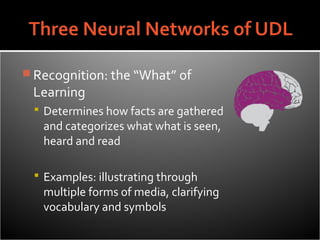
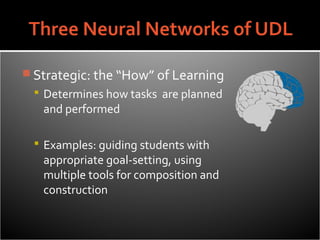
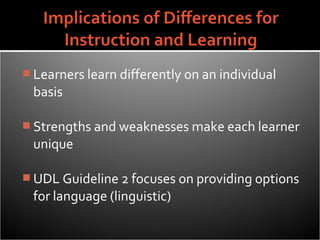
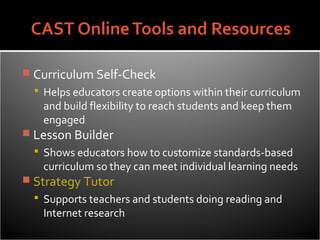

This presentation discusses Universal Design for Learning (UDL) and how it aims to give all learners equal opportunities by creating flexible goals, methods, materials and assessments. UDL focuses on recognition, strategic and affective networks, with examples like using multiple media forms and minimizing threats. Benefits include easier customization for individual learners. The presentation provides resources like the CAST Strategy Tutor and recommends applying UDL principles to better meet student needs and create more engaged learners.


![735 Powerpoint[1]](https://cdn.slidesharecdn.com/ss_thumbnails/735powerpoint1-1217888938306746-8-thumbnail.jpg?width=640&height=640&fit=bounds)


