Magnetic Tape Recorder
by
Venumaheswar rao
KITS Warangal
• Magnetic recording is the storage of
data on a magnetized medium.
Magnetic storage uses different
patterns of magnetization in a
magnetisable material to store data
and is a form of non-volatile
memory.
• The principle of magnetic recording
was first demonstrated by the
Danish engineer Valdemar Poulsen in
1900, when he introduced a machine
called the telegraphone that
recorded speech
• The data presentation can be categories
in two group such as inductor and
recorders.
• Recording type of instrument provides
graphical representation of the quantity under
measurement on screen.
• Analog Recorders
• Digital Recorders
What is Analog Recorder…???
• An analog recording is where you would record the analog singnal to
recordable medium.The medium may be magnetic tapes or sketches on
vinyl.
• Analog recording is the first approaches used to store sound for later
playback. It was first successfully used by Thomas Alva Edison.
• The modern examples of the analog audio recording are:
1) Gramophone record (aka phonograph record, vinyl, etc.)
2) Magnetic tape
3) Reel-to-Reel recorders
4) Compact cassette
Further Analog recorder are
classified In 3 Types
• Magnetic tape recorders
• Graphic recorders
• Oscillographic recorders
Magnetic Tape Recorders.
• The history of Magnetic recording began
with the telegraph. When samuel F.B
Mores sent an electrical signal for “ What
hath God wrought!” over a wire from
Washington to Baltimore in 1844, he
created a new technology and industry.
Oscillographic recorders.
• An oscilloscope , previously called an
oscillograph and informally known as a scope,
CRO ( for cathode-ray oscilloscope), or DSO
(for the more modern digital storage
oscilloscope),is a type of electronic test
instument that allows observation of
constantly varying signal voltages. Non-
electrical signals (such as sound or vibration)
can be converted to voltages and displayed.
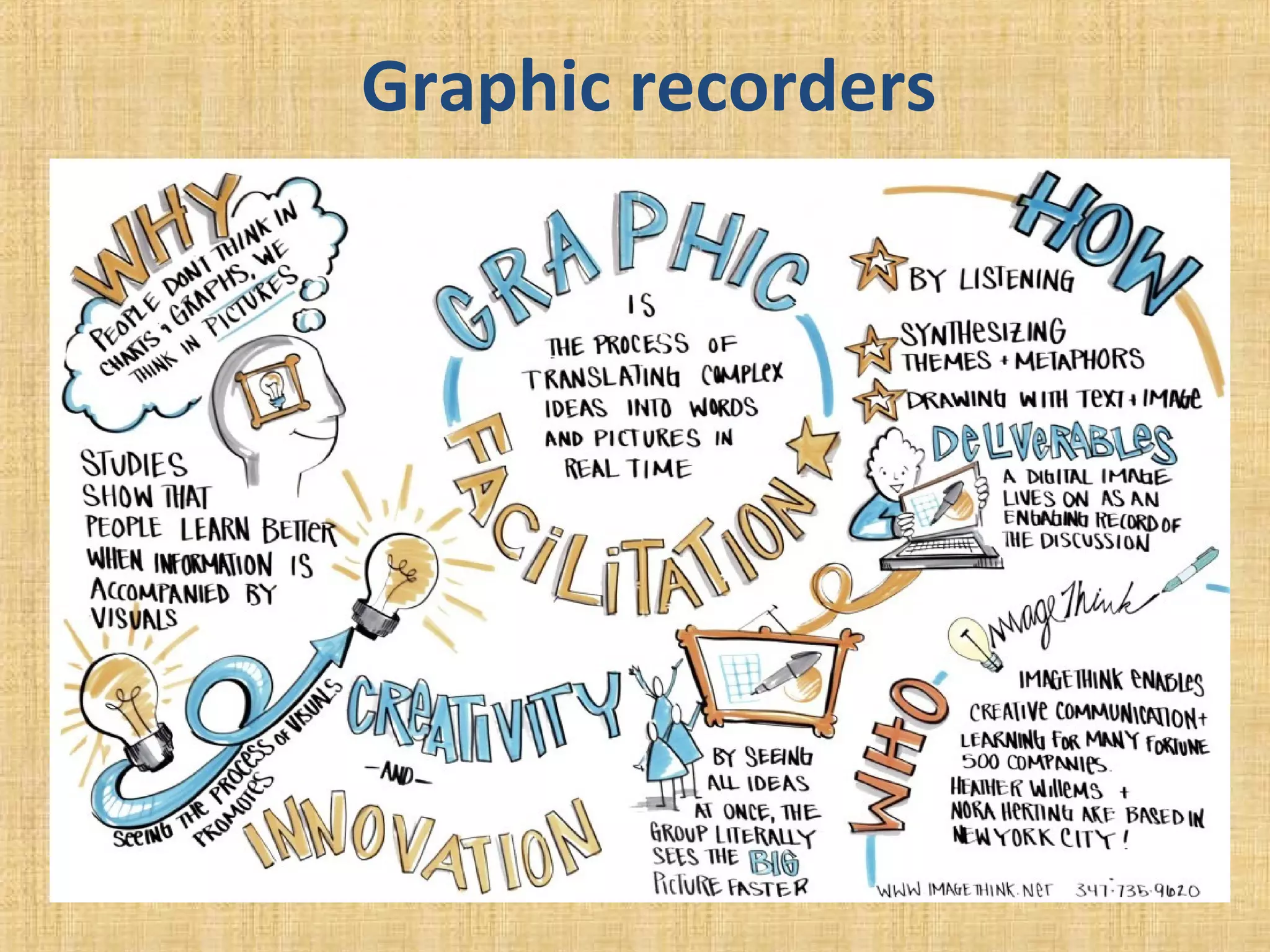
Graphic recorders
What is digital recorders…???
• A device that records video in a digital
format to a disk drive or other memory
medium within a device, and can also be
transfered to a computer via USB cable.
• Digital Recorders are further classified as
• Synchronous Digital Recorders.
• Incremental Digital Recorders.
MAGNETIC RECORDER
MAGNETIC RECORDER
• In many cases it’s necessary to record the data such
that it can be recovered or regenerated in the
electrical.
• Magnetic tape recorder serves this purpose distinctly.
• Magnetic record can be erased and the medium can be
used to record data or signal afresh.
• Recording can be made on either tape or diskette.
BASIC COMPONENTS
• Recording Head
• Magnetic Tape
• Reproducing Head
• Tape Movement Mechanism
• Conditioning Device
Recording head
• A recording head is the physical interface between a recording apparatus and a moving
recording medium. Recording heads are generally classified according to the physical
principle that allows them to impress their data upon their medium. A recording head is
often mechanically paired with a playback head, which, though proximal to, is often discrete
from the record head.
• The two most common forms of recording head are:
• Magnetic - Magnetic recording heads use the principles of electromagnetism to coerce a
paramagnetic recording medium, such as iron oxides, to orient in a readable manner such as
magnetic tape. Record heads are constructed of laminated permalloy, ferrite, or sendust. As
of 2006 this is by far the most dominant type of head in use.
• Optical - Optical recording heads use the principles of optics and light to impart energy on a
recording medium, which accepts the energy in a readable manner, e.g. by melting or
photography.
Magnetic tape
• Magnetic tape is a medium for magnetic recording, made of a
thin magnetisable coating on a long, narrow strip of plastic
film. It was developed in Germany, based on magnetic wire
recording.
• Devices that record and play back audio and video using
magnetic tape are tape recorders and video tape recorders.
• A device that stores computer data on magnetic tape is a
tape drive.
Reproducing head
• This performs the task of converting the stored
magnetic pattern into the electrical signal.
• Appearance of reproduced signal is similar to that of
recording head.
• A recording head is the physical interface between a
recording apparatus and a moving recording medium
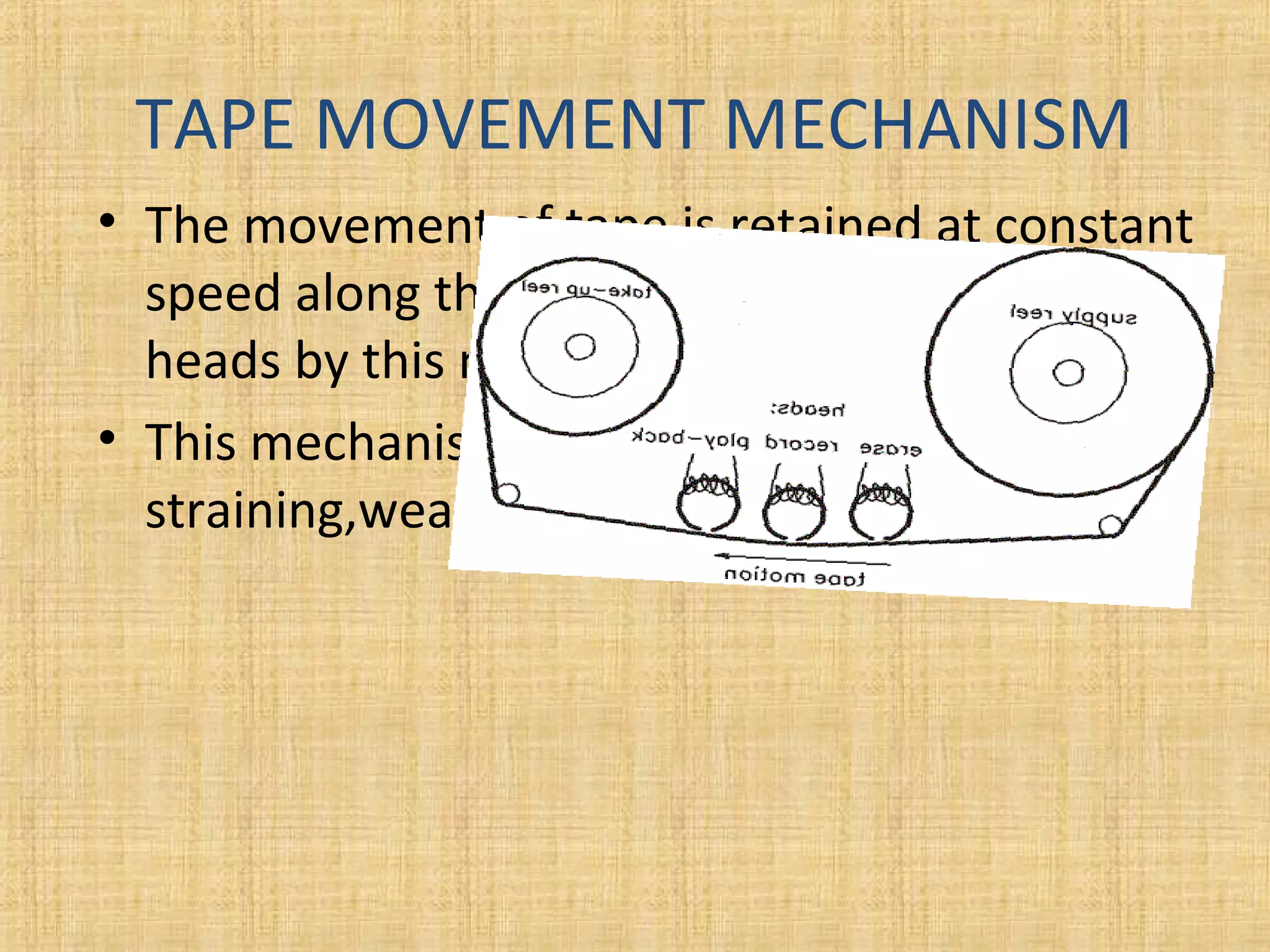
TAPE MOVEMENT MECHANISM
• The movement of tape is retained at constant
speed along the recording or reproducing
heads by this mechanism
• This mechanism is such that it will avoid
straining,wearing of the tape
CONDITIONING DEVICE
• Signal may have to be modified before it is
recorded on a tape
• Conditioning device includes filters and
amplifiers which makes modification suitable
for the tape
TAPE HEAD
THEORY ON TAPE HEAD
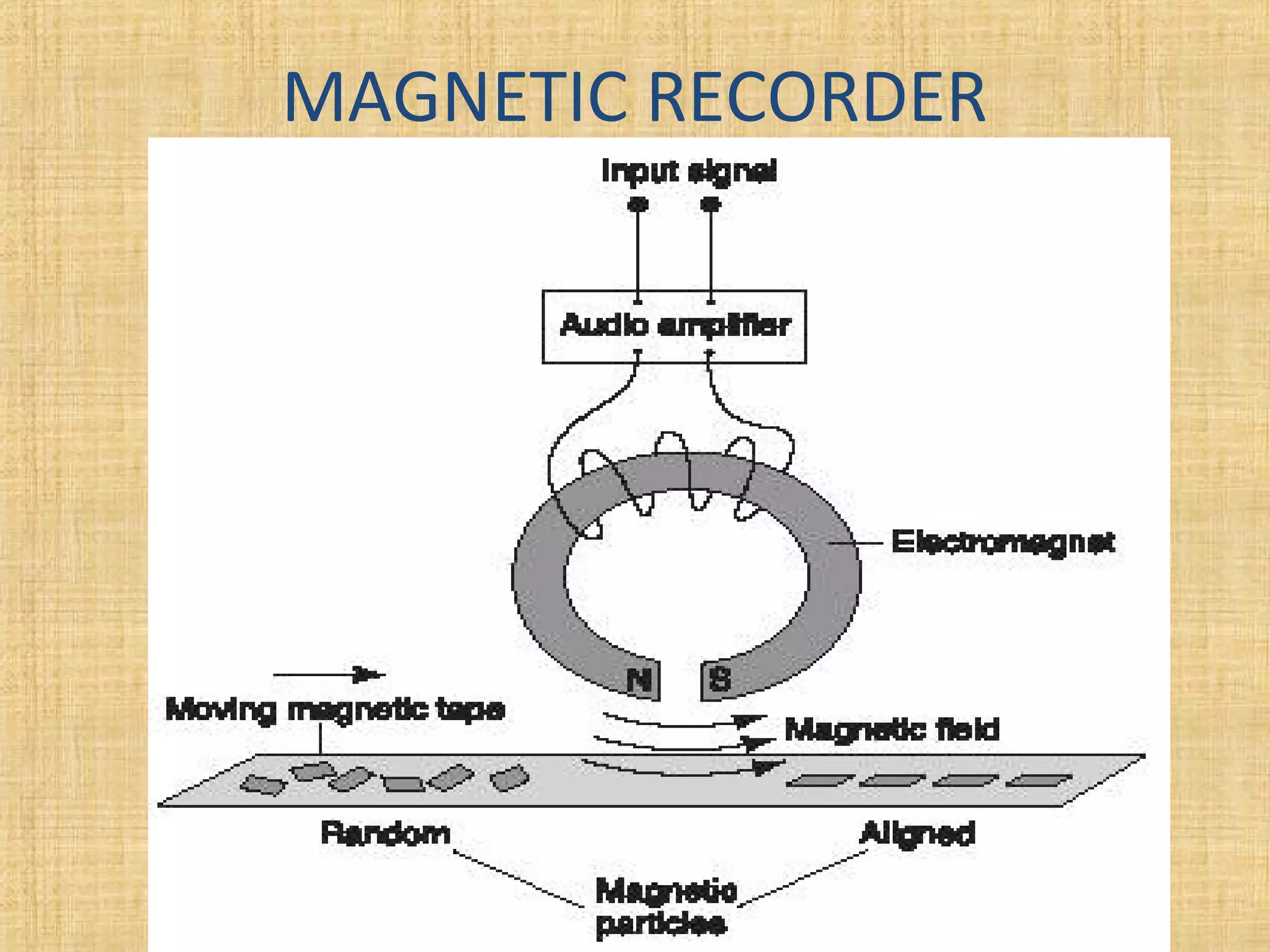
• The tape head consist of a ring of soft
magnetic material called core with a small gap
in it
• The core is wound with a coil
• The tape travels over the gap in the core
• During recording an audio signal causes
current to flow through the coil producing a
magnetic field in the gap
• A head consists of a core of magnetic material
arranged into a doughnut shape or toroid into
which a very narrow gap has been let.
• This gap is filled with a diamagnetic material
such as gold which forces the magnetic flux
out of the gap into the magnetic
tape medium more than air
• The flux thus magnetises the tape at that
point.
• A coil of wire wrapped around the core
opposite the gap interfaces to the electrical
side of the apparatus; thus either supplying a
signal in the case of recording, or being fed to
an amplifier in the case of playback.
• This magnetic field varies with amplitude and
frequency on audio signal
• The tape is magnetized by the field as it
passes over the gap
• Extent of magnetism stored on the tape varies
as the strength of magnetic field varies
• During playback the tape passes over the
same head which is called record/playback
head
• This time the magnetism stored on the tape
induces a voltage in the head coil
• This voltage is amplified and used to drive a
loudspeaker
• The electromagnetic arrangement of a tape
head is generally similar for all types, though
the physical design varies considerably
depending on the application
Advanatages :
1. Low distortion
2.Wide frequency range
3.Wide dynamic range allows linear recording
upto approximataly 0.3% of full scale
4.Immediate availability of recorded signal .
Moreover this signal can be played or
reproduced whenever needed and as many
times as required without losses
5. Magnetic tape can be reused for
new recording
6 . Time bases of the recorded data can
be changed i.e data recorded at fast
speeds can be played back at low speeds
THANK YOU

Magnetic Tape recorder

  • 1.
  • 2.
    • Magnetic recordingis the storage of data on a magnetized medium. Magnetic storage uses different patterns of magnetization in a magnetisable material to store data and is a form of non-volatile memory.
  • 3.
    • The principleof magnetic recording was first demonstrated by the Danish engineer Valdemar Poulsen in 1900, when he introduced a machine called the telegraphone that recorded speech
  • 4.
    • The datapresentation can be categories in two group such as inductor and recorders. • Recording type of instrument provides graphical representation of the quantity under measurement on screen.
  • 5.
    • Analog Recorders •Digital Recorders
  • 6.
    What is AnalogRecorder…??? • An analog recording is where you would record the analog singnal to recordable medium.The medium may be magnetic tapes or sketches on vinyl. • Analog recording is the first approaches used to store sound for later playback. It was first successfully used by Thomas Alva Edison. • The modern examples of the analog audio recording are: 1) Gramophone record (aka phonograph record, vinyl, etc.) 2) Magnetic tape 3) Reel-to-Reel recorders 4) Compact cassette
  • 7.
    Further Analog recorderare classified In 3 Types • Magnetic tape recorders • Graphic recorders • Oscillographic recorders
  • 8.
    Magnetic Tape Recorders. •The history of Magnetic recording began with the telegraph. When samuel F.B Mores sent an electrical signal for “ What hath God wrought!” over a wire from Washington to Baltimore in 1844, he created a new technology and industry.
  • 9.
    Oscillographic recorders. • Anoscilloscope , previously called an oscillograph and informally known as a scope, CRO ( for cathode-ray oscilloscope), or DSO (for the more modern digital storage oscilloscope),is a type of electronic test instument that allows observation of constantly varying signal voltages. Non- electrical signals (such as sound or vibration) can be converted to voltages and displayed.
  • 10.
  • 11.
    What is digitalrecorders…??? • A device that records video in a digital format to a disk drive or other memory medium within a device, and can also be transfered to a computer via USB cable. • Digital Recorders are further classified as • Synchronous Digital Recorders. • Incremental Digital Recorders.
  • 12.
  • 13.
    MAGNETIC RECORDER • Inmany cases it’s necessary to record the data such that it can be recovered or regenerated in the electrical. • Magnetic tape recorder serves this purpose distinctly. • Magnetic record can be erased and the medium can be used to record data or signal afresh. • Recording can be made on either tape or diskette.
  • 14.
    BASIC COMPONENTS • RecordingHead • Magnetic Tape • Reproducing Head • Tape Movement Mechanism • Conditioning Device
  • 15.
    Recording head • Arecording head is the physical interface between a recording apparatus and a moving recording medium. Recording heads are generally classified according to the physical principle that allows them to impress their data upon their medium. A recording head is often mechanically paired with a playback head, which, though proximal to, is often discrete from the record head. • The two most common forms of recording head are: • Magnetic - Magnetic recording heads use the principles of electromagnetism to coerce a paramagnetic recording medium, such as iron oxides, to orient in a readable manner such as magnetic tape. Record heads are constructed of laminated permalloy, ferrite, or sendust. As of 2006 this is by far the most dominant type of head in use. • Optical - Optical recording heads use the principles of optics and light to impart energy on a recording medium, which accepts the energy in a readable manner, e.g. by melting or photography.
  • 16.
    Magnetic tape • Magnetictape is a medium for magnetic recording, made of a thin magnetisable coating on a long, narrow strip of plastic film. It was developed in Germany, based on magnetic wire recording. • Devices that record and play back audio and video using magnetic tape are tape recorders and video tape recorders. • A device that stores computer data on magnetic tape is a tape drive.
  • 17.
    Reproducing head • Thisperforms the task of converting the stored magnetic pattern into the electrical signal. • Appearance of reproduced signal is similar to that of recording head. • A recording head is the physical interface between a recording apparatus and a moving recording medium
  • 18.
    TAPE MOVEMENT MECHANISM •The movement of tape is retained at constant speed along the recording or reproducing heads by this mechanism • This mechanism is such that it will avoid straining,wearing of the tape
  • 19.
    CONDITIONING DEVICE • Signalmay have to be modified before it is recorded on a tape • Conditioning device includes filters and amplifiers which makes modification suitable for the tape
  • 20.
  • 21.
    THEORY ON TAPEHEAD • The tape head consist of a ring of soft magnetic material called core with a small gap in it • The core is wound with a coil • The tape travels over the gap in the core • During recording an audio signal causes current to flow through the coil producing a magnetic field in the gap
  • 22.
    • A headconsists of a core of magnetic material arranged into a doughnut shape or toroid into which a very narrow gap has been let. • This gap is filled with a diamagnetic material such as gold which forces the magnetic flux out of the gap into the magnetic tape medium more than air
  • 23.
    • The fluxthus magnetises the tape at that point. • A coil of wire wrapped around the core opposite the gap interfaces to the electrical side of the apparatus; thus either supplying a signal in the case of recording, or being fed to an amplifier in the case of playback.
  • 24.
    • This magneticfield varies with amplitude and frequency on audio signal • The tape is magnetized by the field as it passes over the gap • Extent of magnetism stored on the tape varies as the strength of magnetic field varies • During playback the tape passes over the same head which is called record/playback head
  • 25.
    • This timethe magnetism stored on the tape induces a voltage in the head coil • This voltage is amplified and used to drive a loudspeaker • The electromagnetic arrangement of a tape head is generally similar for all types, though the physical design varies considerably depending on the application
  • 26.
    Advanatages : 1. Lowdistortion 2.Wide frequency range 3.Wide dynamic range allows linear recording upto approximataly 0.3% of full scale 4.Immediate availability of recorded signal . Moreover this signal can be played or reproduced whenever needed and as many times as required without losses
  • 27.
    5. Magnetic tapecan be reused for new recording 6 . Time bases of the recorded data can be changed i.e data recorded at fast speeds can be played back at low speeds
  • 28.