Macro MARKETING
ENVIRONMENT
Presented By:-
GROUP 6
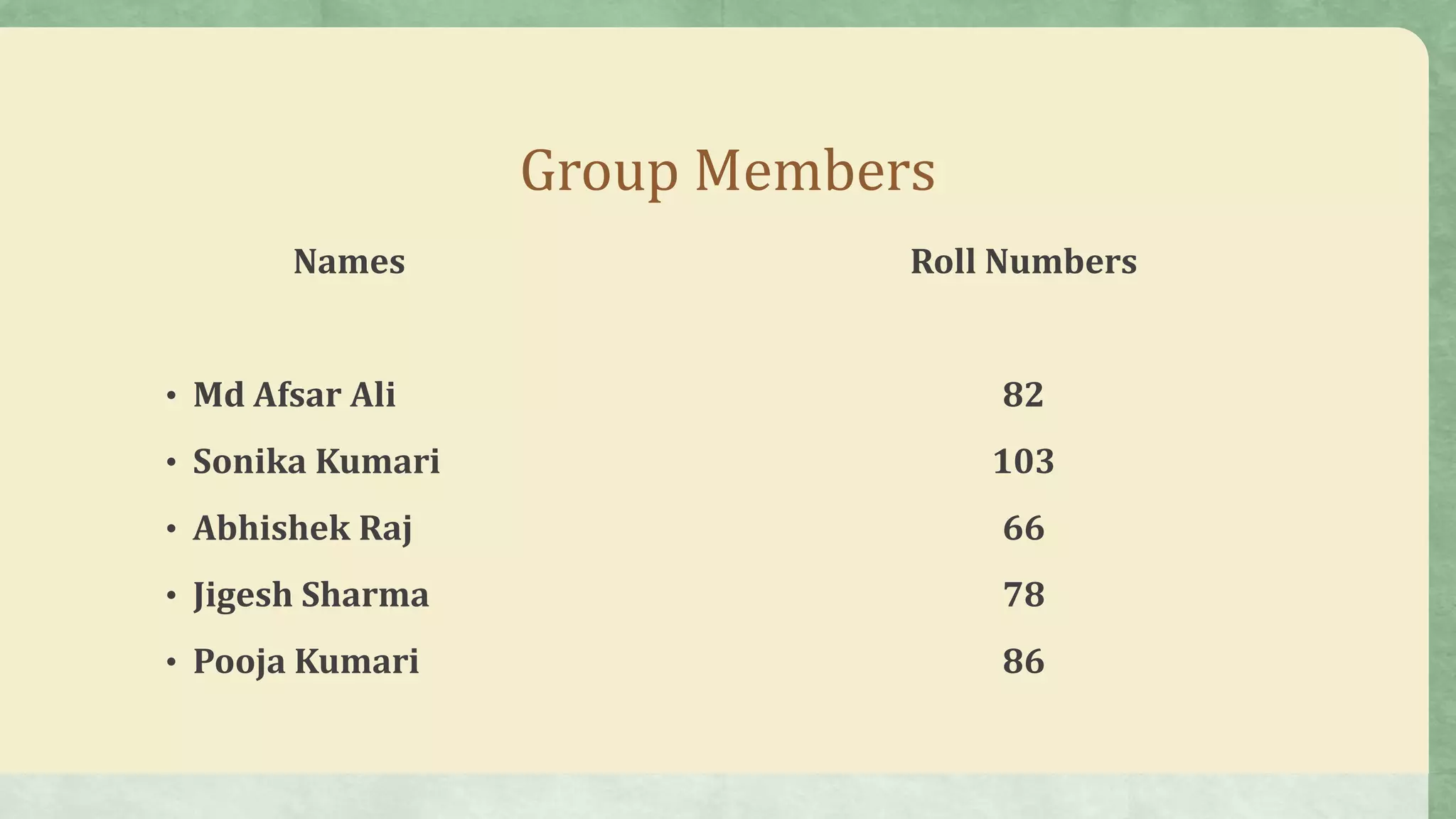
Group Members
Names
• Md Afsar Ali
• Sonika Kumari
• Abhishek Raj
• Jigesh Sharma
• Pooja Kumari
Roll Numbers
82
103
66
78
86
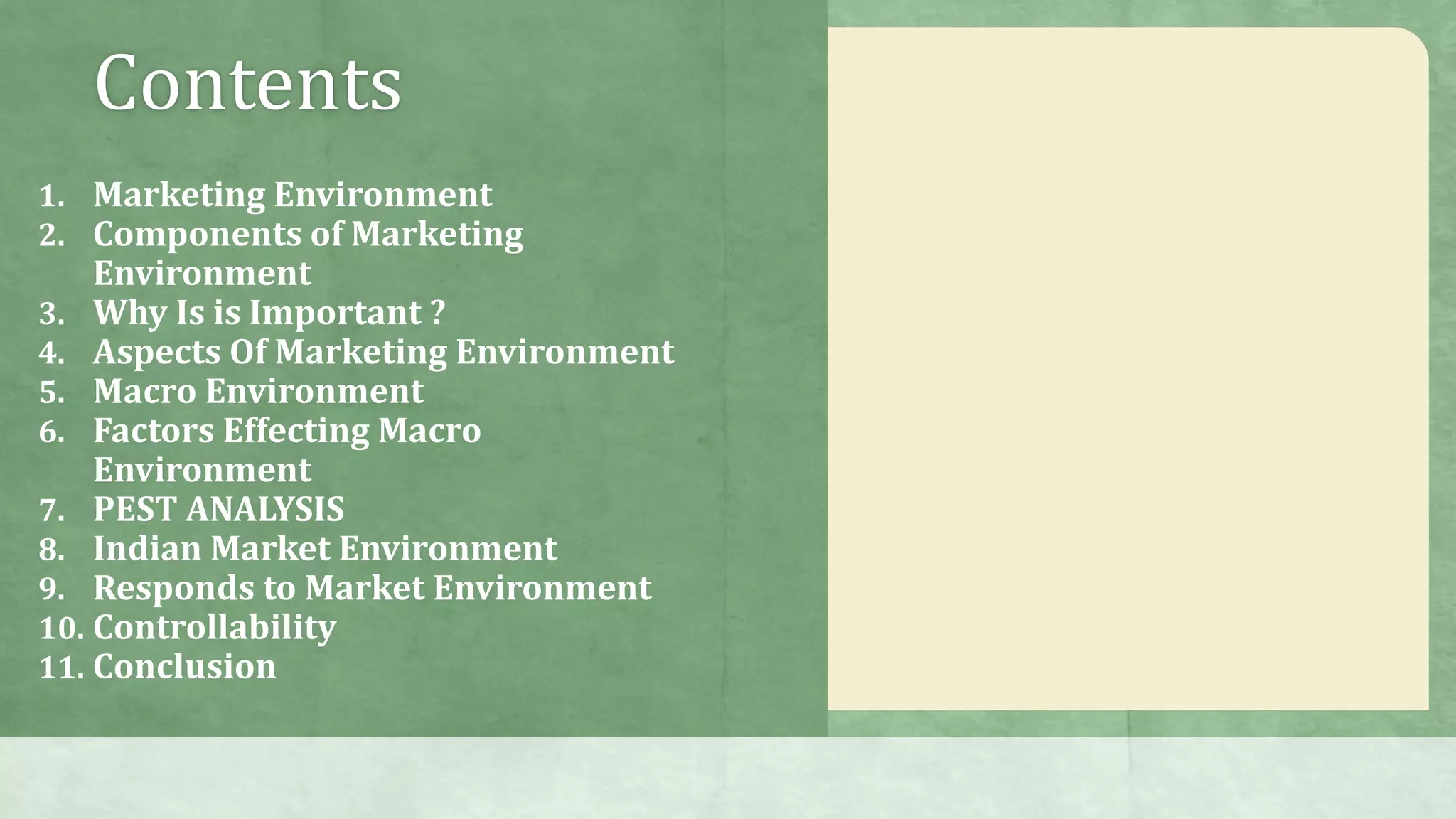
Contents
1. Marketing Environment
2. Components of Marketing
Environment
3. Why Is is Important ?
4. Aspects Of Marketing Environment
5. Macro Environment
6. Factors Effecting Macro
Environment
7. PEST ANALYSIS
8. Indian Market Environment
9. Responds to Market Environment
10. Controllability
11. Conclusion
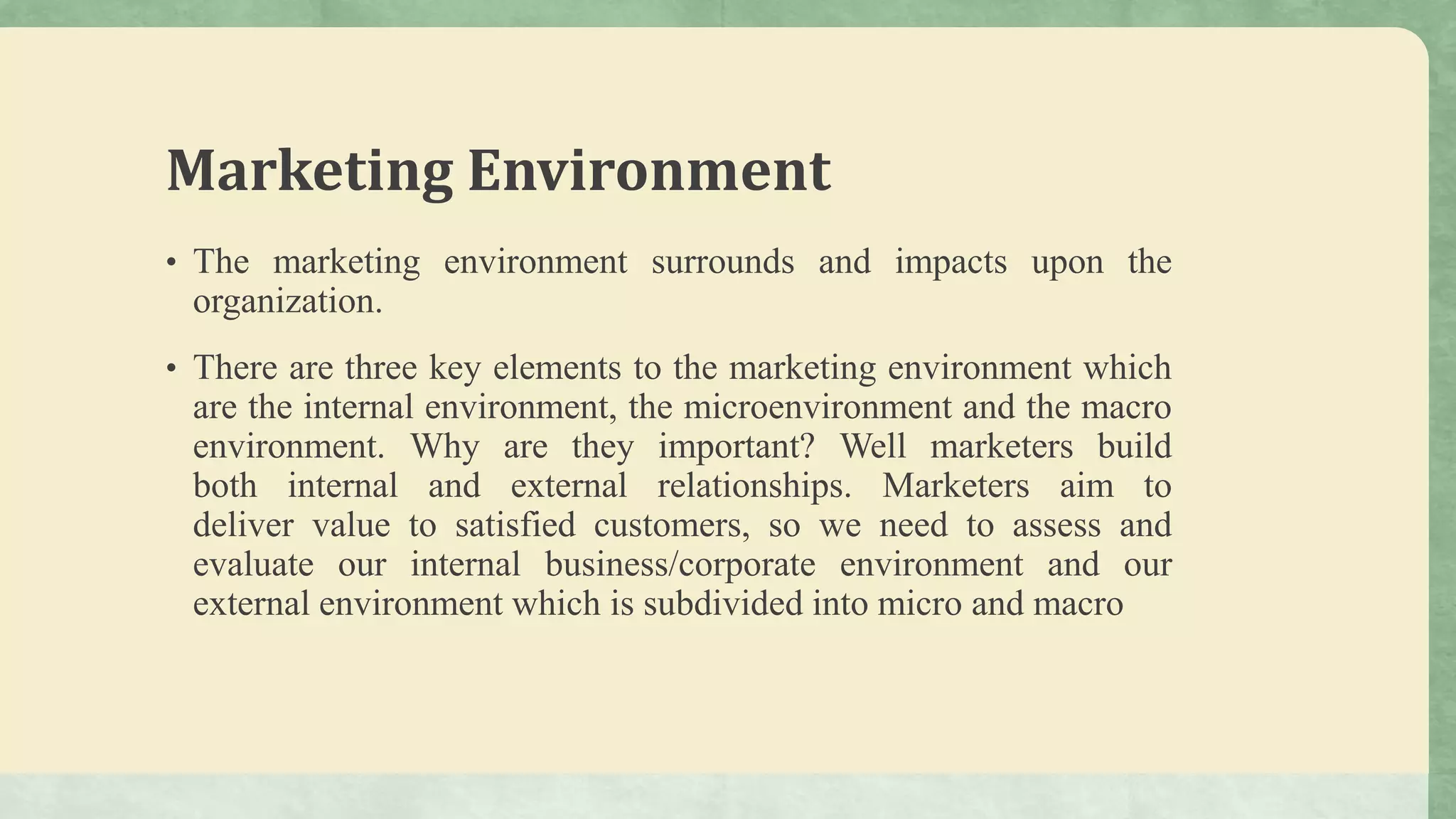
Marketing Environment
• The marketing environment surrounds and impacts upon the
organization.
• There are three key elements to the marketing environment which
are the internal environment, the microenvironment and the macro
environment. Why are they important? Well marketers build
both internal and external relationships. Marketers aim to
deliver value to satisfied customers, so we need to assess and
evaluate our internal business/corporate environment and our
external environment which is subdivided into micro and macro
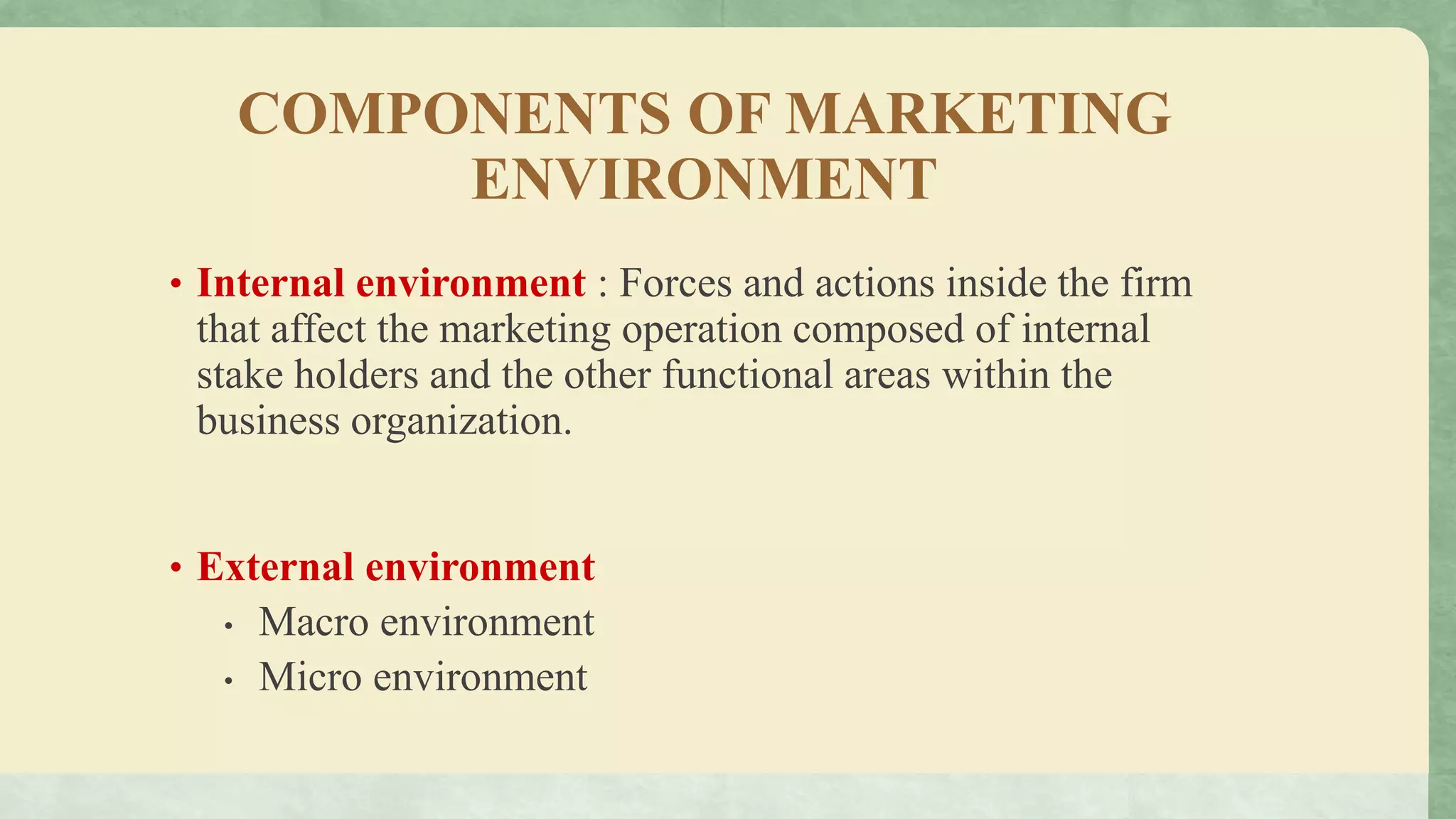
COMPONENTS OF MARKETING
ENVIRONMENT
• Internal environment : Forces and actions inside the firm
that affect the marketing operation composed of internal
stake holders and the other functional areas within the
business organization.
• External environment
• Macro environment
• Micro environment
WHY IS IT
IMPORTANT ?
An understanding of macro and
micro marketing environment
forces is essential for planning.
Helps a business to compete more
effectively against its competitors.
Assists in the identification of
opportunities and threats.
Help maintains economic stability
and Developments
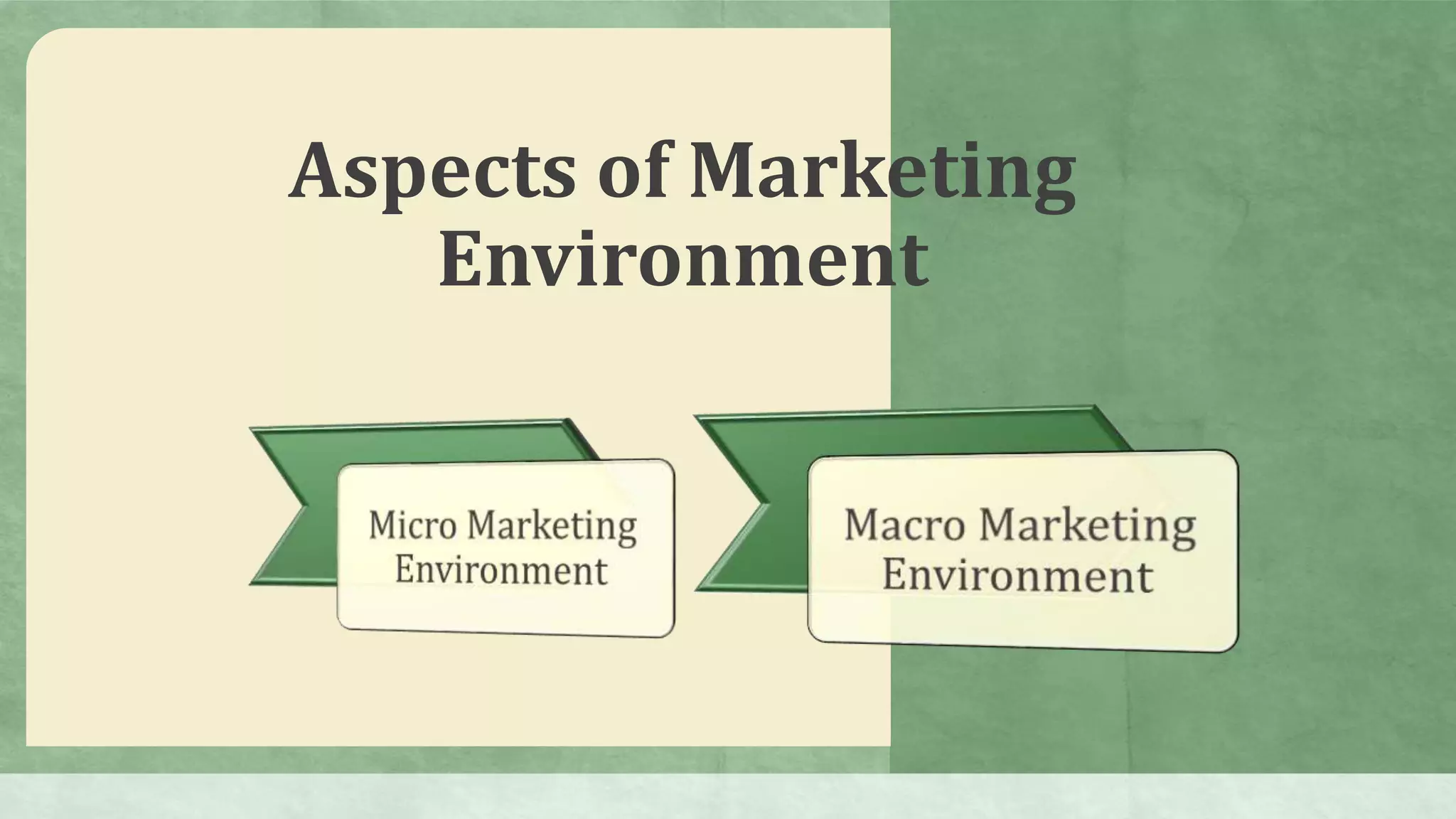
Aspects of Marketing
Environment
Macro environment
The macro environment is less controllable. The macro
environment consists of much larger wide-ranging
influences (which impact the microenvironment) from the
broader global society. Here we would consider culture,
political issues, technology, the natural environment,
economic issues and demographic factors amongst others.
Factors affecting
Macro environment
1. POLITICAL FORCES
2. ECONOMIC FORCES
3. SOCIALAND CULTURAL
FORCES
4. NATURAL FORCES
5. TECHNOLOGICAL
FORCES
6. DEMOGRAPHIC FORCES
Political Environmental
• Government actions which affects
the operations of a company or
business. These actions may be on
local, regional, national or
international level. Business
owners and managers pay close
attention to the
political environment to judge how
government actions will affect their
company.
Economic environment
• Economic Environment are the
economic factors that have effects
on the working of the business. It
includes system, policies and
nature of an economy, trade
cycles, economic resources, level
of income, distribution of income
and wealth. It is very dynamic and
complex in nature and does not
remain the same.
Social and cultural forces
• Social responsibility has move
slowly into the marketing literature
as an alternative to the market
concept.
• Socially responsible marketing is
that business firms should take the
lead in eliminating socially harmful
products.
Demographical Forces
• Demographic data helps in
preparing geographical marketing
plans, household marketing plans,
age and sex wise plans.
• It influences behavior of
consumers which in turn will have
direct impact on market place.
• A marketer must communicate
with consumers anticipate
problems ,respond to complaints
and make sure that the firm
operates properly.
Technological Environment
• The technological environment:
application of knowledge in
science, inventions, and
innovations to solve problems
• The most dramatic force
shaping our destiny is
technology – Internet, wifi Zone
• Technology has affected
hospitality in many ways like e-
ticket, checking in Airport etc.
Natural Forces
The natural environment consists
of many amenities that attract
tourists, such as Conserve natural
habitats, resources, endangered
species, minimise environmental
impact, recycling, energy efficient
products and clean air.
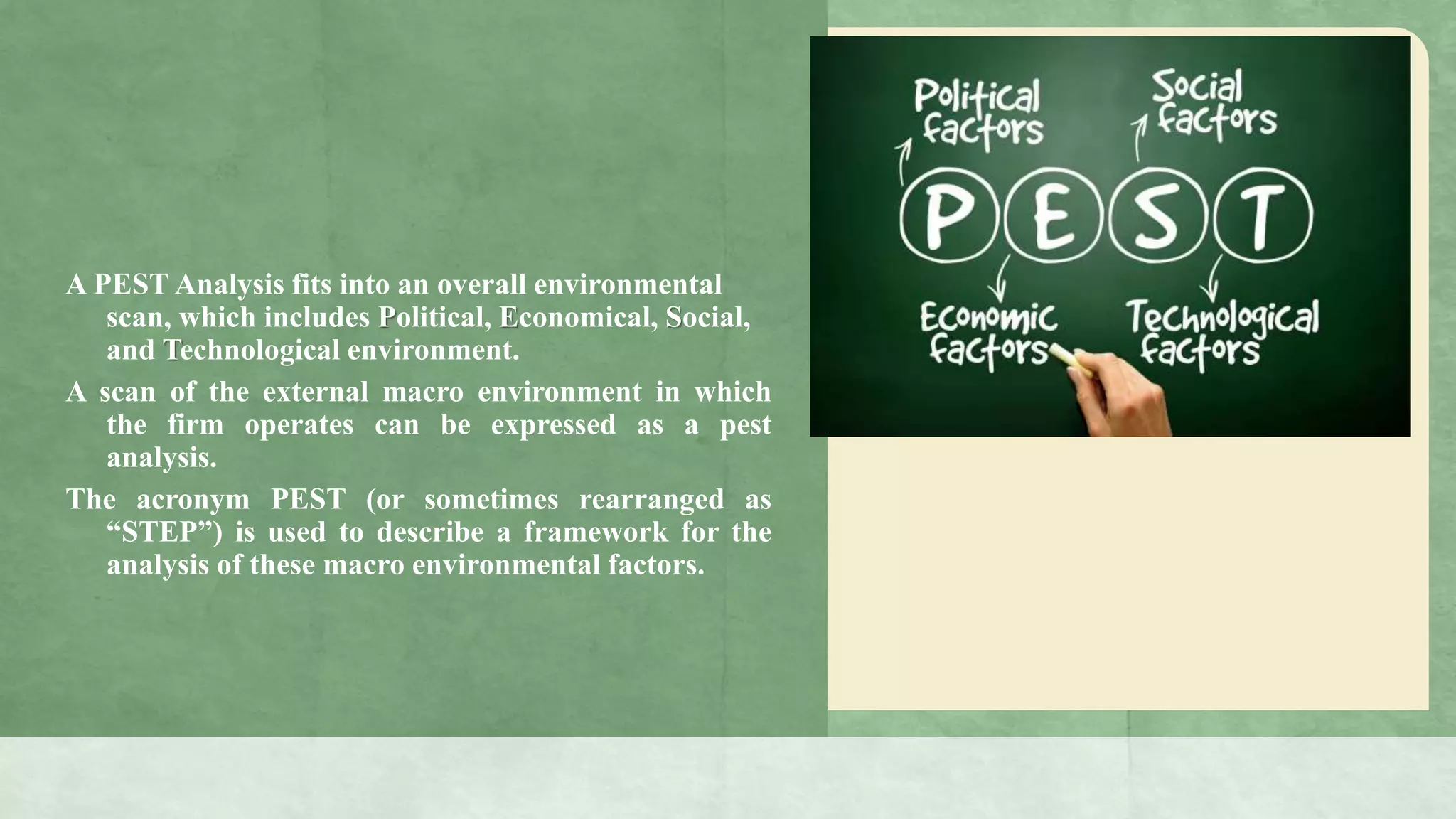
A PEST Analysis fits into an overall environmental
scan, which includes Political, Economical, Social,
and Technological environment.
A scan of the external macro environment in which
the firm operates can be expressed as a pest
analysis.
The acronym PEST (or sometimes rearranged as
“STEP”) is used to describe a framework for the
analysis of these macro environmental factors.
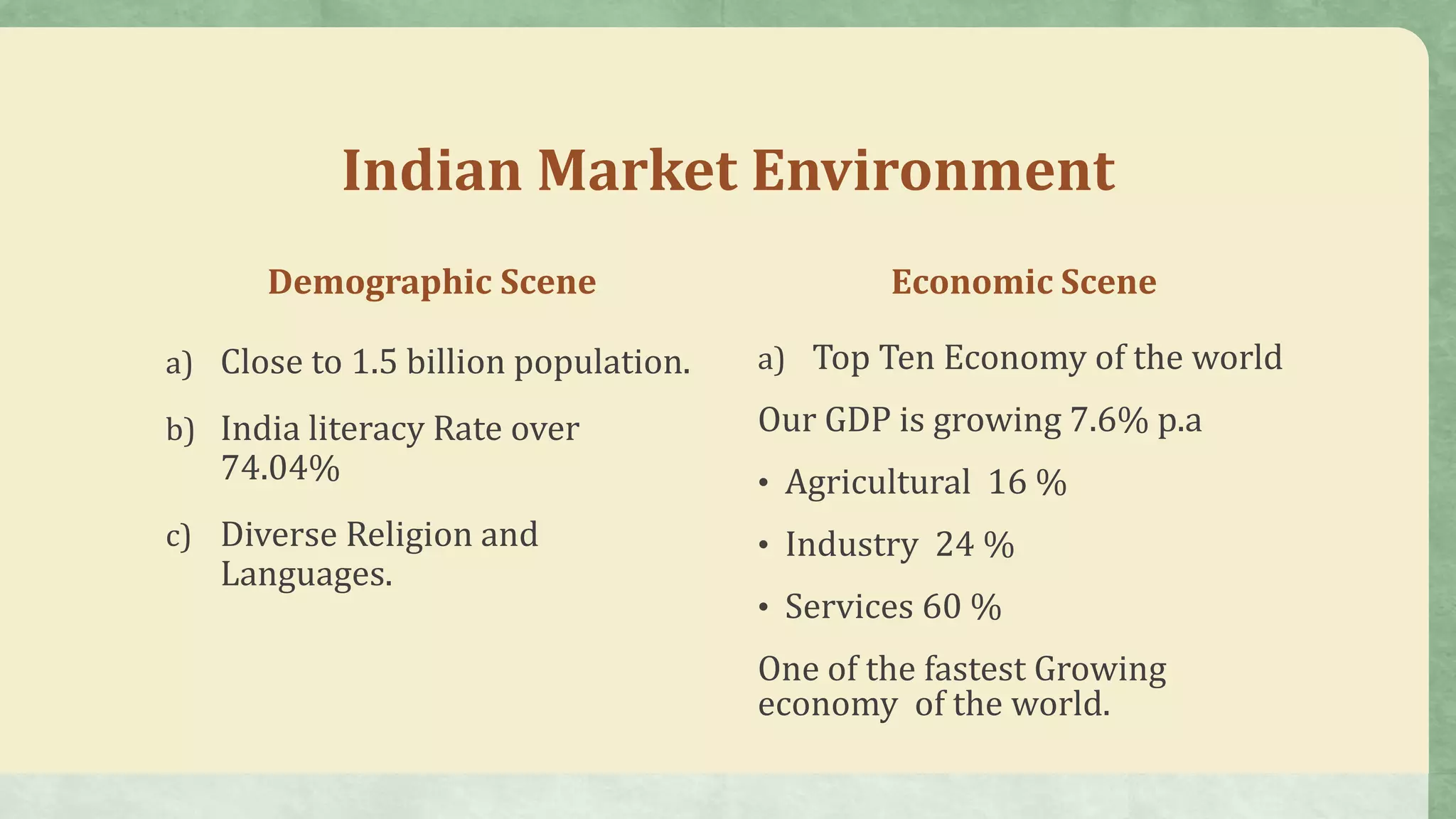
Indian Market Environment
Demographic Scene
a) Close to 1.5 billion population.
b) India literacy Rate over
74.04%
c) Diverse Religion and
Languages.
Economic Scene
a) Top Ten Economy of the world
Our GDP is growing 7.6% p.a
• Agricultural 16 %
• Industry 24 %
• Services 60 %
One of the fastest Growing
economy of the world.
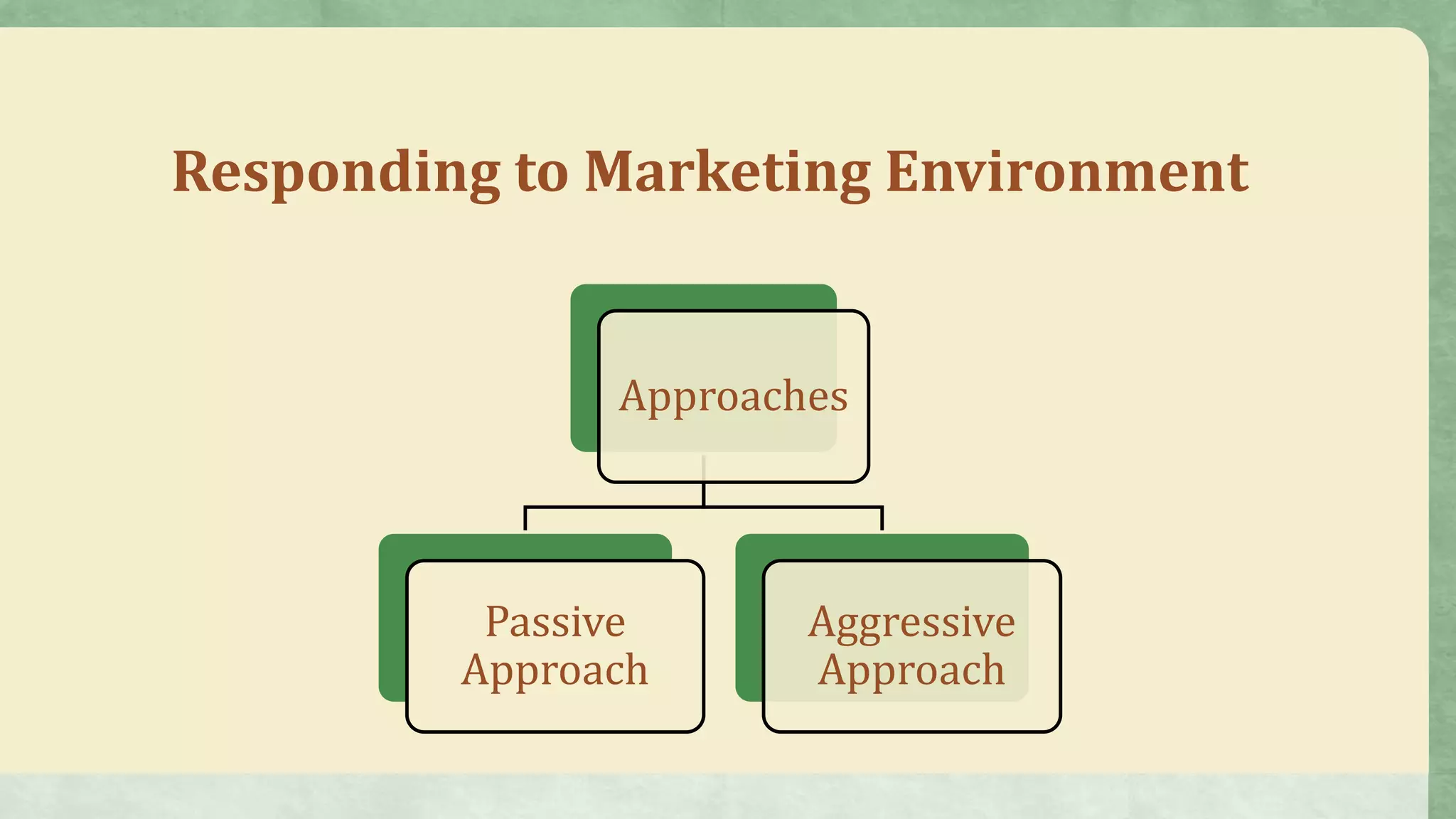
Responding to Marketing Environment
Approaches
Passive
Approach
Aggressive
Approach
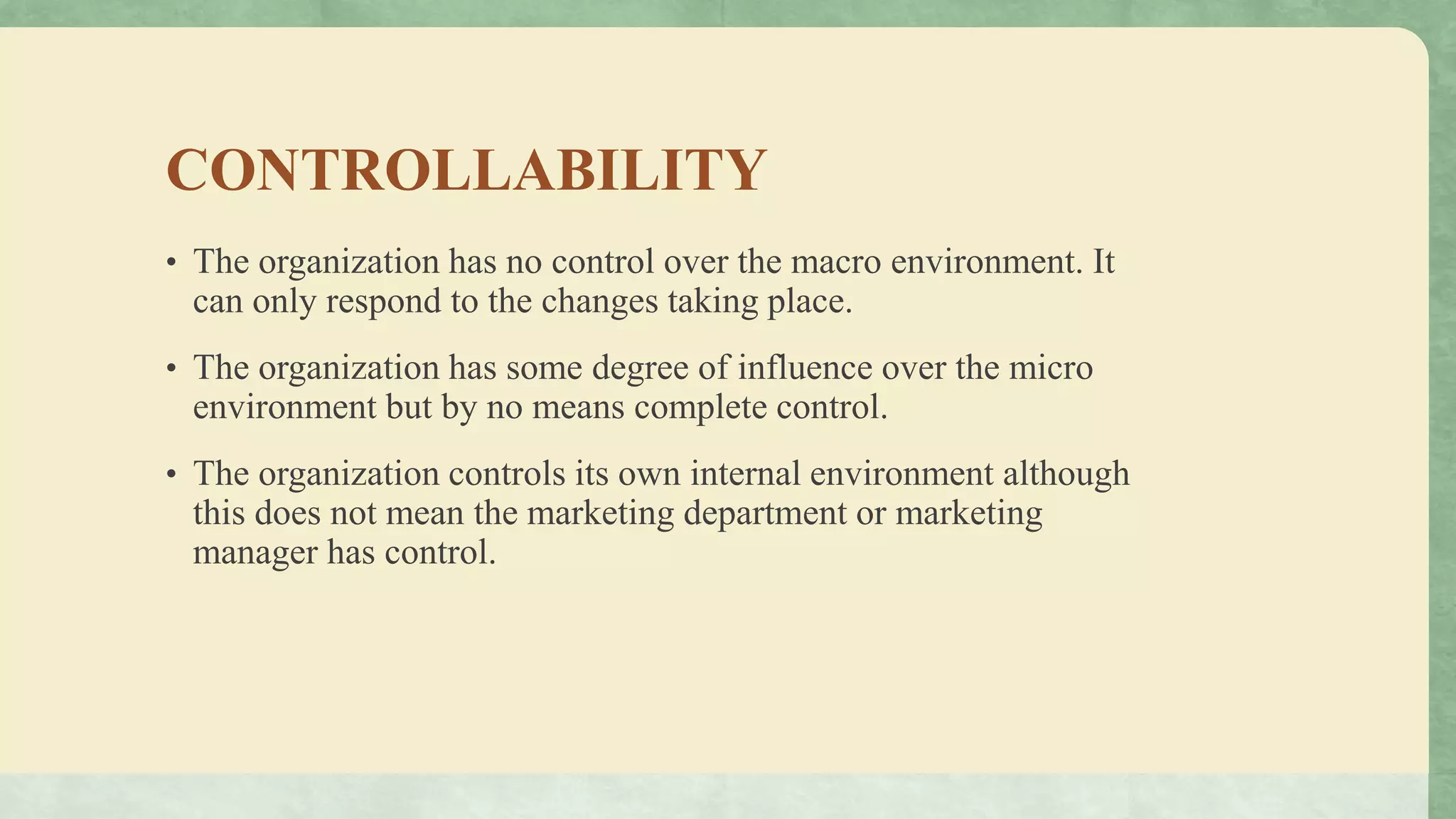
CONTROLLABILITY
• The organization has no control over the macro environment. It
can only respond to the changes taking place.
• The organization has some degree of influence over the micro
environment but by no means complete control.
• The organization controls its own internal environment although
this does not mean the marketing department or marketing
manager has control.
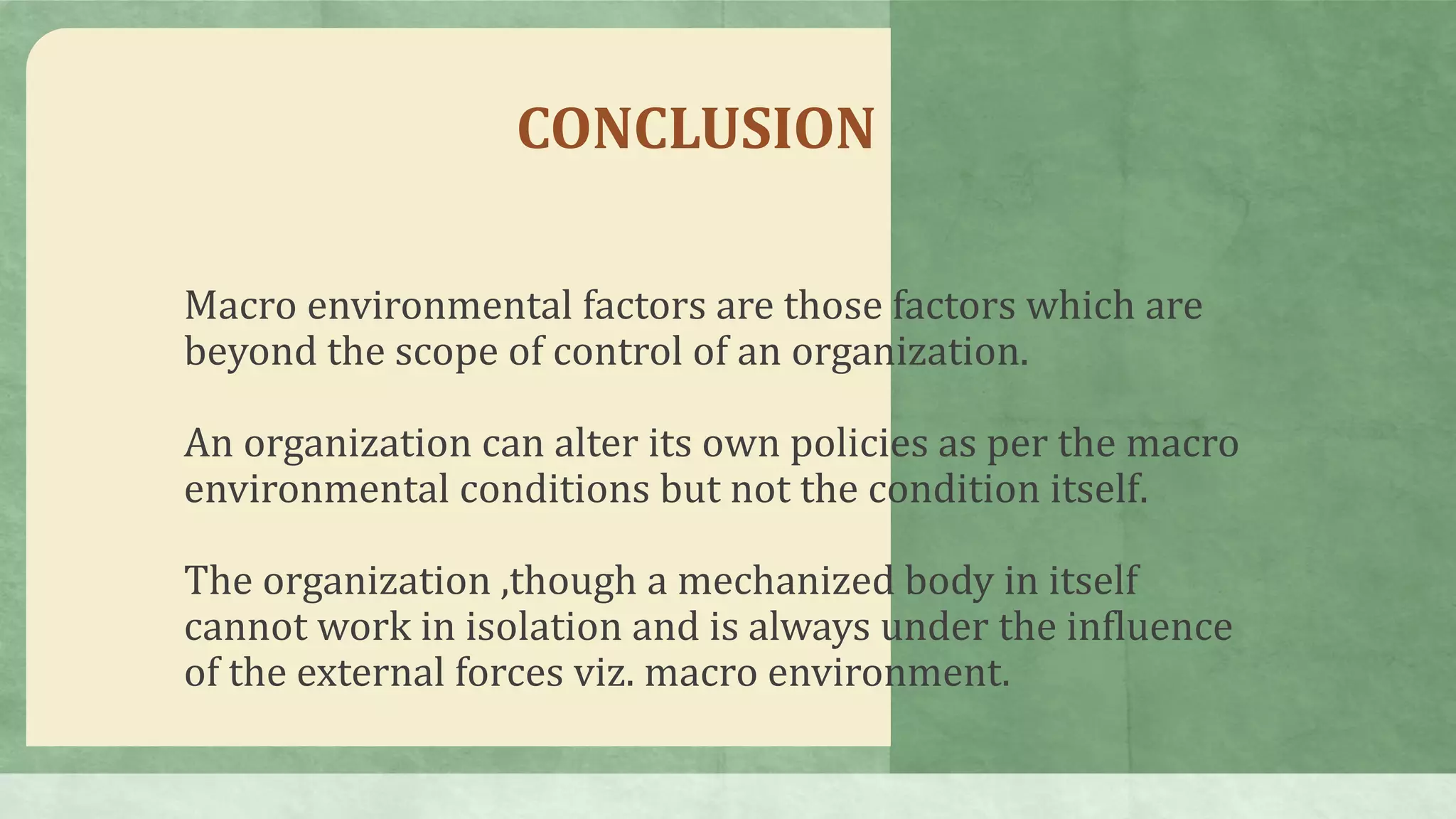
Macro environmental factors are those factors which are
beyond the scope of control of an organization.
An organization can alter its own policies as per the macro
environmental conditions but not the condition itself.
The organization ,though a mechanized body in itself
cannot work in isolation and is always under the influence
of the external forces viz. macro environment.
CONCLUSION
Macro marketing environment

Macro marketing environment

  • 1.
  • 2.
    Group Members Names • MdAfsar Ali • Sonika Kumari • Abhishek Raj • Jigesh Sharma • Pooja Kumari Roll Numbers 82 103 66 78 86
  • 3.
    Contents 1. Marketing Environment 2.Components of Marketing Environment 3. Why Is is Important ? 4. Aspects Of Marketing Environment 5. Macro Environment 6. Factors Effecting Macro Environment 7. PEST ANALYSIS 8. Indian Market Environment 9. Responds to Market Environment 10. Controllability 11. Conclusion
  • 4.
    Marketing Environment • Themarketing environment surrounds and impacts upon the organization. • There are three key elements to the marketing environment which are the internal environment, the microenvironment and the macro environment. Why are they important? Well marketers build both internal and external relationships. Marketers aim to deliver value to satisfied customers, so we need to assess and evaluate our internal business/corporate environment and our external environment which is subdivided into micro and macro
  • 5.
    COMPONENTS OF MARKETING ENVIRONMENT •Internal environment : Forces and actions inside the firm that affect the marketing operation composed of internal stake holders and the other functional areas within the business organization. • External environment • Macro environment • Micro environment
  • 6.
    WHY IS IT IMPORTANT? An understanding of macro and micro marketing environment forces is essential for planning. Helps a business to compete more effectively against its competitors. Assists in the identification of opportunities and threats. Help maintains economic stability and Developments
  • 7.
  • 8.
    Macro environment The macroenvironment is less controllable. The macro environment consists of much larger wide-ranging influences (which impact the microenvironment) from the broader global society. Here we would consider culture, political issues, technology, the natural environment, economic issues and demographic factors amongst others.
  • 9.
    Factors affecting Macro environment 1.POLITICAL FORCES 2. ECONOMIC FORCES 3. SOCIALAND CULTURAL FORCES 4. NATURAL FORCES 5. TECHNOLOGICAL FORCES 6. DEMOGRAPHIC FORCES
  • 10.
    Political Environmental • Governmentactions which affects the operations of a company or business. These actions may be on local, regional, national or international level. Business owners and managers pay close attention to the political environment to judge how government actions will affect their company. Economic environment • Economic Environment are the economic factors that have effects on the working of the business. It includes system, policies and nature of an economy, trade cycles, economic resources, level of income, distribution of income and wealth. It is very dynamic and complex in nature and does not remain the same.
  • 11.
    Social and culturalforces • Social responsibility has move slowly into the marketing literature as an alternative to the market concept. • Socially responsible marketing is that business firms should take the lead in eliminating socially harmful products. Demographical Forces • Demographic data helps in preparing geographical marketing plans, household marketing plans, age and sex wise plans. • It influences behavior of consumers which in turn will have direct impact on market place. • A marketer must communicate with consumers anticipate problems ,respond to complaints and make sure that the firm operates properly.
  • 12.
    Technological Environment • Thetechnological environment: application of knowledge in science, inventions, and innovations to solve problems • The most dramatic force shaping our destiny is technology – Internet, wifi Zone • Technology has affected hospitality in many ways like e- ticket, checking in Airport etc. Natural Forces The natural environment consists of many amenities that attract tourists, such as Conserve natural habitats, resources, endangered species, minimise environmental impact, recycling, energy efficient products and clean air.
  • 13.
    A PEST Analysisfits into an overall environmental scan, which includes Political, Economical, Social, and Technological environment. A scan of the external macro environment in which the firm operates can be expressed as a pest analysis. The acronym PEST (or sometimes rearranged as “STEP”) is used to describe a framework for the analysis of these macro environmental factors.
  • 14.
    Indian Market Environment DemographicScene a) Close to 1.5 billion population. b) India literacy Rate over 74.04% c) Diverse Religion and Languages. Economic Scene a) Top Ten Economy of the world Our GDP is growing 7.6% p.a • Agricultural 16 % • Industry 24 % • Services 60 % One of the fastest Growing economy of the world.
  • 15.
    Responding to MarketingEnvironment Approaches Passive Approach Aggressive Approach
  • 16.
    CONTROLLABILITY • The organizationhas no control over the macro environment. It can only respond to the changes taking place. • The organization has some degree of influence over the micro environment but by no means complete control. • The organization controls its own internal environment although this does not mean the marketing department or marketing manager has control.
  • 17.
    Macro environmental factorsare those factors which are beyond the scope of control of an organization. An organization can alter its own policies as per the macro environmental conditions but not the condition itself. The organization ,though a mechanized body in itself cannot work in isolation and is always under the influence of the external forces viz. macro environment. CONCLUSION