03/07/16
SUBJECT:
Principles Of Marketing
03/07/16
Group Members
Iram Naz roll # 17
Saman Akhter roll # 23
Zobia Ghazanfar roll # 16
M.COM
Topic Of Presentation
Macro
Environment
of
Marketing environment
Acknowledgment:
First of all thanks to ALLAH almighty who gave us
courage, health and knowledge to complete this project.
Second we would like to thank our parents who believe
us and give us a chance to explore our abilities.
We would like express special thanks of gratitude to my
teacher Sir MUDASSAR who guide us in a good way.
03/07/16
Marketing Environment
 The market environment is
a marketing term which refers to
factors and forces that affect a firm's
ability to build and maintain
successful relationships with
customers.
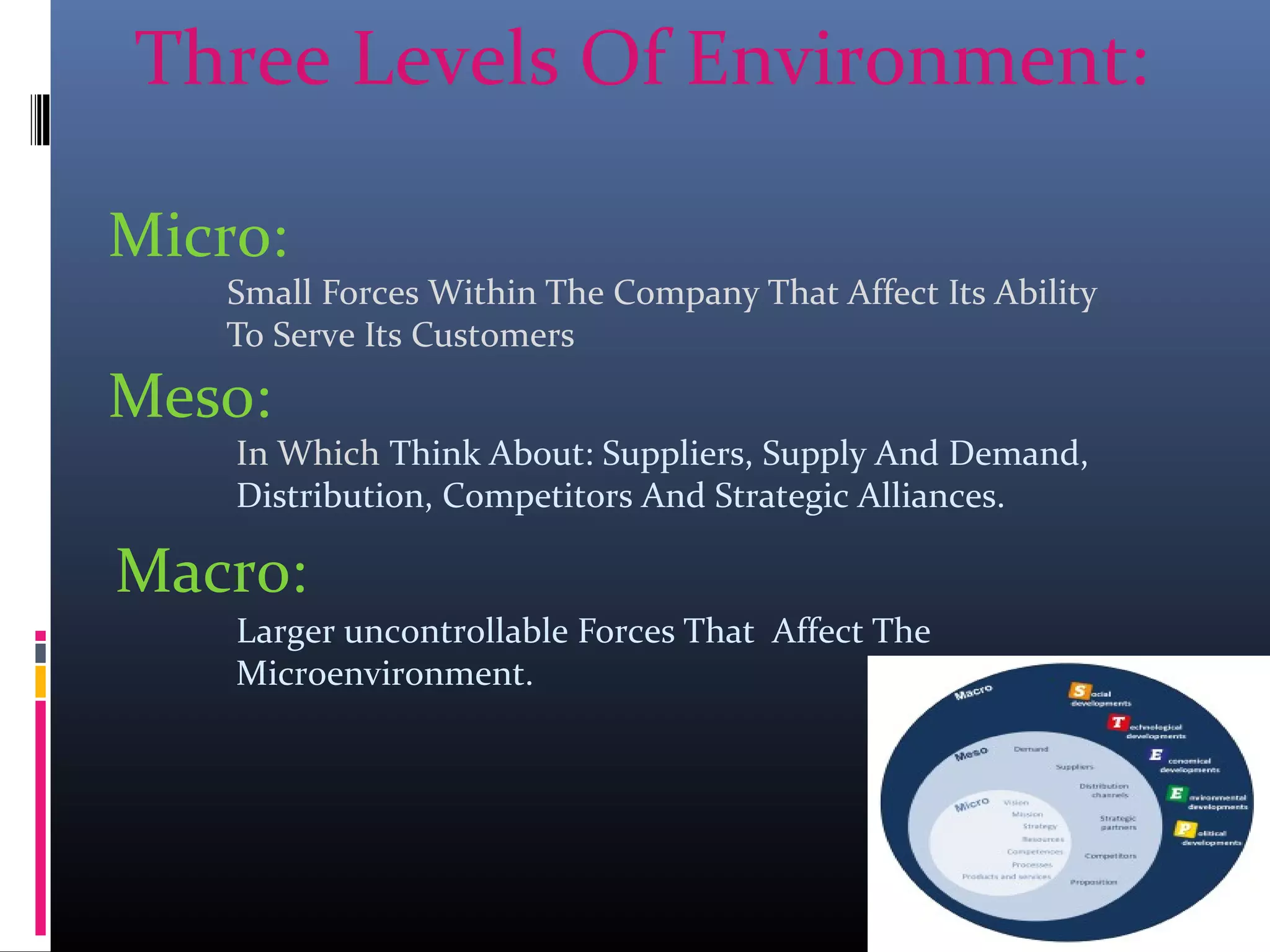
Three Levels Of Environment:
Micro:
Small Forces Within The Company That Affect Its Ability
To Serve Its Customers
Mes0:
In Which Think About: Suppliers, Supply And Demand,
Distribution, Competitors And Strategic Alliances.
Macro:
Larger uncontrollable Forces That Affect The
Microenvironment.
Macro environment:
The major external and uncontrollable
factors that influence an organization’s
decision making and affect its
performance & strategies.
03/07/16
Factors In Macro Environment
 Un controllable factors
 Economic
 Political
 Cultural
 Technological
 Political
 Natural
03/07/16
Aim of study:
 To understand the behavior of key
marketing environmental forces.
 To understand the techniques available
for environmental scanning.
 To understand market research.
 To understand how to tackle the
problems.
03/07/16
WHY it is IMPORTANT?
 An understanding of macro environment
forces is essential for planning.
 Helps a business to compete more
effectively against rivals.
 Assists in identification of opportunities
and threats.
 Enables an organization to take advantage
of emerging strategic opportunities.
Objectives :
 To learn how to gather information and
scanning of the environment.
 To learn the meaning and concepts of
macro and micro environment.
 To learn the objectives, scope, limitations
and applications of marketing research.
03/07/16
03/07/16
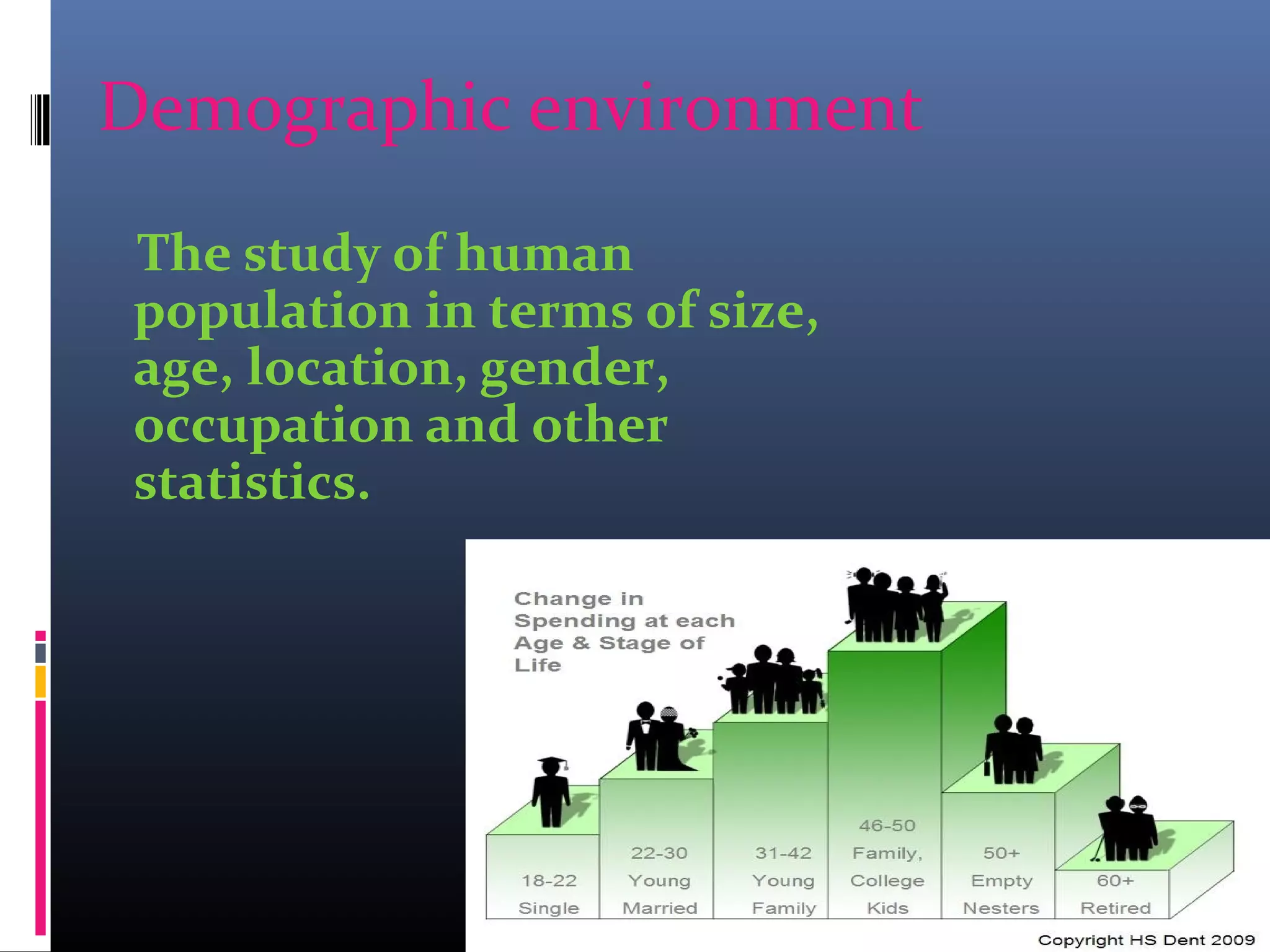
Demographic environment
The study of human
population in terms of size,
age, location, gender,
occupation and other
statistics.
Increasing population
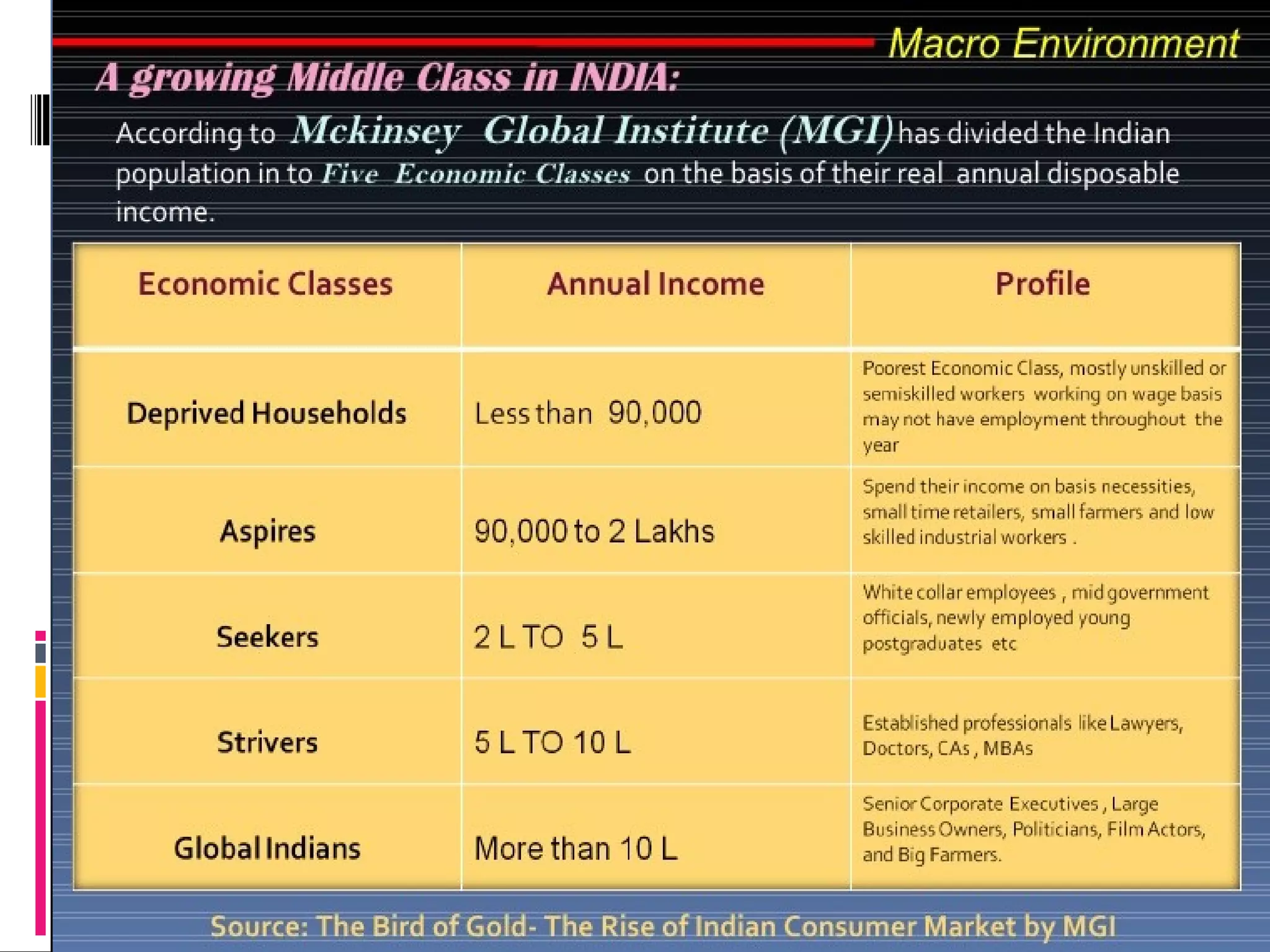
A growing middle class: in India
Growth in the rural population
Changing family system
The changing role of women
A better educated, more white collared,
more professional population
03/07/16
Acronyms in respect of age:
 Skippies
 Moby’s
 Dinks
 Puppies
 Woofs
03/07/16
 School kids with income and
purchases power
 Mother older, baby younger
 Double income, no kids
 Poor urban population
 Well off older folks
03/07/16
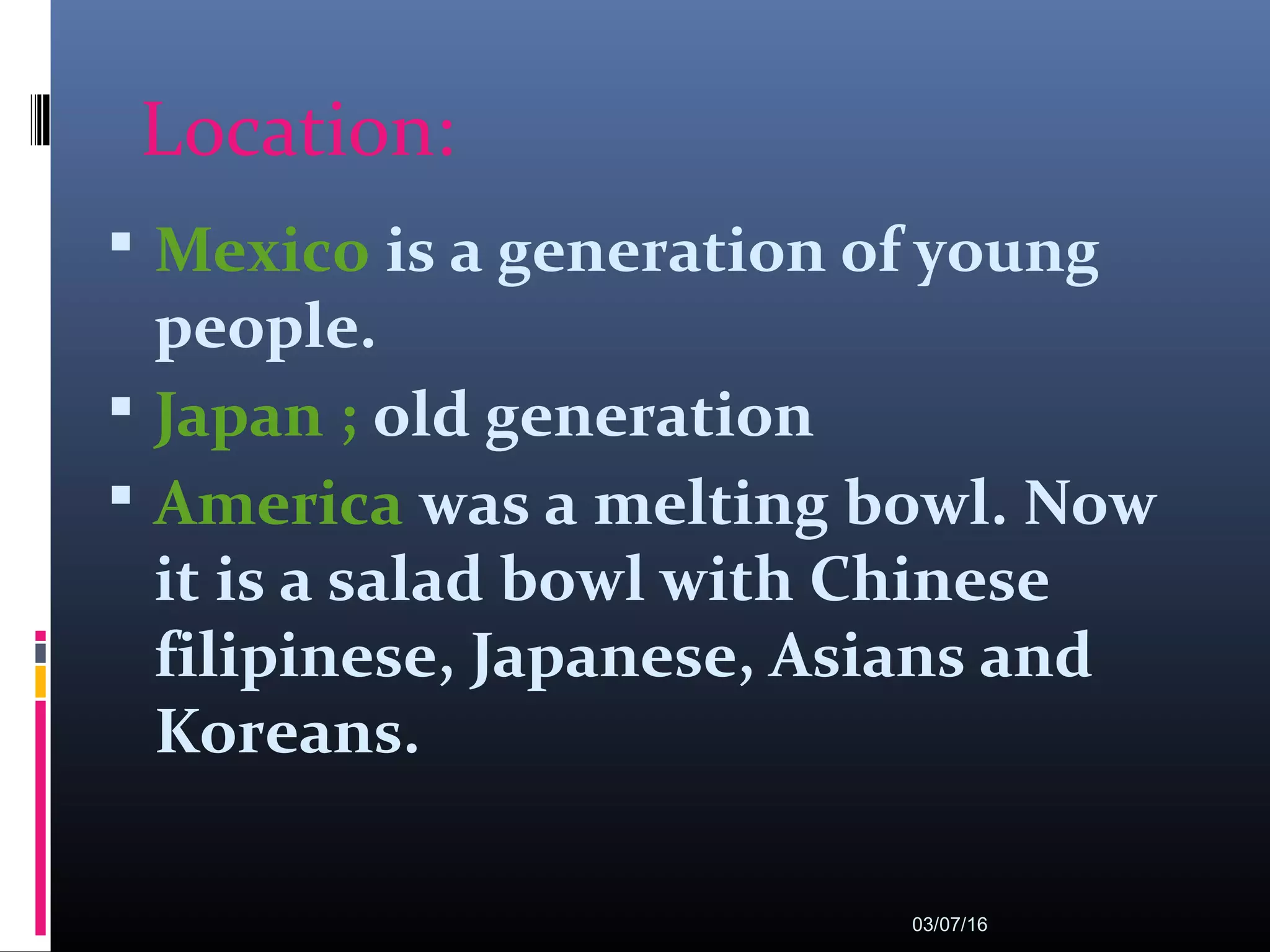
Location:
 Mexico is a generation of young
people.
 Japan ; old generation
 America was a melting bowl. Now
it is a salad bowl with Chinese
filipinese, Japanese, Asians and
Koreans.
03/07/16
03/07/16
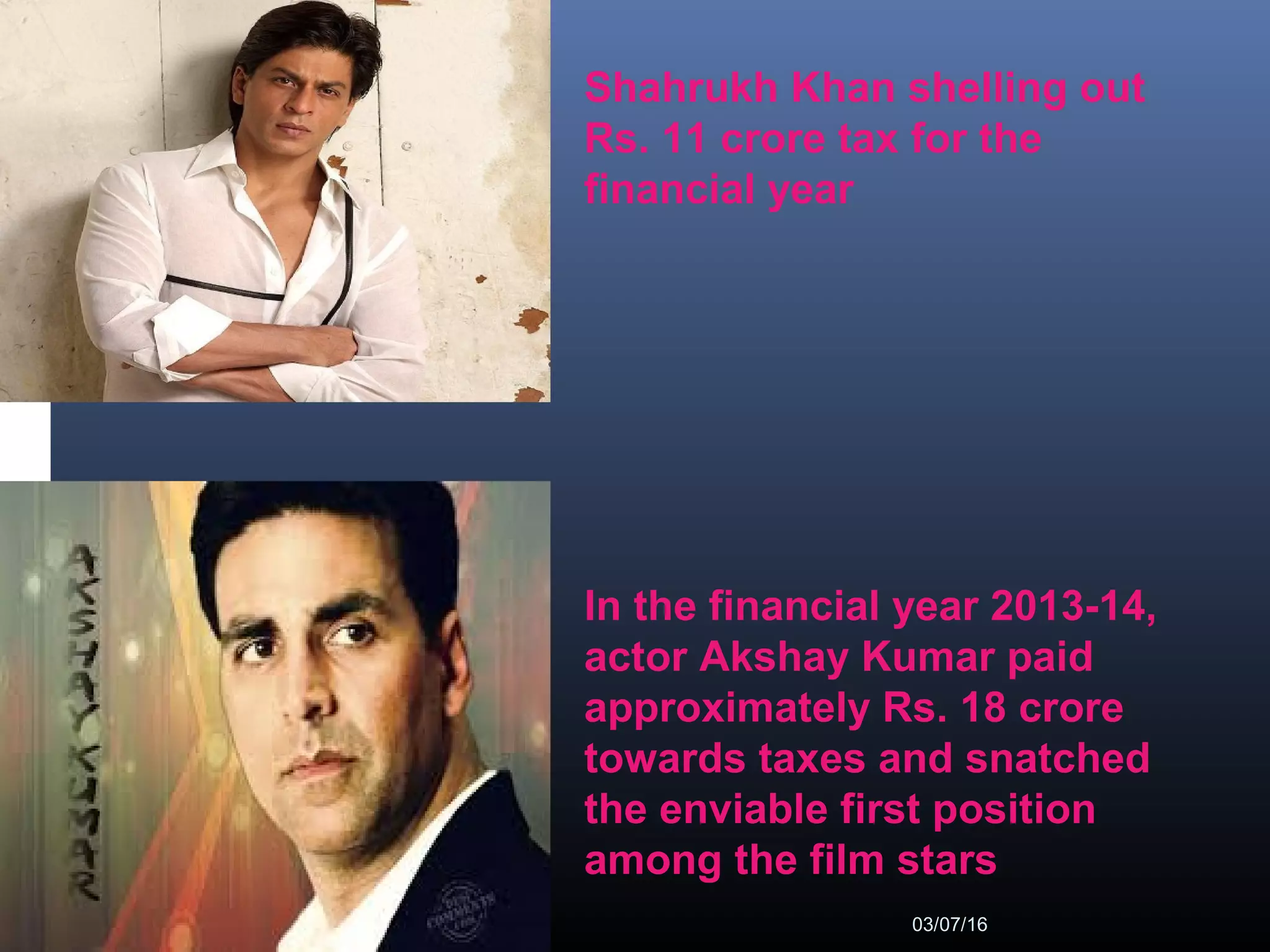
Shahrukh Khan shelling out
Rs. 11 crore tax for the
financial year
In the financial year 2013-14,
actor Akshay Kumar paid
approximately Rs. 18 crore
towards taxes and snatched
the enviable first position
among the film stars
03/07/16
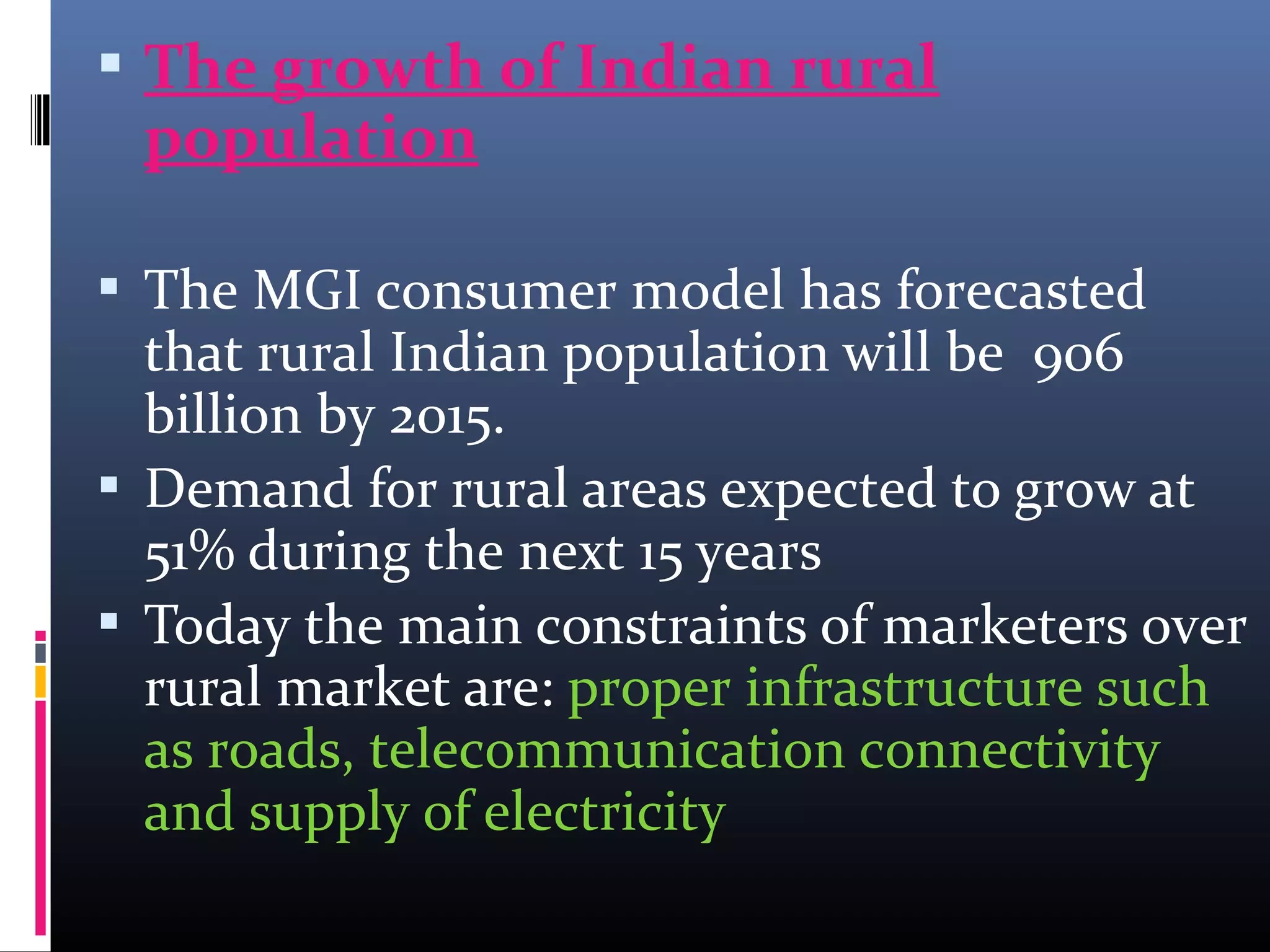
 The growth of Indian rural
population
 The MGI consumer model has forecasted
that rural Indian population will be 906
billion by 2015.
 Demand for rural areas expected to grow at
51% during the next 15 years
 Today the main constraints of marketers over
rural market are: proper infrastructure such
as roads, telecommunication connectivity
and supply of electricity
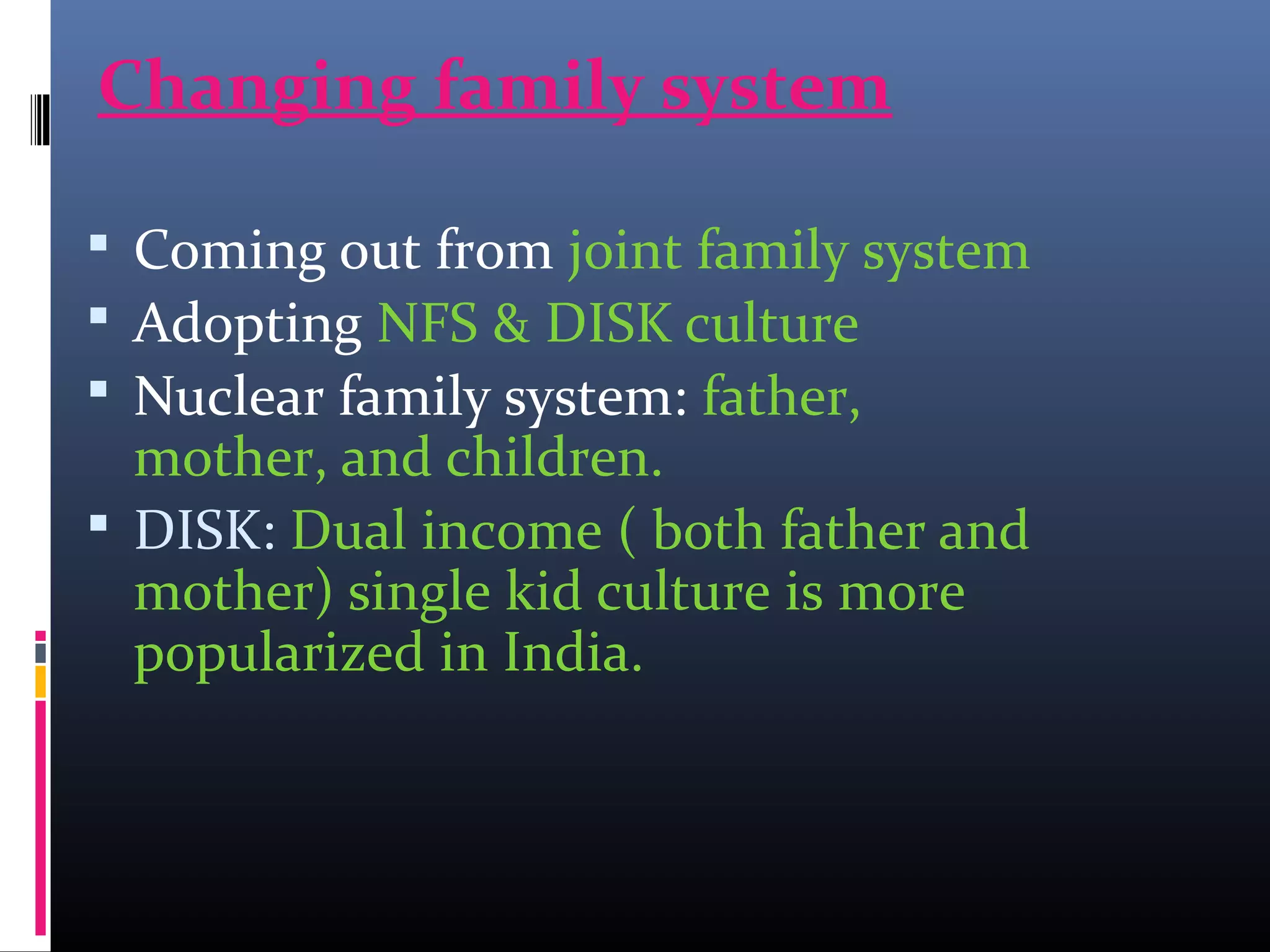
Changing family system
 Coming out from joint family system
 Adopting NFS & DISK culture
 Nuclear family system: father,
mother, and children.
 DISK: Dual income ( both father and
mother) single kid culture is more
popularized in India.
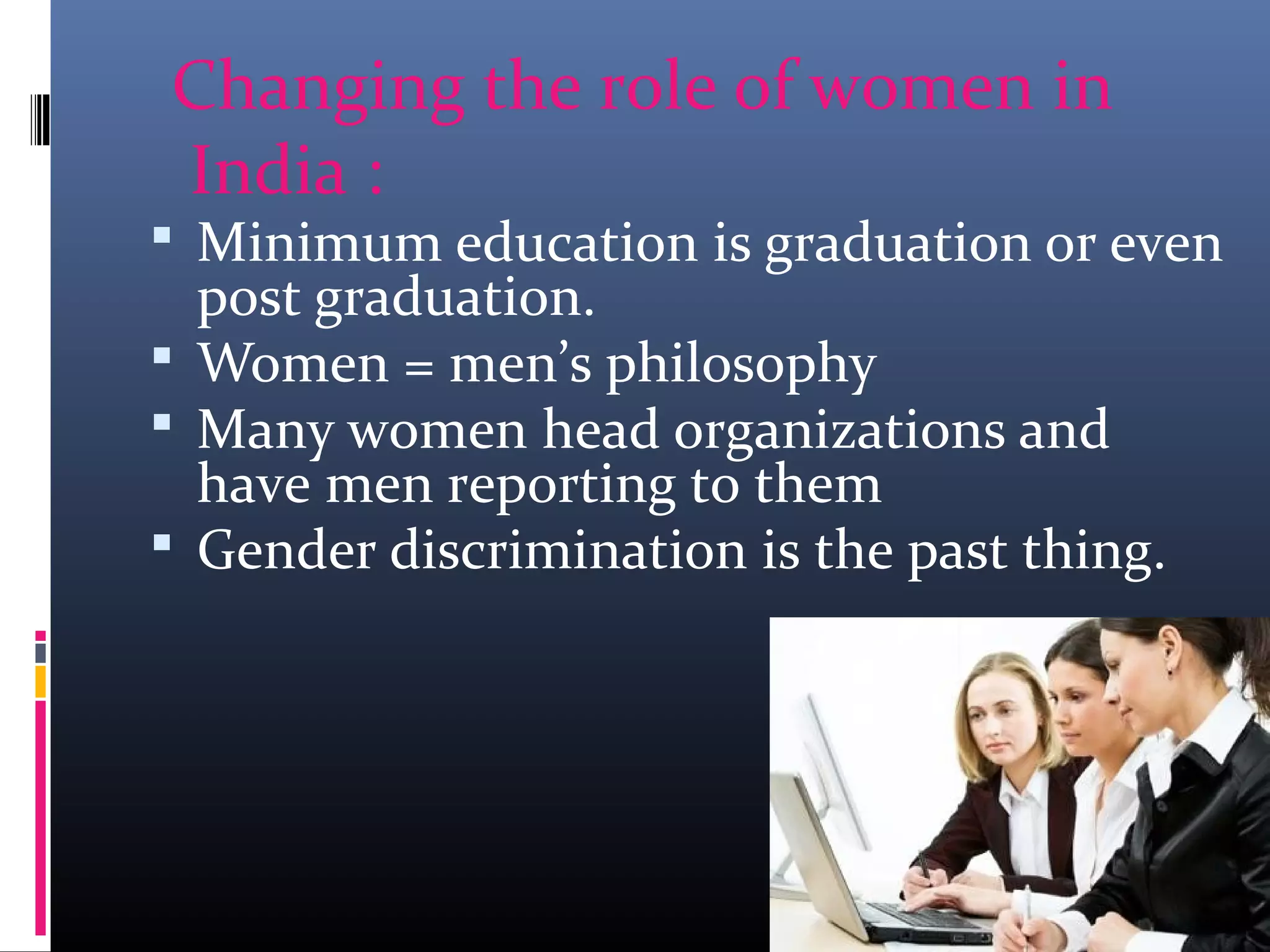
Changing the role of women in
India :
 Minimum education is graduation or even
post graduation.
 Women = men’s philosophy
 Many women head organizations and
have men reporting to them
 Gender discrimination is the past thing.
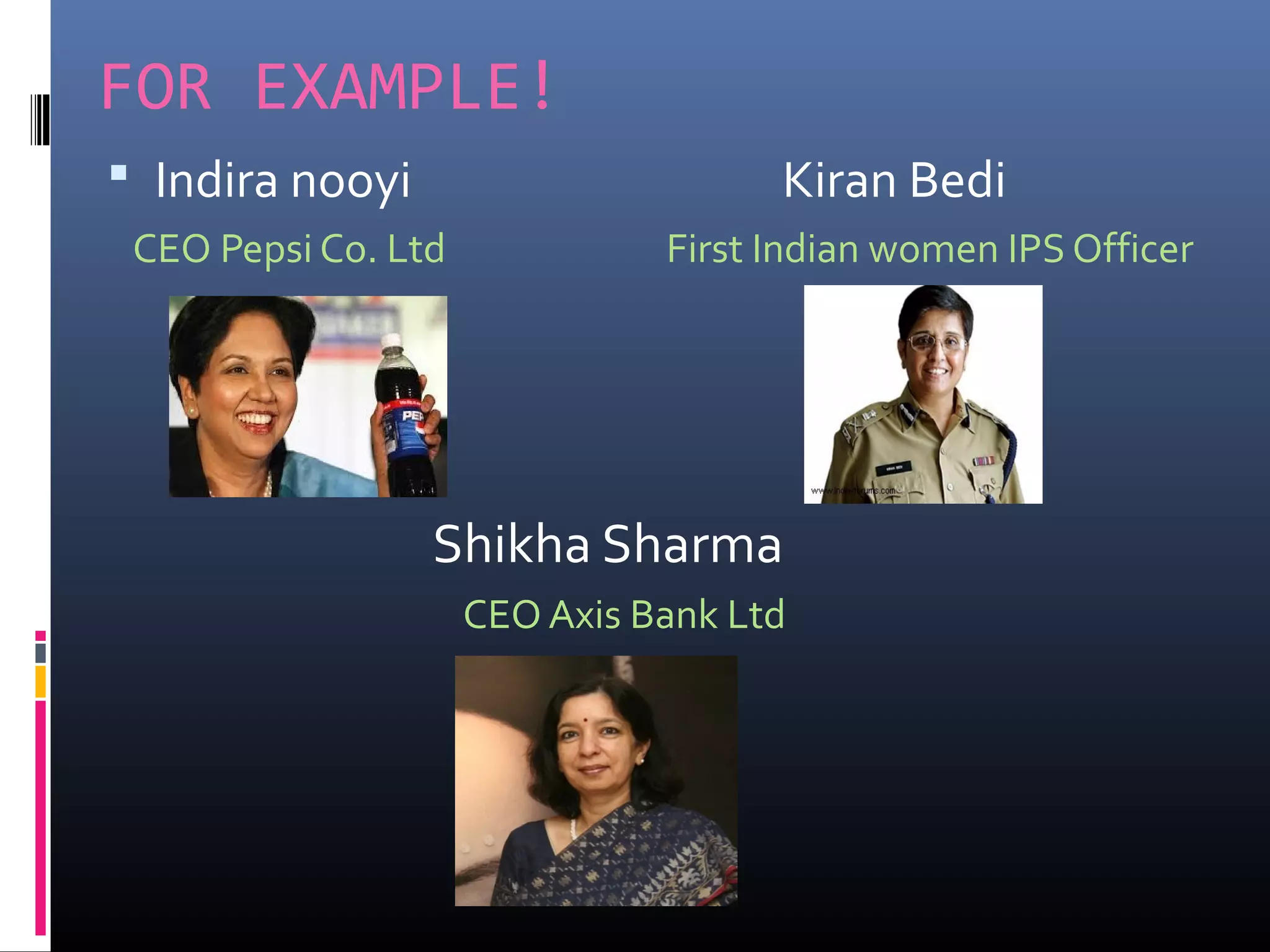
FOR EXAMPLE!
 Indira nooyi Kiran Bedi
CEO Pepsi Co. Ltd First Indian women IPS Officer
Shikha Sharma
CEO Axis Bank Ltd
Better educated more white collared,
more professional population
 Indian population is becoming better
educated
the rising number of educated people will
increase in the demand for quality
products, books, magazines, personal
computers and internet services
There are near 220 MBA colleges in the
Karnataka state which are recognized by
NAAC (National assessment accreditation
council, NEW DEHLI)
03/07/16
ECONOMIC ENVIRONMENT
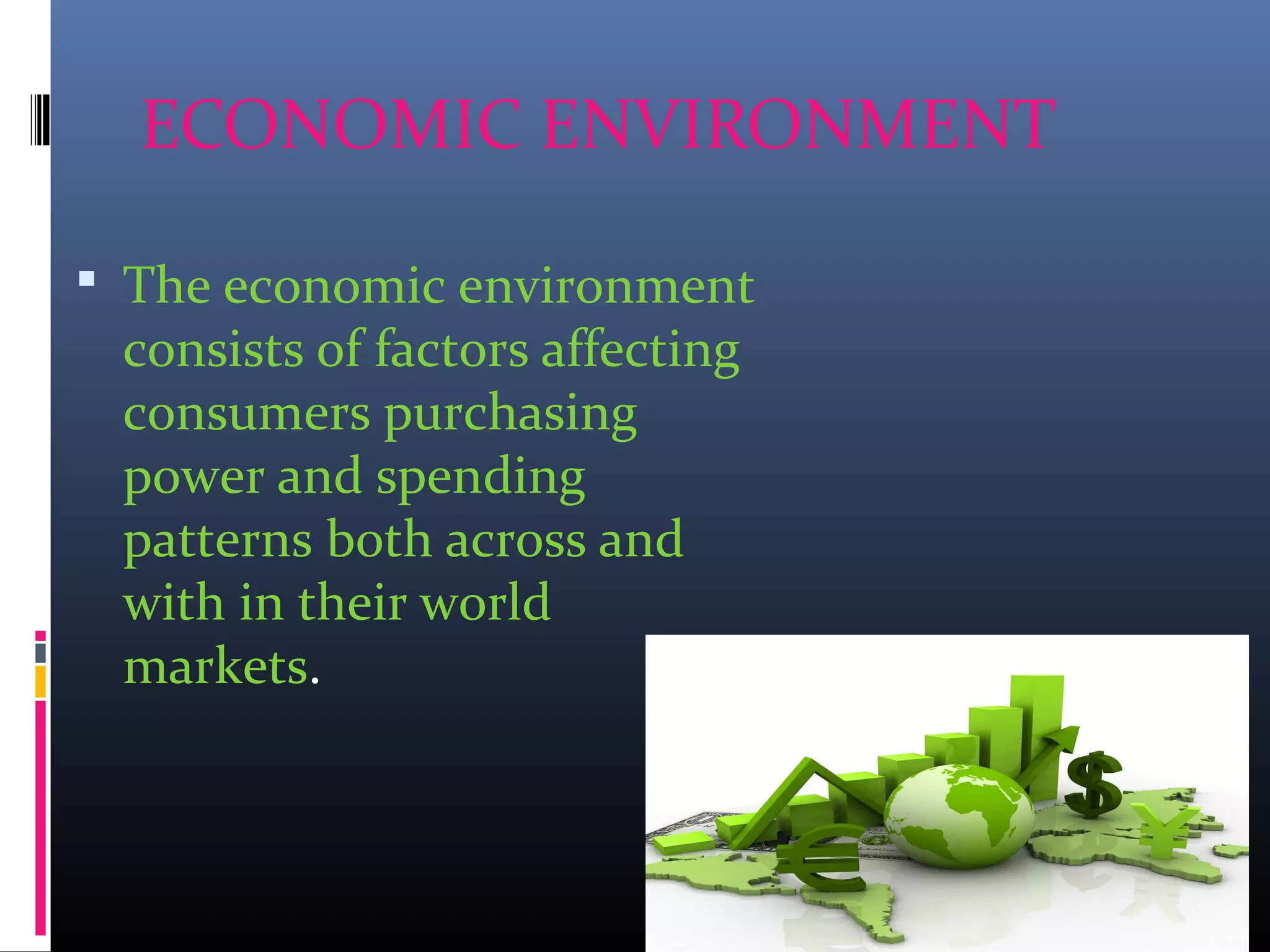
 The economic environment
consists of factors affecting
consumers purchasing
power and spending
patterns both across and
with in their world
markets.
Engel’s law:
 “As the income increases the % of income
spent on the food declines and non food
(such as on luxury goods)items increases “
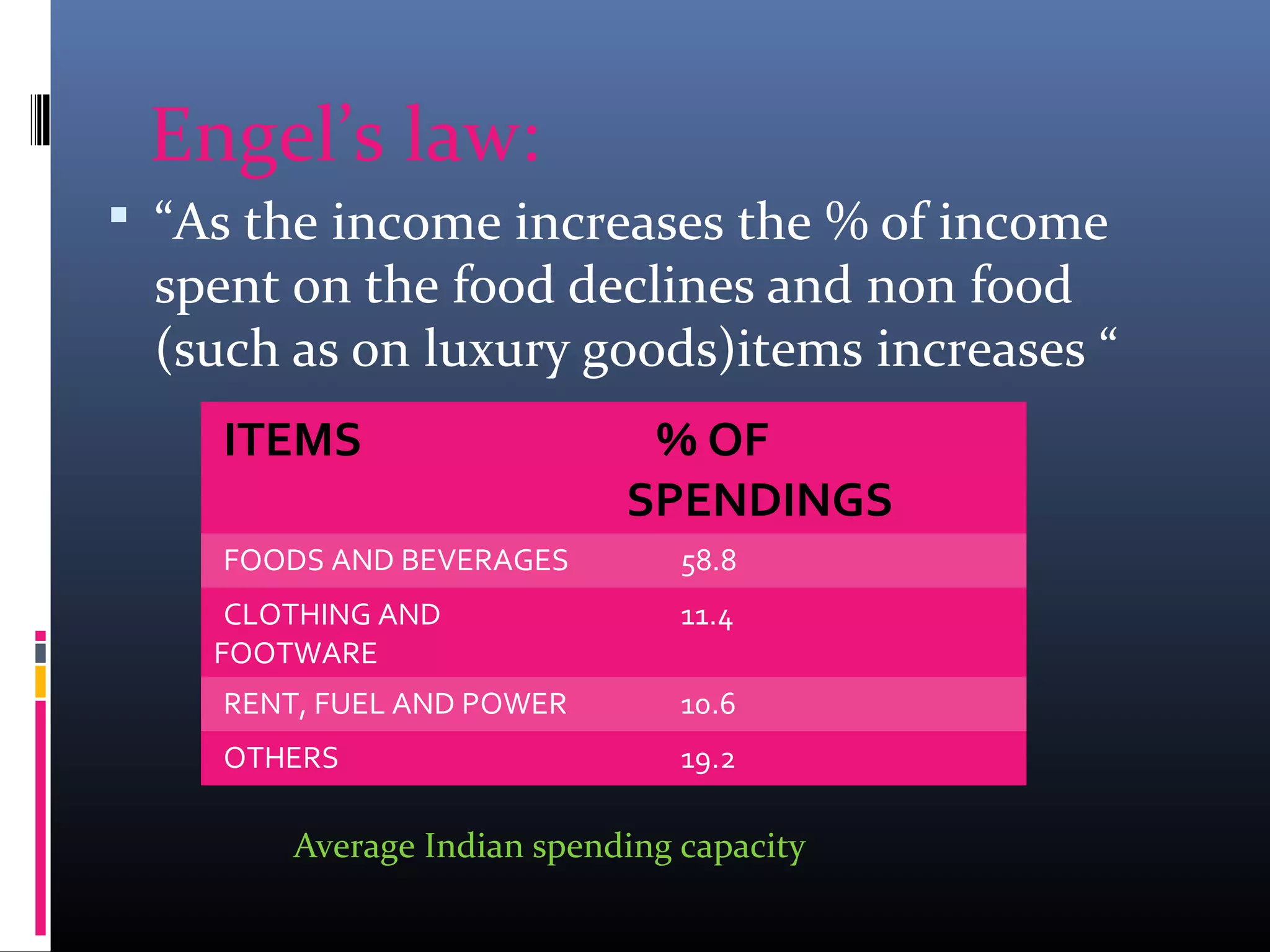
Average Indian spending capacity
ITEMS % OF
SPENDINGS
FOODS AND BEVERAGES 58.8
CLOTHING AND
FOOTWARE
11.4
RENT, FUEL AND POWER 10.6
OTHERS 19.2
NATURAL ENVIRONMENT
 “Natural resources that are
needed as inputs by the
marketers or that are affected
by the marketing activities”.
Trends Involve In The Natural
Environment:
Marketers must be aware of these trends
Shortage of raw material
Increased population
Shortage of water
Natural climates
Technological environment
 Technology _ changing
peoples destiny
 “Forces that create
new technologies,
creating new products
and market
opportunities”
For example:
Marketing through social networking
 External factors in technology that impact business
operations. Changes in technology affect how a company will
do business. A business may have to dramatically change their operating
strategy as a result of changes in the technological environmen
Read more: http://www.businessdictionary.com/definition/technological-
environment.html#ixzz3kMtSQpIr
Wall mart a uses chip in all his products
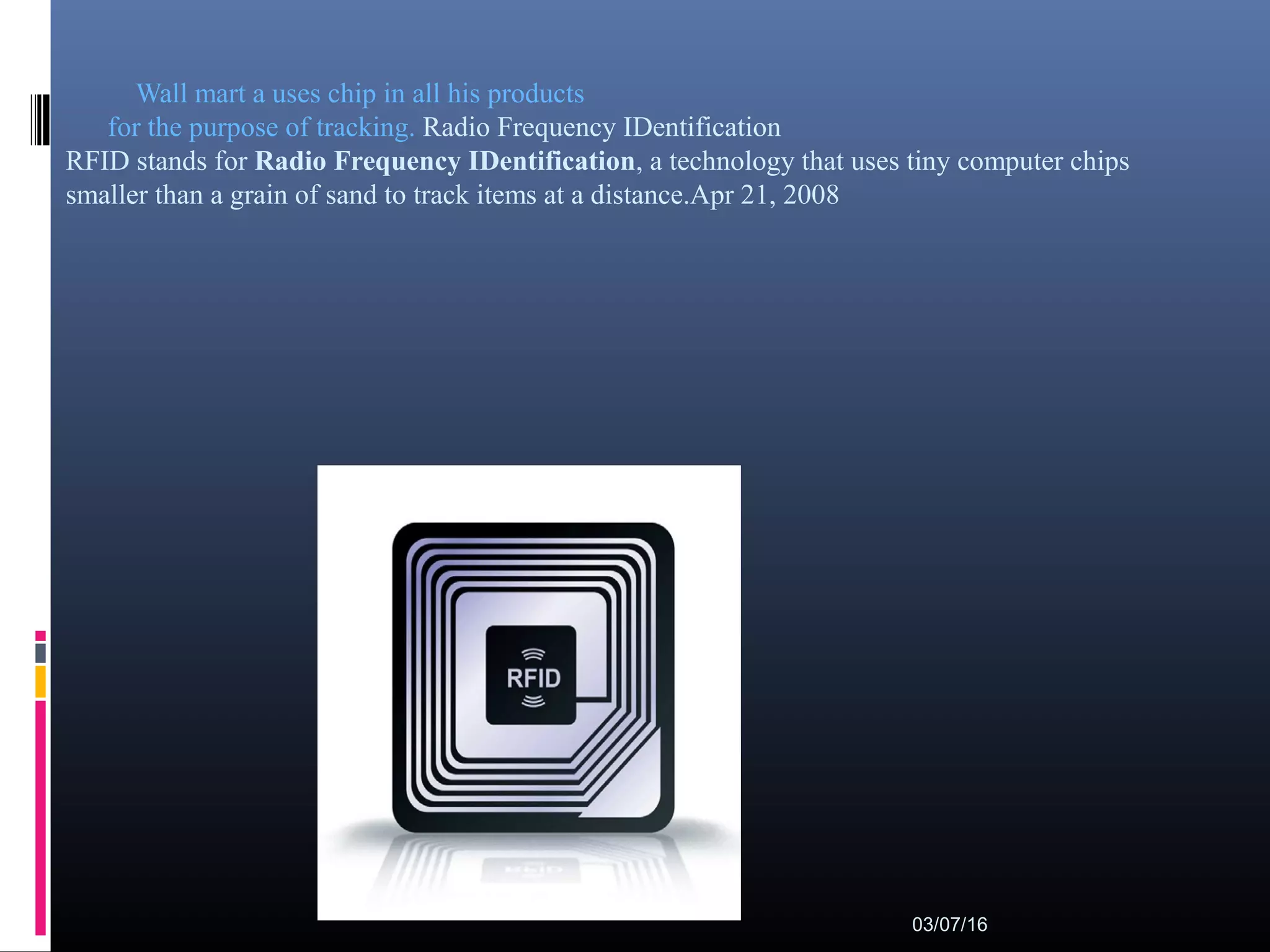
for the purpose of tracking. Radio Frequency IDentification
RFID stands for Radio Frequency IDentification, a technology that uses tiny computer chips
smaller than a grain of sand to track items at a distance.Apr 21, 2008
03/07/16
Political Environment
“the political environment consist of Laws
government agencies and pressure groups
that influence and limit various
organizations and individuals given society”
 The central and state government have enacted
a number of laws to regulated business and
commercial activities in the country.
 Marketing managers have to ensure that all
policies are with in the statutory framework.
03/07/16
Important Statues Are:
The Indian sales of goods Act 1930.
Indian contract Act 1892.
Patent Act 1970.
Consumer protection Act 1986.
Objectives:
 Protecting the consumers from unfair
practices.
 Protecting companies from unfair
competitions.
 Secure smooth business atmosphere.
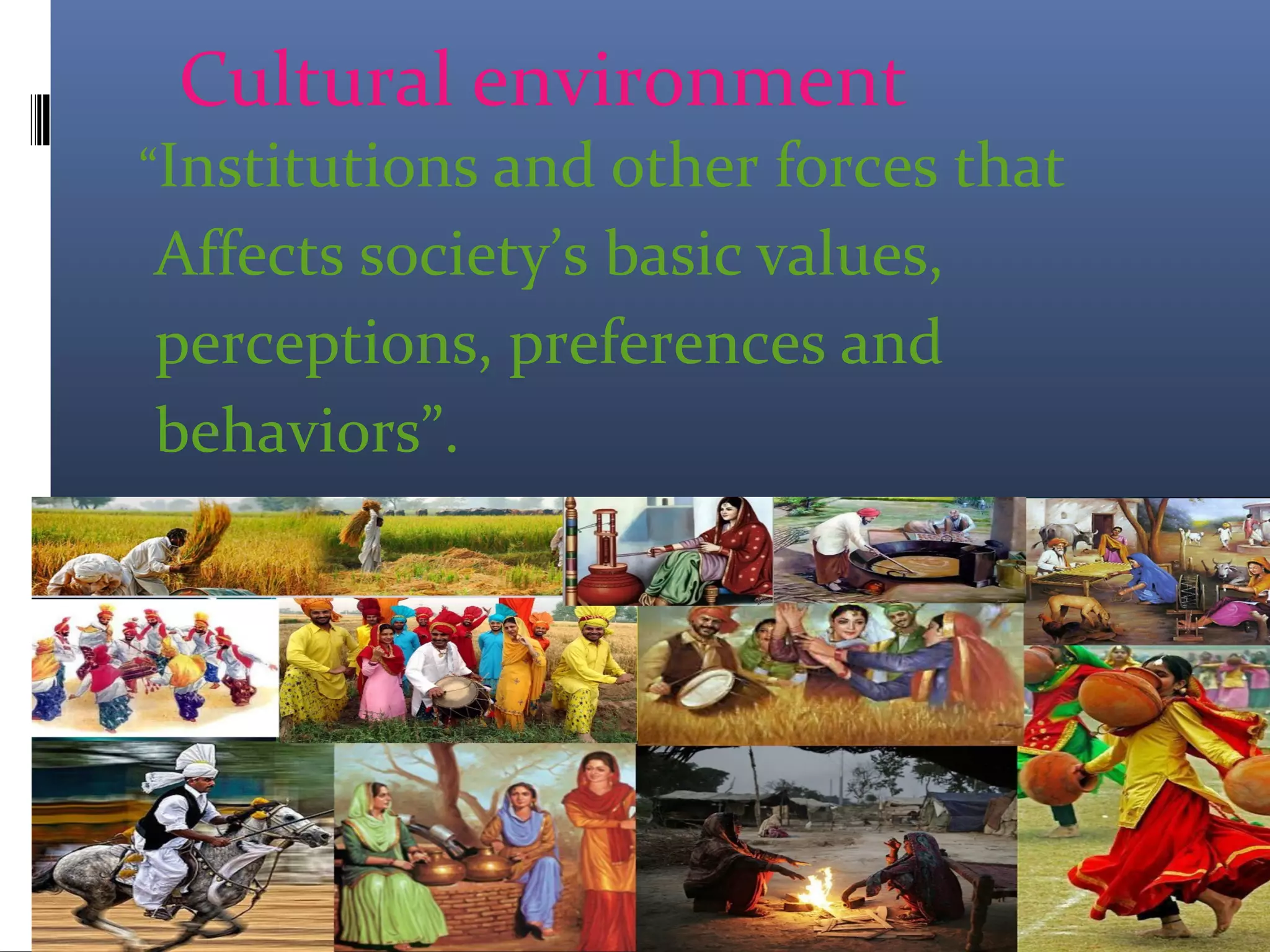
Cultural environment
“Institutions and other forces that
Affects society’s basic values,
perceptions, preferences and
behaviors”.
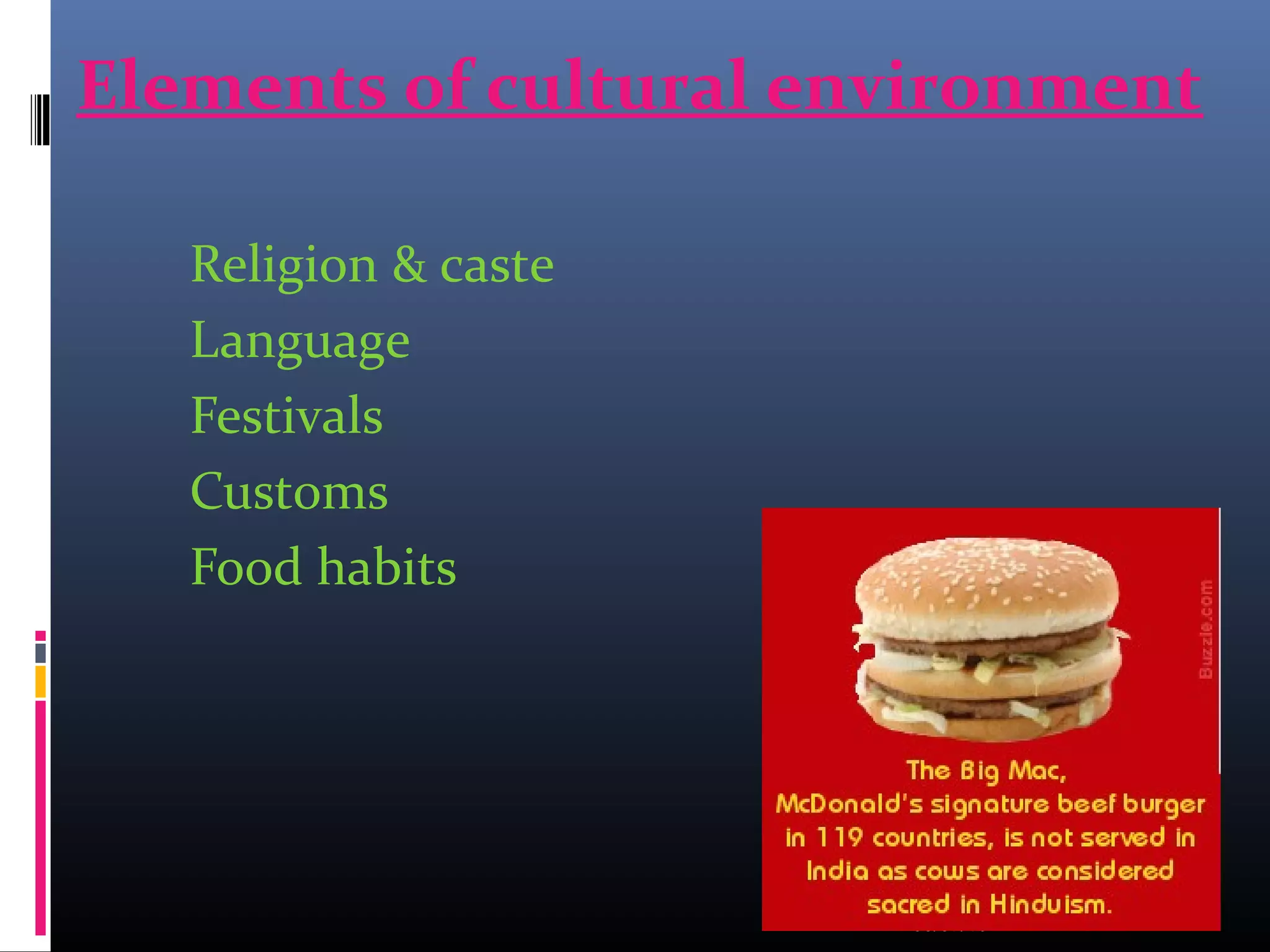
Elements of cultural environment
Religion & caste
Language
Festivals
Customs
Food habits
03/07/16
IN India :
28 States
1618 Languages
6400 Castes
6 Religion
29 Major festivals
&
1 country
Have U Any Question In
Mind Of Any Body??
03/07/16
03/07/16

Macro environment of marketing

  • 1.
  • 2.
  • 3.
    Group Members Iram Nazroll # 17 Saman Akhter roll # 23 Zobia Ghazanfar roll # 16 M.COM
  • 4.
  • 5.
    Acknowledgment: First of allthanks to ALLAH almighty who gave us courage, health and knowledge to complete this project. Second we would like to thank our parents who believe us and give us a chance to explore our abilities. We would like express special thanks of gratitude to my teacher Sir MUDASSAR who guide us in a good way. 03/07/16
  • 6.
    Marketing Environment  Themarket environment is a marketing term which refers to factors and forces that affect a firm's ability to build and maintain successful relationships with customers.
  • 7.
    Three Levels OfEnvironment: Micro: Small Forces Within The Company That Affect Its Ability To Serve Its Customers Mes0: In Which Think About: Suppliers, Supply And Demand, Distribution, Competitors And Strategic Alliances. Macro: Larger uncontrollable Forces That Affect The Microenvironment.
  • 8.
    Macro environment: The majorexternal and uncontrollable factors that influence an organization’s decision making and affect its performance & strategies. 03/07/16
  • 9.
    Factors In MacroEnvironment  Un controllable factors  Economic  Political  Cultural  Technological  Political  Natural 03/07/16
  • 10.
    Aim of study: To understand the behavior of key marketing environmental forces.  To understand the techniques available for environmental scanning.  To understand market research.  To understand how to tackle the problems. 03/07/16
  • 11.
    WHY it isIMPORTANT?  An understanding of macro environment forces is essential for planning.  Helps a business to compete more effectively against rivals.  Assists in identification of opportunities and threats.  Enables an organization to take advantage of emerging strategic opportunities.
  • 12.
    Objectives :  Tolearn how to gather information and scanning of the environment.  To learn the meaning and concepts of macro and micro environment.  To learn the objectives, scope, limitations and applications of marketing research. 03/07/16
  • 13.
  • 14.
    Demographic environment The studyof human population in terms of size, age, location, gender, occupation and other statistics.
  • 15.
    Increasing population A growingmiddle class: in India Growth in the rural population Changing family system The changing role of women A better educated, more white collared, more professional population 03/07/16
  • 16.
    Acronyms in respectof age:  Skippies  Moby’s  Dinks  Puppies  Woofs 03/07/16
  • 17.
     School kidswith income and purchases power  Mother older, baby younger  Double income, no kids  Poor urban population  Well off older folks 03/07/16
  • 18.
    Location:  Mexico isa generation of young people.  Japan ; old generation  America was a melting bowl. Now it is a salad bowl with Chinese filipinese, Japanese, Asians and Koreans. 03/07/16
  • 20.
    03/07/16 Shahrukh Khan shellingout Rs. 11 crore tax for the financial year In the financial year 2013-14, actor Akshay Kumar paid approximately Rs. 18 crore towards taxes and snatched the enviable first position among the film stars
  • 21.
  • 22.
     The growthof Indian rural population  The MGI consumer model has forecasted that rural Indian population will be 906 billion by 2015.  Demand for rural areas expected to grow at 51% during the next 15 years  Today the main constraints of marketers over rural market are: proper infrastructure such as roads, telecommunication connectivity and supply of electricity
  • 23.
    Changing family system Coming out from joint family system  Adopting NFS & DISK culture  Nuclear family system: father, mother, and children.  DISK: Dual income ( both father and mother) single kid culture is more popularized in India.
  • 24.
    Changing the roleof women in India :  Minimum education is graduation or even post graduation.  Women = men’s philosophy  Many women head organizations and have men reporting to them  Gender discrimination is the past thing.
  • 25.
    FOR EXAMPLE!  Indiranooyi Kiran Bedi CEO Pepsi Co. Ltd First Indian women IPS Officer Shikha Sharma CEO Axis Bank Ltd
  • 26.
    Better educated morewhite collared, more professional population  Indian population is becoming better educated the rising number of educated people will increase in the demand for quality products, books, magazines, personal computers and internet services
  • 27.
    There are near220 MBA colleges in the Karnataka state which are recognized by NAAC (National assessment accreditation council, NEW DEHLI) 03/07/16
  • 28.
    ECONOMIC ENVIRONMENT  Theeconomic environment consists of factors affecting consumers purchasing power and spending patterns both across and with in their world markets.
  • 29.
    Engel’s law:  “Asthe income increases the % of income spent on the food declines and non food (such as on luxury goods)items increases “ Average Indian spending capacity ITEMS % OF SPENDINGS FOODS AND BEVERAGES 58.8 CLOTHING AND FOOTWARE 11.4 RENT, FUEL AND POWER 10.6 OTHERS 19.2
  • 30.
    NATURAL ENVIRONMENT  “Naturalresources that are needed as inputs by the marketers or that are affected by the marketing activities”.
  • 31.
    Trends Involve InThe Natural Environment: Marketers must be aware of these trends Shortage of raw material Increased population Shortage of water Natural climates
  • 32.
    Technological environment  Technology_ changing peoples destiny  “Forces that create new technologies, creating new products and market opportunities”
  • 33.
    For example: Marketing throughsocial networking  External factors in technology that impact business operations. Changes in technology affect how a company will do business. A business may have to dramatically change their operating strategy as a result of changes in the technological environmen Read more: http://www.businessdictionary.com/definition/technological- environment.html#ixzz3kMtSQpIr
  • 34.
    Wall mart auses chip in all his products for the purpose of tracking. Radio Frequency IDentification RFID stands for Radio Frequency IDentification, a technology that uses tiny computer chips smaller than a grain of sand to track items at a distance.Apr 21, 2008 03/07/16
  • 35.
    Political Environment “the politicalenvironment consist of Laws government agencies and pressure groups that influence and limit various organizations and individuals given society”
  • 36.
     The centraland state government have enacted a number of laws to regulated business and commercial activities in the country.  Marketing managers have to ensure that all policies are with in the statutory framework.
  • 37.
    03/07/16 Important Statues Are: TheIndian sales of goods Act 1930. Indian contract Act 1892. Patent Act 1970. Consumer protection Act 1986.
  • 38.
    Objectives:  Protecting theconsumers from unfair practices.  Protecting companies from unfair competitions.  Secure smooth business atmosphere.
  • 39.
    Cultural environment “Institutions andother forces that Affects society’s basic values, perceptions, preferences and behaviors”.
  • 40.
    Elements of culturalenvironment Religion & caste Language Festivals Customs Food habits 03/07/16
  • 41.
    IN India : 28States 1618 Languages 6400 Castes 6 Religion 29 Major festivals & 1 country
  • 42.
    Have U AnyQuestion In Mind Of Any Body?? 03/07/16
  • 43.