BIOMECHANICS
OF LUMBAR
SPINE
Topics to be discussed;
 Structure of lumbar spine
 Lumbar articulations
 Ligaments & Fascia
 Lumbopelvic rhythm
 Kinematics of lumbar spine
 Kinetics of lumbar spine
Structure of Lumbar spine
 The first four lumbar L1-L4 vertebrae
are similar in structure.
 The fifth lumbar L5 vertebra has
structural adaptations for articulation
with the sacrum.
5TH LUMBAR VERTEBRA
 It is a transitional vertebra:
 involving, providing, or consisting of a
passage, movement, or change from one
state, condition, subject, place, etc., to
another
 L5 has a wedge-shaped body
 The L5/S1 disk also is wedge shaped.
 The superior discal surface area of L5 is
about 5% greater than the areas of discs
at L3 and L4.
 The inferior discal surface area of L5 is
smaller than the discal surface area at
other lumbar levels.
 The spinous process of L5 is smaller than
other lumbar spinous processes
 The transverse processes of L5 are large
and directed superiorly and posteriorly
Lumbosacral articulation
 It is formed by the L5 and S1.
 The 1 sacral segment, which is inclined
slightly anteriorly and inferiorly, forms
an angle with the horizontal called the
Lumbosacral Angle.
 An increase in this angle will result in an
increase in lordosis of the lumbar curve.
 Increase the amount of shearing stress at
the lumbosacral joint
 ARTICULATION
 Interbody joints
The interbody joints of the lumbar
region are capable of translations
and tilts in all directions.
 Zygapophyseal joints
Allows flexion , extension , rotation
and lateral bending
Intertransverse
Ligament
Supraspinous
Ligament
Content Here
Content Here
Ligaments of
the Lumbar
Spine
 Supraspinous ligament is well
developed in upper lumbar
region and may terminate at
L3 and L4.
 The ligament is almost
always absent at L5/S1
 Intertransverse ligaments are
not true ligaments in the
lumbar area and are replaced
by the iliolumbar ligament at
L4.
Iliolumbar
Ligament
 There are three primary bands:
 Ventral (or anterior) band
 Dorsal (or posterior) band
 Sacral band (lumbosacral
ligament)
 The illiolumber ligaments is
very strong and stabilizing the
5 lumbar vertebra (preventing
the vertebra from anterior
displacement)
 resisting flexion, extension,
axial rotation, and lateral
bending of L5 on S1
Lumbar Pelvis Rhythm
 It is a specific instance of coordinated,
simultaneous activity of lumbar flexion and
anterior tilting of the pelvis in the sagittal
plane during trunk flexion and extension.
 This combined lumbar and pelvic motion is
lumbar-pelvic rhythm
Lumbar Pelvis Rhythm
 Bending over to touch one’s toes with
knees straight
Lumbar flexion followed by anterior
tilting of the pelvis at the hip joints
 Return to the erect posture
Lumber extension
Initiated by posterior tilting of the pelvis at
the hips
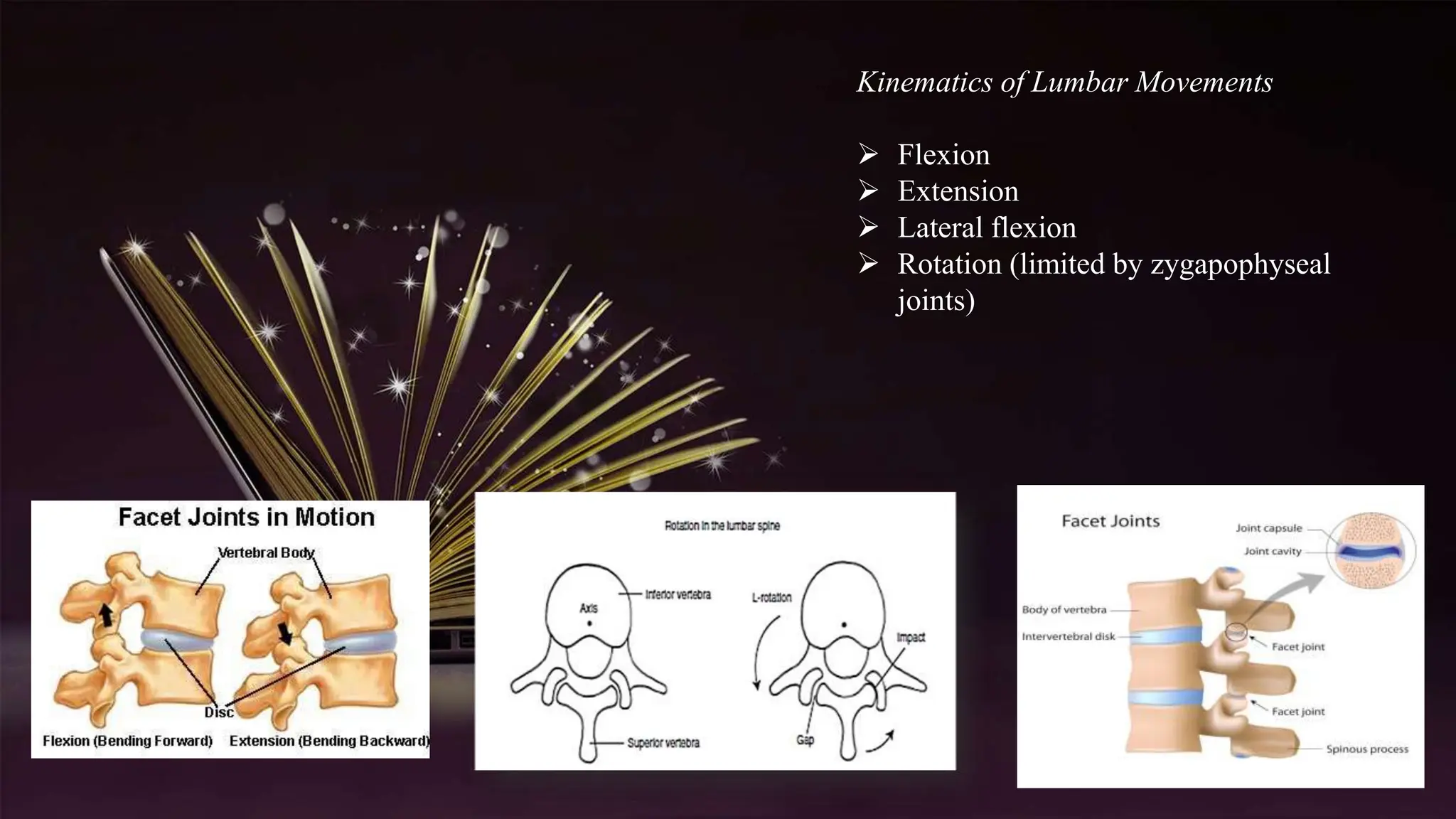
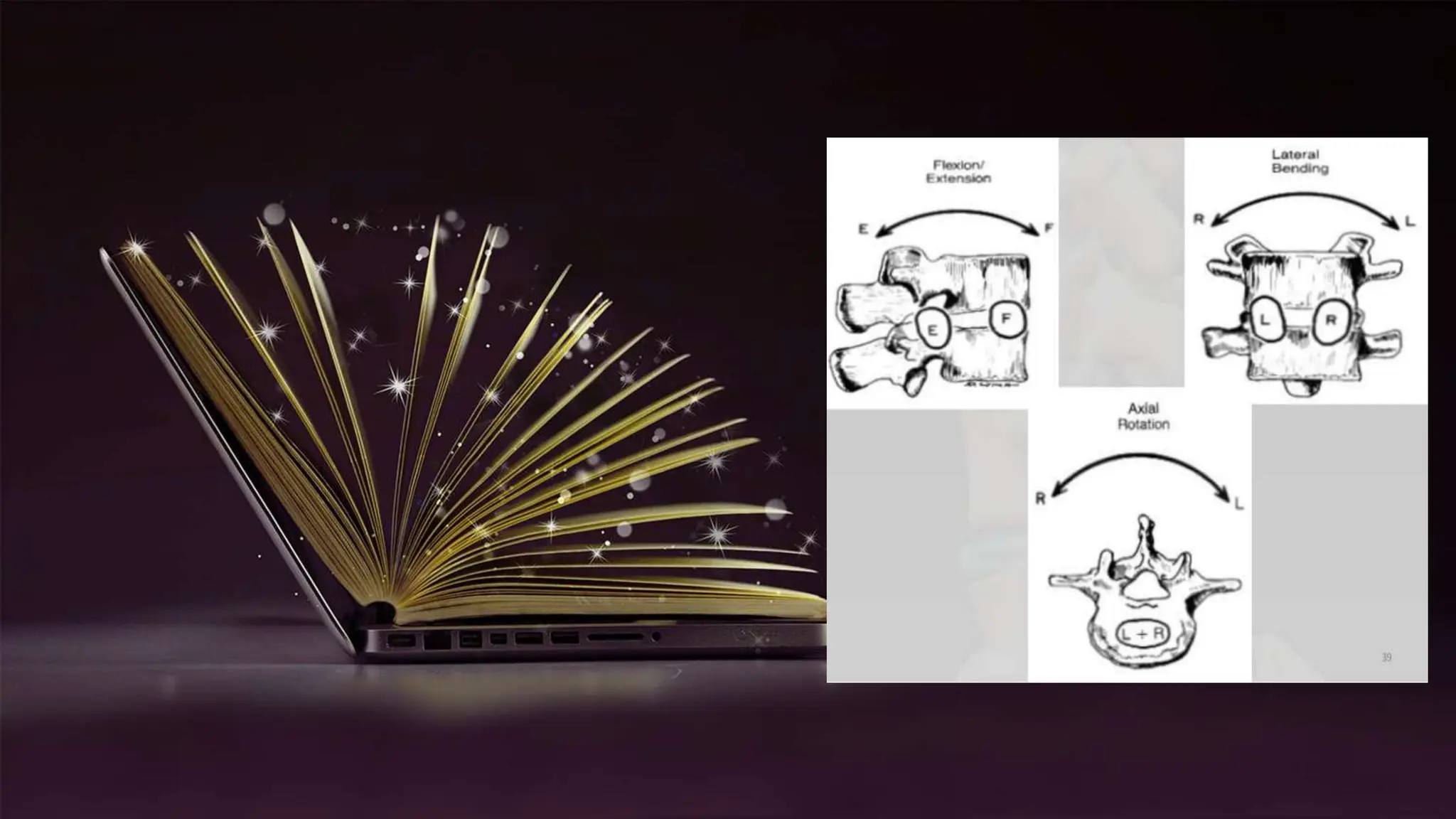
Kinematics of Lumbar Movements
 Flexion
 Extension
 Lateral flexion
 Rotation (limited by zygapophyseal
joints)
Kinetics
Compression:
The increase size of the
lumbar vertebral bodies and
discs in comparison with
their counterparts in the
other regions help the
lumbar structures support
the additional weight.
Shear:
In the upright standing position, the
lumbar segments are subjected to anterior
shear forces cause by the lordotic position,
the body weight, and ground reaction
forces. This anterior shear or translation
of the vertebra is resisted by direct
impaction of the inferior zygapophyseal
facets of the superior vertebra against the
superior zygapophyseal facets of the
adjacent vertebra below.
THANK YOU

Lumbar spine 2020.pptx

  • 1.
  • 2.
    Topics to bediscussed;  Structure of lumbar spine  Lumbar articulations  Ligaments & Fascia  Lumbopelvic rhythm  Kinematics of lumbar spine  Kinetics of lumbar spine
  • 4.
    Structure of Lumbarspine  The first four lumbar L1-L4 vertebrae are similar in structure.  The fifth lumbar L5 vertebra has structural adaptations for articulation with the sacrum.
  • 6.
    5TH LUMBAR VERTEBRA It is a transitional vertebra:  involving, providing, or consisting of a passage, movement, or change from one state, condition, subject, place, etc., to another  L5 has a wedge-shaped body  The L5/S1 disk also is wedge shaped.  The superior discal surface area of L5 is about 5% greater than the areas of discs at L3 and L4.  The inferior discal surface area of L5 is smaller than the discal surface area at other lumbar levels.  The spinous process of L5 is smaller than other lumbar spinous processes  The transverse processes of L5 are large and directed superiorly and posteriorly
  • 7.
    Lumbosacral articulation  Itis formed by the L5 and S1.  The 1 sacral segment, which is inclined slightly anteriorly and inferiorly, forms an angle with the horizontal called the Lumbosacral Angle.  An increase in this angle will result in an increase in lordosis of the lumbar curve.  Increase the amount of shearing stress at the lumbosacral joint
  • 8.
     ARTICULATION  Interbodyjoints The interbody joints of the lumbar region are capable of translations and tilts in all directions.  Zygapophyseal joints Allows flexion , extension , rotation and lateral bending
  • 9.
    Intertransverse Ligament Supraspinous Ligament Content Here Content Here Ligamentsof the Lumbar Spine  Supraspinous ligament is well developed in upper lumbar region and may terminate at L3 and L4.  The ligament is almost always absent at L5/S1  Intertransverse ligaments are not true ligaments in the lumbar area and are replaced by the iliolumbar ligament at L4. Iliolumbar Ligament  There are three primary bands:  Ventral (or anterior) band  Dorsal (or posterior) band  Sacral band (lumbosacral ligament)  The illiolumber ligaments is very strong and stabilizing the 5 lumbar vertebra (preventing the vertebra from anterior displacement)  resisting flexion, extension, axial rotation, and lateral bending of L5 on S1
  • 10.
    Lumbar Pelvis Rhythm It is a specific instance of coordinated, simultaneous activity of lumbar flexion and anterior tilting of the pelvis in the sagittal plane during trunk flexion and extension.  This combined lumbar and pelvic motion is lumbar-pelvic rhythm
  • 11.
    Lumbar Pelvis Rhythm Bending over to touch one’s toes with knees straight Lumbar flexion followed by anterior tilting of the pelvis at the hip joints  Return to the erect posture Lumber extension Initiated by posterior tilting of the pelvis at the hips
  • 12.
    Kinematics of LumbarMovements  Flexion  Extension  Lateral flexion  Rotation (limited by zygapophyseal joints)
  • 14.
    Kinetics Compression: The increase sizeof the lumbar vertebral bodies and discs in comparison with their counterparts in the other regions help the lumbar structures support the additional weight.
  • 15.
    Shear: In the uprightstanding position, the lumbar segments are subjected to anterior shear forces cause by the lordotic position, the body weight, and ground reaction forces. This anterior shear or translation of the vertebra is resisted by direct impaction of the inferior zygapophyseal facets of the superior vertebra against the superior zygapophyseal facets of the adjacent vertebra below.
  • 17.