LECTURE: AN45 1,2,3 :THORACOLUMBAR FASCIA
LUMBER PLEXUS
BACK MUSCLE
AUTHOR: DR PRANAB DEB
(ASST. PROF, ANATOMY DEPT,AGMC)
DATE:24/06/22
Thoracolumbar Fascia
What is it?
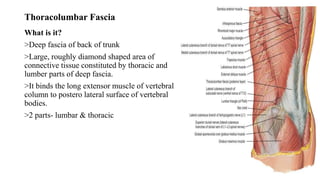
>Deep fascia of back of trunk
>Large, roughly diamond shaped area of
connective tissue constituted by thoracic and
lumber parts of deep fascia.
>It binds the long extensor muscle of vertebral
column to postero lateral surface of vertebral
bodies.
>2 parts- lumbar & thoracic
LUMBAR PART
What are the Features?
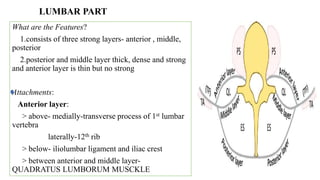
1.consists of three strong layers- anterior , middle,
posterior
2.posterior and middle layer thick, dense and strong
and anterior layer is thin but no strong
Attachments:
Anterior layer:
> above- medially-transverse process of 1st lumbar
vertebra
laterally-12th rib
> below- iliolumbar ligament and iliac crest
> between anterior and middle layer-
QUADRATUS LUMBORUM MUSCKLE
Middle layer
> above-laterally 12th rib
> medially tips of lumbar vertebra
> below-iliolumbar ligament and iliac crest
Posterior layer
>Medially- spines of lumbar vertebra
>Below-iliac crest
Thoracic part of thoracolumbar fascia
• Medially- to the spines of thoracic vertebra
• Laterally-to the angles of rib
• Above-extends to cervical region
• Clinical correlations:
LUMBAR PLEXUS
• The lumbar plexus, which is one of
the main nervous pathways supplying
the lower limb, is formed within the
psoas major muscle from the
anterior rami of the upper four
lumbar nerves.
• The branches of the plexus emerge
from the lateral and medial borders
of the muscle and from its anterior
surface.
The nerves that emerge from the lateral side of the psoas major from above
downward are:
• The Iliohypo gastric nerve (L1)
• Ilioinguinal nerve (L1)
• Genito-femoral nerve(L1,L2 ventral
divison)
• Lateral cutaneous nerve of the thigh (L
2 & 3)
• Femoral nerve (L 2, 3 & 4-dorsal
divison)
• Obturator nerve(L 2,3 &4-ventral
division)
• Lumbosacral trunk(L4,5-ventral rami)
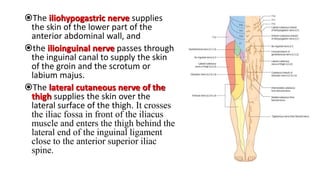
The iliohypogastric nerve supplies
the skin of the lower part of the
anterior abdominal wall, and
the ilioinguinal nerve passes through
the inguinal canal to supply the skin
of the groin and the scrotum or
labium majus.
The lateral cutaneous nerve of the
thigh supplies the skin over the
lateral surface of the thigh. It crosses
the iliac fossa in front of the iliacus
muscle and enters the thigh behind the
lateral end of the inguinal ligament
close to the anterior superior iliac
spine.
The femoral nerve (L2, 3, and 4) is the
largest branch of the lumbar plexus . It
supplies the iliacus muscle in the abdomen.
• The obturator nerve and the fourth lumbar
root of the lumbosacral trunk emerge from
the medial border of the psoas at the brim
of the pelvis. It leaves the pelvis by passing
through the obturator foramen into the
thigh.
MAJOR SUBGROUPS OF BACK MUSCLE OF POSTERIOR ABDOMINAL WALL
• Posterior abdominal wall extends from the
12th rib above to the pelvic brim below
Constructed as-
1. bony
2. Muscular part
3. fascia( Psoas fascia, Fascia iliaca &
Thoracolumbar Fascia)
• 4 muscle
Psoas major
Psoas minor
Iliacus
Quadratus lumborum
Psoas major
• Fusiform muscle placed on the side of
lumbar spine
• Nerve supply: branches from the roots
of spinal nerve L2,L3,L4.
• Action:
1. powerful flexor of the hip joint
2. stability at the hip
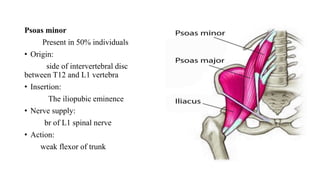
Psoas minor
Present in 50% individuals
• Origin:
side of intervertebral disc
between T12 and L1 vertebra
• Insertion:
The iliopubic eminence
• Nerve supply:
br of L1 spinal nerve
• Action:
weak flexor of trunk
Iliacus
• Triangular muscle
• Origin: Upper two-thirds of the iliac
fossa
• Insertion: Base of the lesser trochanter
of femur
• Nerve supply: branches from femoral
nerve(L2,3)
• Action : with the psoas , it flexes the
hip joint
Quadratus lumborum
• Origin:
Transverse process of vertebra L5
Iliolumbar ligament
• Insertion:
1.Medial part of anterior surface of the 12th rib
2.Upper lumbar transverse process
• Action:
Lateral flexor of lumbar vertebral coloumn

slides for class.pptx

  • 1.
    LECTURE: AN45 1,2,3:THORACOLUMBAR FASCIA LUMBER PLEXUS BACK MUSCLE AUTHOR: DR PRANAB DEB (ASST. PROF, ANATOMY DEPT,AGMC) DATE:24/06/22
  • 2.
    Thoracolumbar Fascia What isit? >Deep fascia of back of trunk >Large, roughly diamond shaped area of connective tissue constituted by thoracic and lumber parts of deep fascia. >It binds the long extensor muscle of vertebral column to postero lateral surface of vertebral bodies. >2 parts- lumbar & thoracic
  • 3.
    LUMBAR PART What arethe Features? 1.consists of three strong layers- anterior , middle, posterior 2.posterior and middle layer thick, dense and strong and anterior layer is thin but no strong Attachments: Anterior layer: > above- medially-transverse process of 1st lumbar vertebra laterally-12th rib > below- iliolumbar ligament and iliac crest > between anterior and middle layer- QUADRATUS LUMBORUM MUSCKLE
  • 4.
    Middle layer > above-laterally12th rib > medially tips of lumbar vertebra > below-iliolumbar ligament and iliac crest Posterior layer >Medially- spines of lumbar vertebra >Below-iliac crest Thoracic part of thoracolumbar fascia • Medially- to the spines of thoracic vertebra • Laterally-to the angles of rib • Above-extends to cervical region
  • 5.
  • 6.
    LUMBAR PLEXUS • Thelumbar plexus, which is one of the main nervous pathways supplying the lower limb, is formed within the psoas major muscle from the anterior rami of the upper four lumbar nerves. • The branches of the plexus emerge from the lateral and medial borders of the muscle and from its anterior surface.
  • 7.
    The nerves thatemerge from the lateral side of the psoas major from above downward are: • The Iliohypo gastric nerve (L1) • Ilioinguinal nerve (L1) • Genito-femoral nerve(L1,L2 ventral divison) • Lateral cutaneous nerve of the thigh (L 2 & 3) • Femoral nerve (L 2, 3 & 4-dorsal divison) • Obturator nerve(L 2,3 &4-ventral division) • Lumbosacral trunk(L4,5-ventral rami)
  • 8.
    The iliohypogastric nervesupplies the skin of the lower part of the anterior abdominal wall, and the ilioinguinal nerve passes through the inguinal canal to supply the skin of the groin and the scrotum or labium majus. The lateral cutaneous nerve of the thigh supplies the skin over the lateral surface of the thigh. It crosses the iliac fossa in front of the iliacus muscle and enters the thigh behind the lateral end of the inguinal ligament close to the anterior superior iliac spine.
  • 9.
    The femoral nerve(L2, 3, and 4) is the largest branch of the lumbar plexus . It supplies the iliacus muscle in the abdomen. • The obturator nerve and the fourth lumbar root of the lumbosacral trunk emerge from the medial border of the psoas at the brim of the pelvis. It leaves the pelvis by passing through the obturator foramen into the thigh.
  • 11.
    MAJOR SUBGROUPS OFBACK MUSCLE OF POSTERIOR ABDOMINAL WALL • Posterior abdominal wall extends from the 12th rib above to the pelvic brim below Constructed as- 1. bony 2. Muscular part 3. fascia( Psoas fascia, Fascia iliaca & Thoracolumbar Fascia) • 4 muscle Psoas major Psoas minor Iliacus Quadratus lumborum
  • 12.
    Psoas major • Fusiformmuscle placed on the side of lumbar spine • Nerve supply: branches from the roots of spinal nerve L2,L3,L4. • Action: 1. powerful flexor of the hip joint 2. stability at the hip
  • 13.
    Psoas minor Present in50% individuals • Origin: side of intervertebral disc between T12 and L1 vertebra • Insertion: The iliopubic eminence • Nerve supply: br of L1 spinal nerve • Action: weak flexor of trunk
  • 14.
    Iliacus • Triangular muscle •Origin: Upper two-thirds of the iliac fossa • Insertion: Base of the lesser trochanter of femur • Nerve supply: branches from femoral nerve(L2,3) • Action : with the psoas , it flexes the hip joint
  • 15.
    Quadratus lumborum • Origin: Transverseprocess of vertebra L5 Iliolumbar ligament • Insertion: 1.Medial part of anterior surface of the 12th rib 2.Upper lumbar transverse process • Action: Lateral flexor of lumbar vertebral coloumn