Workshop on :
4 G networks in Arab region :
A great opportunity and big challenges
to expand internet access
fatehallah.merazga@gmail.com
Fateh Allah Merazga
Plan
• Introduction :
LTE spectrum,Backhauling provisioning challenges.
• Lte specrtum criteria:
Ecosystem, Cell radius, Users distribution, Carrier
aggregation, Radio regulations.
• Growth of mobile data traffic:
Heterogeneous networks,Small Cells,
Software Defined Networks, MIMO, beyond LTE.
• Mobile backhauling:
Microwave (millimeter wave…), Fibers(DWDM…)
• Cost of broadband infrastructure :
devices' cost, partnership.
Introduction
What is LTE
• LTE refers to a standard for wireless acces
network defined by 3GPP through a set of
technical specifications (TS 36) in order to meet
the requirements mentioned in ( TR 25.913 ).
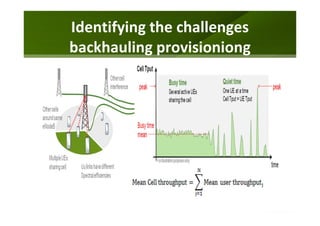
Identifying the challenges
backhauling provisioniong
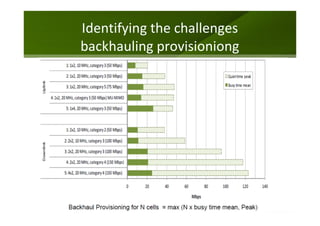
Identifying the challenges
backhauling provisioniong
Identifying the challenges
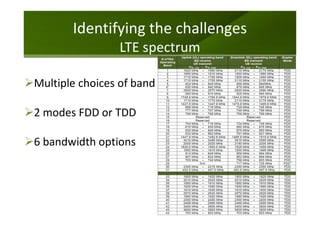
LTE spectrum
Multiple choices of band
2 modes FDD or TDD
6 bandwidth options
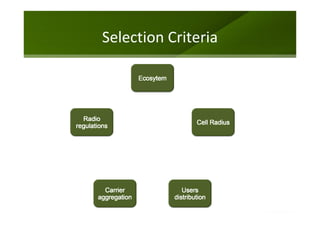
Selection Criteria
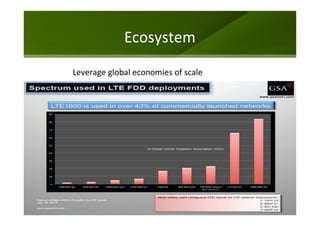
Ecosystem
Leverage global economies of scale
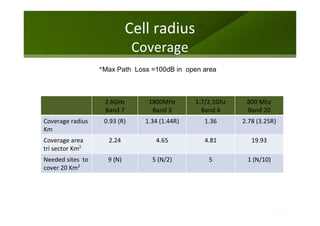
Cell radius
Coverage
•Max Path Loss =100dB in open area
2.6GHz
Band 7
1800MHz
Band 3
1.7/2.1Ghz
Band 4
800 Mhz
Band 20
Coverage radius
Km
0.93 (R) 1.34 (1.44R) 1.36 2.78 (3.25R)
Coverage area
tri sector Km2
2.24 4.65 4.81 19.93
Needed sites to
cover 20 Km2
9 (N) 5 (N/2) 5 1 (N/10)
Cell radius
Capacity
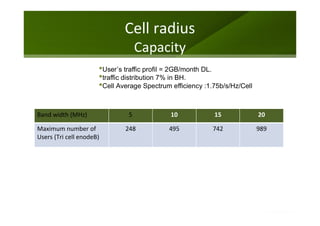
•User’s traffic profil = 2GB/month DL.
•traffic distribution 7% in BH.
•Cell Average Spectrum efficiency :1.75b/s/Hz/Cell
Band width (MHz) 5 10 15 20
Maximum number of
Users (Tri cell enodeB)
248 495 742 989
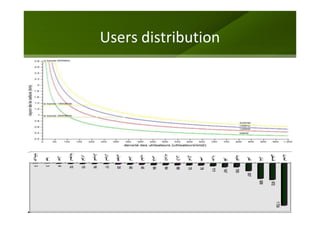
Users distribution
Carrier aggregation
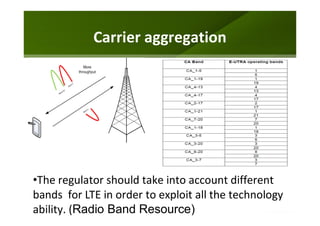
•The regulator should take into account different
bands for LTE in order to exploit all the technology
ability. (Radio Band Resource)
Radio regulations
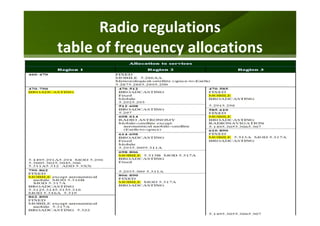
table of frequency allocations
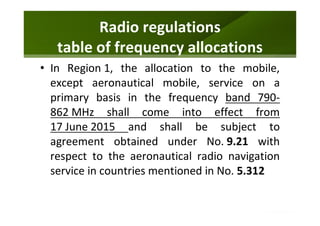
Radio regulations
table of frequency allocations
• In Region 1, the allocation to the mobile,
except aeronautical mobile, service on a
primary basis in the frequency band 790-
862 MHz shall come into effect from
17 June 2015 and shall be subject to
agreement obtained under No. 9.21 with
respect to the aeronautical radio navigation
service in countries mentioned in No. 5.312
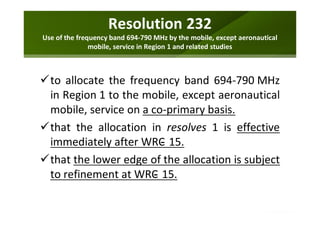
Resolution 232
Use of the frequency band 694-790 MHz by the mobile, except aeronautical
mobile, service in Region 1 and related studies
to allocate the frequency band 694-790 MHz
in Region 1 to the mobile, except aeronautical
mobile, service on a co-primary basis.
that the allocation in resolves 1 is effective
immediately after WRC 15.
that the lower edge of the allocation is subject
to refinement at WRC 15.
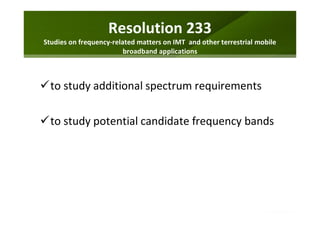
Resolution 233
Studies on frequency-related matters on IMT and other terrestrial mobile
broadband applications
to study additional spectrum requirements
to study potential candidate frequency bands

LTE Spectrum

  • 1.
    Workshop on : 4G networks in Arab region : A great opportunity and big challenges to expand internet access fatehallah.merazga@gmail.com Fateh Allah Merazga
  • 2.
    Plan • Introduction : LTEspectrum,Backhauling provisioning challenges. • Lte specrtum criteria: Ecosystem, Cell radius, Users distribution, Carrier aggregation, Radio regulations. • Growth of mobile data traffic: Heterogeneous networks,Small Cells, Software Defined Networks, MIMO, beyond LTE. • Mobile backhauling: Microwave (millimeter wave…), Fibers(DWDM…) • Cost of broadband infrastructure : devices' cost, partnership.
  • 3.
    Introduction What is LTE •LTE refers to a standard for wireless acces network defined by 3GPP through a set of technical specifications (TS 36) in order to meet the requirements mentioned in ( TR 25.913 ).
  • 4.
  • 5.
  • 6.
    Identifying the challenges LTEspectrum Multiple choices of band 2 modes FDD or TDD 6 bandwidth options
  • 7.
  • 8.
  • 9.
    Cell radius Coverage •Max PathLoss =100dB in open area 2.6GHz Band 7 1800MHz Band 3 1.7/2.1Ghz Band 4 800 Mhz Band 20 Coverage radius Km 0.93 (R) 1.34 (1.44R) 1.36 2.78 (3.25R) Coverage area tri sector Km2 2.24 4.65 4.81 19.93 Needed sites to cover 20 Km2 9 (N) 5 (N/2) 5 1 (N/10)
  • 10.
    Cell radius Capacity •User’s trafficprofil = 2GB/month DL. •traffic distribution 7% in BH. •Cell Average Spectrum efficiency :1.75b/s/Hz/Cell Band width (MHz) 5 10 15 20 Maximum number of Users (Tri cell enodeB) 248 495 742 989
  • 11.
  • 12.
    Carrier aggregation •The regulatorshould take into account different bands for LTE in order to exploit all the technology ability. (Radio Band Resource)
  • 13.
    Radio regulations table offrequency allocations
  • 14.
    Radio regulations table offrequency allocations • In Region 1, the allocation to the mobile, except aeronautical mobile, service on a primary basis in the frequency band 790- 862 MHz shall come into effect from 17 June 2015 and shall be subject to agreement obtained under No. 9.21 with respect to the aeronautical radio navigation service in countries mentioned in No. 5.312
  • 15.
    Resolution 232 Use ofthe frequency band 694-790 MHz by the mobile, except aeronautical mobile, service in Region 1 and related studies to allocate the frequency band 694-790 MHz in Region 1 to the mobile, except aeronautical mobile, service on a co-primary basis. that the allocation in resolves 1 is effective immediately after WRC 15. that the lower edge of the allocation is subject to refinement at WRC 15.
  • 16.
    Resolution 233 Studies onfrequency-related matters on IMT and other terrestrial mobile broadband applications to study additional spectrum requirements to study potential candidate frequency bands