

Low Back Pain
Dr Sushil Kumar
Nayak
Asst. professor
Dept. of PMR
Low back pain is a symptom, not a
disease, and has many causes.
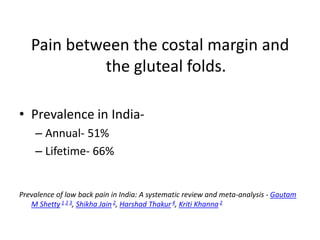
Pain between the costal margin and
the gluteal folds.
• Prevalence in India-
– Annual- 51%
– Lifetime- 66%
Prevalence of low back pain in India: A systematic review and meta-analysis - Gautam
M Shetty 1 2 3, Shikha Jain 2, Harshad Thakur4, Kriti Khanna2
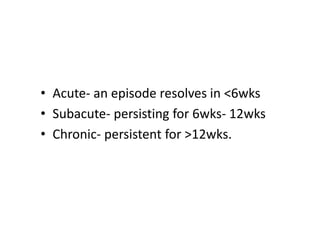
• Acute- an episode resolves in <6wks
• Subacute- persisting for 6wks- 12wks
• Chronic- persistent for >12wks.
Biomechanics of Lumbar Spine
• Dichotomous role in terms of function, which
is strength coupled with flexibility.
• Supports and protects (strength) the spinal
canal contents (spinal cord, conus, and cauda-
equina).
• Provides inherent flexibility by allowing us to
place our limbs in appropriate positions for
everyday functions.
• The strength of the spine results from the size
and arrangements of the bones, ligaments and
muscles.
• The inherent flexibility results from three-joint
complex of vertebral segment.
• And the typical lordotic framework of the
lumbar spine.
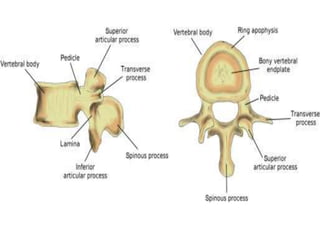
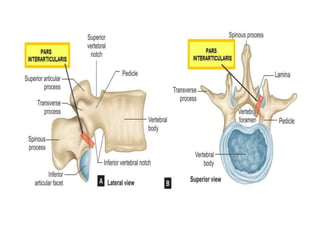
vertebrae
• Body
• Neural Arch
• Posterior Elements
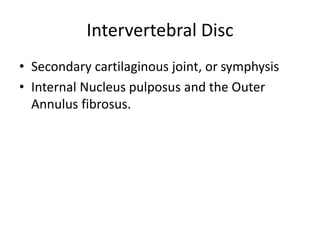
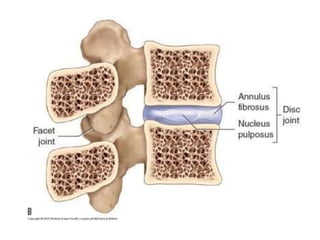
Intervertebral Disc
• Secondary cartilaginous joint, or symphysis
• Internal Nucleus pulposus and the Outer
Annulus fibrosus.
Nucleus pulposus
• It consists of water, proteoglycans, and
collagen.
• The nucleus pulposus is 90% water at birth.
Annulus fibrosus
• concentric layers of fibers at oblique angles to
each other, which help to with-stand strains in
any direction.
• The outer fibers have more collagen and less
proteoglycans and water than the inner fibers.
• The main function of the intervertebral disc is
shock absorption.
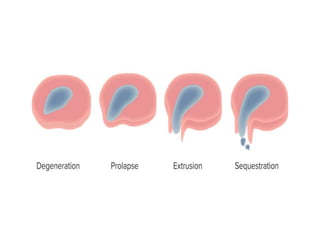
• Posterolateral disc herniations the most
common.
• The activity of the lumbar muscles correlates
well with intradiscal pressures.
Zygapophyseal Joints
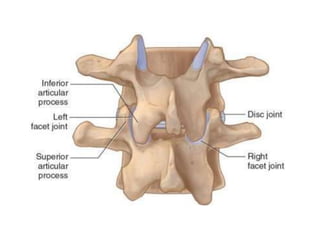
• Paired synovial joints with a synovium and a
capsule.
• The lumbar zygapophyseal joints lie in the
sagittal plane and thus primarily allow flexion
and extension.
Ligaments
• Longitudinal ligaments and the Segmental
ligaments.
• Longitudinal ligaments- Anterior(ALL) and
Posterior(PLL)
• ALL resists extension, translation, and rotation.
• PLL resists flexion.
• ALL is twice as strong as PLL.
Segmental ligaments
• Ligamentum flavum
• Supraspinous,
• Interspinous, and
• Intertransverse
Muscles
• Muscles with Origins on the Lumbar Spine
• Abdominal Musculature
• Thoracolumbar Fascia
• Pelvic Stabilizers
• The posterior muscles include the latissimus
dorsi and the paraspinals.
• The anterior muscles include psoas and
Quadratus lumborum.
Abdominal Musculature
• The superficial abdominals include the rectus
abdominis and external obliques.
• The deep layer consists of internal obliques
and the transversus abdominis.
Pelvic Stabilizers
• Also known as “Core muscles” .
• Indirect effect on the lumbar spine, even
though they do not have a direct attachment
to the spine
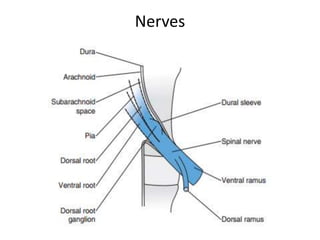
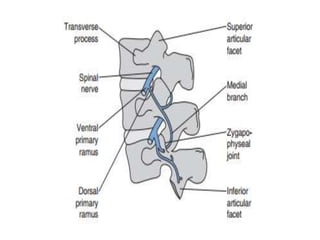
Nerves
Potential Pain Generators of the Back
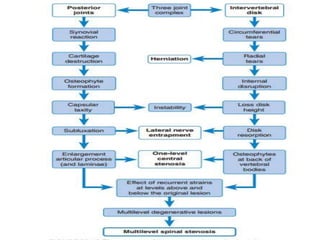
• Aging Spine: A Degenerative Cascade-
(Kirkaldy-Willis et al.)
• Centralization and Pain
• Psychosocial Factors and Low Back Pain
– Depression, Anxiety, and Anger
– Patient Beliefs About Pain and Pain Cognition.
Management
• History & Examinations
• Investigations, if needed.
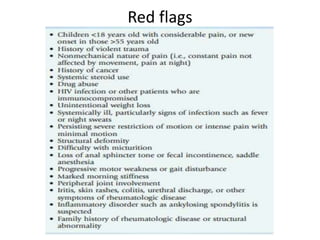
Red flags
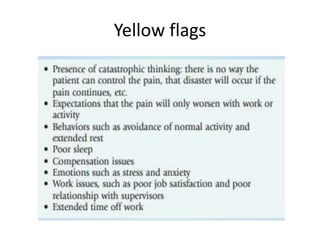
Yellow flags
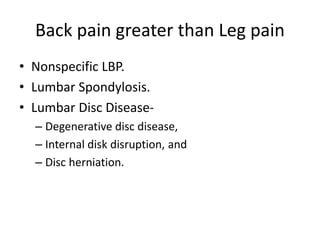
Back pain greater than Leg pain
• Nonspecific LBP.
• Lumbar Spondylosis.
• Lumbar Disc Disease-
– Degenerative disc disease,
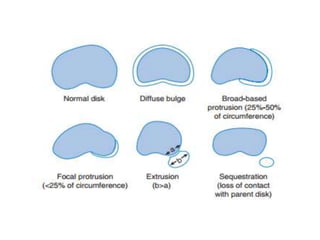
– Internal disk disruption, and
– Disc herniation.
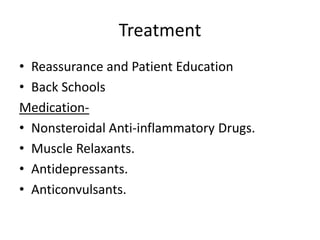
Treatment
• Reassurance and Patient Education
• Back Schools
Medication-
• Nonsteroidal Anti-inflammatory Drugs.
• Muscle Relaxants.
• Antidepressants.
• Anticonvulsants.
• Exercises
• Physical modalities-
– TENS
– Manual massaging
• Lumbar spondylolysis
• Spondylolisthesis
• Spondyloarthropathies
• Spinal infection
• Cancer pain
Leg Pain Greater Than
Back Pain
• Lumbosacral Radiculopathy
Lumbar Spinal Stenosis
• Congenital
• Achondroplasia or dwarfism
• Idiopathic
• Acquired
• Degenerative
• Iatrogenic or postsurgical
• Traumatic
• Combined
• Mechanical compression of the nerves can
occur as a result of
– central canal narrowing,
– lateral recess narrowing, and
– Intervertebral foraminal narrowing
Symptoms
• Neurologic claudication B/L LL
• Initiated by walking, prolonged standing, and
walking downhill, relieved by sitting or
bending forward.
• Radicular pain in specific dermatome.
• Forward-flexed posture.
Treatment
• Oral medications,
• Epidural steroids, and
• Comprehensive functional Exercise program.
– flexion-based lumbar stabilization exercises.
• Bracing with an abdominal corset might be
beneficial for overweight patients with a
protuberant abdomen
• Surgical indication-
Intractable pain resistant to nonoperative
management, profound or progressive
neurologic deficit, or lifestyle impairment.
• Mode- Decompressive Laminectomy
Non-lumbar Spine Causes of Radicular
Leg Symptoms
• Joint Disorders- SI joint, Hip joint
• Soft Tissue Disorders-
– Piriformis syndrome
– Greater Trochanteric Pain Syndrome
– Iliotibial Band Syndrome.
• Vascular Disorders- Vascular claudication
• Peripheral Neuropathy
Low Back Pain in Pregnancy
• Two categories-with low back pain and those
with pelvic girdle pain i.e. below iliac crest
pain.
• estimated the prevalence of low back pain in
pregnancy at 49% to 76%.
• Risk factors-
– History of previous back pain,
– Previous pregnancy-related back pain, and
– Low back pain during menses.
• Can begin at any time during the pregnancy
and generally reaches a peak at 36 weeks.
• Improved by 3 months postpartum.
• Etiology- Altered hormonal influence and/or
Increased biomechanical strain.
• Management- Individualised rehab with
respect to weeks of gestation.
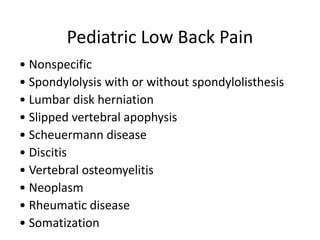
Pediatric Low Back Pain
• Nonspecific
• Spondylolysis with or without spondylolisthesis
• Lumbar disk herniation
• Slipped vertebral apophysis
• Scheuermann disease
• Discitis
• Vertebral osteomyelitis
• Neoplasm
• Rheumatic disease
• Somatization
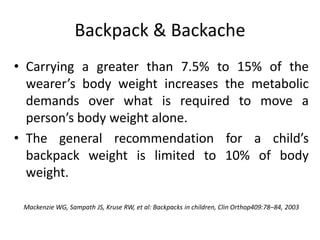
Backpack & Backache
• Carrying a greater than 7.5% to 15% of the
wearer’s body weight increases the metabolic
demands over what is required to move a
person’s body weight alone.
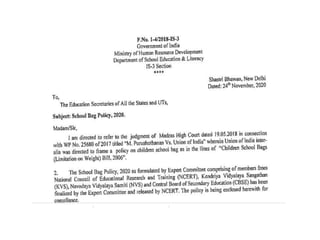
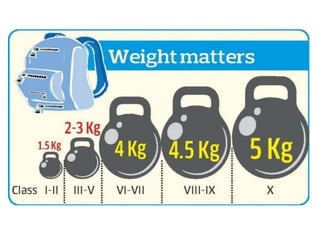
• The general recommendation for a child’s
backpack weight is limited to 10% of body
weight.
Mackenzie WG, Sampath JS, Kruse RW, et al: Backpacks in children, Clin Orthop409:78–84, 2003
Ergonomic modifications
• The science of applying physical and
psychological principles within an environment
to increase both productivity and well-being.
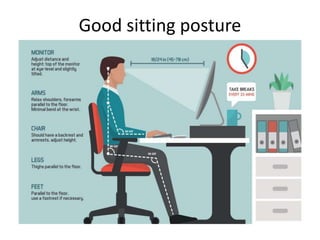
Good sitting posture
Dynamic sitting
• Involves the used of both active and
passive implements to encourage regular
movement of the trunk and lower
extremities in a seated position.
• O'Sullivan, K., O'Keeffe, M., O'Sullivan, L., O'Sullivan, P. and Dankaerts, W. (2012) The effect of dynamic sitting
on the prevention and management of low back pain and low back discomfort: a systematic review.
Ergonomics 55(8): 898-908.
Movement Breaks
• For those individuals who are in a seated
position for prolonged periods of time.
• Short, regular breaks of standing from a
seated position.
heahan, P., Diesbourg, T. and Fischer, S. (2016) The effect of rest break schedule on acute low
back pain development in pain and non-pain developers during seated work. Applied
Ergonomics 53: 64-70.
Thank you

Low Back Pain.pptx

  • 1.
    Low Back Pain DrSushil Kumar Nayak Asst. professor Dept. of PMR
  • 2.
    Low back painis a symptom, not a disease, and has many causes.
  • 3.
    Pain between thecostal margin and the gluteal folds. • Prevalence in India- – Annual- 51% – Lifetime- 66% Prevalence of low back pain in India: A systematic review and meta-analysis - Gautam M Shetty 1 2 3, Shikha Jain 2, Harshad Thakur4, Kriti Khanna2
  • 4.
    • Acute- anepisode resolves in <6wks • Subacute- persisting for 6wks- 12wks • Chronic- persistent for >12wks.
  • 5.
    Biomechanics of LumbarSpine • Dichotomous role in terms of function, which is strength coupled with flexibility. • Supports and protects (strength) the spinal canal contents (spinal cord, conus, and cauda- equina). • Provides inherent flexibility by allowing us to place our limbs in appropriate positions for everyday functions.
  • 6.
    • The strengthof the spine results from the size and arrangements of the bones, ligaments and muscles. • The inherent flexibility results from three-joint complex of vertebral segment. • And the typical lordotic framework of the lumbar spine.
  • 7.
    vertebrae • Body • NeuralArch • Posterior Elements
  • 10.
    Intervertebral Disc • Secondarycartilaginous joint, or symphysis • Internal Nucleus pulposus and the Outer Annulus fibrosus.
  • 11.
    Nucleus pulposus • Itconsists of water, proteoglycans, and collagen. • The nucleus pulposus is 90% water at birth.
  • 12.
    Annulus fibrosus • concentriclayers of fibers at oblique angles to each other, which help to with-stand strains in any direction. • The outer fibers have more collagen and less proteoglycans and water than the inner fibers.
  • 13.
    • The mainfunction of the intervertebral disc is shock absorption. • Posterolateral disc herniations the most common. • The activity of the lumbar muscles correlates well with intradiscal pressures.
  • 15.
    Zygapophyseal Joints • Pairedsynovial joints with a synovium and a capsule. • The lumbar zygapophyseal joints lie in the sagittal plane and thus primarily allow flexion and extension.
  • 18.
    Ligaments • Longitudinal ligamentsand the Segmental ligaments. • Longitudinal ligaments- Anterior(ALL) and Posterior(PLL) • ALL resists extension, translation, and rotation. • PLL resists flexion. • ALL is twice as strong as PLL.
  • 19.
    Segmental ligaments • Ligamentumflavum • Supraspinous, • Interspinous, and • Intertransverse
  • 20.
    Muscles • Muscles withOrigins on the Lumbar Spine • Abdominal Musculature • Thoracolumbar Fascia • Pelvic Stabilizers
  • 21.
    • The posteriormuscles include the latissimus dorsi and the paraspinals. • The anterior muscles include psoas and Quadratus lumborum.
  • 22.
    Abdominal Musculature • Thesuperficial abdominals include the rectus abdominis and external obliques. • The deep layer consists of internal obliques and the transversus abdominis.
  • 23.
    Pelvic Stabilizers • Alsoknown as “Core muscles” . • Indirect effect on the lumbar spine, even though they do not have a direct attachment to the spine
  • 24.
  • 26.
    Potential Pain Generatorsof the Back • Aging Spine: A Degenerative Cascade- (Kirkaldy-Willis et al.) • Centralization and Pain • Psychosocial Factors and Low Back Pain – Depression, Anxiety, and Anger – Patient Beliefs About Pain and Pain Cognition.
  • 28.
    Management • History &Examinations • Investigations, if needed.
  • 29.
  • 30.
  • 31.
    Back pain greaterthan Leg pain • Nonspecific LBP. • Lumbar Spondylosis. • Lumbar Disc Disease- – Degenerative disc disease, – Internal disk disruption, and – Disc herniation.
  • 33.
    Treatment • Reassurance andPatient Education • Back Schools Medication- • Nonsteroidal Anti-inflammatory Drugs. • Muscle Relaxants. • Antidepressants. • Anticonvulsants.
  • 34.
    • Exercises • Physicalmodalities- – TENS – Manual massaging
  • 35.
    • Lumbar spondylolysis •Spondylolisthesis • Spondyloarthropathies • Spinal infection • Cancer pain
  • 36.
    Leg Pain GreaterThan Back Pain • Lumbosacral Radiculopathy
  • 38.
    Lumbar Spinal Stenosis •Congenital • Achondroplasia or dwarfism • Idiopathic • Acquired • Degenerative • Iatrogenic or postsurgical • Traumatic • Combined
  • 39.
    • Mechanical compressionof the nerves can occur as a result of – central canal narrowing, – lateral recess narrowing, and – Intervertebral foraminal narrowing
  • 40.
    Symptoms • Neurologic claudicationB/L LL • Initiated by walking, prolonged standing, and walking downhill, relieved by sitting or bending forward. • Radicular pain in specific dermatome. • Forward-flexed posture.
  • 41.
    Treatment • Oral medications, •Epidural steroids, and • Comprehensive functional Exercise program. – flexion-based lumbar stabilization exercises. • Bracing with an abdominal corset might be beneficial for overweight patients with a protuberant abdomen
  • 42.
    • Surgical indication- Intractablepain resistant to nonoperative management, profound or progressive neurologic deficit, or lifestyle impairment. • Mode- Decompressive Laminectomy
  • 43.
    Non-lumbar Spine Causesof Radicular Leg Symptoms • Joint Disorders- SI joint, Hip joint • Soft Tissue Disorders- – Piriformis syndrome – Greater Trochanteric Pain Syndrome – Iliotibial Band Syndrome. • Vascular Disorders- Vascular claudication • Peripheral Neuropathy
  • 44.
    Low Back Painin Pregnancy • Two categories-with low back pain and those with pelvic girdle pain i.e. below iliac crest pain. • estimated the prevalence of low back pain in pregnancy at 49% to 76%. • Risk factors- – History of previous back pain, – Previous pregnancy-related back pain, and – Low back pain during menses.
  • 45.
    • Can beginat any time during the pregnancy and generally reaches a peak at 36 weeks. • Improved by 3 months postpartum. • Etiology- Altered hormonal influence and/or Increased biomechanical strain. • Management- Individualised rehab with respect to weeks of gestation.
  • 46.
    Pediatric Low BackPain • Nonspecific • Spondylolysis with or without spondylolisthesis • Lumbar disk herniation • Slipped vertebral apophysis • Scheuermann disease • Discitis • Vertebral osteomyelitis • Neoplasm • Rheumatic disease • Somatization
  • 47.
    Backpack & Backache •Carrying a greater than 7.5% to 15% of the wearer’s body weight increases the metabolic demands over what is required to move a person’s body weight alone. • The general recommendation for a child’s backpack weight is limited to 10% of body weight. Mackenzie WG, Sampath JS, Kruse RW, et al: Backpacks in children, Clin Orthop409:78–84, 2003
  • 50.
    Ergonomic modifications • Thescience of applying physical and psychological principles within an environment to increase both productivity and well-being.
  • 51.
  • 52.
    Dynamic sitting • Involvesthe used of both active and passive implements to encourage regular movement of the trunk and lower extremities in a seated position. • O'Sullivan, K., O'Keeffe, M., O'Sullivan, L., O'Sullivan, P. and Dankaerts, W. (2012) The effect of dynamic sitting on the prevention and management of low back pain and low back discomfort: a systematic review. Ergonomics 55(8): 898-908.
  • 53.
    Movement Breaks • Forthose individuals who are in a seated position for prolonged periods of time. • Short, regular breaks of standing from a seated position. heahan, P., Diesbourg, T. and Fischer, S. (2016) The effect of rest break schedule on acute low back pain development in pain and non-pain developers during seated work. Applied Ergonomics 53: 64-70.
  • 54.