




Focus   Groups:   How   to   Develop   a   360*   View   of  Your   Target  Audience   Council of Community Clinics: Project SMART February 2008  Salt Lake City, Utah
This publication was  supported by  grant number  U65/CCU923709  from  The Centers for Disease  Control and Prevention.    Its contents are solely  the responsibility of the  authors and do not  necessarily represent the  official views of  The  Centers for Disease  Control and Prevention.   The Centers for  Disease Control  and Prevention   to  provide capacity  building assistance  to health  departments and  community based  organizations. focus area 3
Social Marketing as a Resource Tool
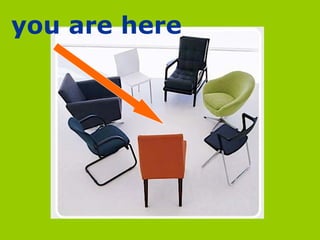
you are here
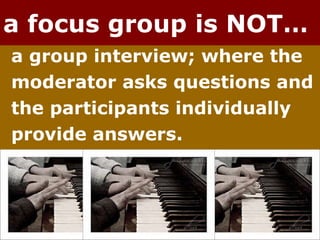
a focus group is NOT… a group interview; where the  moderator asks questions and  the participants individually  provide answers.
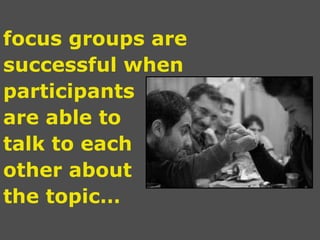
focus groups are successful when participants  are able to  talk to each  other about  the topic…
advantages produce more information  quicker and  at less cost than individual interviews
limitations   results  can’t  be used to  make statements  about the wider community… they can indicate a range of views  and opinions,  but not  the  distribution among the community
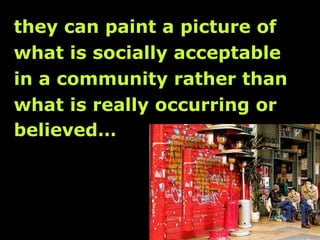
they can paint a picture of  what is socially acceptable  in a community rather than  what is really occurring or  believed…
limited value in  exploring complex  beliefs of individuals  in-depth interviews  can be more appropriate
asking  someone  to explain  their behavior  and intent is a psychological impossibility
so…why is the truth so elusive?
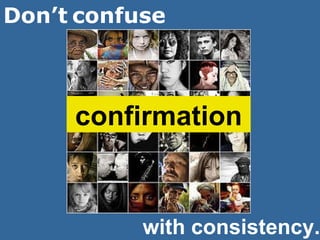
Don’t   confuse   confirmation with consistency.
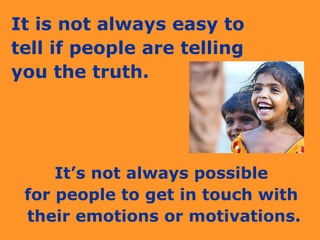
It is not always easy to  tell if people are telling  you the truth. It’s not always possible  for people to get in touch with  their emotions or motivations.
Beyond Listening:  Learning the Secret Language of Focus Groups  (Bonnie Goebert)   Consumers aren’t  dishonest; it’s just that  most people  don’t   listen  the right way.
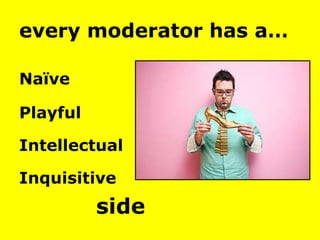
every moderator has a… Naïve Playful Intellectual Inquisitive side
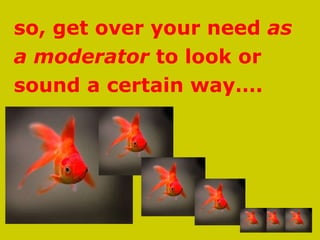
so, get over your need  as  a moderator  to look or  sound a certain way….
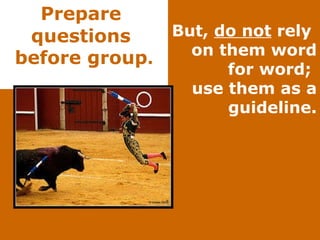
Prepare  questions  before group . But,  do not  rely  on them word for word;  use them as a guideline.
No flip charts;  Use note takers
questions  to ask first   What problems / issues do  you want answered? What is the exact problem?
informality   relaxed playfulness,  coupled with a  professional seriousness  of purpose works best.
consider the status of your participants
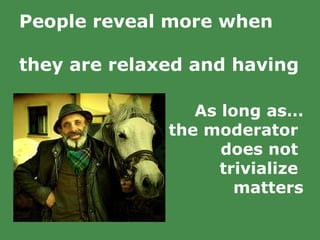
People reveal more when  they are relaxed and having  a good time.   As long as… the moderator  does not  trivialize  matters
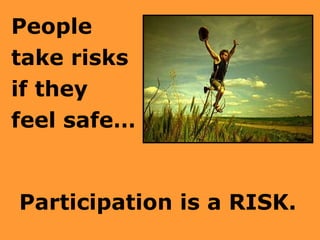
People  take risks  if they  feel safe…  Participation is a RISK.
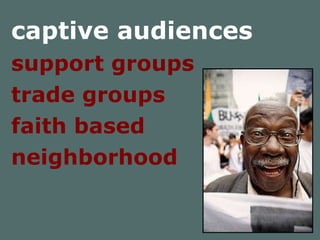
captive audiences support groups  trade groups faith based  neighborhood
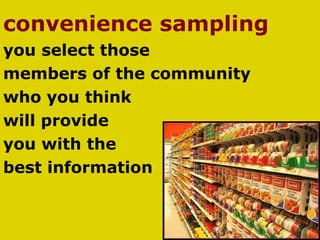
convenience sampling you select those  members of the community  who you think  will provide  you with the  best information
Tell them  WHAT  you are going to  be talking about before they agree  to participate. Screen participants  Follow up sessions (800#, email  further ideas/comments)
Encourage  divergent thinking  and thoughts  within the group.
Participants often agree  with responses from  peers and group leaders.
It is important  to allow  participants to  agree and disagree   with one another.
asking the right questions in the right way   have genuine reactions which  come from  interest  in the  person, rather  than  judging
keep your questions  short and simple- no two-part questions
avoid closed ended ?s Banish Them;   unless,  your intent  is to  shut down   the discussion.
do not word questions  so people feel  embarrassed or guilty when  they  answer
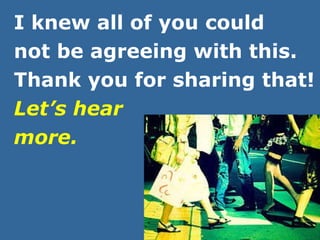
I knew all of you could  not be agreeing with this. Thank you for sharing that!  Let’s hear  more.
Makes people  defensive. Why?
Makes people shut down…Presumably, because when  you don’t  say it again  you are  implying,  that’s bad. that’s good…
avoid forcing people  into answering  questions in  a particular way….  because ,  you can’t  predict how they  will answer  particular questions
non verbal  behavior   Don’t take all too literally; arms folded across chest
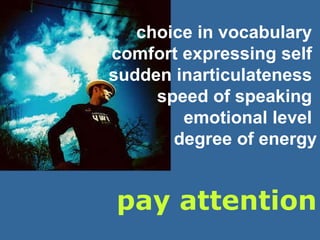
pay attention choice in vocabulary  comfort expressing self  sudden inarticulateness  speed of speaking  emotional level  degree of energy
projective  techniques   people tend to  complete the incomplete  with their assumptions, attitudes, beliefs, experiences & values
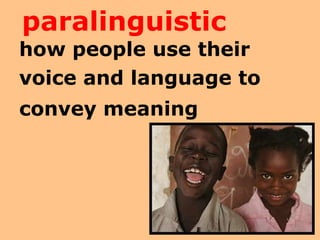
paralinguistic   how people use their  voice and language to  convey meaning
Non-leading
Give me a description picture, of_________. Please  sum all of  this up for  the group…
What I like to hear about is  how you / family /  community is dealing with… How important  is that concern?
please, keep talking…  please, say more... before we move on let’s hear any  burning thoughts  that you just  have to get out…
Let’s see, I’m  having trouble  figuring out  how I should  word this…
I seem to be picking up  on a theme here,  but I don’t want to put words in your mouths.  Let me describe  what  I am hearing and add to  it or change it or make  it more accurate.
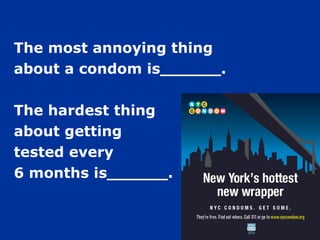
The most annoying thing  about a condom is______. The hardest thing  about getting  tested every  6 months is______.
A typical woman  in my community  resembles____. Most women in my  neighborhood would _____ when confronted by that  message.
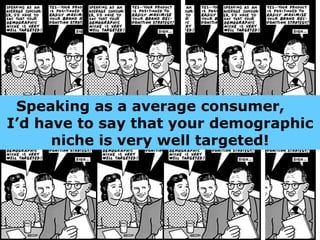
Speaking as a average consumer,  I’d have to say that your demographic niche is very well targeted!
Project SMART  Council of Community Clinics  San Diego, CA   Julie A Minardi  jminardi@ccc-sd.org  619.542.4343

Long Focus Group Feb 2008 Inst

  • 1.
    Focus Groups: How to Develop a 360* View of Your Target Audience Council of Community Clinics: Project SMART February 2008 Salt Lake City, Utah
  • 2.
    This publication was supported by grant number U65/CCU923709 from The Centers for Disease Control and Prevention.   Its contents are solely the responsibility of the authors and do not necessarily represent the official views of The Centers for Disease Control and Prevention. The Centers for Disease Control and Prevention to provide capacity building assistance to health departments and community based organizations. focus area 3
  • 3.
    Social Marketing asa Resource Tool
  • 4.
  • 5.
    a focus groupis NOT… a group interview; where the moderator asks questions and the participants individually provide answers.
  • 6.
    focus groups aresuccessful when participants are able to talk to each other about the topic…
  • 7.
    advantages produce moreinformation quicker and at less cost than individual interviews
  • 8.
    limitations results can’t be used to make statements about the wider community… they can indicate a range of views and opinions, but not the distribution among the community
  • 9.
    they can painta picture of what is socially acceptable in a community rather than what is really occurring or believed…
  • 10.
    limited value in exploring complex beliefs of individuals in-depth interviews can be more appropriate
  • 11.
    asking someone to explain their behavior and intent is a psychological impossibility
  • 12.
    so…why is thetruth so elusive?
  • 13.
    Don’t confuse confirmation with consistency.
  • 14.
    It is notalways easy to tell if people are telling you the truth. It’s not always possible for people to get in touch with their emotions or motivations.
  • 15.
    Beyond Listening: Learning the Secret Language of Focus Groups (Bonnie Goebert) Consumers aren’t dishonest; it’s just that most people don’t listen the right way.
  • 16.
    every moderator hasa… Naïve Playful Intellectual Inquisitive side
  • 17.
    so, get overyour need as a moderator to look or sound a certain way….
  • 18.
    Prepare questions before group . But, do not rely on them word for word; use them as a guideline.
  • 19.
    No flip charts; Use note takers
  • 20.
    questions toask first What problems / issues do you want answered? What is the exact problem?
  • 21.
    informality relaxed playfulness, coupled with a professional seriousness of purpose works best.
  • 22.
    consider the statusof your participants
  • 23.
    People reveal morewhen they are relaxed and having a good time. As long as… the moderator does not trivialize matters
  • 24.
    People takerisks if they feel safe… Participation is a RISK.
  • 25.
    captive audiences supportgroups trade groups faith based neighborhood
  • 26.
    convenience sampling youselect those members of the community who you think will provide you with the best information
  • 27.
    Tell them WHAT you are going to be talking about before they agree to participate. Screen participants Follow up sessions (800#, email further ideas/comments)
  • 28.
    Encourage divergentthinking and thoughts within the group.
  • 29.
    Participants often agree with responses from peers and group leaders.
  • 30.
    It is important to allow participants to agree and disagree with one another.
  • 31.
    asking the rightquestions in the right way have genuine reactions which come from interest in the person, rather than judging
  • 32.
    keep your questions short and simple- no two-part questions
  • 33.
    avoid closed ended?s Banish Them; unless, your intent is to shut down the discussion.
  • 34.
    do not wordquestions so people feel embarrassed or guilty when they answer
  • 35.
    I knew allof you could not be agreeing with this. Thank you for sharing that! Let’s hear more.
  • 36.
    Makes people defensive. Why?
  • 37.
    Makes people shutdown…Presumably, because when you don’t say it again you are implying, that’s bad. that’s good…
  • 38.
    avoid forcing people into answering questions in a particular way…. because , you can’t predict how they will answer particular questions
  • 39.
    non verbal behavior Don’t take all too literally; arms folded across chest
  • 40.
    pay attention choicein vocabulary comfort expressing self sudden inarticulateness speed of speaking emotional level degree of energy
  • 41.
    projective techniques people tend to complete the incomplete with their assumptions, attitudes, beliefs, experiences & values
  • 42.
    paralinguistic how people use their voice and language to convey meaning
  • 43.
  • 44.
    Give me adescription picture, of_________. Please sum all of this up for the group…
  • 45.
    What I liketo hear about is how you / family / community is dealing with… How important is that concern?
  • 46.
    please, keep talking… please, say more... before we move on let’s hear any burning thoughts that you just have to get out…
  • 47.
    Let’s see, I’m having trouble figuring out how I should word this…
  • 48.
    I seem tobe picking up on a theme here, but I don’t want to put words in your mouths. Let me describe what I am hearing and add to it or change it or make it more accurate.
  • 49.
    The most annoyingthing about a condom is______. The hardest thing about getting tested every 6 months is______.
  • 50.
    A typical woman in my community resembles____. Most women in my neighborhood would _____ when confronted by that message.
  • 51.
    Speaking as aaverage consumer, I’d have to say that your demographic niche is very well targeted!
  • 52.
    Project SMART Council of Community Clinics San Diego, CA Julie A Minardi jminardi@ccc-sd.org 619.542.4343