TRANSFORMING
INDIA
1
M. Chandra Sekhar Reddy,
Executive Assistant, CREDAI Andhra Pradesh
2
3
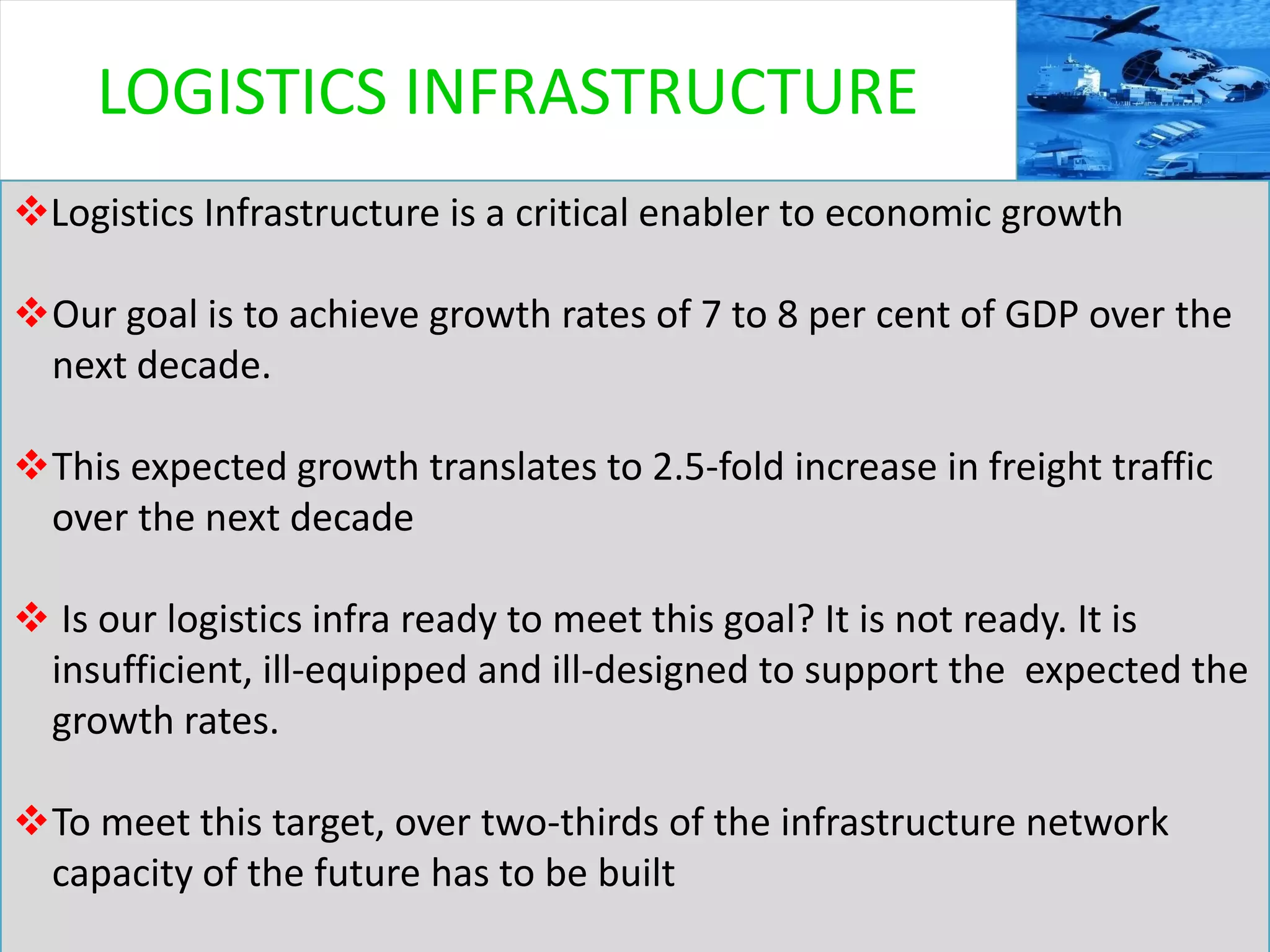
Logistics Infrastructure is a critical enabler to economic growth
Our goal is to achieve growth rates of 7 to 8 per cent of GDP over the
next decade.
This expected growth translates to 2.5-fold increase in freight traffic
over the next decade
 Is our logistics infra ready to meet this goal? It is not ready. It is
insufficient, ill-equipped and ill-designed to support the expected the
growth rates.
To meet this target, over two-thirds of the infrastructure network
capacity of the future has to be built
LOGISTICS INFRASTRUCTURE
4
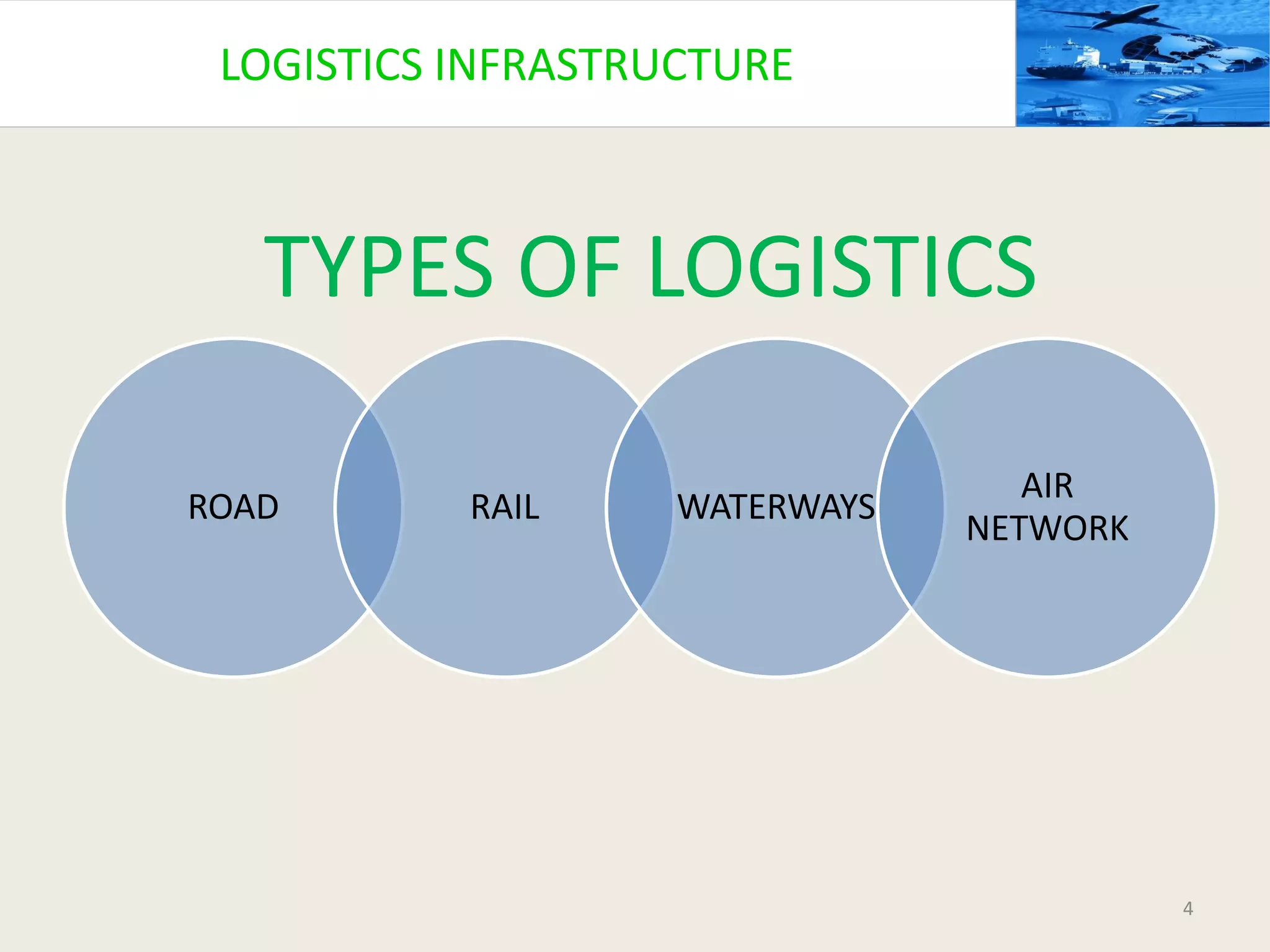
ROAD RAIL WATERWAYS
AIR
NETWORK
TYPES OF LOGISTICS
LOGISTICS INFRASTRUCTURE
5
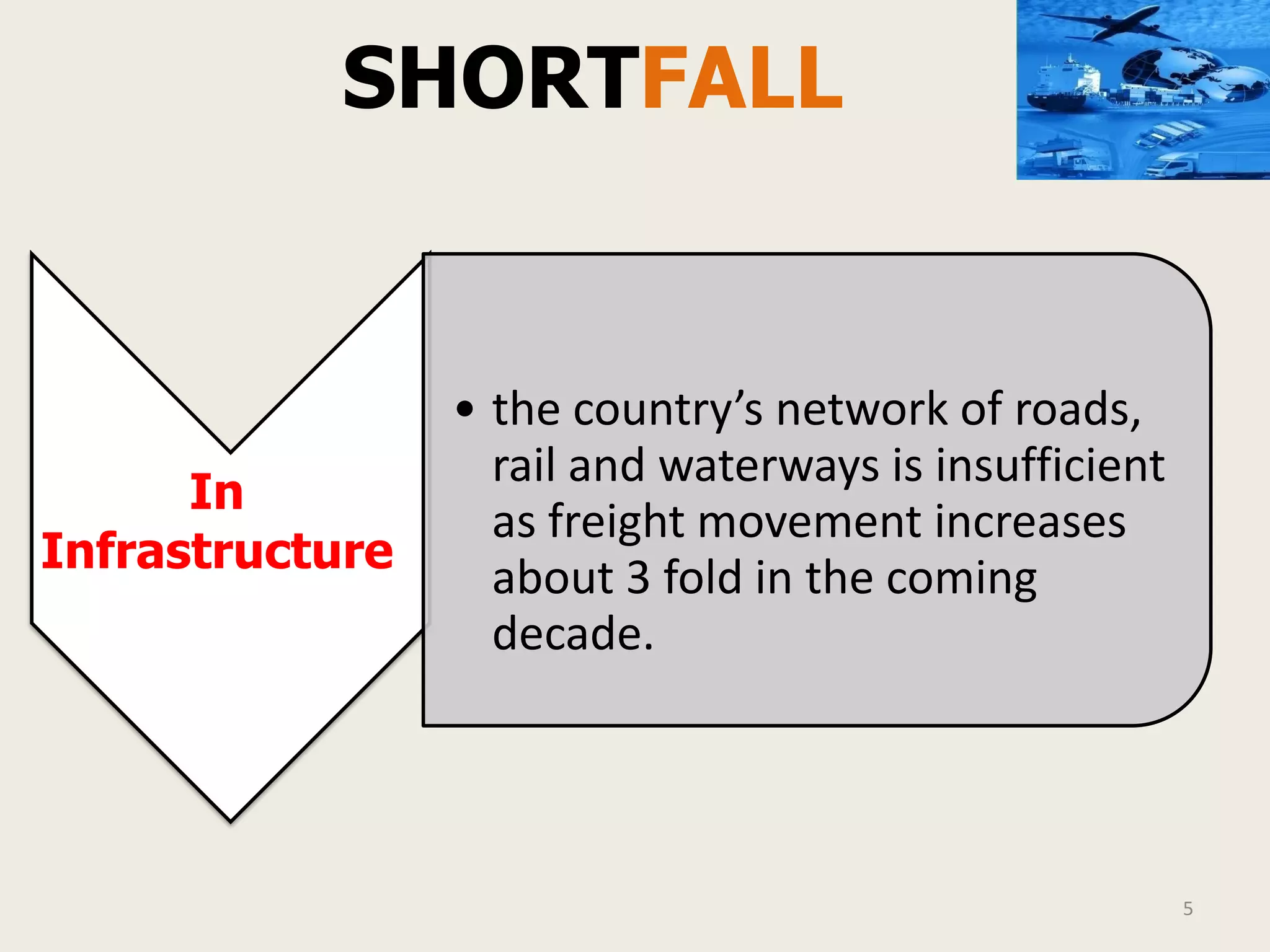
• the country’s network of roads,
rail and waterways is insufficient
as freight movement increases
about 3 fold in the coming
decade.
In
Infrastructure
SHORTFALL
6
How to Overcome
Shortfall
7
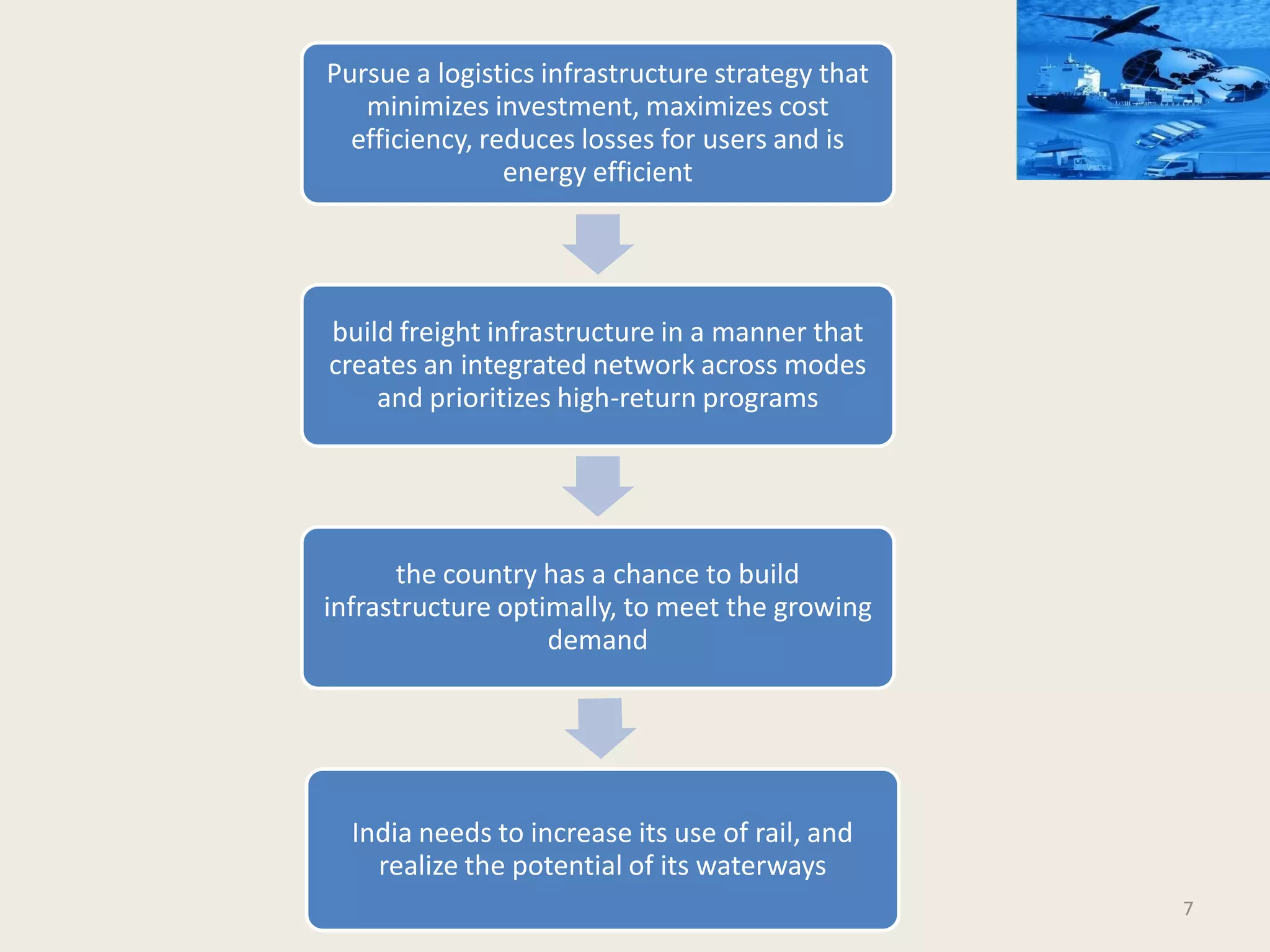
Pursue a logistics infrastructure strategy that
minimizes investment, maximizes cost
efficiency, reduces losses for users and is
energy efficient
build freight infrastructure in a manner that
creates an integrated network across modes
and prioritizes high-return programs
the country has a chance to build
infrastructure optimally, to meet the growing
demand
India needs to increase its use of rail, and
realize the potential of its waterways
8
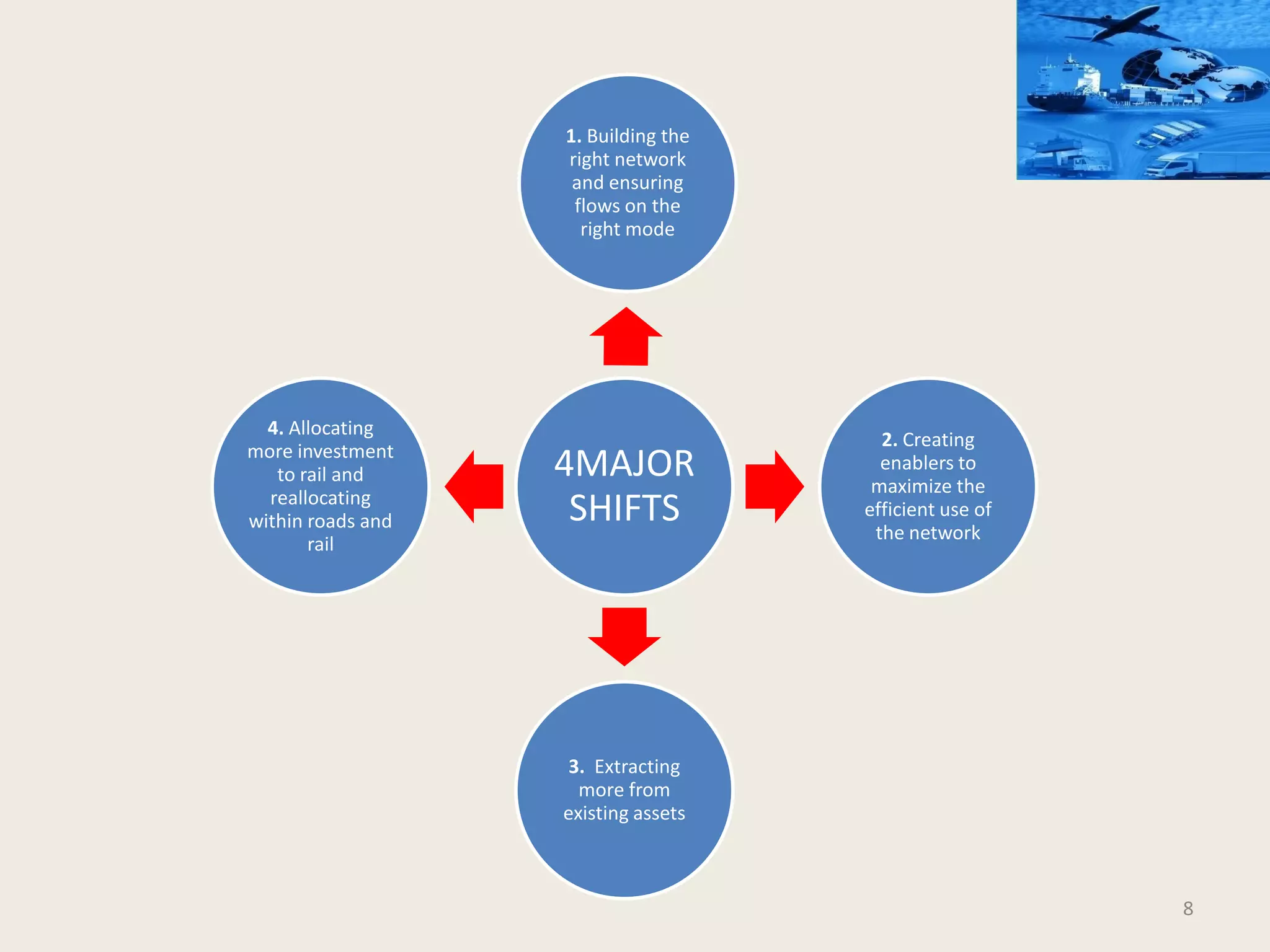
4MAJOR
SHIFTS
1. Building the
right network
and ensuring
flows on the
right mode
2. Creating
enablers to
maximize the
efficient use of
the network
3. Extracting
more from
existing assets
4. Allocating
more investment
to rail and
reallocating
within roads and
rail
9
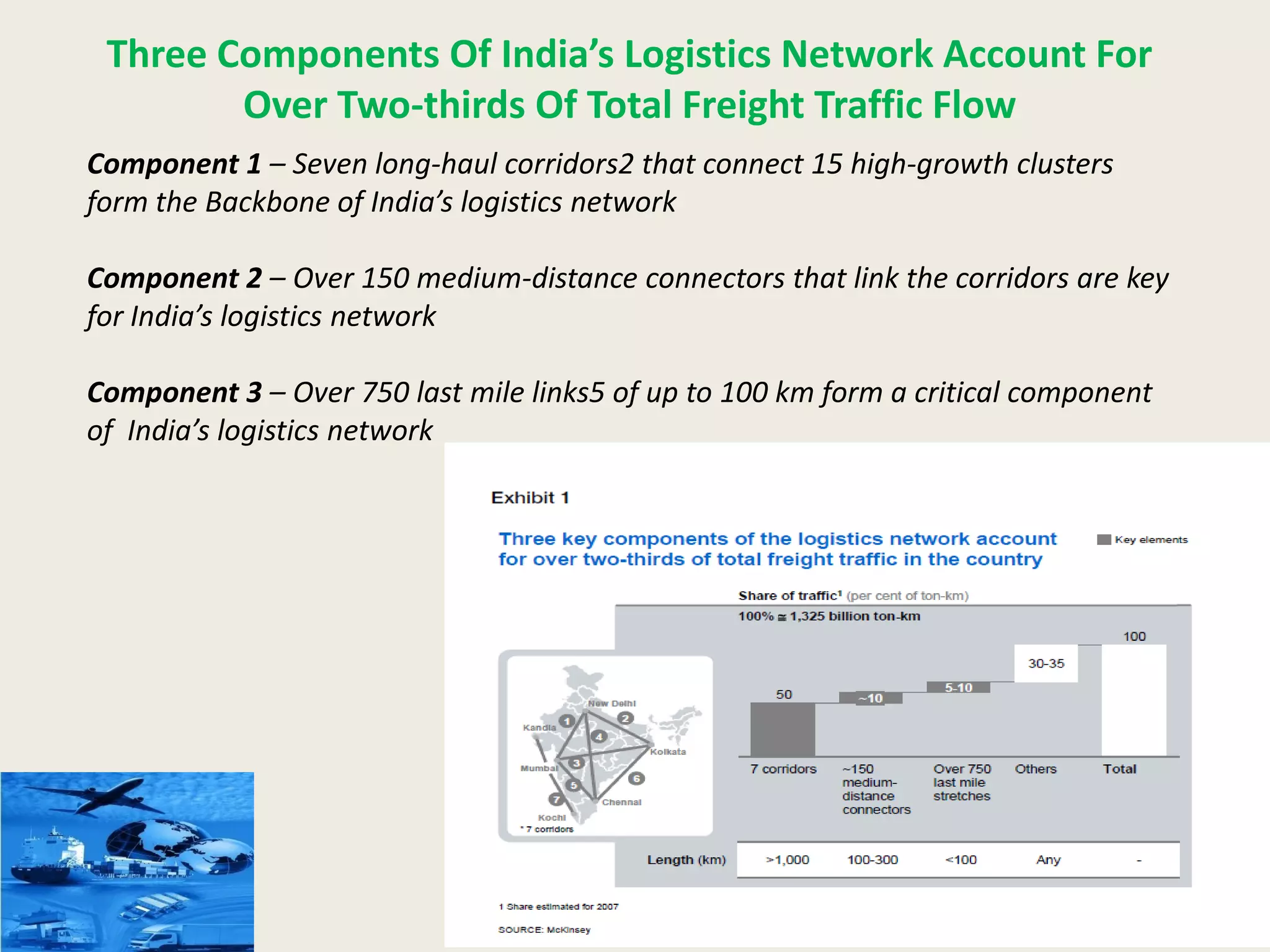
Three Components Of India’s Logistics Network Account For
Over Two-thirds Of Total Freight Traffic Flow
Component 1 – Seven long-haul corridors2 that connect 15 high-growth clusters
form the Backbone of India’s logistics network
Component 2 – Over 150 medium-distance connectors that link the corridors are key
for India’s logistics network
Component 3 – Over 750 last mile links5 of up to 100 km form a critical component
of India’s logistics network
10
India’s Freight Transport
Relies Excessively on
Roads
11
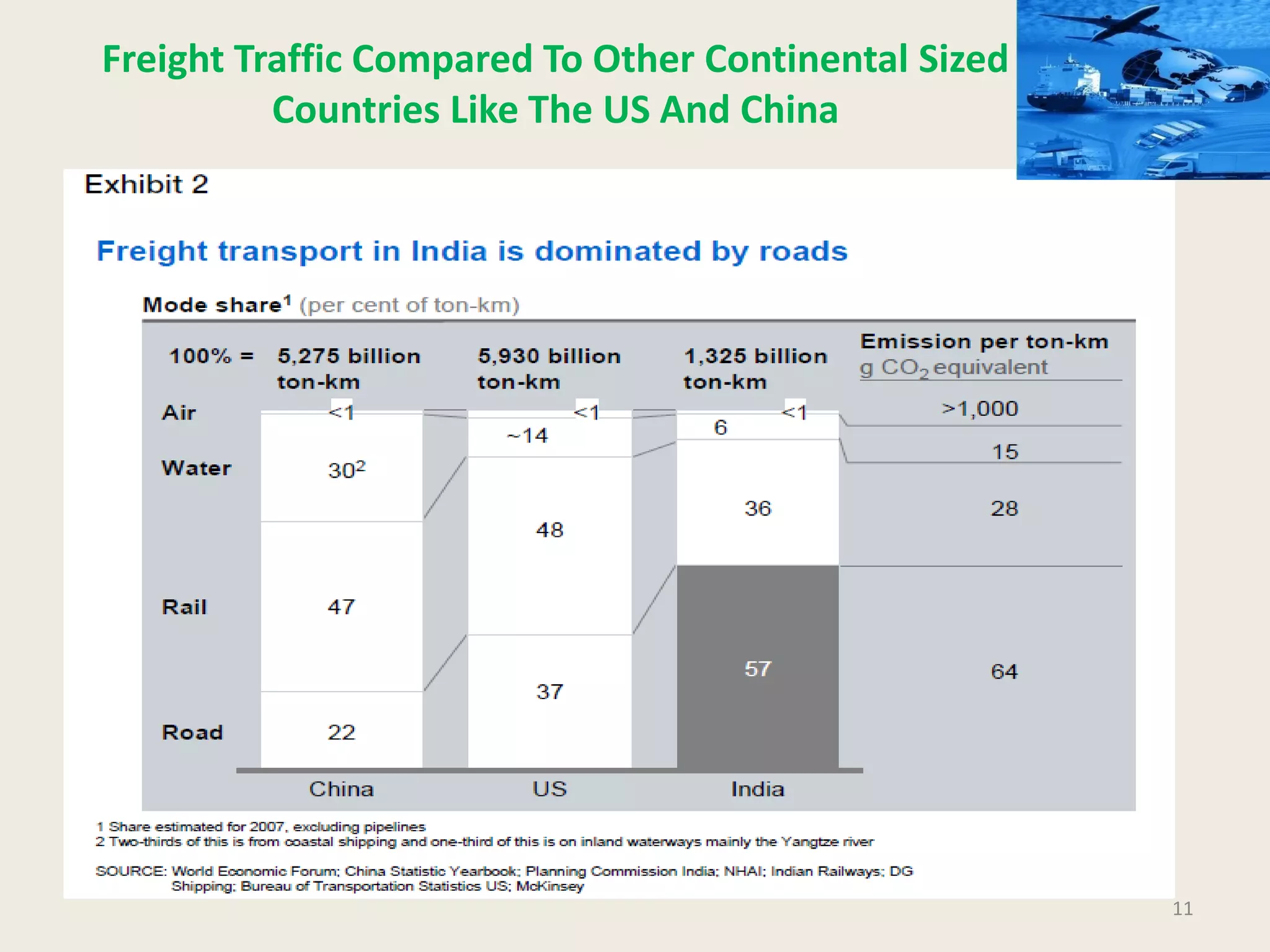
Freight Traffic Compared To Other Continental Sized
Countries Like The US And China
12
Adverse In Road Transport
 The CO2 emissions from road transport are higher than emissions
from rail and waterways
 Road transport emits 84g of CO2 equivalent per ton-km compared to
28g for railways and 15g for waterways
 Yet, India continues to transport a majority of its goods via roads
including bulk materials like steel, cement and coal. A moderate shift
from road to rail can help India save close to 0.7 per cent of its total
commercial energy consumption
13
Around USD 45 billion is lost each year due to inefficiencies in India’s logistics
network
The purchasing power parity (PPP) adjusted benchmark of transportation costs
by mode with the US demonstrates that India’s logistics infrastructure is
inefficient
Our analysis suggests that poor logistics infrastructure costs the economy an
extra USD 45 billion or 4.3 per cent of GDP each year
A 2.5 times increase in freight traffic in the next decade will put further pressure on
India’s logistics infrastructure
India’s current infrastructure is already over-stretched
Recognizing these challenges, the Eleventh Five-Year Plan proposed a large
increase in logistics infrastructure spend from USD 65 billion or 1.5 per cent of
GDP in the Tenth Plan period to USD
14
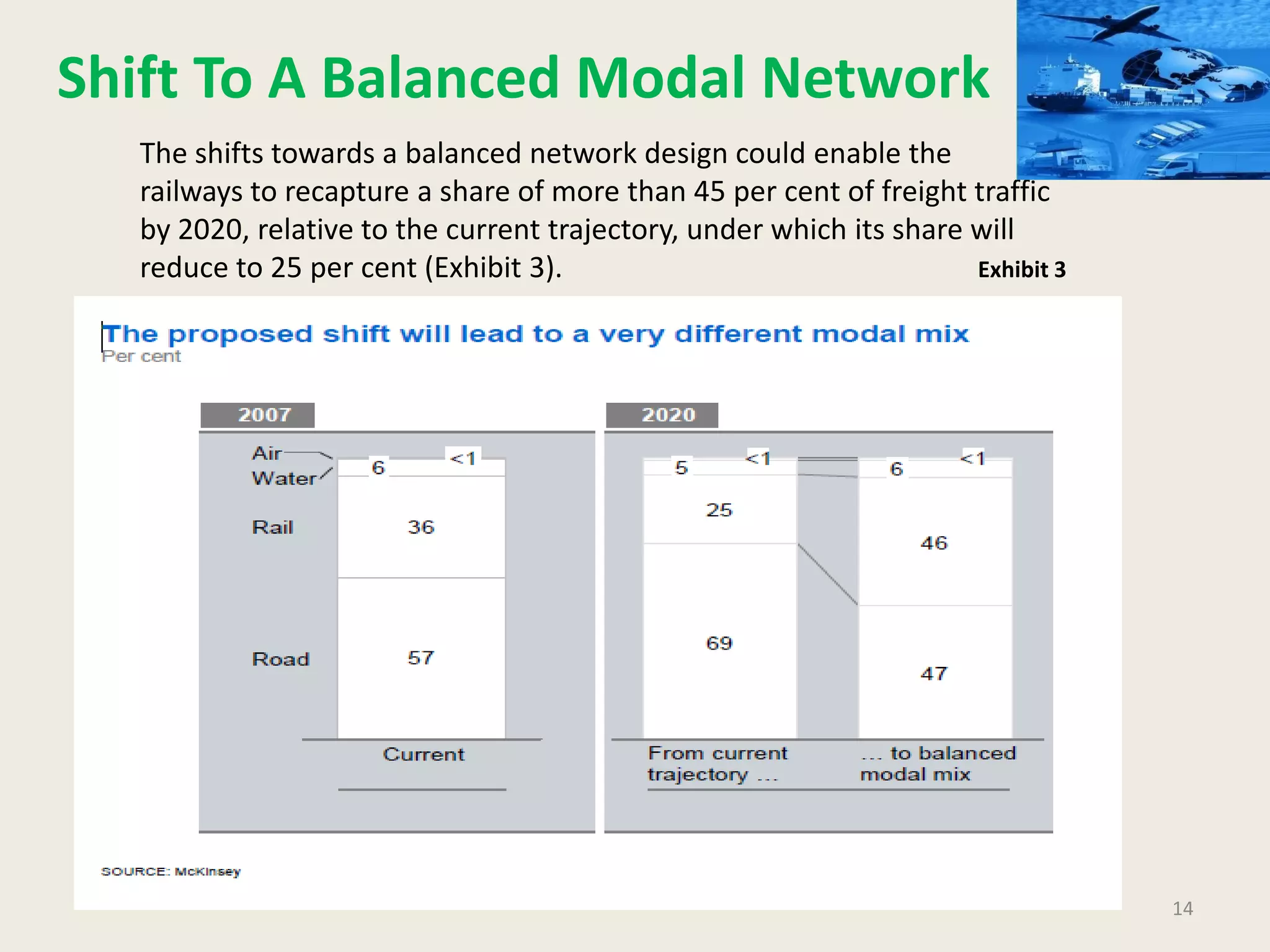
Shift To A Balanced Modal Network
The shifts towards a balanced network design could enable the
railways to recapture a share of more than 45 per cent of freight traffic
by 2020, relative to the current trajectory, under which its share will
reduce to 25 per cent (Exhibit 3). Exhibit 3
15
Building The Right Network And Ensuring
Flows Along The Right Mode
 To meet the demands of growing freight traffic, a shift to more
economically as well as environmentally suitable modes i.e., waterways
and rail is vital.
 Delhi-Mumbai, Delhi-Kolkata, Mumbai-Chennai, Delhi-Chennai, Mumbai-
Kolkata and two coastal corridors namely, Kandla-Kochi and Kolkata-
Chennai. These corridors will need to be supported by 20 to 30
expressways, road and rail links across the 150 connectors and 700 last
mile links.
 particularly when the funds are limited ,a considered network design is
vital to develop effective and efficient logistics infrastructure

Logistics infrastructure

  • 1.
    TRANSFORMING INDIA 1 M. Chandra SekharReddy, Executive Assistant, CREDAI Andhra Pradesh
  • 2.
  • 3.
    3 Logistics Infrastructure isa critical enabler to economic growth Our goal is to achieve growth rates of 7 to 8 per cent of GDP over the next decade. This expected growth translates to 2.5-fold increase in freight traffic over the next decade  Is our logistics infra ready to meet this goal? It is not ready. It is insufficient, ill-equipped and ill-designed to support the expected the growth rates. To meet this target, over two-thirds of the infrastructure network capacity of the future has to be built LOGISTICS INFRASTRUCTURE
  • 4.
    4 ROAD RAIL WATERWAYS AIR NETWORK TYPESOF LOGISTICS LOGISTICS INFRASTRUCTURE
  • 5.
    5 • the country’snetwork of roads, rail and waterways is insufficient as freight movement increases about 3 fold in the coming decade. In Infrastructure SHORTFALL
  • 6.
  • 7.
    7 Pursue a logisticsinfrastructure strategy that minimizes investment, maximizes cost efficiency, reduces losses for users and is energy efficient build freight infrastructure in a manner that creates an integrated network across modes and prioritizes high-return programs the country has a chance to build infrastructure optimally, to meet the growing demand India needs to increase its use of rail, and realize the potential of its waterways
  • 8.
    8 4MAJOR SHIFTS 1. Building the rightnetwork and ensuring flows on the right mode 2. Creating enablers to maximize the efficient use of the network 3. Extracting more from existing assets 4. Allocating more investment to rail and reallocating within roads and rail
  • 9.
    9 Three Components OfIndia’s Logistics Network Account For Over Two-thirds Of Total Freight Traffic Flow Component 1 – Seven long-haul corridors2 that connect 15 high-growth clusters form the Backbone of India’s logistics network Component 2 – Over 150 medium-distance connectors that link the corridors are key for India’s logistics network Component 3 – Over 750 last mile links5 of up to 100 km form a critical component of India’s logistics network
  • 10.
  • 11.
    11 Freight Traffic ComparedTo Other Continental Sized Countries Like The US And China
  • 12.
    12 Adverse In RoadTransport  The CO2 emissions from road transport are higher than emissions from rail and waterways  Road transport emits 84g of CO2 equivalent per ton-km compared to 28g for railways and 15g for waterways  Yet, India continues to transport a majority of its goods via roads including bulk materials like steel, cement and coal. A moderate shift from road to rail can help India save close to 0.7 per cent of its total commercial energy consumption
  • 13.
    13 Around USD 45billion is lost each year due to inefficiencies in India’s logistics network The purchasing power parity (PPP) adjusted benchmark of transportation costs by mode with the US demonstrates that India’s logistics infrastructure is inefficient Our analysis suggests that poor logistics infrastructure costs the economy an extra USD 45 billion or 4.3 per cent of GDP each year A 2.5 times increase in freight traffic in the next decade will put further pressure on India’s logistics infrastructure India’s current infrastructure is already over-stretched Recognizing these challenges, the Eleventh Five-Year Plan proposed a large increase in logistics infrastructure spend from USD 65 billion or 1.5 per cent of GDP in the Tenth Plan period to USD
  • 14.
    14 Shift To ABalanced Modal Network The shifts towards a balanced network design could enable the railways to recapture a share of more than 45 per cent of freight traffic by 2020, relative to the current trajectory, under which its share will reduce to 25 per cent (Exhibit 3). Exhibit 3
  • 15.
    15 Building The RightNetwork And Ensuring Flows Along The Right Mode  To meet the demands of growing freight traffic, a shift to more economically as well as environmentally suitable modes i.e., waterways and rail is vital.  Delhi-Mumbai, Delhi-Kolkata, Mumbai-Chennai, Delhi-Chennai, Mumbai- Kolkata and two coastal corridors namely, Kandla-Kochi and Kolkata- Chennai. These corridors will need to be supported by 20 to 30 expressways, road and rail links across the 150 connectors and 700 last mile links.  particularly when the funds are limited ,a considered network design is vital to develop effective and efficient logistics infrastructure