Locking Down Your Cloud
Teri Radichel | @teriradichel
CEO, 2nd Sight Lab
Can You Be More Secure in the Cloud?
• AWS security processes
• Segregation of duties
• Built-in inventory
• Platform to automate – almost everything
• Scalable log storage and backups
• More secure? Maybe…
But.
Read The Instructions.
Shared Responsibility
Recent S3 Bucket Breaches…
S3 Bucket Security Controls (Customer!)
• S3 ACL – blocks Internet by default
• S3 Bucket Policy – many options
• IAM Roles to access bucket
• S3 endpoint to restrict network access
• Cross-account roles
• CloudFront restrictions
• Front with API Gateway
• CloudTrail and S3 access logs
S3 Misconfiguration – When and Why?
• Before Deployment: Did not understand or implement correctly.
• After Deployment: Malicious, inadvertent, or rushed change.
• How can an organization prevent misconfigurations?
Possible Solution
• Understand the controls and create policies
• Have a security professional review every change
• Reject any change that does not match security policies
• Some companies try to do this manually...does. not. work.
The Tug of War ~ Security and Innovation
• Security people want to prevent insecure deployments.
• Businesses acknowledge they need security…but…
• Will they delay deliverables for it?
• Experienced this tug of war – wrote a paper:
Balancing Security and Innovation With Event Driven Automation.
A Tale of Two Clouds
Cloud One: Automated Response After Deployment
• Allow deployments to occur
• Monitor and reverse unwanted actions
Cloud Two: Automated Response During Deployment
• Force deployment through automated build system
• Built-in security checks
• Block or alert on non-compliant deployments
• Immutable Infrastructure
Immutable Infrastructure
• From concept of an immutable class in software engineering
• Infrastructure and containers, once created, cannot be changed
• To change the infrastructure requires re-deployment
• Prevent configuration changes outside build system
• Eliminate cost of agents (Chef, e.g.)
• Eliminate extra holes in network
Cloud One: Pros and Cons
Pros
• Non-blocking
• Faster to get up and running, fix problems
• Catches changes outside of deployment process
Cons
• Vulnerable time between detection and rollback
• Rollback failure leaves problem in production
• Doesn’t track who made changes
• Repeat problems drive up maintenance cost
Cloud Two: Pros and Cons
Pro
• Track every change with user name
• Limits attack surface
• Lowers long term costs by reducing human error
• Failure happens before deployment if implemented correctly
Cons
• Requires investment up front
• Longer process to fix bugs and problems
• An incorrectly designed build system impedes work
Ideally: Best of Both Clouds
• Create an automated deployment system
• Iteratively add security checks
• Architect for segregation of duties
• Monitor after deployment for unwanted changes
• Implement automated incident response
Automated Intrusion Detection and Response
https://www.sans.org/reading-room/whitepapers/incident/balancing-security-innovation-event-driven-automation-36837
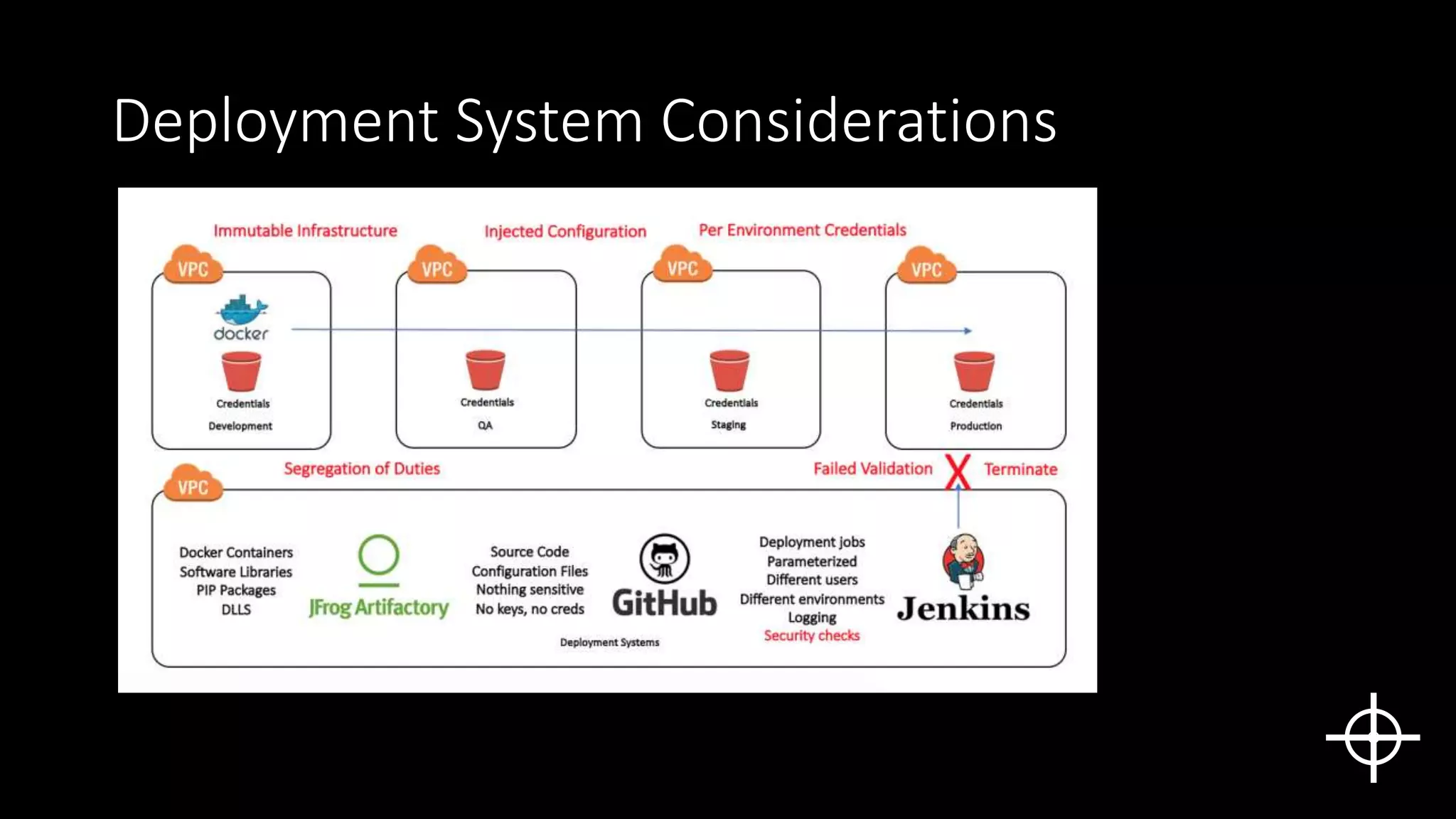
Deployment System Considerations
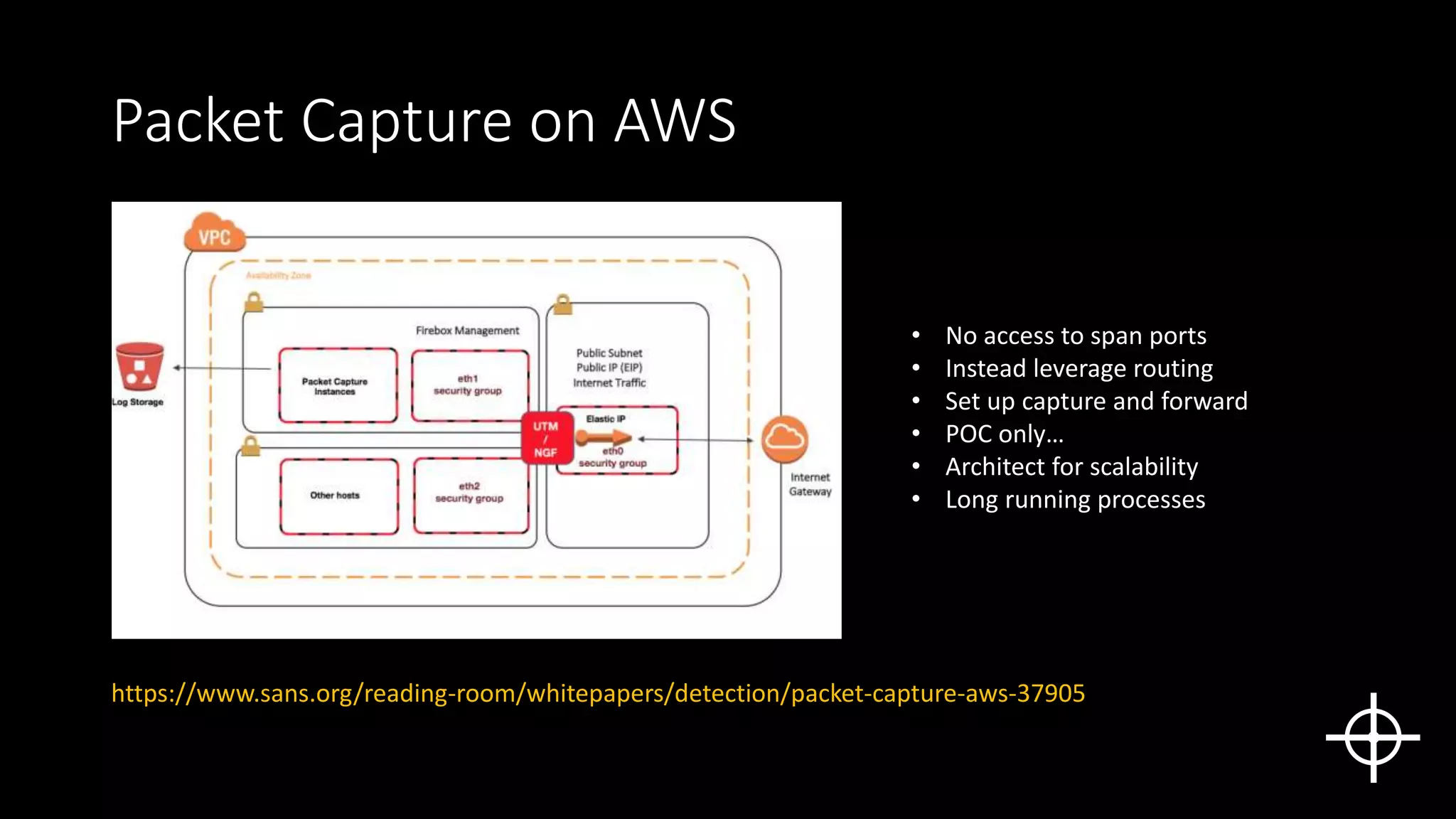
Packet Capture on AWS
https://www.sans.org/reading-room/whitepapers/detection/packet-capture-aws-37905
• No access to span ports
• Instead leverage routing
• Set up capture and forward
• POC only…
• Architect for scalability
• Long running processes
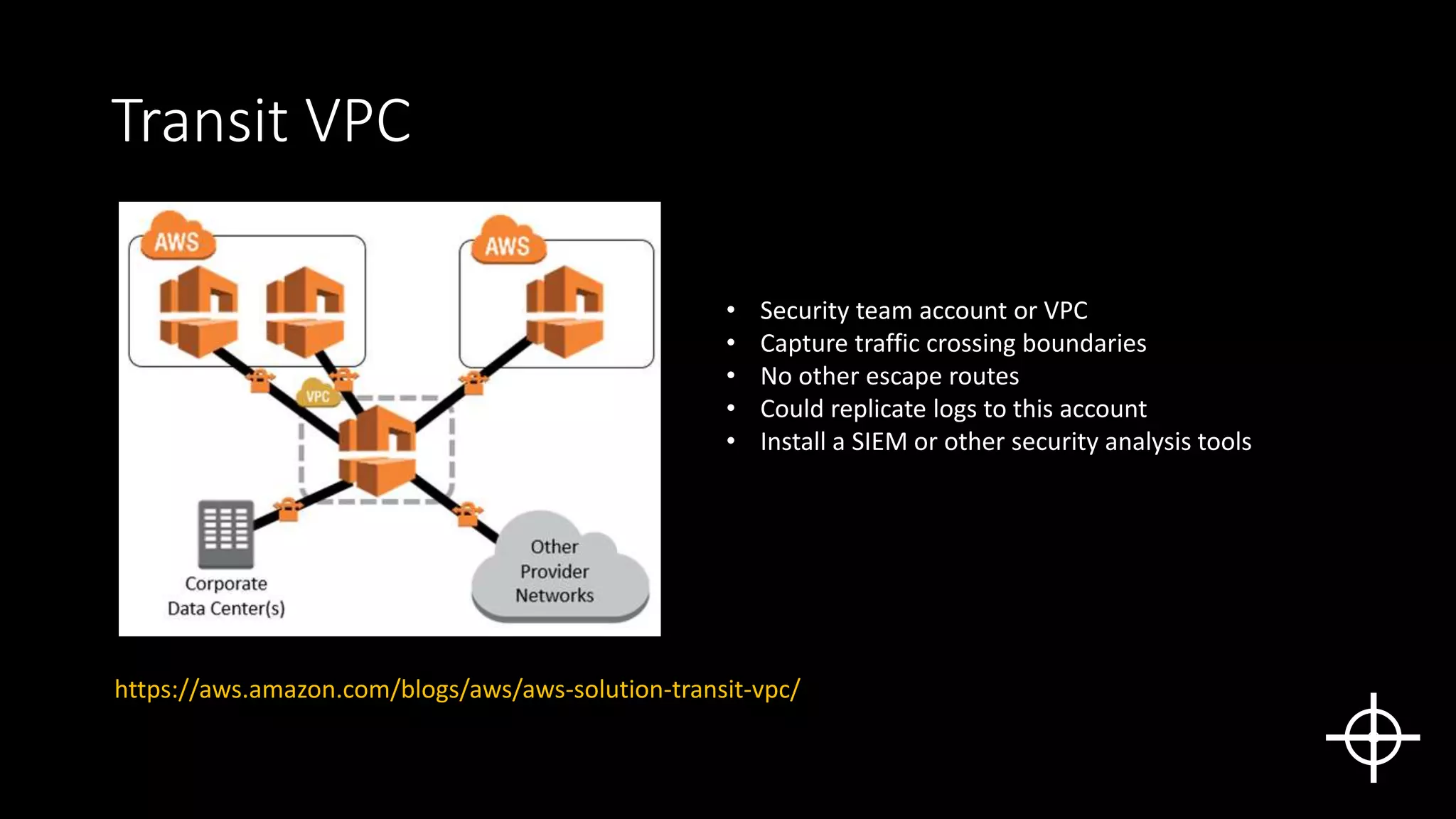
Transit VPC
• Security team account or VPC
• Capture traffic crossing boundaries
• No other escape routes
• Could replicate logs to this account
• Install a SIEM or other security analysis tools
https://aws.amazon.com/blogs/aws/aws-solution-transit-vpc/
Cost Control
• AWS Pricing = a Formula
• Need to know your inputs, to get accurate outputs (cost)
• Optimize system cost the way you optimize for performance
• More in the appendix of paper: Packet Capture on AWS
In Summary…
• Understand cloud security controls
• Secure, flexible, centralized deployment and monitoring
• Event driven automated response
• Segregation of Duties
• Cost management
“Dance like no one is watching. Encrypt like everyone is.” – Werner Vogels
Thank you!
Teri Radichel | @teriradichel
2nd Sight Lab | https://2ndsightlab.com

Locking Down Your Cloud

  • 1.
    Locking Down YourCloud Teri Radichel | @teriradichel CEO, 2nd Sight Lab
  • 2.
    Can You BeMore Secure in the Cloud? • AWS security processes • Segregation of duties • Built-in inventory • Platform to automate – almost everything • Scalable log storage and backups • More secure? Maybe…
  • 3.
  • 4.
  • 5.
    Recent S3 BucketBreaches…
  • 6.
    S3 Bucket SecurityControls (Customer!) • S3 ACL – blocks Internet by default • S3 Bucket Policy – many options • IAM Roles to access bucket • S3 endpoint to restrict network access • Cross-account roles • CloudFront restrictions • Front with API Gateway • CloudTrail and S3 access logs
  • 7.
    S3 Misconfiguration –When and Why? • Before Deployment: Did not understand or implement correctly. • After Deployment: Malicious, inadvertent, or rushed change. • How can an organization prevent misconfigurations?
  • 8.
    Possible Solution • Understandthe controls and create policies • Have a security professional review every change • Reject any change that does not match security policies • Some companies try to do this manually...does. not. work.
  • 9.
    The Tug ofWar ~ Security and Innovation • Security people want to prevent insecure deployments. • Businesses acknowledge they need security…but… • Will they delay deliverables for it? • Experienced this tug of war – wrote a paper: Balancing Security and Innovation With Event Driven Automation.
  • 10.
    A Tale ofTwo Clouds Cloud One: Automated Response After Deployment • Allow deployments to occur • Monitor and reverse unwanted actions Cloud Two: Automated Response During Deployment • Force deployment through automated build system • Built-in security checks • Block or alert on non-compliant deployments • Immutable Infrastructure
  • 11.
    Immutable Infrastructure • Fromconcept of an immutable class in software engineering • Infrastructure and containers, once created, cannot be changed • To change the infrastructure requires re-deployment • Prevent configuration changes outside build system • Eliminate cost of agents (Chef, e.g.) • Eliminate extra holes in network
  • 12.
    Cloud One: Prosand Cons Pros • Non-blocking • Faster to get up and running, fix problems • Catches changes outside of deployment process Cons • Vulnerable time between detection and rollback • Rollback failure leaves problem in production • Doesn’t track who made changes • Repeat problems drive up maintenance cost
  • 13.
    Cloud Two: Prosand Cons Pro • Track every change with user name • Limits attack surface • Lowers long term costs by reducing human error • Failure happens before deployment if implemented correctly Cons • Requires investment up front • Longer process to fix bugs and problems • An incorrectly designed build system impedes work
  • 14.
    Ideally: Best ofBoth Clouds • Create an automated deployment system • Iteratively add security checks • Architect for segregation of duties • Monitor after deployment for unwanted changes • Implement automated incident response
  • 15.
    Automated Intrusion Detectionand Response https://www.sans.org/reading-room/whitepapers/incident/balancing-security-innovation-event-driven-automation-36837
  • 16.
  • 17.
    Packet Capture onAWS https://www.sans.org/reading-room/whitepapers/detection/packet-capture-aws-37905 • No access to span ports • Instead leverage routing • Set up capture and forward • POC only… • Architect for scalability • Long running processes
  • 18.
    Transit VPC • Securityteam account or VPC • Capture traffic crossing boundaries • No other escape routes • Could replicate logs to this account • Install a SIEM or other security analysis tools https://aws.amazon.com/blogs/aws/aws-solution-transit-vpc/
  • 19.
    Cost Control • AWSPricing = a Formula • Need to know your inputs, to get accurate outputs (cost) • Optimize system cost the way you optimize for performance • More in the appendix of paper: Packet Capture on AWS
  • 20.
    In Summary… • Understandcloud security controls • Secure, flexible, centralized deployment and monitoring • Event driven automated response • Segregation of Duties • Cost management “Dance like no one is watching. Encrypt like everyone is.” – Werner Vogels
  • 21.
    Thank you! Teri Radichel| @teriradichel 2nd Sight Lab | https://2ndsightlab.com